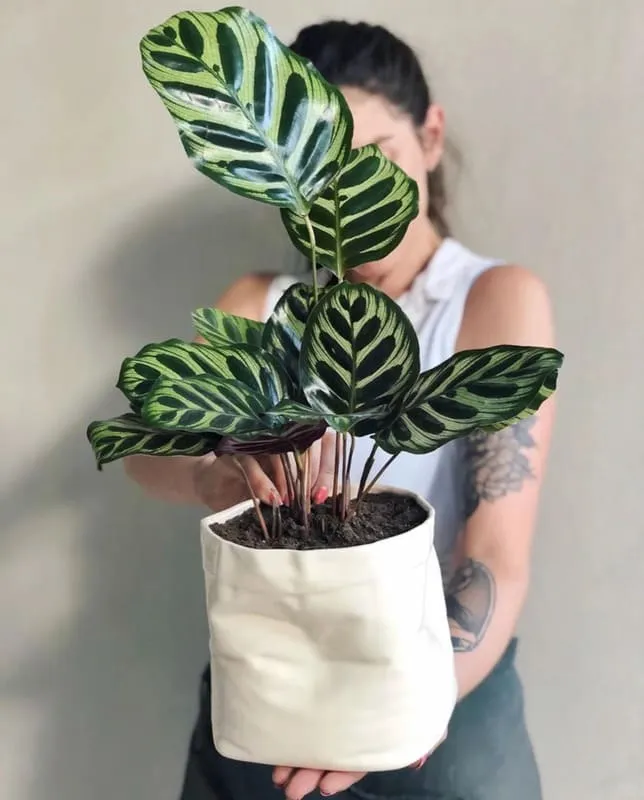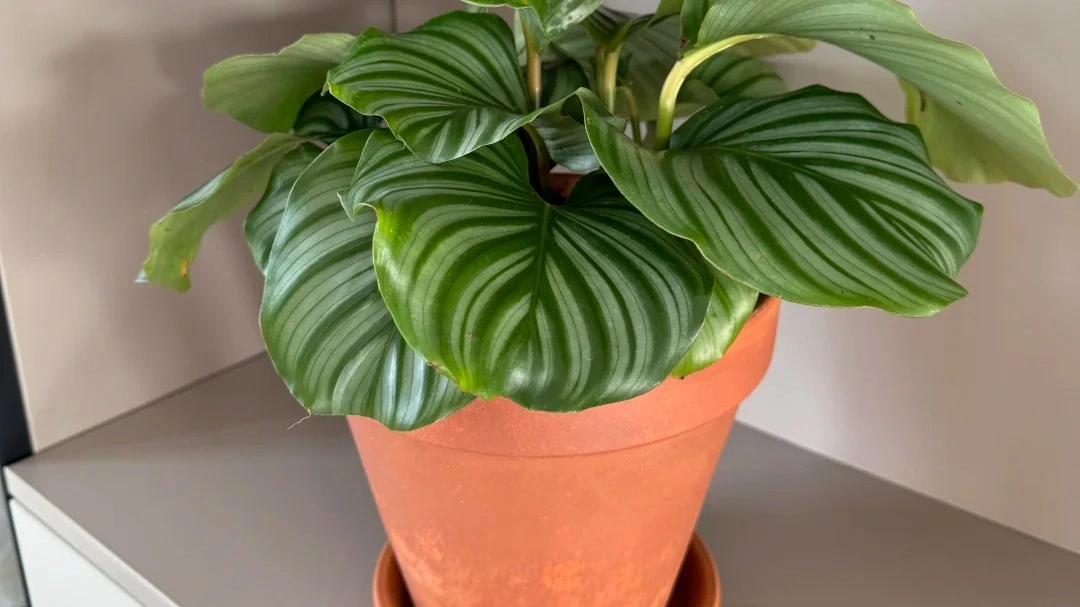
After writing about the kind of soil Calatheas usually need, I realized there is another question that matters just as much: what should you actually buy if you do not want to mix everything from scratch?
I do not think every Calathea grower needs a fancy bag labeled “Calathea soil.” If you only have one or two plants, a ready-made mix can be convenient. But I still look at the texture and ingredients before using it straight from the bag. If the mix feels dense, stays wet for too long, or has very little aeration material, I would rather amend it before putting a sensitive Calathea into it.
This guide is my practical shopping list for Calathea soil and potting supplies. I will go through the ready-made mixes I would consider, the ingredients I would buy separately, and the products I would avoid for sensitive prayer plants grown indoors.
If you want the full soil recipe first, start with my main guide to the best soil for Calathea.
This page may include affiliate links, but I only mention products or product types that make sense for Calathea soil, not random gardening supplies.
Quick Answer: What Should You Buy for Calathea Soil?
If I were starting from zero, I would buy one light ready-made tropical or prayer plant mix, plus perlite or pumice and fine orchid bark. The ready-made mix gives me the moisture-holding base, while the extra amendments help keep the roots from sitting in dense, wet soil.
For one small Calathea, a good ready-made mix may be enough. For several Calatheas, I would rather buy the ingredients separately and adjust the mix myself. It gives me more control, especially in winter when indoor soil dries much more slowly and my Calathea watering schedule has to slow down.
| If you are… | I would buy… |
|---|---|
| Only repotting one small Calathea | A ready-made Calathea, prayer plant, or light tropical houseplant mix |
| Repotting several Calatheas | A light potting base, plus perlite or pumice and fine orchid bark |
| Growing Calathea in a dark room | More aeration material, because the soil will dry more slowly |
| Growing Calathea in a warm, dry room | A mix that holds gentle moisture without turning heavy |
| You often overwater | A smaller pot with drainage holes and a lighter, airier mix |
| You are new to Calathea | A ready-made mix, but only if the texture feels light and not muddy |
The main thing I would not do is buy a heavy all-purpose potting soil and use it straight from the bag. Calatheas like steady moisture, but that does not mean their roots should sit in a compact, wet mix for days. If the plant already smells sour or has soft roots, check my guide to Calathea root rot symptoms before repotting.
How I Judge Store-Bought Calathea Soil
When I buy soil for Calathea, I do not only look at the front label. I look at what the mix is made of, how it feels in my hand, and whether I would trust it in a small indoor pot during slower-growing months.
I Look for Moisture Plus Air
A good store-bought mix for Calathea should hold some gentle moisture, but it should not feel heavy, muddy, or airless. I do not want something bone-dry and chunky like a cactus mix, but I also do not want a dense soil that stays wet for too long around the roots.
When I check the ingredient list, I like seeing a moisture-holding base, such as coco coir or peat, combined with aeration materials like perlite, pumice, fine bark, or charcoal. That balance matters more to me than whether the bag says “Calathea” on the front.
I Do Not Trust the Label Alone
I do not buy a mix just because it says “Calathea,” “tropical,” or “moisture-loving.” Those words can be helpful, but they do not tell me enough. Some mixes sound perfect on the label but still feel too dense once they are in a small indoor pot.
For sensitive prayer plants, I want to know what is actually inside the bag. If the product description is vague and only says “rich organic soil,” I become more careful. Rich soil is not always better for Calathea if it holds too much water and does not leave enough air around the roots.
I Squeeze the Mix Before I Trust It
The hand test is simple but useful. If the mix clumps tightly in my hand and does not loosen back up, I would not use it straight for Calathea. That usually tells me the mix may stay too compact after watering.
In that case, I would amend it first with perlite, pumice, or fine bark. I do not need the mix to fall apart like dry bark, but I do want it to feel light enough that water can move through and air can still reach the roots.
This is also why I am careful with very cheap all-purpose potting soils. Some can work as a base, but I rarely use them alone for Calathea unless I have opened the bag, checked the texture, and adjusted the mix myself.
Ready-Made Calathea Soil Mixes I Would Consider
If I only had one or two Calatheas, I would not always want to buy several separate bags of soil ingredients. A ready-made mix can make sense, especially for a small repotting project. But I still would not trust a mix only because it says “Calathea” on the label. I would check the ingredients, texture, and how heavy the mix feels before using it straight from the bag.
These are the kinds of ready-made mixes I would consider. I would still adjust them if they felt too dense for my room, especially in winter when indoor soil dries more slowly.
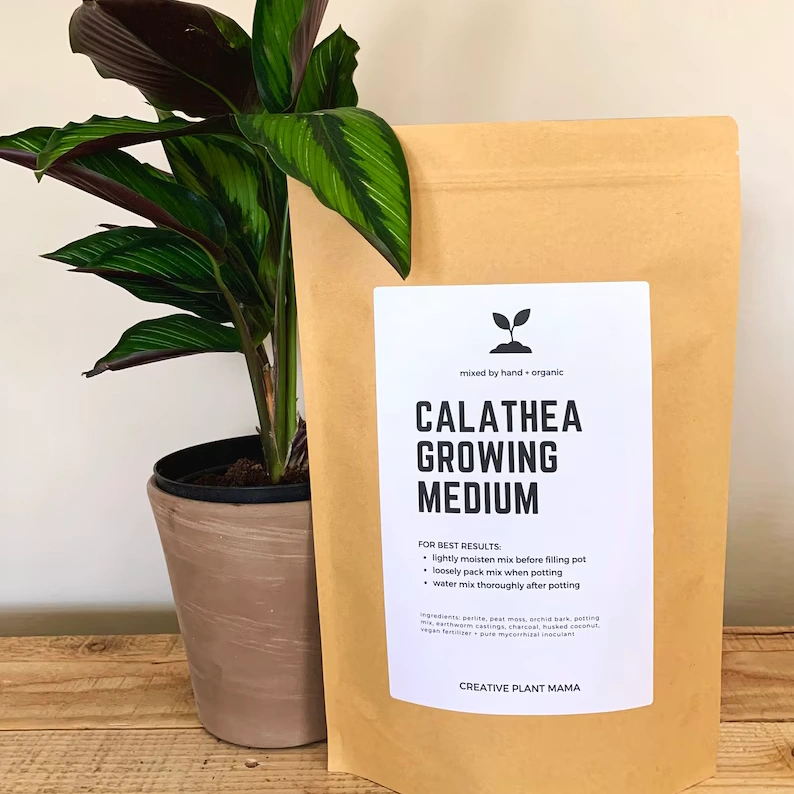
CALATHEA Soil Mix – Houseplant Growing Medium
Best for:
One or two Calatheas, beginner growers, or small repotting projects.
Why I’d consider it:
This kind of ready-made mix makes sense if you do not want to buy several separate amendments just for one plant.
What I’d watch:
I would still check the texture when it arrives. If it feels too moisture-heavy, I would add a little extra perlite or pumice before using it.
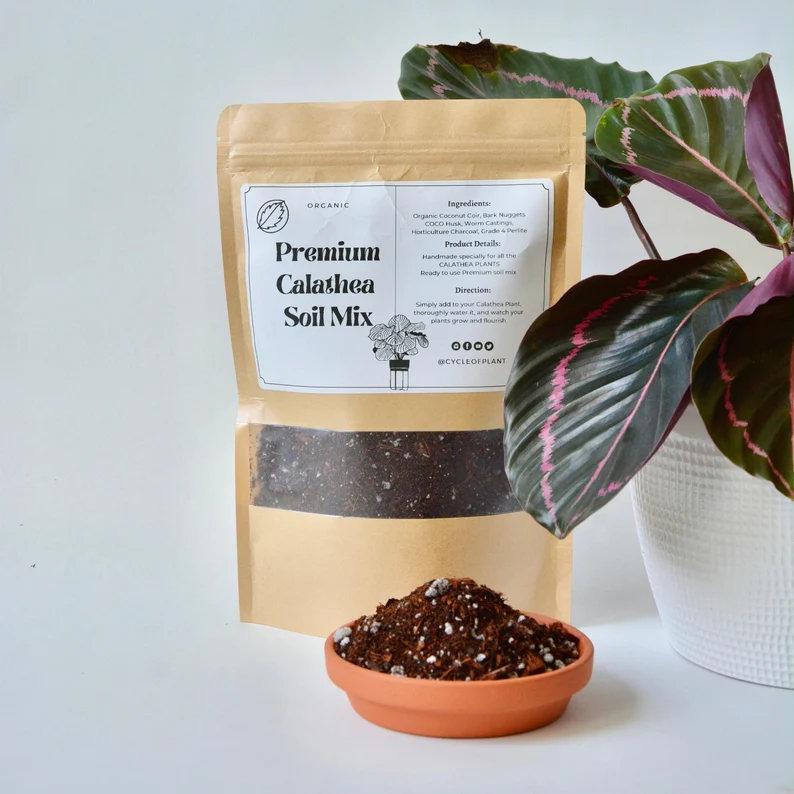
Premium Calathea Potting Mix – Organic Blend
Best for:
Small Calatheas, single-plant repotting, or growers who want a simple ready-made option.
Why I’d consider it:
This fits the small-batch Calathea mix category and feels practical when mixing from scratch would be more trouble than it is worth.
What I’d watch:
In a darker room or during winter, I would be careful not to pair a richer mix with a pot that is too large.
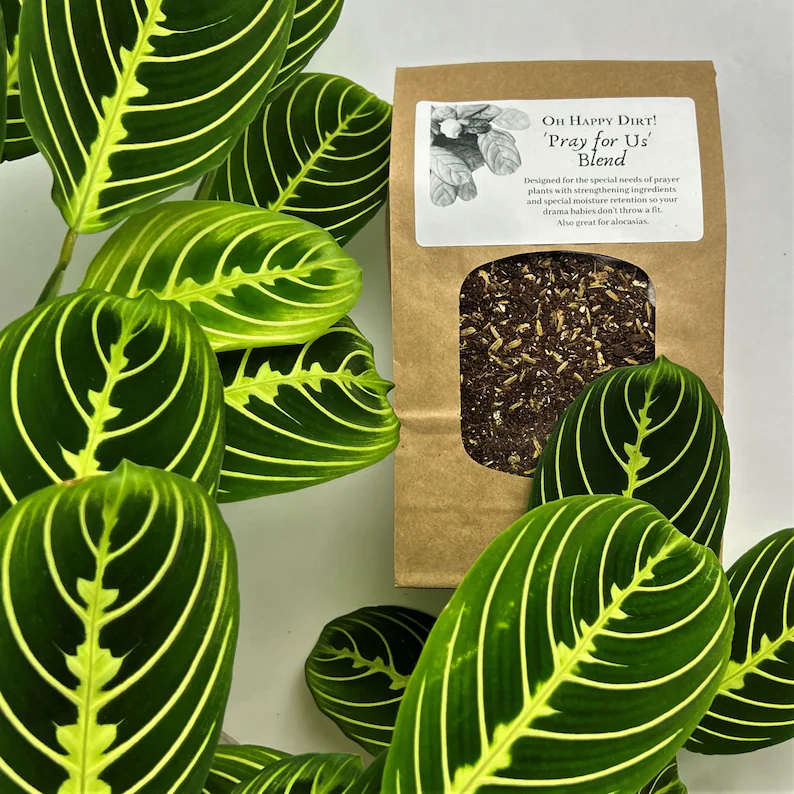
Calathea Potting Soil “Pray for Us” Blend
Best for:
People growing several prayer plants, especially Calathea, Maranta, Stromanthe, or Ctenanthe.
Why I’d consider it:
A prayer-plant-oriented mix can make more sense than a generic tropical mix if you grow several plants with similar moisture needs.
What I’d watch:
I would treat it as a convenience option, not a magic fix. If a plant is already struggling, I would still check roots and pot size first.
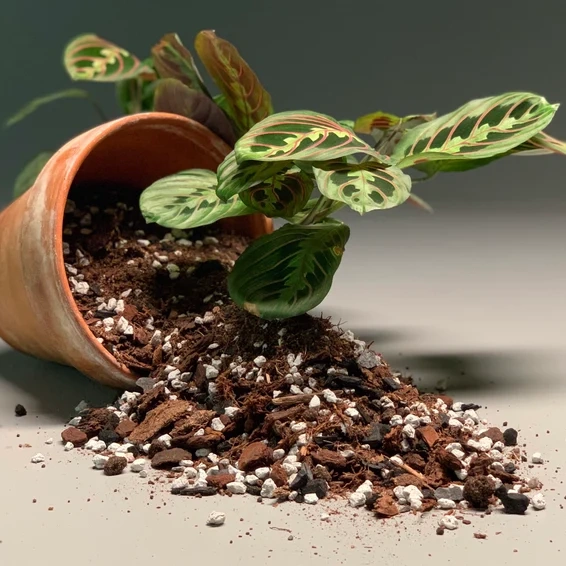
Maranta/Calathea Potting Mix
Best for:
Growers with multiple prayer plants who want one convenient mix instead of building separate recipes.
Why I’d consider it:
This category feels more natural for prayer plants than a very generic tropical mix, especially if you grow more than just Calatheas.
What I’d watch:
If the mix feels too fine, I would add perlite or bark. If it feels too chunky, I would use it more carefully for smaller Calatheas.
My main rule with ready-made Calathea soil is simple: I do not need the fanciest label. I want a mix that feels light, holds gentle moisture, and still gives the roots enough air. If a ready-made mix does that, I would use it. If it feels too dense, I would amend it before trusting it with a sensitive plant.
Mixes I Would Amend Before Using for Calathea
Not every useful soil product has to say “Calathea” on the bag. Sometimes a tropical potting mix, aroid mix, or orchid bark mix can help, but I would not use most of them blindly straight from the package.
For Calathea, I think of these products as starting points. Some can work as a base. Some are better as amendments. The main thing is to check whether the mix gives both moisture and air, not just one or the other.
Tropical Potting Mix
A tropical potting mix can be useful as a base if it already includes a moisture-holding ingredient plus something for drainage, such as perlite, pumice, bark, or lava rock. I would consider this kind of mix when I want something easier than building a full recipe from scratch.
Still, I would check the texture before using it for Calathea. If it feels heavy, fine, or slow to loosen after I squeeze it, I would add more perlite, pumice, or fine bark before potting.
How I would use it: as a ready-made base, especially for one plant, but not as a guaranteed perfect Calathea mix.
One option I would compare:
DUSPRO Tropical Potting Mix on Amazon
Aroid Mix
Aroid mixes are usually made for plants like Monstera, Philodendron, Anthurium, and Alocasia. They are often chunkier and faster-draining than what I would use for Calathea by itself.
I would not automatically use an aroid mix alone for a small Calathea, especially in a dry room. But if my store-bought soil feels too compact, a small amount of aroid mix can help add structure and airflow.
How I would use it: as a partial blend or amendment, not usually as the full potting mix for Calathea.
Orchid Bark Mix
Orchid bark mix is not a complete Calathea soil for me, but it can be useful when the base mix feels too soft, too fine, or too likely to compact after watering.
For Calathea, I prefer using bark as an amendment, not the whole medium. I also prefer smaller or finer bark pieces when possible. Very coarse bark can make a small pot dry unevenly, especially if the room is already warm and dry.
How I would use it: add a small amount to improve structure, especially when using coco coir, peat-based soil, or a soft indoor potting mix as the base.
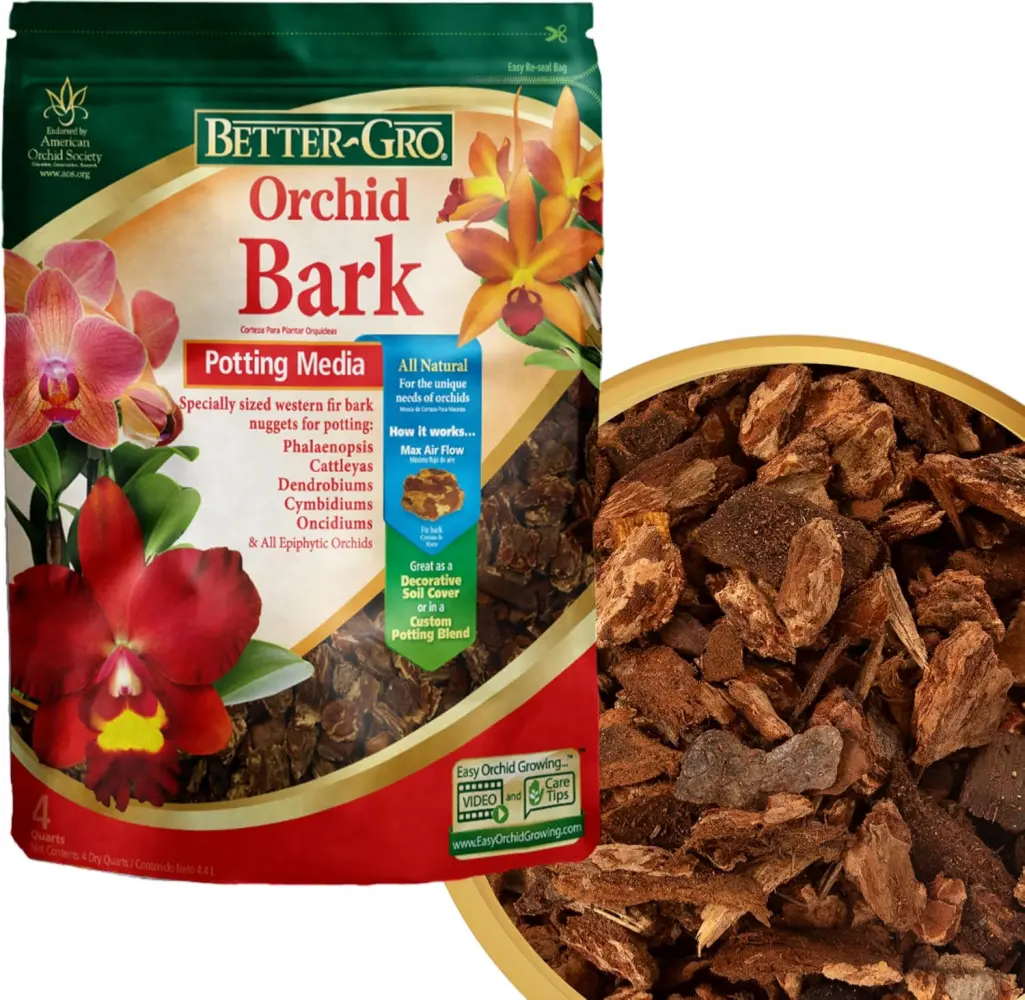
Better-Gro Orchid Bark on Amazon
| Product Type | How I’d Use It |
|---|---|
| Tropical potting mix | Use as a base if it already has some aeration, but check texture first |
| Aroid mix | Use carefully as a partial blend; it may be too chunky alone |
| Orchid bark mix | Use as an amendment, not as the full Calathea soil |
My rule is simple: if a store-bought mix gives me moisture plus air, I can work with it. If it only gives me moisture and no structure, I would not trust it straight for Calathea.
Ingredients Worth Buying Separately
If a store-bought mix feels close but not quite right, I usually do not throw it away. I adjust it. For Calathea, the most useful separate ingredients are usually the ones that help me control moisture, airflow, and texture.
I would not buy every amendment at once. If you are only repotting one plant, start simple. A light base, one aeration ingredient, and a little fine bark are usually more useful than a shelf full of soil products you barely use.
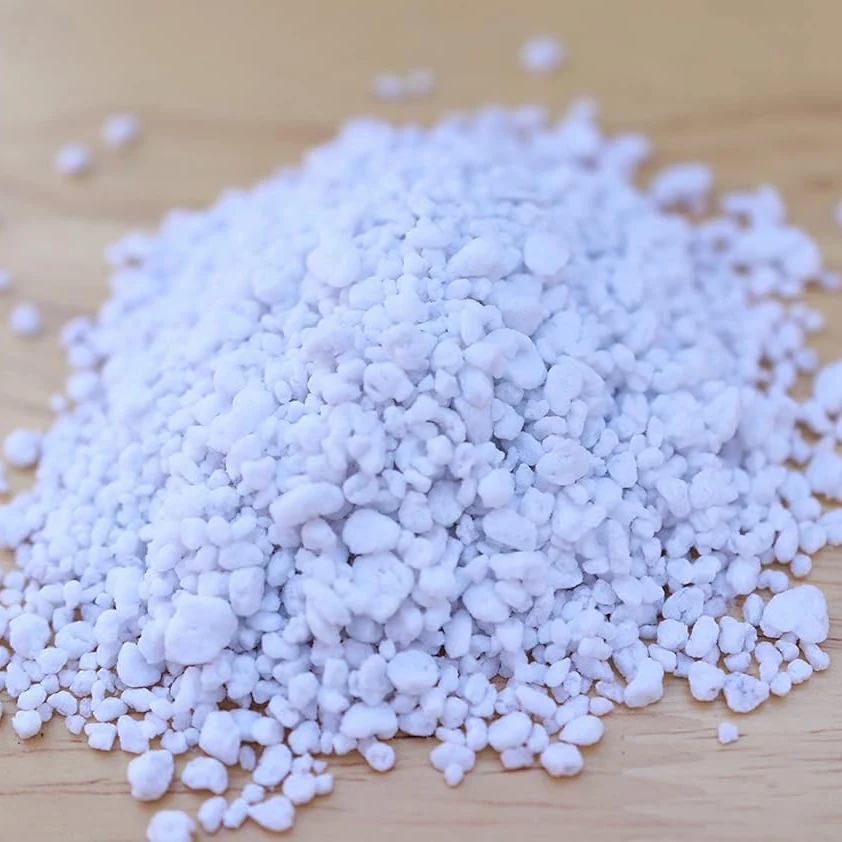
Perlite or Pumice
If I could buy only one amendment for Calathea soil, I would start with perlite or pumice. This is usually the easiest way to make a heavy store-bought mix lighter and less compact around the roots.
Perlite is light, easy to find, and usually cheaper. The downside is that it can float to the surface after repeated watering. Pumice is heavier and more stable in the mix, but it usually costs more. For a small indoor collection, either one can work. I care more about adding air to the mix than chasing the perfect brand.
How I would use it: I would add perlite or pumice to a ready-made mix that feels too dense, especially if the plant is in a cool room, a darker corner, or a slightly larger pot.
Fine Orchid Bark
For Calathea, I prefer fine orchid bark over very large bark chunks. I only want enough structure to keep the mix open. I do not want to turn a small Calathea pot into a dry, chunky aroid pot.
Orchid bark is useful when the base mix feels too fine, too soft, or too likely to compact after watering. I would use it as part of the mix, not as the full potting medium. Large bark pieces can make a small pot dry unevenly, so I would check the particle size before adding too much.
How I would use it: I would add a small amount of fine bark to give the mix more structure, especially when using coco coir, peat-based soil, or a soft indoor potting mix as the base.
Coco Coir or a Light Potting Base
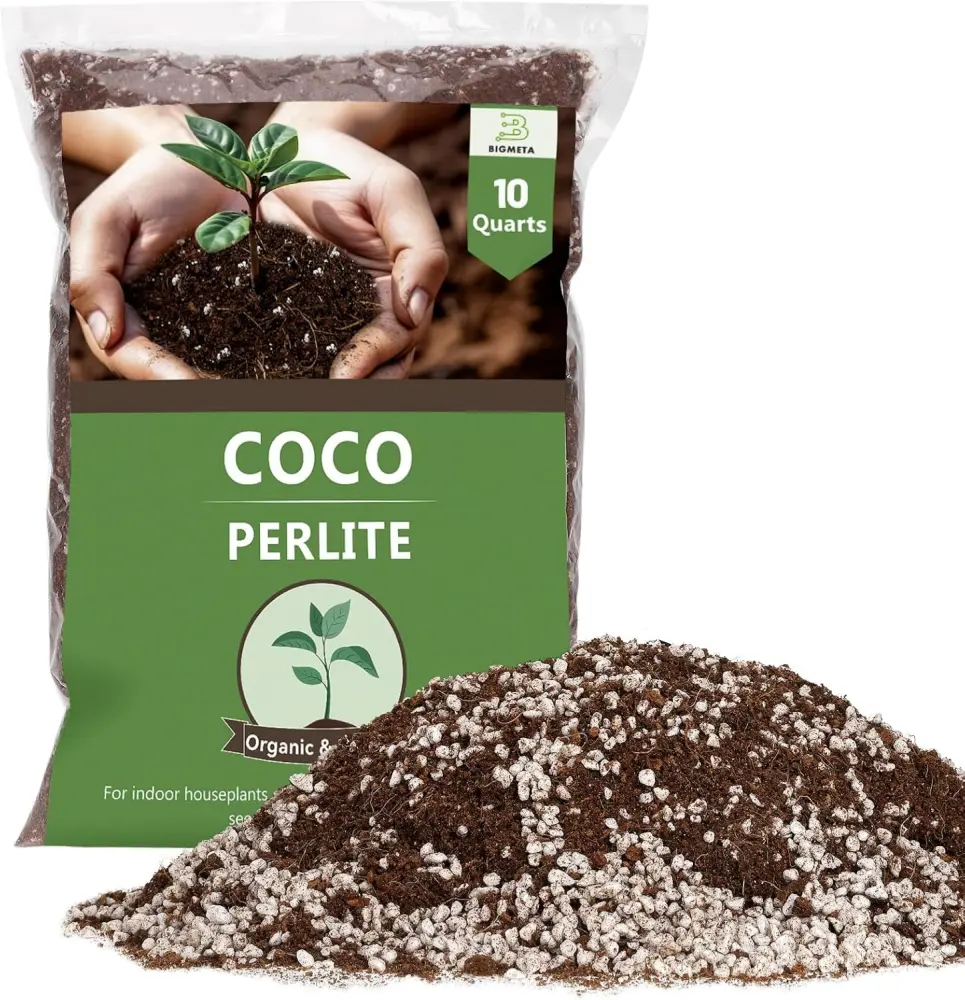
Coco coir is useful when I want the mix to hold gentle moisture without becoming muddy. I would not use plain coco alone for Calathea, but it can be a good base when combined with aeration materials like perlite, pumice, or fine bark.
This is the part of the mix that helps keep Calathea roots from drying too sharply between waterings. But coco-based mixes still need structure. If the blend is mostly fine coco and no aeration, I would not use it straight.
How I would use it: I would use coco coir or a light indoor potting mix as the moisture-holding base, then adjust it with perlite, pumice, or bark depending on my room.
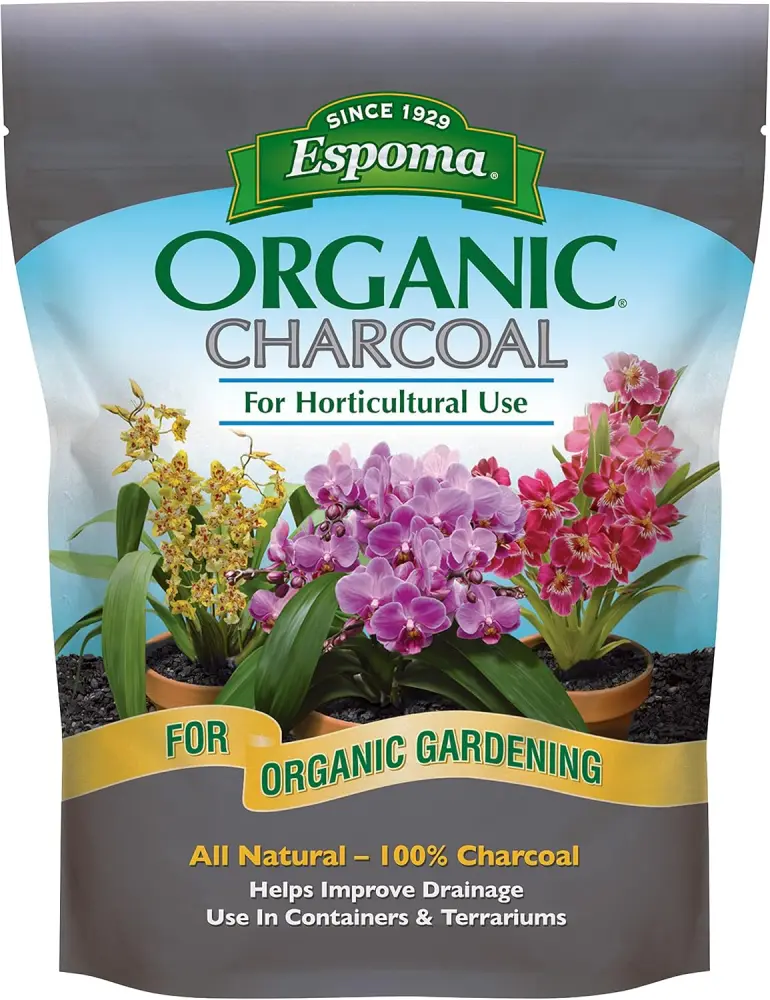
Horticultural Charcoal
Charcoal is optional. I sometimes like a small amount in a soil mix, but I do not treat it as a cure for overwatering. If the pot has no drainage or the mix is too dense, charcoal will not fix the problem.
I would only add a small amount. For Calathea, charcoal is more of a supporting ingredient than a main ingredient. I would buy it after perlite, pumice, and bark, not before them.
How I would use it: I would mix in a small handful if I already have it, especially in a custom blend. I would not buy a large bag just for one small Calathea.
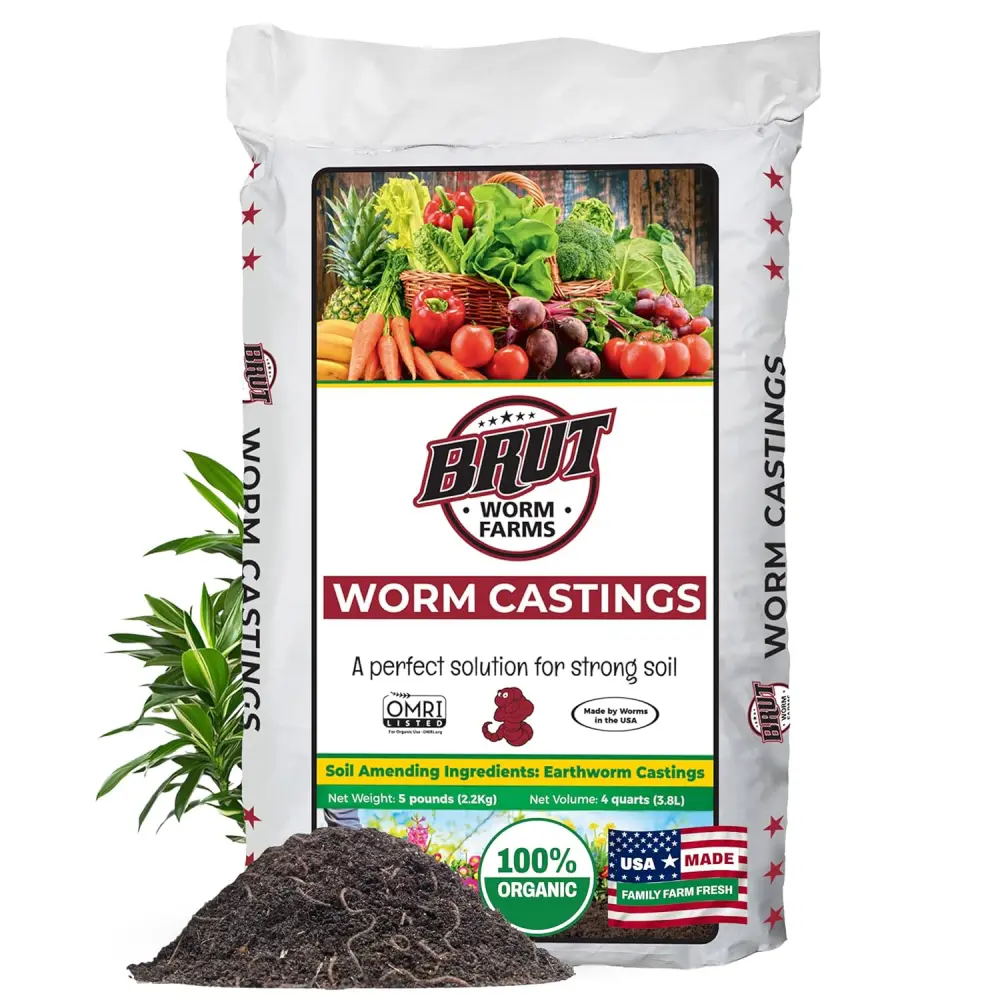
Worm Castings
Worm castings can make the mix slightly richer, but I use them lightly. Too much organic material can make the mix heavier than I want, especially in winter when soil dries slowly indoors.
For Calathea, I would rather start with a light, breathable mix and feed gently later than make the soil too rich from the beginning. If the base mix already contains worm castings, I usually do not add much more.
How I would use it: a small amount only. I would choose a small bag unless I have many indoor plants to repot.
If I had to choose only three things from this whole list, I would buy perlite or pumice, fine orchid bark, and a light base mix first. Charcoal and worm castings are useful, but they are not the foundation of a good Calathea soil mix.
What I Would Not Buy for Calathea Soil
When I shop for Calathea soil, I pay just as much attention to what I would avoid. A mix can look convenient on the shelf, but if it keeps the roots too wet, too airless, or too hard to check, I would rather skip it.
These are the soil products and potting choices I would be careful with, especially for indoor Calatheas grown in lower light or cooler rooms.
- Heavy moisture-control potting soil: I know the words “moisture control” can sound helpful for Calathea, but indoors it can easily stay wet too long. In my setup, I would rather control moisture with the mix and watering rhythm than rely on a dense soil that holds water for days.
- Garden soil: I would not use garden soil for a small indoor Calathea pot. It is usually too dense, too compact, and not designed for roots growing in a container with limited airflow.
- Very chunky bark-only mix: I like adding fine bark, but I would not use a bark-heavy orchid-style mix by itself. Calatheas still need gentle moisture. A very chunky mix can dry unevenly, especially in smaller pots.
- Decorative stones as top dressing: I avoid using stones on top of Calathea soil. They can look clean in photos, but they make it harder to judge how fast the soil is drying. They can also trap moisture at the surface, which is not helpful if the mix below is already slow to dry.
- Pots with no drainage holes: I would not put a Calathea directly into a pot with no drainage hole. Even a good soil mix cannot fix trapped water at the bottom of the pot. If I want a decorative look, I prefer using a nursery pot inside a cache pot.
- Calathea soil with no ingredient list: I do not like buying a mix when I cannot tell what is actually inside. If the description only says “perfect for Calathea” or “rich organic soil” but does not mention aeration materials, I would be cautious.
For me, the safest Calathea soil is not the richest or most expensive one. It is the one that feels light, holds gentle moisture, and still lets the roots breathe. If a product does not help with that balance, I would not buy it just because the label looks right.
My Calathea Soil Shopping Lists
The shopping list changes depending on how many Calatheas you have. If you are only repotting one small plant, I would keep it simple. If you have several Calatheas, buying separate ingredients usually gives you more control and better value over time.
If You Are Repotting One Small Calathea
If I were repotting one small Calathea, I would not buy ten different soil amendments. I would keep the shopping list simple and only buy what helps with the basic balance: light moisture, airflow, and drainage. If you are not sure when to move the plant, start with my Calathea repotting guide.
- One small bag of ready-made Calathea or prayer plant soil
- One bag of perlite or pumice
- A small bag of fine orchid bark
- A nursery pot with drainage holes
- Optional: a little horticultural charcoal or worm castings
For one plant, I would rather start with a good ready-made mix and adjust it lightly than buy a large bag of every ingredient. The goal is not to make the most complicated mix. The goal is to make a mix that stays lightly moist, airy, and easy to manage indoors.
If the ready-made mix already feels light and springy, I may only add a little perlite or pumice. If it feels soft, dense, or slow to loosen after I squeeze it, I would add more aeration before using it.
If You Have Several Calatheas
If I had several Calatheas, I would stop buying tiny bags of ready-made soil and start buying the ingredients separately. It gives me more control, and it usually makes more sense long term.
- Light indoor potting mix or coco-based base
- Perlite or pumice
- Fine orchid bark
- A small amount of horticultural charcoal
- Plastic nursery pots in a few sizes
This setup lets me adjust the mix for different plants and different rooms. A small Calathea in a cool, dark corner may need more aeration. A plant in a warmer, brighter room may handle a slightly more moisture-holding mix.
For me, this is where buying separate ingredients becomes more practical. I can make a lighter mix for plants that stay wet too long, or a slightly softer mix for plants that dry too quickly after watering.
When I Would Stop Shopping and Mix It Myself
Ready-made mixes are convenient, and I do use them as a starting point when they make sense. But there are times when I would rather stop looking for the perfect bag of “Calathea soil” and mix something myself.
I would mix my own soil if the Calathea is expensive, newly imported, recovering from root stress, or growing in a room where soil dries slowly. A store-bought mix is not always adjusted for my light, temperature, pot size, and watering habits.
This matters most in winter. In my indoor setup, a mix that feels fine during warmer months can stay wet for much longer when the room is cooler and the light is weaker. That is when I become more careful with dense ready-made soil and add more aeration before trusting it.
I do not think every Calathea needs a branded soil mix. What matters more is whether the mix feels light, holds gentle moisture, and still lets air reach the roots.
If a store-bought mix already has that balance, I would use it. If it feels too dense, I would amend it. And if the product does not clearly tell me what is inside, I would rather build a simple mix myself than gamble with a sensitive plant.
If you are still building the basics, you may also want to start with my full Calathea care guide before buying more soil products.