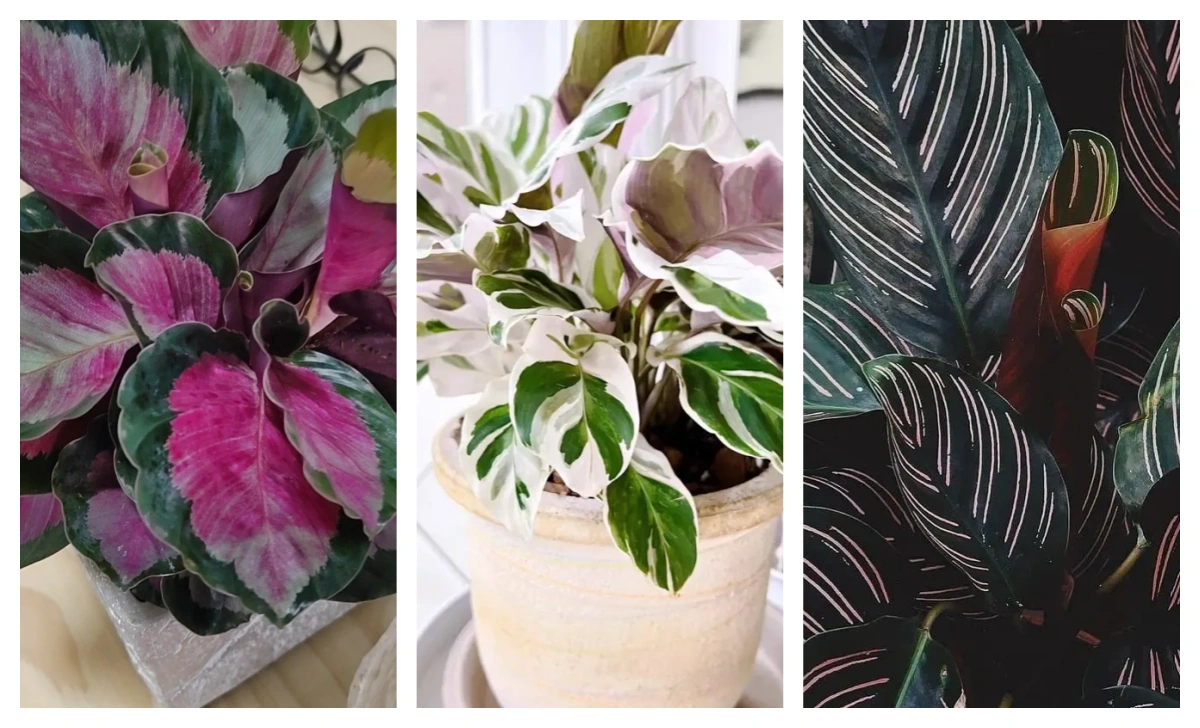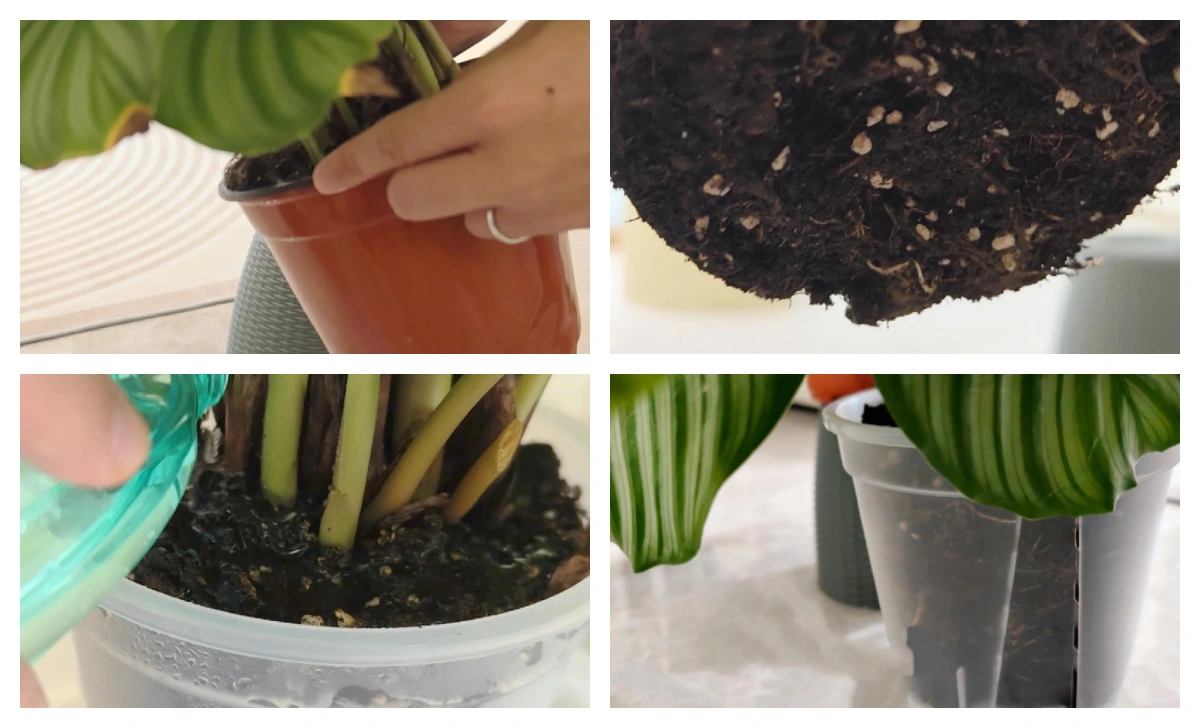
A dark room does not always mean a room with no windows. For Calathea, it can also mean a north-facing apartment, a cloudy city, a long winter season, or a corner that looks bright to my eyes but still gives the plant very weak light.
I do not use grow lights for Calathea the same way I would for succulents or vegetable seedlings. Calatheas do not need harsh, intense light. What they need is steady, gentle support when natural indoor light is not enough.
This guide is about choosing the right grow light setup for the way your plants are actually arranged: one large plant on the floor, several plants on a shelf, a few pots on a desk, or small plants grouped under a tabletop light.
This page may include affiliate links, but I only mention grow light setups I would actually consider for Calatheas in dark rooms, cloudy homes, or weak winter light.
Quick Answer: What Grow Light Setup Should You Choose for Calathea?
The best grow light setup for Calathea depends on where the plant sits. I would not choose the same light for one large floor plant, a plant shelf, and a tray of small nursery pots. The shape of the light matters almost as much as the brightness.
For most Calatheas, I want an adjustable LED light with a timer, especially in cloudy winter homes where natural light changes a lot from day to day.
| Your Setup | Grow Light I Would Consider |
|---|---|
| One large Calathea on the floor | Floor grow light or overhead floor lamp |
| A few medium plants grouped together | Floor grow light with an adjustable head |
| A plant shelf | Under-shelf LED grow light bars |
| A few small plants on a desk | Clip-on grow light |
| Many small plants or seedlings on a tray | Tabletop grow light with stand |
| A dark corner where appearance matters | Vertical grow light or slim floor grow light |
| Very cloudy winter home | Timer-controlled grow light for steady daily light |
If I had to choose one rule, it would be this: match the light to the plant setup first, then adjust the distance and hours. For Calathea, a good grow light should support the plant gently, not make the leaves look faded, curled, or stressed.
What Actually Matters in a Grow Light for Calathea
When I choose a grow light for Calathea, I do not start by looking for the strongest light. I look at whether the light can give the plant steady, gentle support without stressing the leaves.
Gentle, Steady Light Matters More Than Maximum Power
Calatheas are not high-light plants. In most indoor setups, they do best with bright indirect light, not harsh direct light. A grow light should make up for weak natural daylight, not turn the setup into a cactus shelf.
For me, the goal is simple: enough light to keep the plant growing steadily, but not so much that the leaves start fading, curling, or crisping at the edges.
Distance From the Leaves Is Important
Even a good LED grow light can stress a Calathea if it sits too close to the leaves. I would rather start with the light farther away, then adjust slowly after watching the plant for a week or two.
If the leaves begin to look washed out, curl inward, or get dry edges after adding the light, I would first increase the distance or reduce the hours before blaming watering.
A Timer Makes the Setup Easier
A timer is one of the most useful features for a Calathea grow light setup. It keeps the light schedule steady without me having to remember to turn the light on and off every day.
This matters most in winter or in cloudy cities, where natural light changes a lot from day to day. A steady light routine is usually better than random long and short days.
The Shape of the Light Should Match the Plant Setup
The shape of the light matters because Calatheas are not always arranged the same way. One large floor plant needs a different setup from a plant shelf, a desk corner, or a tray of small pots.
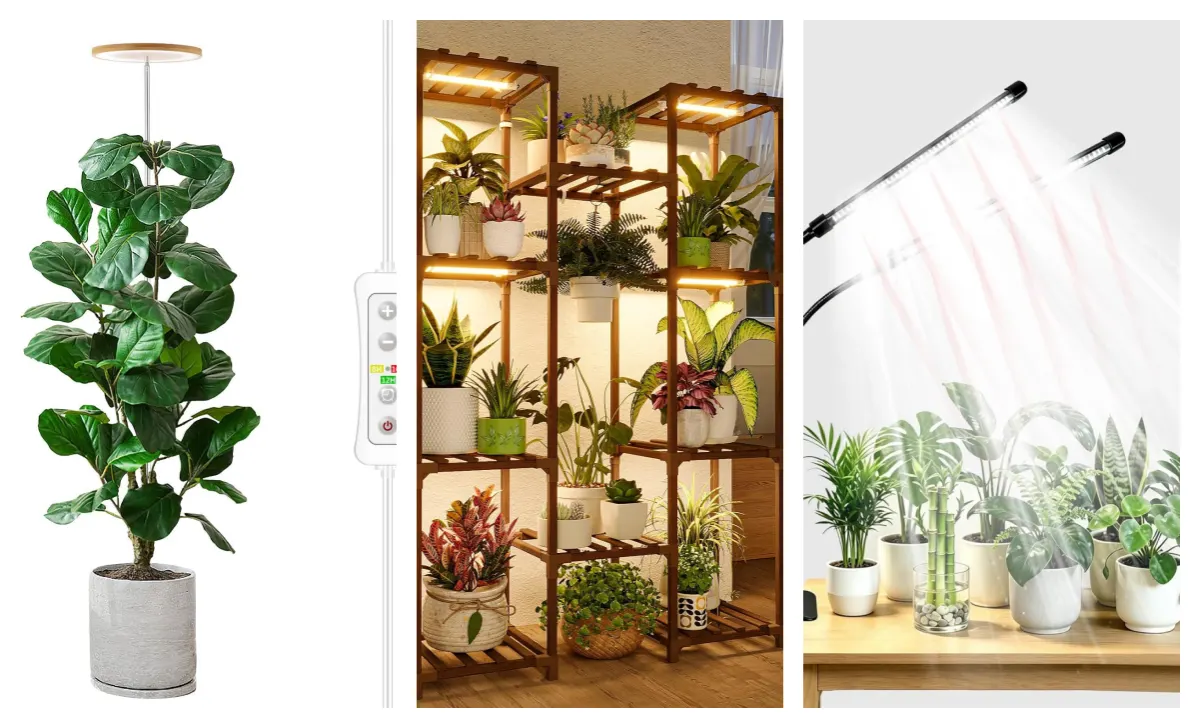
A floor grow light works better for a large plant or a small plant corner. Grow light bars make more sense for shelves. A clip-on light can work for a few desk plants. A tabletop grow light with a stand is more useful for small plants, seedlings, or a tray setup.
That is why I would choose the grow light based on where the Calathea actually lives, not just by reading the wattage or buying the brightest option.
Floor Grow Lights for One Large Calathea
A floor grow light is the setup I would consider for one large Calathea, a floor pot, or a small plant corner. If the plant is not sitting on a shelf or desk, a floor light usually looks cleaner and is easier to position than a clip-on light.
I like this type of light because it can sit beside the pot and aim light from above or at a slight angle. For Calathea, I do not need a harsh, close-range grow light. I want soft, steady support that makes up for weak indoor light.
If possible, I prefer light coming from above rather than only from the side. Top light usually encourages more even growth. Side light can still work, but I would rotate the plant regularly so one side does not lean or grow stronger than the other.
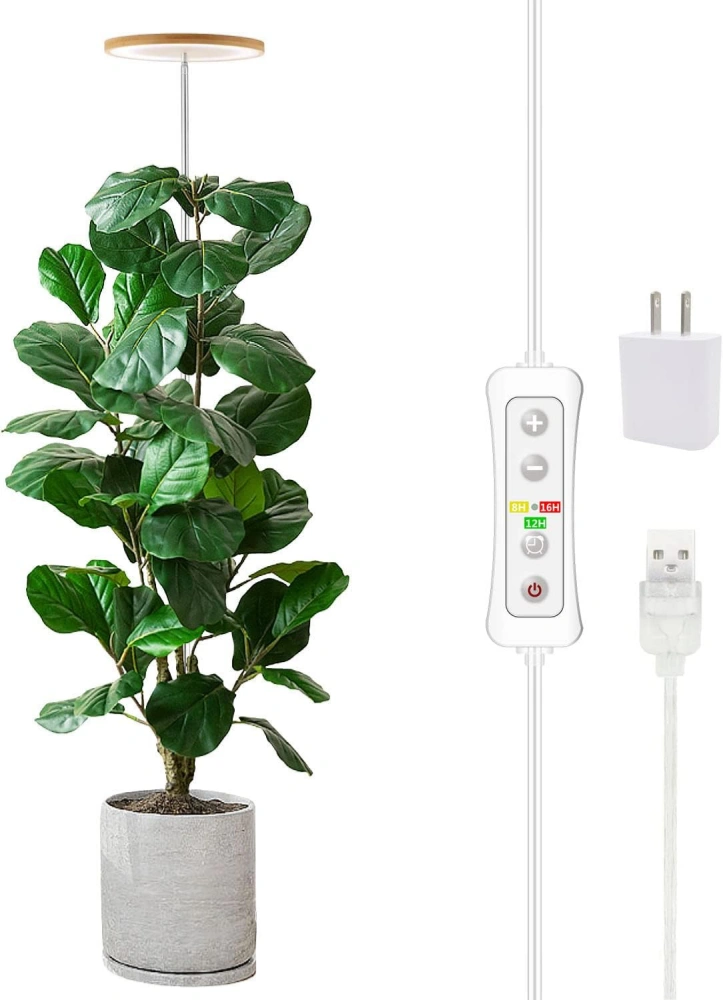
Floor Grow Light
Best for:
One large Calathea or a few medium plants grouped together.
My note:
I would look for adjustable height, a timer, and a soft full-spectrum LED. I do not need a very intense grow light for Calathea.
Vertical Grow Lights for a Cleaner Indoor Look
A vertical grow light can make sense if the Calathea sits in a dark corner, a decorative plant area, or a part of the room where a bulky overhead lamp would look awkward. This style is usually slimmer and easier to blend into a living room setup.
Because most vertical grow lights give more side light than top light, I would use them as style-friendly supplemental light rather than the most plant-perfect setup. I would also rotate my Calatheas regularly so one side does not receive all the light.
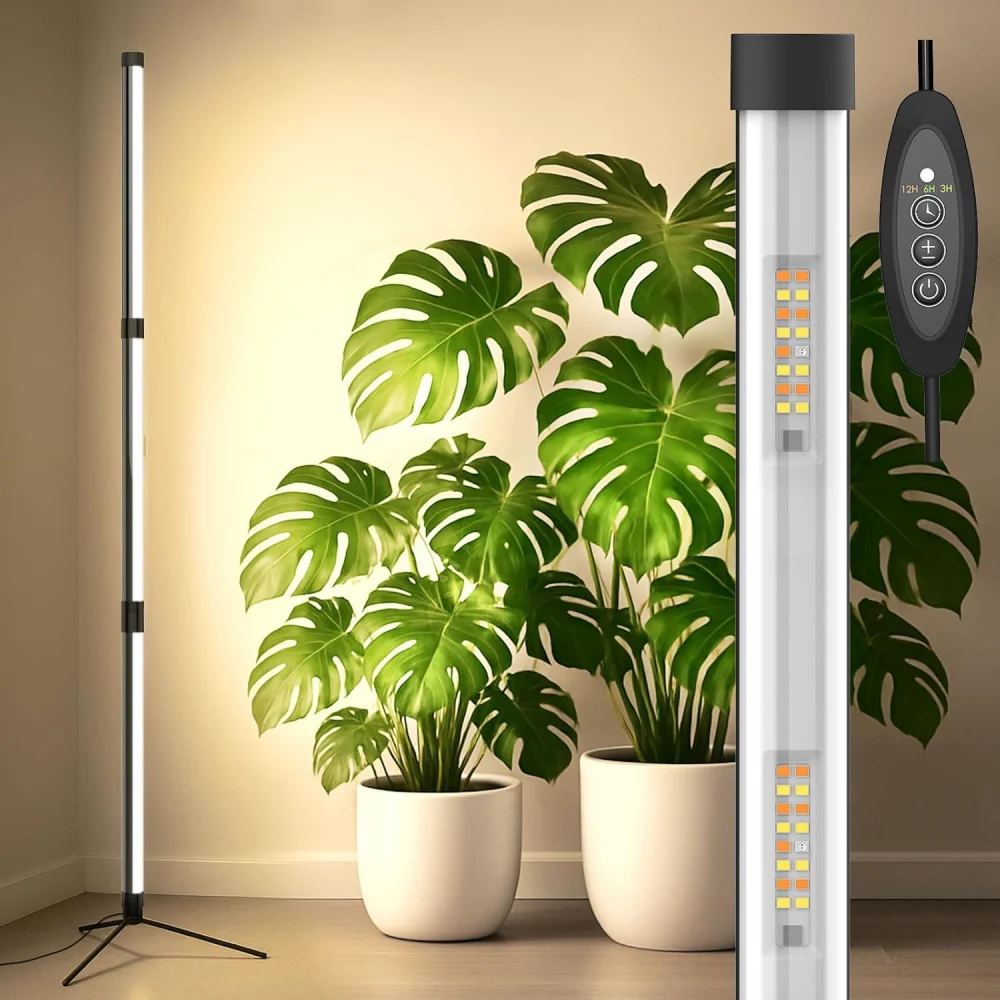
Vertical Grow Light for a Dark Calathea Corner
Best for: A dark room corner, one larger Calathea, or a small group of medium plants where a cleaner-looking grow light matters.
My note:
I would use this as a style-friendly support light for Calatheas that need steadier light without placing a bulky lamp over the plant. Because it gives more side light than overhead light, I would still rotate the plant regularly so one side does not grow stronger than the other.
Deal note:
Currently showing a 30% off offer on Amazon, but I would check the latest price before buying.
Grow Light Bars for Plant Shelves
If my Calatheas are on a plant shelf, I would not use one strong grow light from far away. The top row may get enough light, but the lower shelves can still stay dim. For shelves, I prefer LED grow light bars placed under each level.
This setup gives each row of plants more even light. It works especially well for grouped small Calatheas, young plants, or other low-to-medium-light tropical plants that sit on different shelf levels.
The main thing I would watch is distance. Calathea leaves should not sit too close to the bars. I want the light to feel gentle, with enough space so heat does not build up around the leaves.
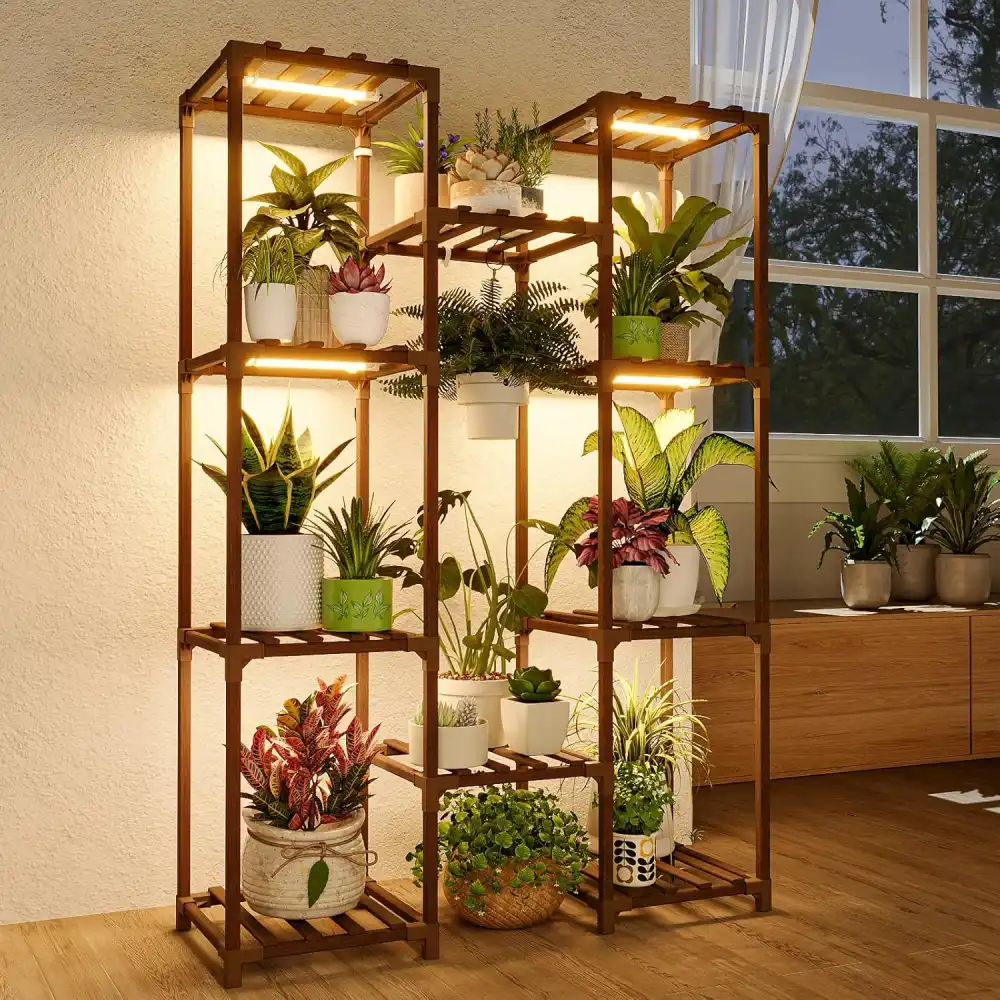
Under-Shelf Grow Light Bars
Best for:
Plant shelves with several Calatheas or other low-to-medium-light tropical plants.
My note:
This is the setup I would choose if I had multiple plants on different shelf levels. It gives more even coverage than one distant lamp.
Clip-On Grow Lights for Small Desk Setups
A clip-on grow light can work well if I only have one or two small Calatheas on a desk, side table, or windowsill where the natural light is weak. It is flexible, easy to move, and usually does not take up much space.
The main thing I would watch is positioning. If the arms are too short, the light may sit too close to the leaves. If the light only hits one side of the plant, I would rotate the pot regularly so the growth does not become uneven.
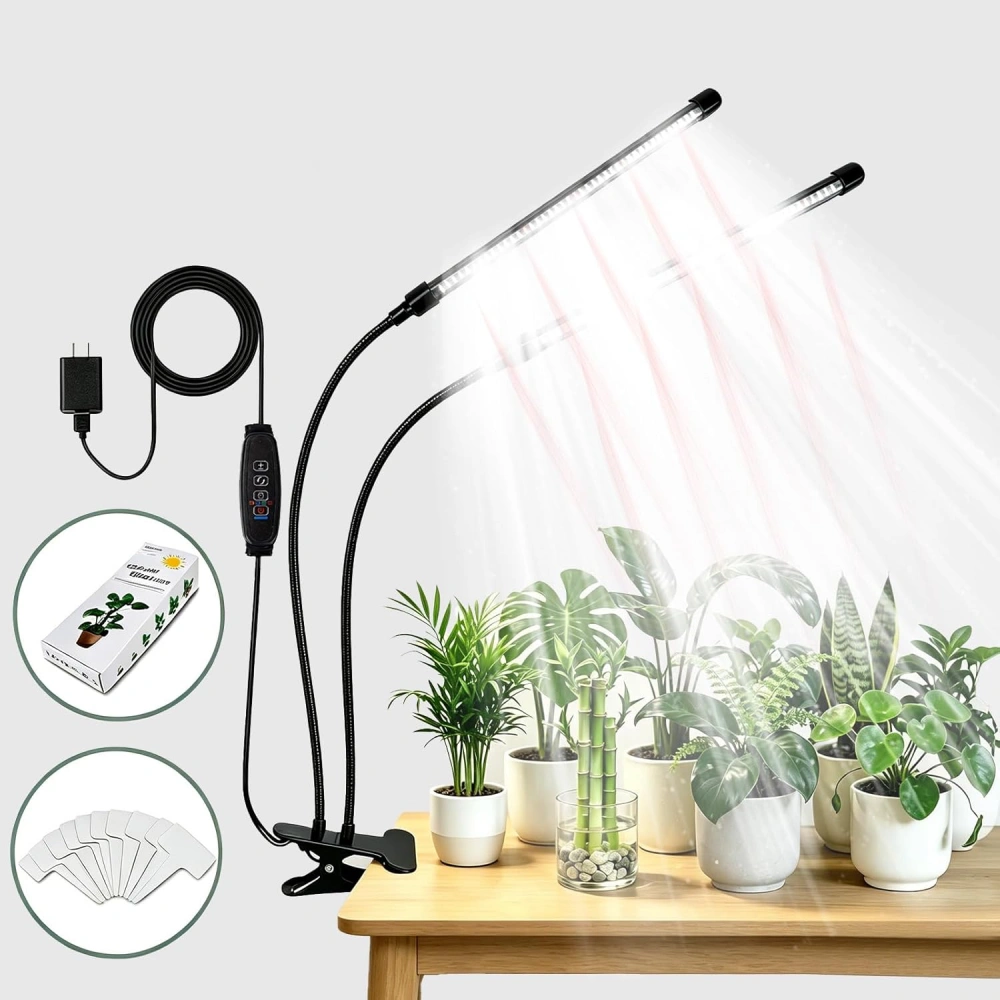
Clip-On Grow Light
Best for:
A few small plants on a desk, side table, or weak windowsill.
My note:
I would use this for a simple, low-cost setup, but I would keep the light gentle and avoid placing it too close to the leaves.
Tabletop Grow Lights With Stand for Small Plants and Propagation Trays
A tabletop grow light with a stand is useful when I have several small Calatheas, nursery pots, propagation trays, or seedlings grouped together on a table. It gives broader coverage than a small clip-on light, especially when the plants are arranged in one tray or one compact area.
This is the style with two side supports and a wide light bar across the top. I like it for short plants because the light comes from above and covers the group more evenly than a narrow desk lamp.
The main limit is height. This setup works best when the plants are still small. I would not choose it for one tall Calathea unless the stand is adjustable enough to keep the light at a comfortable distance from the leaves.
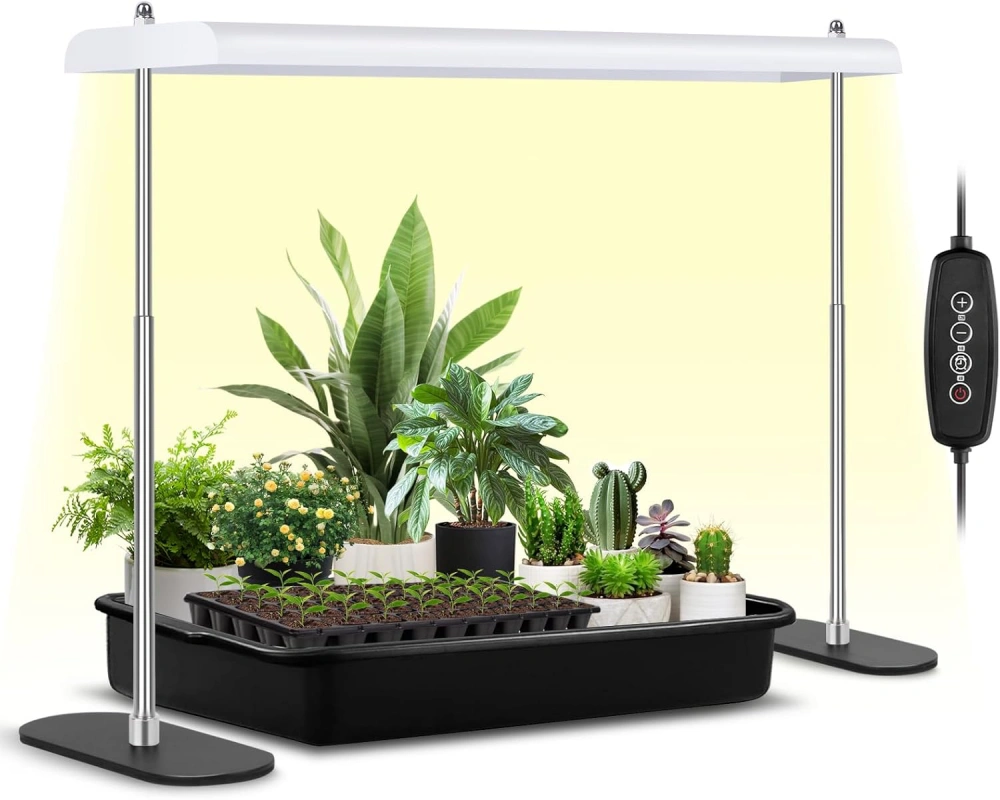
Tabletop Grow Light With Stand
Best for:
Small plants, propagation trays, nursery pots, or several compact Calatheas grouped together.
My note:
I would use this when I want wider coverage over a tray or tabletop setup. It is more useful for small plants than for one tall floor plant.
How Long I Would Run a Grow Light for Calathea
For a dark room or a cloudy winter setup, I would usually start with 8 hours of grow light per day for Calathea. If the plant still seems to stretch toward the light or growth stays very weak, I may slowly increase the time toward 10–12 hours. I would also adjust my Calathea watering schedule, because plants usually dry more slowly in low light.
I would not start with the longest setting right away. More light is not always better for Calathea. These plants usually want steady support, not harsh light for too many hours.
If the leaves start looking faded, curling inward, or getting crispy edges after moving under a grow light, I would not blame watering first. I would increase the distance from the light or reduce the daily hours, then watch how the next leaves respond.
| Light Schedule | How I Would Use It |
|---|---|
| 6–8 hours | Good starting point if the room still gets some natural light |
| 8–10 hours | My usual range for a dark room or cloudy winter setup |
| 10–12 hours | Useful if natural light is very weak, but I would watch for stress |
| More than 12 hours | Usually more than I want for Calathea indoors |
My rule is to adjust slowly. I would rather give a Calathea gentle light every day than suddenly move it under a strong light for long hours and create a new problem.
I would not leave a grow light on all day and night. Calatheas still need a regular dark period, and constant light is not the same as better care.
What I Would Not Buy
Some grow lights look useful on paper, but I would skip them if they are too strong, too awkward to place, or too hard to use consistently.
- A very strong grow light meant for succulents or vegetables: Calatheas do not need that much intensity, and harsh light can make leaves fade, curl, or crisp.
- A light with no timer: if I know I will forget to turn it on and off, I would rather choose a setup with a built-in timer or use a plug-in timer.
- A tiny clip light for a large floor plant: it may only light one small part of the plant and leave the rest reaching toward the light.
- A vertical side light as the only source if I never rotate the plant: side light can help, but uneven light can make Calathea lean or grow more strongly on one side.
- A shelf light setup with no space between the leaves and the LEDs: the light may be too close, and heat can build up around tender leaves.
- A cheap purple grow light if I care about how the room looks: it may work for plants, but I do not like that color for a living space.
Match the Light to the Setup, Not Just the Plant
My rule is simple: I match the light to the setup first. A floor plant needs a different light than a shelf, a desk corner, or a tray of small plants.
For a dark but decorative corner, I might consider a vertical grow light, but I would still rotate the plant regularly. Side light can look cleaner indoors, but overhead light is usually easier for even growth.
The best grow light for Calathea is not the strongest one. It is the one that gives soft, steady light in the place where the plant actually lives.