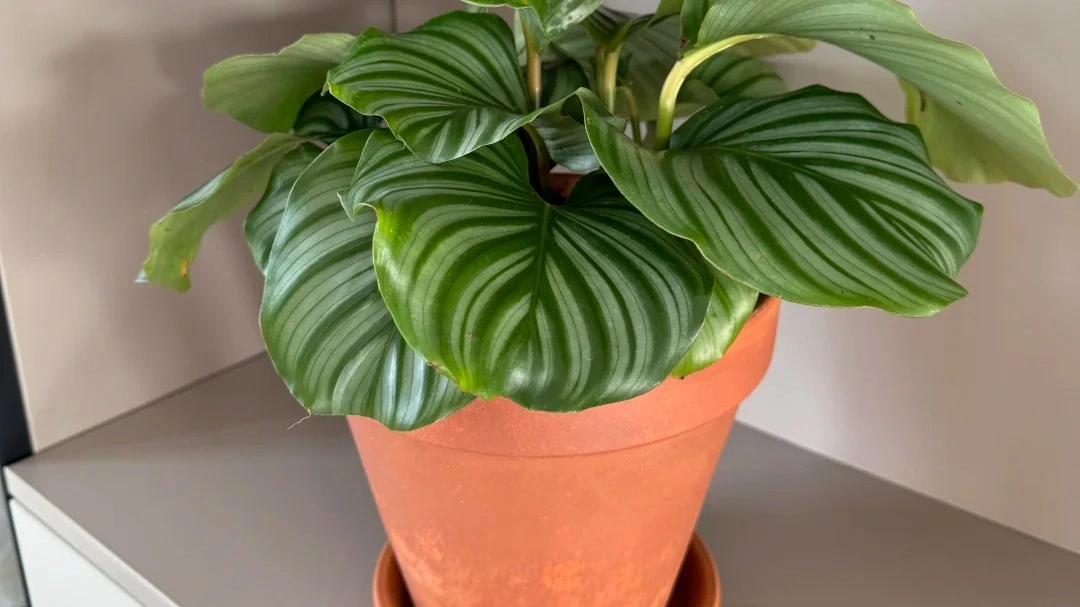
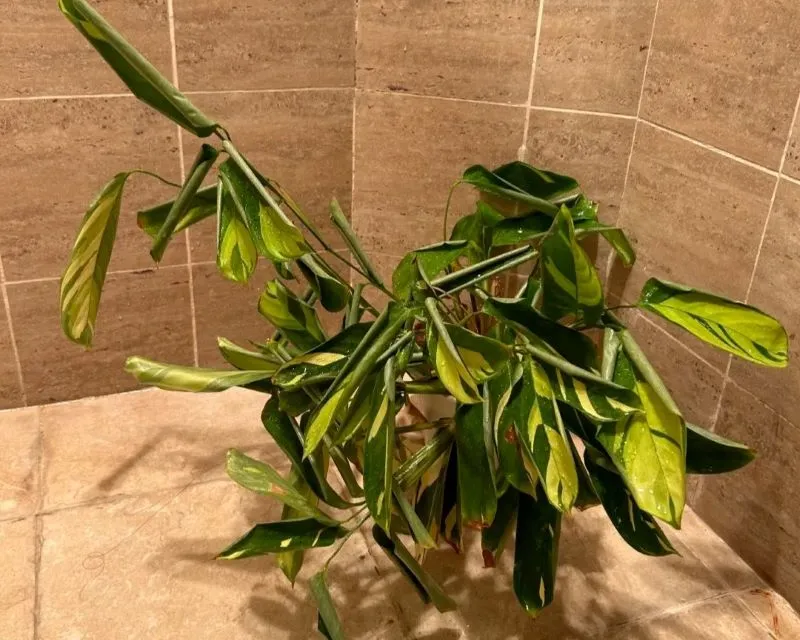
I still remember the first time my Calathea ‘Apple Green’ gave me a scare. One day it looked lush and full of life, and the next—every single leaf had collapsed, hanging limp as if the plant had given up completely. I was stunned and honestly thought it was gone for good.
After a frantic round of research, I realized the culprit was a mix of dry winter air and underwatering. In desperation, I placed the whole plant—pot and all—into a bucket of water and let it soak for two days. To my surprise, it bounced back. Within a week the leaves stood tall again, and the plant looked as vibrant as before.
That experience taught me an important lesson: curling or drooping Calathea leaves are usually not a death sentence. More often than not, it’s a signal about watering mistakes or environmental stress. In this guide, I’ll walk you through the most common signs, the likely watering errors behind them, and how to bring your plant back to health.
Symptoms: Curling vs. Drooping Leaves
When a Calathea is unhappy, its leaves will often show it in two distinct ways:
- Curling leaves — the edges roll inward, sometimes tightly, making the leaf look like a tube. This is often a response to dry soil, low humidity, or inconsistent watering.
- Drooping leaves — instead of standing upright, the entire leaf blade hangs down, almost like it’s exhausted. This can mean the roots are waterlogged and suffocating, or on the opposite extreme, that the plant is severely dehydrated.
The challenge is that both symptoms can look dramatic and worrying, but they don’t always mean the plant is dying. They’re signals—your Calathea is asking you to check the soil, the air, and your watering routine before it’s too late.
Watering Mistakes That Make Calathea Curl or Droop
Calatheas are sensitive to how and when they’re watered. Too much, too little, or even the wrong kind of water can quickly show up as curling or drooping leaves. Let’s look at the most common watering mistakes and how to spot them.
Overwatering: Too Wet, Roots Can’t Breathe
Calatheas love moisture in the air as much as in the soil. When humidity drops—often in winter with heating or in summer with strong AC—the leaves respond by curling tightly inward. This is not always a sign of drought in the soil; it’s the air that’s too dry. Grouping plants, using a pebble tray, or running a humidifier can help restore that lush, flat-leaf look. If you are not sure whether your room is dry enough to justify buying one, see my guide on whether Calatheas need a humidifier. If yellowing and a musty smell persist, review Calathea root rot symptoms first. If the soil keeps staying wet even when you water carefully, the mix may be too dense; for an easier reset, see my guide to store-bought soil for Calathea.
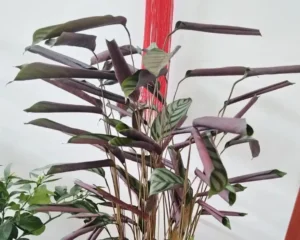
Underwatering: Too Dry, Leaves Conserve Energy
At the other extreme, dry soil leads to both curling and drooping. The edges roll inward like little tubes, and the whole leaf can collapse from dehydration. This often happens in winter heating or summer heat waves when soil dries faster than you expect. The solution is a deep, thorough drink—water until it flows out of the drainage holes, then let the excess drain away. For timing and cues, see how often to water Calathea.
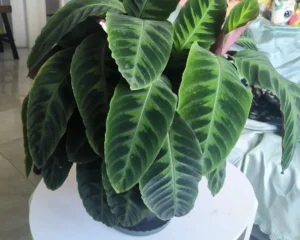
Inconsistent Watering: The Stress of Ups and Downs
Calathea thrives on routine. Watering heavily one week, then forgetting for ten days, puts the plant on a rollercoaster. The leaves may curl one day, droop the next, leaving you unsure what’s really wrong. Inconsistent watering disrupts the plant’s natural day-night leaf movement (nyctinasty). Try to stick to a steady pattern, guided by the soil’s moisture rather than the calendar—this step-by-step routine in how often to water Calathea helps a lot.
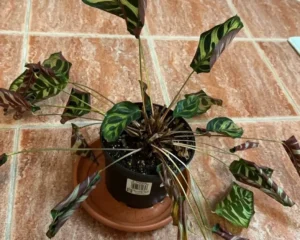
Cold Tap Water: An Invisible Shock
Pouring icy tap water straight into the pot—especially in winter—can shock the roots. The plant often responds with sudden temporary drooping that looks just like underwatering, but it’s really root stress. To avoid this, let tap water sit out until it reaches room temperature, or use filtered or rainwater if your local water is hard or heavily treated.
Underwatering vs. Overwatering Symptoms in Calathea
| Symptom | Underwatering | Overwatering |
|---|---|---|
| Leaf posture | Drooping & curling inward, leaves feel thin and limp | Drooping but not curling, leaves feel heavy and soft |
| Leaf edges | Crispy, dry, or rolled-up edges | Yellowing tips or patches, sometimes mushy |
| Soil condition | Dry, light, pulls away from the pot edges | Consistently wet or soggy, may smell musty |
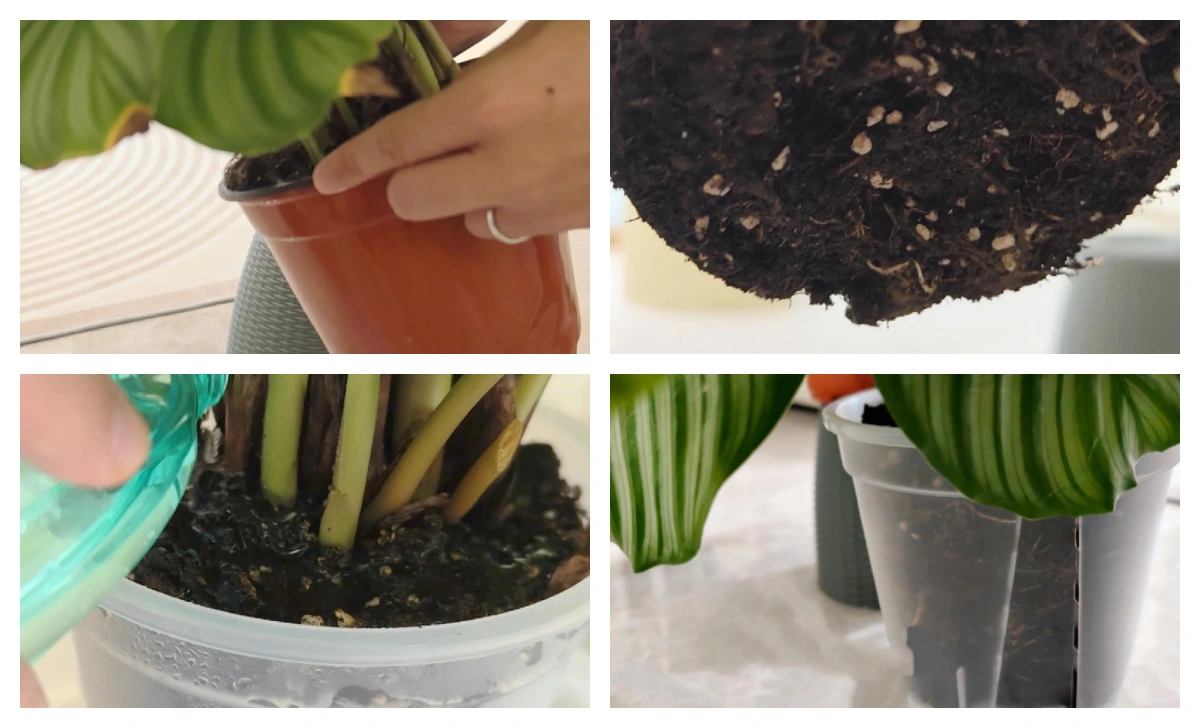
| Pot weight | Feels very light when lifted | Feels heavy, waterlogged |
| Root health | Roots are dry, brittle | Roots may be brown, mushy (sign of rot) |
Other Causes That Look Like Watering Problems
Low Humidity: Dry Air Makes Leaves Curl
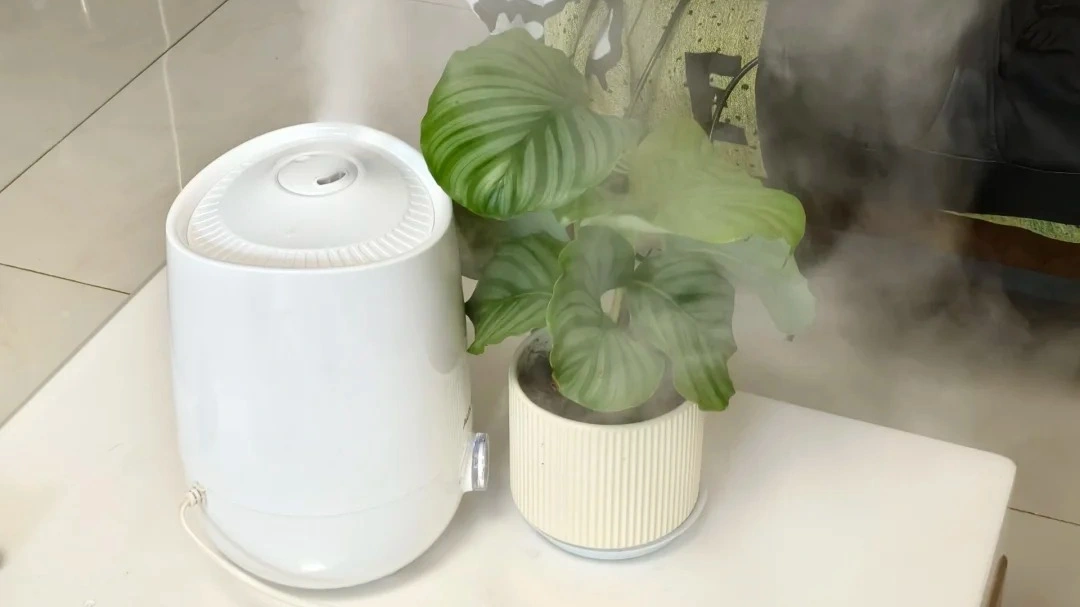
Calatheas love moisture in the air as much as in the soil. When humidity drops—often in winter with heating or in summer with strong AC—the leaves respond by curling tightly inward. This is not always a sign of drought in the soil; it’s the air that’s too dry. Grouping plants, using a pebble tray, or running a humidifier can help restore that lush, flat-leaf look. If you are not sure whether your room is dry enough to justify buying one, see my guide on whether Calatheas need a humidifier.
Temperature Shock: Drafts and Cold Blasts
A sudden blast of cold air from an open window or air conditioner can shock Calathea leaves. The result often looks like drooping, but it’s actually stress from temperature fluctuations. These tropical plants prefer a stable range of 65–80°F (18–27°C). Keep them away from drafty hallways, heaters, or vents where the environment swings too fast.
Natural Night Movement: Not Always a Problem
One of Calathea’s most charming traits is nyctinasty—the leaves move with the day-night cycle. During the day they stand tall and spread wide, but at night they often fold upward or appear to droop. This is completely natural and not a sign of distress. If your plant perks up again in the morning, you’re simply witnessing its daily rhythm, not a watering mistake.
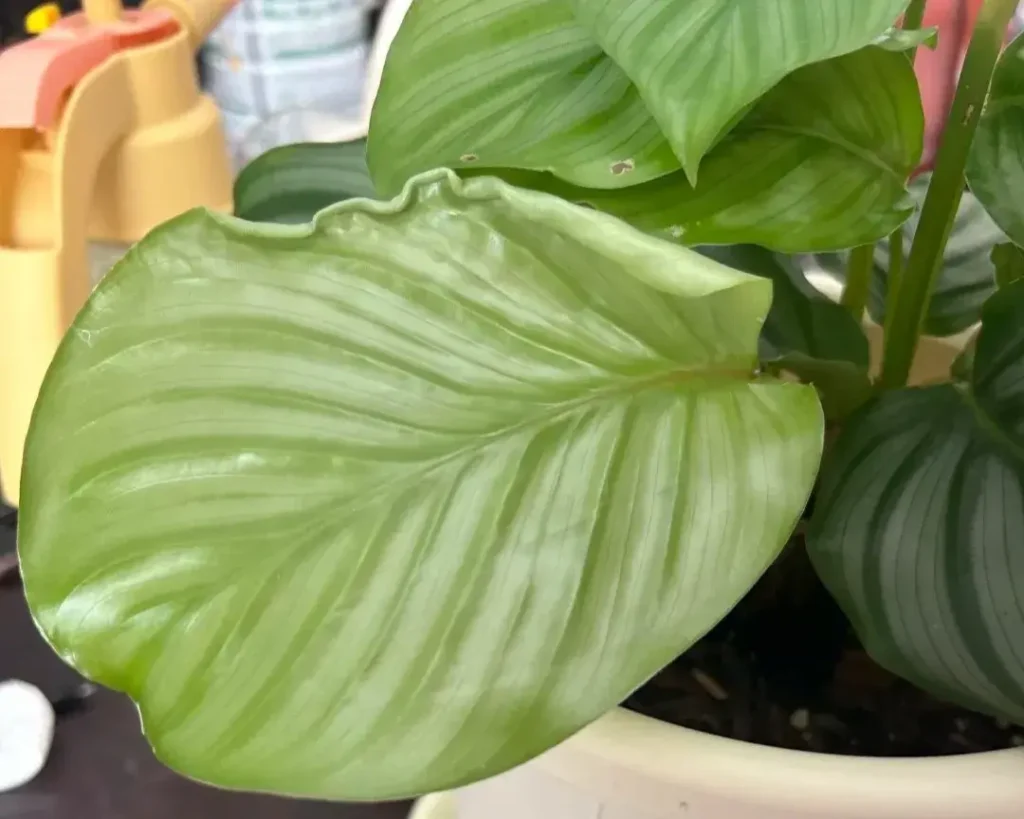
Suspect nutrients are low? Start here: Calathea Yellow & Brown Leaves for quick fixes beyond watering.
How to Diagnose Correctly
When your Calathea’s leaves start curling or drooping, the most important step is to pause and investigate before you react. Watering blindly—whether adding more or cutting back—can make things worse. Here are a few simple checks you can do at home:
1. Finger Test: Check Soil Moisture
Insert your finger about 1–2 inches (2–3 cm) into the potting mix.
- If it feels bone-dry, your plant is likely underwatered.
- If it feels wet or soggy, you’re dealing with overwatering.
This is the quickest and most reliable way to tell what’s happening below the surface.
2. Pot Weight: Light vs. Heavy
Lift the pot gently.
- A pot that feels very light usually means the soil has dried out completely.
- A heavy, waterlogged pot points to excess water.
Over time, you’ll get used to the “normal” weight of a healthy Calathea, which makes this method even easier.
3. Leaf Edge Clues
Look closely at the edges of the leaves:
- Underwatering → crispy, brown, or tightly curled edges.
- Overwatering → yellow patches, soft texture, or limp leaves without curling.
The edges often reveal the story faster than the whole leaf.
4. Smell the Soil
If you notice a musty or sour smell coming from the pot, it’s a warning sign of root rot caused by standing water. Healthy soil should smell earthy and clean—compare with our checklist in Calathea Root Rot Symptoms.
📌 Quick Rule of Thumb
Think of it this way: dry + crispy + light pot = underwatering, while wet + heavy + yellowing leaves = overwatering. Take a moment to diagnose before you water, and you’ll save your Calathea from unnecessary stress.
Fixes & Watering Tips
The good news is that curling or drooping leaves don’t mean your Calathea is doomed—most plants bounce back once you correct their watering routine.
- If underwatered → give a deep, thorough drink and let the excess drain away.
- If overwatered → empty the saucer, loosen compact soil, and let the roots dry slightly before the next watering.
- For consistency → aim for evenly moist soil rather than extremes, and always use room-temperature water.
For a full step-by-step routine, including seasonal adjustments and soil checks, see my complete Calathea watering guide.
My Take on Curling and Drooping Leaves
From my own experience with Calathea ‘Apple Green,’ I’ve learned that small adjustments often make the biggest difference. In winter, I water with only half or even a third of the usual amount to avoid cold, soggy roots. When the air is dry, I slip a clear bag over the plant for a few days or cluster it with other houseplants to raise humidity. And I’ve also stopped panicking when the leaves droop at night—it’s just their natural movement, not a sign of trouble.
The bigger lesson? Curling or drooping leaves are not the end of the world. They’re signals, not sentences. By checking the soil, watering consistently, and keeping the environment steady, your Calathea will usually recover quickly. Every home is different, so the real “secret” is finding a rhythm that fits your space, your seasons, and your plant’s personality. Once you do, your Calathea will reward you with healthy, vibrant leaves.
FAQ
Still worried about your plant?
👉 For more tips on keeping your plant healthy, explore our Complete Calathea Care Guide.
Explore All Problems →