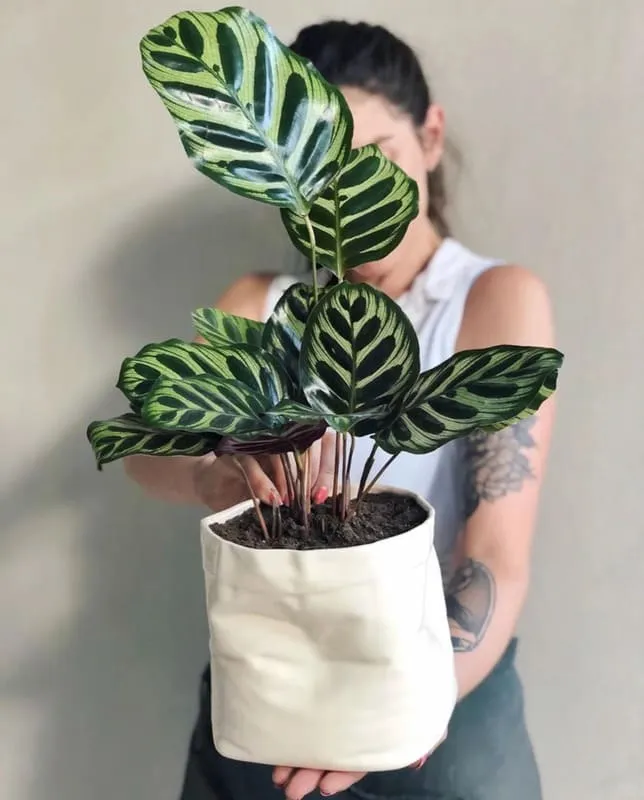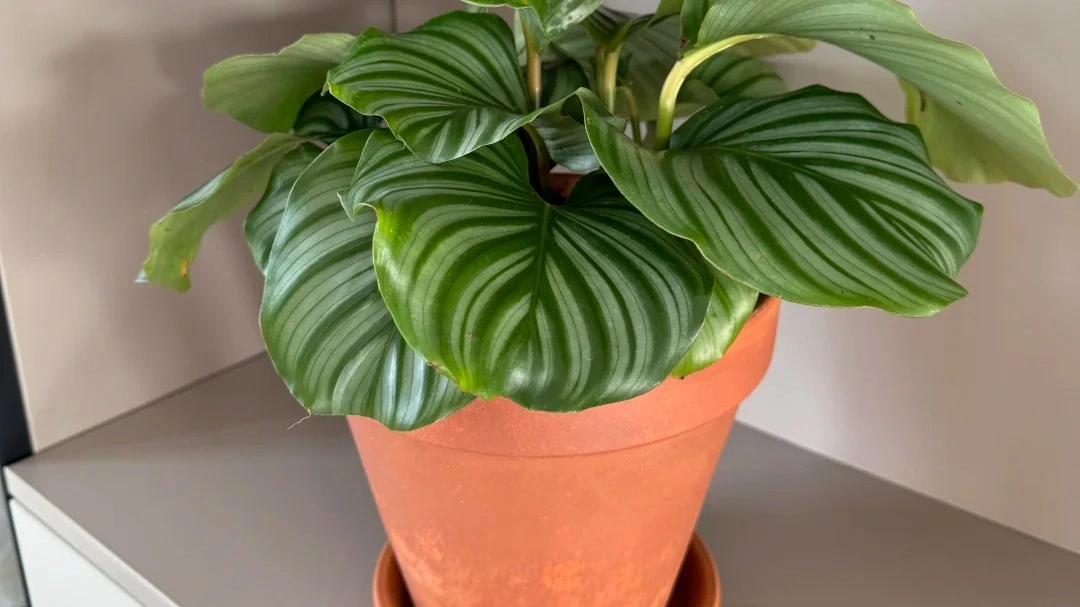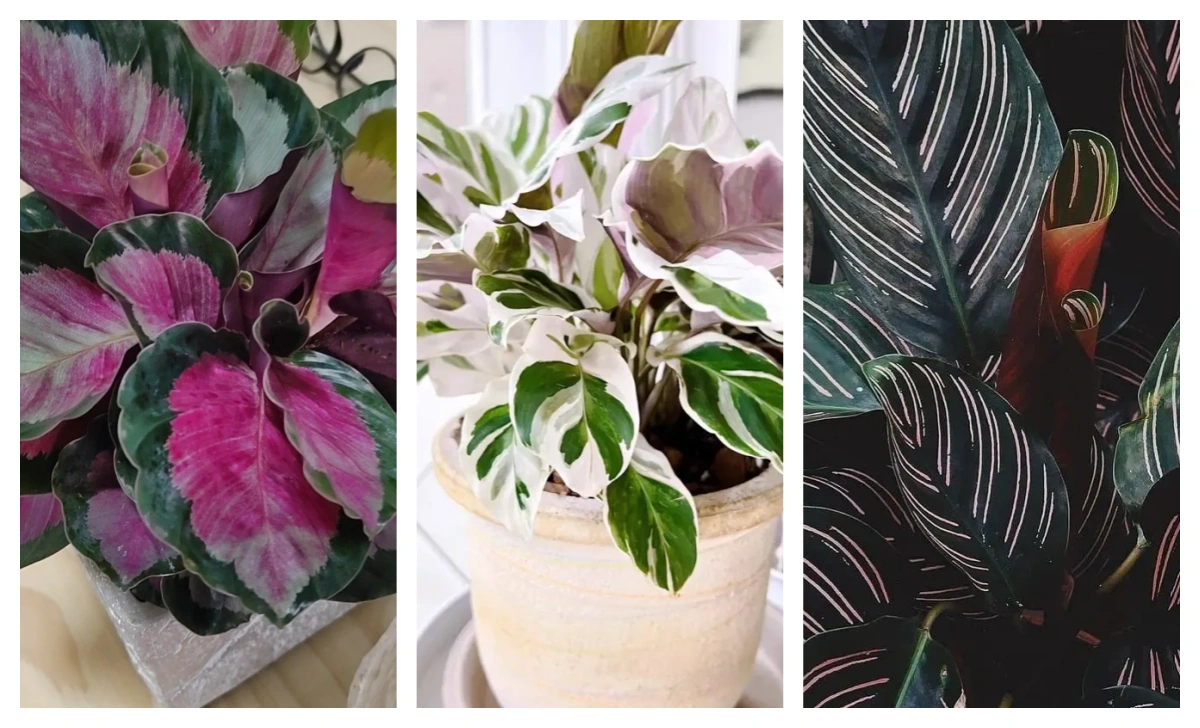
For many plant lovers, the idea of propagating Calathea is both exciting and practical. Who wouldn’t want to turn one lush pot into several—whether to fill your own home with more greenery, save money on new plants, or share a division with friends?
But unlike succulents or pothos, Calathea isn’t a plant you can simply stick in water and expect to root. Its structure is different, and most attempts at leaf cuttings end in frustration. The most reliable way to multiply Calathea is still by division, where you separate part of the root system and grow it into a new plant.
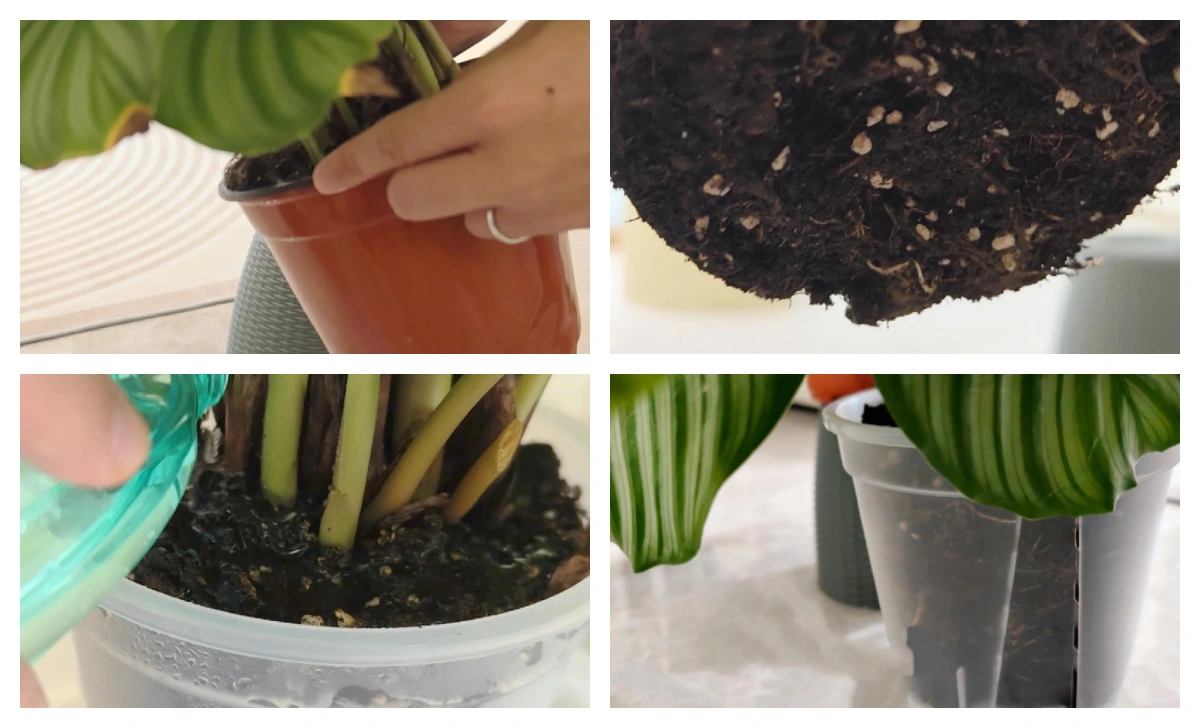
This guide walks you through the methods, conditions, and aftercare you need to know—so you can propagate Calathea with confidence.
The easiest and most successful method to propagate Calathea is division during repotting.
Quick Steps: Divide a Calathea (30-Second Overview)
- Slide it out when the soil is slightly dry (less root breakage).
- Find natural clumps at the base—don’t “invent” a split line.
- Only separate sections with roots + a growth point (not just leaves).
- Repot into airy, moist soil and water once to settle.
- High humidity for 10–14 days, bright indirect light, no fertilizer yet.
Can You Propagate Calathea?
Yes—but not in the same way you might propagate succulents or pothos. Calathea has a different growth structure, which limits the methods that actually work.
When I first tried propagating Calathea, I went straight for the “pothos approach” — single leaves in water. They stayed green and even rooted sometimes, but they never turned into real plants. That was the moment I stopped treating Calathea like a vine and started respecting its clump-based growth.
| Method | Difficulty | Success Rate | Notes |
|---|---|---|---|
| Division | ★★☆☆☆ | High ✅ | Best done during repotting; each clump must have roots + leaves |
| Leaf / Water “Cuttings” | ★★★★☆ | Almost always fails ❌ | A single leaf may stay green or sprout thin roots, but it won’t become a full plant |
| Basal rhizome piece (rare) | ★★★★★ | Low ❓ | Only works if the piece includes a real growth point; slower and easier to rot than division |
👉 In short: if you want consistent results, stick to division. The other methods are more for experiments than reliable propagation.
📌 Want to skip ahead? Jump straight to Method 1: Division (Step-by-Step Guide).
Best Time & Conditions for Propagation
Propagation works best when your Calathea is already in an active growth phase. The ideal window is spring through early summer, when the plant naturally produces new leaves and roots. Many growers also combine propagation with repotting, since the plant is already out of its pot and easier to divide.
To maximize your success rate, keep an eye on the environment:
- Temperature – Aim for 22–28°C (72–82°F). Calathea struggles to root in cooler conditions, and success rates drop sharply below 18°C.
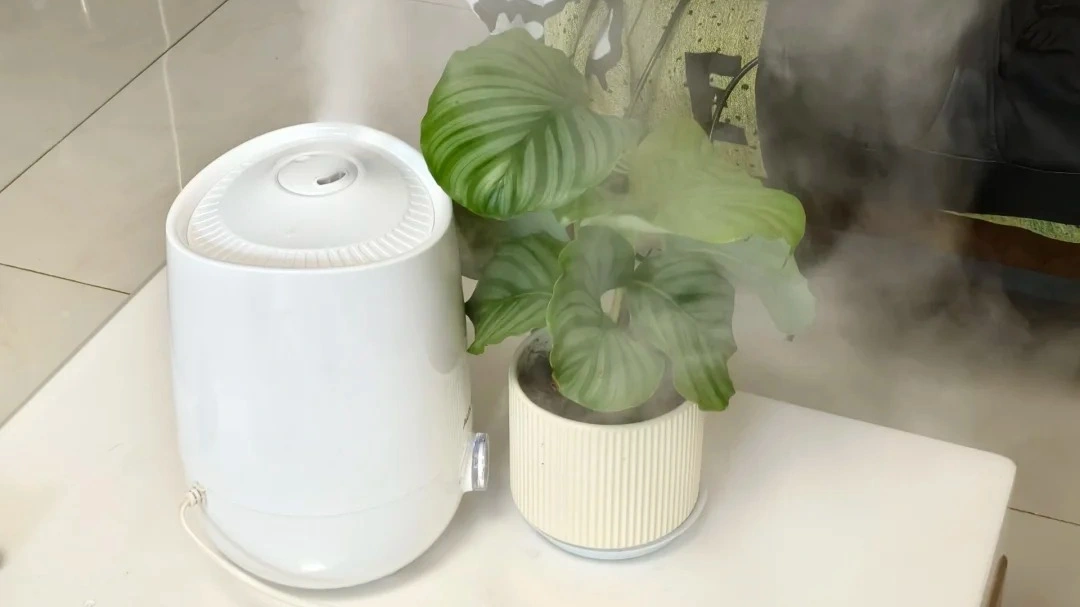
- Humidity – I only get stable recovery when humidity stays above ~60% for the first 10–14 days — otherwise the divisions droop and stall. See the full Calathea Humidity Guide.
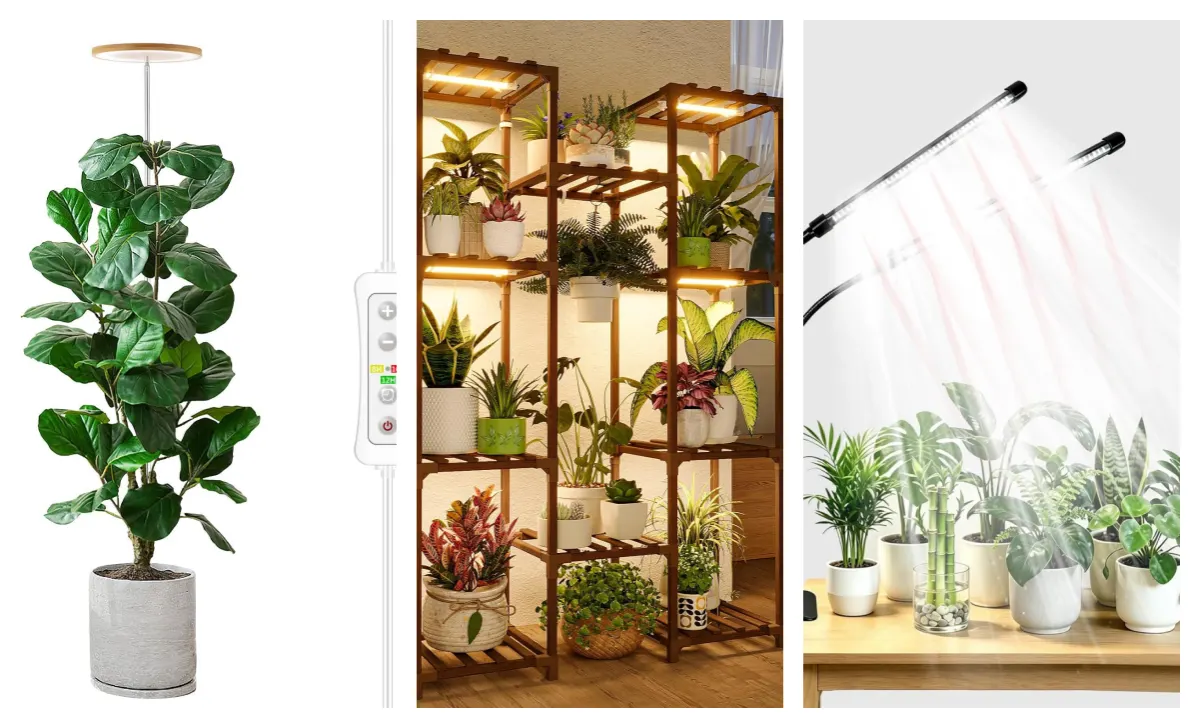
- Light – Place new divisions in bright, indirect light rather than shade or direct sun, which can either slow recovery or burn tender leaves. Learn the details in Calathea Light Requirements.
⚠️ Avoid propagating during winter or dormancy. Growth slows, the soil takes longer to dry, and divisions are much more prone to rot.
Method 1: Division (Most Reliable)
Division is by far the most effective and beginner-friendly way to propagate Calathea. It works because you’re not forcing the plant to grow roots from scratch—you’re simply giving each new clump its own set of roots and leaves.
Here’s how to do it:
| Step | Action | Pro Tip |
|---|---|---|
| 1. Remove the plant | Take the Calathea out of its pot and gently shake or brush off some of the old soil. | Do this when the soil is slightly dry—it’s easier to separate without damaging roots. |
| 2. Find natural divisions | Look for spots where the root system naturally separates. Cut carefully with a clean knife if needed. | Each section should have at least 4–5 healthy leaves and roots. |
| 3. Repot the divisions | Place each clump into a new pot with fresh, well-draining Calathea mix. Water thoroughly. | Don’t pack the soil too tightly—roots need airflow. |
| 4. Recovery period | Keep the new plants in a semi-shaded, humid environment for about 2 weeks. | Avoid fertilizing until the divisions show new growth. |
| 5. Return to normal care | Once established, resume your regular watering and feeding routine. | Check our Best Soil for Calathea guide for the ideal mix. |
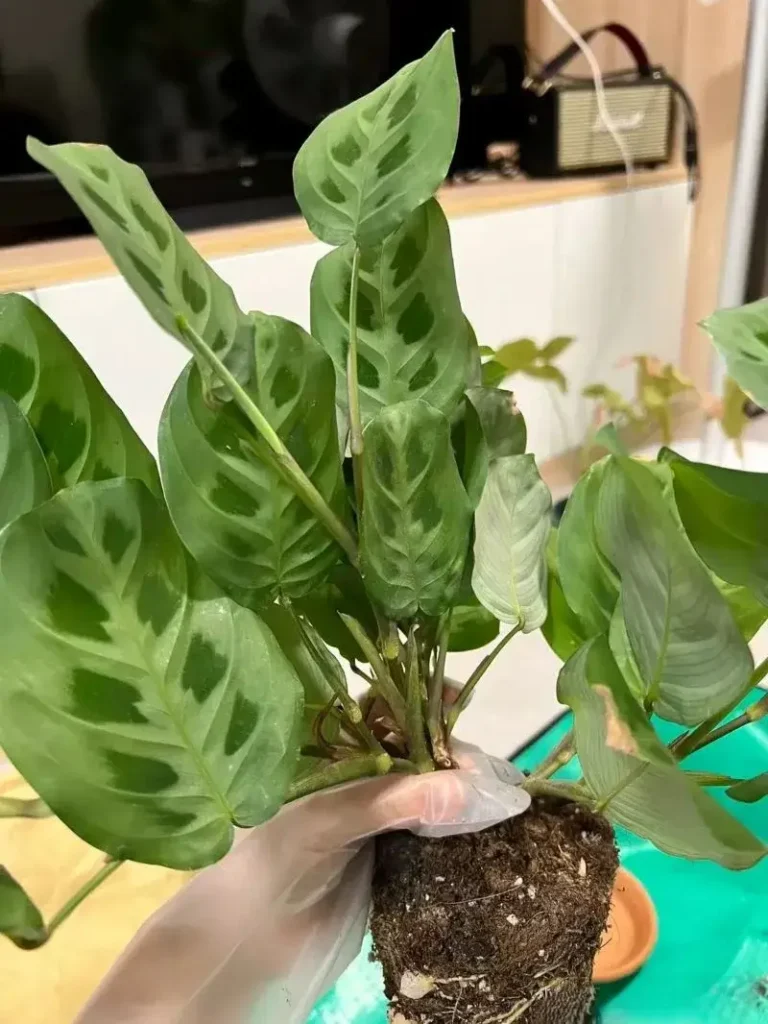
Step 1: Remove the plant from its pot
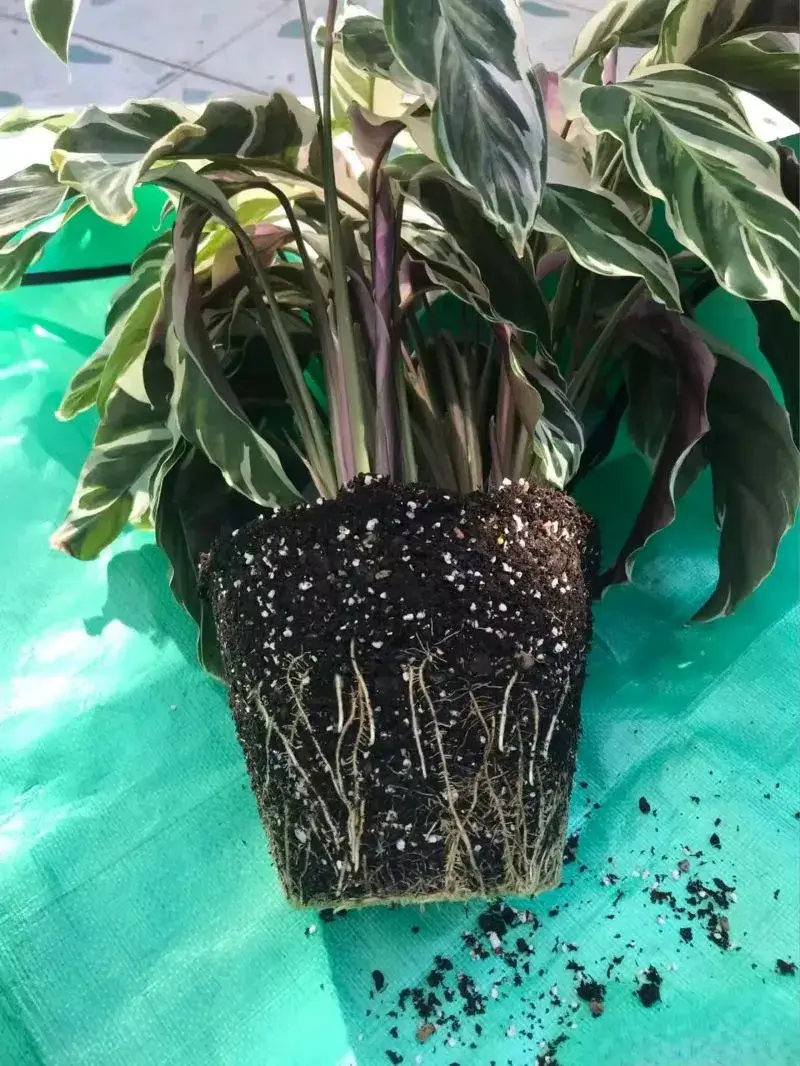
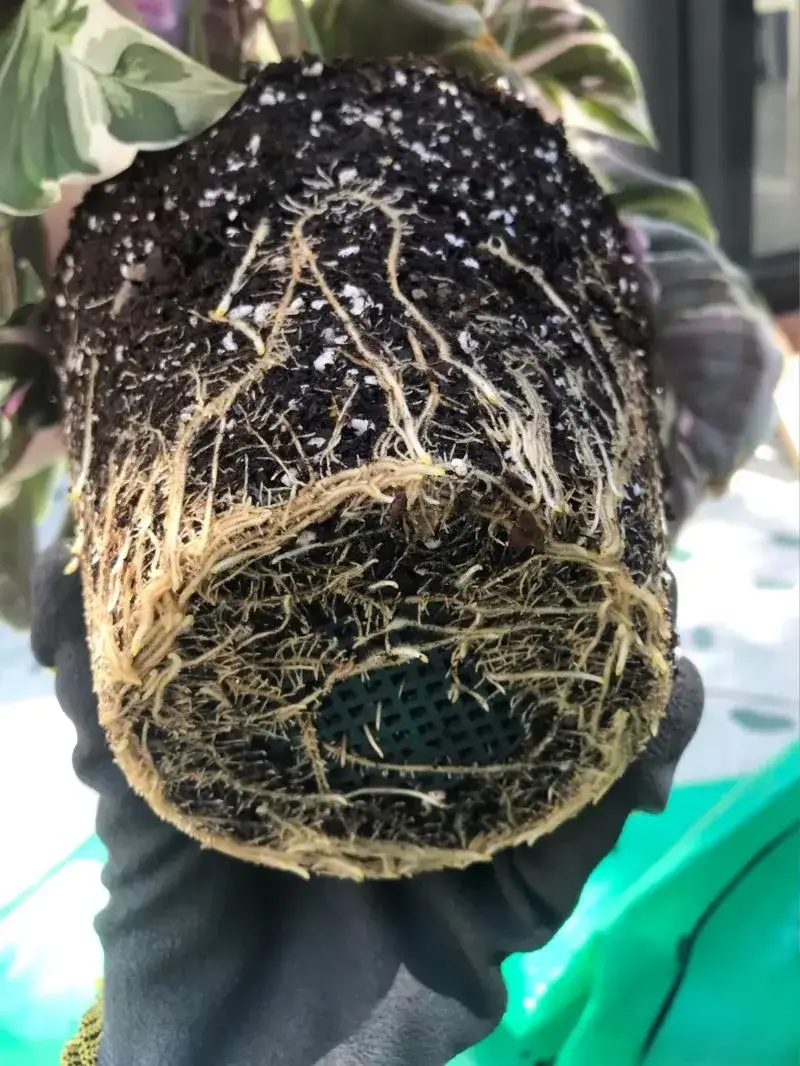
Step 2: Check for natural divisions
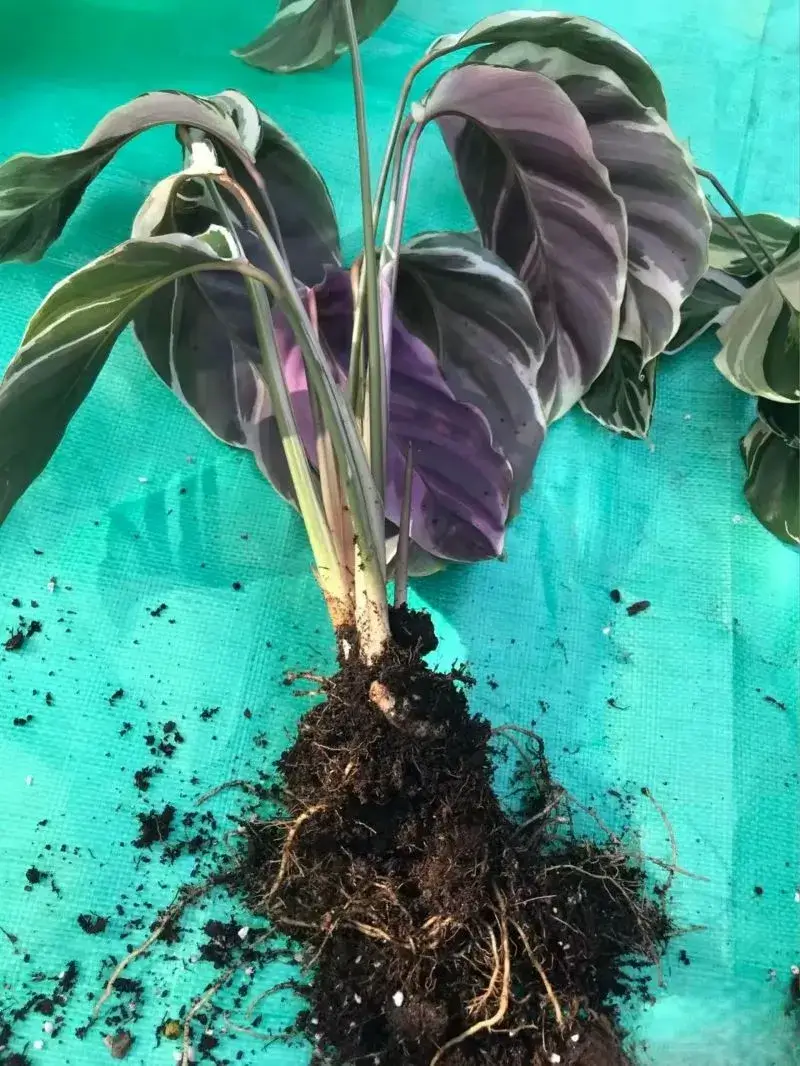
Step 3: Separate the clumps
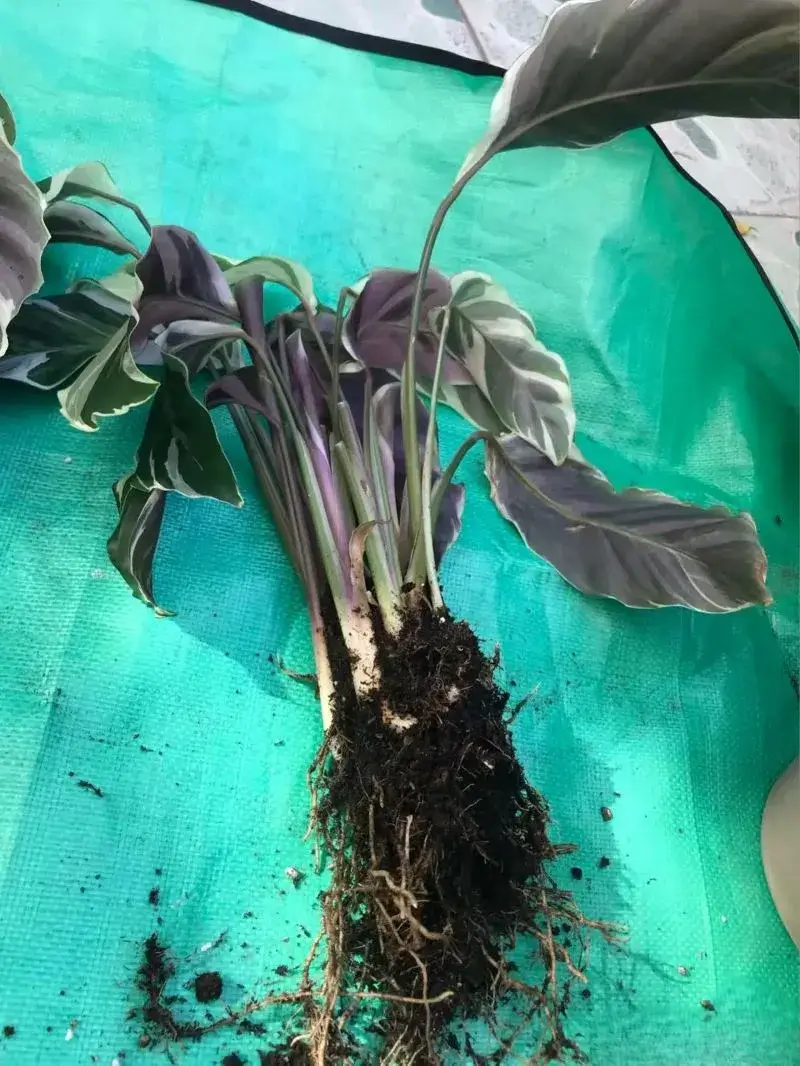
Step 4: Prepare new pots
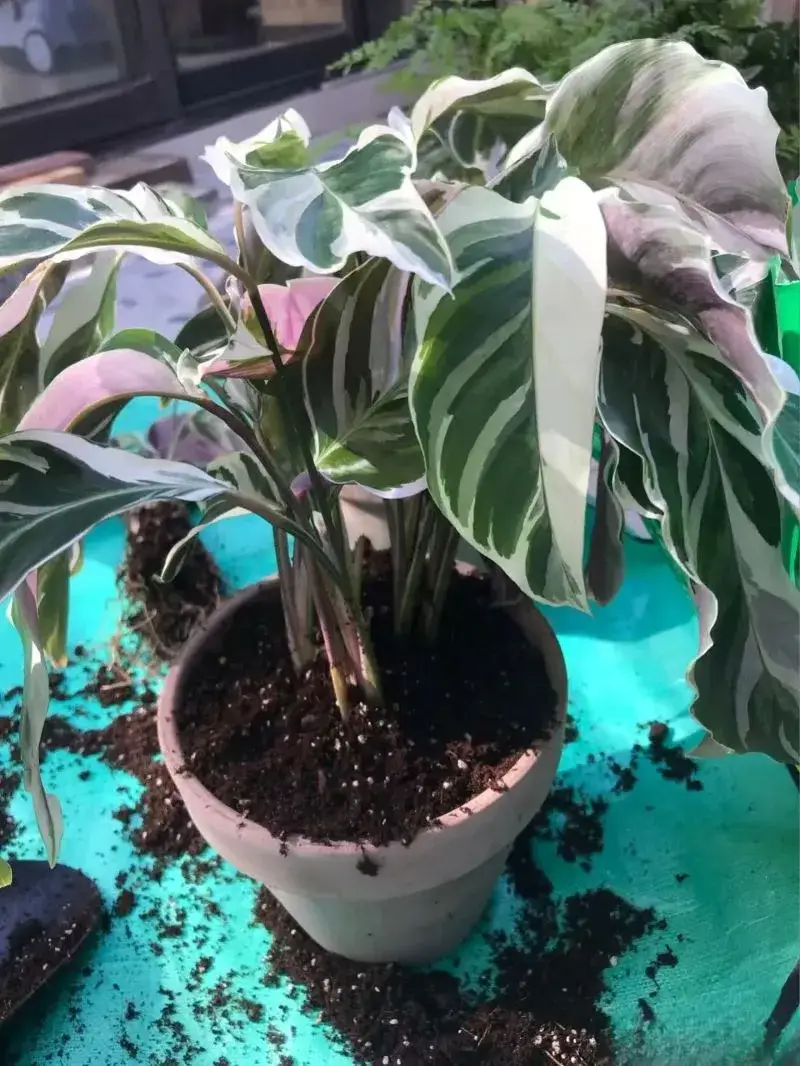
Step 5: Repot the divisions
⚠️ Remember: Dividing can be stressful for the plant, so don’t overdo it. If your Calathea is small, wait until it’s big enough to handle being split. Need a stable recovery environment? Follow the humidity checklist in our Calathea Humidity Guide.
Why Other Methods Usually Fail (Cuttings + Tissue Culture)
If you’ve ever searched “Calathea propagation,” you’ve probably seen people trying water cuttings or single-leaf experiments. The problem is that Calathea doesn’t have the same growth structure as pothos or philodendron. Most “successful” cuttings stall later — not because you did it wrong, but because the plant simply can’t rebuild itself from a leaf the way vine plants can.
1) Single leaves almost always fail
A single Calathea leaf may stay green for a while, and sometimes it even produces thin roots in water — but it rarely becomes a real plant. Without a true growth point (a node/rhizome piece), there’s nothing that can reliably produce new shoots. In most home setups, the leaf eventually declines once its stored energy runs out.
2) “Stem cuttings” only work if they include a real growth point
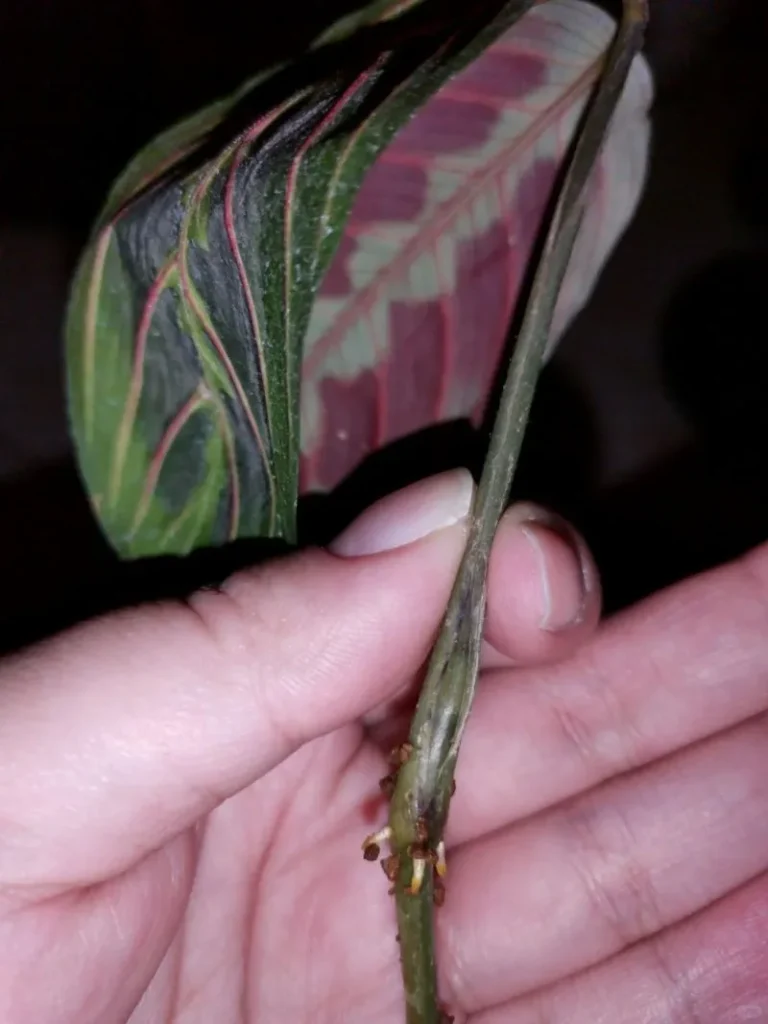
People say “stem cuttings,” but what they really mean is taking a piece from the plant’s base that includes a node/rhizome growth point. If you cut too high (above the base), you usually end up with foliage that can’t restart. Even when it works, it’s slower, less predictable, and easier to rot than division.
👉 If your goal is consistent success (especially indoors), division is still the only method with a high success rate because each new clump already has roots + leaves.
3) Tissue culture is a lab method, not a home method
Tissue culture works great commercially because it uses sterile conditions and controlled hormones to regenerate plants from tiny tissue samples. But at home, it’s not realistic — contamination is common, and the equipment requirements are beyond normal indoor growing setups. For hobbyists, it’s best treated as something nurseries do, not a practical propagation option.
How to Choose a Real Division (What Actually Survives)
Not every section of a Calathea can survive on its own. When people say “divide the plant,” the mistake is often assuming that any cluster of leaves will grow if it has some roots attached. In reality, a real division is defined by its growth structure — not by leaf count alone.
Over time, I learned to look for a few specific signs before separating anything. If a section doesn’t meet most of these conditions, I leave it attached and wait for the next repot.
- A natural clump at the base – Healthy Calatheas grow in distinct clumps. A real division usually separates with gentle pressure where the plant already wants to split.
- Its own root mass – You should see multiple healthy roots attached to that clump, not just one or two thin strands.
- At least 4–5 mature leaves – This isn’t a hard rule, but divisions with fewer leaves struggle to balance water loss before new roots establish.
- A visible growth point – New shoots, rolled leaves, or firm stem bases near the soil surface are strong indicators that the division can continue growing.
One of the easiest traps is mistaking a leafy top for a viable division. Leaves alone don’t store enough energy, and sections without a true growth point often stall or slowly decline after being separated.
When in doubt, I always choose to split less, not more. A Calathea divided into two strong plants almost always recovers better than one chopped into three or four weak ones.
👉 If a section doesn’t look like it could stand on its own for a few weeks, it probably can’t. Waiting one more growing season is usually safer than forcing a division too early.
When I don’t divide (even if I really want to)
- The clump is “leafy but light” — lots of leaves, but only a few thin roots.
- No obvious growth point — no new spear, no rolled leaf, no firm basal node.
- The plant is already stressed (recent move, winter slowdown, or recovering from droop/yellowing).
If I can’t picture that section surviving on its own for two weeks in a humid corner, I leave it attached and wait for the next growing season.
Aftercare for New Plants
Propagation is only half the journey—how you care for the new divisions will decide whether they thrive or fail. Calathea can be sensitive after being separated, so gentle aftercare is essential.
- Moist but not soggy – Keep the soil evenly damp, never waterlogged. High humidity (60–80%) is especially important in the first weeks. A clear cover, mini greenhouse, or humidifier can help prevent stress.
- No fertilizer yet – Hold off on feeding for the first 4–6 weeks. Fresh roots are delicate and can easily burn from added nutrients.
- Indirect light only – Place the new pots in bright, indirect light to support recovery. Direct sun will scorch fragile leaves.
For more details on creating the right environment, check out:
Common Problems During Propagation
Even with the right method, new Calathea divisions often look stressed in the first few weeks. Don’t panic—some issues are part of the normal recovery process, while others signal that conditions need adjusting.
| Symptom | Likely Cause | What to Do |
|---|---|---|
| Leaves drooping | New roots not established yet | Normal during the first 1–2 weeks; keep humidity high and avoid moving the plant. |
| Yellow leaves | Root damage during division, or too much water | Trim damaged leaves, reduce watering slightly, and ensure the soil drains well. |
| Root rot | Soil staying wet for too long | Repot into a lighter mix and improve drainage. See our full guide: Calathea Root Problems. |
⚠️ The key is patience. A Calathea may look worse before it looks better, but with stable humidity and indirect light, most divisions bounce back.
What I Learned (After Failing More Than Once)
When I first tried propagating Calathea, I was stubborn—I wanted to see if a single leaf could grow into a new plant. It rooted, yes, but without enough storage tissue, it quickly failed. Later, I experimented with stem cuttings that included a node, and a few of those managed to push out new growth. Still, the process was slow and unpredictable.
Over time, I realized that division is the most reliable path. Each clump already has roots and leaves, giving it a strong start. But more than the method itself, what really made the difference was the environment—keeping the right temperature and humidity mattered far more than the cut of a knife.
🌱 In the end, successful propagation isn’t about chasing a secret trick. It’s about matching the method to your plant’s biology and your home’s conditions. Get those right, and your Calathea will reward you with new life.
Have you ever tried propagating Calathea? Which method worked best for you — division, cuttings, or maybe something else?
FAQ
Still have more Calathea problems?
Curling and drooping are just the beginning. From yellow leaves to root rot, we’ve put together a full guide to every common Calathea issue.
Explore All Problems →