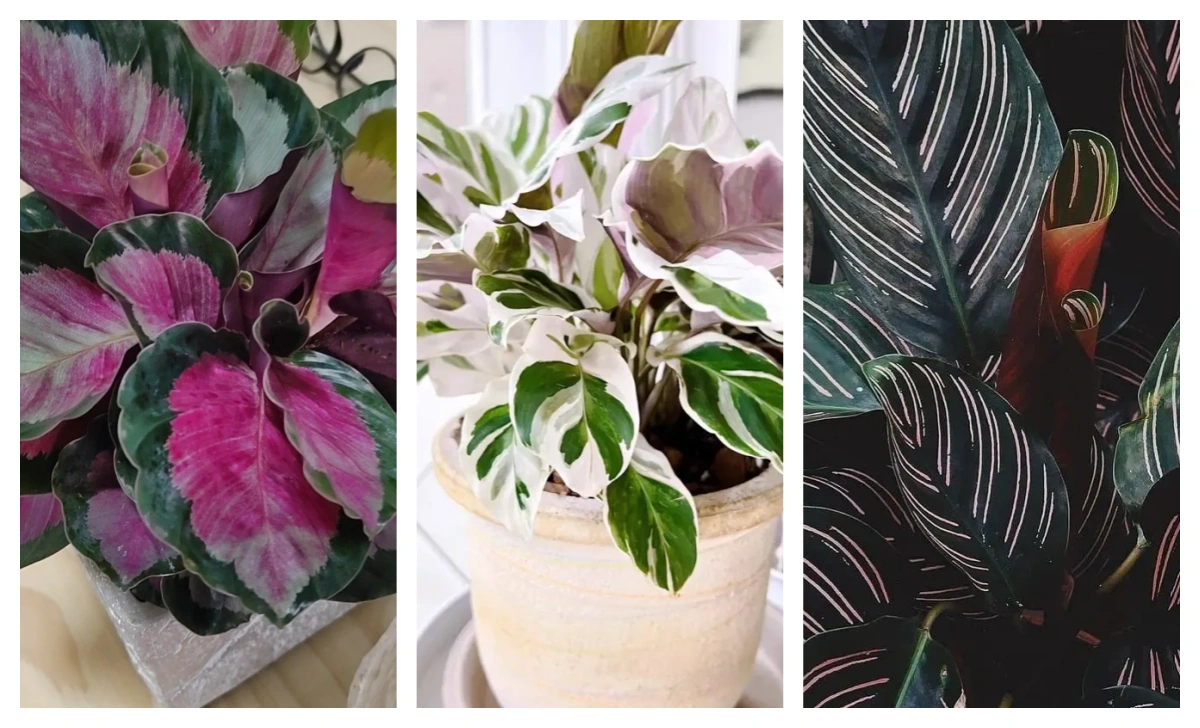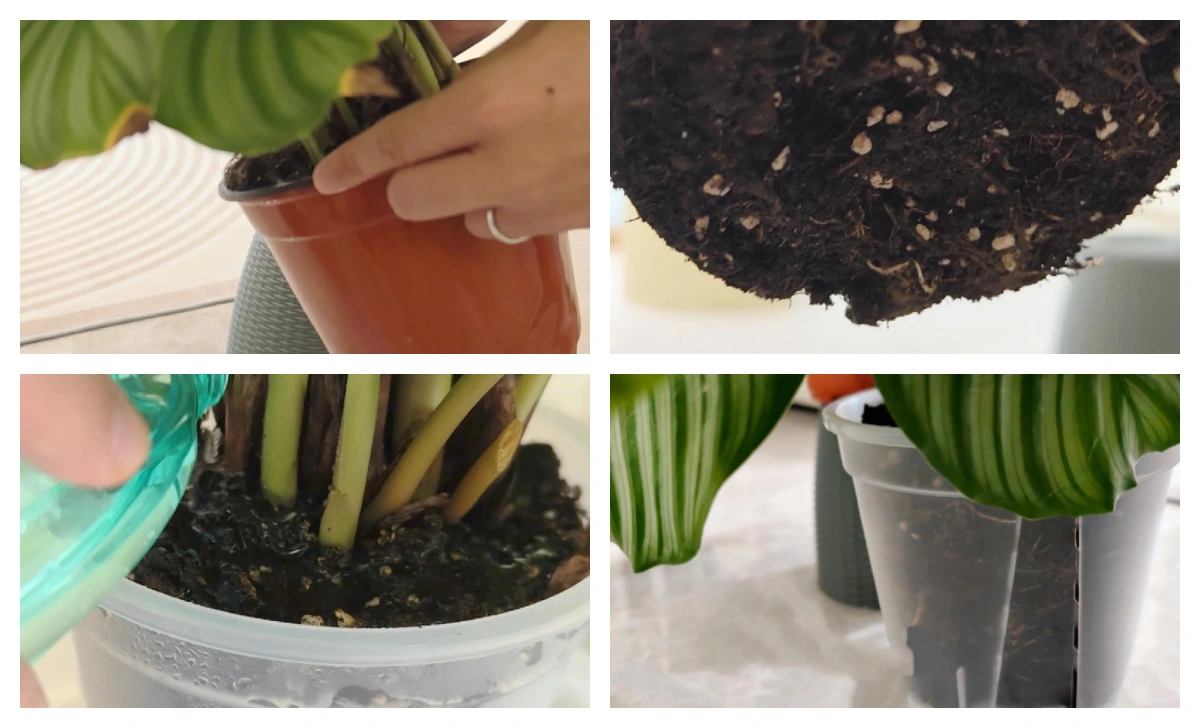
I would rather underfeed a Calathea than overfeed it. These plants can benefit from fertilizer, but they do not need strong feeding to look good indoors.
For me, the best fertilizer for Calathea is not the strongest one. It is a gentle fertilizer I can dilute, control, and stop using quickly if the plant starts showing stress. If the light, watering, soil, or roots are not stable yet, fertilizer is not the first fix.
This guide is how I choose fertilizer for indoor Calatheas: what I would buy first, what I would use carefully, how often I would feed, and when I would skip fertilizer completely.
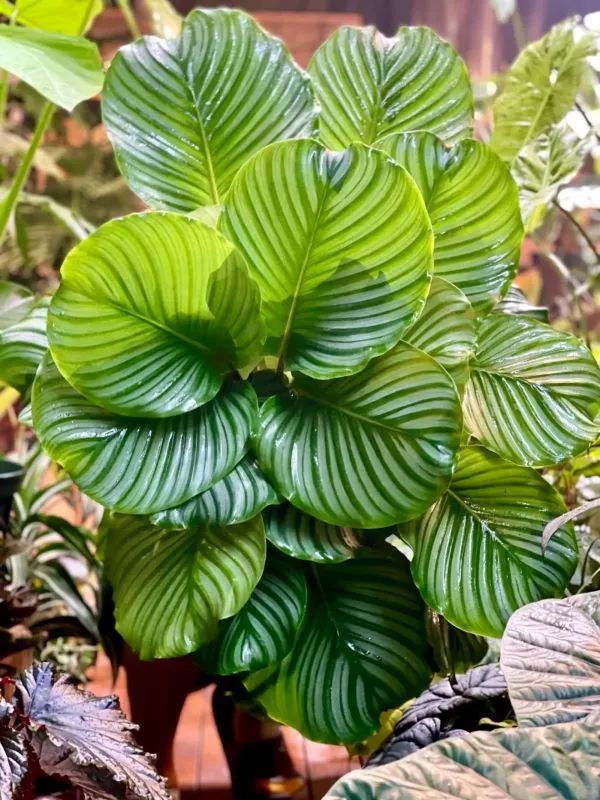
This page may include affiliate links, but I only mention fertilizer types I would actually consider for indoor Calatheas.
Quick Answer: What Fertilizer Is Best for Calathea?
For most indoor Calatheas, I would choose a gentle, balanced liquid fertilizer and dilute it weaker than the label suggests. I would only feed when the plant is actively growing, and I would reduce or pause fertilizer in winter, low light, or when the roots are stressed.
I would not use strong fertilizer to “fix” yellow leaves or crispy edges before checking watering, soil, light, and root health first.
| Plant Situation | What I Would Use |
|---|---|
| Healthy Calathea actively growing | Diluted balanced liquid fertilizer |
| New or recently repotted Calathea | Wait before fertilizing |
| Weak roots or yellowing plant | Fix care first, do not fertilize yet |
| Winter or low-light room | Reduce or pause feeding |
| Beginner grower | Gentle liquid fertilizer at weak strength |
| Plant already has crispy tips | Be careful; do not increase fertilizer |
What I Would Buy First
If I were buying fertilizer for one or two indoor Calatheas, I would keep it simple. I would start with one gentle liquid fertilizer, use it lightly, and avoid buying several products before I understand how the plant responds.
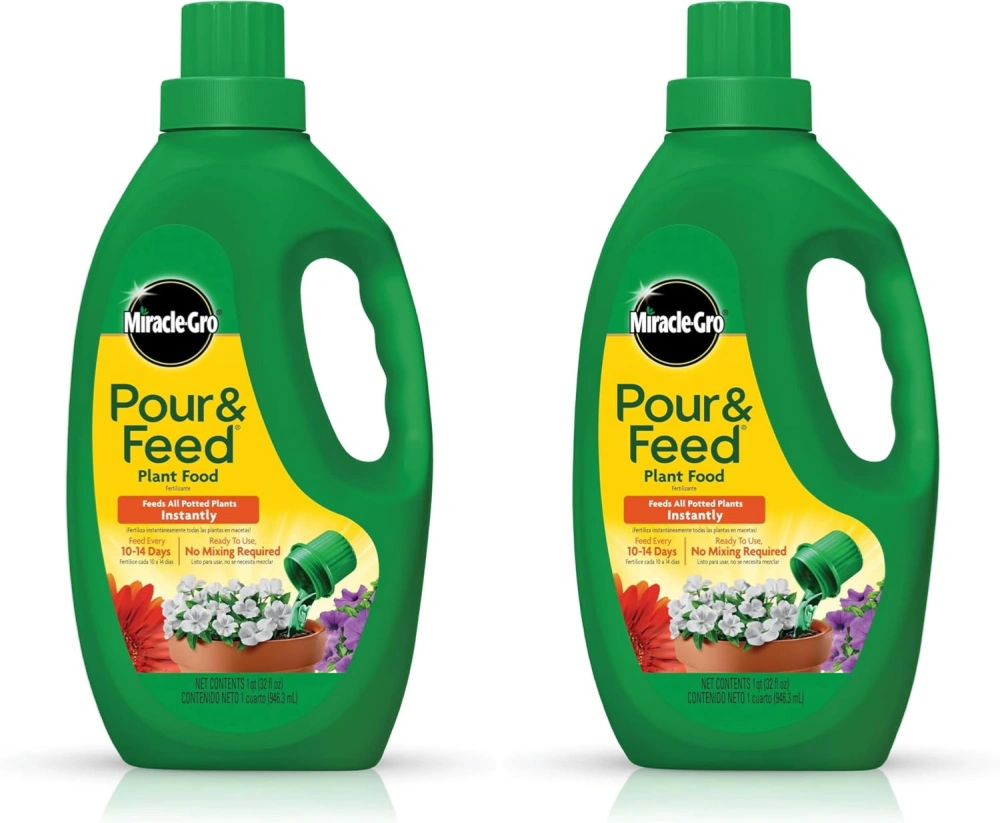
Gentle Balanced Liquid Fertilizer
Best for:
Healthy Calatheas that are actively growing indoors.
My note:
I would dilute it weaker than the label suggests. Gentle feeding is safer than strong feeding for Calathea.
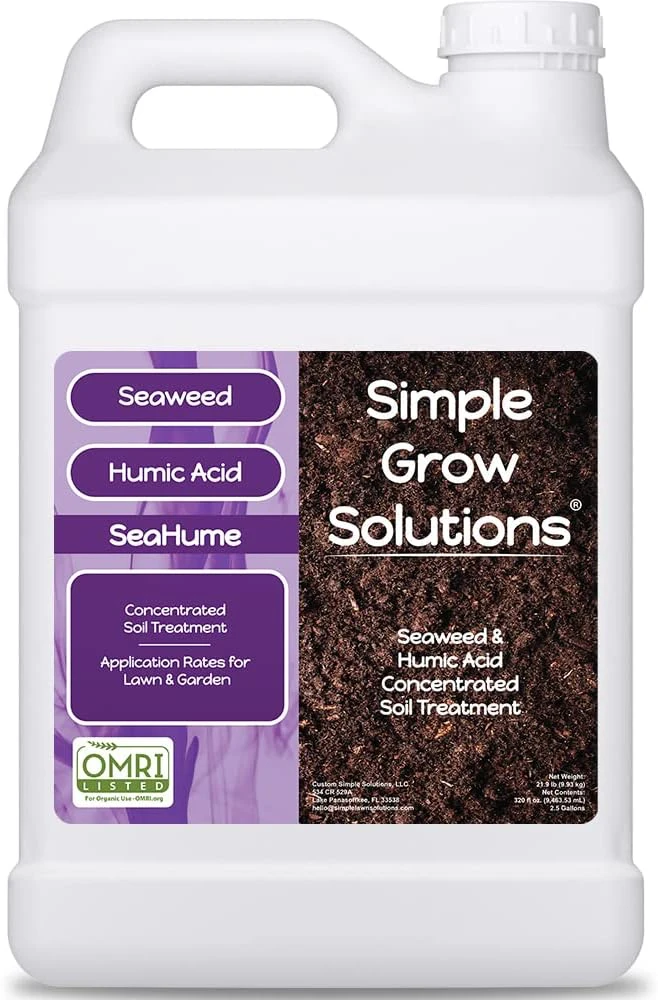
Seaweed or Gentle Organic Fertilizer
Best for:
Growers who want a mild feeding option for stable, actively growing plants.
My note:
Organic does not mean impossible to overdo. I would still dilute it and use it lightly.
If I had to choose only one, I would start with a gentle liquid fertilizer. It gives me the most control because I can dilute it, use it less often, or stop completely if the plant reacts badly.
What Actually Matters in a Calathea Fertilizer
When I choose fertilizer for Calathea, I do not focus only on the NPK number. I care more about whether the fertilizer is gentle, easy to dilute, and safe to use lightly indoors.
Gentle Is Better Than Strong
Calatheas are not heavy feeders. A strong fertilizer can create more problems than benefits if the plant is already stressed, growing in low light, or sitting in slow-drying soil.
Dilution Matters More Than the Brand
The same fertilizer can be safe or risky depending on how strongly I mix it. For Calathea, I usually prefer 1/4 to 1/2 strength rather than using the full label dose right away.
Timing Matters
I would fertilize only when the plant is actively growing and care conditions are stable. If the plant has no new leaves, weak roots, or winter low light, I would wait.
Fertilizer Does Not Fix Bad Care
If the light is too weak, the soil stays wet, or the roots are damaged, fertilizer will not fix the real problem. It may even make stress show faster through brown tips or root burn.
Fertilizer Types I Would Actually Consider
I would not buy every fertilizer type for Calathea. For indoor growing, I only want options that are easy to control and easy to stop if the plant reacts badly.
| Fertilizer Type | How I Would Use It | My Caution |
|---|---|---|
| Balanced liquid fertilizer | My safest default for healthy, actively growing Calatheas | Dilute weaker than the label at first |
| Seaweed or gentle organic fertilizer | A mild option for stable plants | Still use lightly; organic does not mean risk-free |
| Slow-release fertilizer | Use carefully, usually not my first choice for beginners | Harder to control in low light or slow-drying soil |
| High-nitrogen foliage fertilizer | Only for healthy plants in active growth | Too much can cause tip burn or weak growth |
| Bloom booster or strong specialty fertilizer | I would usually skip this for Calathea | Calatheas are grown for foliage, not heavy flowering |
My main choice would be a diluted liquid fertilizer. It gives me the most control, especially indoors where light, temperature, and soil drying speed change through the year.
Fertilizer also works best when the root zone is healthy. If your soil stays wet for too long, start with my best soil for Calathea guide before increasing fertilizer.
How I Would Fertilize Calathea Indoors
For most indoor Calatheas, I would keep the routine simple. I would rather feed lightly and occasionally than follow a complicated fertilizer schedule that is hard to maintain.
During active growth, I would fertilize lightly about once every 4–6 weeks, depending on light, temperature, and how fast the plant is actually growing. In winter or low light, I would reduce feeding or pause completely.
| Season or Plant Condition | How I Would Feed |
|---|---|
| Spring or summer with active new growth | Weak liquid fertilizer every 4–6 weeks |
| Plant growing slowly but care is stable | Very weak dose, used less often |
| Winter or low-light room | Reduce or pause fertilizer |
| Recently repotted plant | Wait several weeks before feeding |
| Stressed or root-damaged plant | Do not fertilize yet |
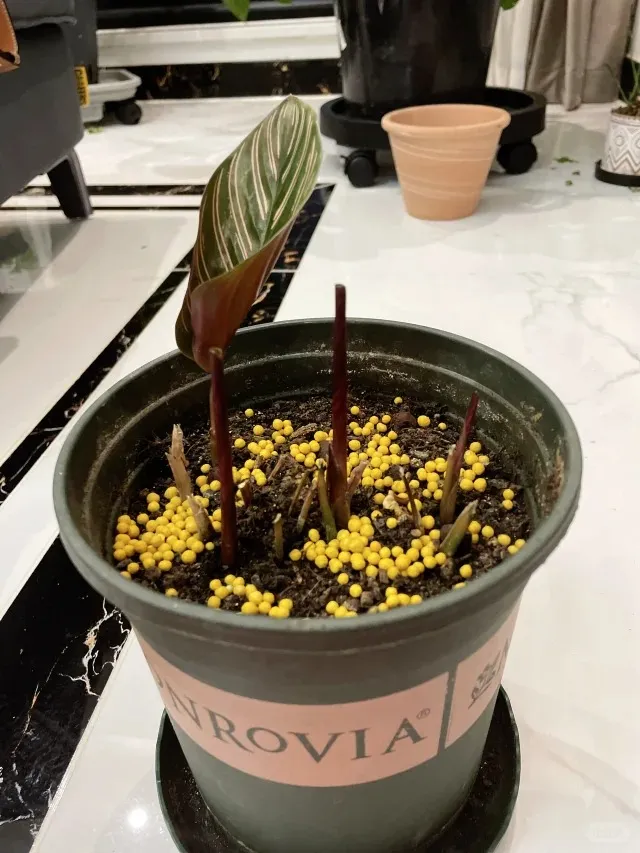
If I am unsure, I check for active new growth first. No new leaves usually means I can wait. A Calathea that is not actively growing does not need me to push it with fertilizer.
Watering also changes how safe fertilizer feels. If the soil stays wet for a long time, I would fix the watering rhythm first. My Calathea watering guide explains how I adjust watering indoors.
Signs of Over- and Under-Fertilization
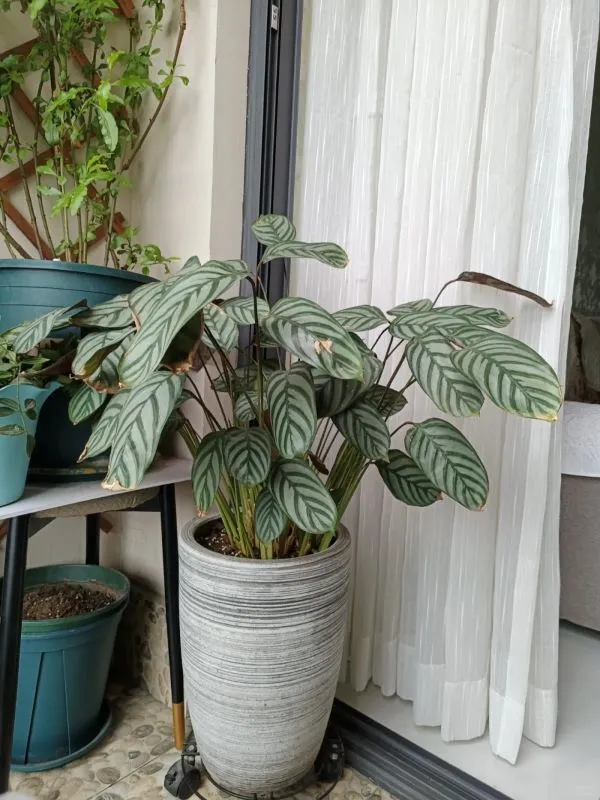
Fertilizer problems are easy to misread on Calathea. Brown tips, dull leaves, and slow growth can come from fertilizer, but they can also come from water, light, soil, or root stress. I would look at the whole setup before assuming the plant simply needs more food.
Common Symptoms
| Condition | What You’ll Notice | What It Means |
|---|---|---|
| Under-fertilization | Leaves look dull, faded, or lose their vibrant patterns. Growth slows or stops. | Your plant isn’t getting enough nutrients to support new foliage. |
| Over-fertilization | Leaf tips turn brown and crispy, white crust (salt buildup) appears on the soil surface. | Excess fertilizer is burning the roots and stressing the plant. |
How to Fix Fertilizer Issues
- If underfed: Gradually introduce diluted fertilizer (start at 1/4–1/2 strength). Don’t try to “catch up” by giving a strong dose all at once.
- If overfed: Flush the soil thoroughly with plain water—a process called leaching—to wash out built-up salts. Repeat a few times over the next week if needed.
- Going forward: Always dilute liquid fertilizer and feed less often if you’re unsure. Calathea responds better to a gentle, steady supply than to sudden surges.
💡 Tip: If the problem persists after adjusting fertilizer, check your watering habits or soil mix—nutrient issues can sometimes overlap with root health problems.
👉 Read next: Calathea Root Problems — nutrient burn and root rot often overlap.
My Rule: Feed Less Than You Think
My own rule with Calathea is simple: I would rather feed too little than too much. If the plant has decent light, healthy roots, steady moisture, and new growth, a little fertilizer can support it.
If the plant is already stressed, fertilizer is not the first thing I reach for. I check the roots, soil, watering, and light before adding anything stronger.
For me, the best fertilizer for Calathea is the one I can use lightly and safely indoors. Strong feeding may sound tempting, but gentle, consistent care usually gives better results.
FAQ
Still Working on Your Calathea Care Routine?
A gentle fertilizer can support healthy Calathea growth, but it cannot replace good basic care. If the plant is still struggling with watering, light, humidity, or soil, I would fix those parts first before feeding more.
For the full care routine, start with my complete Calathea care guide.