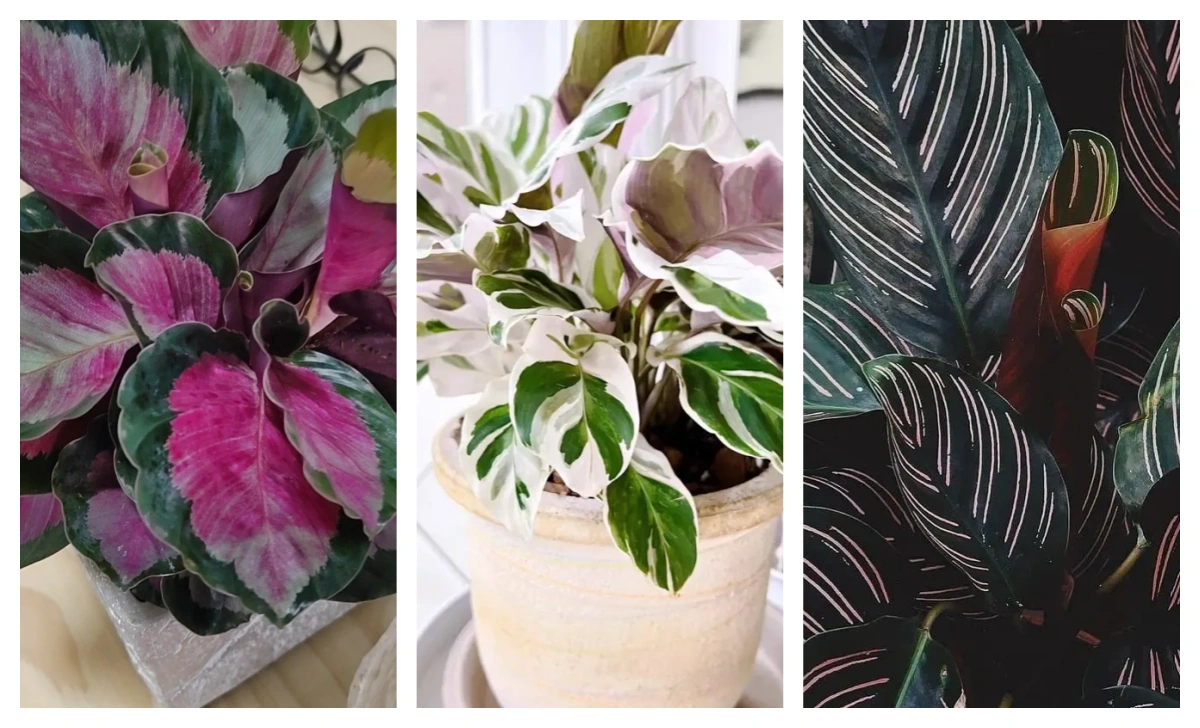
Calathea are loved for their rhythmic bursts of new leaves, often unfurling in a dramatic spiral that feels like a reward for good care. But sometimes, your plant looks healthy enough—green leaves, no major damage—yet it simply seems to stop growing.
Quick reality check: Most “no growth” cases are a stall, not a death spiral. If the stems feel firm, the crown isn’t soft or smelly, and the newest growth point isn’t turning mushy, your plant is usually just waiting for better conditions—not failing.
This guide focuses on stalling (no new leaves / not getting fuller). If you’re seeing curling, brown edges, spotting, or yellowing, those are separate issues—use the linked guides below.
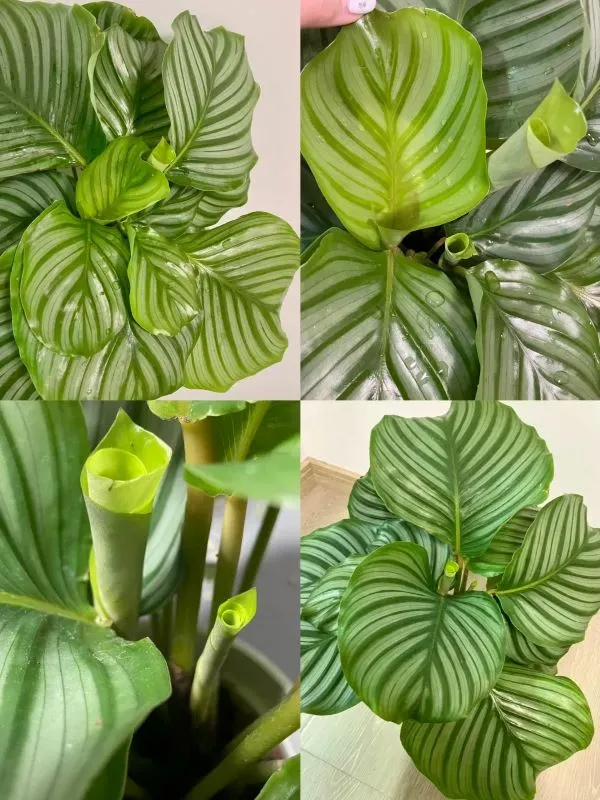
When we talk about “not growing,” it usually falls into two scenarios:
- No new leaves are appearing, even after weeks of waiting.
- The plant isn’t getting taller or fuller, even though leaves are still present.
It’s important to note that this article will focus only on these “stalling” issues. If your Calathea shows leaf curling, brown edges, or spotting, those are signs of other health problems. For those cases, check out our guides on Calathea Yellow Leaves, Calathea Root Rot, and Calathea Sunburn.
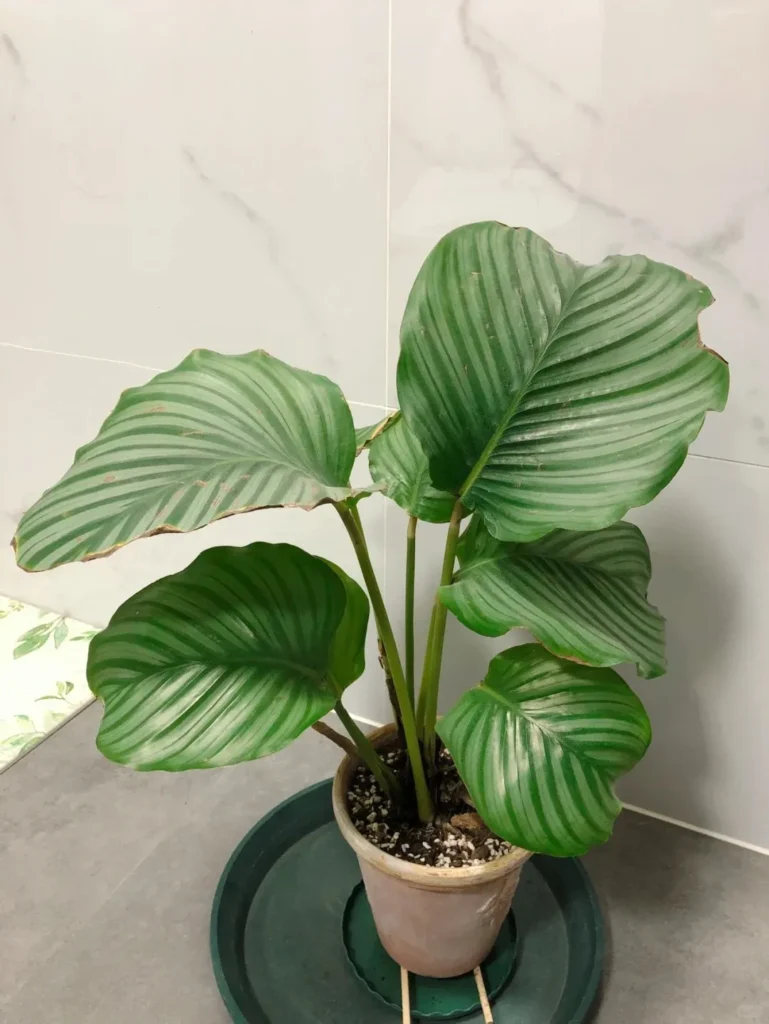
Here, we’ll walk through the common reasons your Calathea may stop growing and what you can do to get it thriving again.
Quick Diagnosis Table (at-a-glance)
| Growth issue | Most likely causes | Quick fix |
|---|---|---|
| No new leaves |
Seasonal slowdown (fall/winter) Low light (not enough energy) Rootbound or compacted soil No nutrients for months |
Brighten indirect light / add grow light Feed weakly every 4–6 weeks (spring–summer) Check roots + refresh soil if crowded |
| Not getting fuller |
Humidity too low (growth stalls) Watering swings (stress cycles) Pot too large (energy goes to roots) Old leaves hogging energy |
Keep humidity ~55–65%+ Water consistently (avoid bone-dry → soggy) Trim the oldest damaged leaves |
💡 Note: If your Calathea also shows yellow leaves, brown edges, or spotting, that’s a different issue—see our guides on Calathea Yellow Leaves, Calathea Root Rot, or Calathea Sunburn.
Case 1: No New Leaves
Sometimes your Calathea looks perfectly healthy—lush leaves, no yellowing or browning—yet it simply stops producing new leaves for weeks or even months. This doesn’t necessarily mean the plant is dying; instead, it’s usually a response to environmental conditions.
Possible Reasons:
- Too little light → Without enough energy, your Calathea won’t push out fresh growth.
- Natural dormancy → Growth naturally slows down in autumn and winter.
- Nutrient deficiency → Lack of nitrogen or trace elements can stunt new leaf production.
- Root issues → Compacted soil or damaged roots prevent nutrient absorption.
- Transplant shock → After repotting or division, the plant may pause growth while recovering.
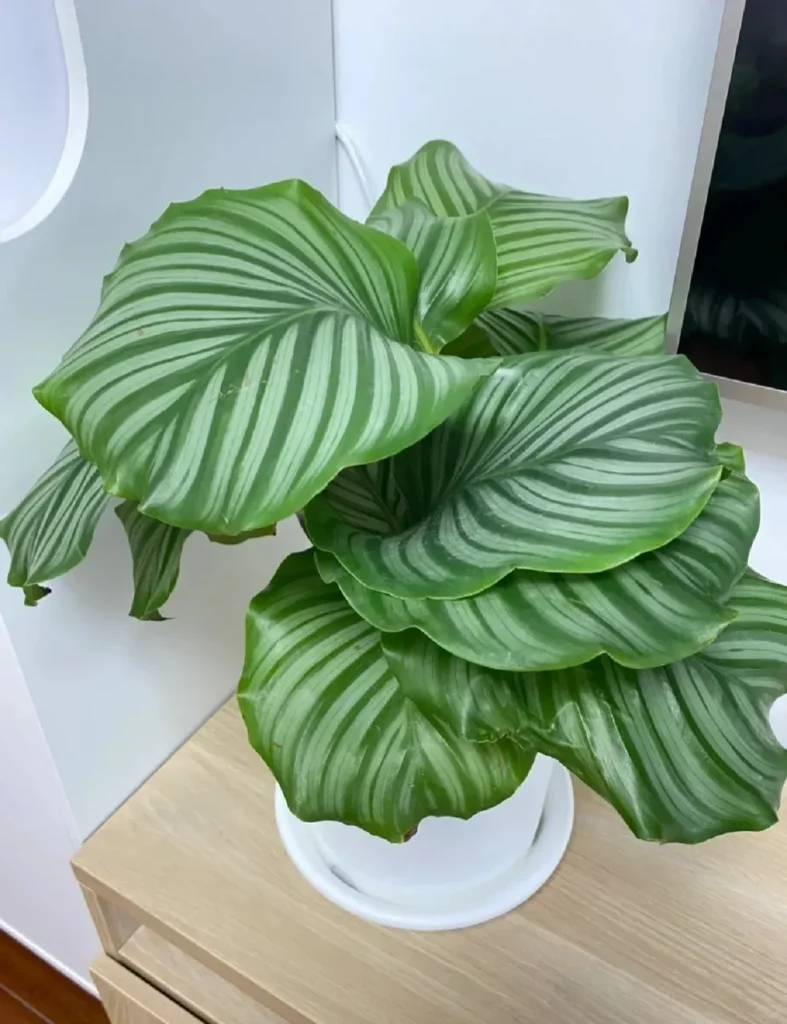
How to Fix It:
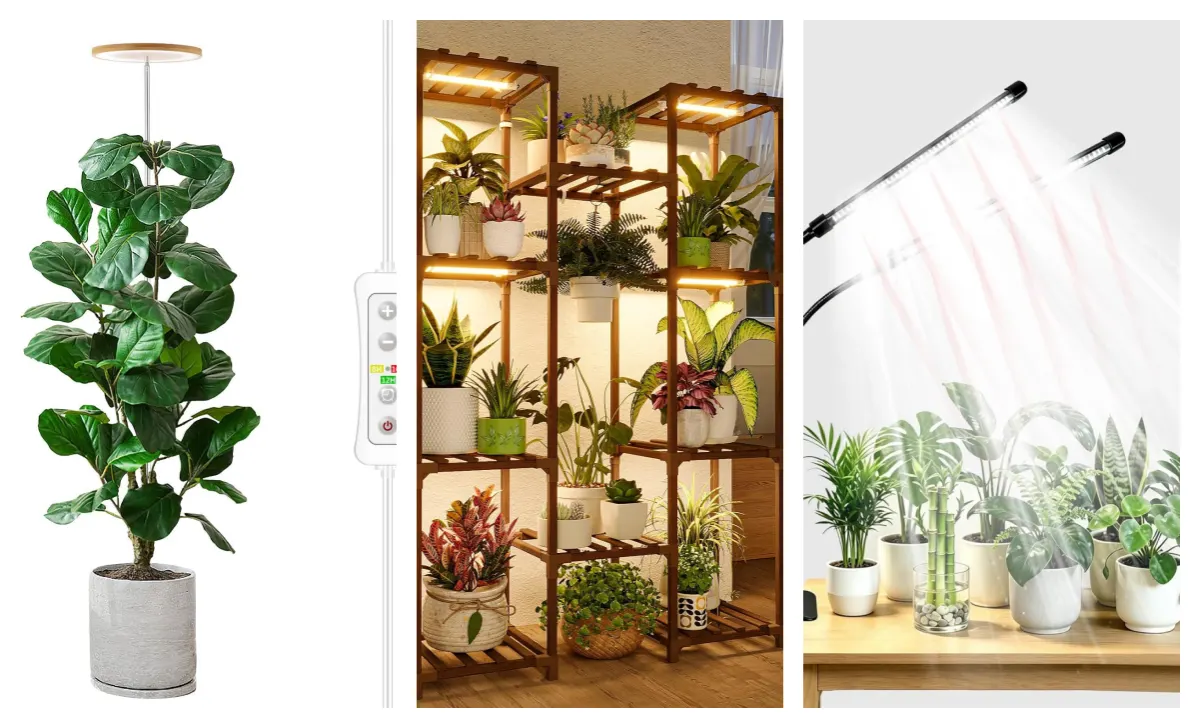
- Increase light exposure → Move the plant to a bright, indirect spot or supplement with a grow light for 4–6 hours daily. If your room stays dim in winter, see my Calathea grow light setup guide. For natural light placement, check Calathea light requirements.
- Check and refresh the soil → Use a loose, airy mix to keep roots healthy and breathing. If you want the full ingredient breakdown, see my best soil for Calathea guide. If you prefer buying a ready-made mix or amendments, see my guide to store-bought soil for Calathea.
- Feed lightly → During the active growing season, apply a diluted foliage fertilizer. Follow the rule of “weak but regular” feedings. I explain what I use and when I would skip feeding in my guide to the best fertilizer for Calathea.
- Be patient in cooler months → In autumn and winter, Calathea naturally slows down. Reduce water and fertilizer, and allow the plant to rest.
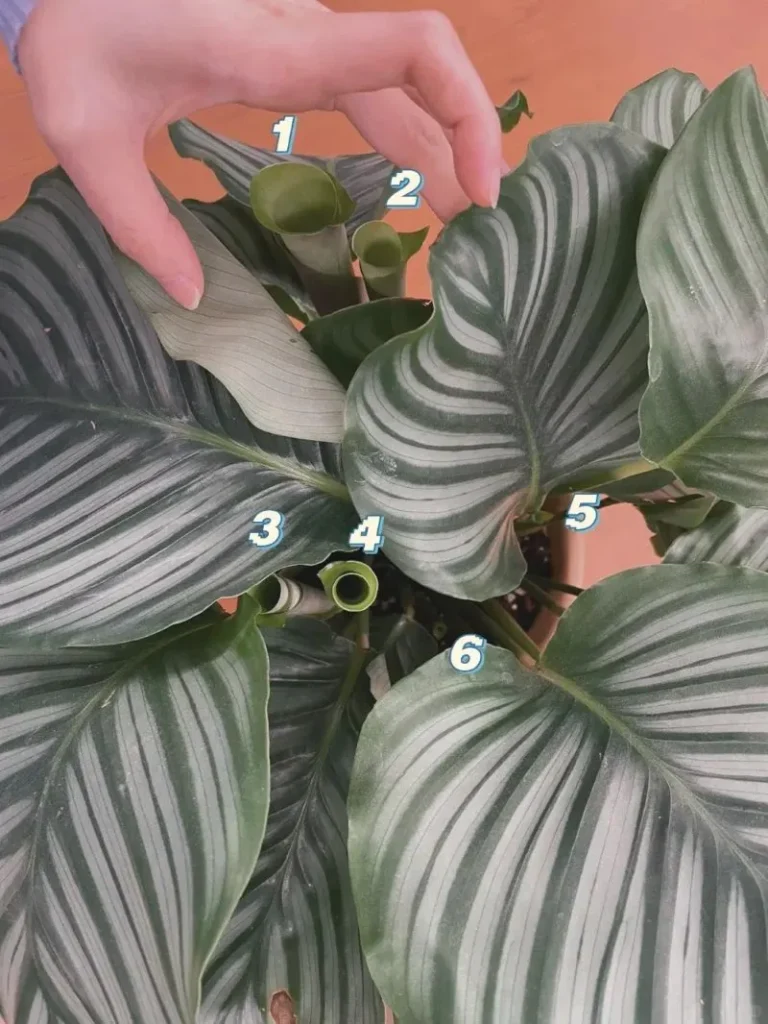
💡 Tip: If you see new leaves starting to unfurl in spring or summer, that’s a sign your plant has regained strength and the conditions are right again.
Case 2: Not Growing Taller / Fuller
Another common situation is when your Calathea keeps producing leaves, but the plant looks short and squat instead of becoming taller or fuller. This is often caused by environmental stress or imbalanced care, rather than a disease.
Possible Reasons:
- Too much light → Excessive direct or strong light keeps the plant compact, with short stems and leaves hugging the soil.
- Low humidity → Dry air leads to smaller leaves and stunted overall growth.
- Nutrient imbalance → Lack of phosphorus and potassium can prevent new shoots from stretching out.
- Poor soil structure → Heavy or compacted soil reduces root activity and limits vertical growth.
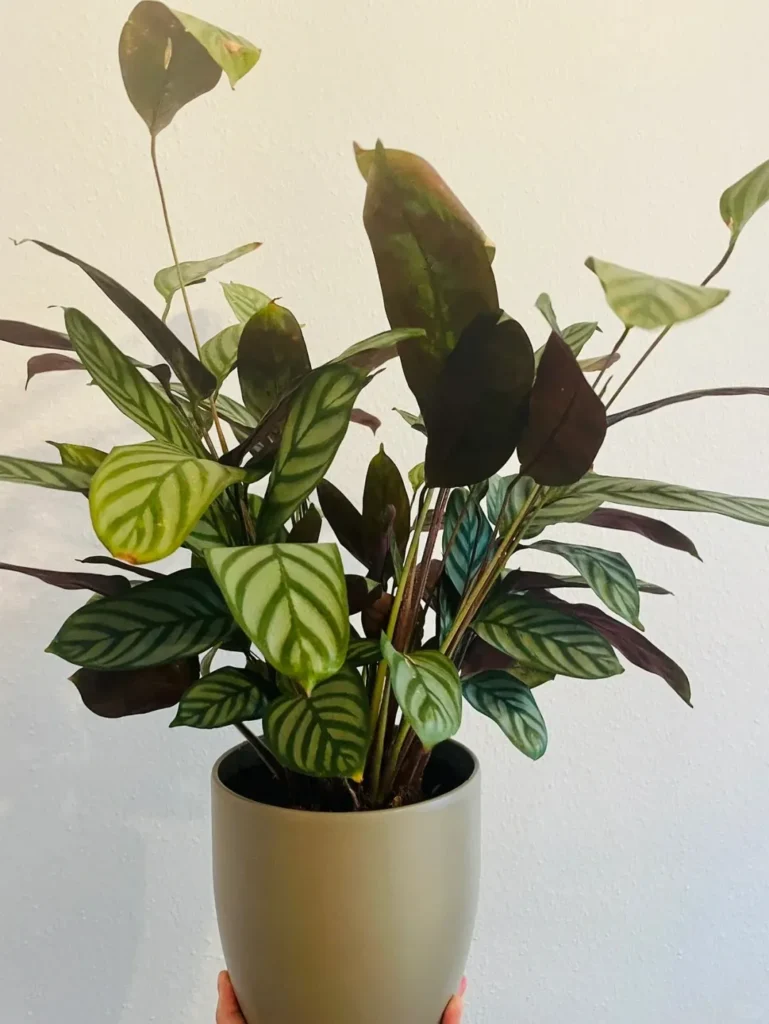
How to Fix It:
- Adjust lighting → Keep Calathea in bright, indirect light. Avoid strong direct sun that makes the plant grow wide but not tall (details in light requirements).
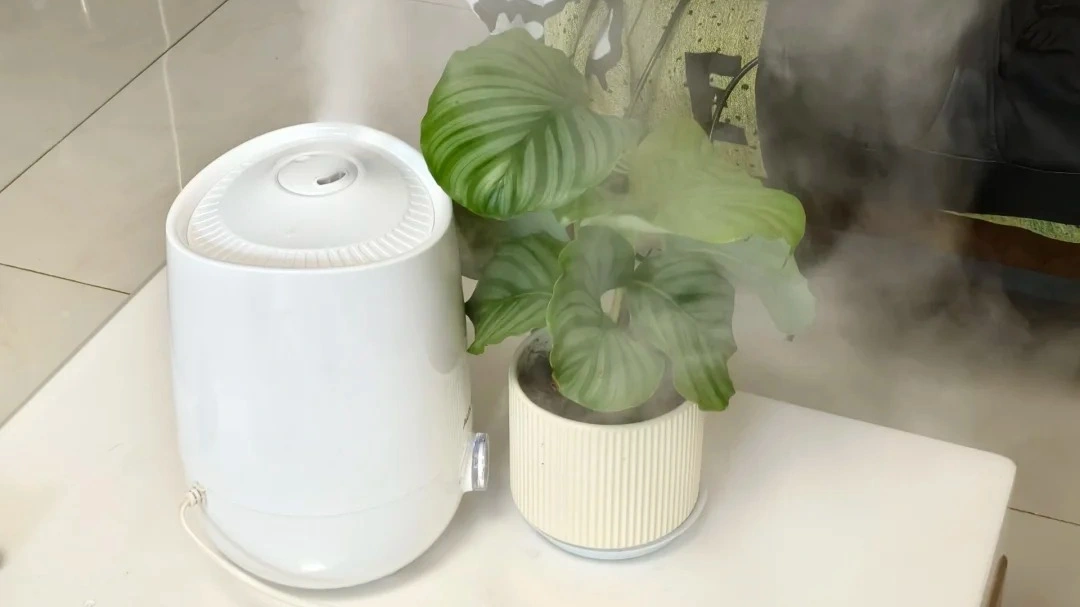
- Boost humidity → Maintain steady air moisture using a humidifier, pebble tray, or grouping plants together. If you are not sure whether your room is dry enough to need one, see my guide on whether Calatheas need a humidifier.
- Fertilize properly → Apply a balanced fertilizer (NPK 1:1:1) during the growing season to encourage healthy vertical and lateral growth.
- Keep watering consistent → Water when the top 1–2 inches are dry; avoid swings between soggy and bone-dry (see how often to water Calathea).
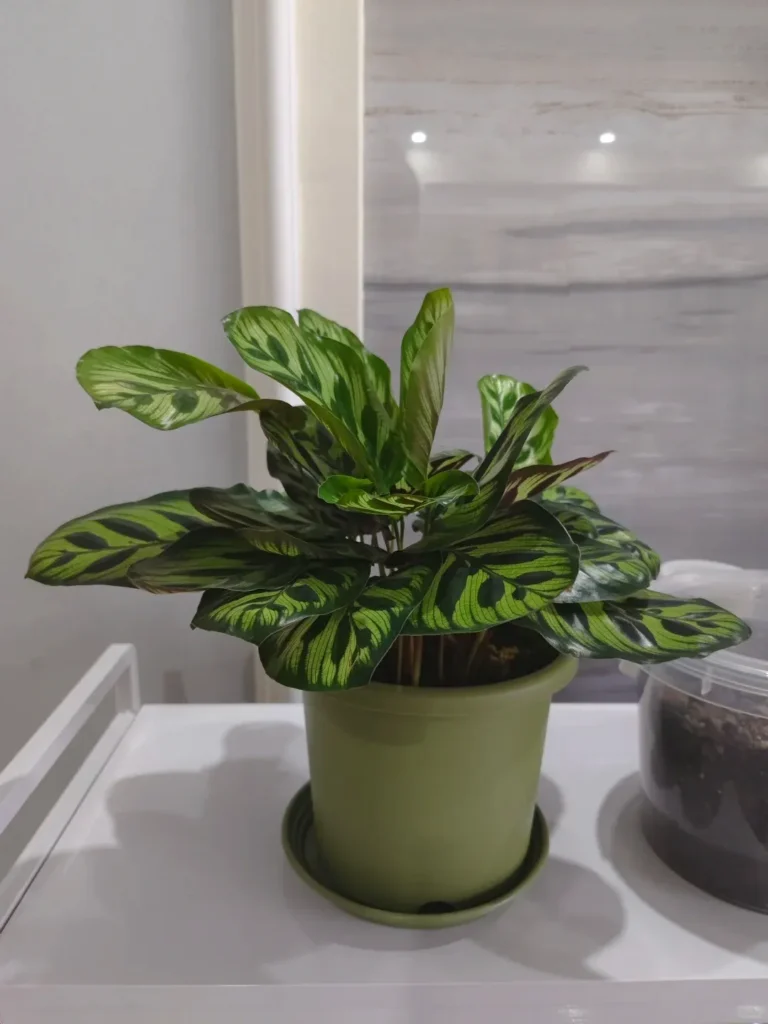
💡 Tip: Rotate your Calathea every few weeks. This ensures even exposure to light, prevents lopsided growth, and encourages a more balanced, fuller appearance.
How Long Can a Calathea Go Without New Leaves? (A Realistic Timeline)
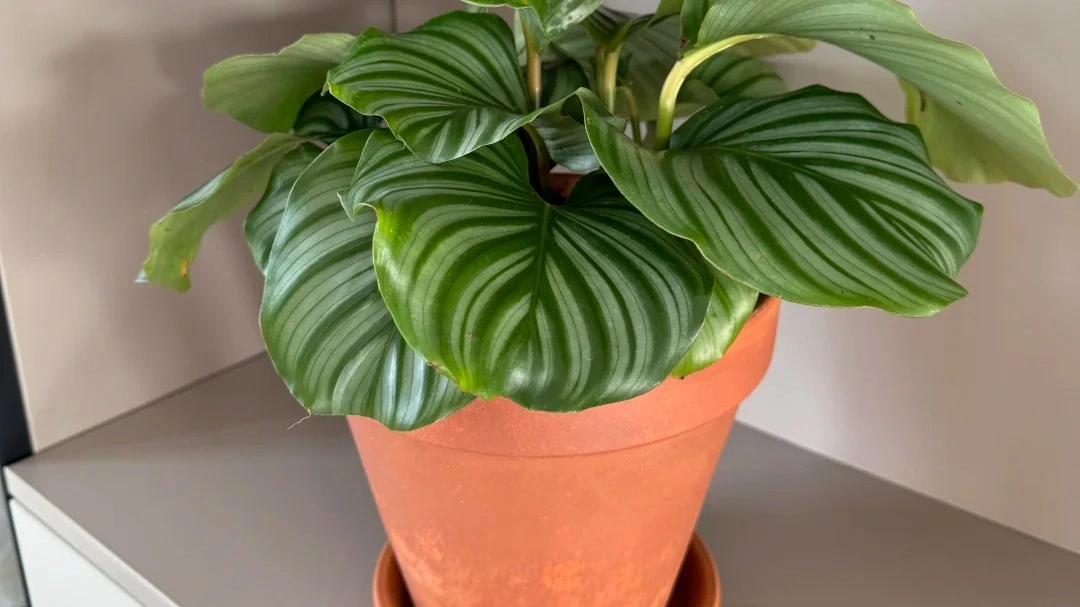
When my Calathea leopardina first came home, I honestly thought I had bought a fake plant.
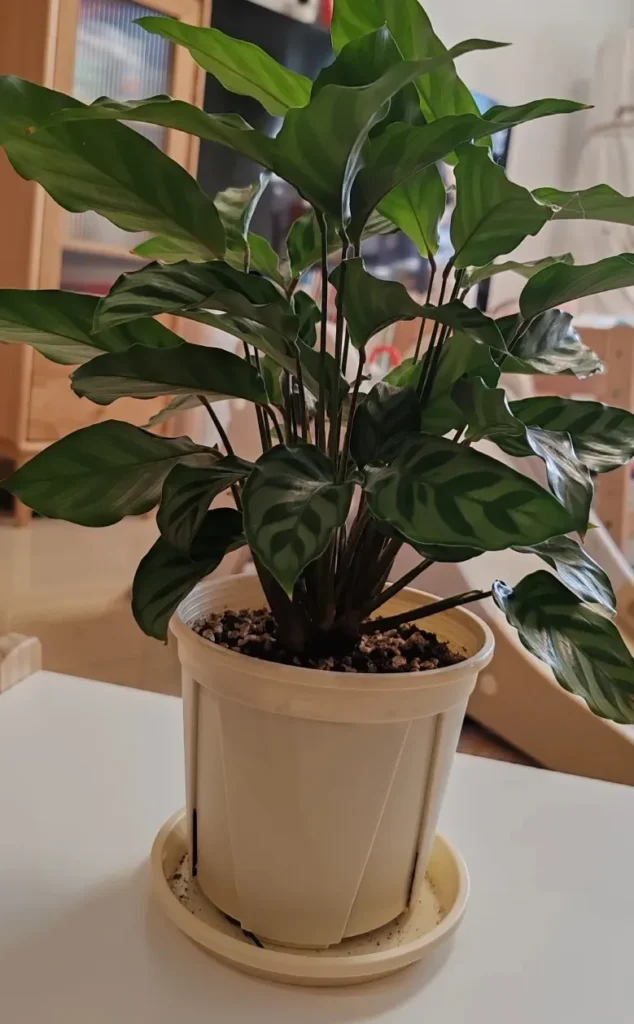
For almost two full months, nothing happened.
No yellow leaves.
No leaf drop.
No new growth.
At night, the leaves still folded upward like a healthy prayer plant — which made it even more confusing. It looked alive, but completely frozen in time.
At first, I assumed the issue was light. I had seen this before with another calathea (a Green Apple variety) that stopped growing when placed in a dim corner. That one started pushing out new leaves almost immediately after I moved it into brighter, indirect light and kept the soil lightly moist.
So I adjusted the light again. Still nothing.
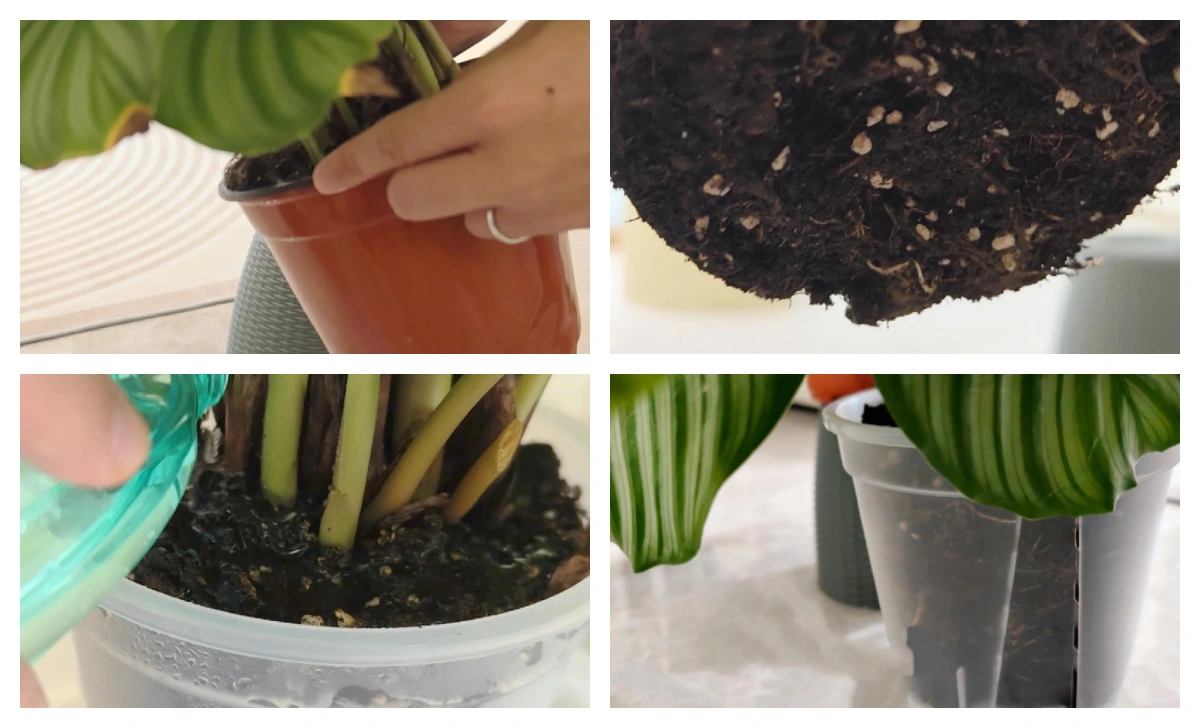
What finally changed my understanding was checking the root system.
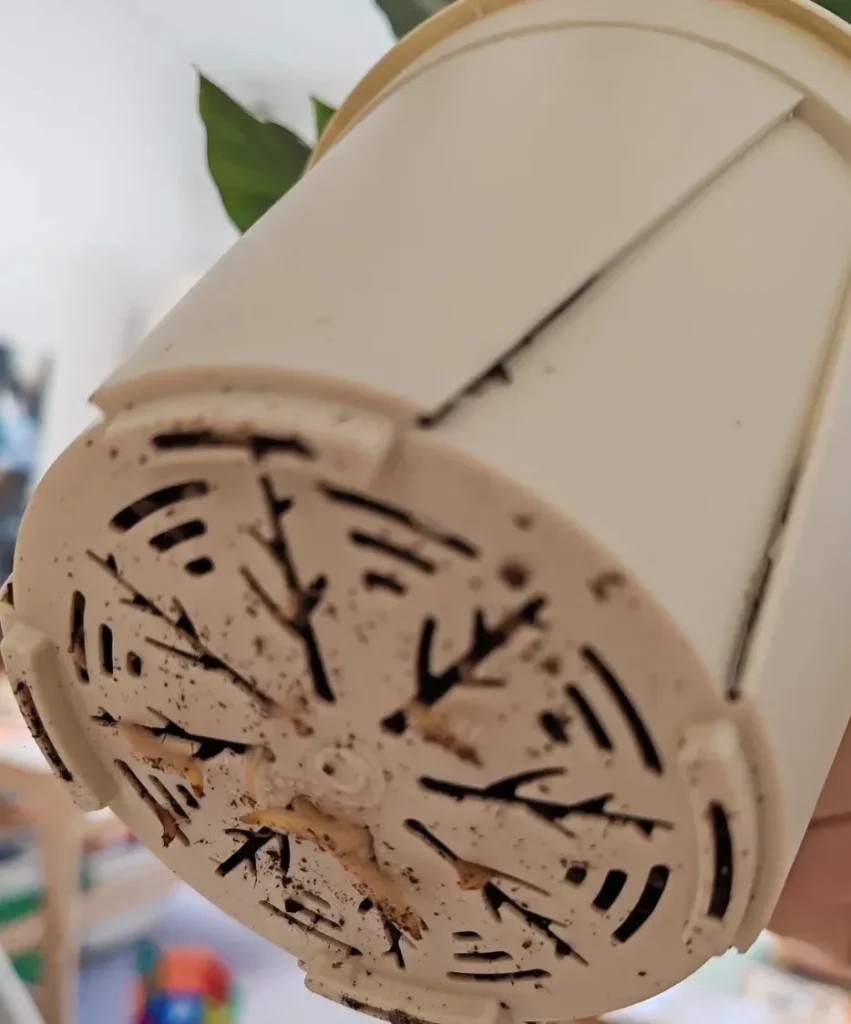
When I lifted the pot, I noticed roots actively growing out of the drainage holes. The plant wasn’t stalled because it was weak — it was stalled because it was prioritizing roots over leaves. Growth hadn’t stopped. It had simply moved underground.
I also realized I had been too cautious with watering. The soil was never dry enough to cause stress, but it wasn’t consistently moist either. Once I allowed the lower tray to hold some water and let the roots access it from below, new growth started shortly after. A fresh leaf emerged — slowly, but decisively.
This experience taught me an important rule about calatheas:
A calathea can go 4–8 weeks without producing new leaves and still be perfectly healthy — especially after relocation or environmental changes.
Here’s a more realistic timeline based on what I’ve seen:
- 0–2 weeks: Adjustment phase. No visible growth is completely normal.
- 2–4 weeks: Root development often takes priority. Leaves may look unchanged.
- 4–8 weeks: New growth should appear if light, moisture, and humidity are adequate.
- Beyond 8 weeks: If there’s still no new growth, it’s time to reassess light levels, watering consistency, or root space.
The key takeaway is this:
No new leaves does not automatically mean something is wrong.
If the leaves are firm, the color is stable, and the plant still follows its day–night movement cycle, chances are it’s not dying — it’s just growing where you can’t see it yet.
Staying Patient with Calathea
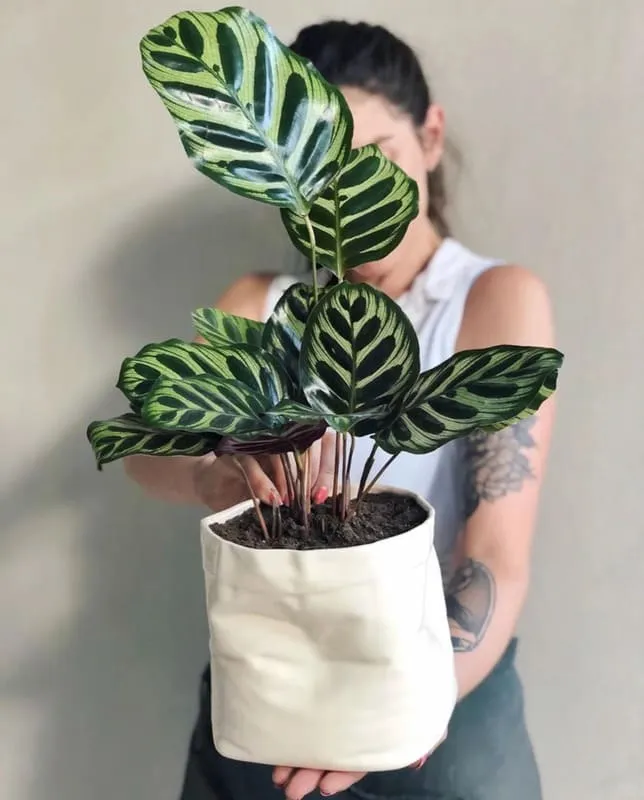
It’s important to remember that Calathea don’t grow on a strict daily schedule. They tend to grow in bursts—sometimes pushing out several new leaves in a short period, then pausing for weeks. Certain varieties, like Calathea orbifolia or makoyana, are naturally slower growers, so don’t panic if progress seems minimal.
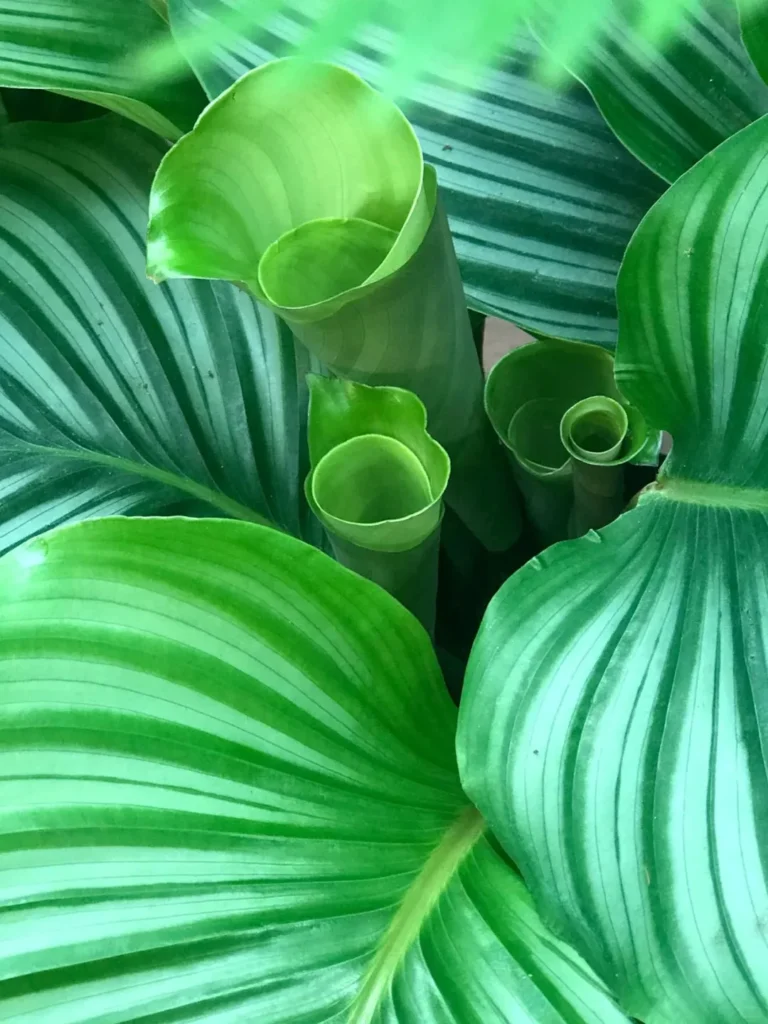
Instead of worrying, focus on building a stable and supportive environment:
- Keep care consistent—avoid shifting the plant’s location too often.
- Choose a pot that matches the plant’s current size, not one that’s too big or too small.
- Track your plant’s seasonal rhythm so you know when to expect slower phases.
- Most importantly, accept that Calathea are moderate, steady growers, not rapid sprinters.
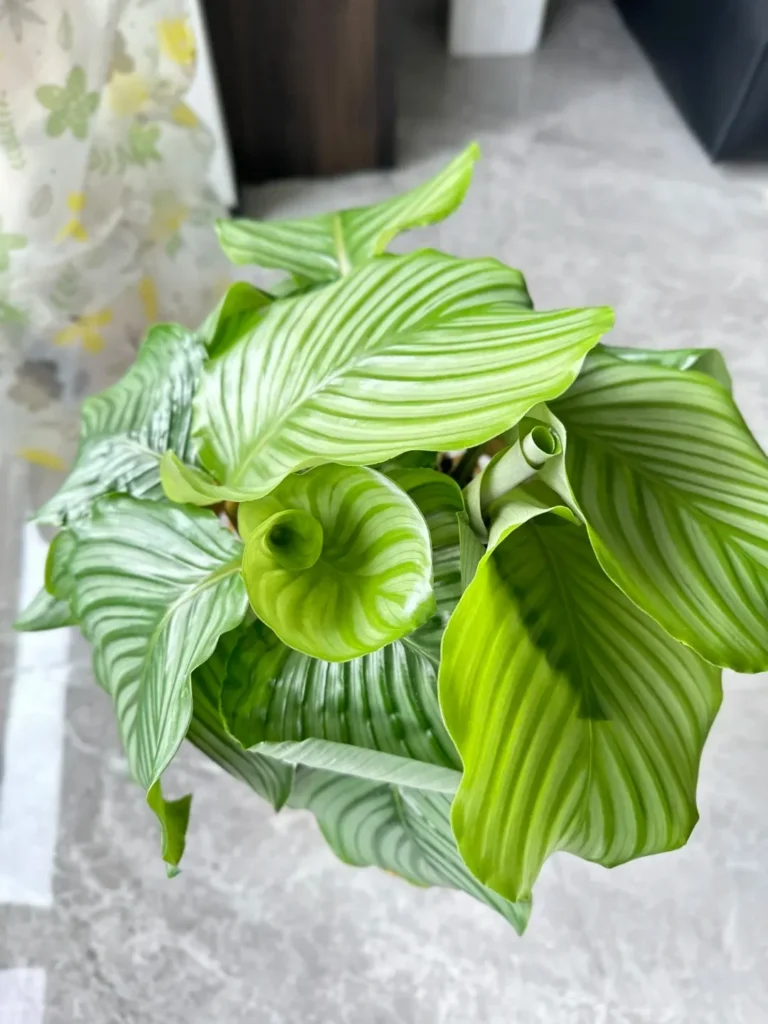
💡 Bottom line: A few quiet weeks without new leaves is usually normal. As long as your Calathea looks healthy, it’s simply waiting for the right conditions to surprise you with fresh growth.
FAQ
Still worried about your plant?
👉 For more tips on keeping your plant healthy, explore our Complete Calathea Care Guide.
Complete Care Guide →