
For many cat parents, filling a home with lush greenery brings comfort and beauty — but it also raises a real worry: could these plants harm my pets? Cats are naturally curious, and a single nibble on the wrong leaf can lead to anxiety and even an urgent vet visit.
Among indoor favorites, Calathea plants (also known as prayer plants or zebra plants in the broader houseplant world) stand out for their bold patterns and tropical appeal. With their striking stripes, purples, and velvety textures, they often look suspiciously like other tropical ornamentals that are toxic, such as peace lilies or philodendrons. It’s no surprise that many cat owners hesitate before bringing one home.
This guide brings clarity. Backed by veterinary sources such as the ASPCA’s toxic plant database, I’ll walk you through whether Calatheas are toxic to cats, what risks (if any) exist when cats chew their leaves, and how to place and care for your plants in a pet-friendly home. Think of it as a complete safety roadmap: from toxicity facts → to safety details → to common concerns → and finally, practical placement and care tips that balance your love for both plants and pets.
Calathea Plants Are Non-Toxic to Cats
According to the ASPCA (American Society for the Prevention of Cruelty to Animals) and other veterinary references, all Calathea species are considered safe for both cats and dogs.
👉 What this means for you:
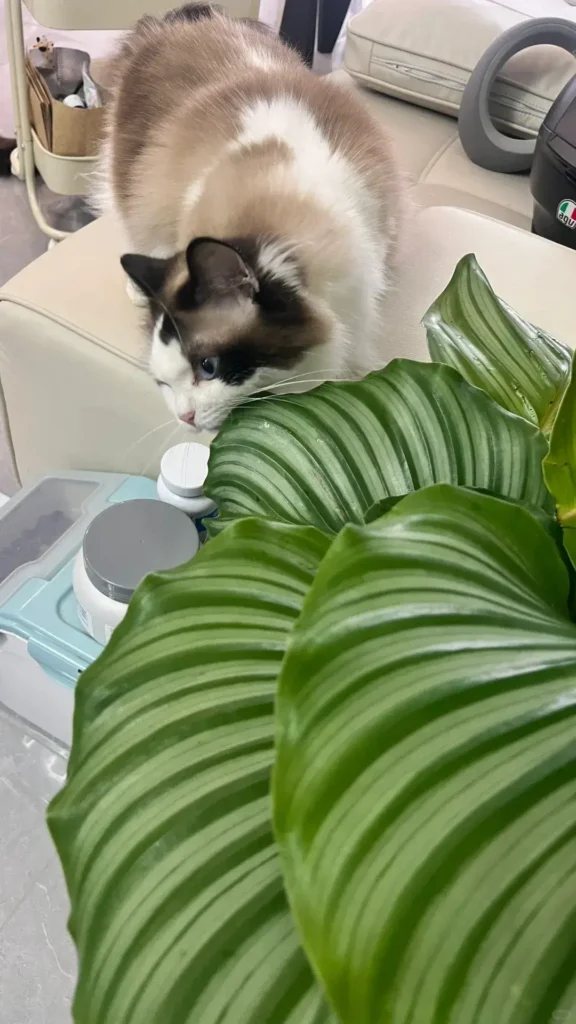
- You don’t need to worry about poisoning if your cat happens to chew a Calathea leaf.
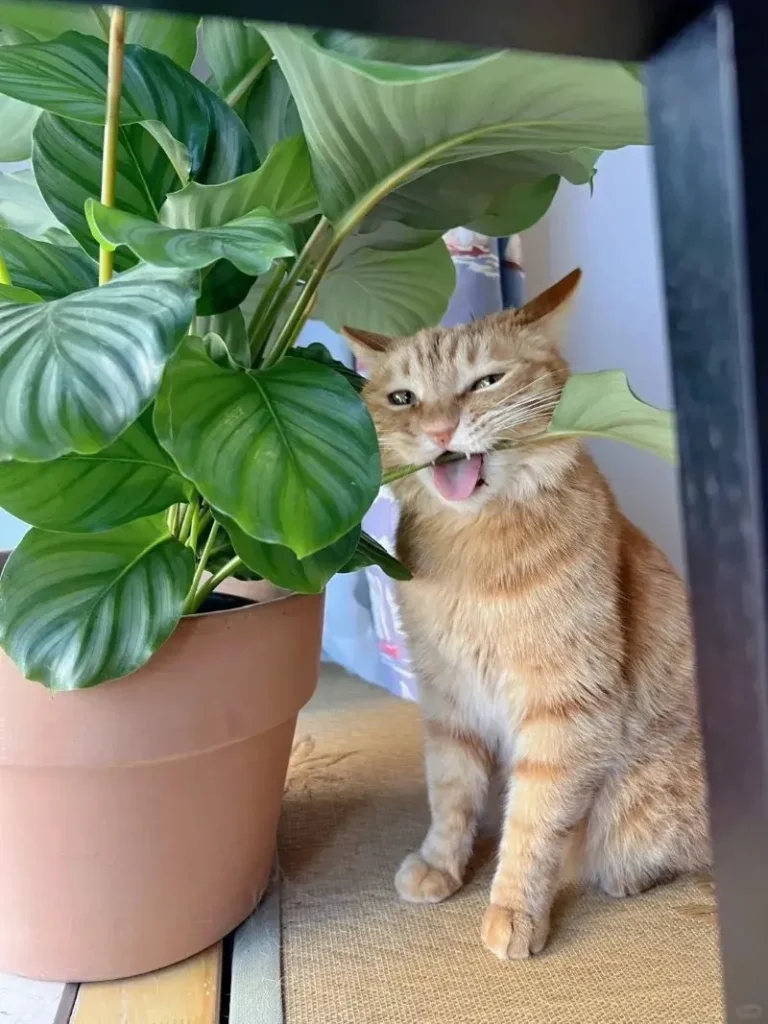
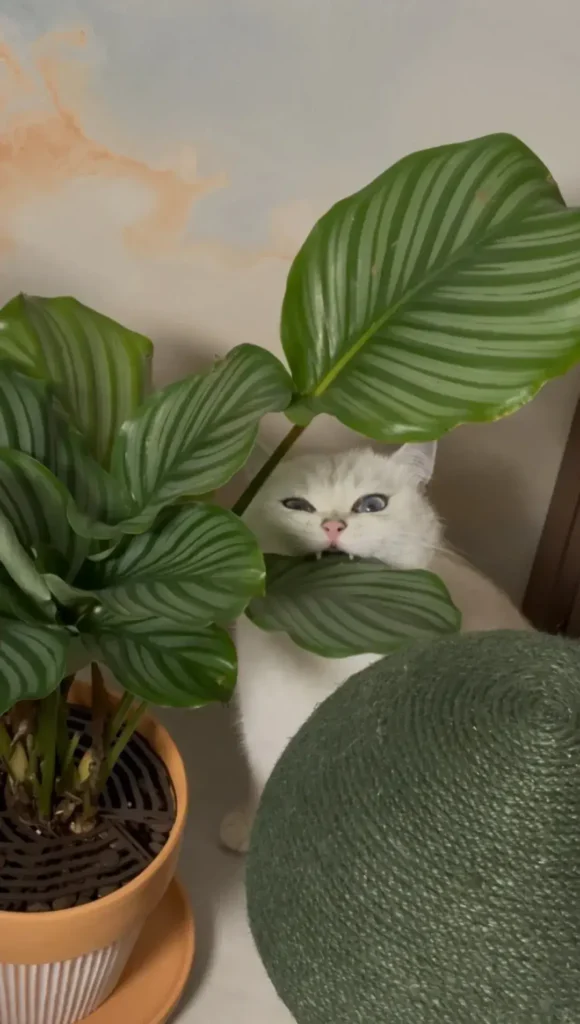
- However, the fibrous texture of the leaves can sometimes irritate a cat’s stomach. Occasional symptoms may include mild vomiting, drooling, or diarrhea, but these are due to digestive upset, not toxicity.
- The bigger “danger” is often to the plant itself — curious cats may shred the delicate patterned leaves.
Bottom line:
Calathea is one of the best pet-friendly houseplants. It offers beauty and peace of mind, making it a safe choice for homes with curious felines.
Why Cat Owners Worry about Calathea
If you’ve ever Googled “are Calathea plants toxic to cats?” you’re not alone — it’s one of the most common questions plant lovers with pets ask. The concern is understandable.
- Many popular houseplants are toxic.
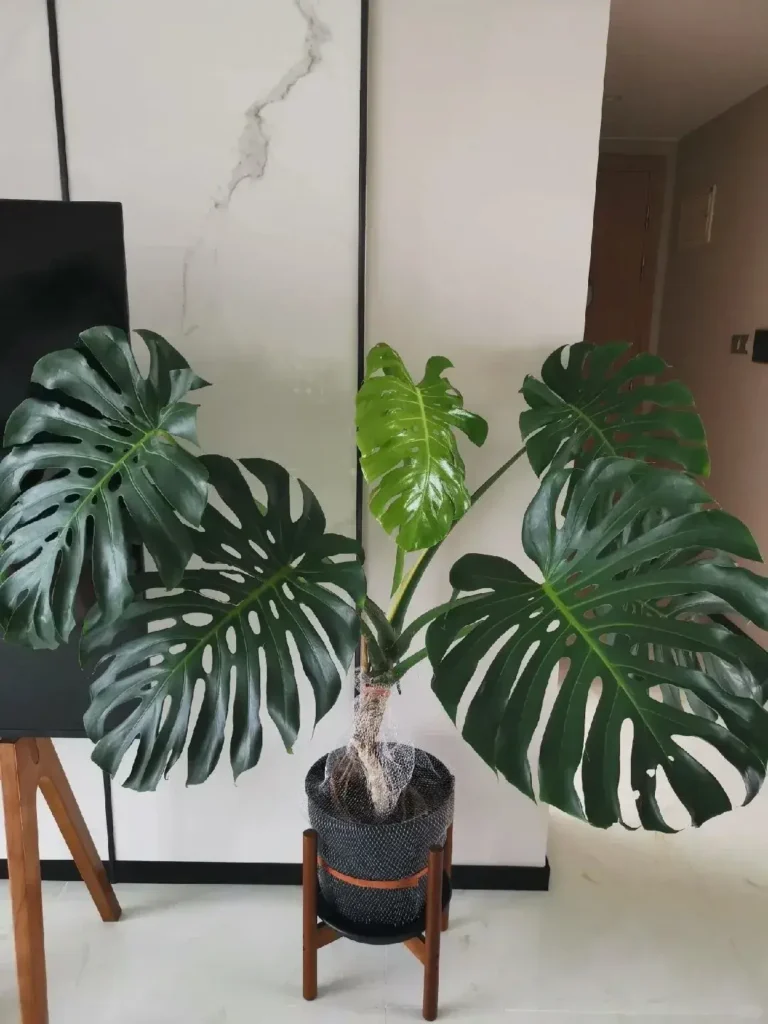
Monstera, Peace Lily, Philodendron, and Dieffenbachia all belong to the Araceae family and contain calcium oxalates that can cause painful oral irritation, drooling, and even more severe reactions in cats. With so many familiar leafy plants posing real risks, cat parents are naturally cautious. - Calathea looks suspicious.
Its bold stripes, deep purples, and exotic patterns often resemble the flashy appearance of toxic plants. To an untrained eye, it’s easy to assume it falls into the same “dangerous” group. - Repeated searches reflect anxiety.
Cat owners want certainty. Even after seeing “non-toxic” mentioned once, they often double-check — because the consequences of a wrong assumption can be serious. Better safe than sorry is the mindset.
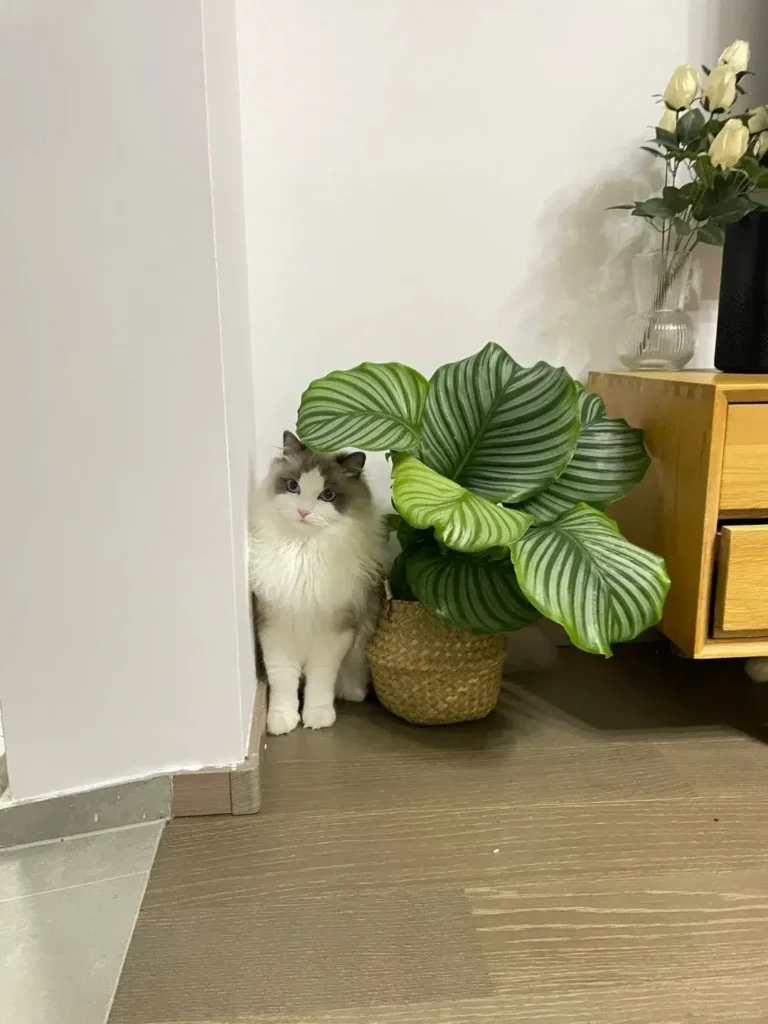
👉 This is why Calathea gets flagged so often in pet forums and search engines: its tropical look raises red flags, but the good news is that it doesn’t share the toxic traits of its lookalike cousins.
Calathea & Cats Safety in Detail
✅ Confirmed Non-Toxic
Authoritative sources such as the ASPCA toxic plant list, PetMD, and veterinary references all confirm that Calathea species are non-toxic to cats and dogs. Unlike many members of the Araceae family, Calathea belongs to the Marantaceae family and does not contain calcium oxalates or other harmful compounds.
🚫 Potential Risks from Leaf-Chewing
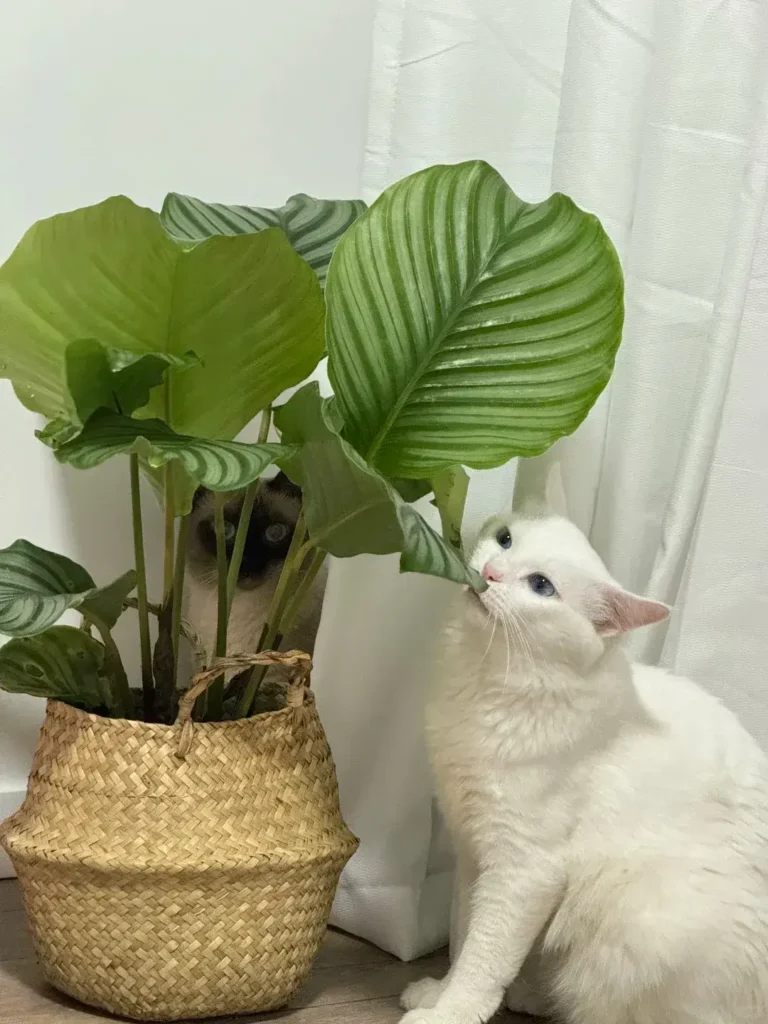
While not poisonous, Calathea leaves are fibrous and can upset a cat’s stomach when chewed. Some owners report:
- Occasional vomiting
- Mild diarrhea
- Drooling or gagging
These symptoms are signs of digestive irritation, not toxicity, and usually resolve on their own.
⚠️ When to Be Extra Careful
If your cat has a strong habit of chewing on houseplants, Calathea may suffer more than your cat. Constant nibbling can lead to:
- Damaged, ragged leaves
- Stress to the plant, slowing its growth
- Repeated mild stomach upset in sensitive cats
💡Tip: In multi-pet homes, consider placing Calathea on higher shelves or using plant stands to keep a healthy balance — protecting both your plants and your pets.
Common Calathea Varieties & Cat Safety
Calathea is a large genus with dozens of varieties, many of which are popular as indoor ornamentals. The good news is that every known Calathea is non-toxic to cats. The real difference for pet parents isn’t about safety, but about how tempting each variety may be to a curious feline.
Some Calathea have broad, tender leaves that invite nibbling. Others have firmer or narrower leaves that most cats ignore. Below is a quick reference chart combining toxicity status with a practical “chewing attractiveness index” (⭐ = low interest, ⭐⭐⭐⭐ = high interest).
Calathea & Cat Safety Quick Guide
| Calathea Variety | Safe for Cats? | Chewing Attractiveness* | Notes |
|---|---|---|---|
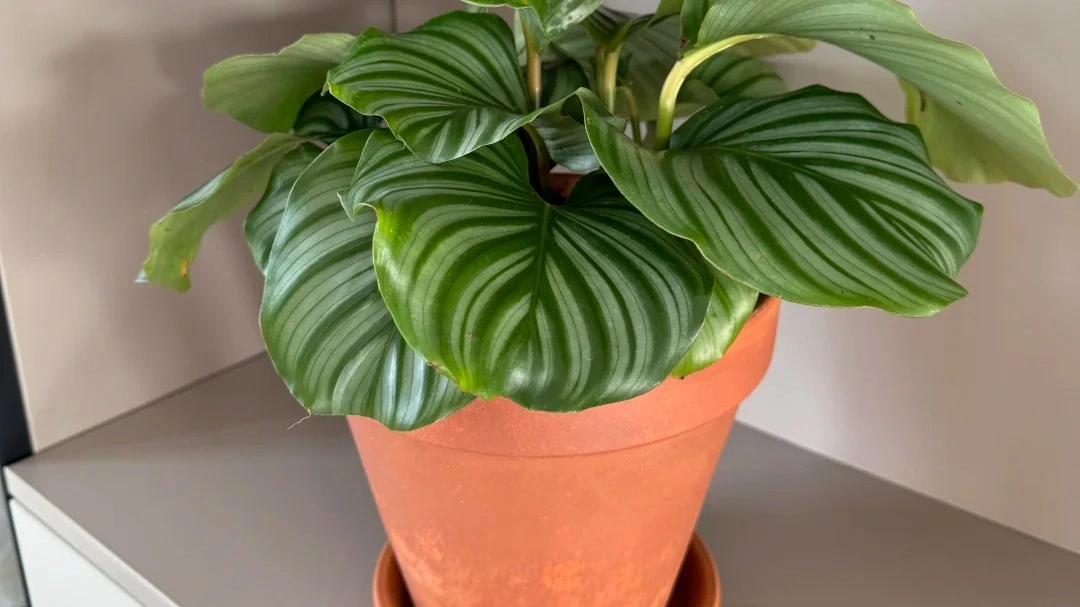
| Calathea Orbifolia | ✅ Safe | ⭐⭐ | Large, leathery leaves; less appealing to most cats |
| Calathea Medallion | ✅ Safe | ⭐⭐⭐ | Soft, round leaves with bold patterns; moderate nibble risk |
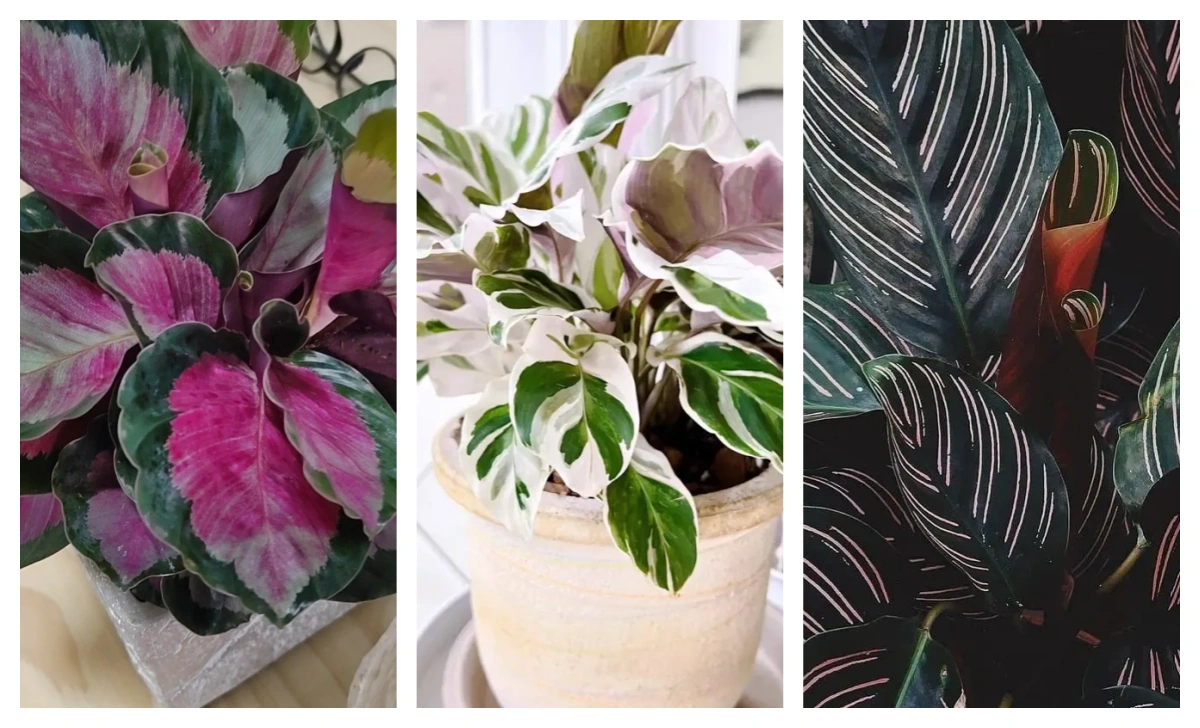
| Calathea White Fusion | ✅ Safe | ⭐⭐⭐⭐ | Delicate variegation; often shredded by playful cats |
| Calathea Rattlesnake | ✅ Safe | ⭐ | Narrow, tougher leaves; rarely attracts cats |
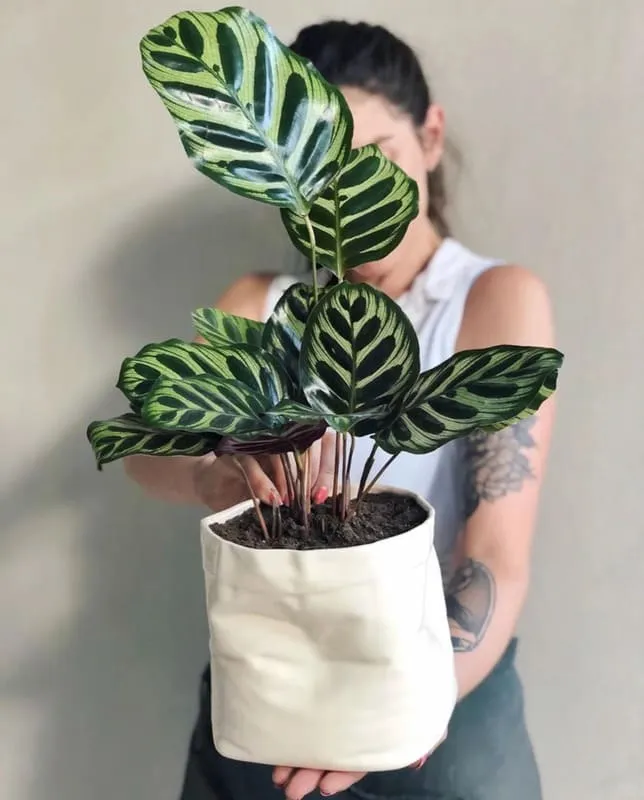
| Calathea Makoyana (Peacock) | ✅ Safe | ⭐⭐⭐ | Striking peacock stripes; cats may investigate |
| Calathea Freddie | ✅ Safe | ⭐⭐ | Slim, upright leaves; less fragile than White Fusion |
| Calathea Beauty Star | ✅ Safe | ⭐⭐⭐ | Shiny striped leaves; moderate interest for chewers |
| Calathea Roseopicta | ✅ Safe | ⭐⭐⭐ | Colorful pink-green patterns; tends to draw attention |
*Chewing Attractiveness = based on leaf texture, patterns, and anecdotal feedback from pet owners.
👉 Key takeaway: All Calathea species are safe for cats. The varieties listed above are simply the ones most frequently sold and searched. If your plant isn’t listed here, you can still be confident it’s pet-friendly.
What To Do If Your Cat Chews Calathea Leaves
It’s not unusual for cats to take a curious bite of a houseplant. If yours decides to sample a Calathea leaf, here’s what you should do:
Monitor for Mild Symptoms
Chewing Calathea is generally safe, but the fibrous leaves can irritate a cat’s stomach. You may notice:
- Mild vomiting (once or twice)
- Drooling or gagging
- Soft stools or diarrhea
These signs are usually short-lived and resolve without treatment.
Keep Your Cat Hydrated
Make sure fresh water is available. Hydration helps the digestive system process any plant material more easily.
When to Call the Vet
Seek veterinary advice if you observe:
- Repeated vomiting over 24 hours
- Loss of appetite or refusal to drink
- Lethargy, hiding, or other unusual behavior
While toxicity is not the concern, prolonged digestive upset can still make your cat uncomfortable and deserves professional attention.
Reassurance for Pet Parents
Remember, this isn’t poisoning. Calathea does not contain harmful compounds — the reaction comes from simple digestive irritation. In most cases, your cat will bounce back quickly, while your plant may be the one left looking worse for wear.
Guidance Module 🐈 Practical Care Tips
Living with both Calathea and cats is all about smart placement and balance. Here are a few pet-friendly care notes:
- Match environments wisely
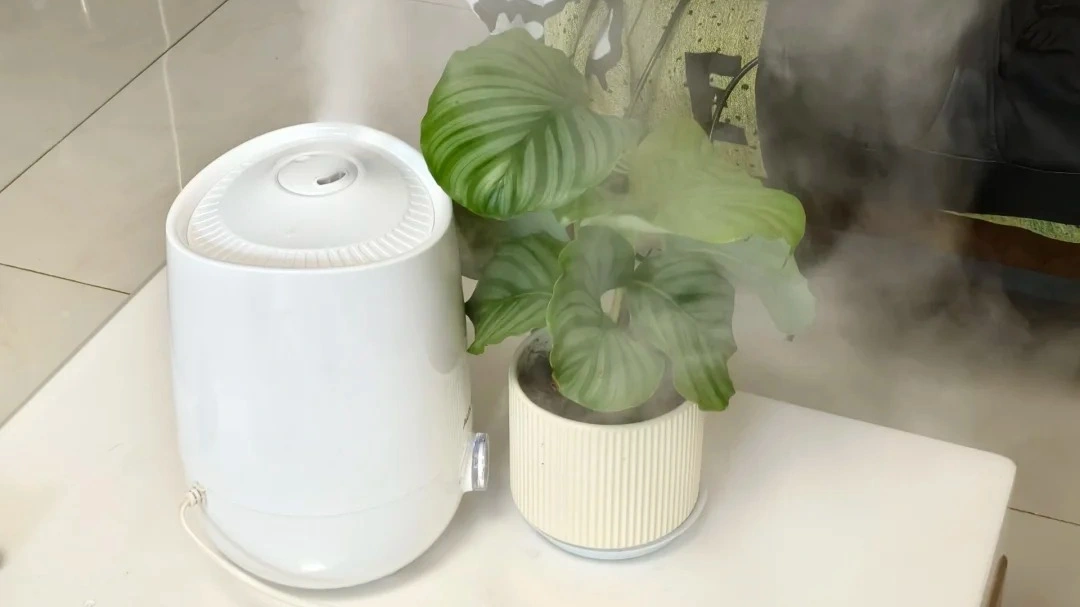
Calathea loves high humidity and indirect light, while cats love warm, cozy spots. Try to find areas that satisfy the plant without doubling as your cat’s favorite nap zone. - Avoid certain locations
Don’t place Calathea near the litter box — ammonia in the air can damage sensitive leaves. Also, skip windowsills where your cat likes to sunbathe, or you’ll end up with flattened foliage. - Choose tougher varieties if needed
If your cat shows an unstoppable interest in nibbling, go for sturdier types like the Rattlesnake Calathea, which holds up better to occasional chewing compared to delicate varieties like White Fusion. - Give your cat an alternative
Providing cat grass or catnip can redirect chewing behavior, keeping your Calathea safe and your cat entertained.
👉 With the right setup, you can enjoy vibrant Calathea foliage and keep your cat happy — no compromises needed.
FAQ
Still have more Calathea problems?
Curling and drooping are just the beginning. From yellow leaves to root rot, we’ve put together a full guide to every common Calathea issue. For droopy foliage, see curling & drooping fixes.
Explore All Problems →To wrap it up: Calathea = Safe, Non-toxic.
You can confidently enjoy their vibrant patterns and tropical charm without worrying about endangering your cat. The only “risk” is a few nibbled leaves or mild tummy upset, which is far less concerning than the dangers posed by toxic plants like lilies or monstera.
For cat parents, Calathea is a rare combination of beauty and peace of mind — a plant that brings lush greenery into your home without compromising your pet’s safety.
💬 Your turn: Do you grow Calathea at home with cats? How do you keep both happy? Share your experience in the comments — your story may help another cat parent find the perfect balance.