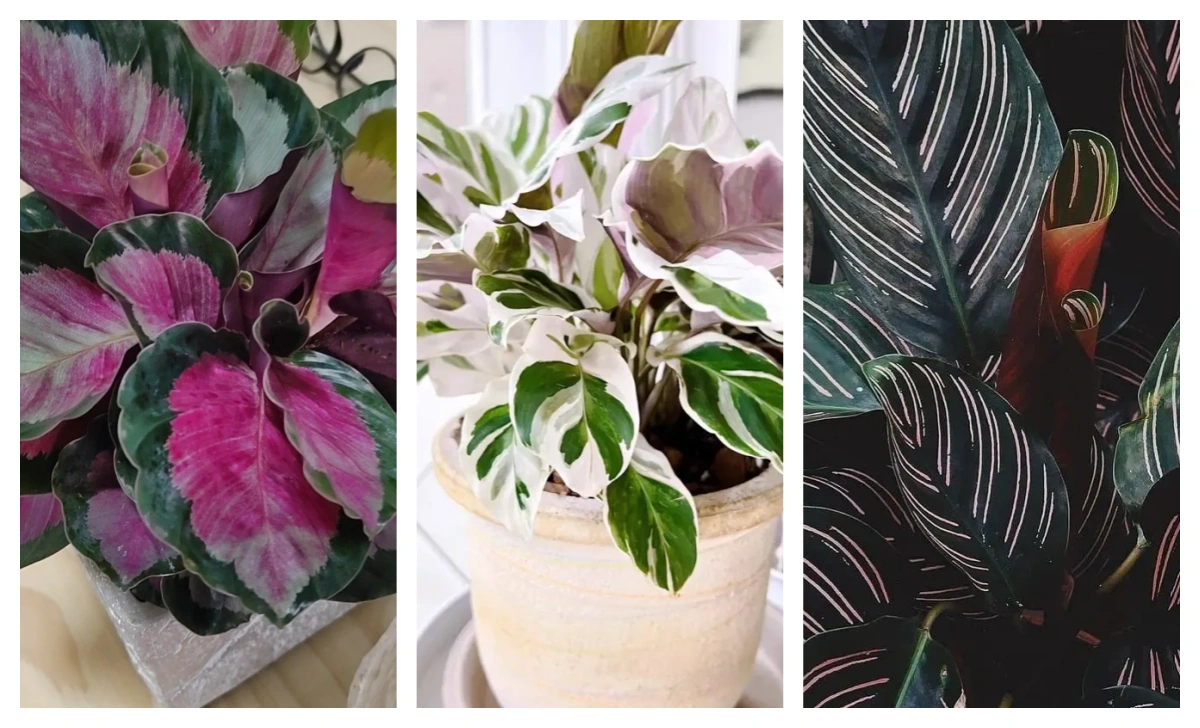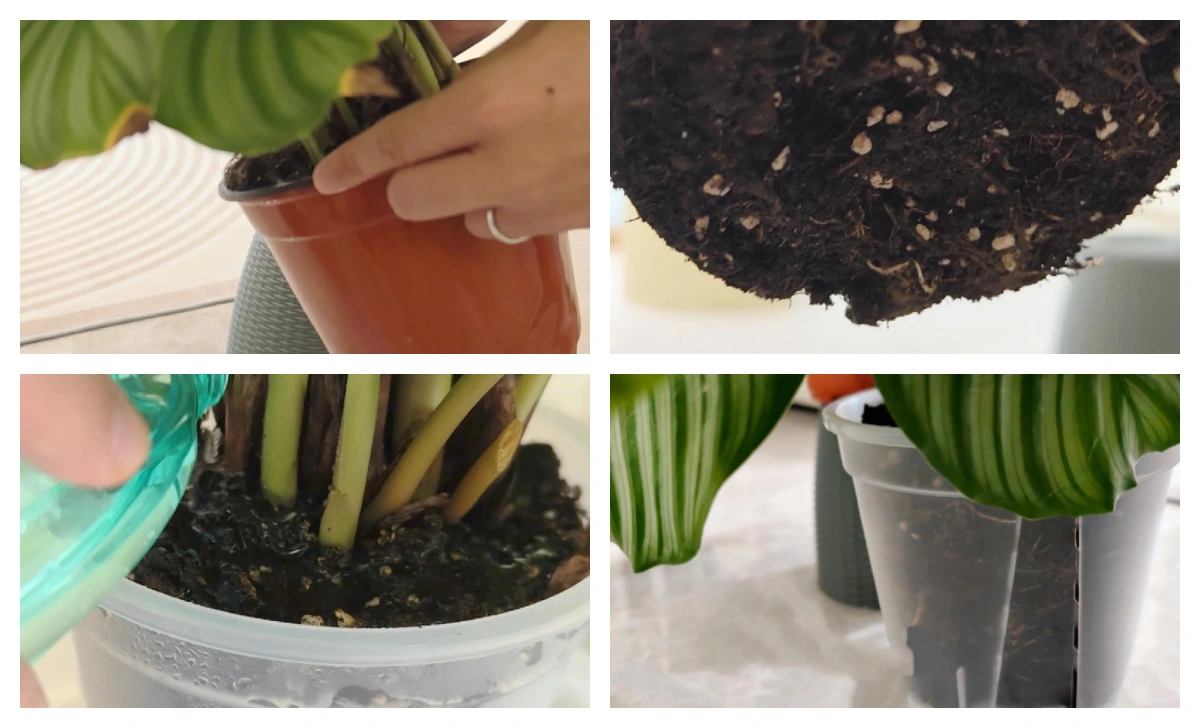
Last updated: April 28, 2026
Quick Answer: How Often Should You Water a Calathea?
Most indoor Calatheas need water when the top layer of soil begins to dry and the pot feels noticeably lighter. In a warm, bright room, that may be about every 7–10 days. In winter or a cooler low-light room, it may stretch to 10–20 days or longer.
I do not water Calatheas by a fixed calendar anymore. Light, temperature, humidity, pot size, and soil mix all change how fast the pot dries. A Calathea in summer light may drink quickly, while the same plant in winter can stay wet for far longer than expected.
The safest rule is this: water when the plant is ready, not when the calendar says so. I check the pot weight, the middle layer of soil, and the leaf posture before watering.
| Indoor Condition | Typical Watering Rhythm | What I Check First |
|---|---|---|
| Warm, bright summer room | About every 5–10 days | Pot weight, slight leaf curl, top soil dryness |
| Average room in spring or fall | About every 7–14 days | Top layer dry, middle layer lightly moist |
| Cool, low-light winter room | About every 10–20+ days | Bottom moisture, pot weight, cold soil |
| Leaves curling but pot is heavy | Do not water yet | Humidity, airflow, root stress |
| Leaves curling and pot is light | Water thoroughly | Let excess water drain fully |
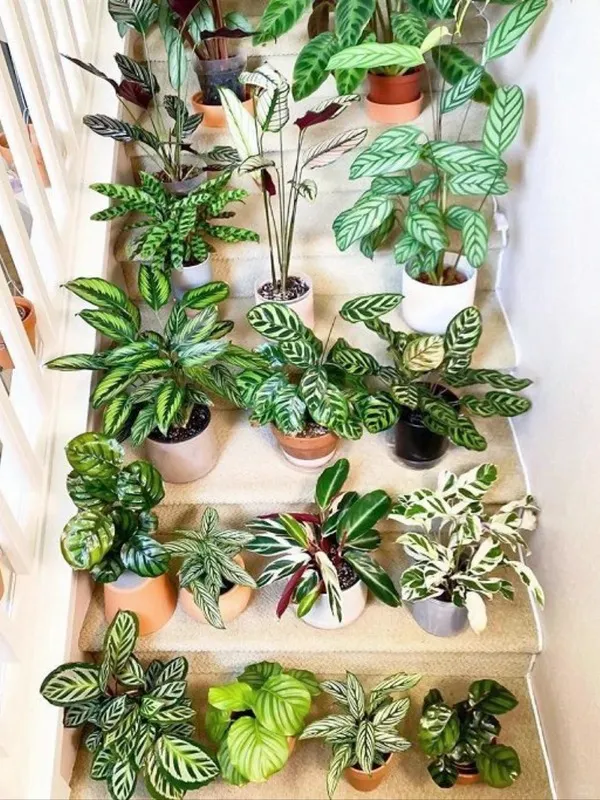
❄️ WINTER WATERING: How I Survived the Cold-Root Crisis
Winter is when most Calatheas quietly go into survival mode — metabolism slows, roots drink less, and soil stays damp far longer than you’d expect.
Inside our homes, heaters dry the air while windows leak cold drafts, creating that confusing mix of warm air but cold soil. The top inch feels dry, yet the lower roots are still sitting in yesterday’s water. That’s how rot begins.
I learned this lesson during my first full winter in Seattle. The days were short, my apartment barely reached 20°C, and I was still watering every Sunday out of habit. Within weeks, the leaves started to yellow from the base. When I finally unpotted the plant, the roots were black, soft, and smelled faintly sour — classic root rot warning signs.
That was my “cold-root crisis”, and it completely changed how I approach watering in the cold months.
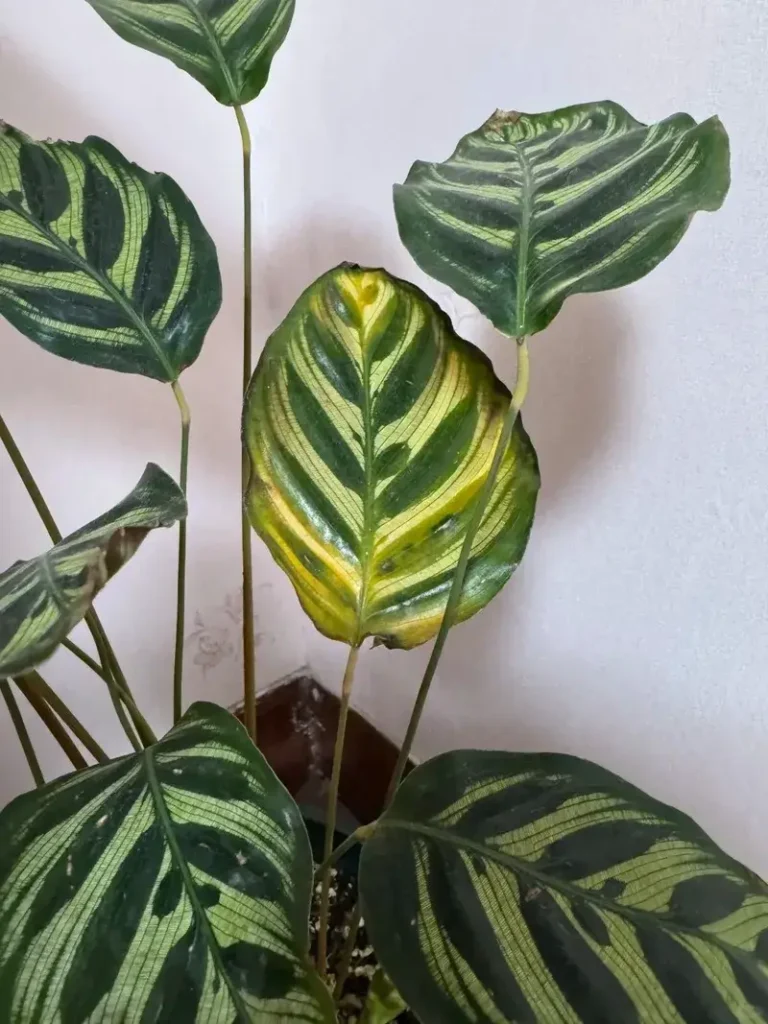
1. Slow Down, Don’t Stop
Calatheas don’t need you to quit watering altogether; they just need you to match their pace.
I now water every 10–14 days instead of weekly, and sometimes I stretch it to three weeks if the weather stays grey and cool. My cue isn’t the calendar — it’s the pot’s weight. When it feels one-third lighter, that’s my sign.
If you use a moisture metre, don’t chase perfect “dry” readings in winter. Calathea roots actually prefer the soil to remain slightly cool and barely damp. Think of it as “moist air in the rainforest morning”, not “bone-dry desert noon”.
2. My 3-Step Diagnostic Routine Before Every Watering
Before I even think about watering in winter, I go through a short three-step check. It sounds obsessive, but this little ritual has saved me from countless root rot incidents. Calatheas don’t speak, but if you listen to the soil, it tells you everything you need to know.
🪴 Step 1: The Finger Test
I gently press two or three knuckles into the soil — just deep enough to reach the middle layer.
If it still feels cool or slightly damp, I wait.
It’s not about the surface dryness (that dries fast in heated rooms); it’s about what’s happening underneath.
In winter, the surface can look bone-dry while the roots are still swimming in moisture below.
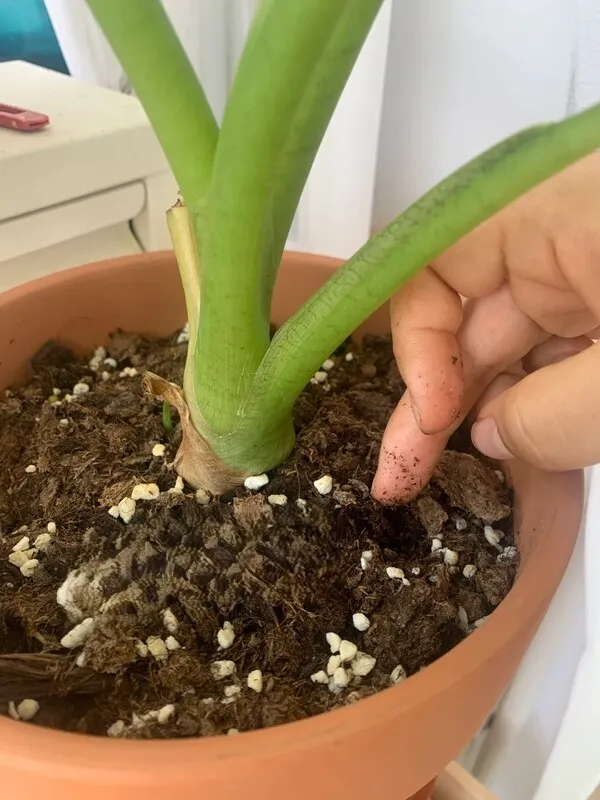
I used to water as soon as the top looked pale. Now, I remind myself: “Cold soil lies.”
🪴 Step 2: The Weight Check
I lift the pot to feel its weight. A well-watered pot feels solid and heavy; when it becomes about one-third lighter, that’s my cue.
Every new pot I get, I test it — I weigh it mentally when it’s freshly watered, then again when dry. Over time, you build an instinct.
It’s not fancy science, just muscle memory.
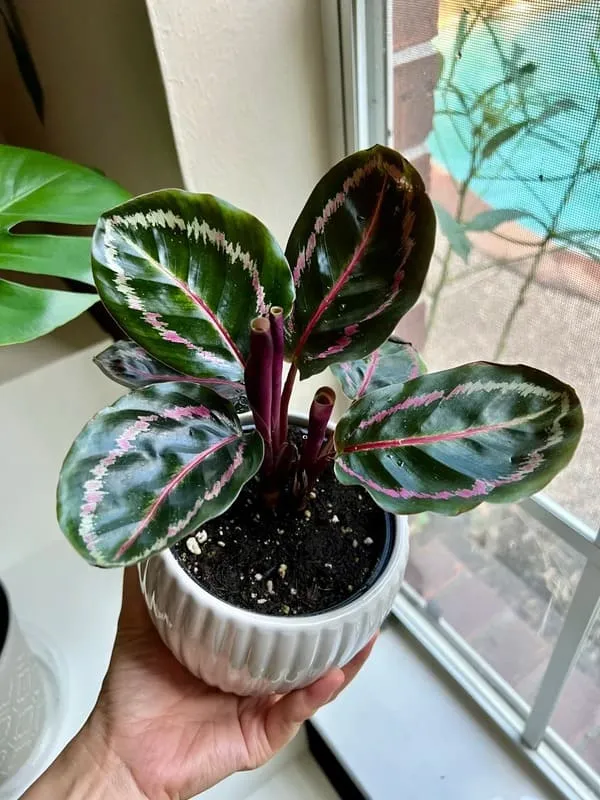
Honestly, this trick alone taught me more about plant care than any moisture meter I’ve ever bought.
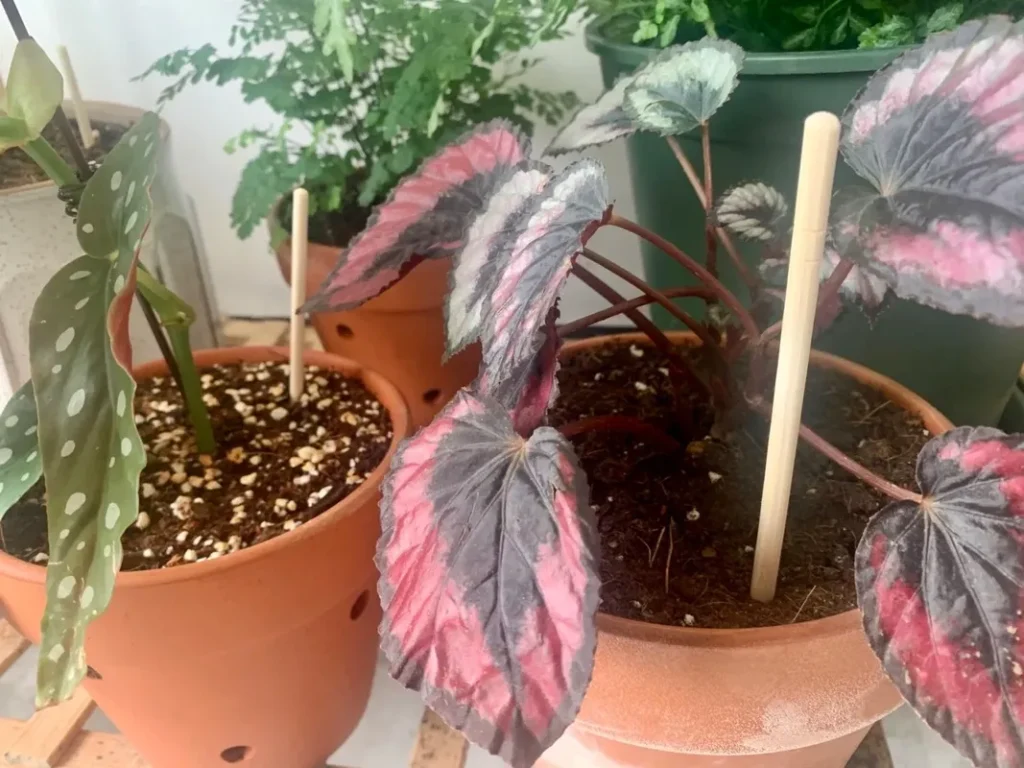
🪴 Step 3: The Bamboo Stick Method
For denser or moss-based mixes, where the surface can deceive you, I insert a clean bamboo skewer all the way down and leave it for five minutes.
When I pull it out, if the bottom third feels moist or shows dark soil marks, I hold off watering.
It’s my quiet way of checking the soil’s hidden zone — the one the roots actually live in.
| Method | How I Use It | Why It Works |
|---|---|---|
| Finger Test | Insert 2–3 knuckles deep | Checks mid-layer dryness |
| Weight Check | Feel pot weight drop 1/3 | Detects hidden moisture |
| Bamboo Stick | Leave 5 min to test bottom soil | Best for moss or dense mix |
Pro Tip
Calatheas only need the top inch of soil to dry before the next drink — anything deeper risks stressing the roots.
In cold months, deep dryness isn’t toughness; it’s danger.
Think of it like keeping a rainforest alive in a ceramic pot — moisture should breathe, not drown.
3. The “Warm Water Ritual”
When I told a friend that I water my plants with warm water, he laughed and said, “What’s next, a bubble bath?”
I laughed too — until I realized that lukewarm water had quietly saved more Calatheas than any fertilizer ever did.
It started one icy December morning when my tap water felt like melted snow. I poured it straight onto the soil, and within days, the leaves curled and stopped unfurling. It wasn’t overwatering this time — it was temperature shock. The roots went numb.
Since then, I’ve made it a habit to let my water rest overnight indoors or add just enough warm water to reach that gentle 18–25°C range. I don’t measure with a thermometer; I just dip my hand in. If it doesn’t sting from cold and doesn’t feel noticeably warm, it’s perfect.
“Not icy, not hot — just invisible to your skin.” That’s my rule of thumb.
Timing matters just as much as temperature. I always water between 10:00 AM and 2:00 PM, when the room and soil have warmed slightly. The midday warmth helps the moisture settle evenly and prevents that heavy, stagnant dampness that lingers overnight.
Evening watering, on the other hand, keeps the roots sitting in cool soil through long, dark hours — exactly when they need oxygen the most.
Now, every winter watering feels a bit like a small ceremony. I fill the jug early, let it rest on the counter, and wait for the sunbeam to reach my plant shelf. The leaves seem to relax instantly after a midday drink, as if to say, “Finally, someone understands.”
🧡 I still remember laughing at myself for ‘pampering’ my plants — until I realized lukewarm water saved more roots than fertilizer ever did.
4. Sitting-Water Method (Half-Soak Hydration)
In winter, my apartment turns into a strange microclimate — warm but still, with dry air and sluggish airflow. Even with a humidifier running, the relative humidity barely stays around 45–55%, and the potting soil dries unevenly: the surface turns dusty while the bottom layer stays damp for days.
That’s when I realized my usual “water-from-above” routine was drowning the hidden roots while the top looked deceptively dry.
So I switched to a sitting-water method — a half-soak that gives moisture only from below.
I place the pot in a shallow basin of water, letting it soak about one-third of the pot’s height for roughly 20 seconds, then lift it out to drain. The soil wicks up just enough moisture through capillary action, leaving the surface slightly dry but the roots hydrated.
This not only prevents soggy topsoil but also trains the roots to grow deeper, toward the consistent moisture zone instead of clustering near the surface.
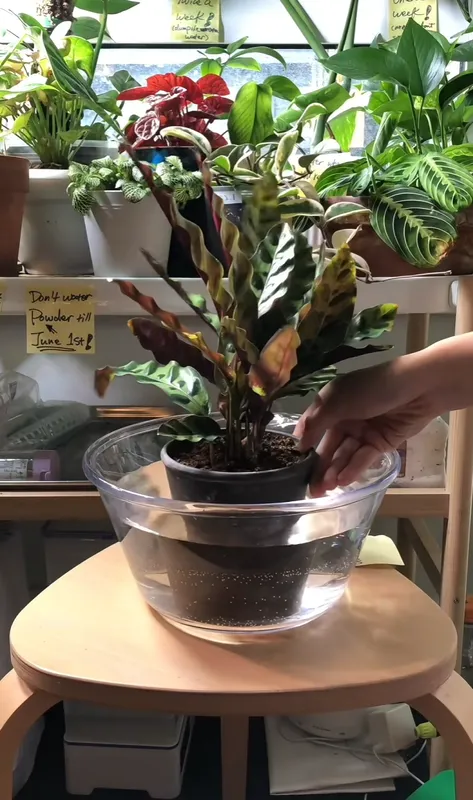
My winter trick: I let my pots sit in half a basin of water for 20 seconds — no full soak. This gives my roots a reason to grow downward instead of rotting in place.
Sometimes I misjudge and the surface ends up too wet — it happens. When that does, I turn on a small oscillating fan for half an hour to move the air around the pots. The gentle airflow speeds up evaporation without chilling the plant.
After I adopted this method, root rot practically disappeared, and my Calatheas began putting out firm, healthy new leaves even in mid-January.
Now, half-soaking feels like the perfect middle ground between care and patience — giving enough water to sustain life without smothering it.
5. Winter Don’ts & Emergency Fixes
Even experienced plant lovers lose Calatheas in winter — not because they stop caring, but because they care too much.
These are the mistakes I used to make, and what actually happens when you do them.
❌ Cold tap water
Roots shut down instantly below 15°C.
Cold water creates micro-cracks in root tissue, much like frostbite.
You might not see it right away, but within a week, the leaves start curling and the root tips turn brown. Always let water reach room temperature or slightly warmer before watering.
❌ Late-night misting
Moisture + cold air = leaf burn.
At night, when light and airflow drop, the water sitting on leaf surfaces can’t evaporate, causing fungal spots or translucent edges by morning.
If you love misting, do it in the late morning when light is bright but not harsh — never after sunset. If edges already crisped, check these sunburn & brown-edge fixes.
❌ Fertilizer in cold months
Sleepy roots can’t digest nutrients now.
During winter dormancy, Calathea roots barely absorb water, let alone fertilizer salts. Feeding them is like offering a heavy meal to someone half-asleep — it only causes stress.
Save the fertilizer for early spring, when new growth begins. I explain when I feed and when I skip it in my guide to the best fertilizer for Calathea.
❌ Ignoring stagnant water
Trays full of runoff water may look harmless, but they cut off oxygen to the lower roots.
Standing water also becomes a breeding ground for fungus gnats.
Always empty saucers after watering and lift the pot slightly to improve airflow under it.
🆘 If Rot Appears
Don’t panic — root rot is reversible if you act early.
Trim away every black or mushy root, soak the healthy ones in a mild fungicide solution for 30 minutes, then repot in a light, airy mix with perlite or orchid bark. If you need an easier reset after root rot, see my guide to store-bought soil for Calathea for ready-made mixes and amendments I would use carefully.
Keep the soil barely moist for the first week, then resume normal watering once new roots appear.
| Symptom | Likely Cause | Quick Fix |
|---|---|---|
| Leaf tip dripping | Root rot | Stop watering, repot |
| New leaves misshapen | Low oxygen | Loosen soil, add perlite (full mix in my soil guide). |
| Stem base soft | Too cold & wet | Move to warmer spot |
The hardest part isn’t fixing rot — it’s realizing that overcare caused it.
In winter, love your Calathea less, and it will love you more.
☀️ SUMMER WATERING: From Rainforest to Living Room
When summer arrives, Calatheas finally wake up.
Longer days, higher humidity, and warm air spark new leaves almost weekly — a beautiful sight, but also a reminder: they drink faster now.
The same plant that barely needed water in January suddenly demands your attention every few days. Heat speeds up evaporation, light drives photosynthesis, and the soil dries out before you even notice.
1. Mimic Tropical Rainfall
Calatheas evolved under rainforest canopies, where sudden bursts of rain wash dust off their leaves and moisten the soil evenly.
In my home, I try to recreate that feeling instead of rigidly sticking to a “watering schedule”.
On the hottest days, I take my plants into the shower for a quick rain session. Using a handheld showerhead or fine mist nozzle, I spray water from above for 15–20 seconds, letting it run gently across the leaves and drip through the soil.
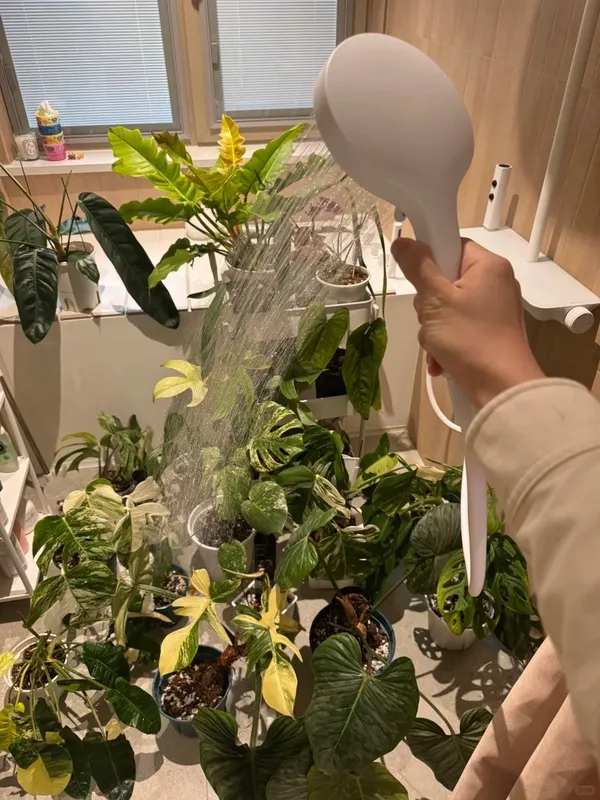
This brief “rain” does two things:
1️⃣ It rehydrates the foliage, which loses moisture quickly under summer light.
2️⃣ It helps rinse off mineral buildup from fertilizers and tap water.
On the hottest days, I take mine to the shower — a quick mist feels closer to their jungle origin than any watering can.
After each shower, I let the pots drain completely before putting them back in place. The leaves look brighter, the air feels cleaner, and somehow the whole room smells like wet earth — my favourite kind of summer therapy.
Feeling the Rhythm
In summer, watering is no longer about strict timing — it’s about rhythm.
I watch the plants more than the calendar. When I see the leaves slightly curl by late afternoon, I know it’s their way of saying, “Tomorrow, please.”
For everyday care, I use self-watering pots for my thirstiest Calatheas. These help maintain gentle, consistent moisture at the roots without the risk of daily overwatering.
Still, I empty the reservoir once a month to prevent stagnation — Calatheas love moisture, not swamps.
Watering in summer is like dancing with your plants: you lead sometimes, but mostly, you follow their rhythm.
2. Prevent Summer Shock
Summer is supposed to be paradise for tropical plants — until the air conditioner turns on, creating a classic crispy-edge problem.
For Calatheas, that blast of cold, dry air is the opposite of the rainforest they came from. Within a few days, the leaf edges start to crisp, turning pale brown like paper. It’s not disease; it’s dehydration from the air itself.
If your AC blows directly on them, consider it a slow-motion sunburn.
Air conditioning drops both temperature and humidity, creating a double hit: cool roots that slow water absorption and dry air that makes leaves lose moisture faster than they can replace it.
Even if you water perfectly, the plant still suffers because the air is stealing what the roots can’t supply fast enough.
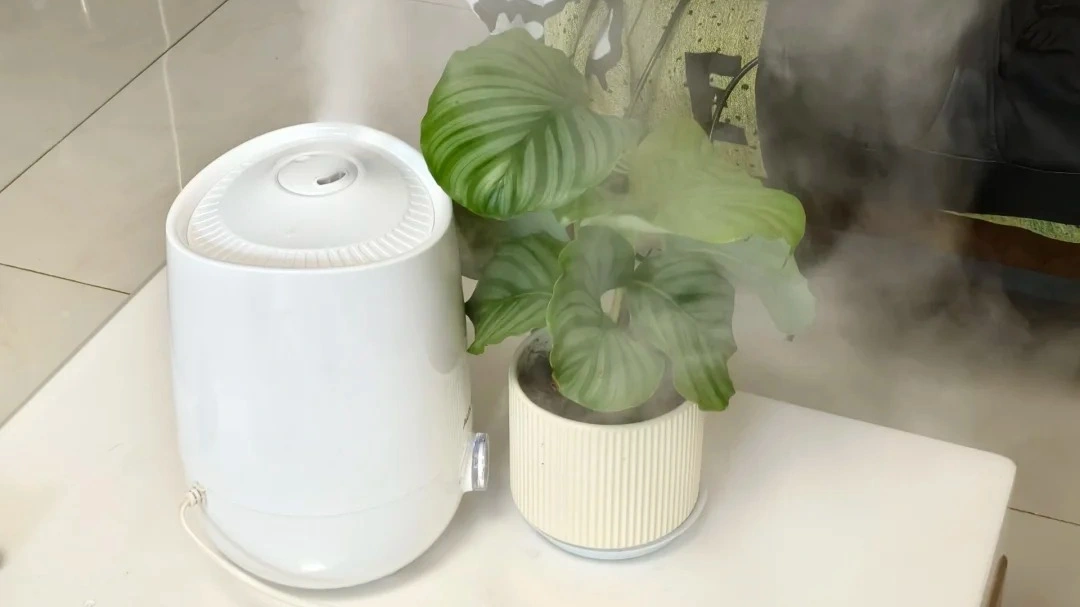
That’s why I keep my Calatheas at least one to two meters away from vents or fans. I group them together to create a small humidity pocket, and I run a small humidifier nearby on low for a few hours a day. If you are not sure whether your room is dry enough to need one, I explain when I would actually use a humidifier in my guide on whether Calatheas need a humidifier.
On the driest days, I also place a tray filled with pebbles and water under their shelf — the evaporating moisture lifts the local humidity without soaking the soil.
Another trick I’ve learned: open the windows briefly in the early morning or evening, just enough for fresh air to circulate. It balances the temperature and prevents the air from becoming too stagnant — a condition Calatheas dislike as much as dryness.
Calatheas thrive in warmth, not wind. They love summer’s light, but only when it feels like a forest breeze, not a hotel air vent.
Once I made these small changes, the crispy edges stopped appearing, and my plants held onto their lush, velvety look even through the hottest weeks.
Now, every time I feel the AC humming, I glance at my Calatheas — and if their leaves look peaceful, I know I’ve got the balance right.
3. The Environment Formula
There is no single “every 7 days” rule for Calatheas. Your light, temperature, humidity, pot size, and soil mix all set the pace. Once I started reading those conditions together, watering became much less confusing.
So I started thinking in a formula:
Watering interval = Base value × (Temperature + Humidity + Light factors)
It sounds overly technical, but it’s really just a way of describing observation.
When the temperature rises, evaporation speeds up.
When humidity drops, the leaves lose water faster.
When light gets stronger, photosynthesis increases, which makes roots thirstier.
Combine those, and suddenly your “once-a-week” rule stops working.
Here’s how I visualize it in summer:
| Variable | Range | Effect on Watering |
|---|---|---|
| Temperature | +10 °C above baseline | Water more often |
| Humidity | –20 % below average | Add a misting or tray cycle |
| Light | Strong indirect or partial sun | Slightly faster soil drying |
🧮 Example
At 25 °C, 60 % humidity, and bright shade, I end up watering about every 12–13 days.
But if the room jumps to 30 °C and humidity drops to 40 %, that interval shortens to about 7–8 days — and sometimes even less when the sunlight hits directly for hours.
That’s why I always recommend paying attention to patterns, not calendars.
Every space has its own rhythm: basement apartments hold moisture longer; bright studios dry out in half the time.
My “formula” just helps me read those rhythms and stay consistent.
Calatheas don’t want precision — they want awareness. Once you start noticing how your room feels, you’ll never have to ask, “Is it time to water yet?”
Expert Section: Tools & Tricks I Rely On
After years of trial and error, I’ve learned that success with Calatheas isn’t about buying every new gadget — it’s about knowing which tools actually make a difference.
Moisture Meter: A Tool, Not a Rule
I keep a basic moisture meter on hand, but I don’t let it dictate when to water.
In winter, it reads “dry” even when the deeper soil is still wet; in summer, it sometimes says “moist” long after the plant is thirsty.
I use it as a reference, not a command — just to double-check what my fingers already tell me. If it reads dry but growth stalls, see why Calathea stops growing.
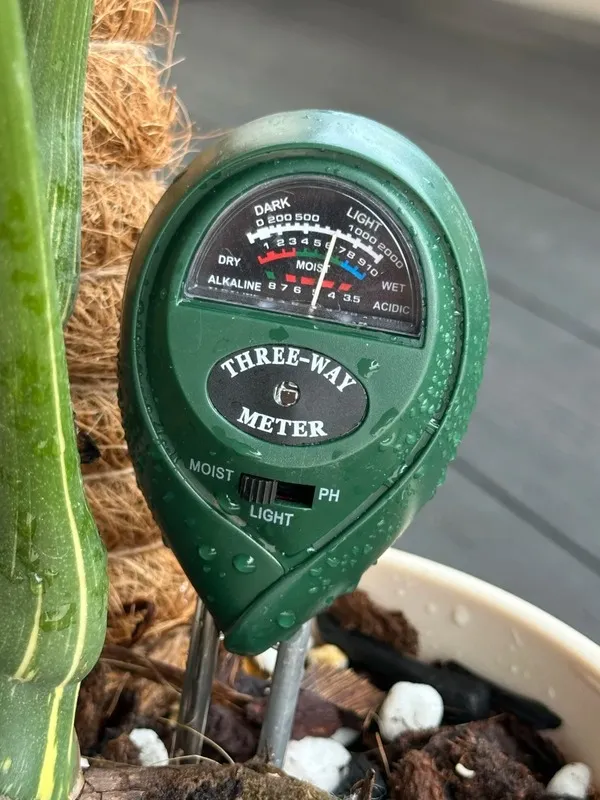
The best sensor is still your own hand.
Spray Bottle & Watering Gear
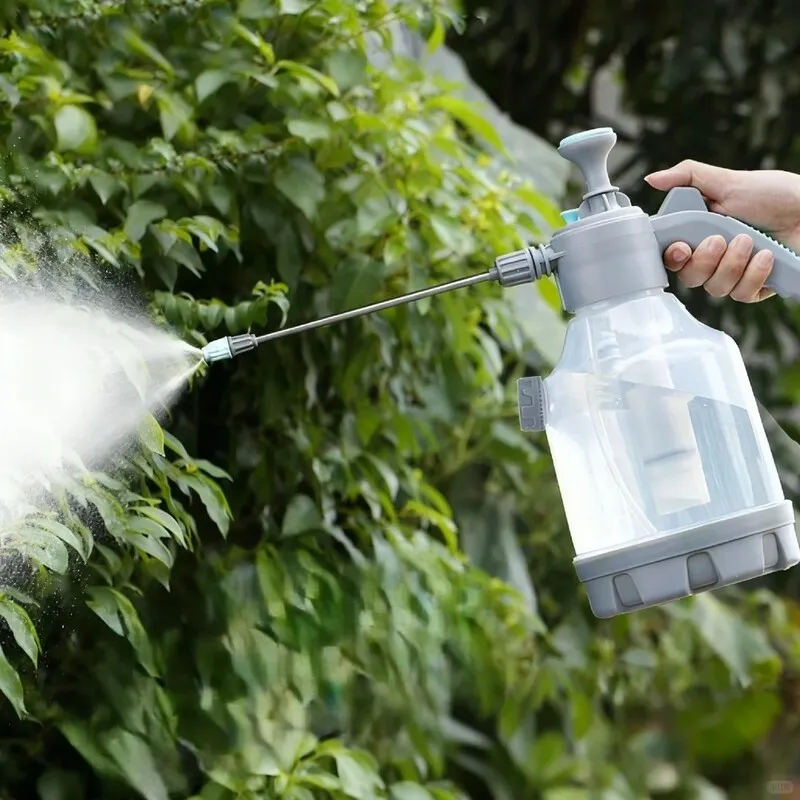
My go-to tool in summer is a fine-mist sprayer — the kind with a long, curved nozzle that can reach under large leaves.
I use it to keep humidity steady and to rinse off dust every few days.
For larger plants, I rely on a handheld shower head with gentle pressure settings. It mimics tropical rain and makes watering faster without compacting the soil.
The trick is consistency, not intensity: light misting often beats heavy watering once a week.
The “Aoyama” Pots I Swear By
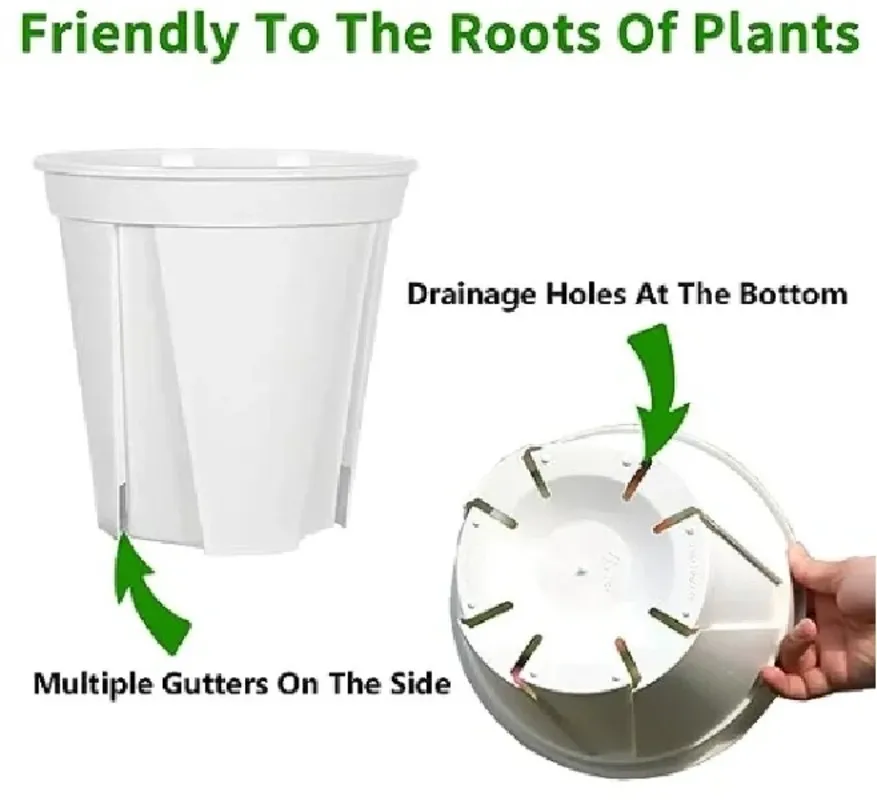
I’ve tried terracotta, ceramic, and many kinds of plastic pots, and I’ve ended up loyal to Aoyama-style plastic nursery pots — the tapered plastic planters with side drainage gutters.
They’re lightweight yet sturdy, smooth inside, and — most importantly — consistent from batch to batch.
Terracotta varies a lot: some pieces are very porous and dry too fast, others feel almost sealed. That inconsistency made it hard to judge moisture by weight or touch. If you are comparing self-watering pots, terracotta, ceramic, or nursery pots with better drainage, I explain the trade-offs in my guide to the best pots for Calathea.
With Aoyama-style pots, I can lift the plant and instantly know whether the soil is still holding water. The moderate breathability + efficient side drainage keep the mix slightly moist without turning soggy — exactly what Calatheas like.
I stopped chasing the “perfect pot” and started trusting my fingers instead.
Air & Drainage Tricks
Under each pot, I keep a thin mesh layer and a few small pebbles to improve drainage and air circulation.
It’s a tiny step that prevents those mysterious “bottom rot” cases even when everything else seems right.
I also rotate the pots every few weeks so one side doesn’t stay constantly cooler or darker — it helps even out moisture distribution and light exposure.
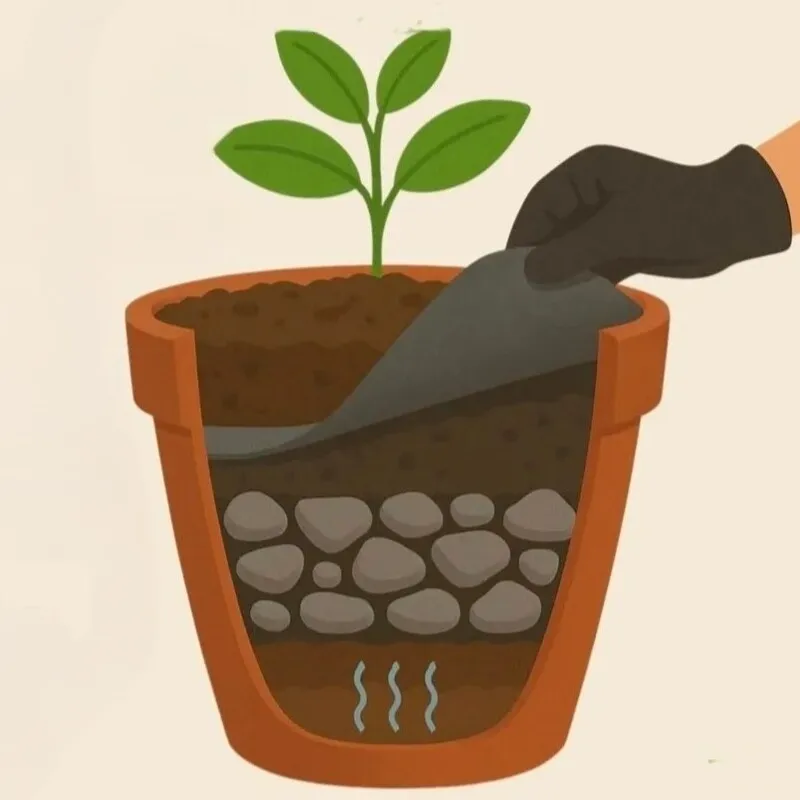
These little habits don’t look impressive, but they changed how I care for my plants.
They turned watering from a guessing game into a quiet conversation.
Now, I don’t chase perfection — I just respond.
Watering Is a Form of Patience
Many Calathea watering problems do not come from one missed watering. They come from repeating the same habit after the season has changed. In winter, that often means watering too soon. In summer, it may mean missing the faster dry-down.
Once I stopped following a fixed schedule and started checking pot weight, soil depth, light, and humidity together, watering became much easier. Calatheas do not need perfect timing. They need you to notice when their rhythm changes.
In the end, patience grows plants better than water ever could.
FAQ
Build a More Stable Calathea Care Routine
Watering only works when light, soil, humidity, and root health are working together. Visit the full Calathea Care hub for watering, light, soil, and common problem guides.
Start the Care Guide →