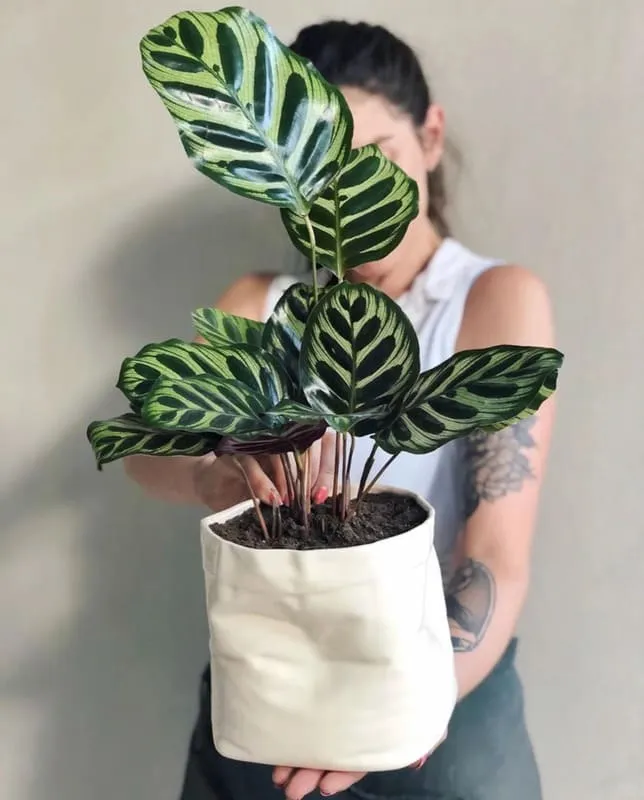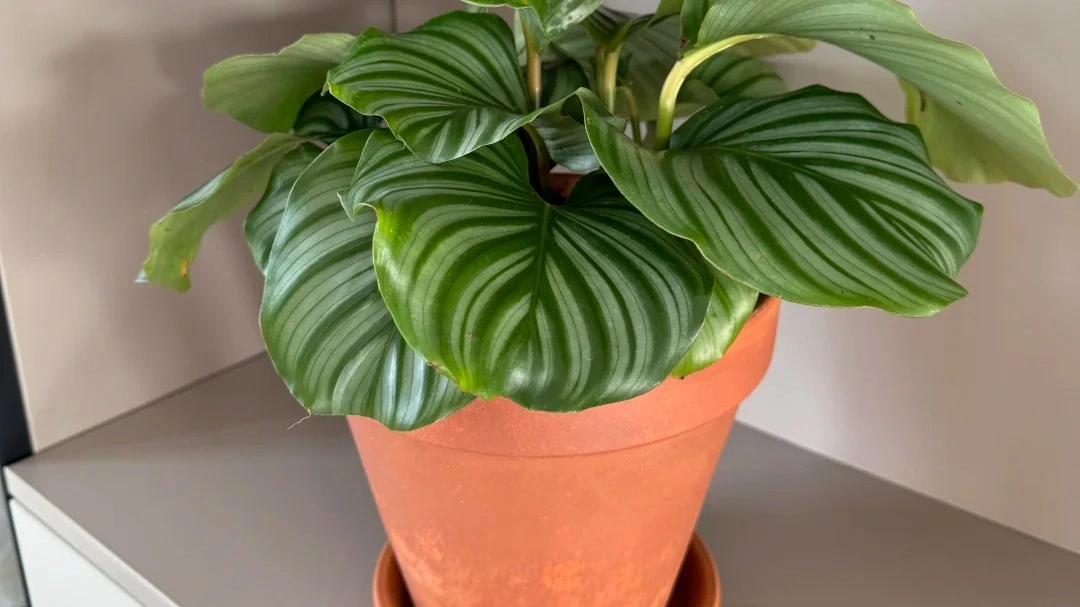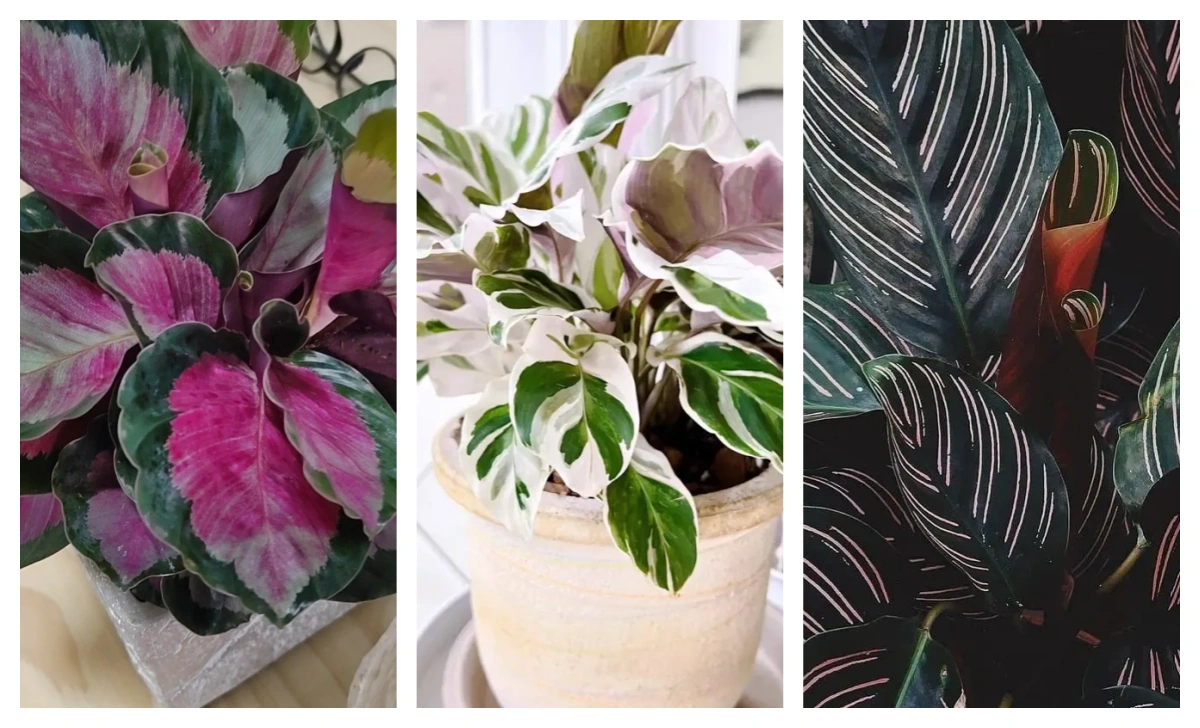
For a long time, I couldn’t tell Maranta leuconeura and Calathea apart.
They’re both called prayer plants.
They both fold their leaves at night.
And in plant shops, they’re often placed side by side as if they’re interchangeable.
I used to think that too.
That changed after I’d been growing a Maranta — specifically a Maranta leuconeura — for nearly two years. What started as a small, cautious purchase slowly became one of the most surprising plants in my home. It didn’t just survive my experiments; it responded to them. New leaves appeared where I didn’t expect them. Aerial roots grew leaves, and those leaves grew roots again. It felt… cooperative.
Only after that did I really understand the difference.
Maranta and Calathea may look similar, but they behave very differently in real homes.
Over time, I realized this simple truth:
Maranta gives feedback.
Calathea gives pressure.
That one sentence explains why beginners often fall in love with Marantas — and why Calatheas have a reputation for being “difficult,” even though they’re incredibly beautiful. This article isn’t a botanical comparison or a plant encyclopedia. It’s a real-world explanation based on living with both plants, making mistakes, and watching how they react.
If you’re trying to decide which one belongs in your home, this difference matters more than leaf patterns ever will.
Are Maranta and Calathea the Same Plant?
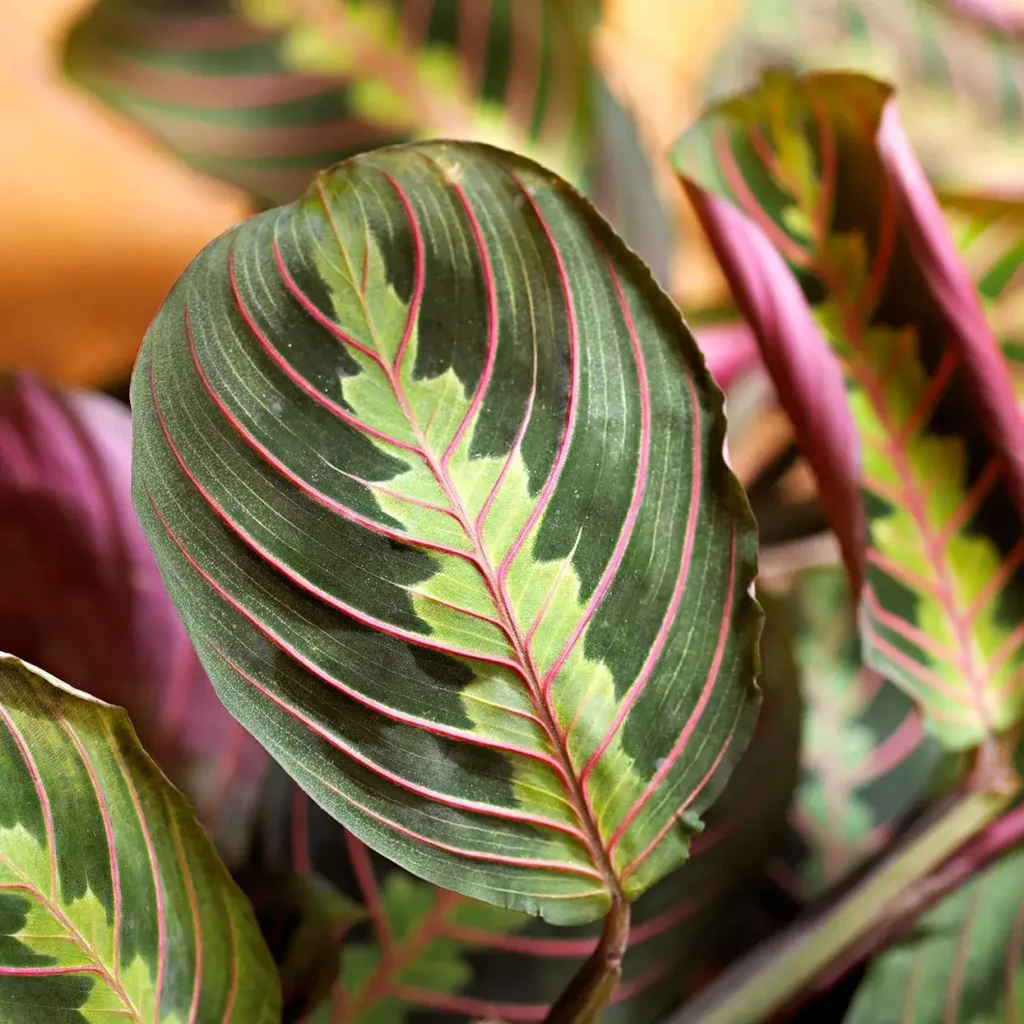
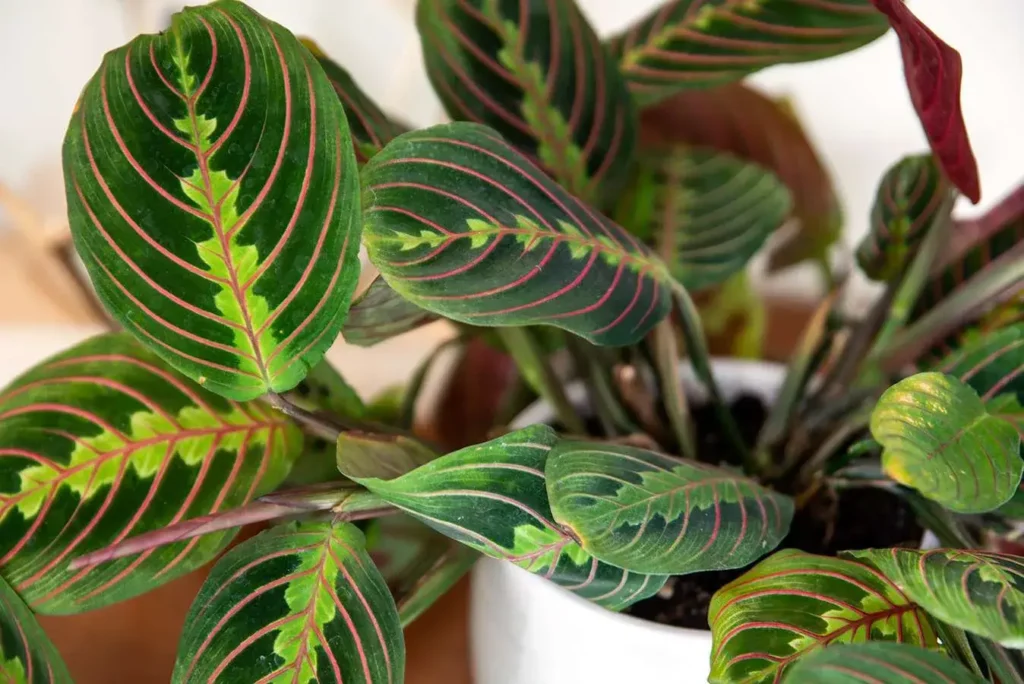
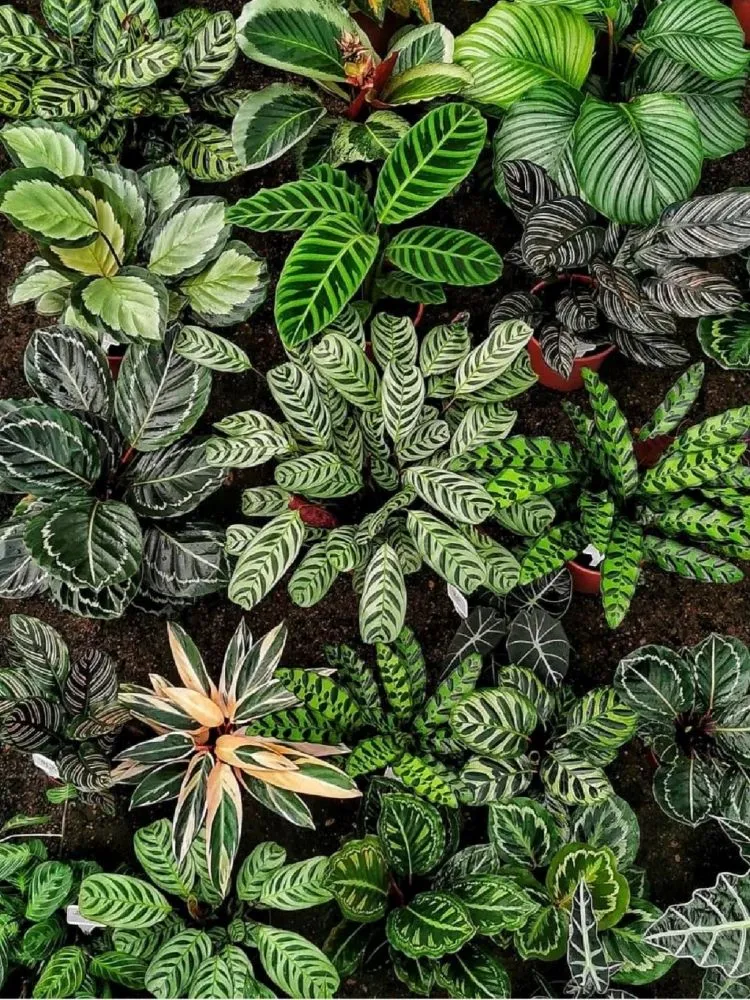
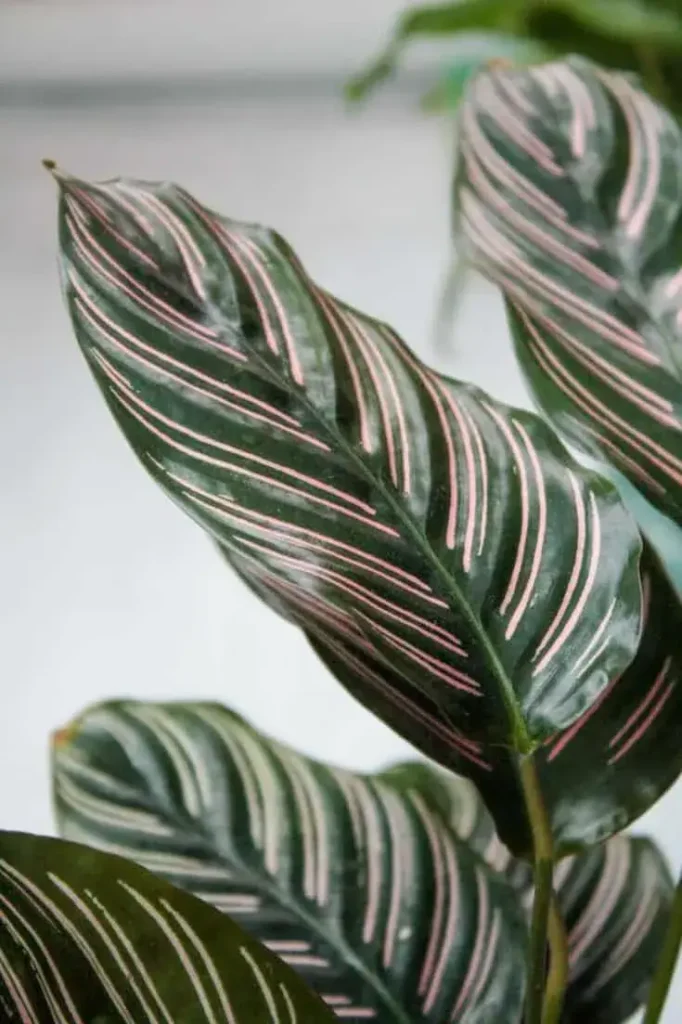
On the surface, it’s easy to think they are.
Both Maranta leuconeura and Calathea are commonly called prayer plants because of a shared behavior known as nyctinasty — their leaves gently rise and fold upward at night, then relax again during the day. This daily movement is one of the reasons people fall in love with them in the first place.
Botanically, they are closely related. They come from the same tropical regions of Central and South America and belong to the same broader plant family. That close relationship explains why they share similar leaf shapes, patterns, and even care advice at first glance.
But here’s where the similarity starts to break down.
Being closely related does not mean they behave the same way once they leave a greenhouse and enter a real home. The way they respond to light changes, watering mistakes, airflow, and dry indoor air is noticeably different — sometimes within days.
In real homes, they behave very differently.
What I Noticed After Growing Maranta Long-Term
Aerial Roots That Keep Growing New Life
The biggest surprise didn’t come from the leaves — it came from the roots.
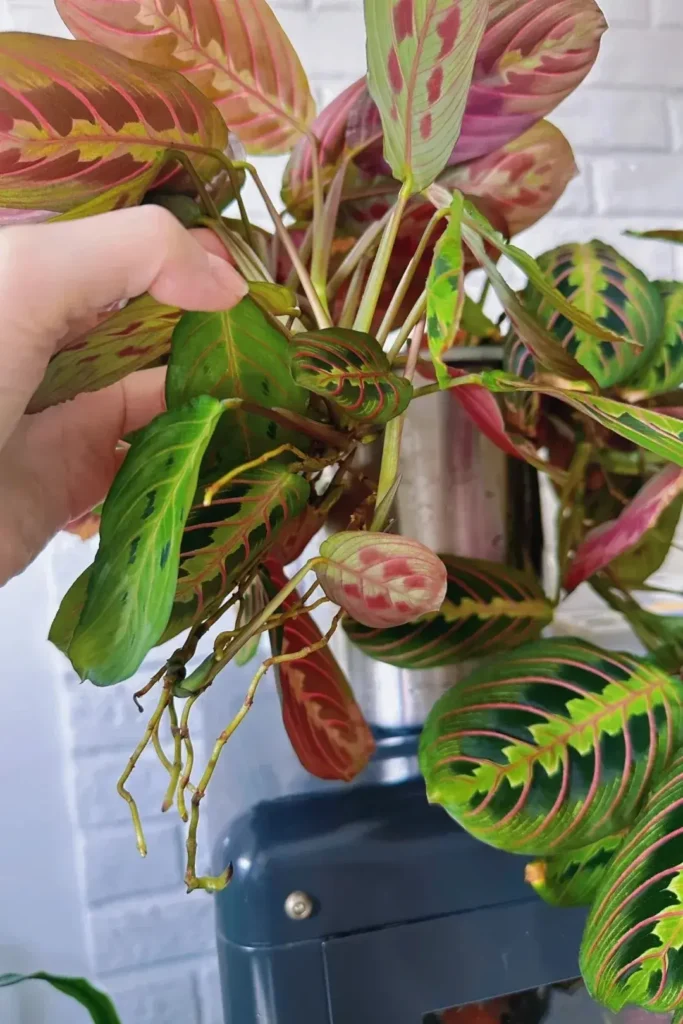
After growing my Maranta for a long time, I started noticing something unexpected: aerial roots forming above the soil, reaching out slowly, almost cautiously. At first, I didn’t think much of it. But then those aerial roots began to do something that completely changed how I understood this plant.
They grew leaves.
Those leaves, in turn, grew new roots.
And the cycle just… kept going.
It wasn’t a one-time accident. It repeated itself, quietly and steadily, like the plant had its own internal logic for continuing life. Watching it felt very similar to growing pothos — that same sense that the plant is always looking for the next opportunity to root, adapt, and carry on.
Over time, I started thinking of it as a self-renewing cycle.
There’s something deeply reassuring about that. Even when I pruned it, even when I experimented with its setup, the Maranta didn’t just survive — it responded. It adjusted. It found another way forward. That behavior alone explains why so many people feel encouraged by Marantas early on: they show you that you’re doing something right.
This isn’t the kind of growth you notice overnight. It only reveals itself after months of living with the plant, observing it day after day. And once you see it, you can’t unsee it — Maranta isn’t just growing leaves for display. It’s quietly building continuity, one node at a time.
My Semi-Hydro Experiment (And Why It Worked)
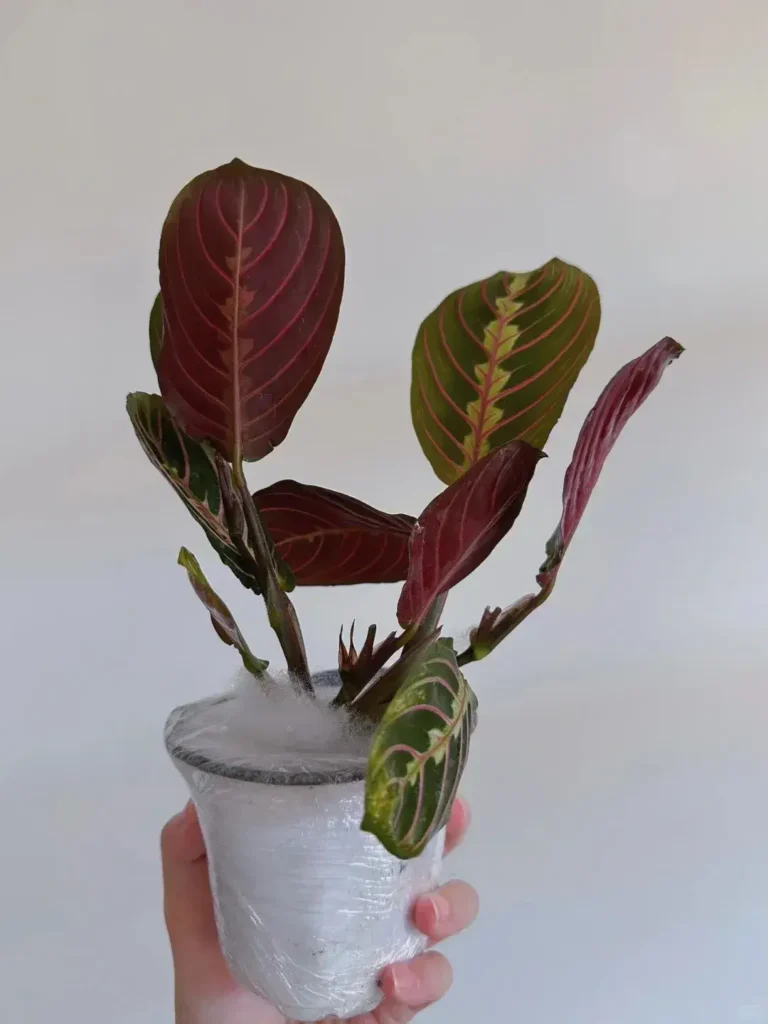
In August 2023, I bought home a very small Maranta. At the time, I honestly wasn’t confident about controlling my watering. Marantas have fine, delicate roots, and I knew from experience that overwatering and underwatering are both easy mistakes — especially in a regular soil setup.
So instead of potting it up the usual way, I decided to experiment.
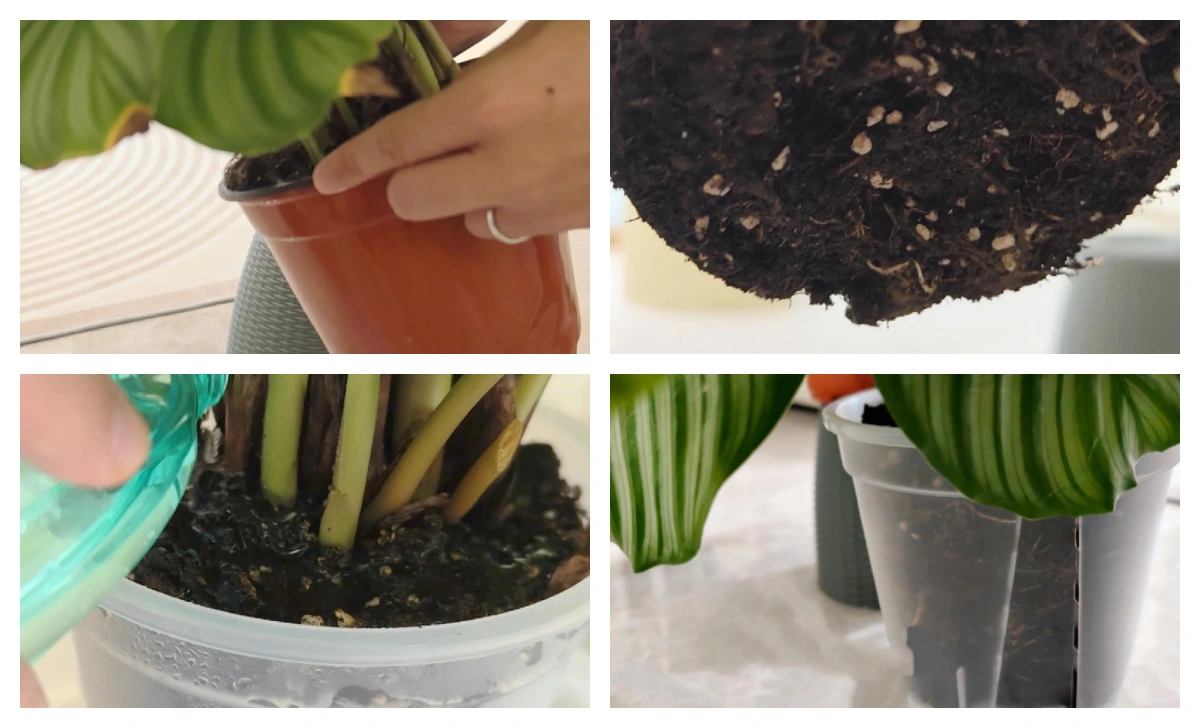
I gently washed all the soil off the roots, placed the plant into a plastic net pot, and filled the outer container with LECA (clay pebbles). The setup was simple: a semi-hydro system, with the water level kept low — just enough to provide constant moisture without submerging the roots.
At that point, there was no confidence behind the decision. It was very much a “let’s see what happens” moment.
What happened surprised me.
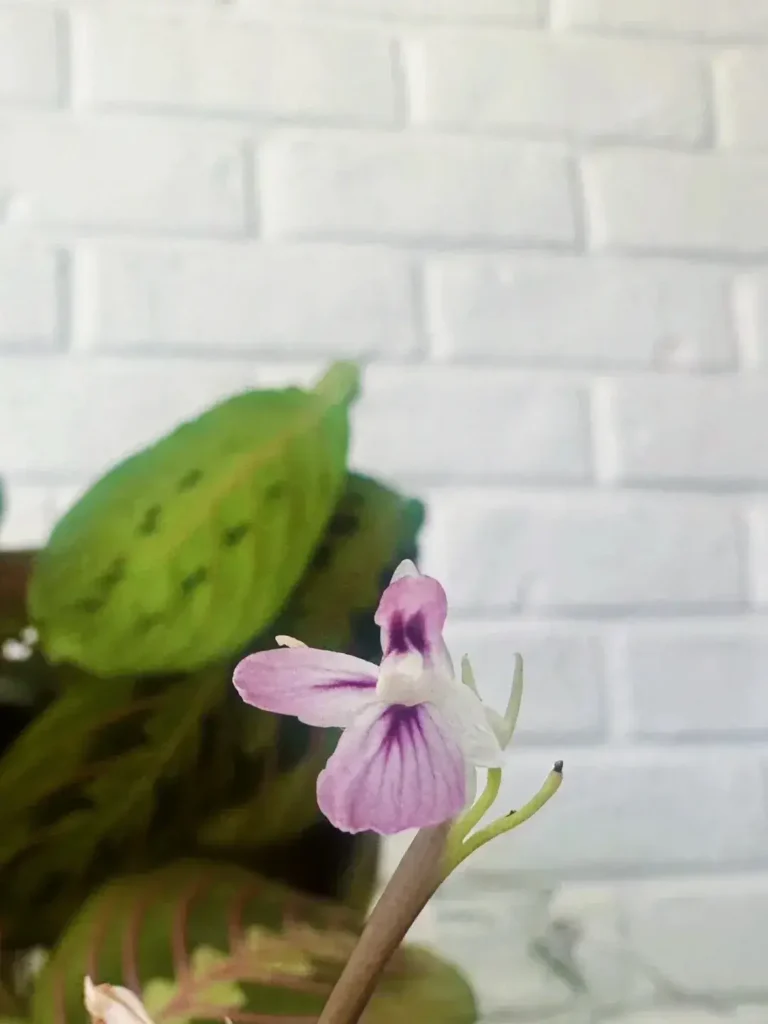
The plant didn’t struggle. It settled in. The roots adapted quickly, staying clean and active instead of suffocating. Over time, not only did the Maranta grow steadily — it flowered. And even more unexpectedly, those aerial roots I’d noticed earlier began producing clusters of baby plants, right above the LECA.
That was the moment I knew this wasn’t luck.
The semi-hydro setup worked because it matched the plant’s nature: constant access to moisture, plenty of oxygen around the roots, and no sudden drying cycles. For a plant with such fine, thirsty roots, this stability made all the difference.
Looking back, this experiment completely changed how I see Maranta. It’s not fragile — it’s responsive. Give it a system that doesn’t stress its roots, and it rewards you with growth, flowers, and new life in places you didn’t even expect.
Pruning, Propagation, and Zero Losses
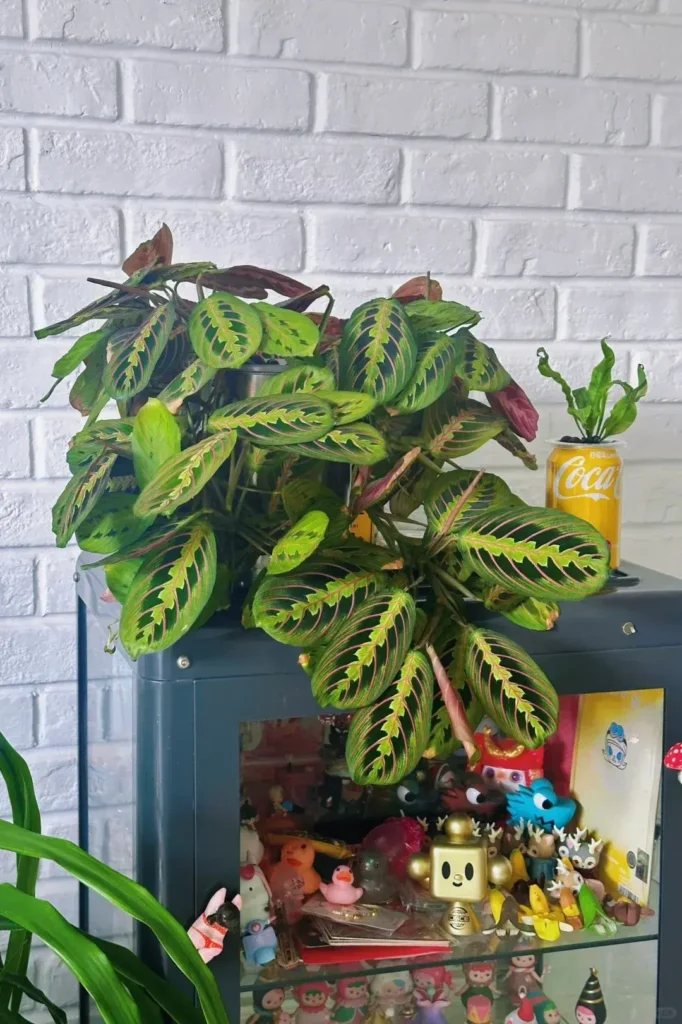
That realization became even clearer last summer.
During the peak growing season, my Maranta had become so full that I decided to prune it back. It wasn’t a careful, minimalist trim either — it was a proper summer cut to control size and encourage fresh growth. I ended up with several healthy cuttings in my hands.
I almost threw them away.
Almost.
Instead, I placed the cuttings in water and left them alone, with no special treatment, no rooting hormone, and no expectations. Every single one rooted successfully. Not just barely surviving — they continued growing, pushing out new leaves and settling in as if nothing had happened.
There was zero loss.
Meanwhile, the mother plant responded just as generously. New shoots appeared quickly, growth stayed compact and balanced, and the overall vigor actually improved after pruning. Nothing stalled. Nothing sulked.
That was the moment it really clicked for me:
That’s when I realized how forgiving Marantas really are.
They don’t punish you for learning. They don’t collapse because you cut at the wrong time or try to propagate out of curiosity. Instead, they adapt, recover, and keep moving forward. For anyone building confidence as a plant grower, that kind of response makes all the difference — it turns care into a conversation, not a constant test.
Daily Care: What Actually Matters for Maranta (From My Home)
After living with Maranta for a long time, I’ve learned that its care doesn’t come down to complicated rules — it comes down to a few priorities that actually affect how the plant behaves. These aren’t textbook instructions; they’re conclusions I reached by watching how my plant reacted over time.
Light — Bright, Indirect, and Honestly… Not That Demanding
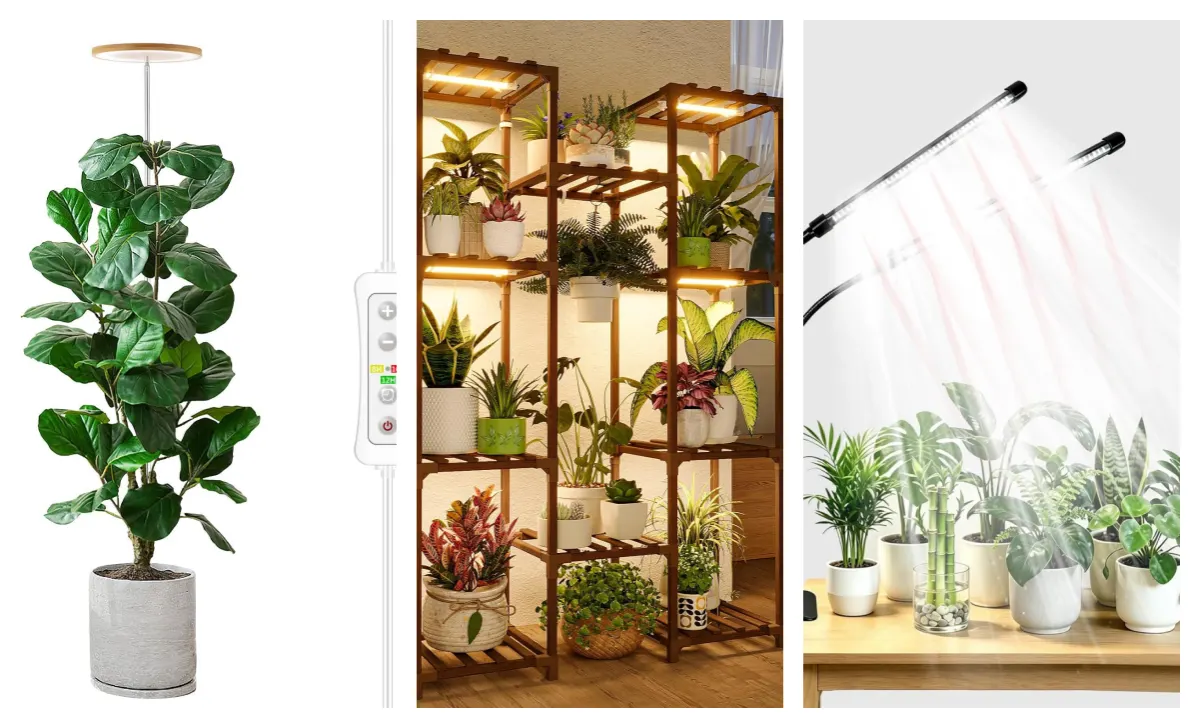
Maranta doesn’t need strong light to look good. In my home, soft, indirect light has always been enough to keep the leaves vibrant and growth steady. I’ve tried brighter spots and more shaded ones, and the difference is clear: harsh light stresses the leaves, while gentle, scattered light lets the plant focus on growing rather than defending itself.
I say this confidently because when the light is right, Maranta shows it — new leaves appear regularly, and the plant stays relaxed rather than tense or curled.
Airflow — More Important Than Most People Realize
This is the part that gets overlooked the most.
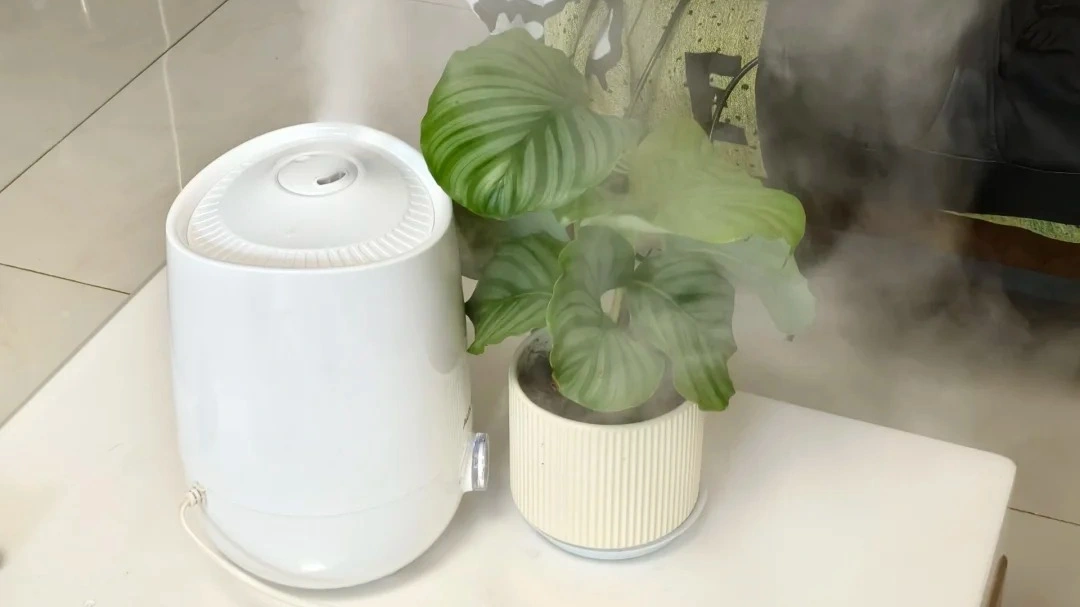
Yes, Maranta appreciates humidity, but good airflow matters just as much. In still, stagnant air, I noticed slower growth and occasional leaf issues, even when moisture levels were fine. Once I improved ventilation — simply by keeping air moving in the room — the plant looked noticeably healthier.
That’s why I always emphasize airflow. It prevents moisture from lingering where it shouldn’t and keeps the plant environment balanced, especially in setups like semi-hydro.
Water — Fine Roots, No Dry Cycles
Maranta has very fine, hair-like roots, and that structure tells you everything you need to know about watering. Letting the plant dry out completely doesn’t “teach it resilience” — it just creates stress.
In my experience, Maranta performs best when moisture is consistent. Not soggy, not flooded — just reliably available. Whenever I let the water level drop too far, the plant reacted almost immediately. When I kept things steady, it stayed calm and productive.
That’s why I don’t follow strict schedules. I watch the plant, check moisture levels, and refill before dryness becomes a problem. The plant’s response has always been clear and honest.
Taken together, these three factors explain why Maranta feels so cooperative to grow. When light is gentle, air is moving, and water is consistent, the plant doesn’t fight you — it works with you. And once you experience that rhythm, it’s hard not to appreciate how naturally forgiving this plant really is.
So Where Does Calathea Fit In?
These days, I actually collect Calatheas more often than Marantas.
Not because they’re easier — they aren’t. And not because they’re more forgiving — they definitely aren’t. The reason is simpler than that: I know what they’ll punish me for now.
With Calatheas, the rules feel stricter. Miss the watering window, let the air get too dry, or ignore airflow for too long, and they respond almost immediately. Leaves curl, edges crisp, patterns fade. There’s very little grace period. Where Maranta adjusts, Calathea demands precision.
But once you understand those demands, Calatheas stop feeling impossible. They become predictable. And for someone who already has experience — who enjoys fine-tuning light, humidity, and routines — that challenge can actually be rewarding.
That’s where Calathea fits for me now. Not as a beginner-friendly plant, but as one I choose deliberately. I don’t expect it to forgive mistakes. I expect it to tell me, clearly and quickly, when something isn’t right — and once you accept that relationship, caring for a Calathea starts to make sense.
Maranta vs Calathea: Which One Should You Choose?
If you’re standing in front of these two plants and wondering which one belongs in your home, here’s my honest, experience-based answer.
If you’re new to houseplants, start with Maranta. It reacts gently, recovers well from small mistakes, and gives clear feedback when conditions are right. That kind of response builds confidence quickly.
If you’re looking for a sense of achievement and momentum, Maranta is still the better choice. It grows, propagates easily, and rewards consistency without demanding perfection.
If you already enjoy plants as a hobby and like collecting varieties or taking on a challenge, that’s where Calathea makes sense. Its patterns are stunning, and once you understand its expectations, caring for one can feel precise and intentional — but it’s not forgiving.
And then there’s the simplest truth of all.
If you’re drawn to a specific plant for the way it looks, don’t overthink it. Buy the one you genuinely love. Learn its behavior, accept its limits, and grow into its care.
Because in the end,
liking a plant is the strongest motivation to keep it alive.
FAQ
Explore More Calathea Varieties
Looking to discover more beautiful Calathea plants?
Browse our full collection of Calathea varieties — from the bold Orbifolia to the velvety Warscewiczii — and find the one that fits your home best.