Last winter, I damaged one of my healthiest calatheas — not because my home was unusually cold, but because I watered it the wrong way during the coldest days. Night temperatures dropped close to 10°C, and I kept watering as if it were still fall — before I understood how much seasonal watering changes in winter. Within days, several leaves turned translucent and collapsed. A few were lost completely.
What surprised me most was how fast it happened. There was no gradual decline, no warning phase. One day the plant looked fine, and the next, the damage was obvious. That experience forced me to re-learn how calatheas behave in cold conditions — especially how temperature changes what “overwatering” actually means in winter.
Since then, I’ve tested different winter approaches across multiple calatheas, including reducing water volume, using simple finger checks instead of schedules, and even bagging plants during cold spells. The plant that froze that winter has fully recovered, but only because I reacted quickly and stopped treating cold damage as a temperature problem alone.
This article isn’t a generic care guide. It’s a breakdown of what cold damage in calatheas really looks like, why it almost always involves water, and exactly how I handle it now — step by step — when temperatures drop below 10°C.
How to Tell If Your Calathea Has Cold Damage
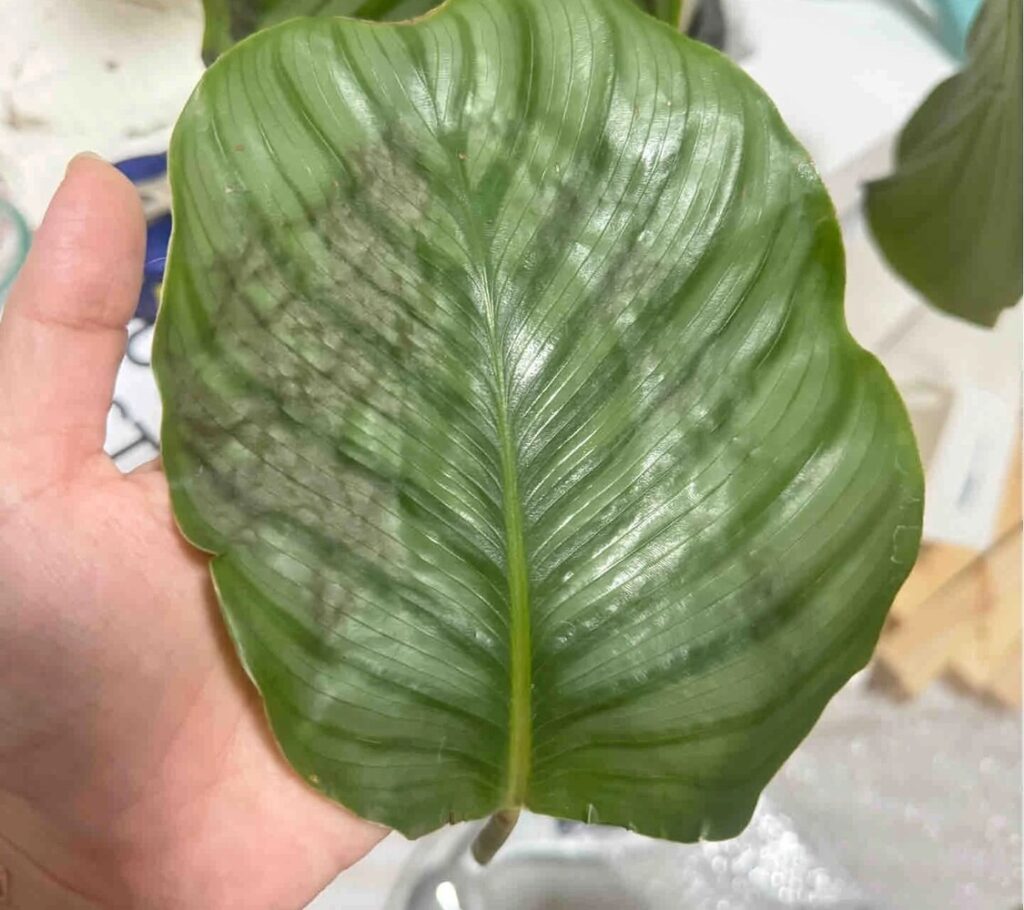
Cold damage in calatheas usually shows up fast, and it almost always shows up on the leaves first. One of the clearest signs is water-soaked tissue. Affected areas may look translucent or slightly glossy, as if the leaf has been thawed after freezing. These patches feel soft rather than crisp and often collapse within a day or two.
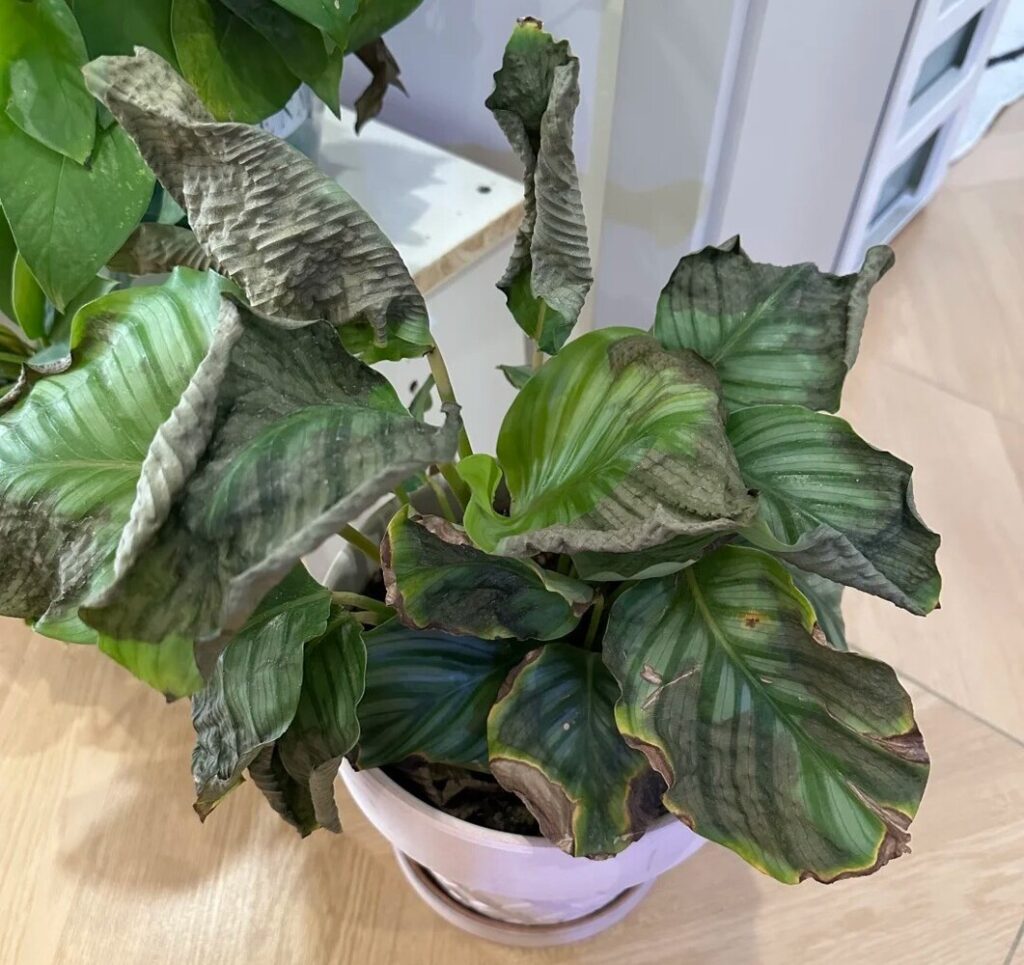
Another common pattern is rapid drying. Leaves that looked fine shortly before can suddenly lose firmness, curl inward, and dry out unevenly. This isn’t the slow, tip-by-tip browning you see with humidity issues — it’s a faster structural failure of the leaf.
You may also notice irregular mottling or blotchy discoloration, especially on older leaves. The pattern is uneven and doesn’t follow veins or margins cleanly. This kind of damage is often mistaken for pests or sun stress (I cover those look-alikes here: calathea sunburn vs brown patches), but when it appears right after cold nights, temperature stress is the more likely cause.
Leaf drop can happen, but it’s usually not instant or complete. In most cases, leaves dry or collapse first, then detach later. If a calathea loses all its leaves overnight, that points to a more severe event. Gradual leaf loss, especially when leaves were already showing the signs above, is a more typical cold-damage response.
Why Cold Damage Is Usually a Watering Problem
Cold damage in calatheas is rarely caused by temperature alone. In most home setups, the real trigger is cold combined with too much water.
As temperatures drop, transpiration slows down dramatically. Calatheas stop moving water efficiently through their leaves, even if light and humidity seem unchanged. Soil that would normally dry within a few days can stay wet for much longer, especially during cold nights.
The problem is that many winter watering habits don’t change with temperature. Watering “on schedule” or using the same volume as in fall means moisture accumulates faster than the plant can use it. Roots sit in cold, wet soil — and if your mix holds water too long, a well-draining calathea soil becomes even more important in winter.
This is why cold damage often feels sudden. The plant isn’t gradually declining; it’s failing to cope with a condition it can’t physiologically adjust to. In winter, water stops being a neutral care routine and becomes a risk factor when temperatures drop.
How I Water Calatheas Below 10°C
Once temperatures drop below 10°C, I stop thinking about watering as a routine and start treating it as a decision. Nothing in winter follows a fixed rhythm, and calatheas respond far more to soil conditions than to dates on a calendar.
Don’t Follow a Schedule
In cold conditions, watering schedules break down completely. A pot that dried in four or five days during fall can stay damp for more than a week once temperatures drop. Following a “every X days” rule in winter is how most cold damage starts — not because the plant needs less care, but because its ability to move and use water slows down.
Below 10°C, I ignore timing altogether. If the soil hasn’t clearly dried, I don’t water — even if it’s been longer than usual.
The Finger Test I Use
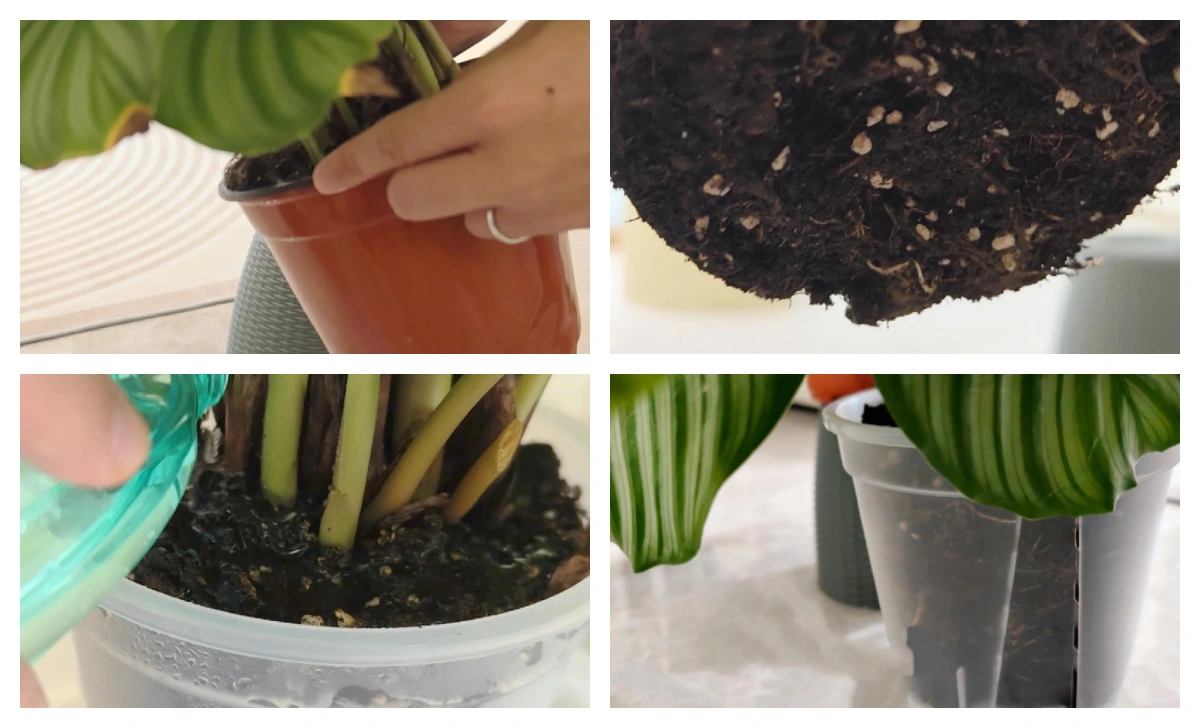
Instead of checking the surface, I push my finger about two knuckles deep into the soil. I’m not looking for “slightly moist” or “almost dry.” I only water when there is no detectable moisture at all.
When I pull my finger out, there should be little to no soil sticking to it. If the soil feels cool, damp, or clings in any way, that’s a clear sign to wait. In winter, waiting is almost always safer than watering too soon.
This simple check has been far more reliable than moisture meters or visual cues, especially during cold spells. And when I do water in winter, I keep it gentle — the water quality matters more than people think.
What “Water Less” Actually Means
Watering less doesn’t mean skipping water entirely. It means reducing volume, not just frequency.
For example, if a calathea normally takes about a cup of water to fully soak the soil around 15°C, I’ll use half that amount — sometimes even a third — once temperatures drop. The goal is to rehydrate the root zone without leaving excess moisture that the plant can’t process.
Cold damage often happens not because water was added, but because too much water was added at once. Smaller amounts give the plant a chance to stabilize without sitting in cold, saturated soil.
What to Do If Cold Damage Has Already Started
Once cold damage begins, the goal isn’t to “fix” the plant immediately. It’s to stop the damage from spreading and avoid actions that make things worse.
If you see water-soaked or mushy leaves, those need to be removed right away. Tissue that has turned translucent won’t recover, and leaving it attached increases the risk of further decline. If the damage is limited to leaves, removing the affected foliage is usually enough. If it has moved down toward the base and the plant smells sour or collapses easily, unpotting becomes necessary — these are also classic root rot symptoms. In severe cases, all softened tissue must be cut back — from leaves down to firm rhizome or roots. This is stressful for the plant, but cold-rotted tissue spreads quickly, and waiting can be fatal. If you’re unsure whether the plant is still salvageable, I wrote a deeper step-by-step guide here: how I revive a dying calathea.
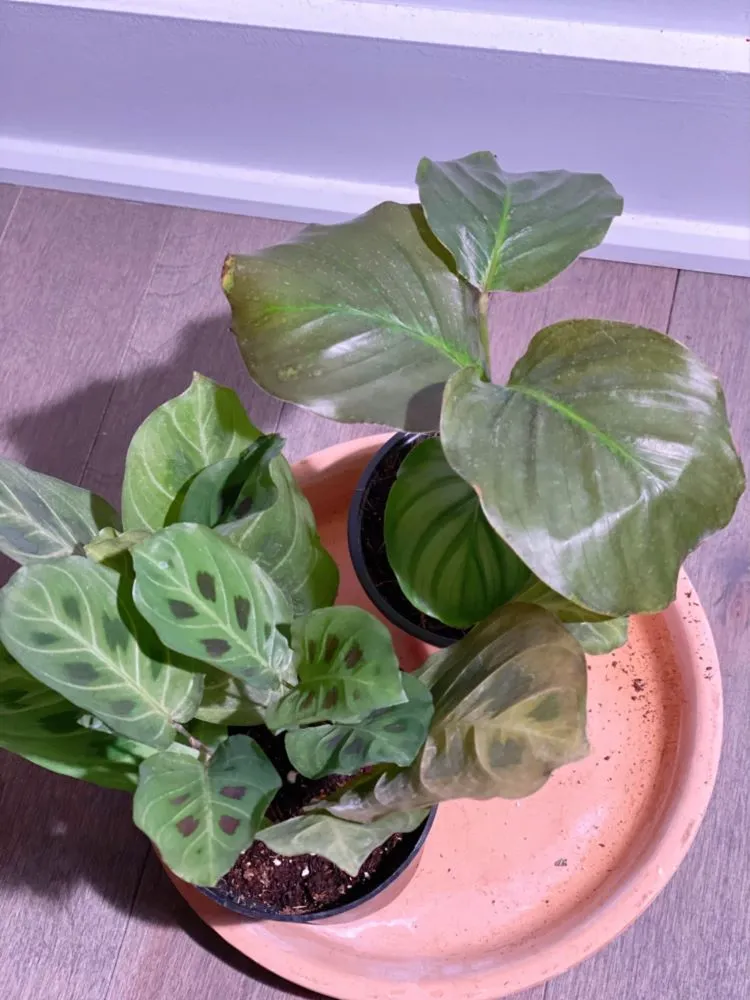
If the leaves are dry, papery, or blotchy, the situation is very different. This type of damage is often cosmetic and doesn’t require immediate action. As long as there are still healthy leaves, it’s best to leave the plant alone. Do not water in response to dry-looking damage — cold-stressed calatheas rarely need moisture at this stage.
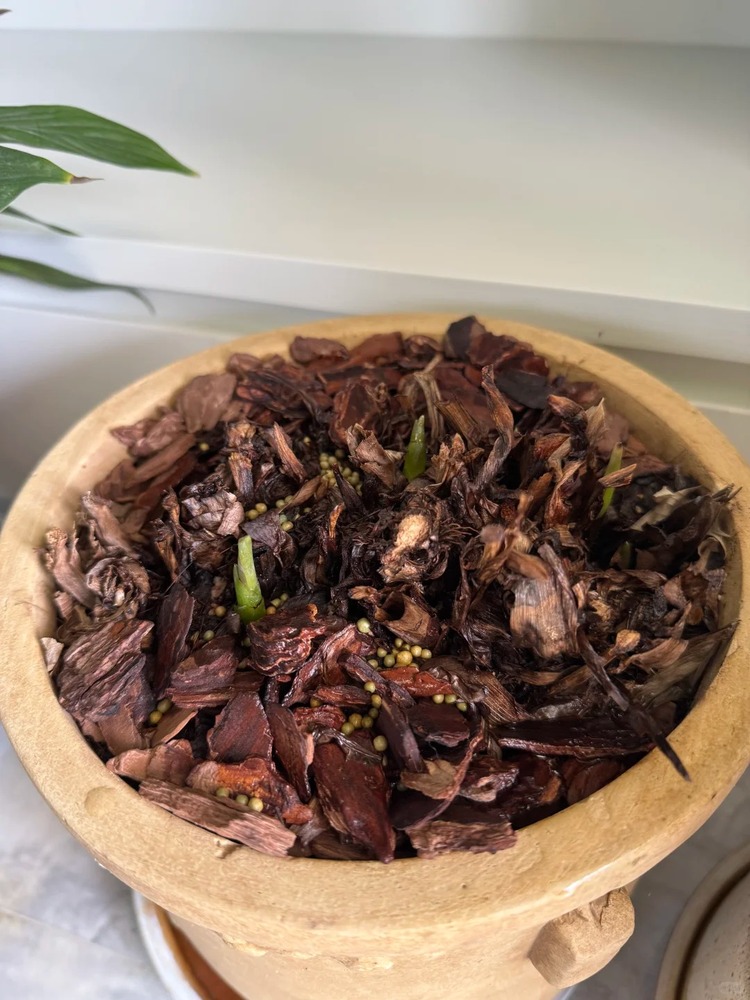
When the soil is still too wet, avoid the instinct to repot right away. If roots don’t show obvious rot, simply removing the damp top layer and replacing it with dry soil can help moisture escape faster. Improving airflow around the pot speeds drying far more safely than adding heat or water. Once the soil stabilizes, the plant has a much better chance of holding on until temperatures rise again.
Should You Remove Damaged Leaves or Leave Them?
Whether to remove damaged leaves after cold stress depends less on how bad the damage looks and more on how much healthy tissue the plant still has.
If there are several healthy leaves remaining, removing badly damaged ones is usually fine. Fully collapsed, mushy, or completely dried leaves won’t recover, and trimming them can reduce stress and improve airflow. In this case, selective removal helps the plant redirect energy without compromising its ability to function.
When a plant has only a few leaves left, it’s often better to leave partially damaged ones in place. Even imperfect leaves still contribute to photosynthesis, and cutting too aggressively can slow recovery. This is especially true if the damage is dry or mottled rather than soft and decaying.
There are also situations where doing nothing is the better choice. If damage has stabilized, temperatures are still low, and the plant isn’t actively growing, cutting can trigger unnecessary stress. Cold-stressed calatheas recover when conditions improve, not when they’re heavily pruned.
In general, I avoid “cleaning up” a plant for appearance alone. Leaves can be removed gradually as the plant regains strength, but immediate cosmetic pruning rarely speeds recovery in winter.
When Recovery Actually Happens
Cold-damaged calatheas don’t recover gradually. They recover when conditions cross a threshold.
As long as the rhizome is firm and not rotting, the plant is still alive — even if most or all leaves are gone. Leaf loss alone doesn’t mean failure. In winter, calatheas often retreat completely above the soil before regrowth becomes possible again.
Recovery usually begins only after night temperatures stay consistently above 15°C. Before that point, the plant is in survival mode. Water uptake is limited, growth is paused, and any attempt to “wake it up” too early often does more harm than good.
This is why test watering is risky. Adding small amounts of water to see if the plant responds can keep the soil damp without triggering growth. If the rhizome is healthy, it will push new shoots once warmth returns — not because it was encouraged, but because conditions finally allow it.
Until temperatures stabilize, the safest approach is patience. Keep the soil on the dry side, maintain basic airflow, and resist the urge to intervene. When recovery starts, it’s usually obvious: new growth appears suddenly, not inch by inch.
During prolonged cold spells, I sometimes use simple winter bagging to keep conditions stable while waiting for temperatures to rise. It’s not about warmth in the heating sense — it’s about reducing airflow and slowing moisture loss so the plant doesn’t experience repeated stress swings.
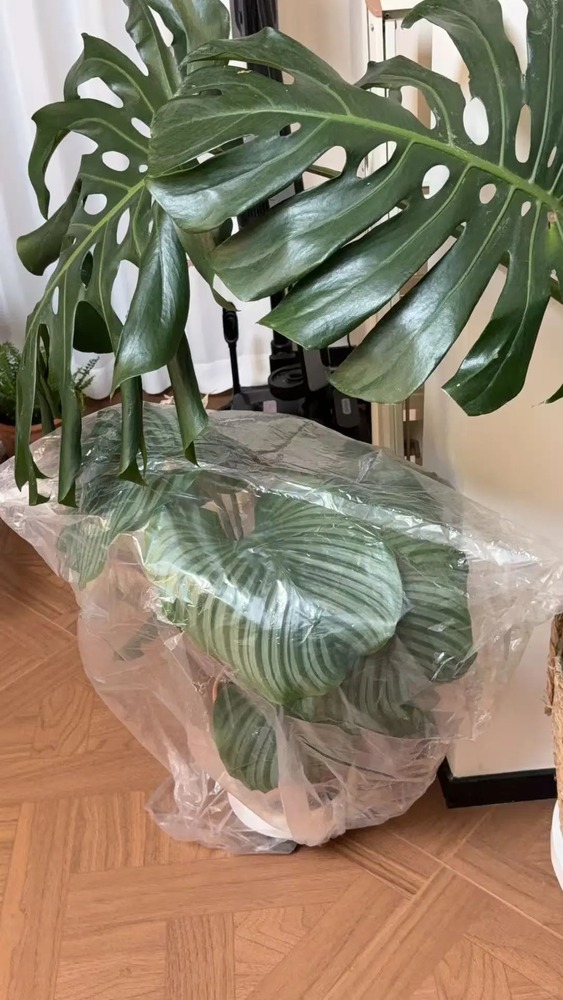
The bag doesn’t need to be sealed. I always leave small openings for air exchange to prevent condensation buildup. This method is especially useful when night temperatures hover just above freezing or fluctuate unpredictably. It’s not pretty, but it’s low-effort and effective when recovery isn’t possible yet.
Bagging isn’t meant to restart growth. It’s a holding strategy. Once nighttime temperatures remain above 15°C, the bag comes off and normal care resumes.
FAQ
Still worried about your plant?
👉 For more tips on keeping your plant healthy, explore our Complete Calathea Care Guide.
Explore All Problems →