The first time I noticed holes on my calathea leaves, my reaction was immediate: something must be wrong.
Holes feel different from yellowing or drooping. They look deliberate — like damage caused by an external force. And for most plant owners, that force has a name already attached to it: pests.
But after growing calatheas for a while, I’ve learned that holes or tears don’t automatically mean disease or infestation. If you still suspect bugs, this is the first checklist I use: calathea spider mites (signs vs false alarms). In fact, many cases that look alarming at first turn out to have nothing to do with bugs, fungus, or pathogens at all.
What makes this kind of damage especially confusing is that it often appears suddenly and without warning. A leaf that looked fine days ago can show multiple holes overnight, pushing people into panic mode — spraying, isolating, or even discarding the plant before understanding what actually happened. If you’re tempted to “fix everything” at once, start here first: common calathea watering mistakes.
In reality, some of the most common causes of holes on calathea leaves aren’t biological problems. They’re everyday factors we rarely think to suspect: growth mechanics, physical contact, environmental shifts — and sometimes, the living beings sharing our space.
This article breaks down the real reasons calathea leaves develop holes or tears, how to tell them apart, and when you actually need to worry. One of these causes took me far longer to recognize than it should have — and it had nothing to do with insects at all.
When the “Pest” Turned Out to Be My Cat

Here’s a situation I completely misread at first.
There was a period when work got busy, and I wasn’t checking my plants closely every day. One morning, I noticed that my newly purchased Calathea ‘Green Apple’ — barely two weeks into my home — had developed multiple holes along the leaf edges. Not random damage, but a rough ring of missing tissue around several leaves.
My first reaction was obvious: this has to be pests.
I searched for hours, comparing photos online, reading forum posts, and checking common calathea pest damage. But nothing quite matched what I was seeing. The holes weren’t irregular chew marks scattered across the leaf. They followed the edges. There were no yellow halos, no webbing, no speckling. I inspected the plant early in the morning and late at night for days — and never once saw an insect.
Then one evening, the mystery solved itself.
I walked into the room and caught my cat actively chewing on the calathea leaves.
At that moment, everything clicked. The “hidden pest” wasn’t hidden at all — it had just been sleeping all day.

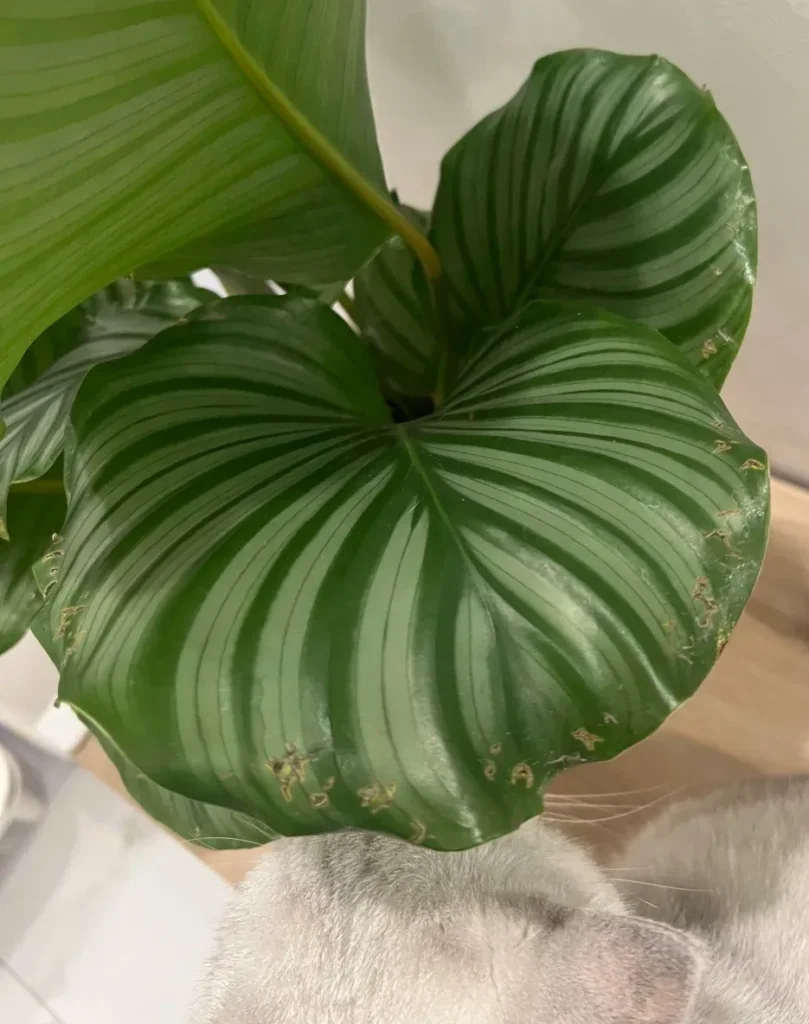
The damage pattern suddenly made sense:
- Holes concentrated along leaf margins
- No progression once the plant was moved
- No secondary symptoms like discoloration or weakening leaves
What mattered most was what didn’t happen next. Once I placed the calathea higher, completely out of reach, no new damage appeared. Existing holes stayed exactly the same. New leaves emerged clean and intact. If your plant is also acting “off” overall (curling, drooping, crispy tips), I keep the full routine here: Complete Calathea Care Guide.
This experience taught me something important:
not all leaf damage is biological or environmental — some of it is behavioral.
It’s also worth noting that calatheas are non-toxic to cats and dogs, which makes them especially attractive to curious pets. That doesn’t mean they’re safe from damage — it just means your pet feels comfortable testing them.
If you have pets and see unexplained holes with no signs of pests, always consider access first. Sometimes the simplest explanation is the one we overlook the longest.
Leaf Tearing During New Growth (Quick Check)
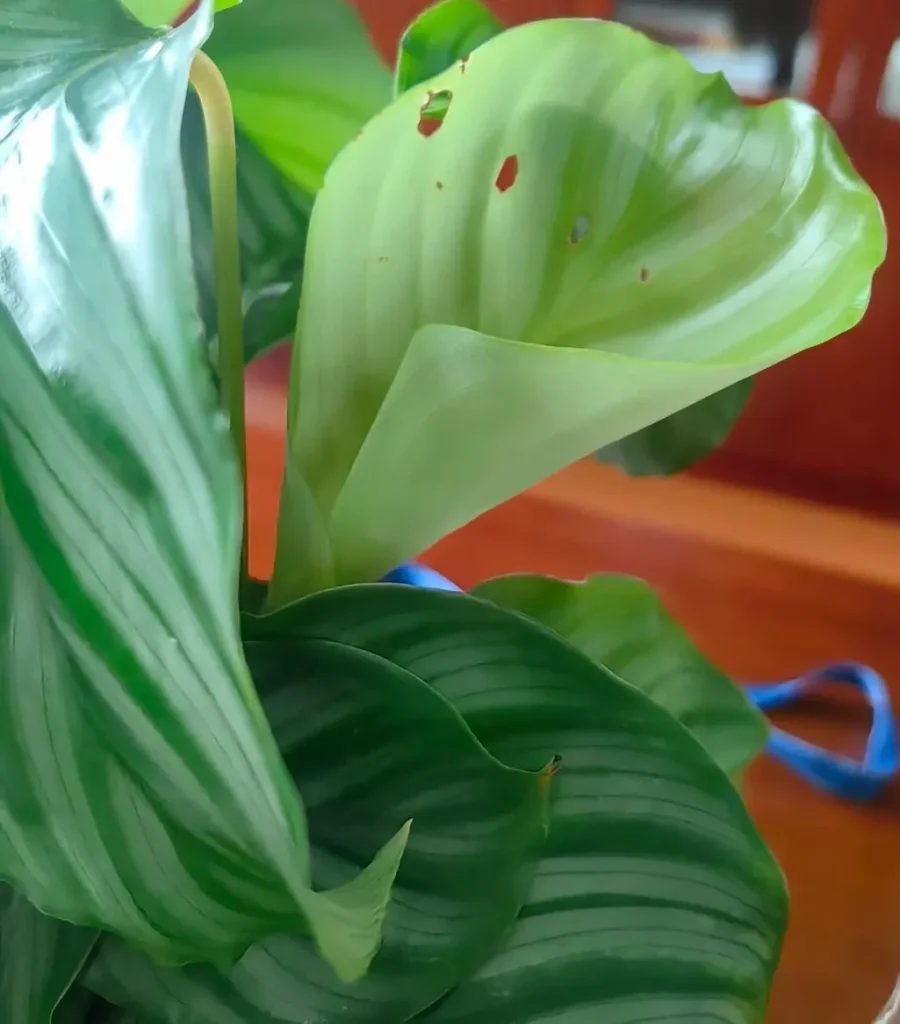
One of the most common reasons calathea leaves develop holes or tears happens before the leaf is fully visible.
Calathea leaves emerge tightly rolled. During this unfurling stage, the tissue is soft and under tension. If conditions shift — especially humidity, temperature, or moisture availability — the leaf can tear as it opens. This isn’t decay and it isn’t damage that spreads. It’s a mechanical failure during growth.
Use this quick check:
- The damage appears on new or recently opened leaves, not old ones
- Tears often follow the direction of the veins or run cleanly along the leaf surface
- Edges look pulled or split, not chewed or irregular
- No additional symptoms appear on surrounding leaves
If the leaf finished opening with holes already present and nothing continues to worsen, this is almost always a one-time event.
What matters most is timing. If the tear appeared as the leaf was unfolding — especially during a period of dry air, heating, or sudden environmental change — there’s usually no underlying problem to fix. The plant isn’t sick. It simply couldn’t support even expansion at that moment. Sudden light changes can trigger the same kind of rough unfurling too — here’s my practical range: calathea light requirements.
New leaves that grow under stable conditions will typically come out intact. Tearing during unfurling doesn’t “carry over” unless the same stress is repeated.
In short:
If the holes showed up during leaf expansion and then stopped, observation is usually all that’s needed.
Low Humidity vs Physical Damage
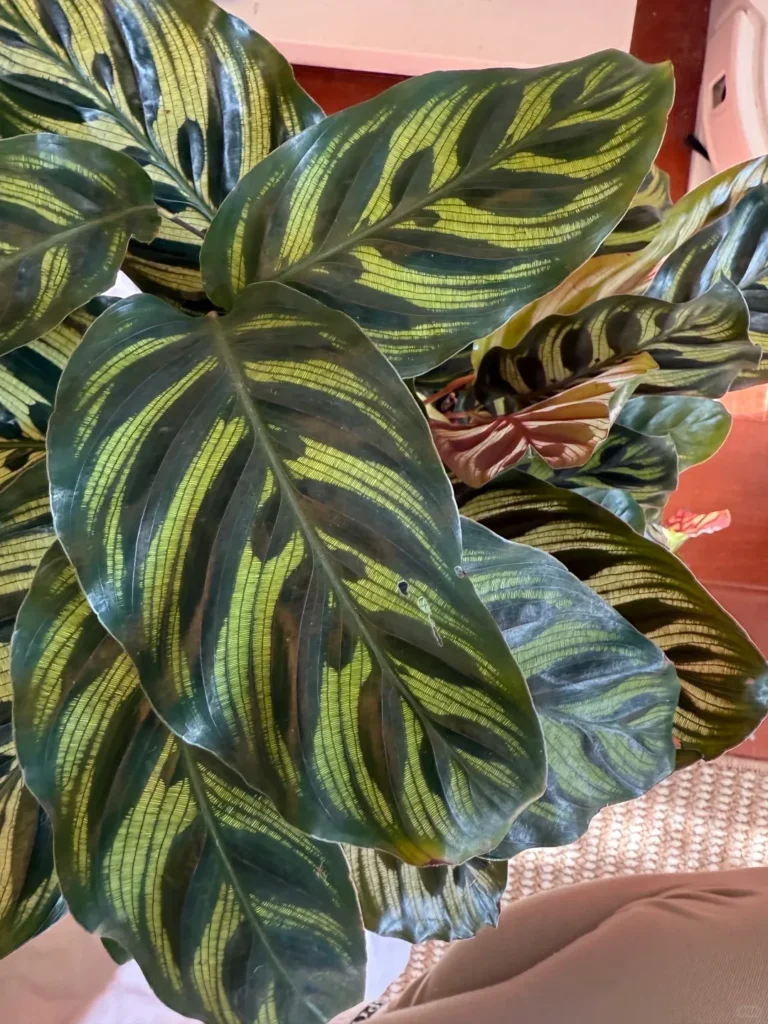
Low humidity and physical damage are often blamed for the same symptoms — but they leave very different clues.
When humidity is too low, calatheas usually respond gradually. Leaf tips dry first, edges turn crispy, and discoloration spreads slowly over time. The damage follows the margins and feels brittle. You can often trace it back to dry air, heating, or long periods without environmental stability. If your edges keep crisping no matter what you do, water quality can be the hidden multiplier: best water for calathea.
Physical damage behaves differently.
Tears or holes caused by contact, movement, or pressure tend to appear suddenly and stay localized. The surrounding leaf tissue remains healthy. There’s no progression, no spreading edge burn, and no change in color beyond the damaged area. Once the source of contact is removed, the damage stops completely.
A simple way to tell them apart:
- Low humidity damage → gradual drying, crispy texture, expanding edge browning
- Physical damage → instant holes or splits, clean edges, no spread
If a leaf looks structurally broken but otherwise healthy, humidity is rarely the main cause. And if multiple leaves are slowly drying at the tips with no actual tearing, physical damage is unlikely.
Understanding this difference matters because the response is different. Raising humidity won’t repair torn tissue, and moving a plant won’t fix dry air. Identifying which process is happening saves time — and prevents unnecessary interventions.
Actual Pest Damage (When to Worry)
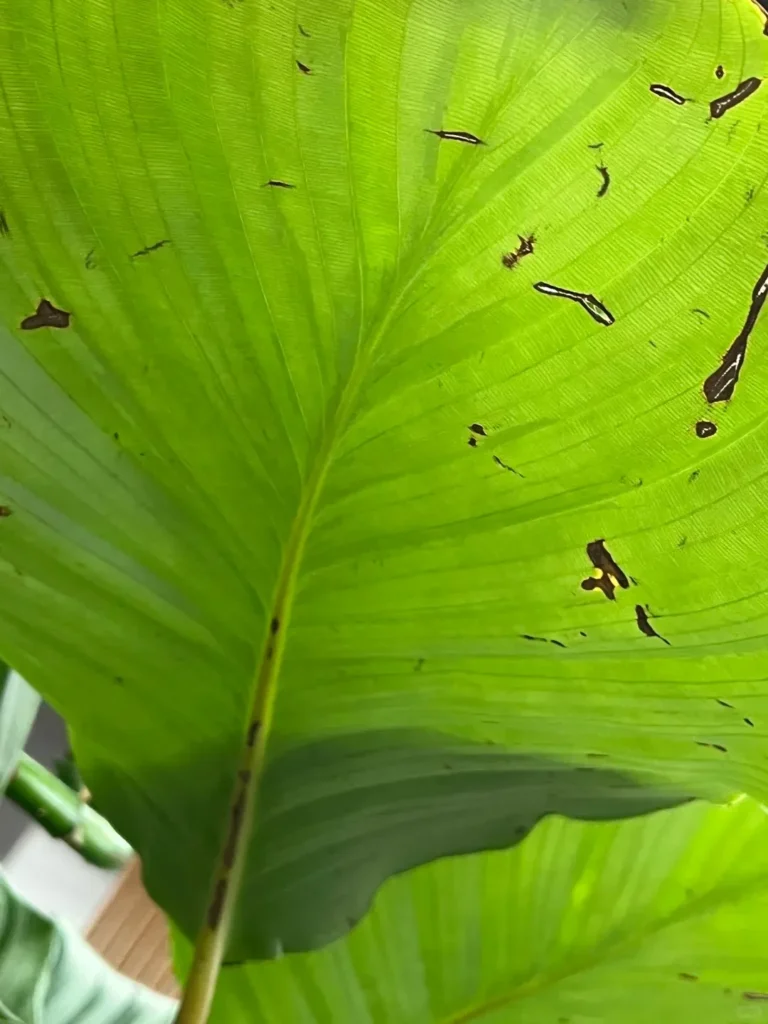
Actual pest damage on calatheas is far less common than most people assume, and it rarely shows up as clean holes alone.
When insects are responsible, leaf damage usually comes with additional evidence. Holes tend to have irregular, chewed edges rather than smooth tears. Damage often spreads to multiple leaves over time, and the plant’s overall condition begins to decline instead of stabilizing.
More importantly, pests leave signs beyond the holes themselves. These can include fine webbing, speckled discoloration, sticky residue, or visible insects — especially on the undersides of leaves and along stems. (Here’s what that actually looks like on calatheas: calathea spider mites.)
If holes are the only symptom, and they don’t increase after a few days of observation, pests are unlikely to be the cause.
A simple rule helps narrow it down:
- Holes plus active changes → inspect for pests
- Holes with no progression → look elsewhere first
Before treating for insects, it’s worth taking a step back. Unnecessary spraying, isolation, or repotting often does more harm than the damage you’re trying to fix. Observation over several days is usually enough to confirm whether pests are truly involved.
If you already sprayed or stressed the plant and things got worse, use this recovery path: revive a dying calathea.
When pest damage is real, it makes itself known. If nothing else changes, the plant is usually telling you the issue isn’t biological.
Should You Cut Damaged Leaves, and Will New Leaves Be Affected?
Leaves with holes don’t need to be removed unless the damage is actively getting worse.
If a leaf has stable holes or tears and the rest of the tissue is firm and green, cutting it off won’t improve the plant’s health. It can still photosynthesize, and removal is mainly a cosmetic choice. Cutting healthy but imperfect leaves often creates more stress than benefit.
Removal only makes sense when:
- The leaf is mostly destroyed and no longer functional
- Tissue is soft, collapsing, or continuing to deteriorate
- Decaying foliage is restricting airflow
Holes and tears themselves do not spread. They don’t “infect” new leaves. If the leaf damage comes with softness, a sour smell, or rapid decline, it’s worth ruling out roots: calathea root rot symptoms.
New growth reflects current conditions, not past damage. If the cause was physical contact, temporary stress during leaf unfurling, or a resolved environmental issue, new leaves will emerge normally. Only when the same stress continues will similar damage reappear.
In short:
- Stable damage → leave it
- Ongoing damage → fix the cause, not the leaf
Old holes are a record of what happened before, not a predictor of what comes next.
FAQ
If there are no visible insects, no webbing, no speckling, and the damage does not spread, pests are unlikely. Mechanical tearing, physical contact, or pet damage are far more common causes.
Holes affect appearance more than function. Removing a leaf with stable damage rarely improves plant health.
If new leaves show similar damage, it means the cause is still present (such as ongoing contact, low humidity during unfurling, or pets), not that the damage is contagious.
Insecticides stress calatheas and can damage leaves further. Only treat if you confirm pests through visible signs or active progression.
Pet damage often appears along leaf edges and stops completely once the plant is placed out of reach.
New leaves reflect current growing conditions. If the cause of damage has been resolved, new growth will typically emerge intact, even if older leaves still show holes.
Still worried about your plant?
👉 For more tips on keeping your plant healthy, explore our Complete Calathea Care Guide.
Explore All Problems →