Spider mites are one of the most common pests that attack Calathea. At first, the signs are subtle—tiny yellow dots on the leaves or a faint webbing that’s easy to miss. Many growers only notice when the infestation has already spread, leaving leaves dull, curled, and even dropping.
The danger with spider mites is their speed: under warm, dry conditions, they reproduce in days, and a small problem can quickly overwhelm your plant. If left untreated, they can weaken or even kill your Calathea.
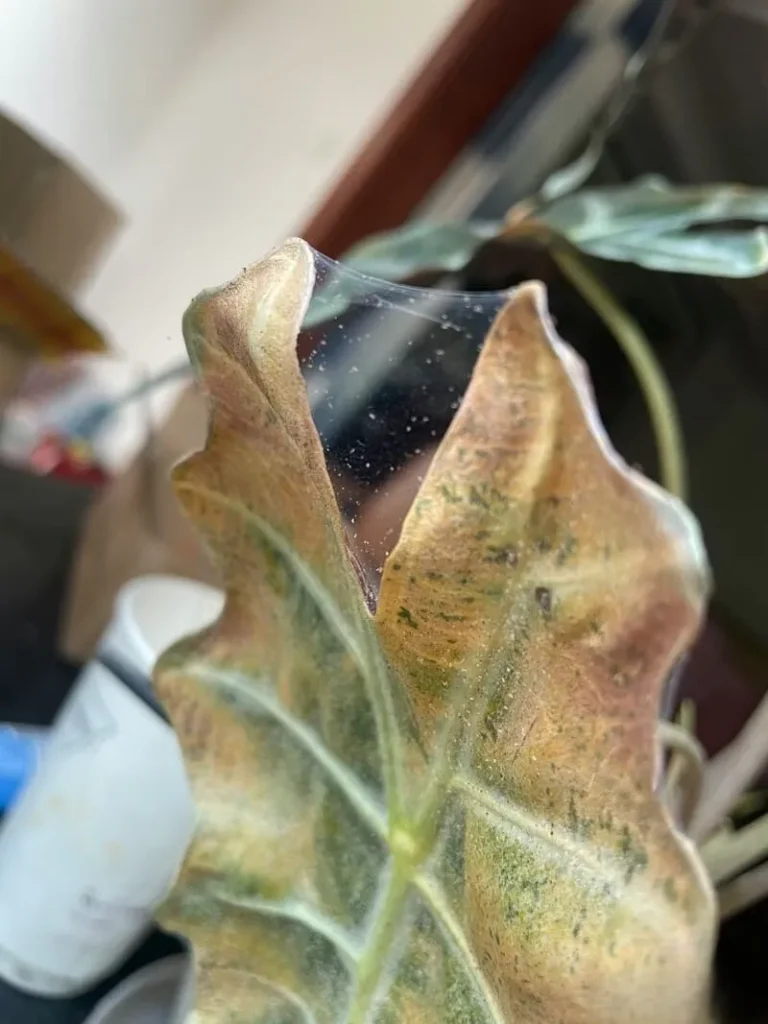
This guide will walk you through how to spot the early warning signs, apply the most effective treatments (both natural and chemical), and build a long-term prevention routine to keep your Calathea pest-free.
Quick Diagnosis Table (at-a-glance)
| Symptom | Likely Cause | Quick Fix |
|---|---|---|
| Tiny yellow speckles on leaves | Early spider mite feeding (sap sucking) | Inspect underside of leaves with magnifying glass |
| Fine webbing between stems or under leaves | Active spider mite colony | Isolate plant, rinse leaves, start treatment immediately |
| Dull or faded leaf patterns | Prolonged feeding damage | Wipe leaves with insecticidal soap or neem oil, repeat weekly |
| Leaves curling or turning crispy | Severe infestation | Prune damaged leaves, deep cleaning + ongoing treatment |
| Multiple houseplants show similar symptoms | Mites have spread | Check and treat all nearby plants |
💡 Tip: Unlike Calathea Sunburn or Leaf Spot Disease, spider mite damage usually comes with webbing and speckling, not large isolated patches.
What Are Spider Mites? 🕷️
Despite their name, spider mites are not insects—they are tiny arachnids, closely related to spiders and ticks. Invisible to the naked eye until their numbers explode, they thrive in warm, dry, and poorly ventilated environments.
Spider mites feed by piercing the leaf surface and sucking out plant sap. Over time, this weakens the leaf tissue, causing Calathea’s vibrant stripes to fade, turn dull, and eventually collapse.
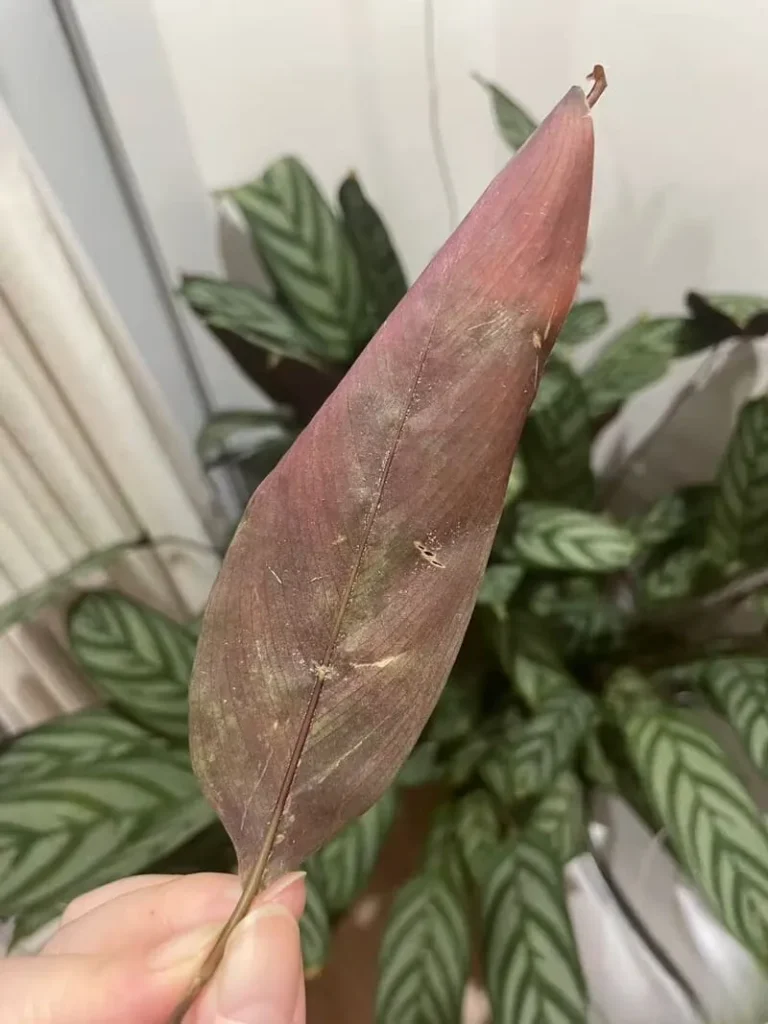
Calathea are especially vulnerable because of their broad leaves with deep veins on the undersides. These grooves provide perfect hiding spots for mites to feed, spin fine webs, and lay eggs in safety. By the time you notice dull leaves or webbing, the population may already be well-established.
Early Signs of Spider Mites 🔍
Catching spider mites early makes all the difference. Here are the warning signs to look out for:
- Tiny yellow speckles (stippling) → The very first sign of feeding damage. Spider mites puncture leaf cells, leaving behind small yellow dots that spread across the leaf surface.
- Fine webbing → Look closely at the undersides of leaves or between stems. A thin, silk-like web is a telltale indicator of an active colony.
- Loss of shine and faded patterns → Calathea’s vibrant stripes may start to look dull or blurred as mites continue sucking sap.
- Curling, crisping, or premature leaf drop → In severe infestations, leaves collapse entirely and fall off.
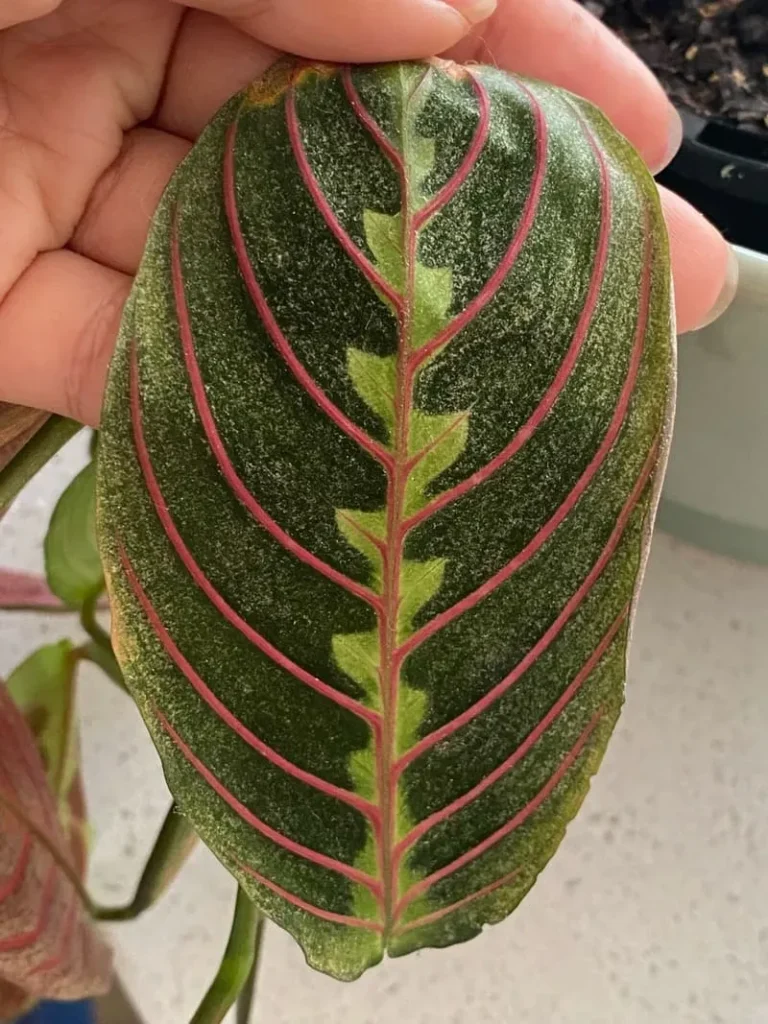
👉 Sometimes these symptoms can be mistaken for simple yellowing. If you’re unsure, check our guide on Calathea Yellow Leaves to help distinguish between nutrient issues, watering problems, and pest damage.
How to Treat Spider Mites
Spider mites won’t disappear on their own—you need to take action quickly and consistently. Here’s a step-by-step treatment plan that works:
Step 1: Isolate the plant
Move your Calathea away from other houseplants immediately. Spider mites spread fast, and isolation prevents the infestation from jumping to nearby plants.
Step 2: Physical cleaning
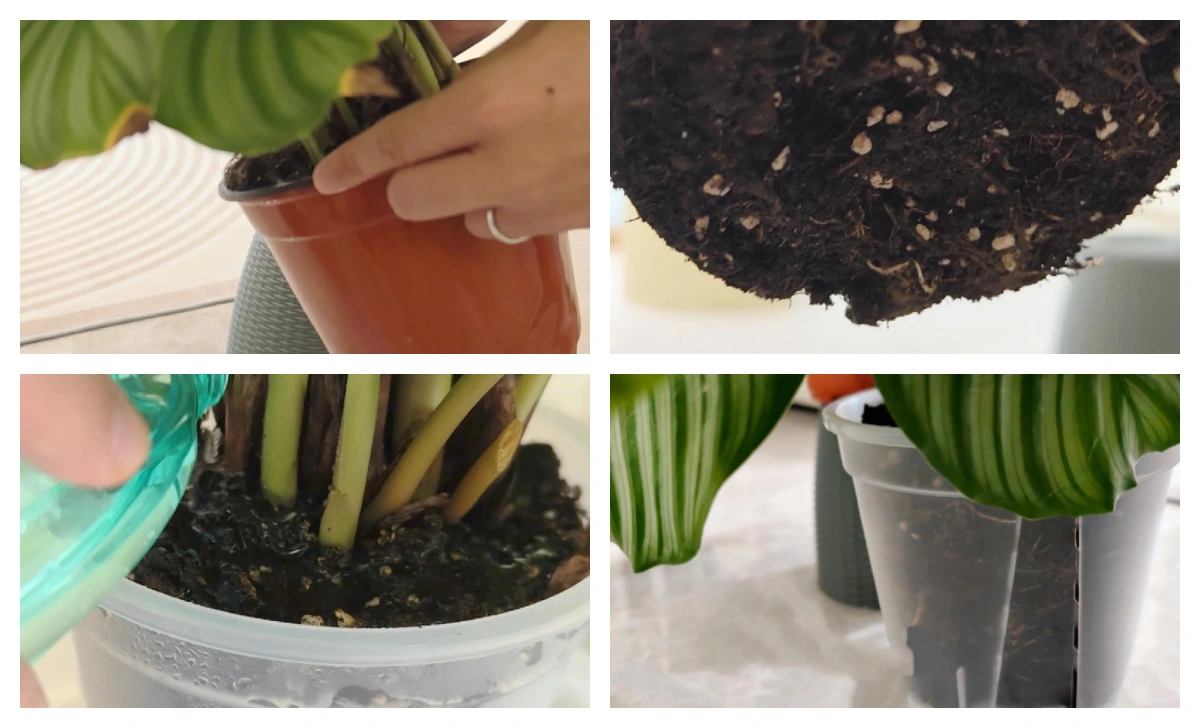
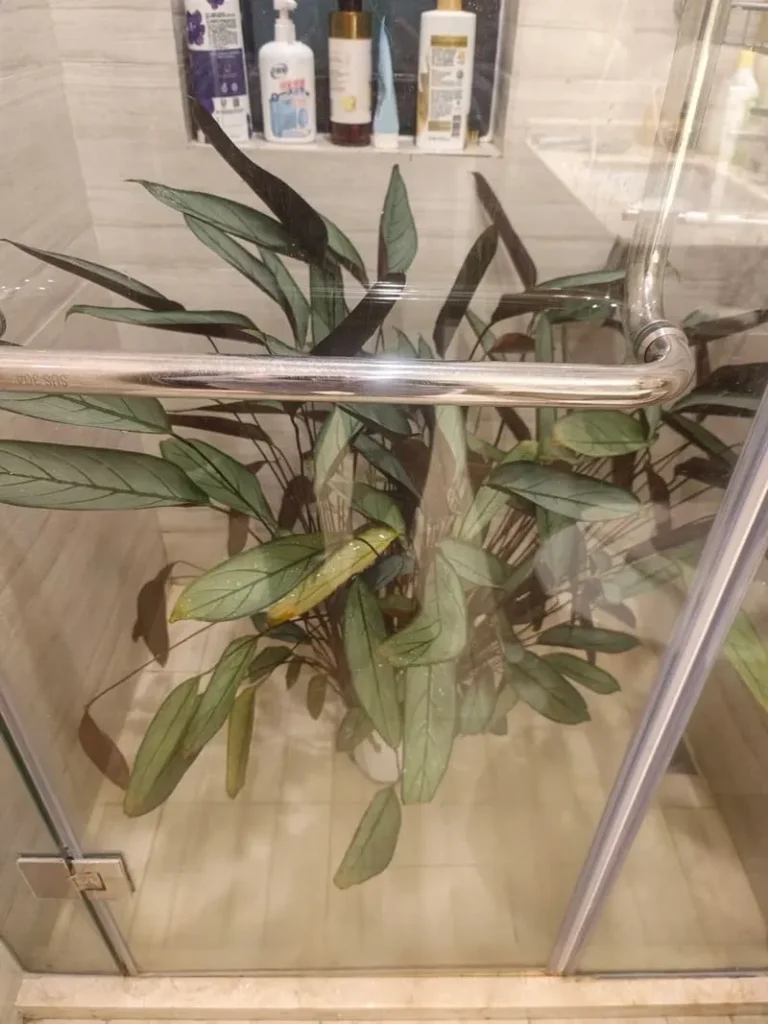
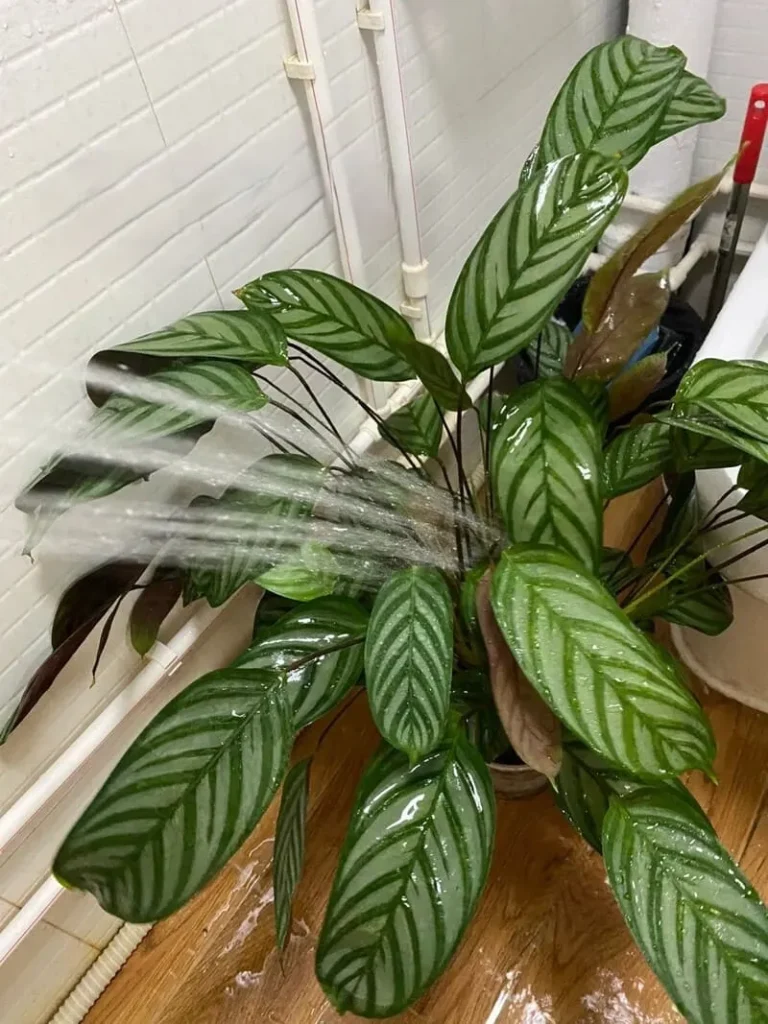
- “Washing method”: Rinse the undersides of leaves thoroughly with lukewarm water. A showerhead or spray bottle works well.
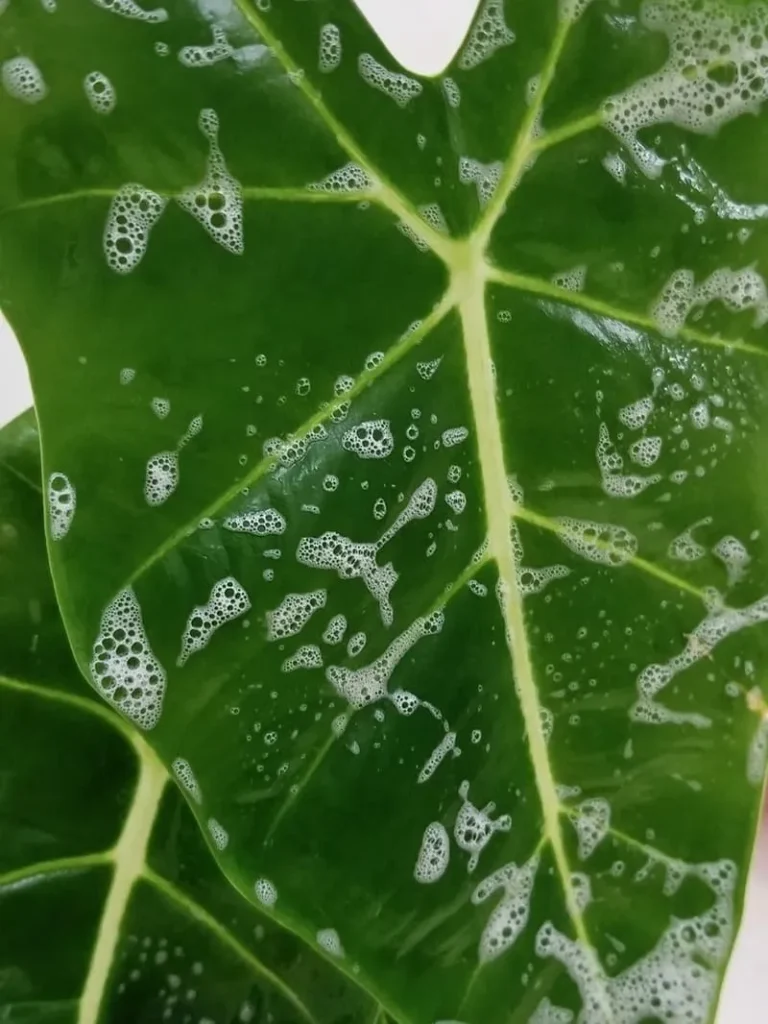
- Soapy wipe: Dilute mild liquid soap or handwash and gently wipe both sides of the leaves (avoid soaking the roots).
- Massage-style cleaning: Use your fingertips or a soft cloth to carefully rub along the leaf surface, removing mites and eggs without scratching the delicate tissue.
Step 3: Repotting & tobacco water (optional)
- For severe infestations, repot in fresh, sterile soil to eliminate hidden eggs in the mix.
- Some growers use tobacco leaf or cigarette butt water (soaked and diluted) as a home remedy because nicotine is toxic to mites. ⚠️ However, this can alter soil pH and should only be used sparingly and temporarily.
Step 4: Targeted treatments
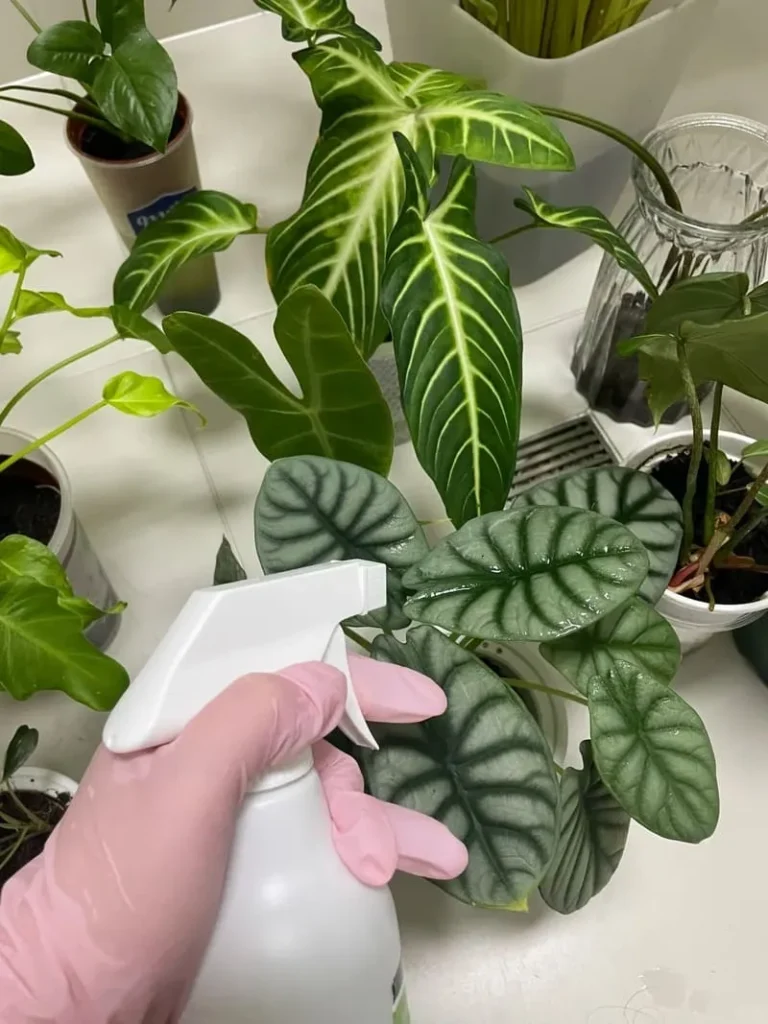
- Neem oil or insecticidal soap → Safe, natural options. Spray thoroughly (especially leaf undersides) every 5–7 days for 3 weeks to break the egg-laying cycle.
- Chemical miticides → Effective for heavy infestations, but spider mites develop resistance quickly. Rotate products if you must use them.
⚠️ Safety Note: Many chemical miticides are toxic to pets and children. If you share your home with cats, dogs, or little ones, stick to safer natural treatments like neem oil, insecticidal soap, or repeated physical cleaning. Always wear gloves, dilute according to instructions, and ensure proper ventilation.
💡 Tip: Spider mites reproduce in as little as 3–5 days. That’s why one-time treatment won’t work—you must repeat cleaning and spraying consistently for at least 2–3 weeks to wipe out every generation.
Two Main Strategies
When it comes to dealing with spider mites on Calathea, most treatments fall into two broad approaches. Each has its pros and cons:
| Strategy | Examples | Pros | Cons / Risks |
|---|---|---|---|
| Chemical / Targeted | Miticides, systemic insecticides | Fast-acting, effective for heavy infestations | Can cause resistance if overused; toxic to pets, children, and beneficial insects; requires careful handling |
| Natural / Physical | Washing leaves, insecticidal soap, neem oil, diluted alcohol spray, tobacco water | Safer for home use, low-cost, pet- and child-friendly (when used correctly) | Requires persistence; must repeat every 3–5 days for several weeks; less effective for very heavy infestations |
💡 Pro Tip: Start with natural methods whenever possible. Reserve chemical miticides as a last resort if the infestation is out of control, and only if your household environment allows for safe use.
Prevention Tips 🌱
The best way to deal with spider mites is to prevent infestations before they explode. Here are proven strategies:
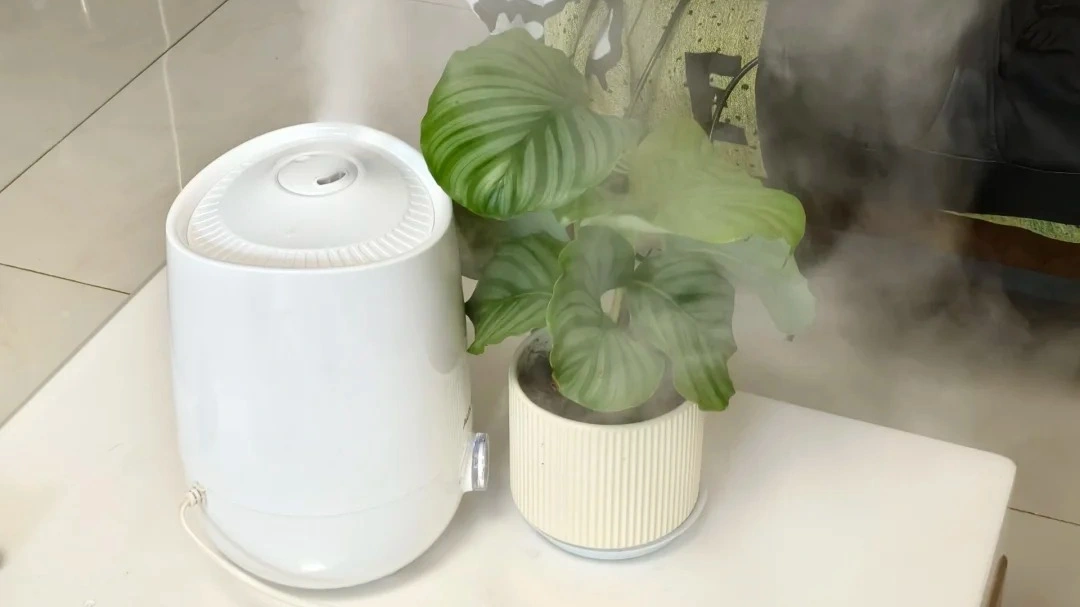
- Maintain humidity → Keep the environment above 50–60%. Spider mites hate moisture, while Calathea thrives in it. Use a humidifier, pebble tray, or regular misting (with good airflow). See the Calathea Humidity Guide for targets and quick setups.
- Ensure airflow → Stale, dry air encourages mites. Place Calathea near a window with light circulation or use a fan to prevent hotspots.
- Regular leaf cleaning → Wipe both sides of the leaves weekly with a damp cloth or mild soapy water to remove dust, eggs, and early pests.
- Quarantine new plants → Isolate new houseplants for at least 2 weeks before placing them near your Calathea.
- Check often → Use a magnifying glass once a week to inspect the undersides of leaves for early signs of mites.
🕷️ Biological Control: Predatory Mites
Predatory mites (e.g., Neoseiulus californicus) are a natural enemy of spider mites and can be highly effective—but only when used correctly.
Common Mistakes:
- Stockpiling for later → Predatory mites must be used immediately after purchase. Even the most resilient species can only be stored unopened at 8–15 °C for up to 1 week.
- Waiting until infestation explodes → A single predatory mite eats ~10 spider mites per day, while a spider mite can lay ~20 eggs per day. If your leaves already host hundreds of mites, predators cannot catch up.
- Low humidity environments → Predatory mites lose effectiveness below 60% humidity, while spider mites thrive in dry air.
Correct Use:
- Prevention stage → Release predators as soon as you see 1–2 spider mites per leaf, not when colonies explode.
- During outbreak → First use physical or chemical suppression (e.g., heavy water spray, miticide). Only after reducing the population should you release predatory mites.
- Optimize environment → Keep humidity above 60%, avoid pesticides that would kill your beneficial mites, and ensure good airflow.
💡 Tip: Think of predatory mites as a preventive tool, not an emergency cure. For best results, combine them with regular cleaning and humidity control.
Keep Your Calathea Mite-Free
When it comes to spider mites, prevention is far easier than cure. Calathea owners should always remember the “big three”: humidity, leaf cleaning, and airflow. These simple habits create an environment where mites struggle to survive.
If you’ve already spotted early signs, don’t panic—with quick action and consistent follow-up, your Calathea can recover fully. Many growers see fresh, healthy leaves within a few weeks once the infestation is under control.
For related Calathea care and troubleshooting, check out:
- Calathea Yellow Leaves – learn how to distinguish nutrient issues, pests, and watering problems.
- Calathea Sunburn – identify brown patches caused by light stress, not mites.
- Calathea Root Rot – another common Calathea killer, often mistaken for pest damage.
With vigilance and proper care, your Calathea can stay lush, vibrant, and spider mite–free. 🌿
FAQ
Still worried about your plant?
👉 For more tips on keeping your plant healthy, explore our Complete Calathea Care Guide.
Explore All Problems →