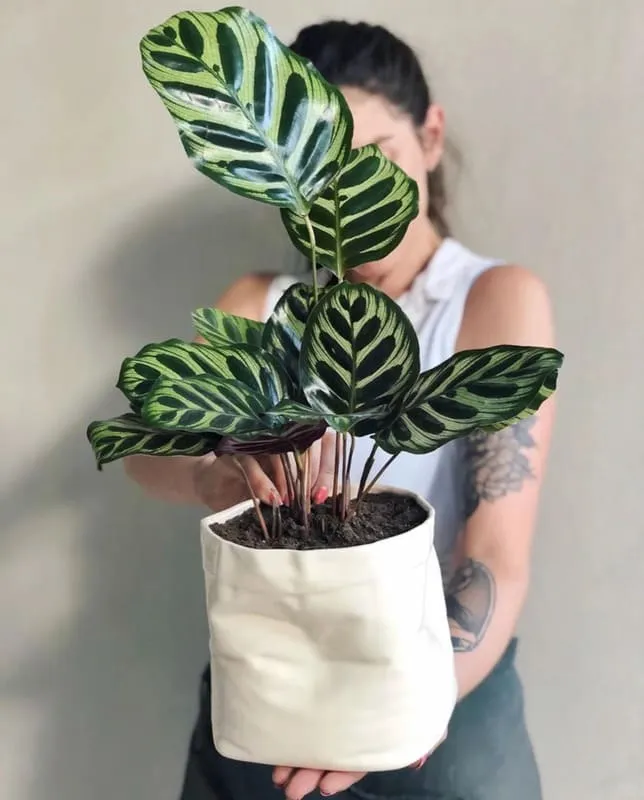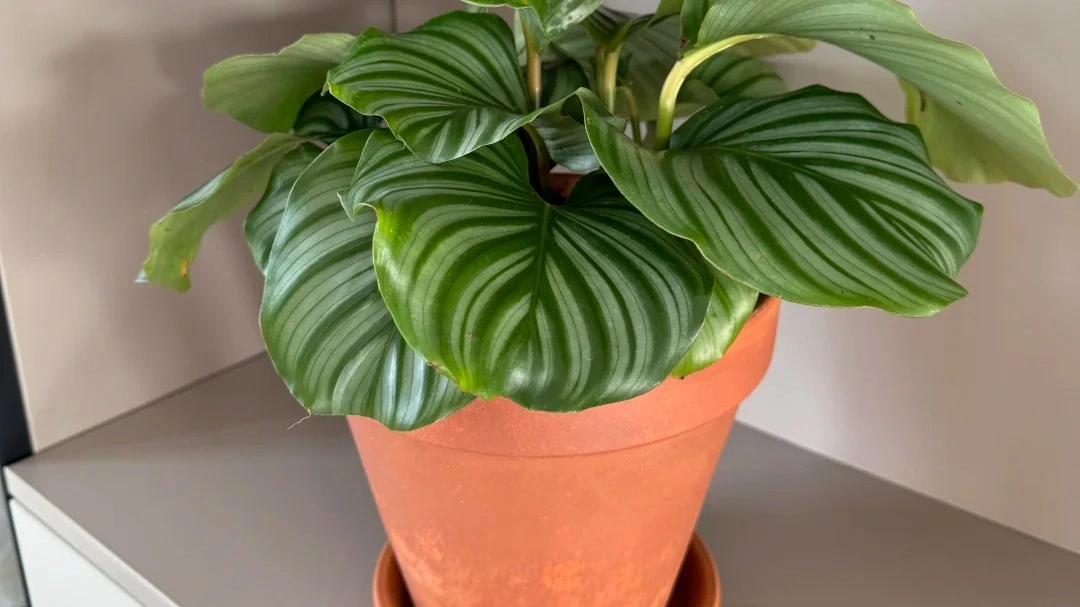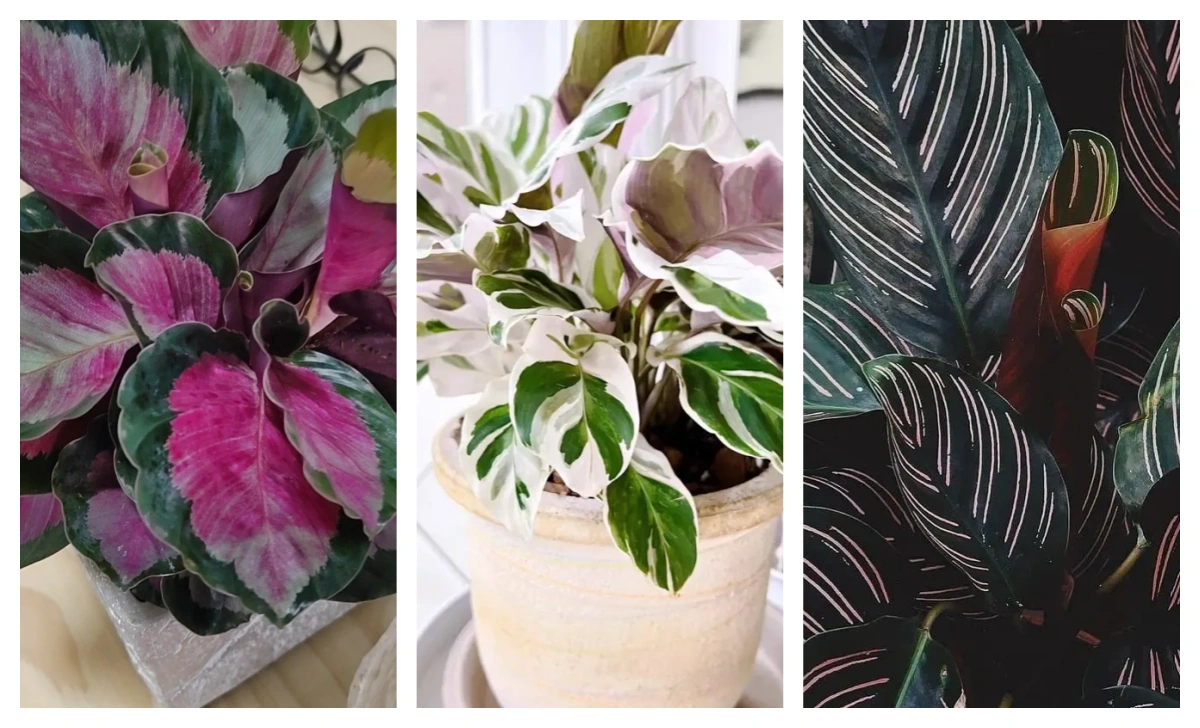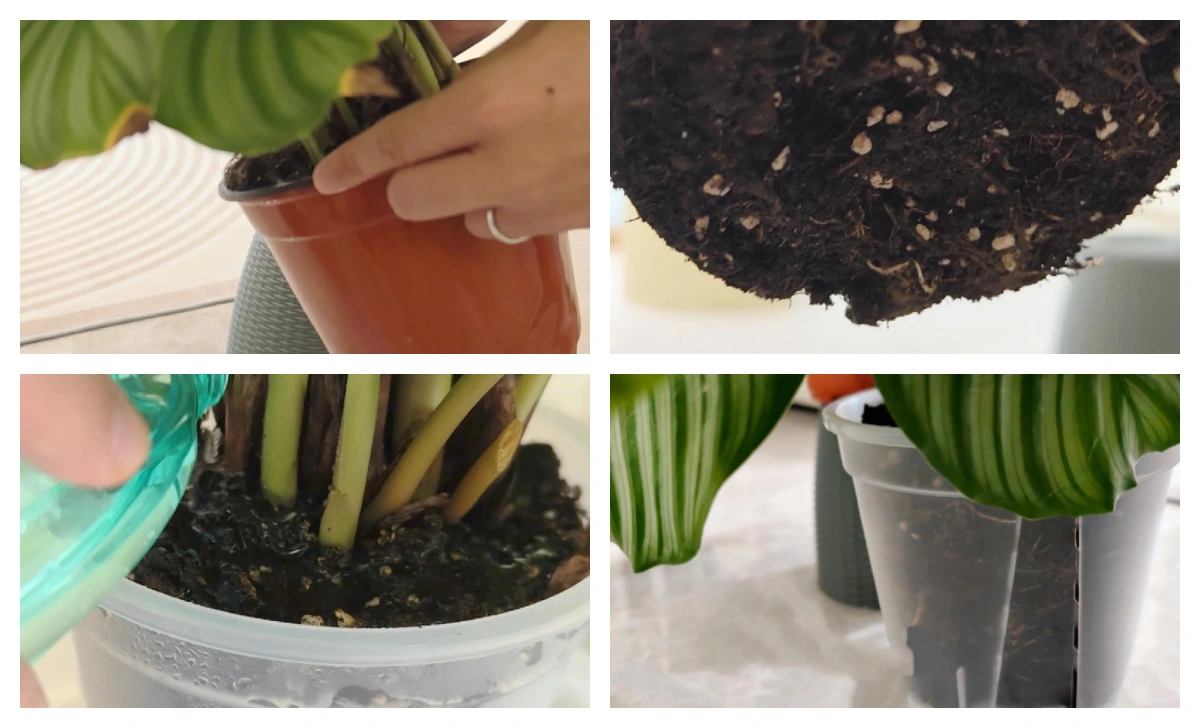
When I initially started planting Calatheas, I thought that additional light would help them grow, like most houseplants. Later I learned that Calathea light requirements are completely different. I put them by the window, sprayed them with water often, and even tried to “pamper” them by giving them extra attention. But a lot of them didn’t last long. Their leaves twisted, and the edges burned, and I couldn’t figure out why.
Over time, I realized Calatheas are very different from flowering plants. They don’t compete for the brightest spots on the balcony. Instead, They thrive in gentler corners of the home—on a coffee table, bookshelf, or even a bedside stand—where the light is softer, especially when you follow Calathea care basics. Today, I have Apple Calathea, Beauty Star, Peacock, White Stripes, Velvet Warscewiczii, and many others growing happily in low-light spaces.
So here’s the truth: yes, Calathea can survive in low light—but that doesn’t mean they’ll always thrive. Without enough gentle light, the patterns may fade and growth slows down. In this guide, we’ll explore how to balance light so your Calathea stays healthy and vibrant indoors. Want to know which types adapt best to dim rooms? See our Calathea types guide.
Calathea can survive in low light, but it won’t truly thrive without the right balance of gentle, indirect light.
Can Calathea Survive in Low Light?
Calatheas are naturally adapted to the forest floor, where they live under the shade of taller trees. This means they’re more tolerant of low light than many common houseplants.
You can place them in a corner of your living room, a spot near a north-facing window, or even on a bedside table, and they will keep growing.
But survival doesn’t always mean thriving. In low light, Calathea leaves may hold on for a long time, yet the plant won’t show its full vibrancy. Patterns can fade, growth slows down, and the plant gradually looks less lush.
In other words: Calathea can live in low light, but it won’t be at its best.
For a happy balance, think of it this way: Calathea doesn’t want bright sun, but it does want some gentle, indirect light to keep its colors and patterns strong. A softly lit corner is usually much better than a completely dark room.
Finally, if you want a full breakdown of how much sun and shade works best, check out our detailed guide: Calathea Light Requirements.
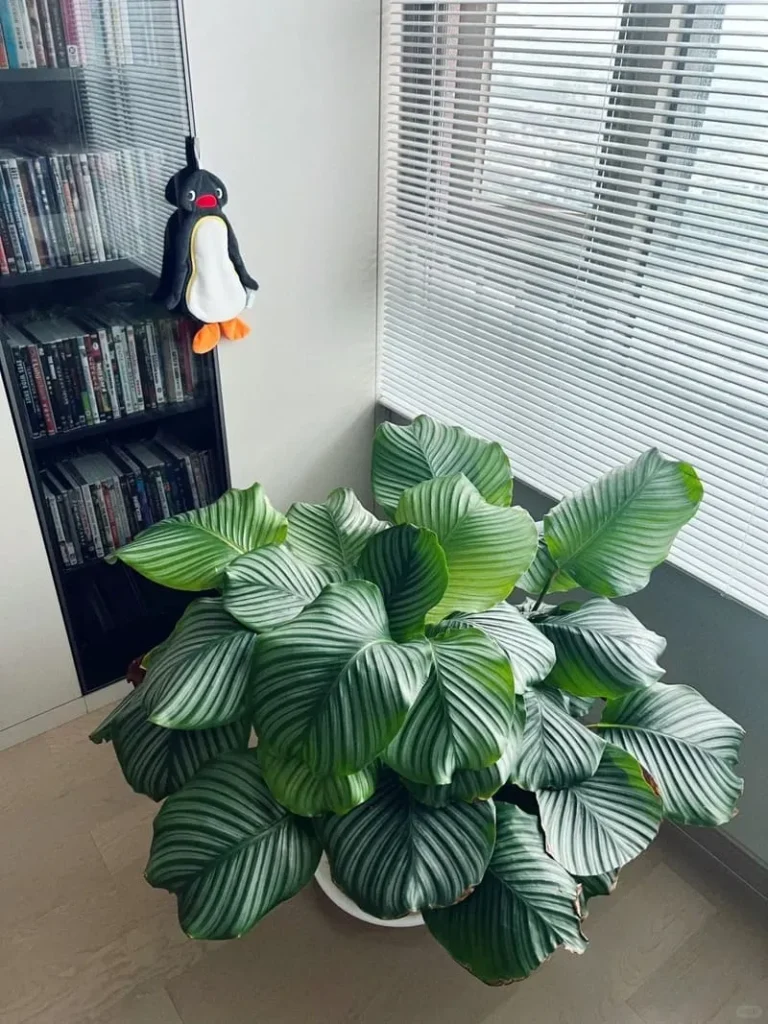
Signs Your Calathea Isn’t Getting Enough Light
If your Calathea isn’t getting the light it needs, the plant will show you through its leaves and growth habits. Common signs include:
| Symptom | What You’ll Notice | Possible Confusion |
|---|---|---|
| Faded patterns and stripes | Leaf markings lose contrast, colors look dull | Similar to nutrient deficiency |
| Slow growth | New leaves appear rarely, and stay small | Could also be due to poor soil(see our best soil for Calathea guide). |
| Leggy stems | Long gaps between leaves as plant stretches toward light | Mistaken for “weak variety” |
| Persistent drooping | Leaves stay limp even with correct watering | Often confused with over/underwatering—learn more in how often to water Calathea. |
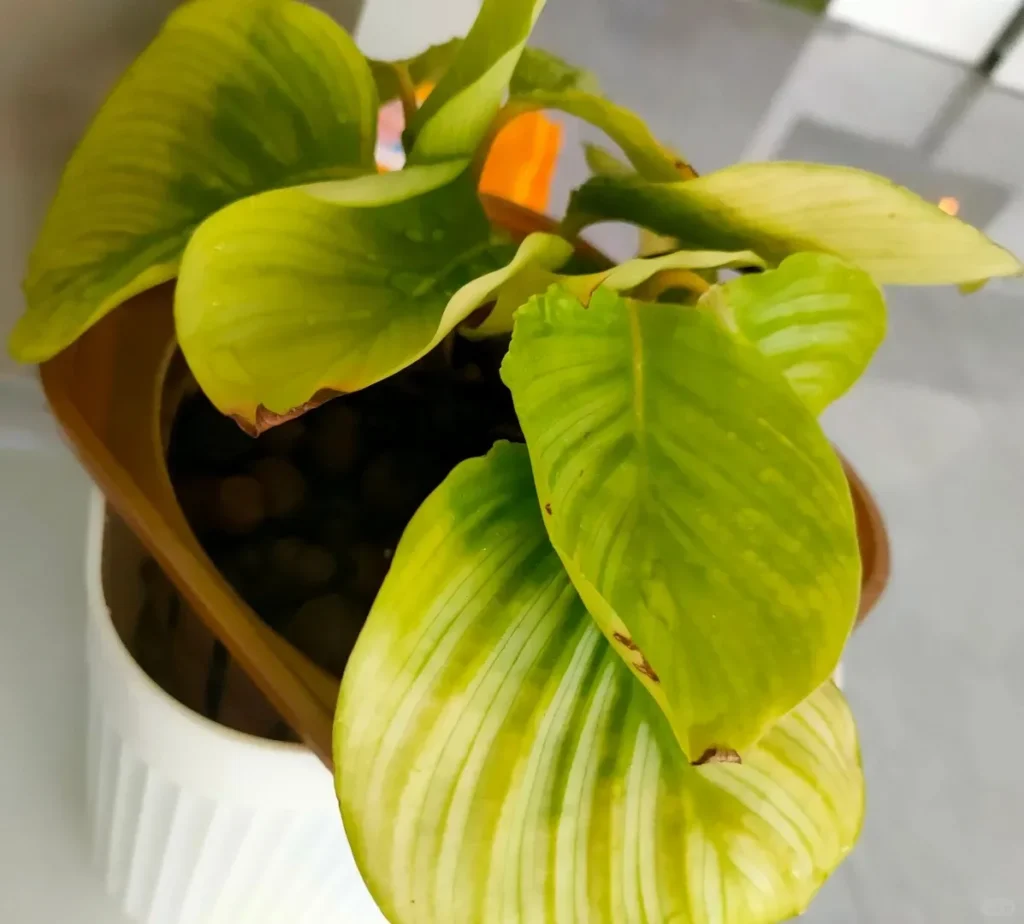
These symptoms can sometimes be mistaken for watering problems, so it’s important to consider light as a factor. For a full breakdown of proper conditions, see Calathea Light Requirements.
Best Low-Light Spots Indoors
Finding the right location is key when growing Calathea in low-light conditions. Here are some of the best and worst spots indoors:
- Near a north-facing window – Gentle, consistent light without direct sun exposure.
- On a bookshelf or TV stand – Calatheas can brighten corners of the room where light is soft but steady.
- Behind a sheer curtain – Filters harsh rays while still letting in enough brightness.
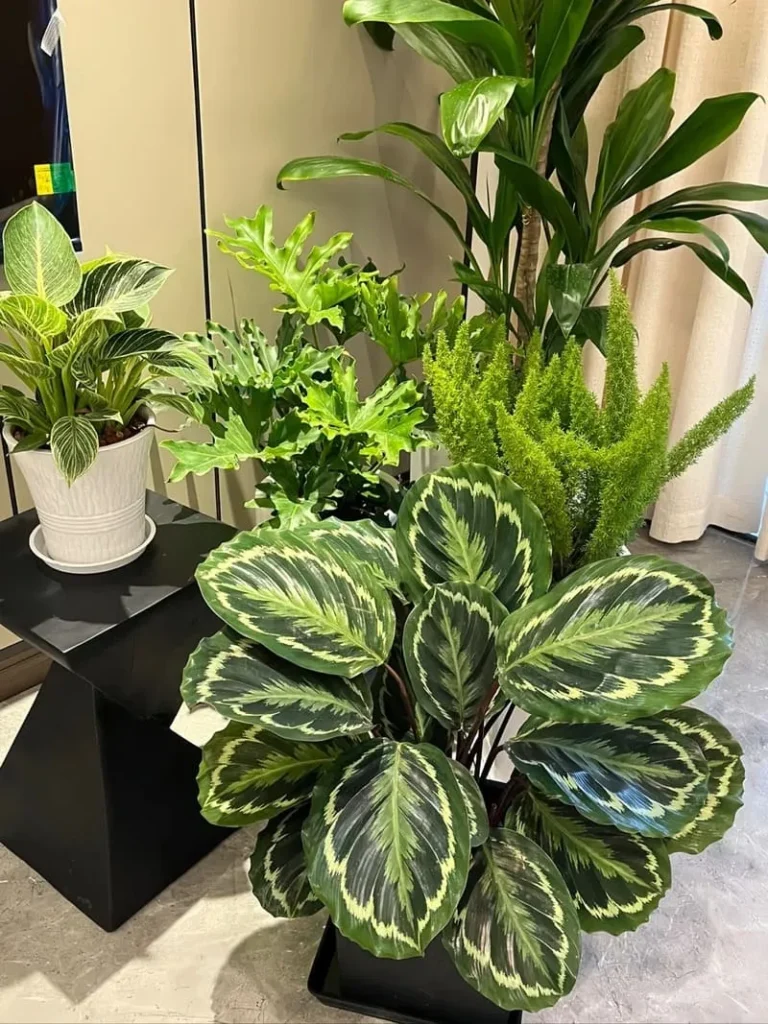
Places to avoid:
- Completely dark corners – Without any light, Calathea will slowly weaken and lose its patterns.
- Closed rooms with no windows – Even a shade-loving plant cannot survive in total darkness.
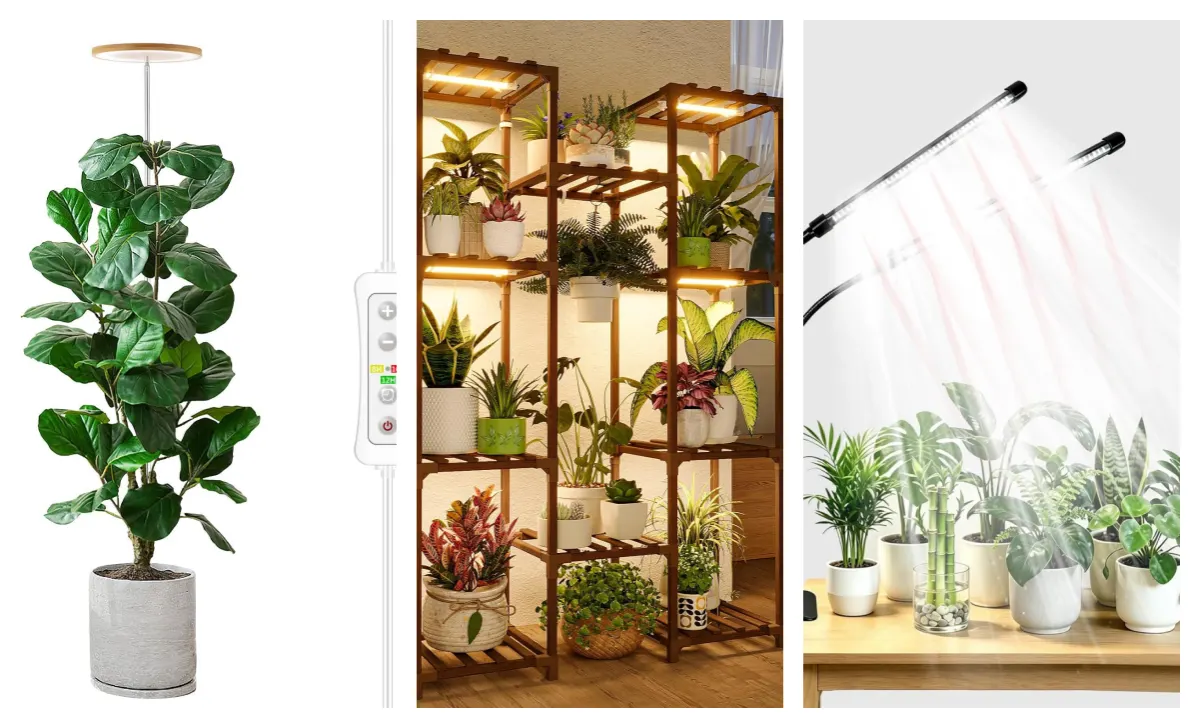
👉 Extra tip: If your home is consistently dim, consider adding an LED grow light to supplement natural light. It can make the difference between a Calathea that merely survives and one that thrives.
Tips to Help Calathea Thrive in Low Light
Low light doesn’t have to mean poor health. With the right adjustments, your Calathea can still look vibrant indoors:
| Tip | Why It Helps |
|---|---|
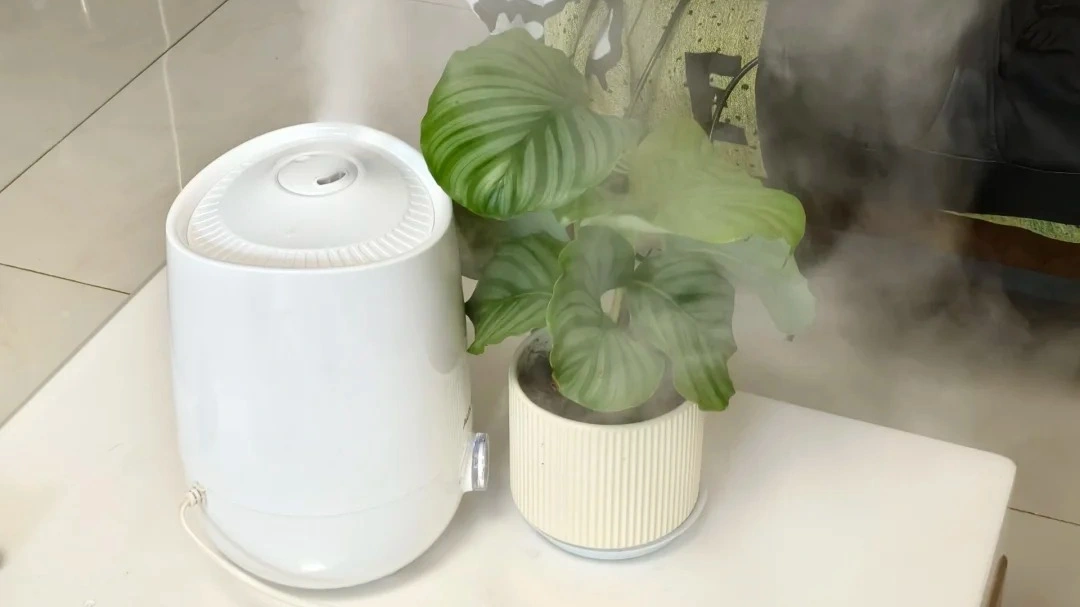
| Increase humidity | Low-light areas are often drier, especially in heated rooms. Using a humidifier or pebble tray prevents leaf curling—more tips in why your Calathea is not growing. |
| Keep a stable watering routine | Avoid swings between dry soil and soggy roots. Consistency prevents stress that shows up as curling or drooping leaves. |
| Rotate the pot regularly | Turning the plant every 1–2 weeks ensures even light exposure and prevents one-sided, leggy growth. |
| Add artificial light | A simple LED grow light or desk lamp with the right bulb can help maintain leaf patterns and steady growth in dim rooms. For distance, timing, and setup ideas, see my Calathea grow light setup guide. |
Common Mistakes to Avoid
| Mistake | What Happens |
|---|---|
| Treating “low light” as “no light” | In total darkness, Calathea weakens, patterns fade, and leaves lose energy. |
| Placing in harsh sun for compensation | Direct rays scorch leaves, leaving brown, crispy patches. Learn more in our Calathea sunburn & brown patches guide. |
| Never rotating the pot | Plant leans awkwardly toward one side, with uneven growth. |
I’ve made all three of these mistakes myself. Years ago, I thought Calatheas would be fine in shadowy corners, only to watch them slowly fade. When I tried moving them to sunnier windows, the leaves burned within days. And when I left one pot untouched for months, it ended up lopsided, leaning heavily toward the light.
What I learned is that Calatheas don’t ask for perfection, just balance—gentle, indirect brightness, steady humidity, and patience. Today, my Apple Calathea and Velvet Warscewiczii grow strong in softly lit corners, proof that once you avoid these extremes, the plant finds its rhythm again.
Bottom line: Calathea can survive in low light, but it will only thrive when you respect its need for balance.
FAQ
Still have more Calathea problems?
Curling and drooping are just the beginning. From yellow leaves to root rot, we’ve put together a full guide to every common Calathea issue.
Start the Care Guide →