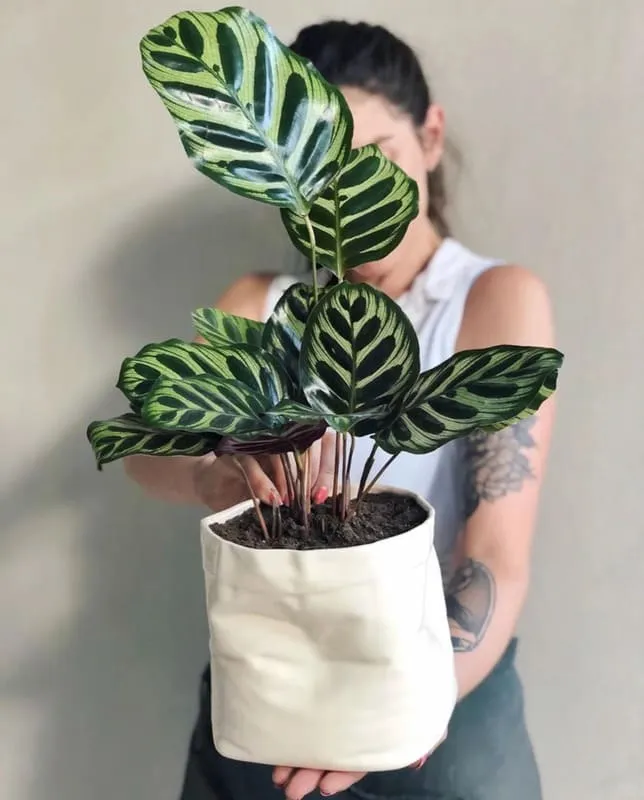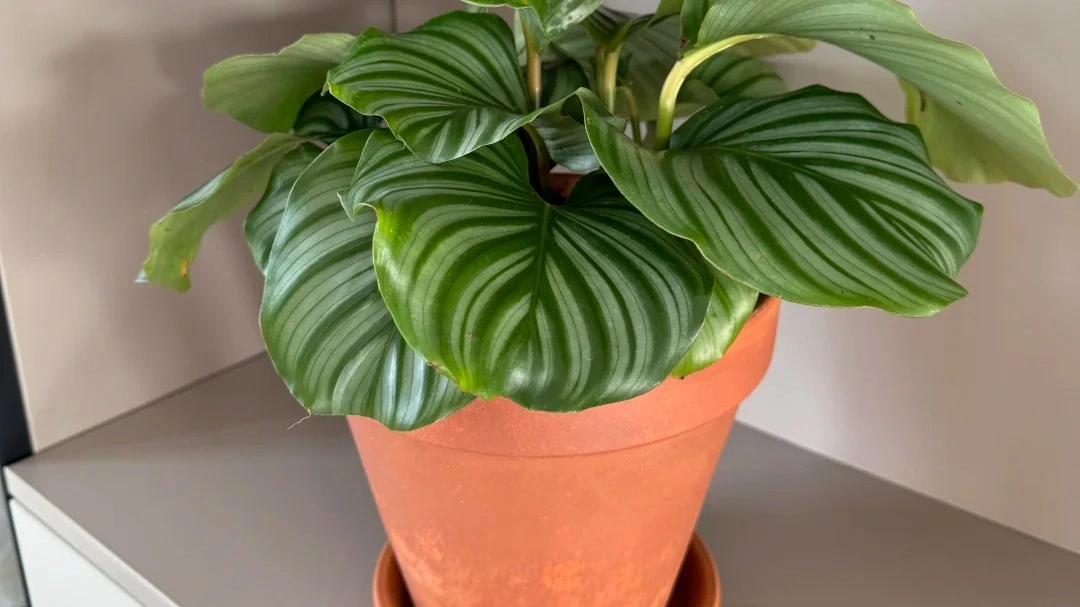
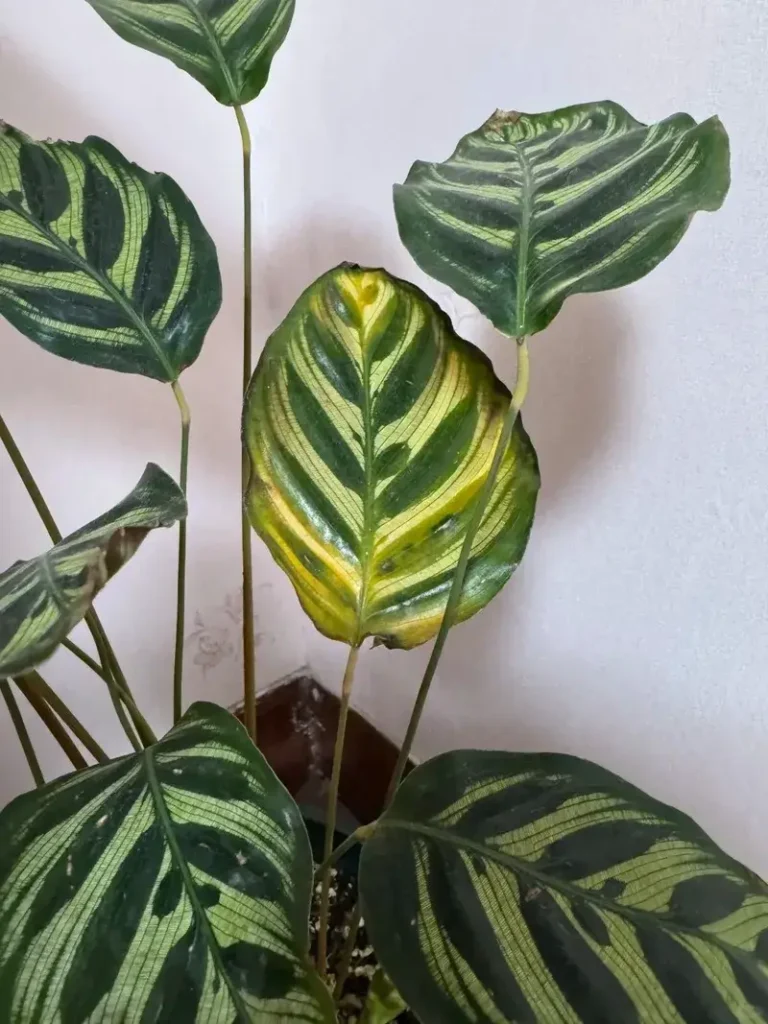
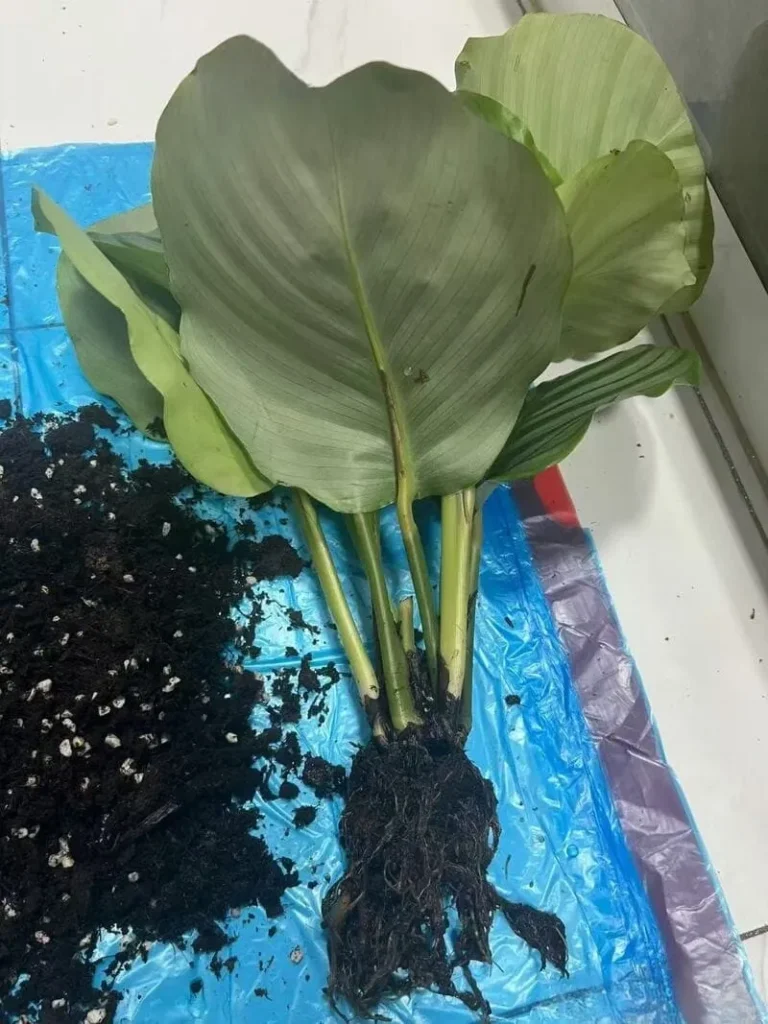
Last spring, one of my Calatheas (a Calathea makoyana) looked half-dead. No matter how much I adjusted watering or tried to encourage new growth, the leaves kept yellowing and growth stalled. Out of frustration, I finally unpotted it—and discovered that most of the roots were black, mushy, and foul-smelling.
After trimming away the rot and repotting, the plant looked even worse at first. It dropped almost all its leaves and was reduced to a bare stump. But within a month, new shoots started pushing up like bamboo shoots after rain, and soon the pot was full of fresh, vibrant foliage again.
That experience taught me two important lessons:
- Root rot is one of the most common—and most deadly—issues for Calathea.
- With early action and patience, it’s still possible to bring the plant back.
In this guide, we’ll walk through the symptoms, the main causes, two proven rescue methods (repotting vs. water rehab), how to distinguish suffocated roots vs. true root rot, and the prevention practices that will help you avoid it in the future.
Quick Diagnosis Table (at-a-glance)
| Symptom | Likely Cause | Quick Fix |
|---|---|---|
| Leaves yellowing from the base | Overwatering / poor drainage | Let soil dry between waterings; check drainage; repot if roots are mushy |
| Plant wilts even though soil feels wet | Advanced root rot | Unpot, trim rotten roots, repot in fresh soil or try water rehab |
| Roots are black, mushy, foul-smelling | Fungal or bacterial infection | Remove damaged roots, disinfect with fungicide or diluted hydrogen peroxide |
| Soil smells musty or sour | Compacted soil, lack of aeration | Repot into a fresh, airy mix with perlite/coco coir |
| Lower leaves yellowing, growth stalled | Suffocated roots | Improve ventilation, repot in breathable soil, reduce watering |
💡 Tip: If you notice yellowing plus a musty smell, act quickly—waiting too long usually means more roots will collapse.
What Is Root Rot in Calathea?
Root rot is essentially a chain reaction: when soil stays too wet for too long, the roots lose access to oxygen. This lack of airflow creates the perfect conditions for fungi and bacteria to multiply, which then attack and break down the root tissue. What starts as a few mushy spots can quickly spread through the entire root system if left unchecked. Severe leaf scorch from too much sun isn’t rot — it’s more likely sunburn stress.
Calathea plants are especially vulnerable because they thrive in moisture and humidity but have very low tolerance for waterlogging. They like their soil slightly damp, yet their roots suffocate easily if conditions tip from “moist” to “soggy.” In other words, the very thing that Calathea loves—consistent moisture—is also what makes it prone to root rot when balance is lost.
Symptoms of Root Rot
Catching root rot early is key to saving your Calathea. Here are the most common warning signs to look for:
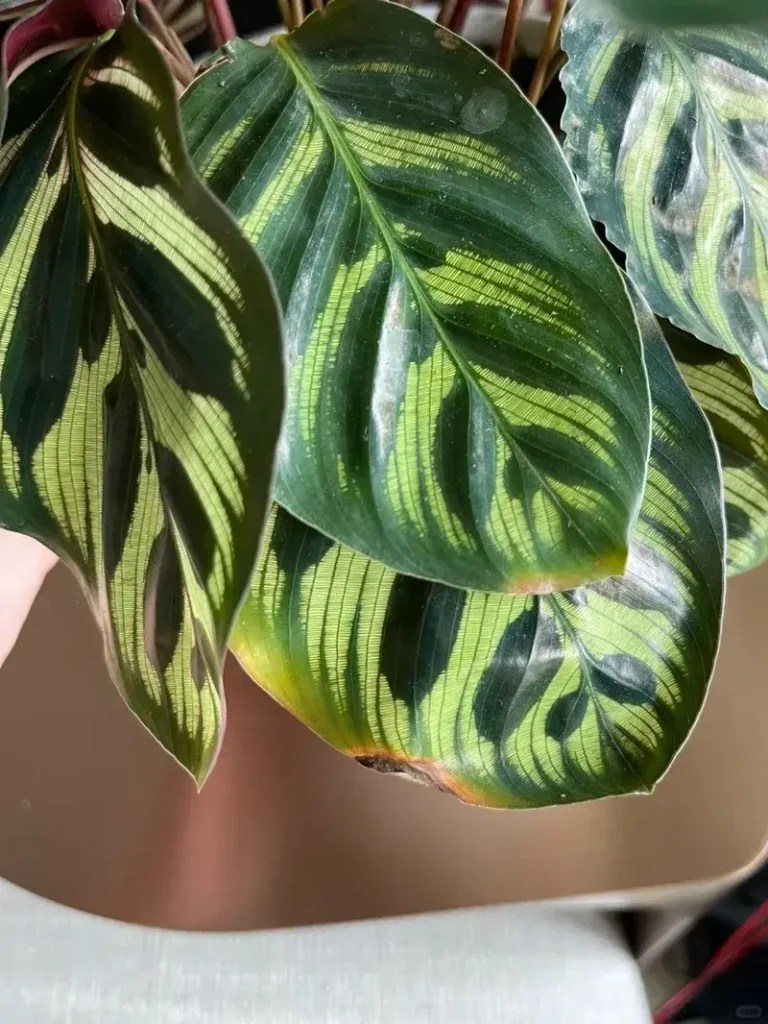
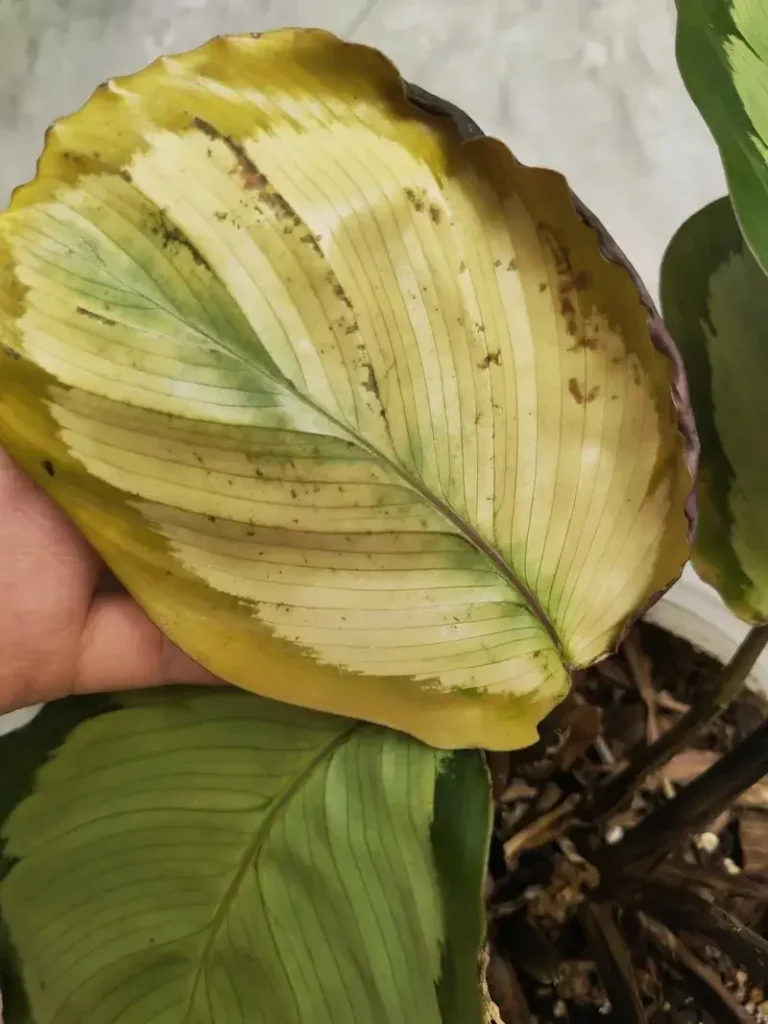
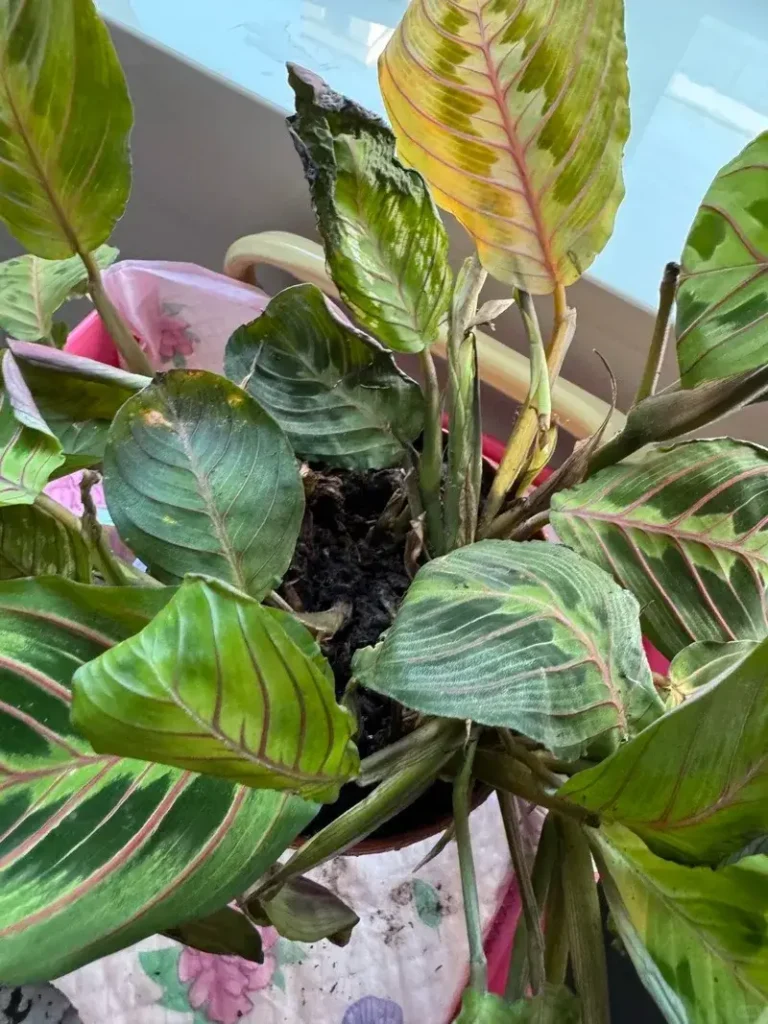
- Yellowing leaves starting from the bottom
Unlike natural aging (where one or two old leaves yellow over time), root rot usually causes several leaves to turn yellow at once, beginning with the lower ones. - Wilting even in moist soil
If your plant droops despite the soil being wet, it means the roots are too damaged to take up water. This is one of the clearest red flags. When wilting happens repeatedly, check your watering routine to prevent recurrence. - Mushy, black, or foul-smelling roots
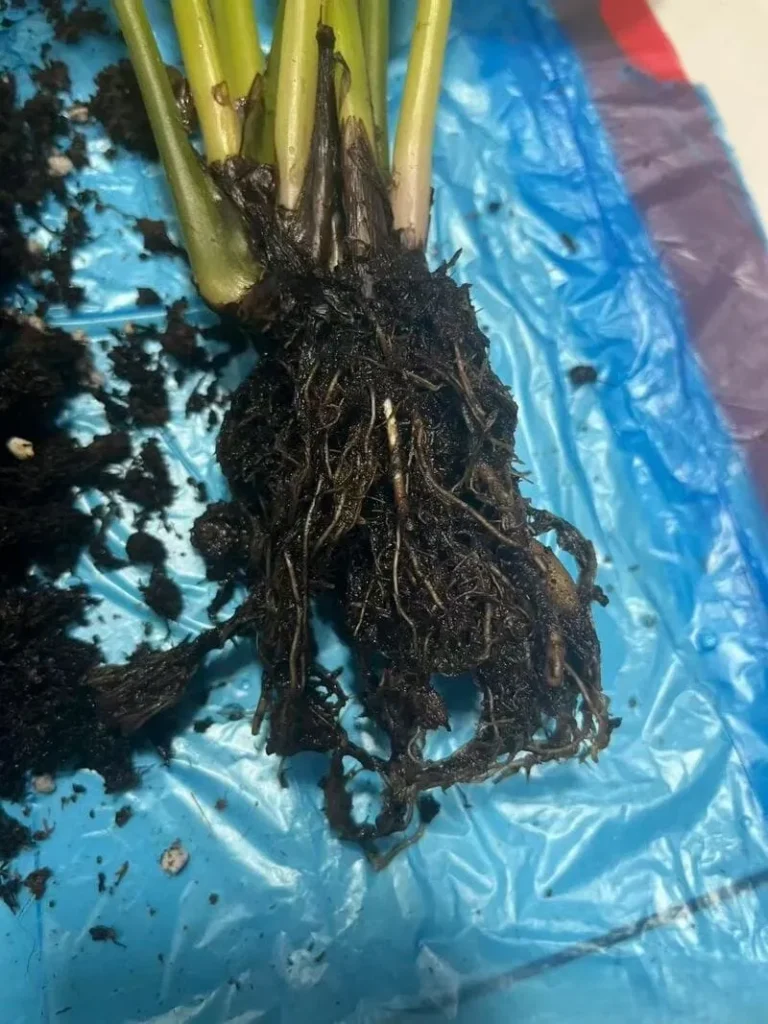
Healthy Calathea roots should be firm and white. Soft, dark, or smelly roots are a sure sign of decay. - Growth stalls, new leaves fail to open
When roots can’t function, the plant stops producing energy for fresh growth. New leaves may stay curled or never unfurl fully. - Soil smells musty or sour
A stagnant, unpleasant odor coming from the pot often signals fungal activity and poor aeration in the soil.
💡 Tip: If only one or two older leaves are yellowing but new growth looks healthy, it may just be natural aging—not root rot.
Common Causes ⚠️
Root rot doesn’t just happen overnight—it’s usually the result of environmental stress and poor growing conditions. Here are the most frequent culprits:
1. Overwatering
Watering too often keeps the soil constantly wet, depriving the roots of oxygen. Calathea likes moisture, but it needs periods of partial drying to breathe.
💡 Fix: Always check the top 1–2 inches of soil before watering. If it’s still damp, wait.
2. Poor Drainage
Pots without drainage holes or compacted soil trap water at the bottom, creating stagnant conditions where rot spreads quickly. To prevent this, switch to a well-aerated Calathea mix that drains freely.
If poor drainage keeps coming back, the pot itself may be part of the problem. I explain how I choose between self-watering pots, terracotta pots, and orchid pots with holes in my Calathea pot guide.
💡 Fix: Use pots with drainage holes and refresh compacted soil every 1–2 years.
3. Wrong Soil Mix
Heavy garden soil or peat-only mixes hold too much water and not enough air. Calathea roots need a loose, airy substrate to stay healthy.
If you do not want to mix everything from scratch after trimming rotten roots, I also have a buying guide to store-bought soil for Calathea, including ready-made mixes, perlite, pumice, bark, charcoal, and potting supplies I would use carefully.
💡 Fix: Choose a mix with peat/coco coir, perlite, and orchid bark for proper aeration.
4. Low Light
When Calathea is placed in deep shade, water evaporates more slowly. The soil stays wet for too long, increasing the chance of rot.
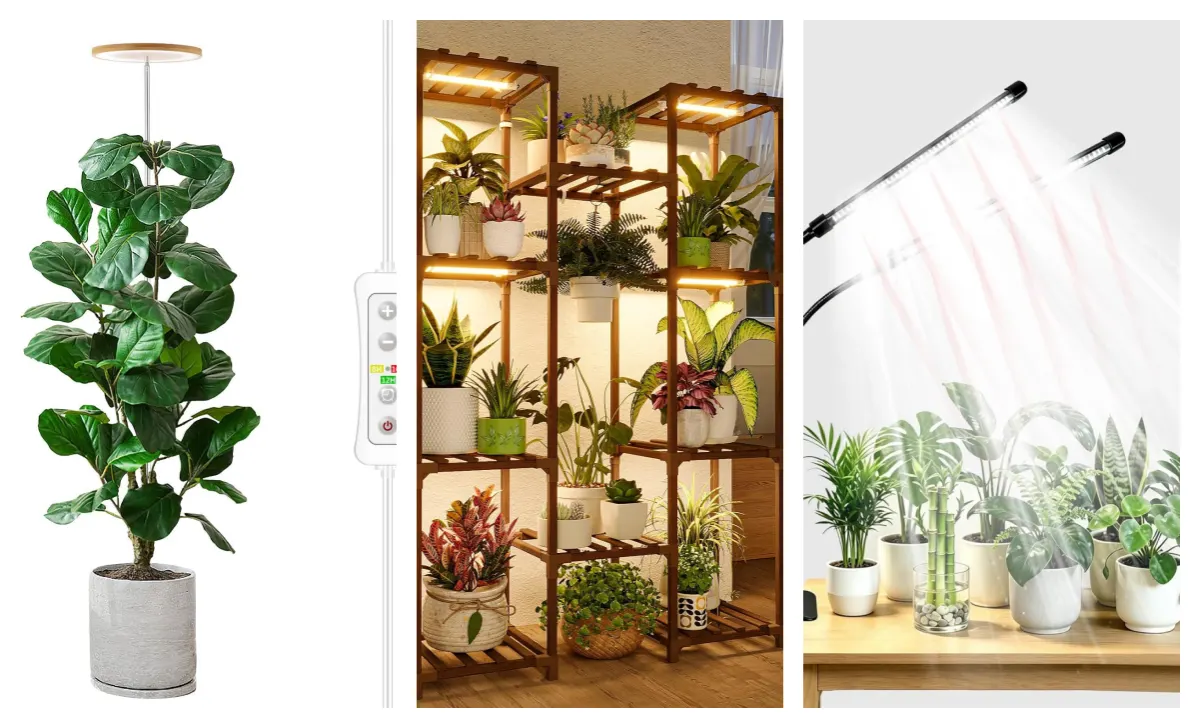
If your room is naturally dark, north-facing, or gloomy through winter, a gentle grow light setup for Calathea may help the pot dry at a healthier pace without moving the plant into harsh direct sun.
💡 Fix: Place your plant in bright, indirect light to help soil dry at a healthy pace.
5. Pathogens
Fungi and bacteria naturally live in soil, but soggy, oxygen-poor conditions allow them to thrive and attack weakened roots.
💡 Fix: Improve drainage, disinfect tools, and avoid reusing old, contaminated soil.
How to Save a Calathea with Root Rot
If you’ve confirmed root rot, quick action can give your Calathea a second chance. Here’s how to proceed:
Core Steps
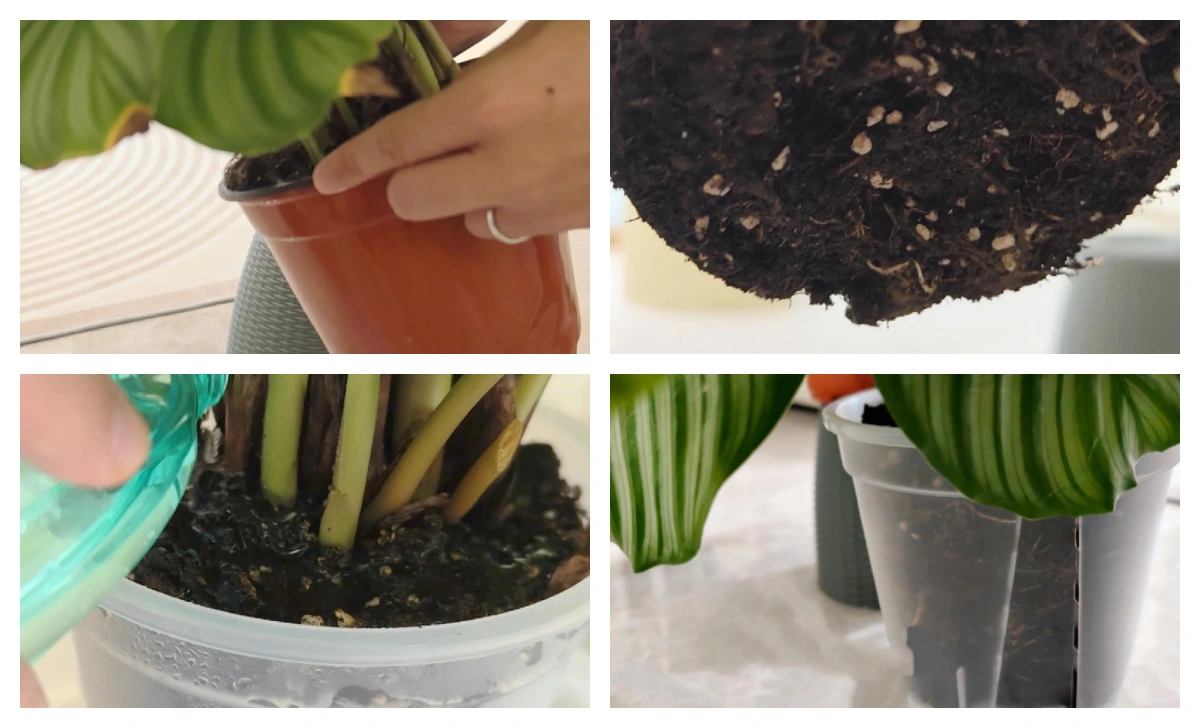
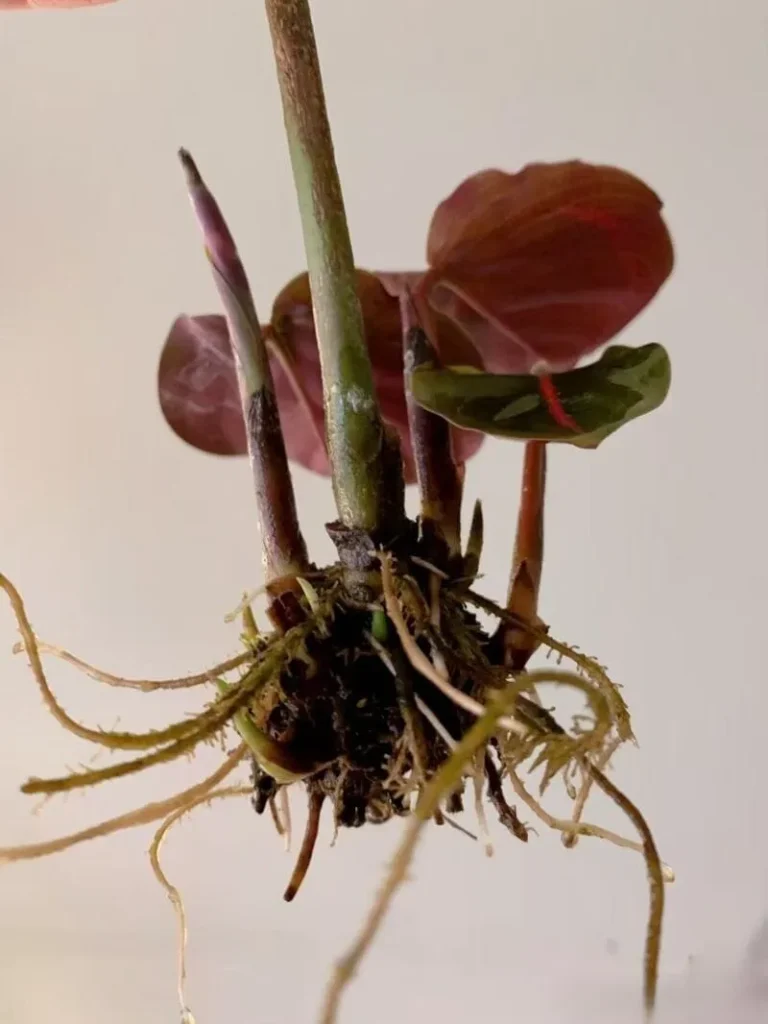
- Unpot & clean – Gently remove the plant from its pot and shake off as much old soil as possible.
- Rinse & trim – Wash away any slimy or rotten material. Cut off black, mushy roots with sterilized scissors, leaving only firm, white roots behind.
Two Recovery Methods
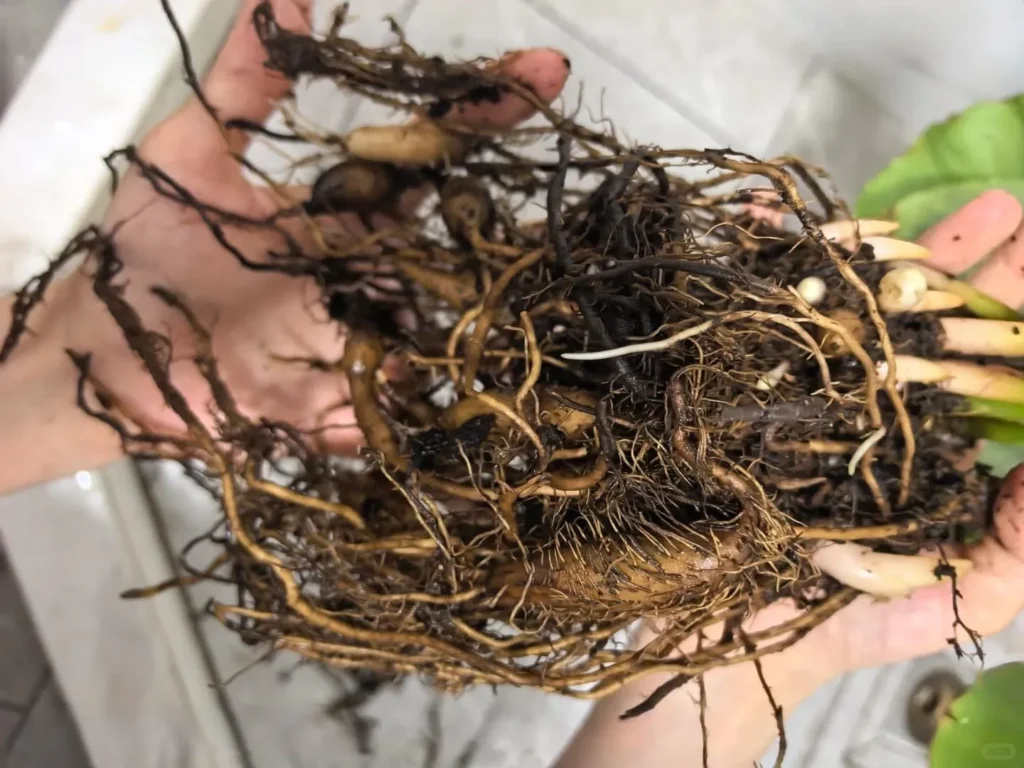
A. Repot in Fresh Soil (for mild cases)
- When to use: If you still see a good portion of healthy, white roots.
- How it works: After trimming, place the plant into a fresh, airy soil mix (peat or coco coir + perlite + bark).
- Pros: Less transplant stress, allows the plant to resume normal growth quickly.
- Cons: If too few healthy roots remain, recovery will be slow and uncertain.
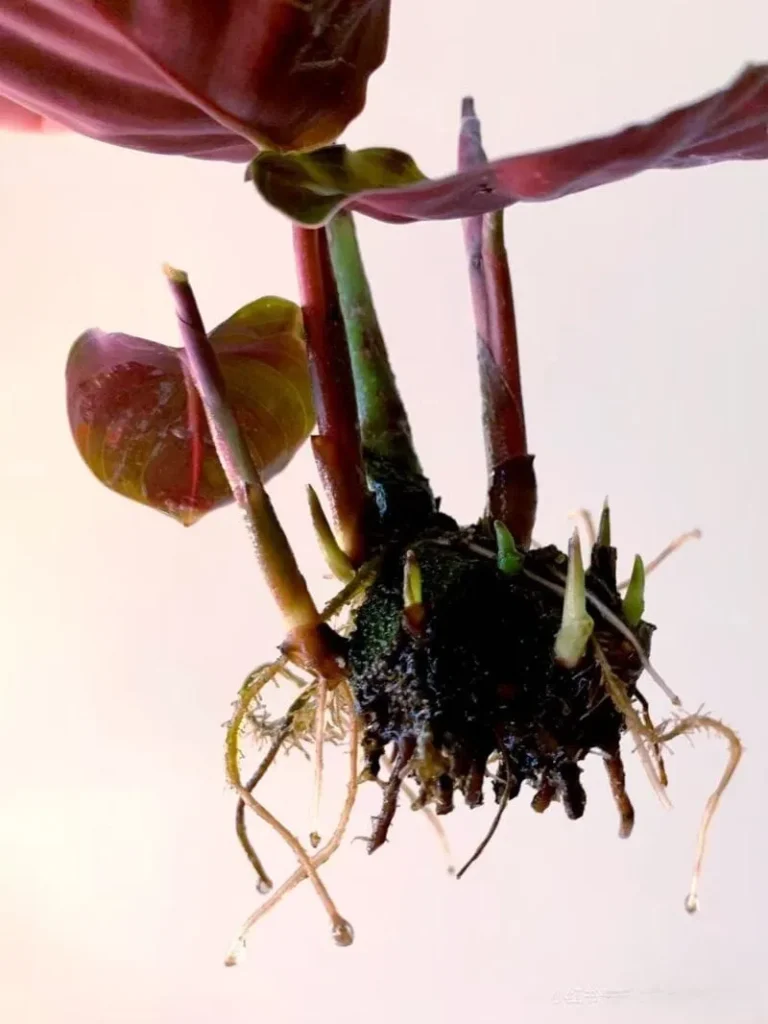
B. Water Rehab in an Opaque Container (for severe cases)
- When to use: If most of the root system is gone and only a few healthy sections remain.
- How it works: Place the plant in a dark or opaque container with a shallow layer of clean water, just enough to cover the roots. Change the water daily for the first week to reduce bacterial growth.
- Pros: Provides a clean, low-stress environment where new roots can emerge.
- Cons: New roots are extremely fragile and can break easily. Transitioning back to soil requires extra care.
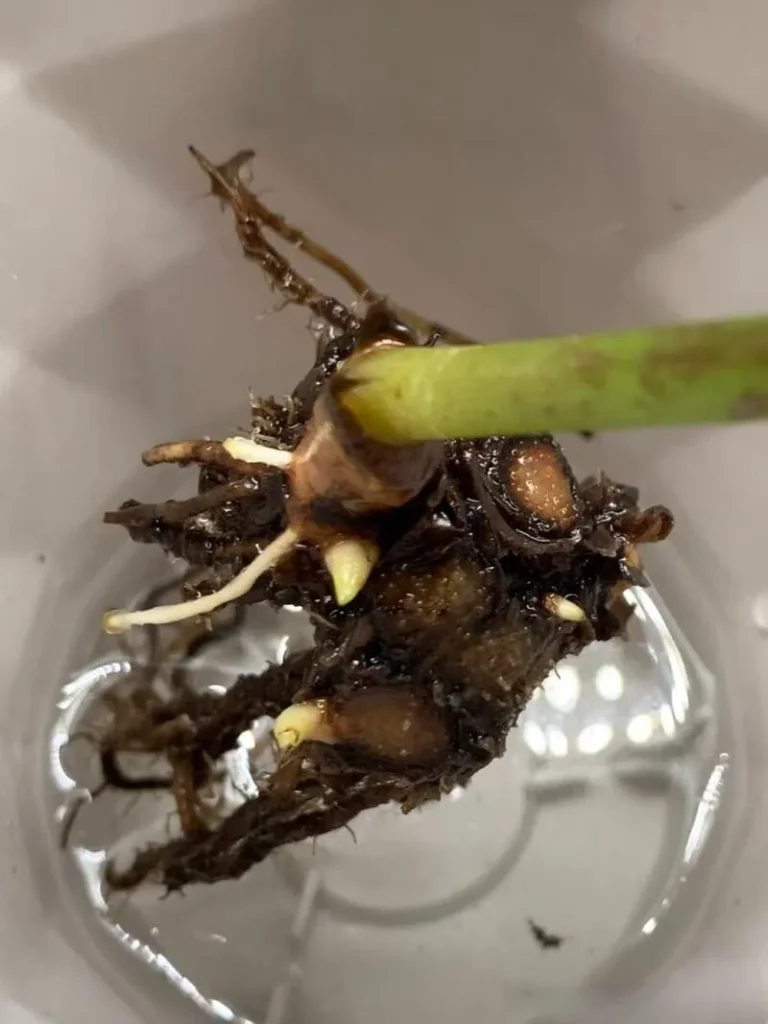
💡 Tip: During the early recovery phase, handle roots as gently as possible. Even light pressure can snap new growth—patience and gentle care make all the difference.
I would not fertilize a Calathea right after root rot treatment. Damaged roots need time to recover before handling extra nutrients. When the plant is stable again and pushing new growth, I explain what I would use lightly in my guide to the best fertilizer for Calathea.
“Suffocated Roots” vs. True Root Rot
Not every case of yellowing leaves means full-blown root rot. Sometimes your Calathea is suffering from suffocated roots. While the early symptoms can look similar, the treatment approach is different.
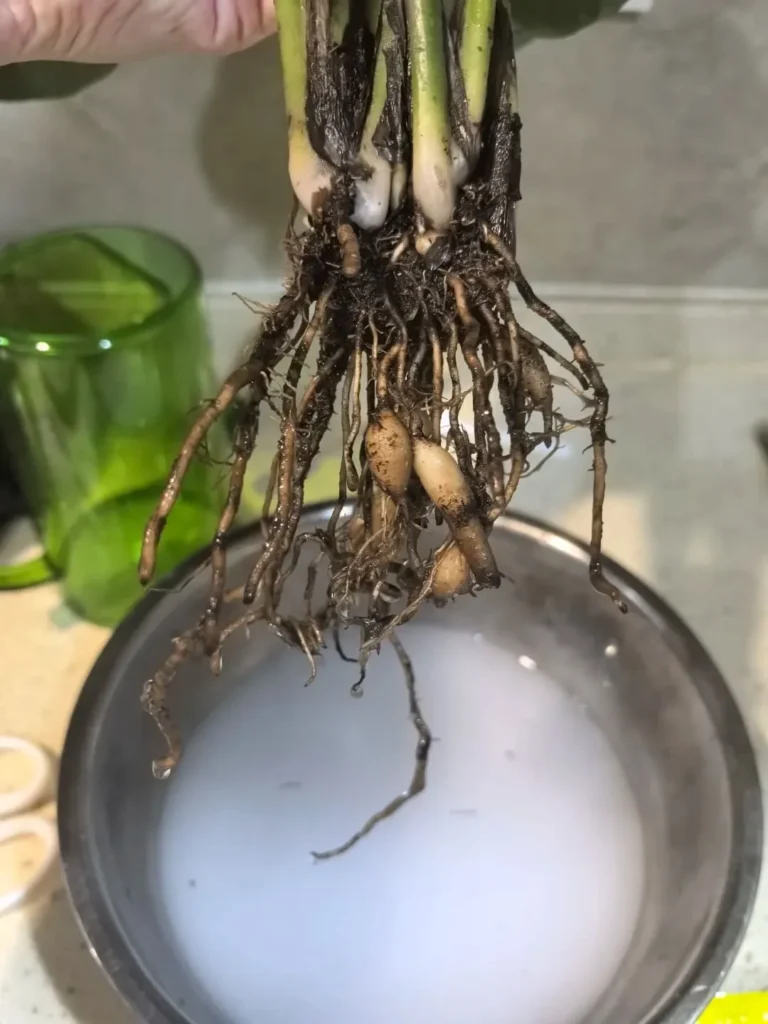
Suffocated Roots (oxygen-deprived, but not decayed)
- Causes: Soil compaction, watering too frequently, non-breathable pots, or poor ventilation around the plant.
- Symptoms: Leaves yellow and curl but do not bounce back after watering; growth stalls; roots feel soft and yellowish but are not yet rotten.
- Fixes: Repot into a looser, more aerated mix, reduce watering frequency, and use a breathable pot such as terracotta.
True Root Rot (irreversible decay)
- Causes: Prolonged waterlogging, fungal or bacterial infection, fertilizer burn, or cold + wet conditions.
- Symptoms: Leaves suddenly wilt and drop; the stem base turns black and soft; roots appear black, mushy, and foul-smelling.
- Fixes: Trim away rotten roots, disinfect with fungicide or diluted hydrogen peroxide, and repot in fresh soil. In severe cases, try water rehab or even propagation by division/cuttings.
💡 Key point:
Suffocated roots = oxygen starvation → functional impairment (reversible if caught early).
True root rot = root tissue decay → structural collapse (faster progression, harder to save).
| Aspect | Suffocated Roots | True Root Rot |
|---|---|---|
| Main Causes | Soil compaction, watering too often, non-breathable pots, poor ventilation | Prolonged waterlogging, fungal/bacterial infection, fertilizer burn, cold + wet conditions |
| Symptoms | – Leaves yellow and curl but don’t perk up after watering- Growth stalls- Roots soft/yellow but not decayed | – Leaves suddenly wilt and drop- Stem base turns black and soft- Roots black, mushy, foul-smelling |
| Severity | Functional stress, but roots are still intact → reversible | Structural decay, root tissue destroyed → progresses quickly |
| Fixes | Repot into loose, airy soilReduce wateringUse breathable pots (e.g., terracotta) | Trim off rotten rootsDisinfect with fungicide or hydrogen peroxideRepot in fresh soilSevere cases: water rehab or propagation |
| Key Point | Oxygen deprivation → roots suffocate but can recover if caught early | Root tissue breakdown → much harder to save once rot spreads |
Prevention Tips
The best way to deal with root rot is to stop it before it starts. A few simple habits can keep your Calathea’s roots healthy and thriving:
- Water only when the top 1–2 inches of soil are dry. Use your finger or a wooden stick to test moisture before watering.
- Use a well-draining Calathea mix. Combine peat or coco coir with perlite and bark to keep the soil airy.
- Always choose pots with drainage holes. Standing water at the bottom of a pot is the fastest path to root rot.
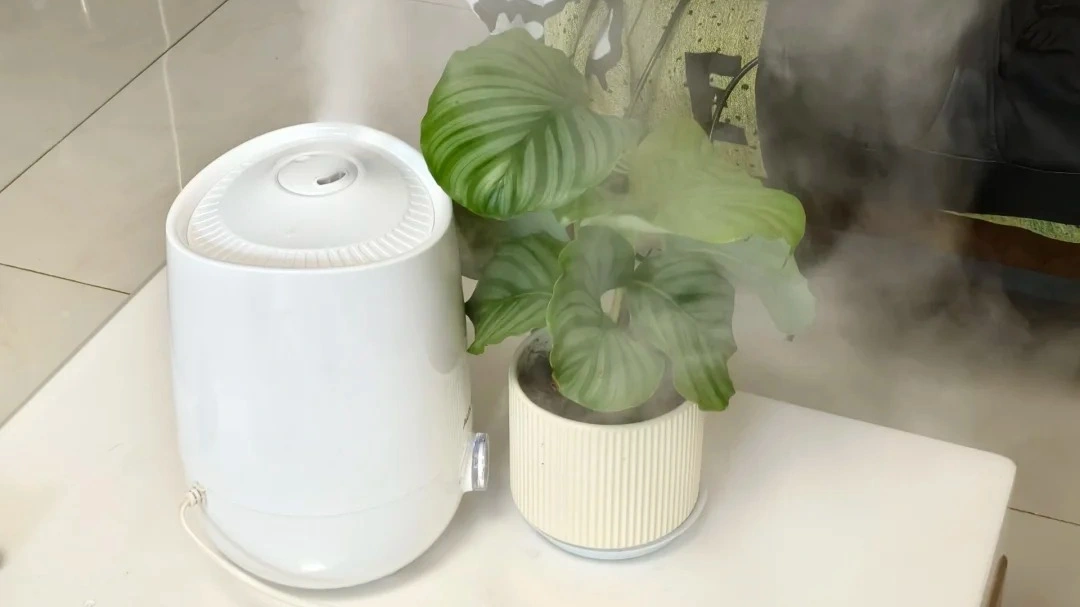
- Maintain humidity, but avoid soggy soil. Calathea loves moist air, not wet feet. If your room is dry, it is better to check humidity and consider a small humidifier than to keep watering more often. See my guide on whether Calatheas need a humidifier before adding another machine.
- Refresh soil regularly. Repot every 1–2 years to prevent compaction and restore aeration.
💡 Tip: Think “moist, not wet.” Calathea roots thrive when the soil is slightly damp but still breathable.
FAQ
True rot: Black, mushy, foul-smelling roots, sudden leaf collapse → needs immediate rescue.
Still worried about your plant?
👉 For more tips on keeping your plant healthy, explore our Complete Calathea Care Guide.
Explore All Problems →