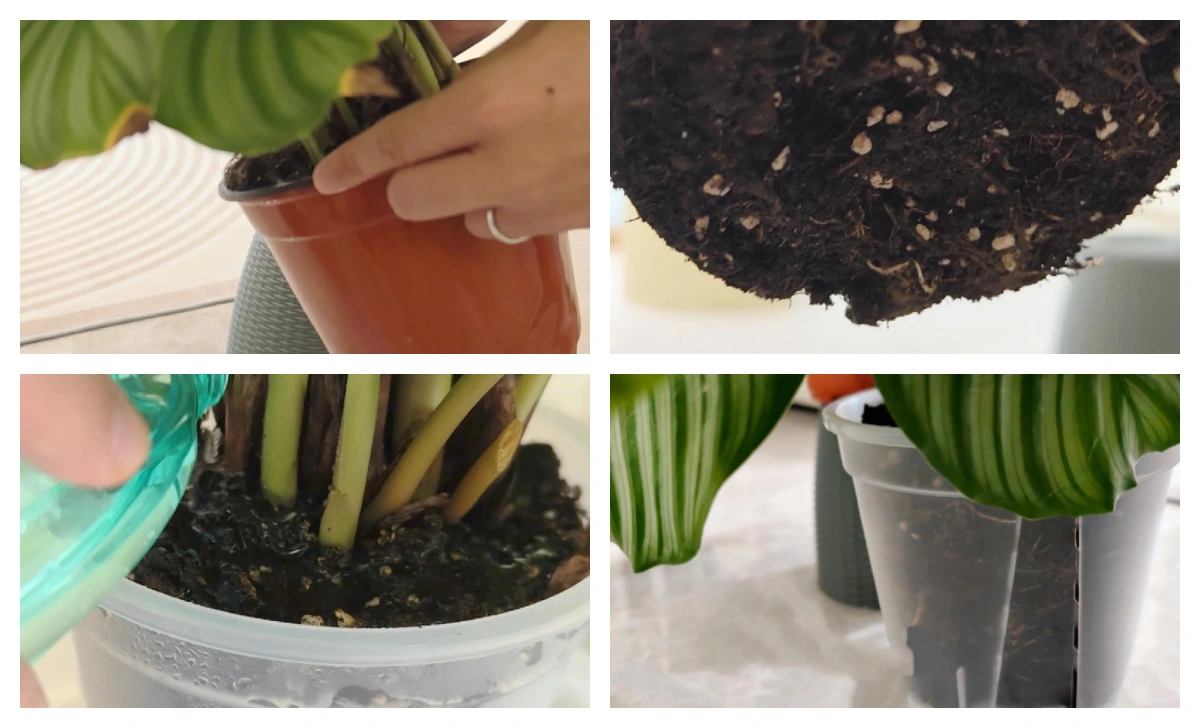
When I first started growing Calatheas, the question that haunted me the most was: how often should I water them? Every care guide seemed to throw around numbers — “once a week,” “every 3 days,” “when the soil feels dry” — but in reality, there is no universal schedule. I learned this the hard way.
One particularly cold winter here in Seattle, I made the rookie mistake of giving my Calathea ‘Apple Green’ a full watering just before the temperature dipped below 10°C (50°F). My place was drafty near the window, so the pot and soil stayed much colder than the room felt. Within days, the leaves showed signs of frost damage and several turned to mush. It was painful to watch, but that failure taught me one of the most important lessons about Calathea care: watering isn’t about following a strict calendar — it’s about reading the soil, the pot, the season, and the plant itself. 👉 Learn the basics in my Calathea Care Guide — it covers light, soil, humidity, and watering balance.
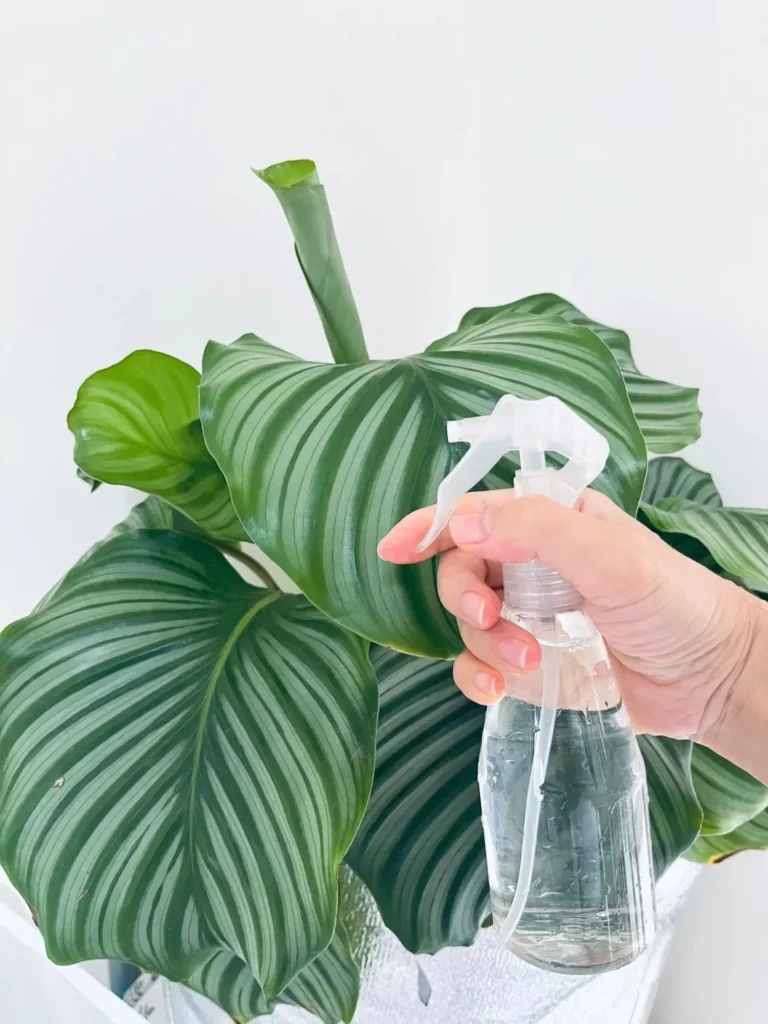
In this guide, I’ll share the complete watering strategies I’ve developed after years of trial and error: how to check moisture properly, how to water the right way, and how to adjust your routine across seasons, pot types, and climates. If you’ve ever worried about overwatering or underwatering your Calathea, this article will help you find a rhythm that actually works for your home.
Understanding Calathea’s Water Needs
Calatheas belong to the Marantaceae family, a group of tropical understory plants that evolved in the warm, humid rainforests of South America. In their native habitat, they grow under dense canopy cover where the soil stays evenly moist from frequent rains, but never waterlogged. This explains why Calatheas thrive in consistently damp soil at home, yet are extremely sensitive to standing water around their delicate roots.
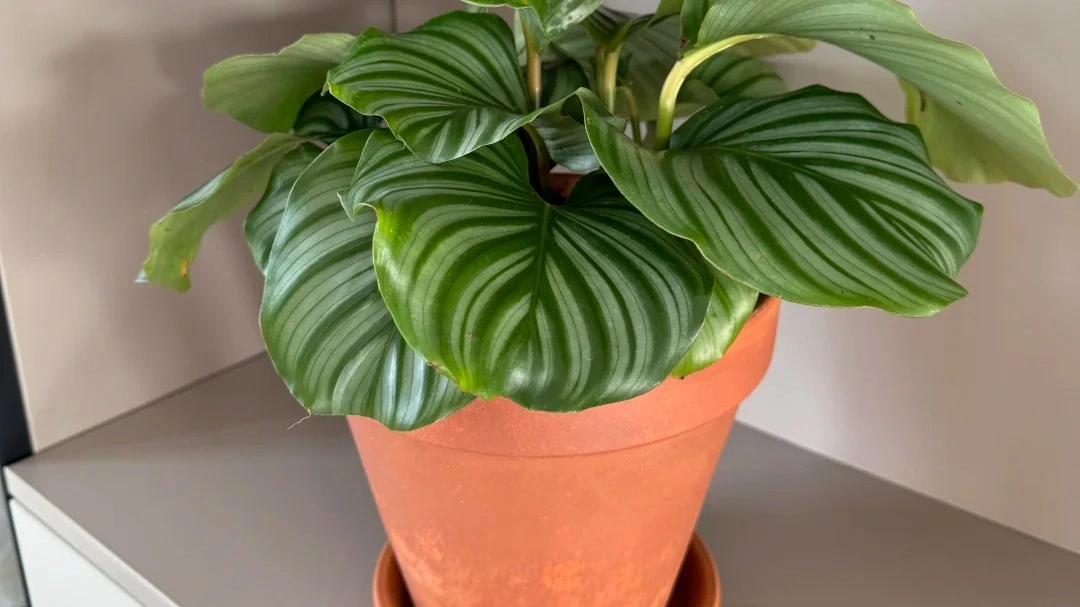
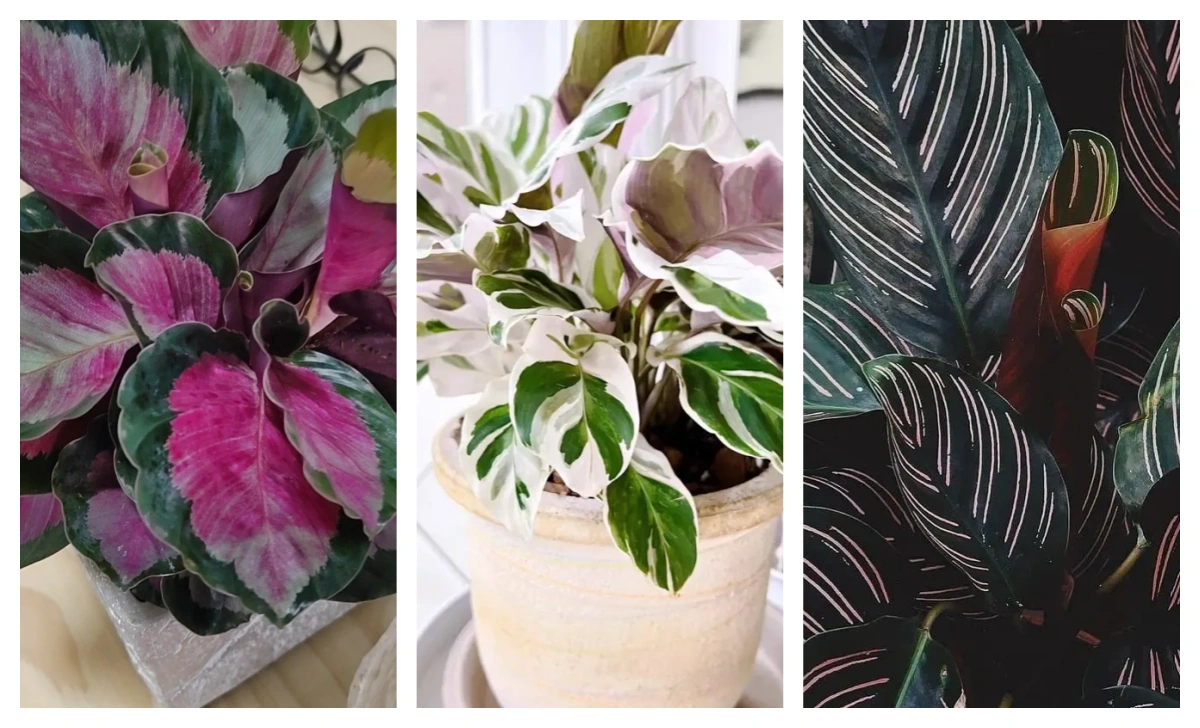
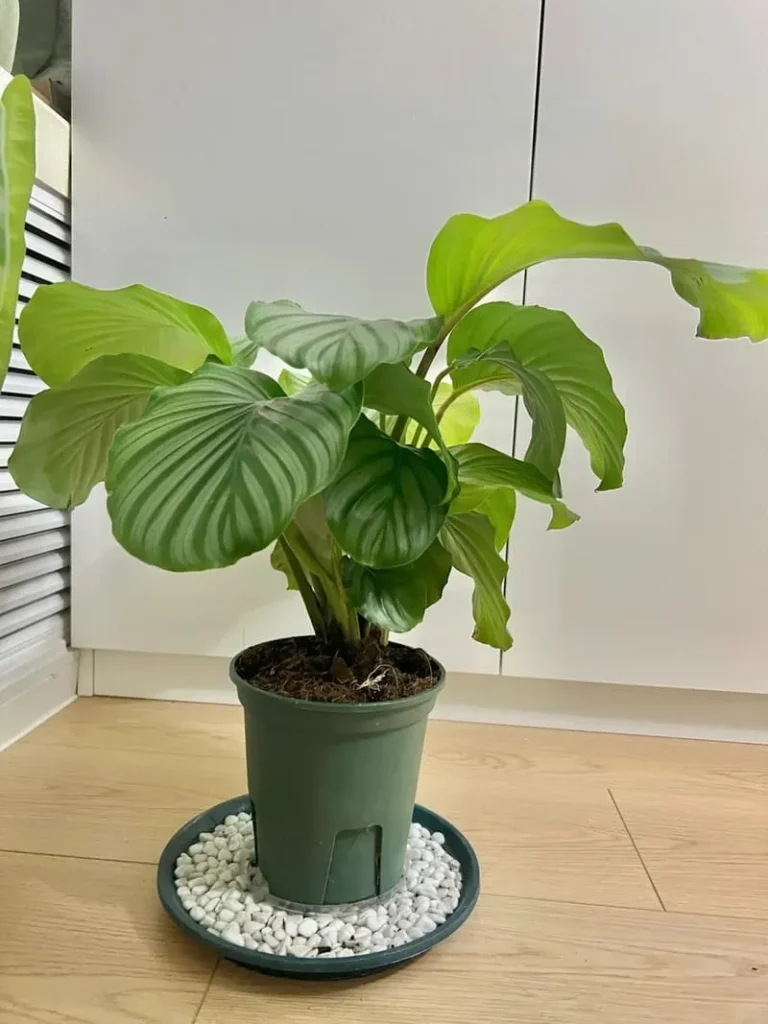
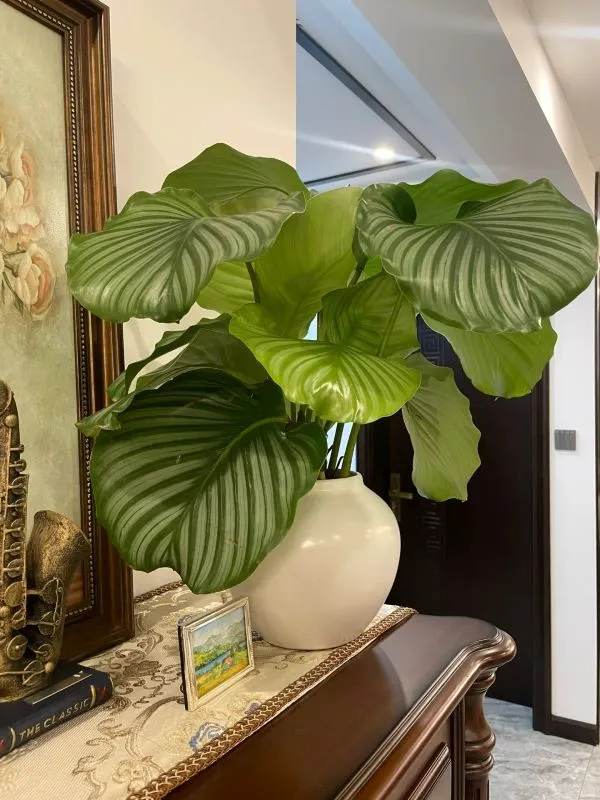
It’s also worth noting that there are more than 60 recognized Calathea varieties, from the large, round-leaved Calathea orbifolia to the striking striped Calathea ornata. While their patterns and growth habits differ, their water requirements are surprisingly similar: all prefer moist, breathable soil and suffer quickly if left dry for too long. What varies is how fast the soil dries depending on leaf size, potting mix, and environment — for instance, an Orbifolia in a clay pot will demand water sooner than a Dottie in a plastic nursery pot. For humidity and temperature balance, see Calathea Light Requirements — light level affects how fast the soil dries.
👉 If you’d like to explore the different varieties in detail, check out my guide to Calathea Types, where I break down the most popular cultivars and their subtle care differences.
Regardless of the variety you grow, watering is about balance — keep the soil evenly moist without letting it sit in soggy conditions.
Do Different Calathea Varieties Need Different Watering?
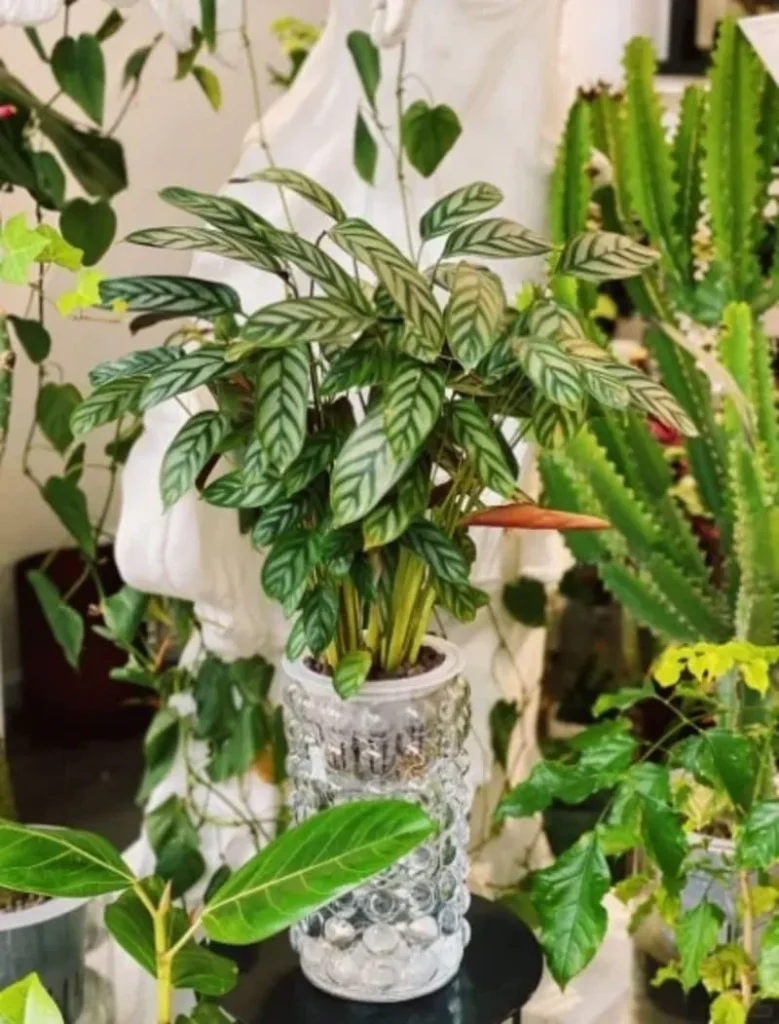
Despite the wide variety of Calathea plants — from the elegant Calathea Orbifolia to the compact Calathea Dottie — their watering requirements are fundamentally the same. All Calatheas prefer:
- Soil that stays consistently moist but not soggy
- Watering based on soil dryness, not a fixed schedule
- Adjustments depending on season, pot type, and indoor climate
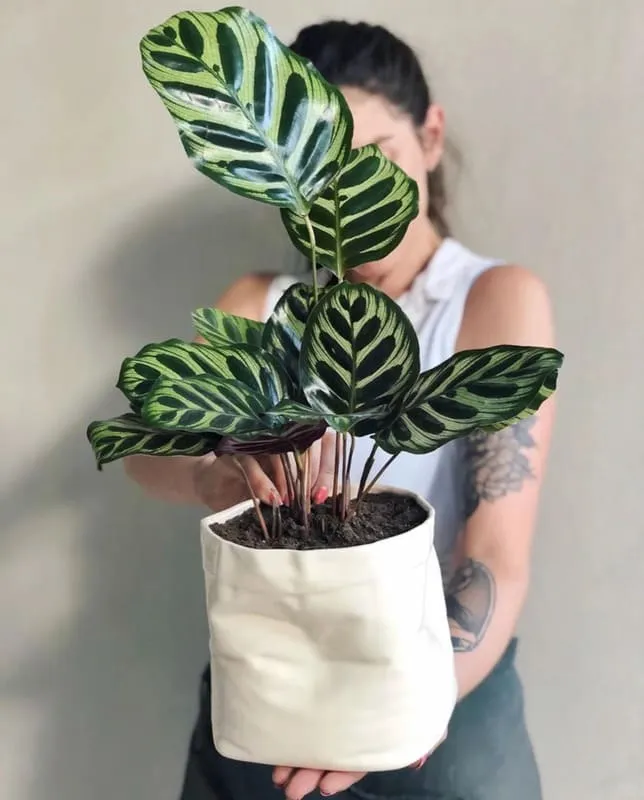
So whether you’re caring for a tall Calathea warscewiczii or a patterned Calathea makoyana, the golden rule remains: keep the soil evenly damp, and never let the roots sit in standing water.
👉 Want to know why soil type changes everything? See Best Soil for Calathea.
Seasonal Watering Guide
One of the biggest mistakes new Calathea owners make is sticking to a strict schedule — “once a week” or “every three days.” In reality, watering frequency should shift with the seasons, just like it does in their native rainforest.
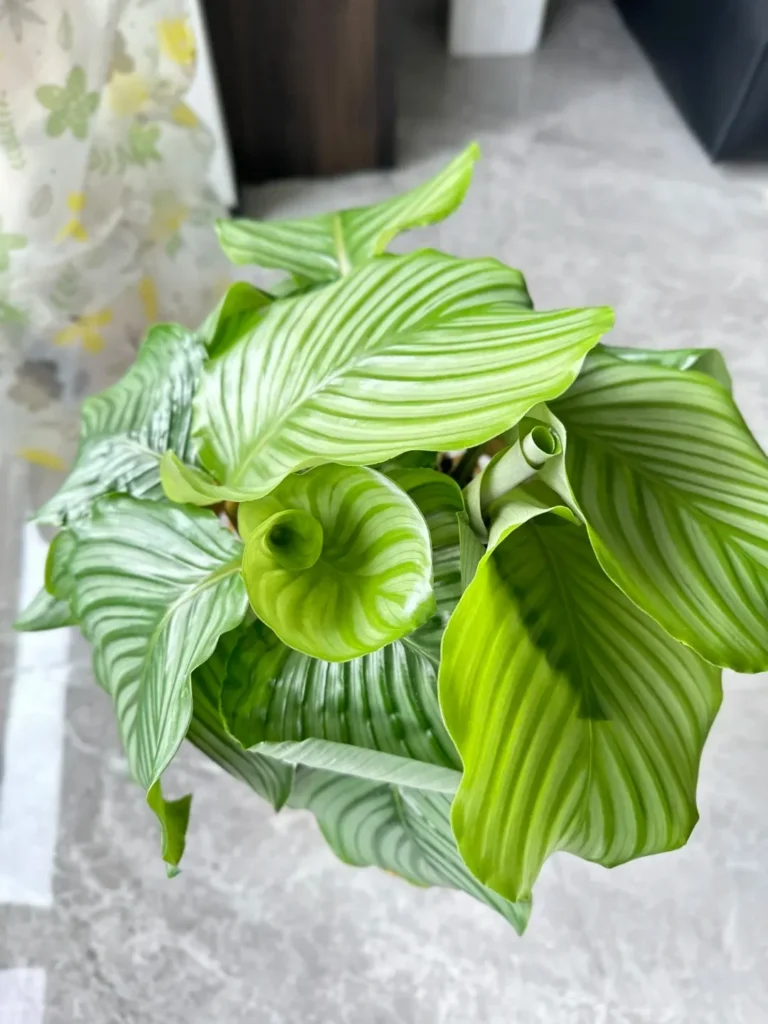
🌱 Spring & Summer — Active Growth
When temperatures rise and your Calathea is actively producing new leaves, water more frequently. Let the top 1–2 cm (half an inch) of soil dry out, then water thoroughly until it drains from the bottom. In most indoor conditions, this works out to 1–2 times per week, but always check the soil before grabbing your watering can.
🍂 Autumn — Transition Season
As daylight hours shorten, Calatheas naturally slow their growth. This is the time to gradually reduce watering. The soil should stay lightly moist, but you’ll find yourself reaching for the watering can less often — maybe every 10 days instead of every 5.
❄️ Winter — Resting & Sensitive Period
This is where I personally learned my hardest Calathea lesson. One particularly cold spell, I watered my Calathea ‘Apple Green’ just as temperatures dipped below 10°C (50°F). Within days, several leaves showed frost damage and collapsed. It was a painful reminder that in winter, less is more.
- Once the temperature drops below 10°C, cut back to ½ or even ⅓ of your usual water amount.
- If the soil still feels damp, wait — forcing extra water at this stage only invites root rot.
- Combine reduced watering with good airflow and moderate warmth to prevent fungal issues.
👉 If your plant ever suffers in cold, you’ll find rescue tips in Reviving a Dying Calathea.
Calathea Watering Quick Reference
| Season | Frequency | How to Check | Extra Notes |
|---|---|---|---|
| Spring | About once a week (adjust to environment) | Top 1–2 cm of soil dry before watering | Active growth starts; increase humidity if needed |
| Summer | 1–2 times per week (more often in heat) | Finger test / pot weight method | Watch humidity levels to prevent leaf curl (→ see Humidity Guide) |
| Autumn | Every 7–10 days | Soil surface dry but still slightly moist | Growth slows; gradually reduce watering |
| Winter | Every 10–14 days, with reduced amount (½–⅓ normal) | Wait until soil feels nearly dry before giving less water | Below 50°F (10°C), overwatering easily leads to rot (→ see Root Rot Guide) |
💡 Tip: This is only a guideline. Actual frequency depends on light, soil, pot type, and indoor humidity. Always read the soil, not the calendar.
How to Check Soil Moisture
One of the golden rules of Calathea care is this: don’t water by the calendar — water by the soil. These plants don’t care if it’s been “five days” since the last drink. What matters is whether the roots still have enough moisture. Here are the easiest ways to check:
👉 Finger Test
The simplest and most reliable method. Insert your finger about 1–2 inches deep into the soil (roughly two knuckles).
- If it feels moist, wait.
- If it feels dry with no dampness at all, it’s time to water.
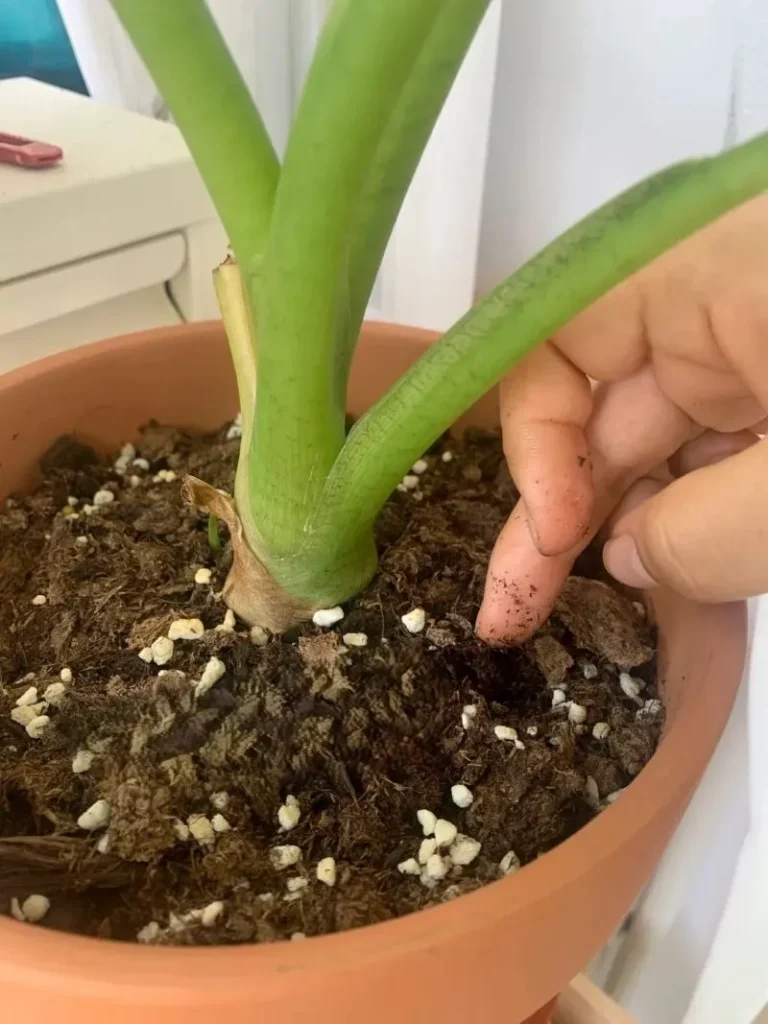
(Pro tip: when you pull your finger out, if no soil sticks, that usually means the mix is fully dry.)
If your soil seems to dry out too quickly or stay wet too long, see my guide to Best Soil for Calathea or Calathea Not Growing to troubleshoot growth slowdown.
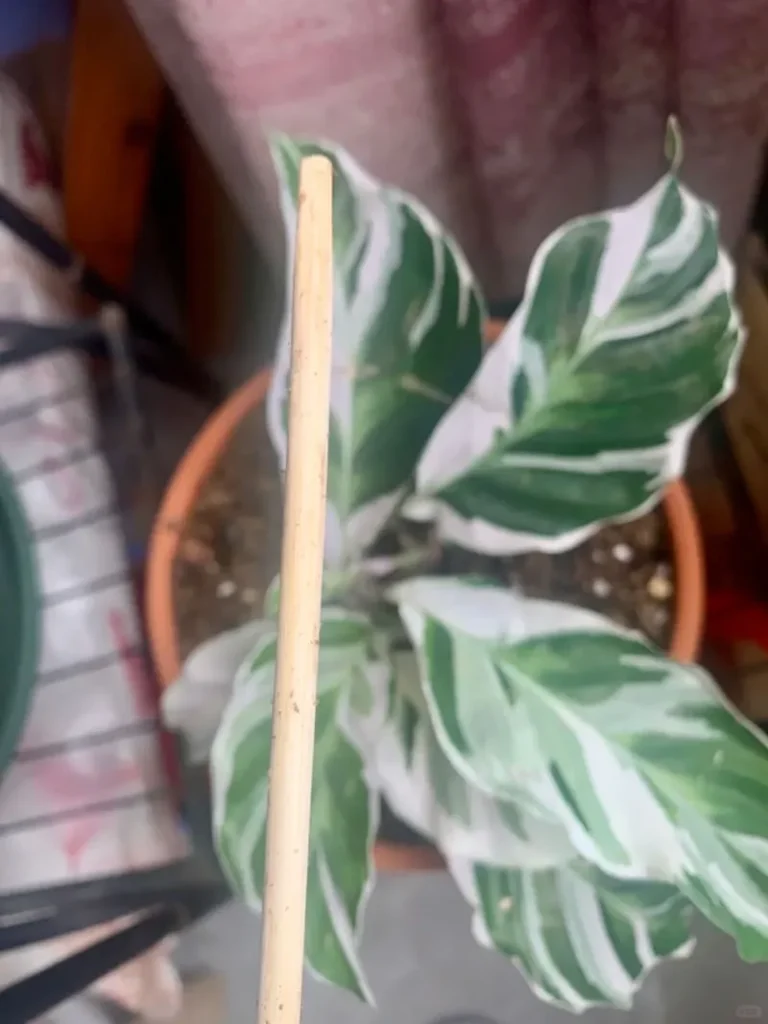
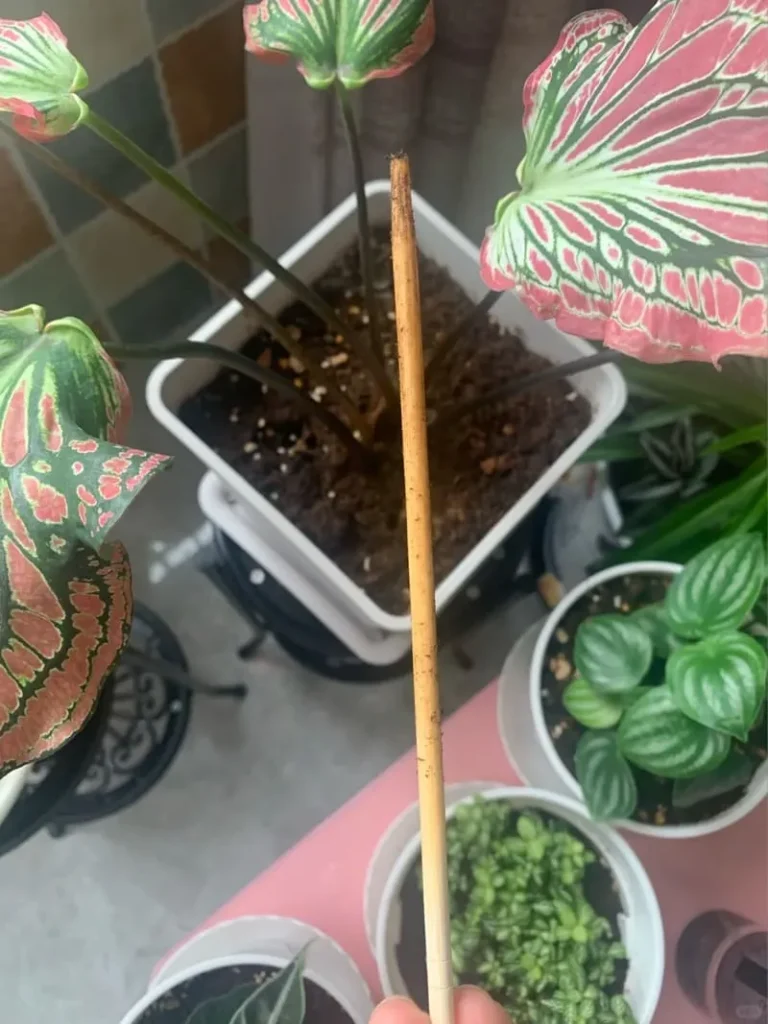
👉 Toothpick or Chopstick Method
Stick a wooden toothpick or chopstick into the soil. Leave it for a few seconds, then pull it out:
- If it comes out clean, the soil is dry.
- If it comes out dark or with bits of soil stuck, there’s still moisture inside.
This method is especially helpful if you don’t like getting your hands dirty or if you’re using a dense potting mix.
👉 Pot Weight Method
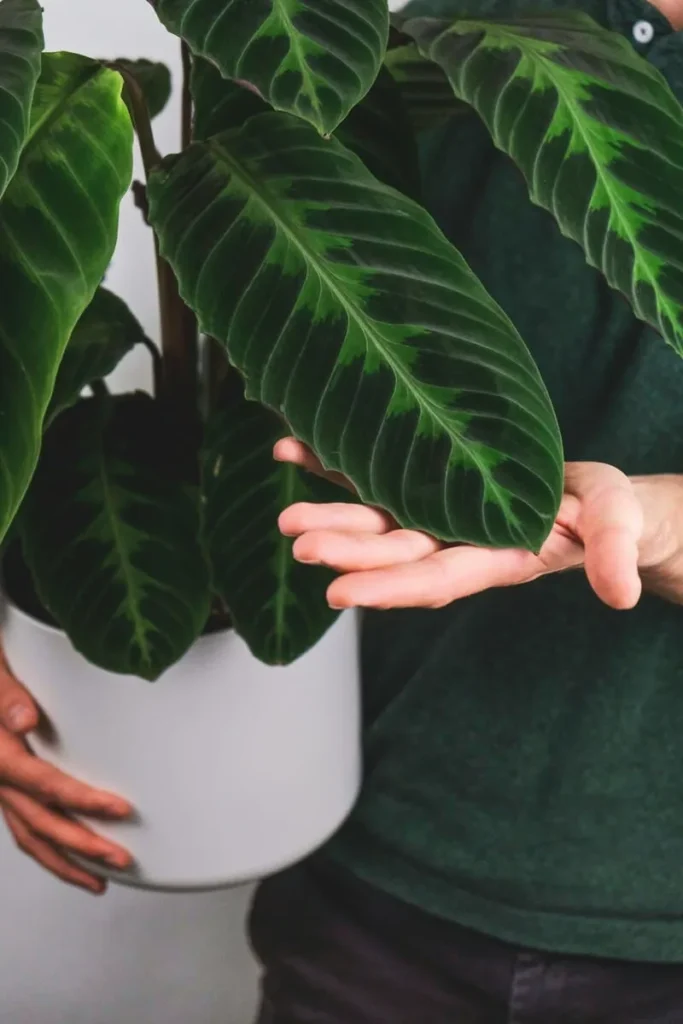
Pick up the pot (or tilt it slightly if it’s large). A freshly watered pot will feel noticeably heavier than a dry one. Over time, you’ll develop a sense of the “dry weight” vs. “wet weight” of your Calathea.
This is my personal go-to trick in winter, when I want to avoid overwatering — if the pot still feels heavy, I hold off.
✅ Bottom line: Ignore generic advice like “water every 7 days.” Your plant will tell you when it needs water — you just have to listen to the soil.
📌 Common Mistake to Avoid
Don’t mistake Calathea’s natural leaf movement for a watering problem.
These plants are nicknamed “prayer plants” because their leaves lift during the day and droop slightly at night. Many beginners think drooping leaves always mean “thirsty” — but that’s not true.
- True underwatering: leaves stay limp even in the morning, soil feels bone dry.
- Normal nyctinasty (daily movement): leaves perk up in daylight, fold or droop at night — no water needed.
👉 If you’re unsure whether your soil is holding the right amount of moisture, check my guide to Best Soil for Calathea for tips on improving drainage and water retention.
How to Water Properly
Knowing when to water is only half the story — how you water makes just as much difference. Calatheas have sensitive roots that need moisture, but they can’t sit in soggy soil for long. Here’s how to water them the right way.
Step-by-Step Watering
1. Check the soil first (finger test or pot weight).
2. Water evenly across the surface until excess starts draining out of the bottom.
3. Empty the saucer within 10–15 minutes to avoid root rot.
4. In colder months, reduce the volume instead of skipping water completely — half a cup may be better than a full soak.
Pot Material & Watering Differences
Different pot materials change how quickly water evaporates. Choosing the right pot — and adjusting your watering — can save your Calathea from stress.
| Pot Type | Water Retention | Watering Tips | Best For |
|---|---|---|---|
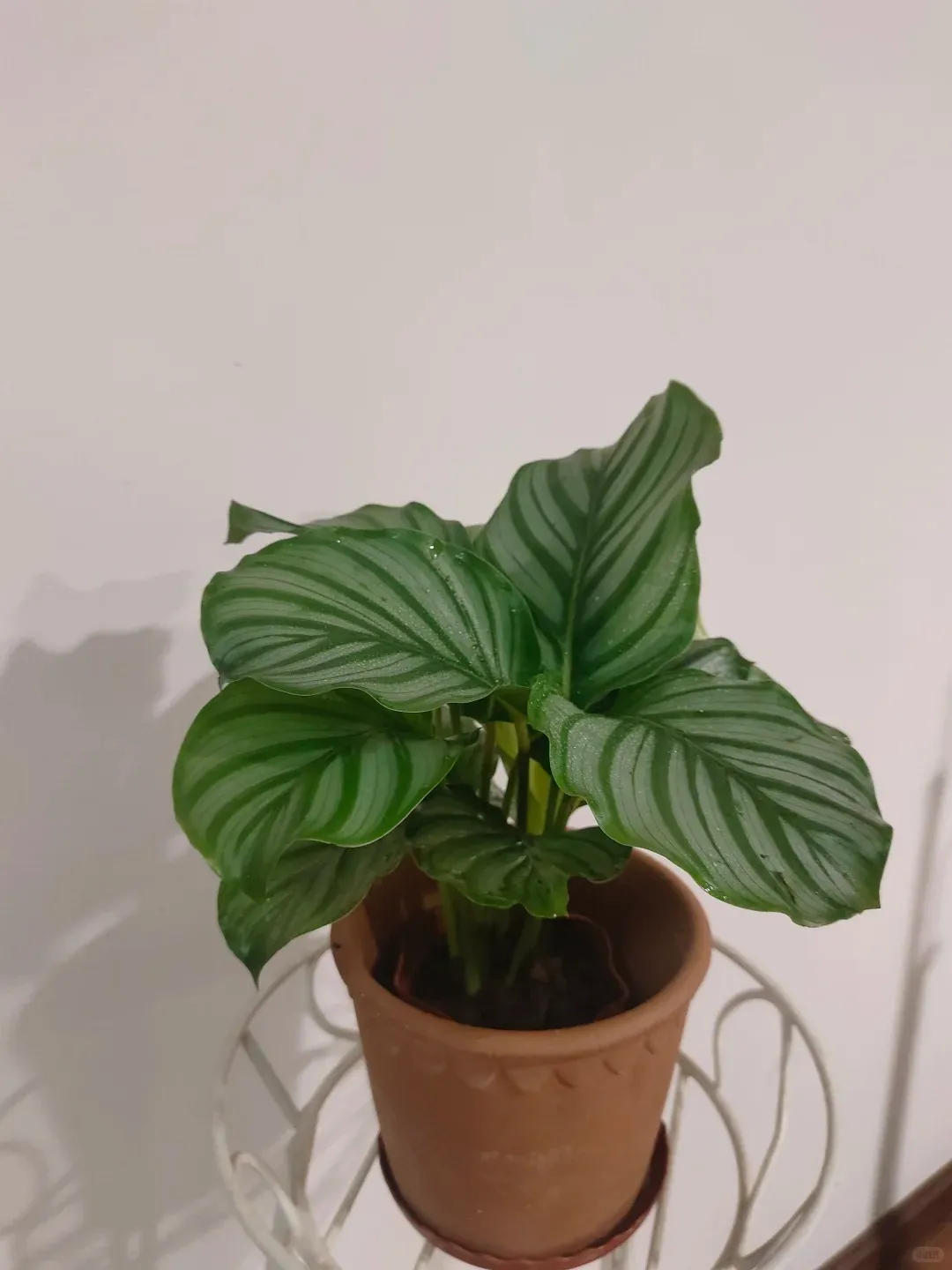
| Terracotta (clay) | Dries quickly | Check soil more often; water slightly more frequently | Humid climates, people who tend to overwater |
| Plastic/Nursery Pot | Holds moisture longer | Water less often; ensure drainage holes are open | Dry climates, small Calathea varieties |
| Self-watering pot | Balanced | Good for most homes; still empty saucer after watering | Display pots indoors |
| Ceramic without Drainage | Risky | Only for decorative cachepots — always keep nursery pot inside | Styling without repotting |
Watering Methods
Over the years, I’ve tested different techniques — here’s what works best for Calathea:
- Top Watering (Standard): Slowly pour water on top until it drains out. Best for most homes.
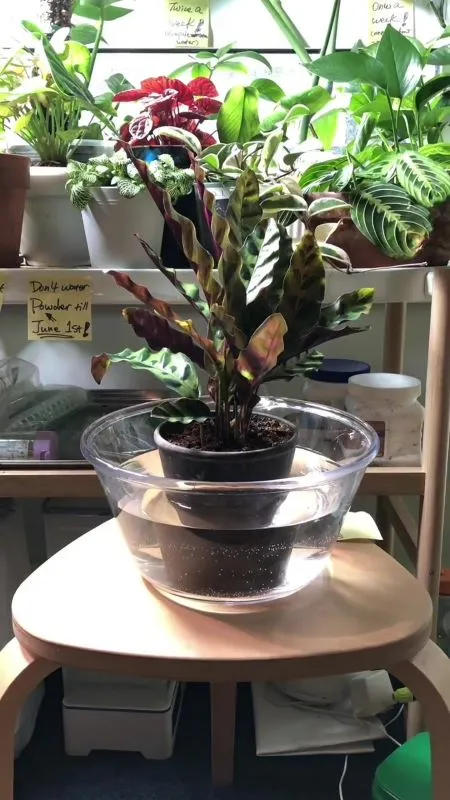
- Bottom Watering (Soak Method): Place the pot in a tray of water for 10–15 minutes, allowing the soil to soak up moisture. Great if your soil dries unevenly.
- Thorough Soak: Occasionally (every few weeks), give the plant a deep soak to flush out fertilizer salts.
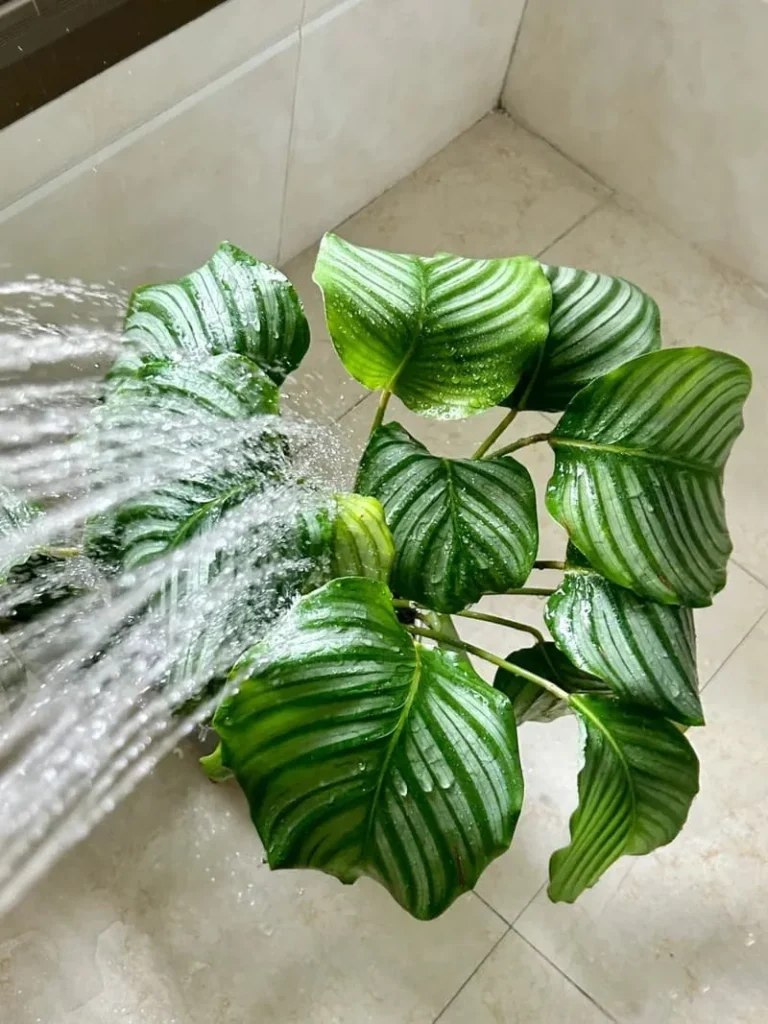
- Tropical “Rain” Method: Mimic rainforest rain by lightly showering the leaves and soil. Refreshing in summer, but avoid in winter to prevent cold stress.
Common Mistakes & How to Avoid Them
Even experienced plant lovers make watering mistakes with Calatheas. Here are the most common ones I see — and how you can avoid them.
Watering by the Calendar
Many guides say things like “water every 5–7 days.” But this doesn’t work for Calathea. Depending on your home’s light, pot size, and humidity, soil can dry out faster or slower.
✅ Fix: Always check the soil moisture before watering (→ see How to Check Soil Moisture).
Forgetting to Reduce in Winter
One of my biggest “oops” moments happened during a cold snap — I watered like it was summer, and several leaves got frost damage. Calathea slows its growth below 50°F (10°C), which means it needs far less water.
✅ Fix: In winter, cut water volume to ½ or ⅓ of your normal amount. Allow the soil to almost fully dry before giving a small drink (→ see Winter Watering Guide).
Letting the Saucer Sit Full of Water
Leaving water in the saucer is one of the fastest ways to cause root rot. Roots suffocate in stagnant water and fungal problems set in quickly.
✅ Fix: Always empty the saucer 10–15 minutes after watering (→ see Root Rot Guide).
Misreading Nighttime Leaf Droop
Calathea is a “prayer plant” — its leaves naturally rise in the morning and relax at night. Many beginners think drooping leaves mean “thirsty,” and they water unnecessarily.
✅ Fix: Learn the difference:
If leaves perk back up in the morning, it’s normal.
If they stay limp even in daylight, that’s a watering issue (→ see Curling or Drooping Leaves).
💡 Takeaway: Don’t stick to rigid rules. Watch your soil, watch your plant, and adjust. Calatheas thrive on attentive, flexible care — not a strict schedule.
Personal Tips from My Own Experience
Over the years of keeping Calatheas, I’ve made plenty of mistakes — especially in winter — and learned a few tricks that now keep my plants thriving.
Winter “Half Watering” Rule
When temperatures drop below 50°F (10°C), I always cut my normal watering to half or even one-third. The soil takes much longer to dry, and giving a full soak in cold weather is a recipe for root rot. Learn how to identify early signs in Calathea Root Rot Symptoms
The Bagging Trick for Winter Survival
During particularly cold snaps, I sometimes “bag” my Calatheas with a loose plastic cover. It keeps humidity in and cold drafts out. The key is to leave breathing holes so the air doesn’t stagnate. It looks a bit silly in the living room — but it works. For winter-specific care, you can also read Calathea Low Light Care — helpful for plants overwintering indoors.
Don’t Be Fooled by Night Droop
One unique thing about Calathea is its nyctinastic movement — leaves rise during the day and droop at night. In my first year, I kept watering every time I saw drooping leaves in the evening. Big mistake! Now I only water when the soil, not the clock or the leaves, tell me it’s time.
My Golden Rule
Every home is different. Your Calathea might need water every 3 days in a dry Arizona apartment, or every 10 days in a cool Seattle winter. The secret is not copying someone else’s “formula,” but finding the rhythm that works for your plant in your environment.
FAQ
Still have more Calathea problems?
🌿 Looking to master other aspects of care? Visit the full Calathea Care hub for watering, light, and soil guides.
Start the Care Guide →