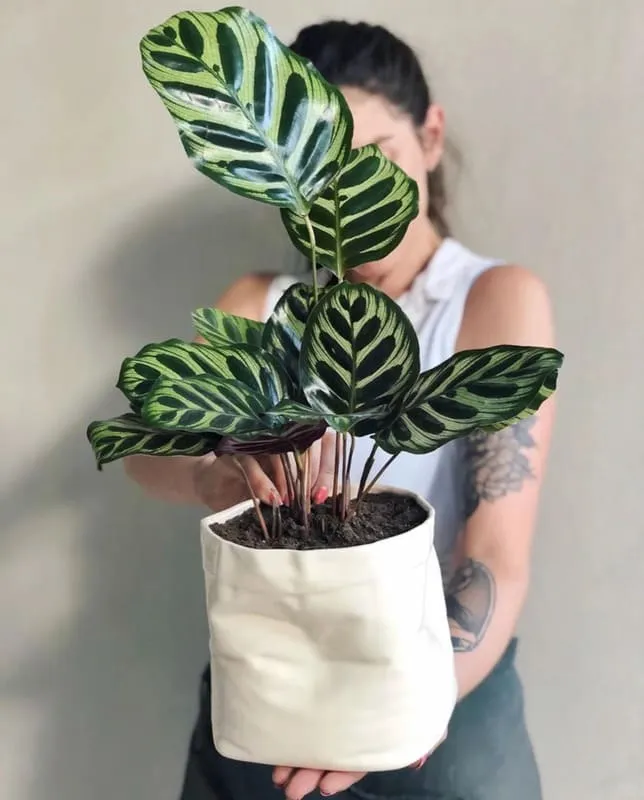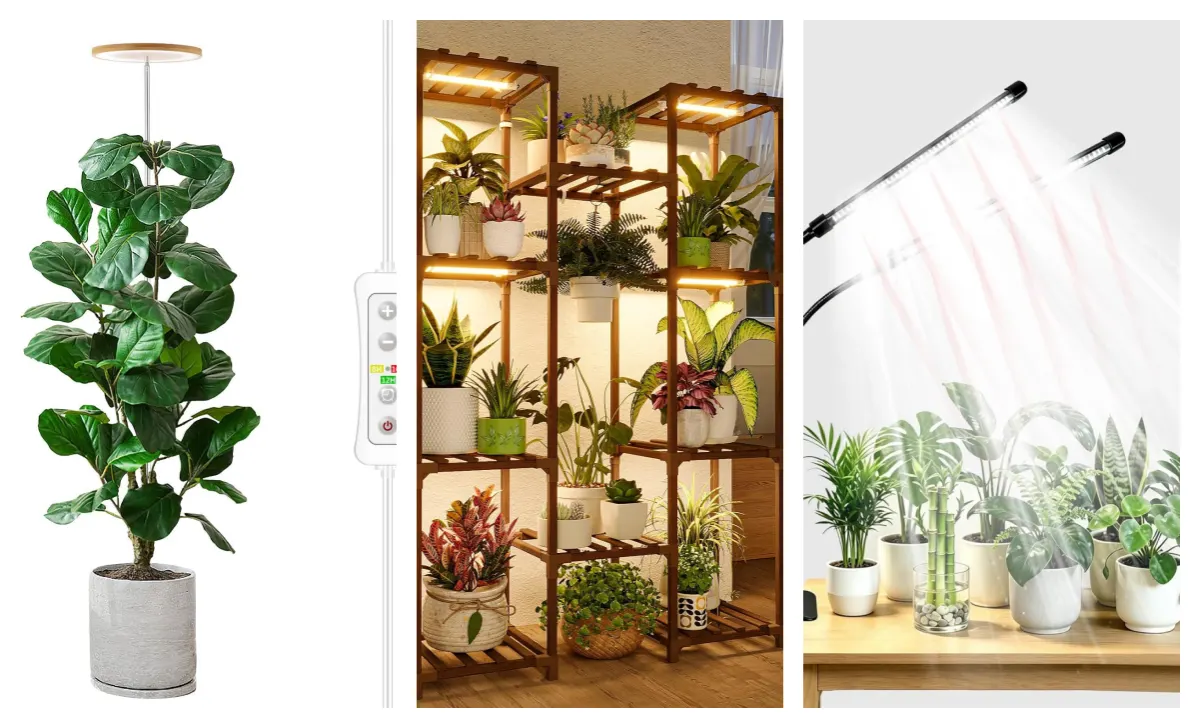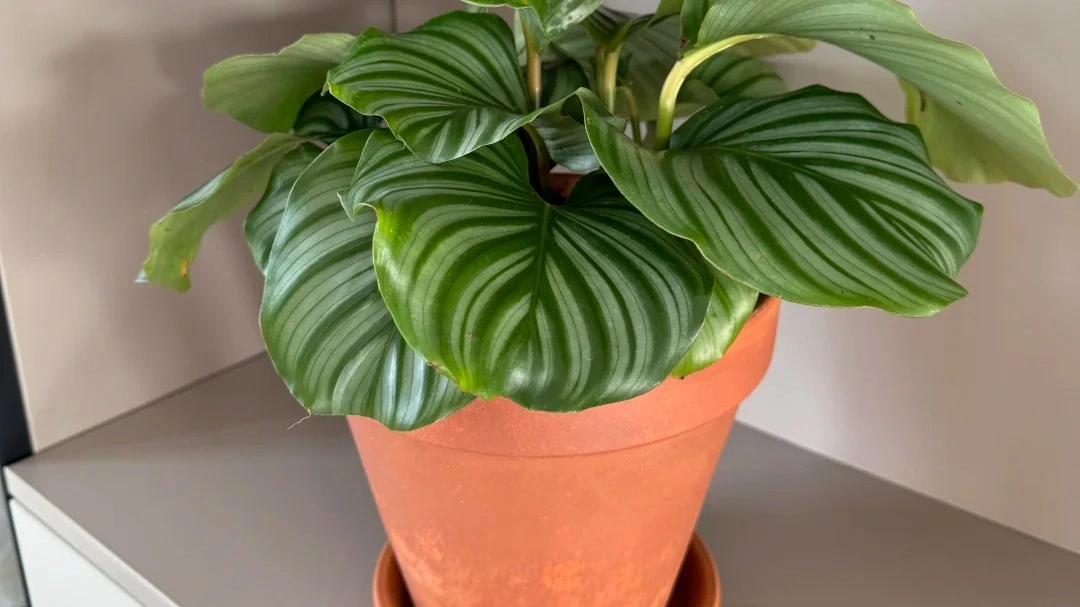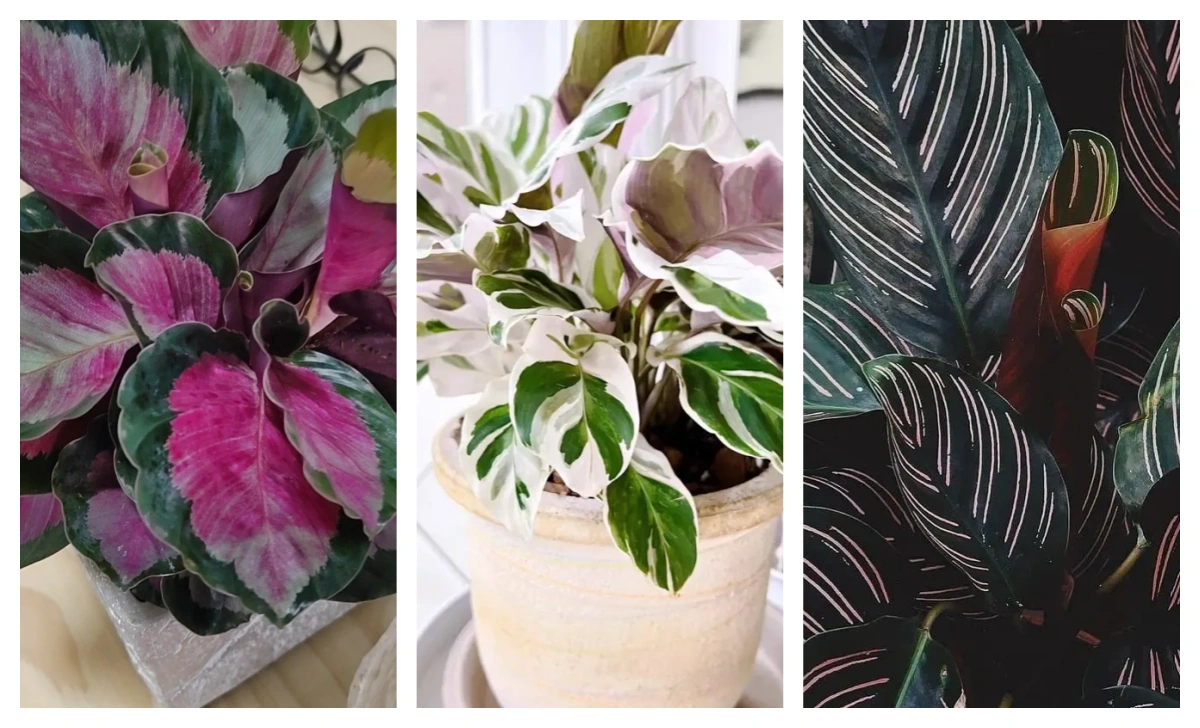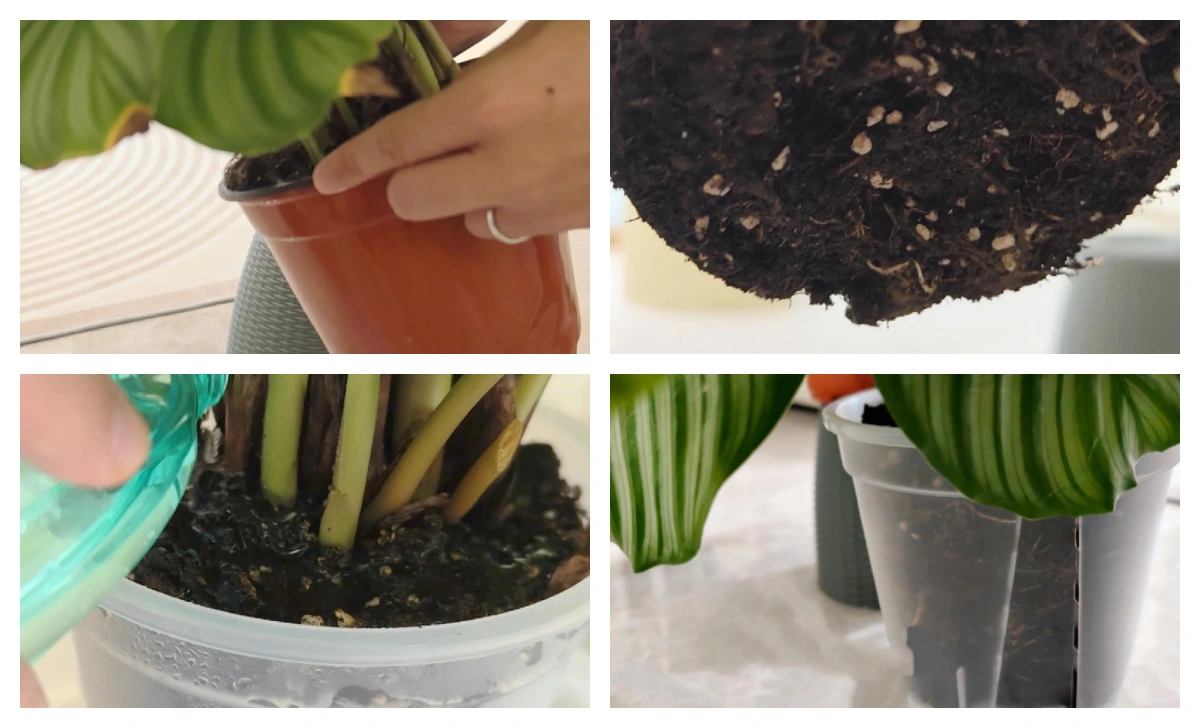
I used to think watering was everything — until I realized humidity was the quiet, invisible lifeline that kept my Calathea alive. It wasn’t about how much water I gave, but how much moisture the air could hold around it.
Calatheas belong to the tropical rainforests of South America, just like their relatives featured in the Calathea varieties guide, where the air stays thick and moist nearly every day of the year. Down there, humidity rarely drops below 60%, and mist from rain and canopy shade keeps the leaves soft, flexible, and glossy.
When we bring these rainforest natives into our homes—where winter heaters and air conditioners dry out the air—we unknowingly strip away what they rely on most. For more on balancing indoor conditions, see Calathea light requirements. Low humidity makes their leaf tips crisp, edges curl inward, and that once-satin sheen turns dull and papery.
In other words, when a Calathea starts to look tired even though you’ve been watering it carefully, the culprit is often not in the pot—it’s in the air.
If you are trying to decide whether a humidifier is actually worth buying, I also wrote a separate guide on whether Calatheas need a humidifier, including when I would measure first, when I would buy one, and when humidity is not the real problem.
Understanding humidity isn’t just about numbers on a hygrometer. It’s about learning how to recreate the invisible comfort of the rainforest — so your Calathea can breathe, move, and stay radiant year-round.
Signs Your Calathea Needs More Humidity
| Ideal Humidity | 55–65% (never below 45%) |
| Best Tools | Hygrometer, pebble tray, humidifier |
| Common Issues | Curling, dullness, brown tips |
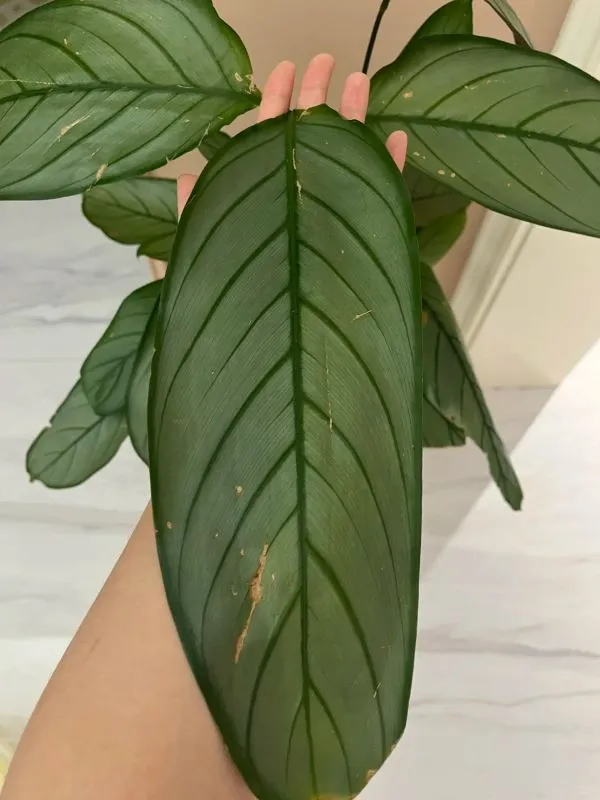
Unlike overwatering or pests, low humidity leaves quiet clues. The plant doesn’t die overnight — it fades slowly, showing distress in small but visible ways.
The first thing you’ll notice is browning at the leaf tips, almost as if they’ve been singed by dry air. Then the edges begin to curl inward, especially during the afternoon when room humidity drops. Soon after, the leaves lose their natural sheen, turning matte and dull instead of the velvety gloss that makes Calatheas so beautiful.
When humidity stays low for too long, the plant’s internal rhythm changes too. Calatheas are “prayer plants,” meaning their leaves rise and fall with the light cycle — open in the morning, fold slightly at night. In dry air, they stop moving altogether. It’s a quiet sign of stress that many people miss.
A Calathea owner from California recently wrote to me. After five years of healthy growth, her plant suddenly began curling and showing brown tips. She used a humidifier regularly, but occasional gaps in humidity — combined with cooler winter air — caused the roots to slow down while the leaves dried from the edges. It was a reminder that consistency matters more than intensity — Calatheas can handle brief changes, but they struggle when humidity keeps swinging up and down.
If you start seeing one or more of these signs, it doesn’t mean your plant is doomed — it means the air simply isn’t helping it anymore. And the good news? Humidity is one of the easiest conditions to fix once you know what your Calathea is asking for.
You can cross-check these symptoms with the yellow and brown leaves troubleshooting guide.
How to Raise Humidity (Real-World Methods That Work)
After years of trial and error — and more than a few crispy Calathea leaves — I finally discovered that the best humidity tricks are the simplest ones. You don’t need fancy gadgets or misting schedules that take over your day. What really matters is creating a stable, gentle environment that mimics the still, damp air of the rainforest.
Today I’m sharing three humidity tricks that truly saved my Calatheas — all tested, adjusted, and proven in my own home.
1️⃣ The “Mini Jungle” Method
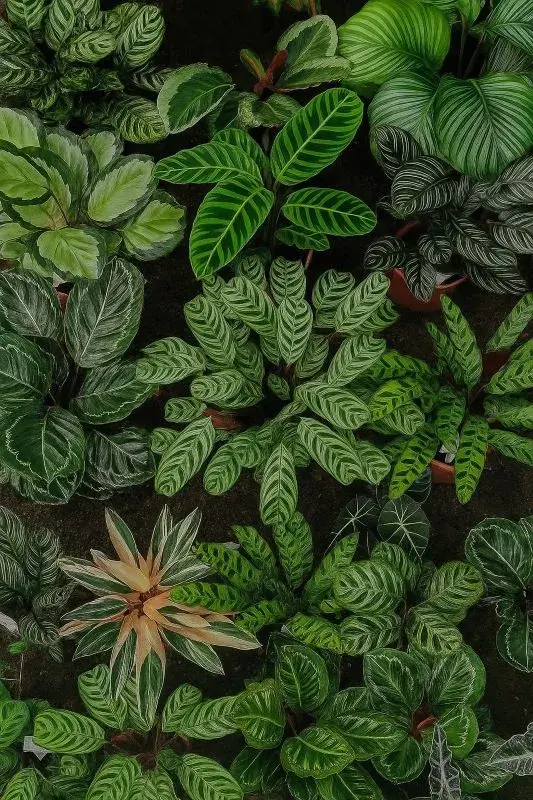
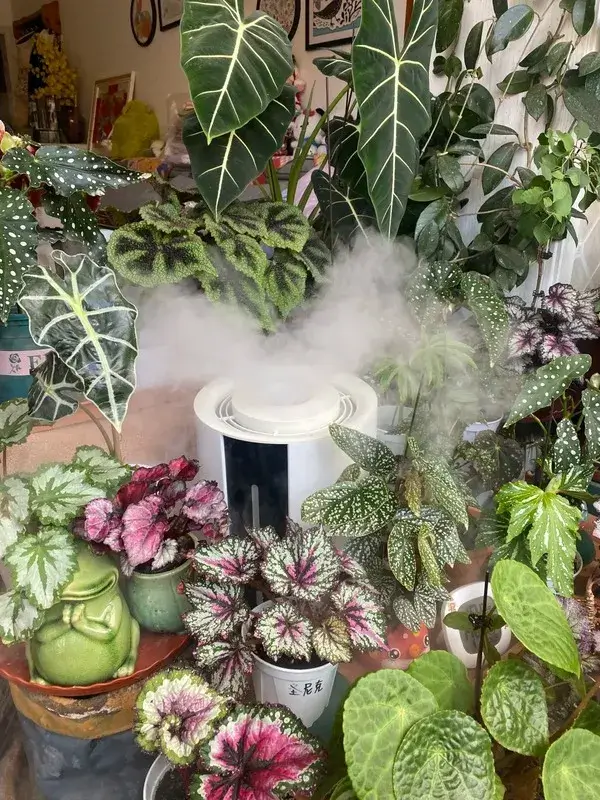
Calatheas love company. Grouping humidity-loving plants together helps them form a shared microclimate through transpiration — the natural process where leaves release moisture into the air. When you cluster them close, the air between the leaves becomes more humid and balanced, almost like a soft bubble of rainforest air.
This setup also helps buffer sudden drops in humidity from heaters or air conditioners. I call it “passive teamwork” — your plants keep each other comfortable while you sit back and enjoy the view.
2️⃣ Pebble Tray Method (My Forever Favorite)
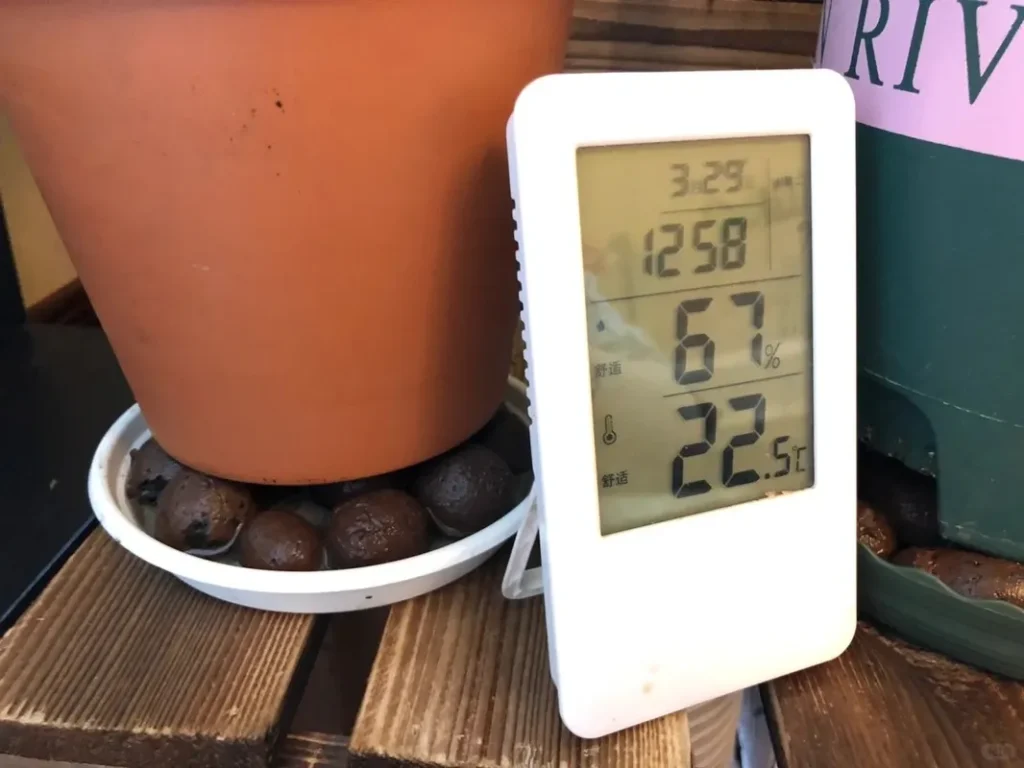
This is my go-to for any room that feels too dry. Take a shallow tray, fill it with clean pebbles or clay balls, and pour in water until it sits just below the top layer — never letting it cover the stones. Then, place your Calathea pot on top.
As the water evaporates, it gently raises humidity around the plant without soaking the soil. It’s completely silent, low-maintenance, and budget-friendly. I’ve found it especially helpful during heating season, when indoor air can drop below 40%.
One small note: refresh the water every week or two to prevent stagnation or mineral buildup — similar to tips in the Calathea watering guide.
3️⃣ Tech-Savvy Method: The Humidifier Upgrade
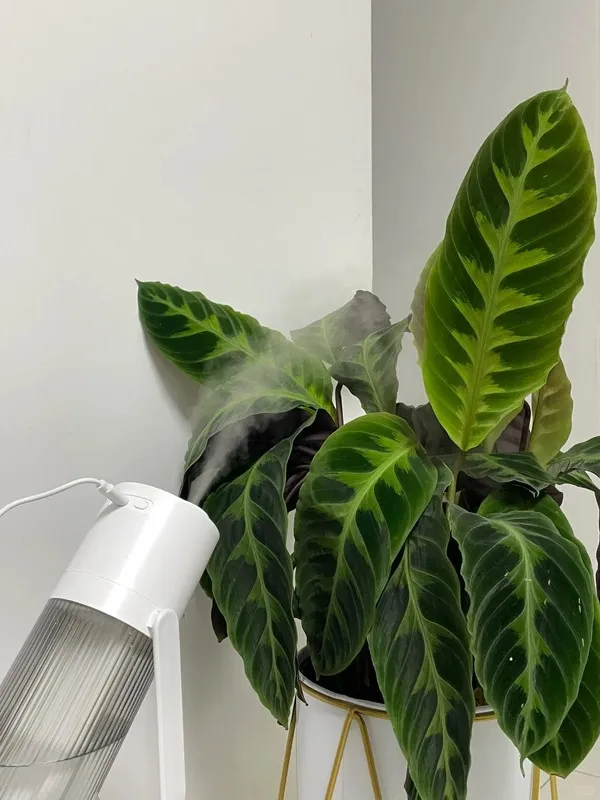
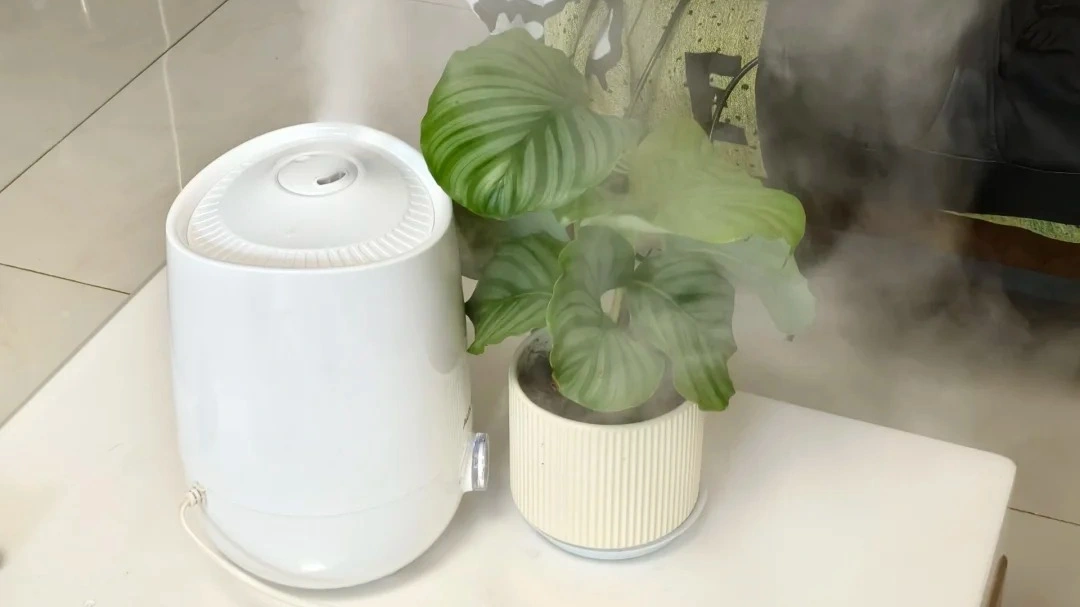
For homes with multiple Calatheas or an entire plant shelf, a quiet ultrasonic humidifier is worth every penny. Aim the mist toward the general area, not directly at the leaves, and keep it about 2 feet away.
The trick isn’t to run it 24/7 — it’s to create consistent cycles. I usually let mine run twice a day for 30 minutes, which keeps humidity in the 55–65% range without overdoing it. Always use distilled or filtered water to avoid mineral dust, and give the tank a quick rinse weekly.
Before buying one, I would still measure the room first. My separate guide on whether Calatheas need a humidifier explains when a small humidifier is useful, when a hygrometer is enough, and when crispy leaves are caused by something else.
I used to think humidifiers were “extra.” Now I know they’re lifesavers in winter — the difference between limp, curled leaves and a Calathea that looks like it just stepped out of the rainforest.
Each of these methods works beautifully on its own, but together they build a stable humidity ecosystem that lets your Calathea thrive year-round — no more dry, crispy surprises when the weather changes.
The Balance Rule: Moist Air, Not Wet Leaves
One of the most common misunderstandings about Calathea care is confusing humidity with wetness. Adding moisture to the air is beneficial — but leaving it on the leaves for too long can quickly backfire.
Misting seems harmless, even nurturing, but it only raises humidity for a few minutes and often wets the foliage instead of the surrounding air. When those droplets linger, especially overnight or in poorly ventilated corners, they create the perfect conditions for leaf spots and fungal issues to develop. The rule is simple:
Humid air is good; wet leaves are risky.
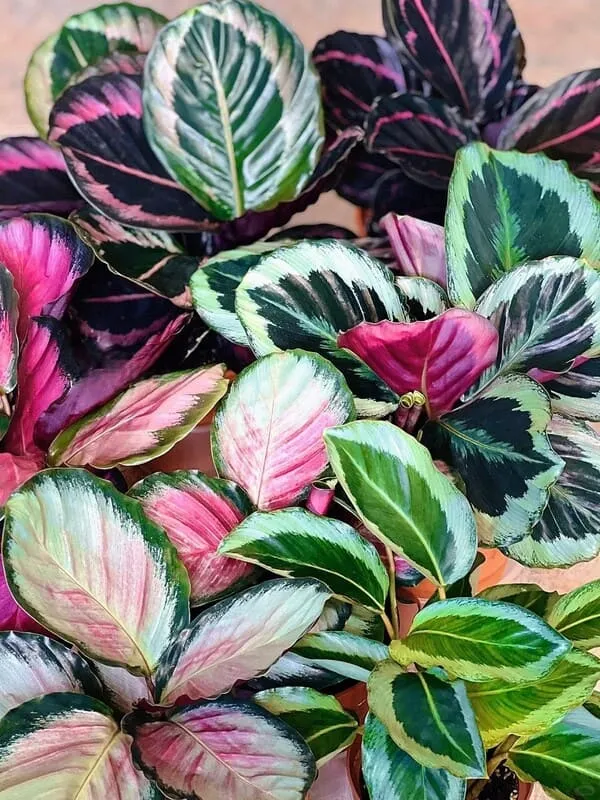
If you enjoy misting, keep it light and strategic:
- Do it in the morning or at midday, when sunlight and warmth allow the moisture to evaporate naturally.
- Never mist at night. Cool air plus damp leaves is an open invitation for disease.
- Make sure your humidifier’s mist flows around, not onto, your plants — direct misting on leaves can lead to the same problem as over-spraying.
Balanced humidity isn’t about turning your home into a sauna — it’s about keeping the air comfortably moist while letting your Calathea’s leaves stay clean, dry, and able to breathe. Once you master this balance, you’ll notice something subtle yet beautiful: the leaves stop curling, their sheen returns, and the plant finally feels at home in your space.
Seasonal Adjustments: Winter vs. Summer
Humidity isn’t static — it shifts with the seasons, and your Calathea feels every change. What works perfectly in July may be disastrous in January. Understanding how temperature, heating, and airflow interact with moisture levels will save you endless frustration (and countless brown tips).
Here’s a simple guide I use to keep humidity balanced year-round:
| Season | Common Problem | Best Fix |
|---|---|---|
| Winter | Dry indoor air from heaters and closed windows causes leaves to crisp. | Run a humidifier twice daily for 30 minutes, or combine it with a pebble tray near your Calathea. Avoid placing plants too close to radiators or vents. |
| Summer | Air conditioners pull moisture from the air, leaving edges curled and dull. | Group plants together to form a mini jungle, or place pebble trays under each pot. A small desktop humidifier also helps counter AC dryness. |
| Rainy Season | Naturally high humidity can trap stagnant air, encouraging fungal growth. | Improve ventilation with a small fan on low speed or by opening windows for short periods each day. Moist air must move to stay healthy. |
Even in the same home, humidity can differ by corner — near a window, under a shelf, or beside an AC unit. That’s why I always keep a small digital hygrometer near my Calatheas.
For reference:
- Ideal humidity: 55–65%
- Tolerable range: 45–75%
- Danger zone: below 40% or above 80% for long periods
Your goal isn’t to chase a perfect number — it’s to maintain steady comfort. Think of it like this: Calatheas thrive on consistency more than perfection.
Real Case: When Humidity Goes Wrong (Anonymous Reader Story)
“I’ve had my Calathea for five years. It’s been healthy until recently — leaves are curling and browning, even though I water with distilled water and use a humidifier daily. The roots are brown but not rotting.”
When I received this message from a long-time reader, I knew instantly what was happening — it’s a classic case of humidity imbalance meeting seasonal stress.
This usually appears in late autumn or winter, when indoor air suddenly turns dry while the soil stays cool and moist. The plant’s roots slow down under lower temperatures, absorbing less water, while the air above becomes too dry for the leaves to stay supple. The result is a confusing combination: wilted, curling leaves with damp soil below.
In these conditions, the roots aren’t rotten — they’re simply oxygen-starved. When air circulation drops and the soil remains heavy, the plant can’t “breathe” properly, even if humidity around it seems high.
Here’s how to fix it — and prevent it from happening again:
- Keep the room temperature steady above 20°C (68°F). Calatheas stop absorbing water efficiently when the air or soil drops below that threshold.
- Reduce watering frequency. Let the top layer dry slightly before adding more — wet soil and cold roots are a dangerous mix.
- Maintain moist air, not wet leaves. Run your humidifier in short, consistent bursts (20–30 minutes twice a day) rather than long, irregular sessions.
- Improve air movement. A small oscillating fan on low helps prevent stagnation without drying the plant.
This story reminds us that humidity alone isn’t enough — it must work in harmony with temperature, airflow, and soil balance. You can learn more about soil choices in the Calathea soil guide.
My Real Home Setup: How I Keep Humidity Stable
After experimenting with every humidifier, pebble tray, and misting trick you can imagine, I realized the real secret isn’t adding moisture — it’s keeping it steady. Calatheas respond best when humidity changes slowly, within a narrow comfort range, not in daily spikes and dips.
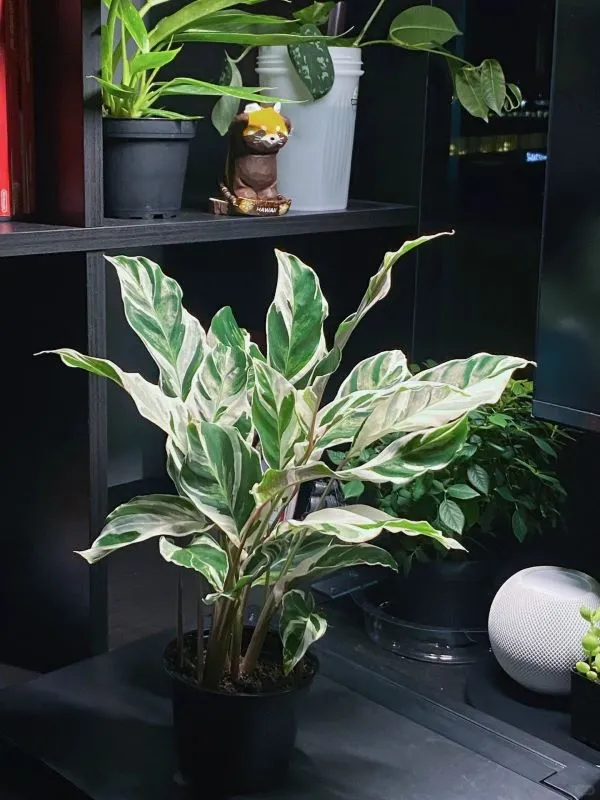
1. Track Before You React
I rely on a small digital hygrometer placed near my Calathea shelf. Every morning, I glance at it — not to chase a number, but to notice patterns. If humidity drops sharply overnight or after turning on the heater, I know it’s time to adjust the environment instead of watering more.
Over time, I learned my plants are happiest between 58–62%, even though most guides recommend 55–65%. Every home has its own “sweet zone,” and finding yours matters more than hitting textbook precision.
2. Maintain, Don’t Over-Correct
In the beginning, I used to panic at every reading below 50%. Now I know fluctuations are normal — the goal is gentle rhythm, not control. I schedule short humidifier bursts twice a day and refresh my pebble trays weekly, but I never overcompensate. Sudden swings in air moisture stress plants more than gradual dryness.
3. Airflow and Space Matter Too
Stable humidity also depends on good air circulation. I keep a small oscillating fan on low nearby — not to dry the air, but to keep it moving. It prevents stagnant moisture from settling on leaves and helps humidity distribute evenly throughout the room.
4. Routine Checks, Real Comfort
Every two weeks, I wipe the leaves gently with a damp cloth. It’s part cleaning, part inspection — I check for dullness, edge crisping, or curled tips. These are my first indicators that the air needs a little help. Over time, this habit has saved me from more plant “emergencies” than any gadget ever did.
💡 Pro tip: The healthiest Calatheas live in homes where humidity feels comfortable to you too.
If your skin and throat feel dry, your plant is already struggling.
Trust your senses first — the hygrometer only confirms what your Calathea already told you.
Over time, this habit has saved me from more plant “emergencies” than any gadget ever did. For long-term stability, check my Calathea care hub.
Humidity Is the Quiet Secret
Calatheas don’t die from thirst — they fade in dry air.
It’s not the lack of water in the soil, but the lack of softness in the air that makes their leaves curl and lose their shine.
Keep the air gently moist, not heavy. Let it move, not stagnate.
When you find that balance, you’ll notice it — the leaves will rise and fall again, like they’re breathing with you.
FAQ
Still have more Calathea problems?
🌿 Looking to master other aspects of care? Visit the full Calathea Care hub for watering, light, and soil guides.
Start the Care Guide →