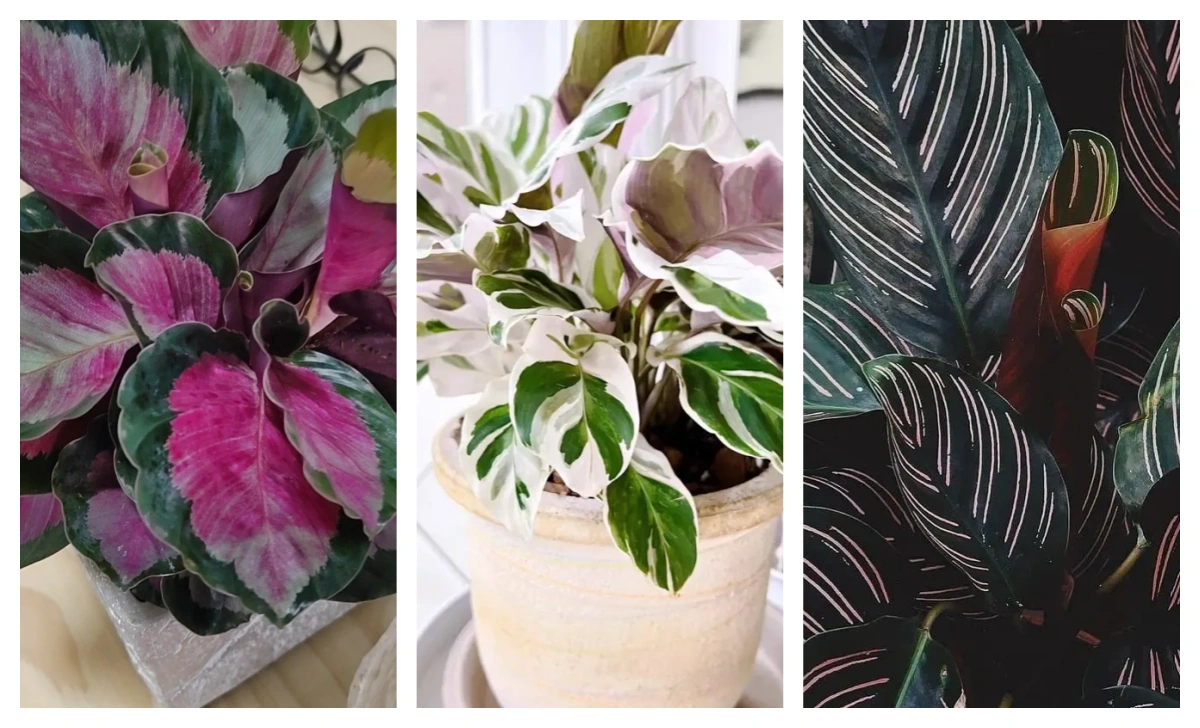
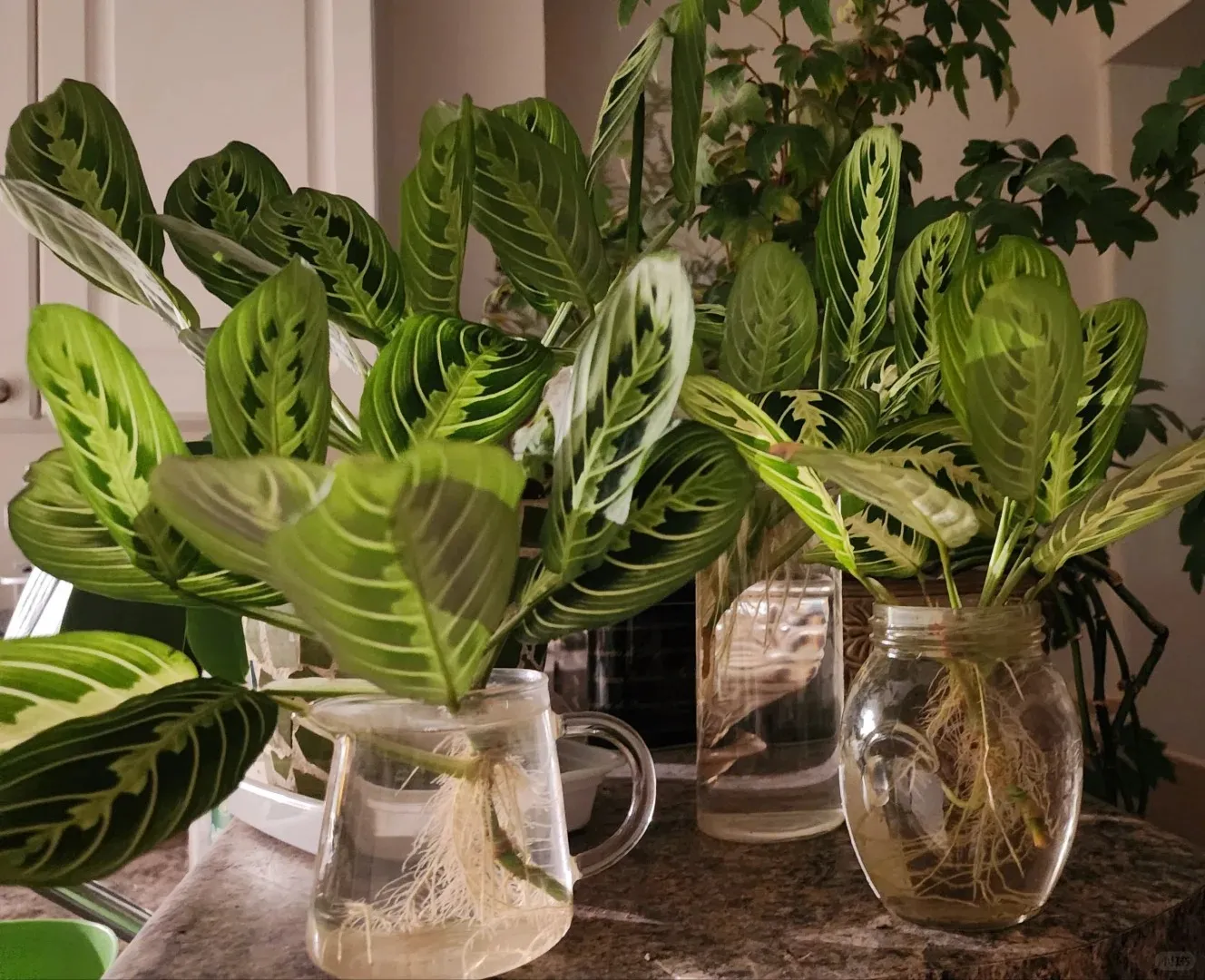
When I first started growing Calatheas, I assumed “moisture-loving” meant “water-loving.” I tried the classic experiment — keeping a Calathea in water — and learned a hard truth: humidity and submersion are not the same thing.
In this guide, I’ll show you why full water culture usually fails for Calatheas, and why semi-hydro (LECA / layered pots) can work when the water line stays below the roots.
Short answer: Calatheas can root in water for a short time, but they usually won’t thrive long-term in full water culture. For most homes, semi-hydro (LECA) works better because it keeps roots moist and oxygenated.
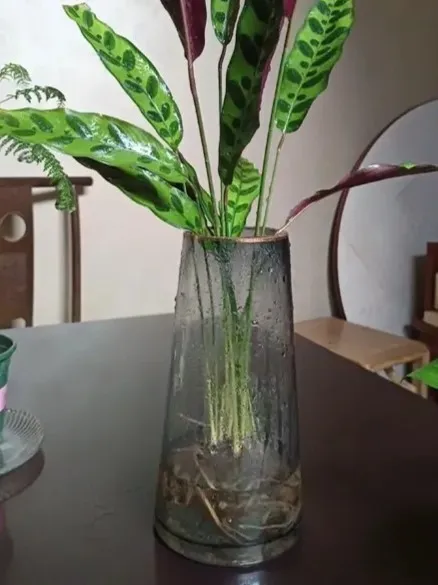
If your goal is “less watering,” skip stagnant water jars — aim for a setup where the water line stays below the roots. That one detail is the difference between steady growth and slow rot.
Can Calathea Grow in Water? What Happens to the Roots Over Time
At first glance, it’s easy to assume that tropical plants like Calathea should enjoy living in water. After all, their natural habitat is the rainforest floor — warm, damp, and shaded. But there’s a crucial difference between humidity and submersion.
Calathea roots evolved to live in loose, airy soil that stays moist but never waterlogged. They are terrestrial, meaning they rely on oxygen from the tiny air pockets between soil particles. When those spaces fill with water, the roots suffocate. Without oxygen, they can’t take in nutrients or moisture — leading to soft, blackened roots and leaves that curl and brown at the edges.
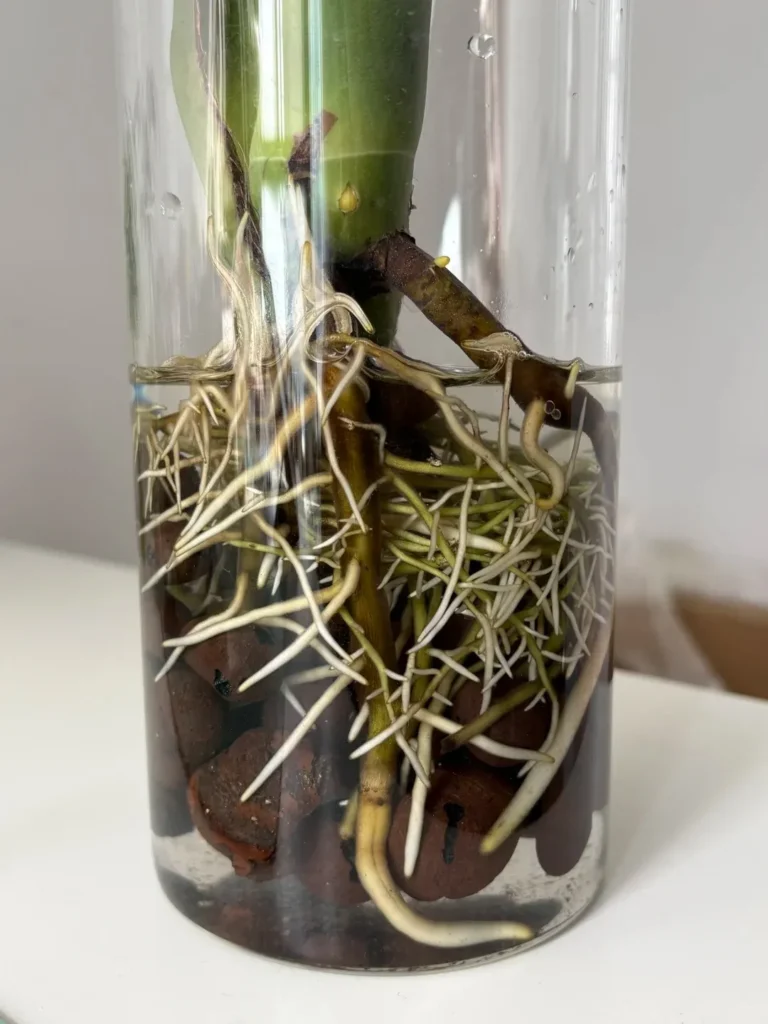
To understand why some houseplants adapt better to water than others, here’s a quick comparison:
| Feature | Calathea | Monstera |
|---|---|---|
| Root Type | Terrestrial (soil-dwelling) | Epiphytic + Aerial |
| Oxygen Adaptation | Poor | Strong (aerenchyma) |
| Tolerates Standing Water | ❌ No | ✅ Yes |
| Best System | Moist soil / Semi-hydro | Hydro / Soil / Water |
Key insight: Calatheas love humidity and evenly moist soil — not submersion. When their roots sit in water for too long, oxygen levels drop, leading to a slow shutdown of absorption. The result? A plant that looks thirsty even as it drowns.
Semi-Hydro for Calathea (LECA): Why It Works Better Than Water
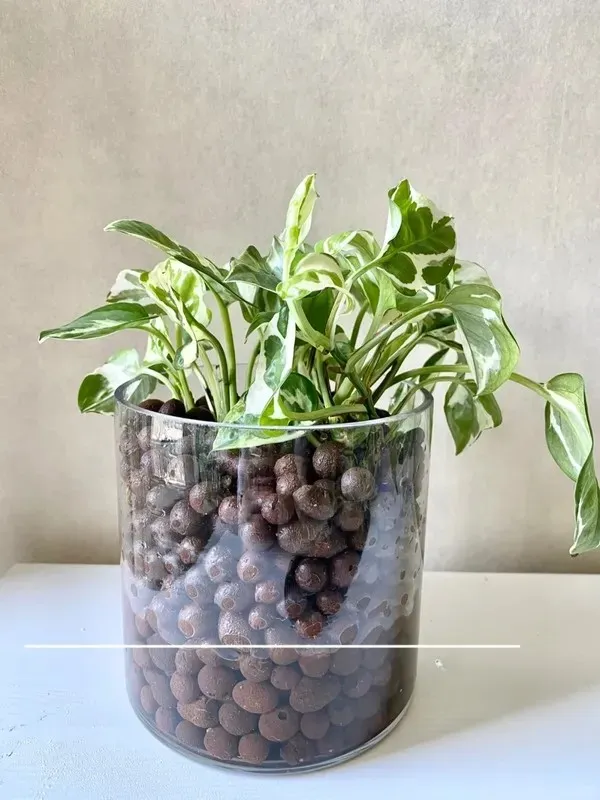
Semi-hydroponics isn’t about growing plants in water — it’s about growing them above it. The key lies in maintaining a delicate balance between moisture and air.
In a semi-hydro system, roots are surrounded by an airy medium (like LECA or pumice) that absorbs water from a small reservoir below. This setup mimics the natural “wet–dry rhythm” of tropical soil, keeping the roots moist yet oxygenated.
Definition (for quick reference):
Semi-hydroponics = a system that keeps the roots moist and oxygenated.
Semi-hydro systems hold water below the root zone, allowing roots to draw moisture through air-filled gaps instead of sitting in stagnant water.
This difference is what separates survival from rot.
While water culture suffocates Calathea roots over time, semi-hydro encourages steady hydration and healthy respiration — the two things Calatheas need most.
Best Semi-Hydro Setups for Calathea (Ranked by Success Rate)
Not every “semi-hydro” method works the same way — and for Calatheas, the difference between thriving and dying often comes down to oxygen. After testing multiple systems, here’s how they rank in real-world performance.
✅ ① LECA / Clay Pebble Setup — The Safest Option
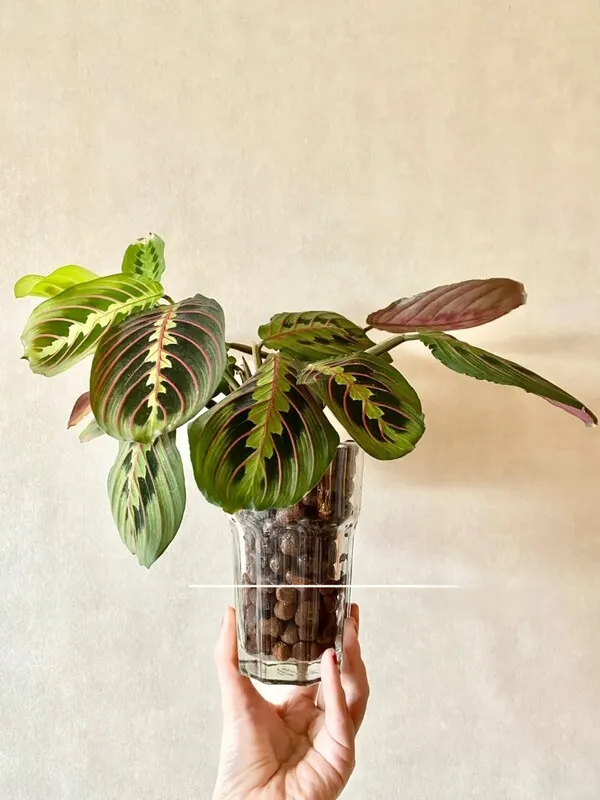
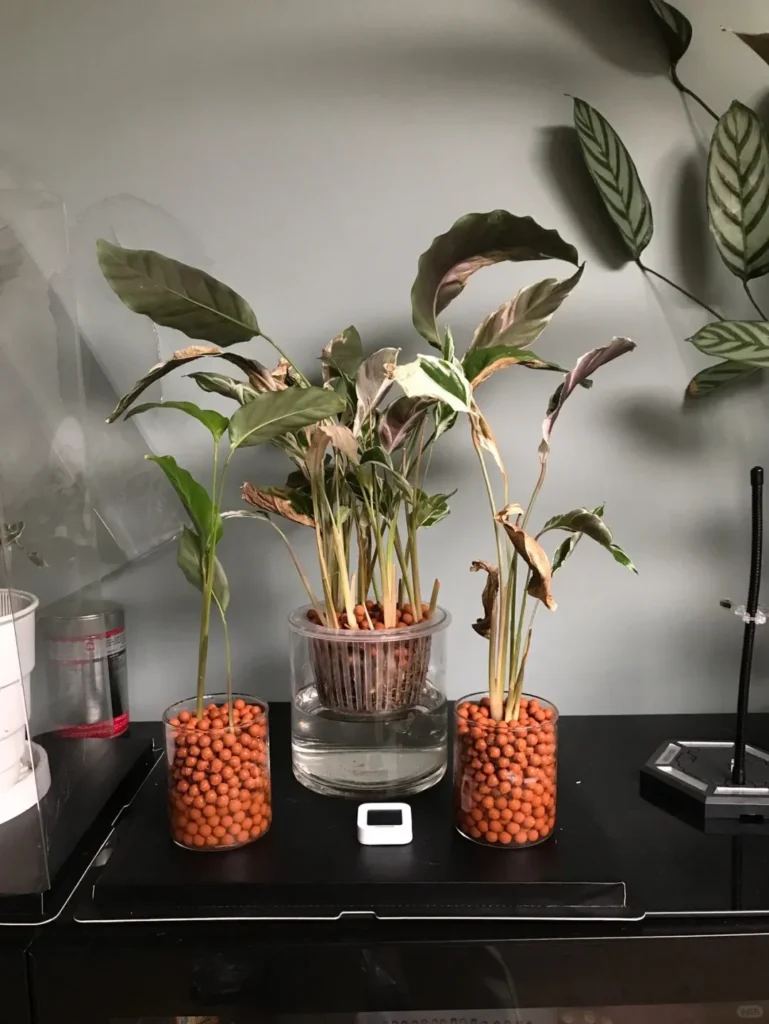
This is the most reliable long-term setup for Calatheas. It uses LECA (Lightweight Expanded Clay Aggregate) — porous, round clay balls that absorb and slowly release water.
- Water level: Keep it about 1–2 cm below the root base.
- How it works: The air between the pellets allows roots to breathe while still getting consistent moisture.
- Maintenance: Refill water weekly and rinse LECA monthly to prevent mineral buildup.
Roots absorb moisture gradually while avoiding suffocation, which makes this system perfect for growers who want control without constant watering.
✅ ② Layered Pot System — Low-Maintenance & Oxygen-Rich
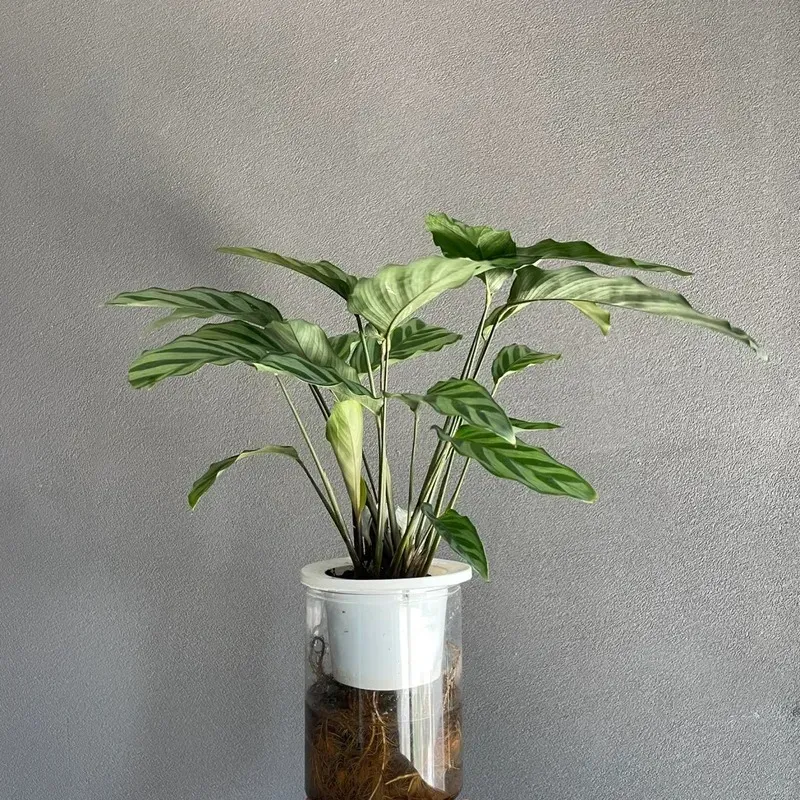
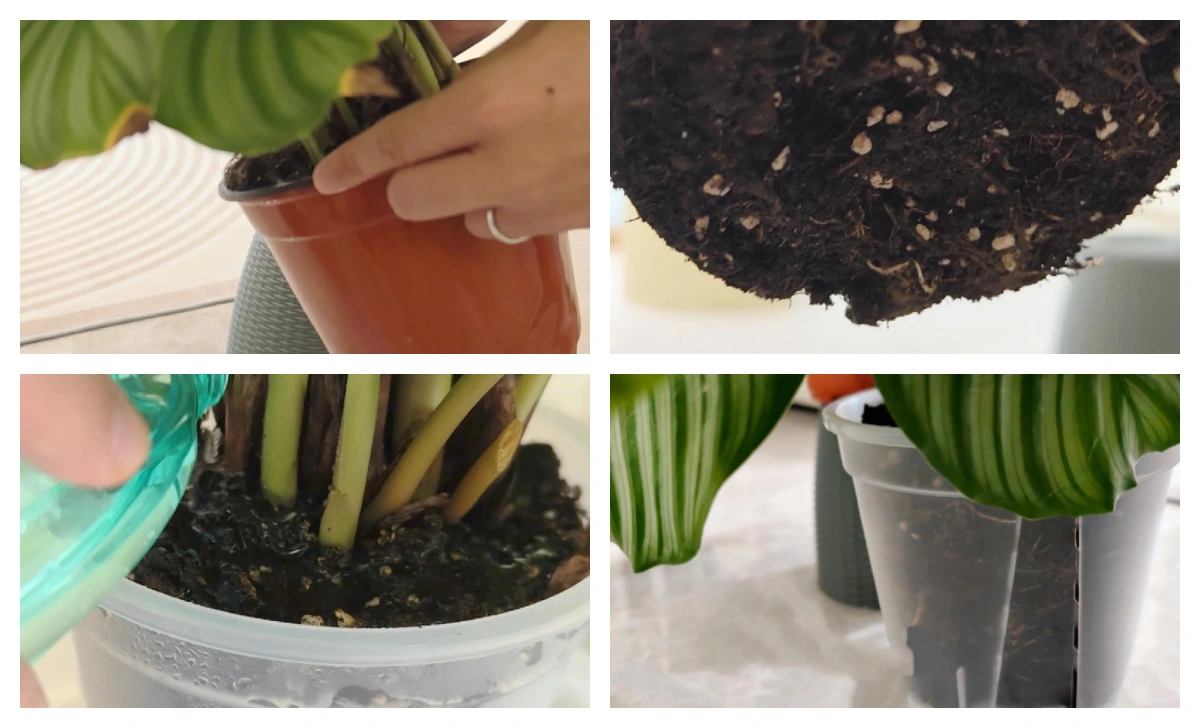
This method uses a double-layer setup — an inner pot with holes suspended above a small water reservoir in the outer pot. The roots hover above the waterline, absorbing moisture through humidity and light wicking.
- Pros: Self-regulating, easy to monitor, and visually clean.
- Best for: Plant owners who prefer a “set it and forget it” style.
- Bonus: It maintains air circulation and prevents root rot during cooler months.
Think of it as auto-regulated humidity — perfect for busy plant parents or those living in drier climates.
⚠️ ③ Wick System (String Watering) — Not Recommended for Calatheas
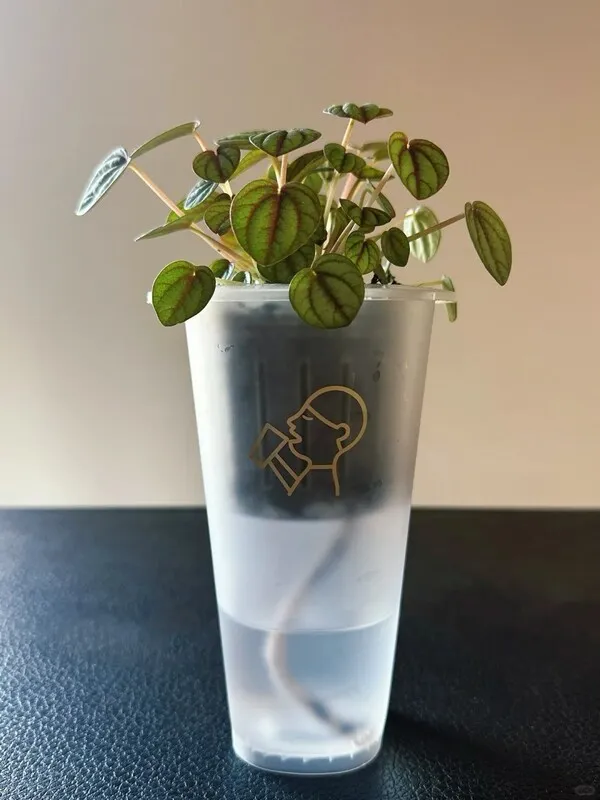
The wick system — where a cotton string transfers water from a lower reservoir to the soil — seems clever, but for Calatheas, it’s a trap.
- Problem: The wick keeps the substrate constantly wet while cutting off air circulation.
- Result: Roots suffocate slowly, fungi develop, and lower stems soften.
- Reality check: It works fine for pothos or spider plants, but not for Calatheas — their roots demand air as much as water.
Bottom line:
Between the three, LECA and layered systems clearly outperform wick setups.
Calatheas thrive on moisture balance, not constant saturation — the secret is to keep them close to water, never in it.
Common Mistakes When Growing Calathea in Water
Even if your setup looks perfect, small details can quietly destroy a Calathea’s roots. These are the mistakes most people make when experimenting with water or semi-hydro growing:
- Using tap water → mineral buildup → leaf edge burn
Calatheas are sensitive to fluoride, chlorine, and heavy minerals. Over time, these salts collect in the water and cause crispy brown tips. Always use distilled, filtered, or rainwater. - Water level too high → root suffocation
Roots need access to air pockets to exchange gases. When water sits above the root base, oxygen drops sharply — leading to soft, blackened roots and slow leaf curling. - No air movement → fungal growth
A still, humid environment encourages fungal spores to thrive on wet surfaces. Gentle airflow (like a small fan nearby) keeps humidity healthy without creating mold. - No water changes → algae and odor buildup
Standing water becomes stagnant within a week, coating the pot and roots with a slippery film that blocks oxygen. Refreshing water regularly prevents bacterial bloom and keeps the system clean.
Most failures come not from water itself, but from the lack of oxygen that follows.
When roots can’t breathe, they stop absorbing water — even when surrounded by it.
How to Transition from Soil to Semi-Hydro
Switching your Calathea from soil to a semi-hydro setup isn’t complicated — but it does require patience and a gentle hand. Think of it less as “repotting” and more as helping your plant learn a new language.
- Remove all soil gently.
Take the plant out of its pot and rinse the roots under lukewarm water until every trace of soil is gone. Any leftover soil can trap bacteria or block airflow in your new setup. - Trim damaged roots.
Snip away any soft, brown, or mushy roots — they won’t recover in water. Leave only the firm, white roots that look healthy. - Set up in LECA or a layered pot.
Place the roots above the waterline, not inside it. Keep the reservoir about 1–2 cm below the roots so they draw moisture through evaporation and capillary action. - Use filtered or distilled water.
Tap water minerals accumulate fast in a semi-hydro system. Start clean to avoid leaf burn and residue buildup later. - Give it time.
Calatheas rarely adjust overnight. Expect some leaf curling or slower growth during the first few weeks as the roots re-adapt to their new oxygen–moisture balance.
Transition is a slow conversation, not a sudden move.
Calatheas take time to trust their new environment — but once they do, they’ll reward you with stronger roots and livelier leaves.
Real-World Experience: What Actually Works
My takeaway: If the roots touch the water line, problems show up. If the roots sit above the reservoir and the medium stays airy, Calatheas stop acting like “drama queens.”
After a few trial-and-error winters, I’ve come to realize that Calatheas are more forgiving than we think — as long as we respect their rhythm. I’ve tested both LECA and layered pot systems through changing seasons, and here’s what really happens beyond theory.
In winter, when room temperatures drop below 20°C, the layered pot setup wins. The air gap between the inner and outer pot keeps the roots breathing, and the gentle humidity buffer prevents that dreaded “cold wet root” shock. Even with less watering, the plant stays hydrated without suffocating.
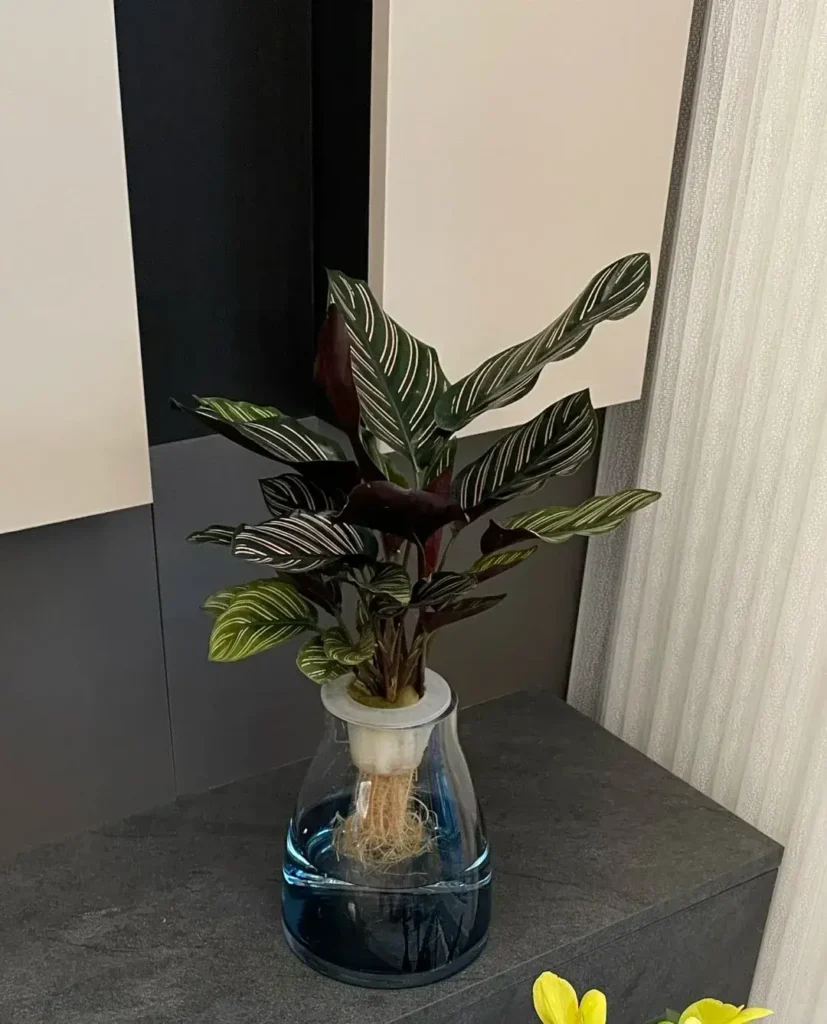
During summer, LECA gives me better control. Humidity in my Seattle home fluctuates wildly, but LECA holds moisture evenly and dries just fast enough to avoid rot. It’s also easier to flush — perfect for keeping mineral buildup under control.
The wick system, however, never worked. My Calatheas always ended up with swollen, tired roots that couldn’t “breathe back.” It felt like the plant was slowly drowning, even though the surface looked fine.
In the end, it’s not about which system looks clever — it’s about which one respects how Calatheas live.
Among all the varieties I’ve tested, these three adapt best to semi-hydro conditions:
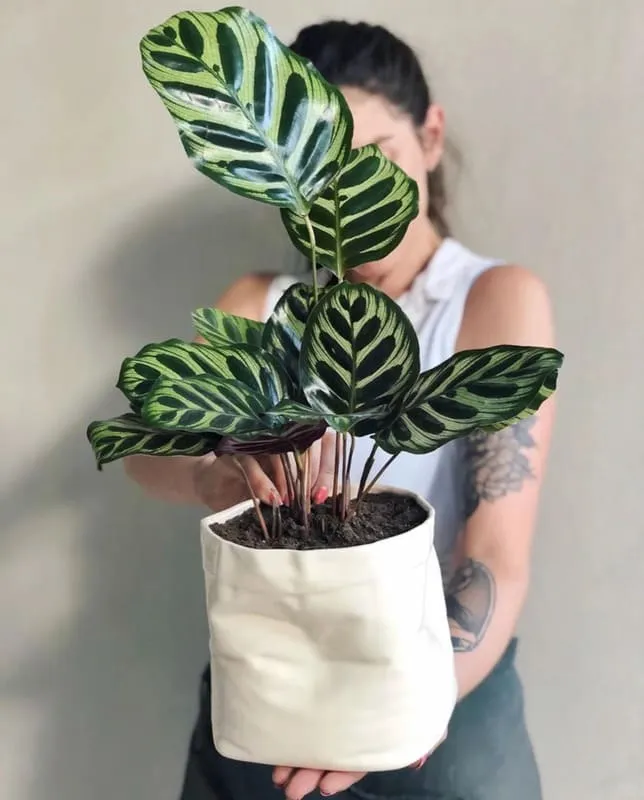
- Calathea makoyana (Peacock Plant) — naturally tolerant to humidity changes.
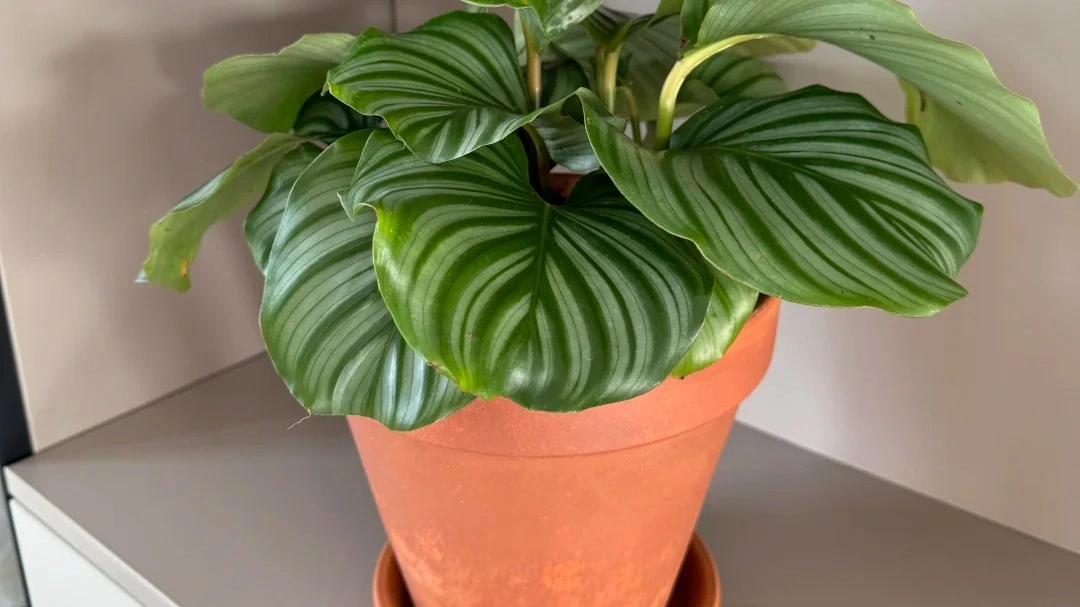
- Calathea orbifolia — large leaves benefit from stable root moisture.
- Calathea lancifolia (Rattlesnake Plant) — surprisingly sturdy during transitions.
Each thrives when given one thing: steady moisture with room to breathe.
Moisture Is the Goal, Not Water
Calatheas don’t want to live in water — they want to live near it.
Give their roots space to breathe, keep the air gently humid, and resist the urge to overcare.
When you find that balance between moisture and oxygen, your Calathea won’t just survive — it will move, shine, and remind you that patience is part of the beauty of growing plants.
FAQ
Still have more Calathea problems?
🌿 Looking to master other aspects of care? Visit the full Calathea Care hub for watering, light, and soil guides.
Start the Care Guide →