Last updated: May 15, 2026
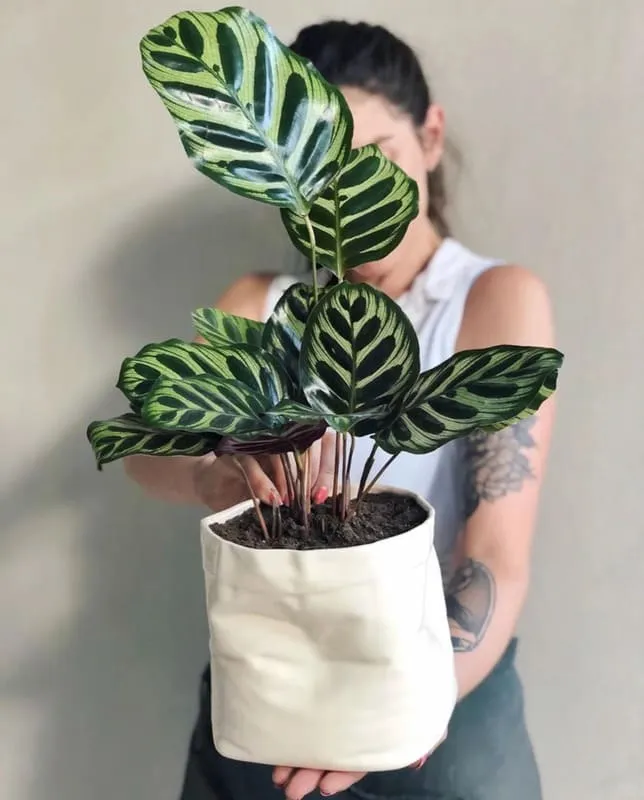
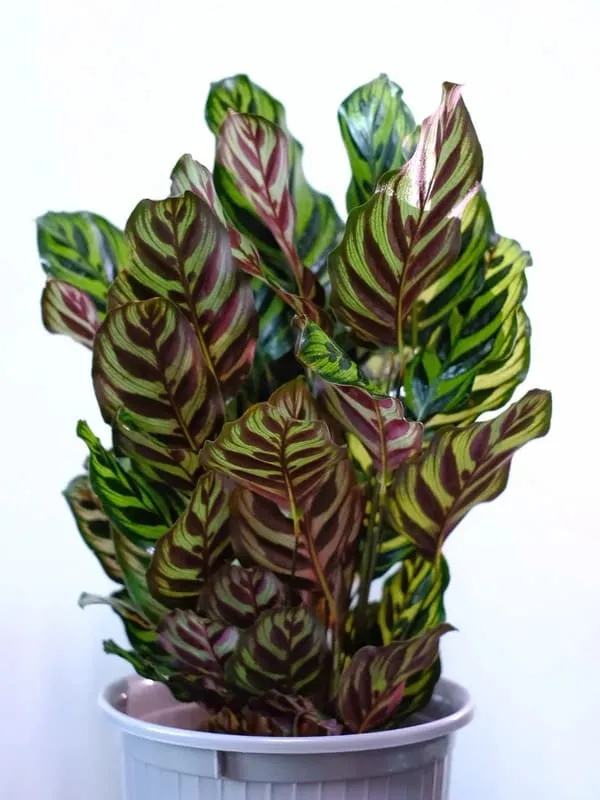
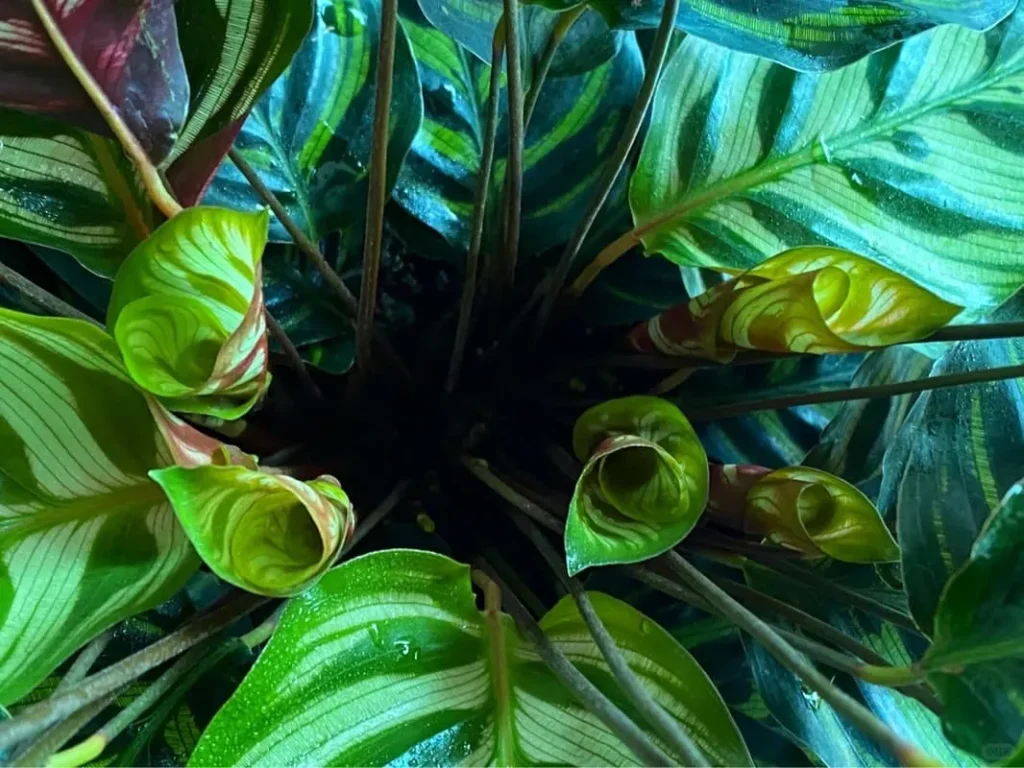
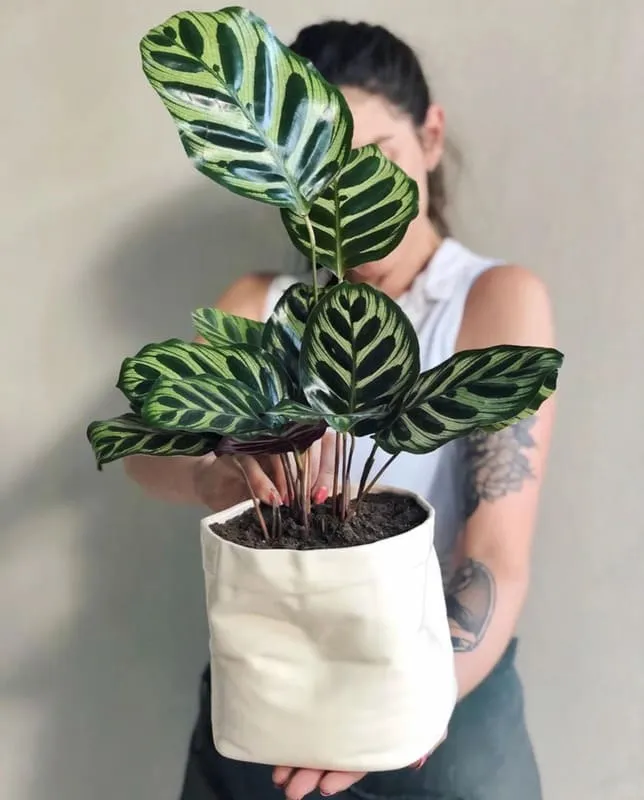
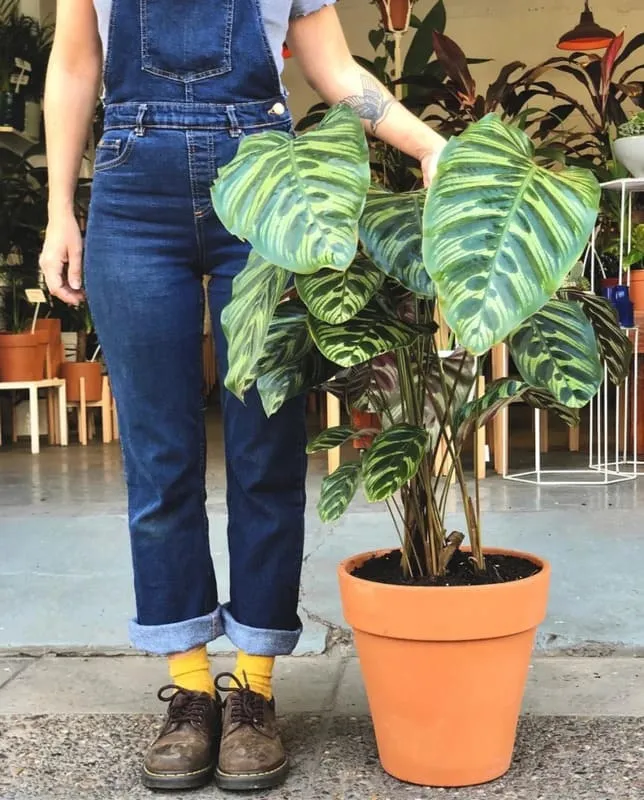
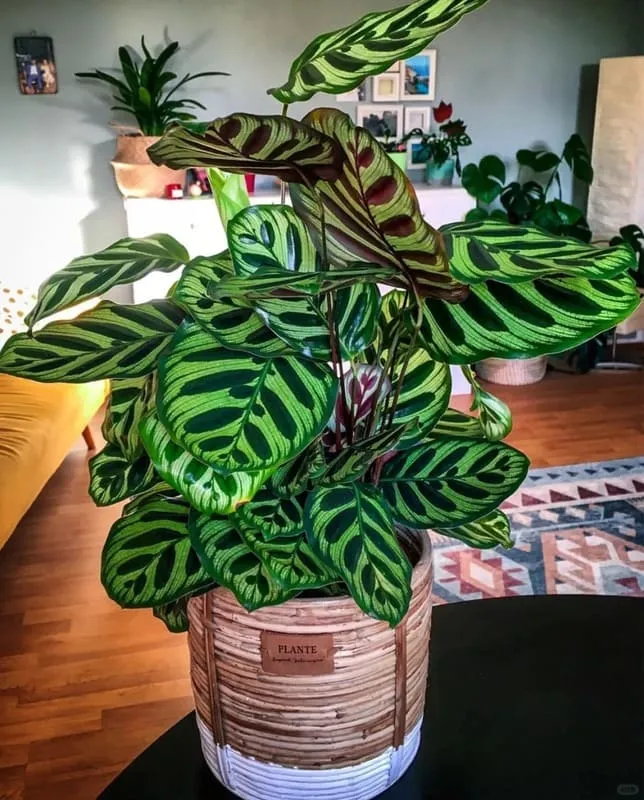
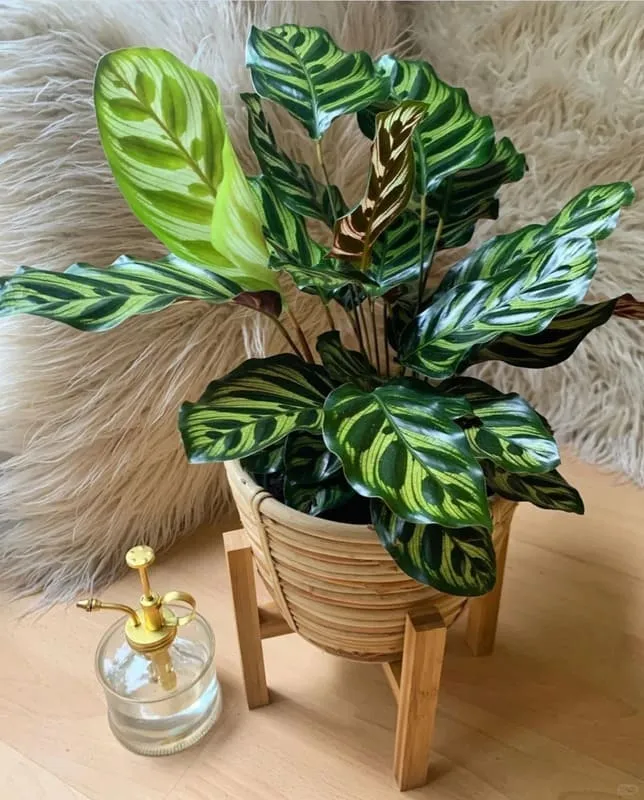
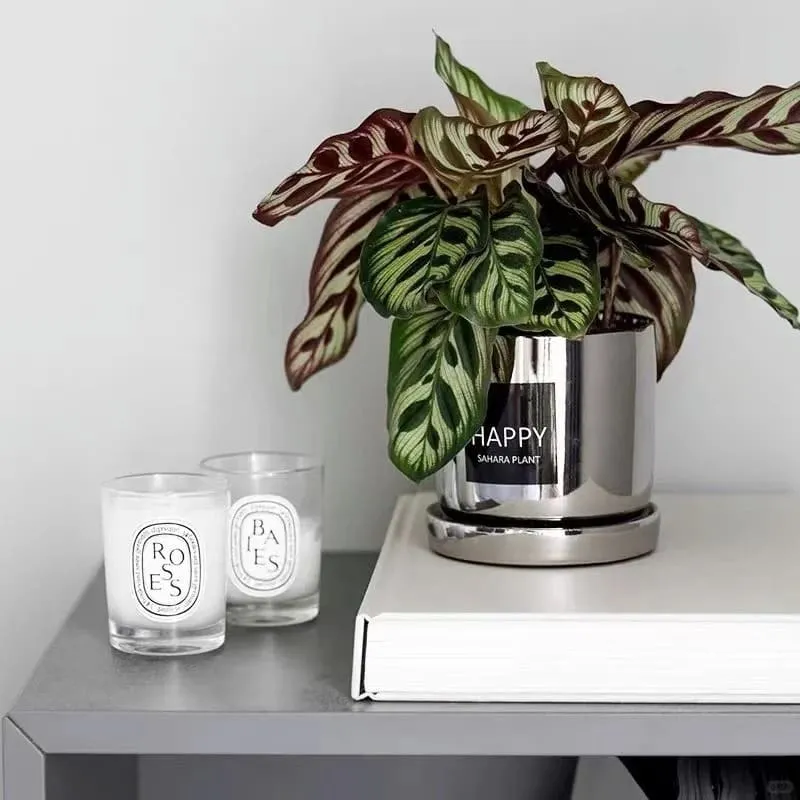
Calathea makoyana, or the Peacock Plant, is one of those Calatheas that looks delicate before you even touch it. The leaves have that pale green, feathered pattern people buy it for, but in a normal home it is usually the edges, not the pattern, that tell me how well the plant is doing.
I do not find Makoyana as dramatic as White Fusion, but I also would not call it a carefree plant. In my Seattle apartment, the biggest problems have not come from one bad watering or one dim corner. They usually start when the soil stays damp for too long, the room is cool, or the plant sits in still air.
This guide focuses on how I actually keep Peacock Plant stable indoors: soft light, careful watering, an airy soil mix, and what I check first when the leaves turn yellow, brown, or crispy. For a broader starting point, you can also read my Calathea care guide.
The Indoor Conditions That Matter Most
For Makoyana, I pay more attention to stability than perfection. It does not need greenhouse-level care, but it does react badly when the pot stays wet, the room gets cold, or the light changes too suddenly.
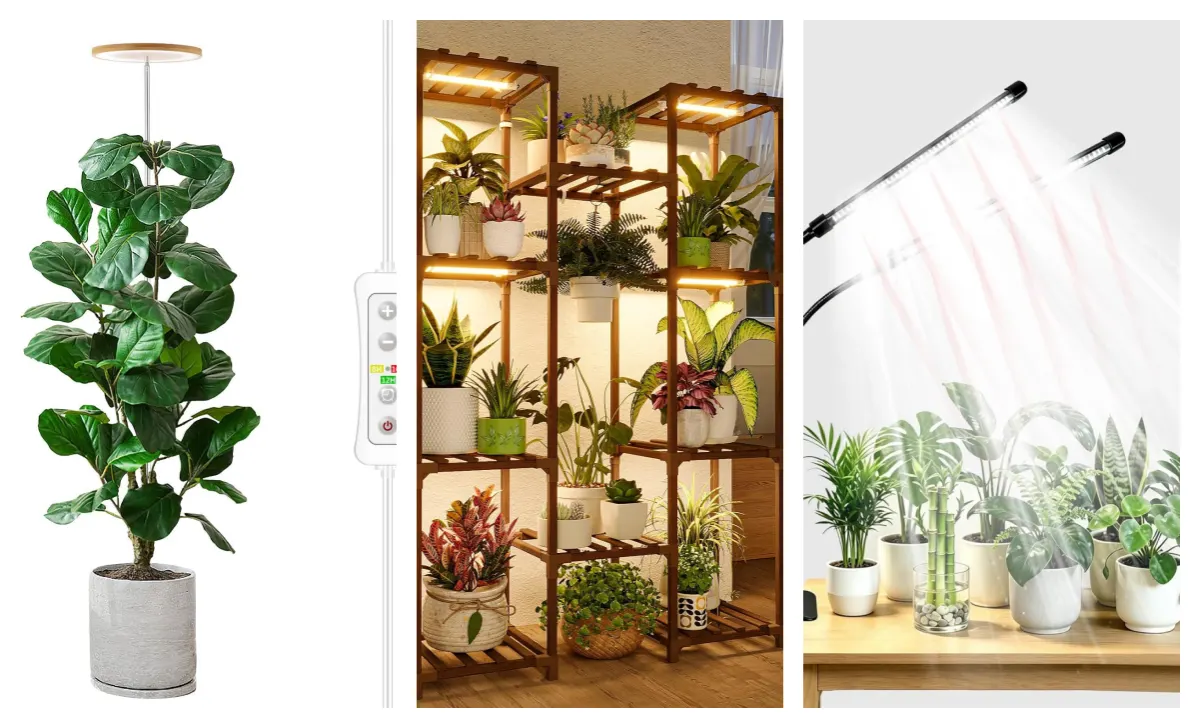
- Light: Bright indirect light keeps the pattern clear. Direct sun can mark the leaves, but very low light also makes the plant weaker over time. My fuller notes are in the Calathea light requirements guide.
- Water: I water by pot feel, not by a fixed calendar. If the soil still feels heavy and cool, I wait.
- Soil: The mix needs to hold some moisture but still breathe. Dense nursery soil is where many Makoyana problems begin.
- Airflow: Gentle airflow matters, especially in winter. Still, damp air around wet soil is not the same thing as healthy humidity.
Why Does My Calathea Makoyana Have Brown Crispy Edges and Yellow Leaves?
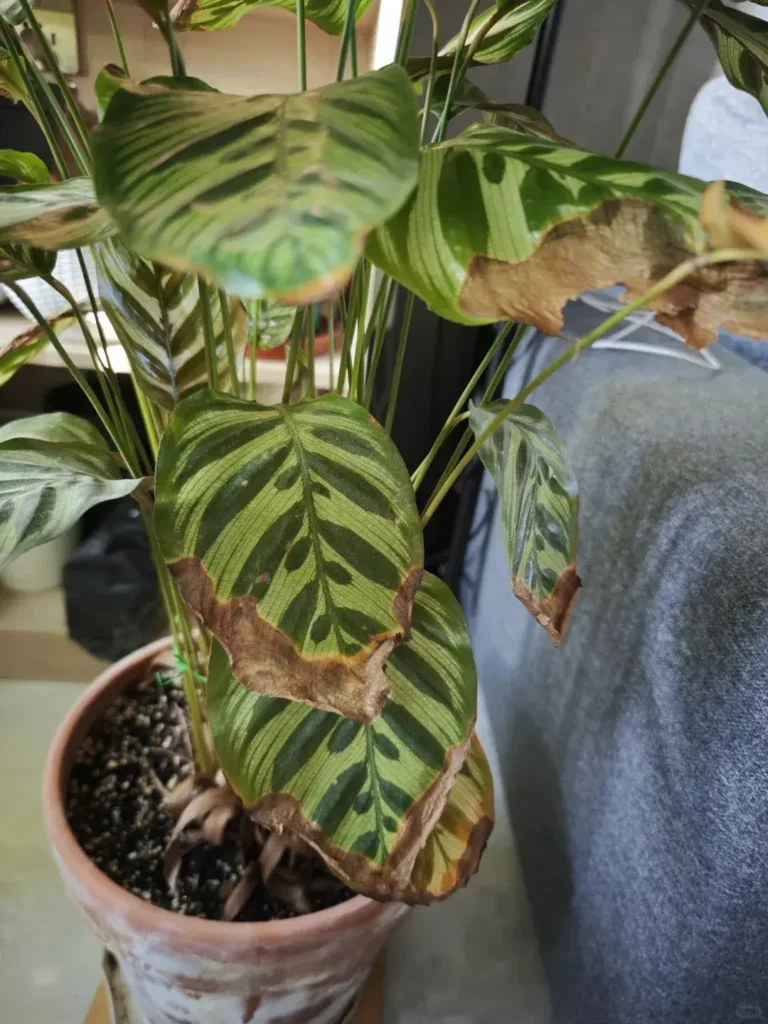
This is by far the most common question I get about Calathea Makoyana — and based on both the photo you shared and my own growing experience, I want to be very clear about one thing first:
Most of the time, this is not simple sunburn.
I’ve grown Peacock Plants in Seattle apartments for years, often in low-light rooms, and I’ve seen the exact same symptoms even when the plant never received direct sun.
Quick Diagnosis: What I Check First
| What You See | What I Check First | Most Likely Direction |
|---|---|---|
| Crispy edges but soil is wet | Pot weight, smell, and root condition | Root stress or soil staying wet too long |
| One old yellow leaf | Whether new growth still looks clean | Normal aging or minor stress |
| Several yellow leaves at once | Watering rhythm and soil aeration | Overwatering, cold roots, or compacted soil |
| New leaves open with brown tips | Root health, not just humidity | Ongoing stress below the soil line |
| Dry edges in very dry air | Humidity, water quality, and airflow | Environmental stress, especially in winter |
What the Symptoms Are Really Telling You
When you see:
- Brown, crispy edges on both old and new leaves
- Yellowing that starts from the edges or tips
- Older leaves declining very quickly
- New leaves emerging already damaged or drying at the tips
This points to root stress, not a leaf-level problem.
In my experience, this almost always comes down to poor soil aeration and chronic overwatering, even if you feel like you’re “watering carefully.”
“But I Only Water Every 2–3 Days” — That’s the Problem
Calathea Makoyana is extremely sensitive to constantly damp soil.
Watering every two or three days may sound reasonable, but if the soil isn’t drying properly between waterings, the roots slowly suffocate. Once that happens:
- Roots stop absorbing water efficiently
- Mineral salts build up around damaged roots
- Leaves dry out despite wet soil
That’s why the plant looks paradoxical: crispy leaves in wet soil.
If you lean close to the pot and notice even a faint musty, moldy, or sour smell — that’s a strong sign the roots are under stress.
Why New Leaves Still Burn
This is the detail many people miss.
When new leaves are already browning at the edges, it means:
- The root system is no longer supporting healthy growth
- The plant is reallocating resources just to survive
At this stage, misting, humidity trays, or fertilizer won’t fix the issue. The problem is happening below the soil line.
What I Do (And What Actually Works)
Here’s the exact approach that has helped me stabilize Makoyana plants like this:
1. Reset your watering rhythm
I only water when:
- The top layer looks dry and
- I can push my finger 5–8 cm (2–3 inches) down and feel dry soil
This dry–wet cycle is crucial. Calatheas hate extremes, but they hate constant moisture even more.
2. Flush the soil with soft water
On the next watering, I:
- Use filtered, rain, or distilled water
- Water thoroughly 2–3 times in one session, letting excess drain out
This helps wash away salt and buildup around stressed roots.
3. Improve airflow (this matters more than humidity)
Good airflow prevents the soil from staying stagnant. I’ve found gentle air movement is often more effective than chasing high humidity numbers.
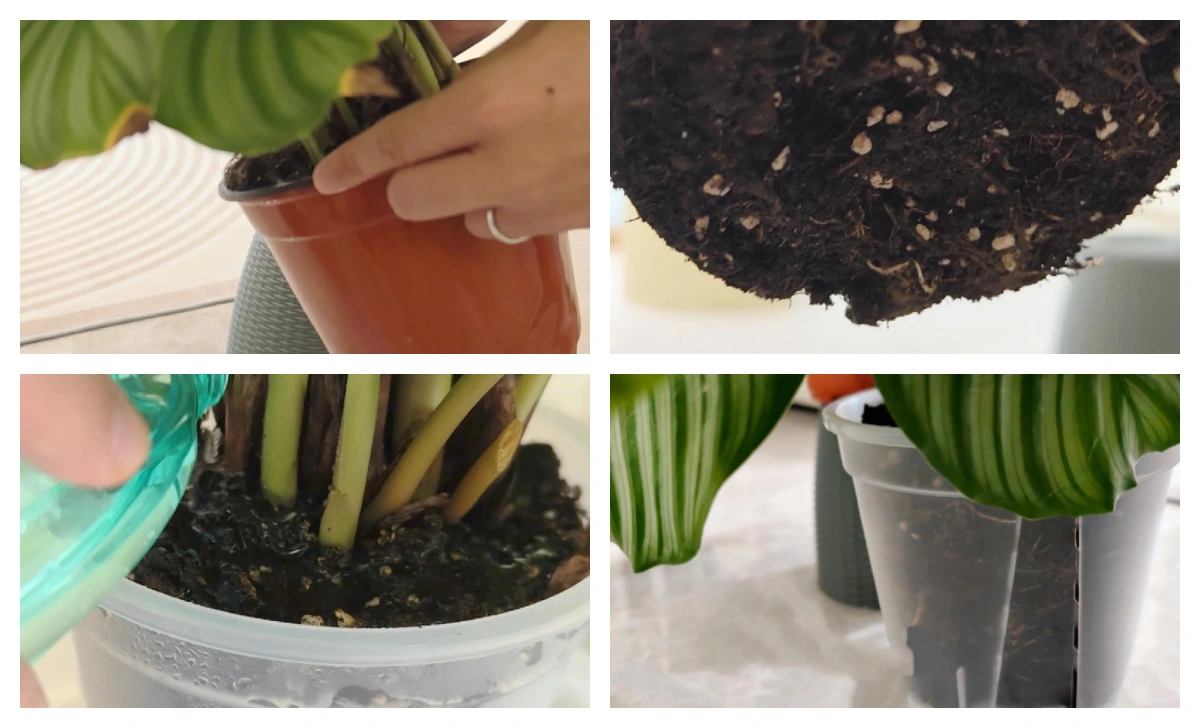
4. If there’s no improvement — repot
When symptoms persist, I don’t wait:
- I unpot the plant and remove as much dense, wet soil as I can without tearing the roots apart
- I trim only the roots that are brown, mushy, hollow, or smelly
- I repot into a lighter mix and keep the plant warm, steady, and out of strong direct light while it recovers
Then I repot using:
- A very airy mix with plenty of large particles (bark, perlite, pumice)
- A slightly smaller pot, not a bigger one
This is important: I do not move a stressed Makoyana into a much larger pot. A slightly snug pot dries more evenly, while an oversized pot can keep the center wet for too long and make root rot more likely.
One More Hidden Cause: Uneven Soil Structure
I’ve also seen cases where:
- The center of the pot stays wet
- The outer edges dry quickly
This creates a “wet core, dry shell” situation that quietly suffocates roots. Dense, uneven nursery soil is often the culprit. Repotting fixes this immediately.
My Honest Take
When Calathea Makoyana shows crispy edges and yellowing, it’s rarely about light or humidity alone. It’s a soil and root health issue first.
Once the roots recover, you’ll often see:
- New leaves emerging clean
- Slower leaf loss
- Less edge burn over time
Old damaged leaves won’t heal — but healthy roots will absolutely grow better ones.
Detailed Care Guide
Watering
Peacock Plants like evenly moist soil, but I would not water them just because the top looks dry. I check the pot weight and the moisture a little deeper in the mix. If the pot still feels heavy, I wait. I also prefer filtered, rain, or distilled water because Makoyana can show brown edges when the roots are already stressed and the water is mineral-heavy. For more detail, see my Calathea watering guide and best water for Calathea guide.
Light
Provide bright, indirect light to maintain vibrant patterns. Avoid direct sun, which will scorch the leaves. Low light is tolerated, but the iconic peacock markings may fade over time. An east-facing window or a few feet back from a south-facing window works well.
Soil
Use a well-draining, airy potting mix that holds moisture without becoming compacted. A good recipe is:
- 2 parts peat moss or coco coir
- 1 part perlite
- 1 part compost or fine bark
This ensures roots get both moisture and oxygen.
For detailed mix ratios, see the Best Soil for Calathea guide.
Fertilizer
I only fertilize Makoyana when it is actively growing and the roots seem healthy. A diluted balanced liquid fertilizer once a month in spring and summer is enough for me. If the plant is yellowing, staying wet, or pushing damaged new leaves, I stop feeding first and fix the roots or soil. For a fuller schedule, see my Calathea fertilizer guide.
Humidity
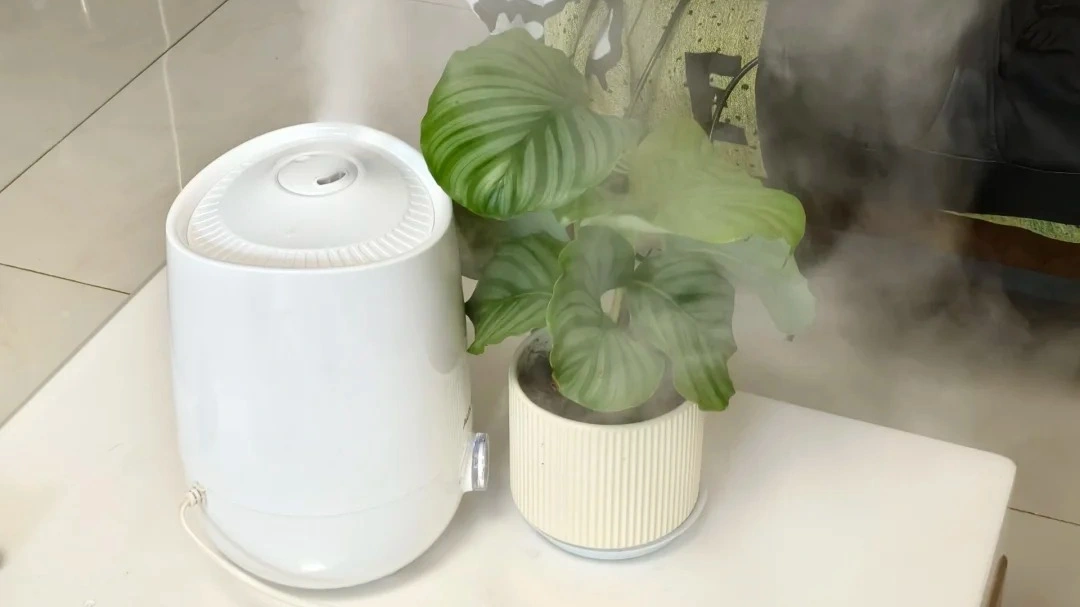
Humidity helps Makoyana keep softer leaf edges, but I do not treat humidity as a cure for root problems. In winter, a humidifier helps only if the pot is not staying cold and wet. If your home gets dry during heating season, my Calathea humidity guide explains what actually helps and what usually does not.
Common Problems with Calathea Makoyana
Makoyana usually shows stress through the leaf edges first. I do not judge the plant from one old leaf, but I pay attention when the same pattern keeps showing up on new growth.
- Curling leaves → Check the watering rhythm first. Dry soil, cold roots, or a recent move can all make the leaves curl. If the whole plant also looks limp, my Calathea curling and drooping guide is the better next read.
- Crispy brown edges → Dry air and mineral-heavy water can cause this, but if the soil is still wet and the plant keeps declining, I would check root health. This is where my Calathea crispy leaves guide and Calathea root rot symptoms guide are more useful than simply misting the leaves.
- Yellowing leaves → One older yellow leaf is not always serious. Several yellowing leaves at once, especially with a wet pot, usually means the roots or watering rhythm need attention. You can compare patterns in my yellow and brown Calathea leaves guide.
- Faded patterns → This can happen when the plant is sitting too dark for too long, or when it has been weakened by poor roots. I would fix the growing conditions before blaming the variety.
For broader troubleshooting, use the Calathea problems hub.
Propagation & Repotting
- Propagation → Like other Calatheas, the Peacock Plant can only be propagated by division. Separate healthy clumps during repotting in spring or summer. Stem or leaf cuttings won’t work.
- Repotting → Repot every 1–2 years when roots start to crowd the pot. Choose a container one size larger with good drainage and refresh the soil mix.
- Tip → Handle roots gently — they’re delicate and don’t like disturbance.
👉 For step-by-step guidance, see the Calathea Propagation Guide.
FAQ
Explore More Calathea Varieties
Looking to discover more beautiful Calathea plants?
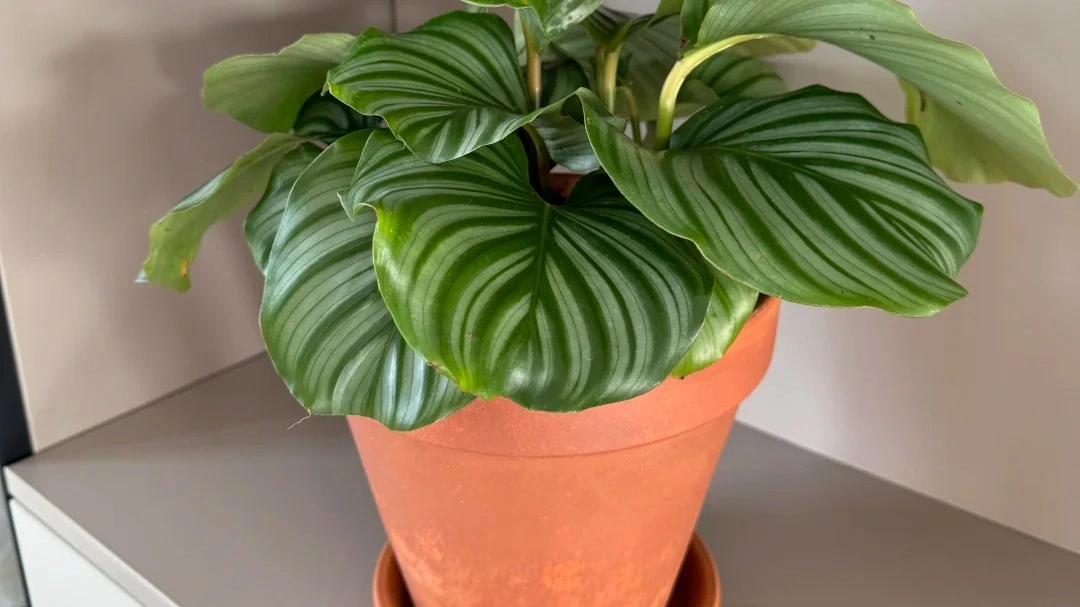
Browse our full collection of Calathea varieties — from the bold Orbifolia to the velvety Warscewiczii — and find the one that fits your home best.