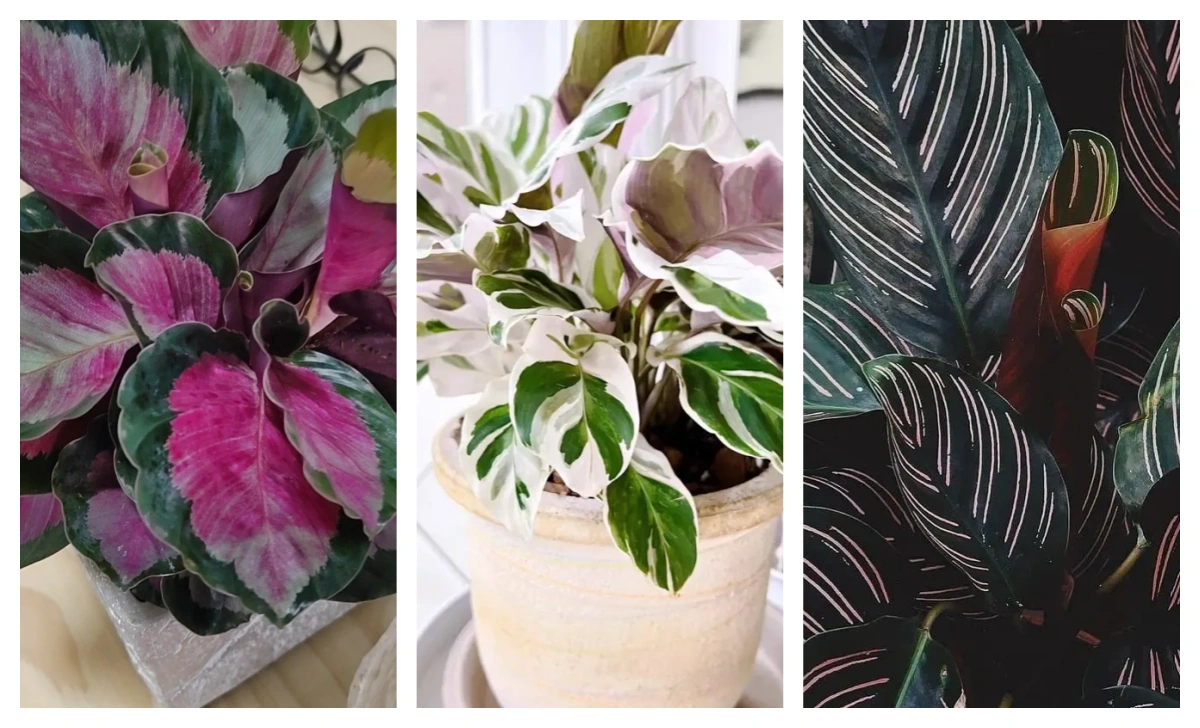
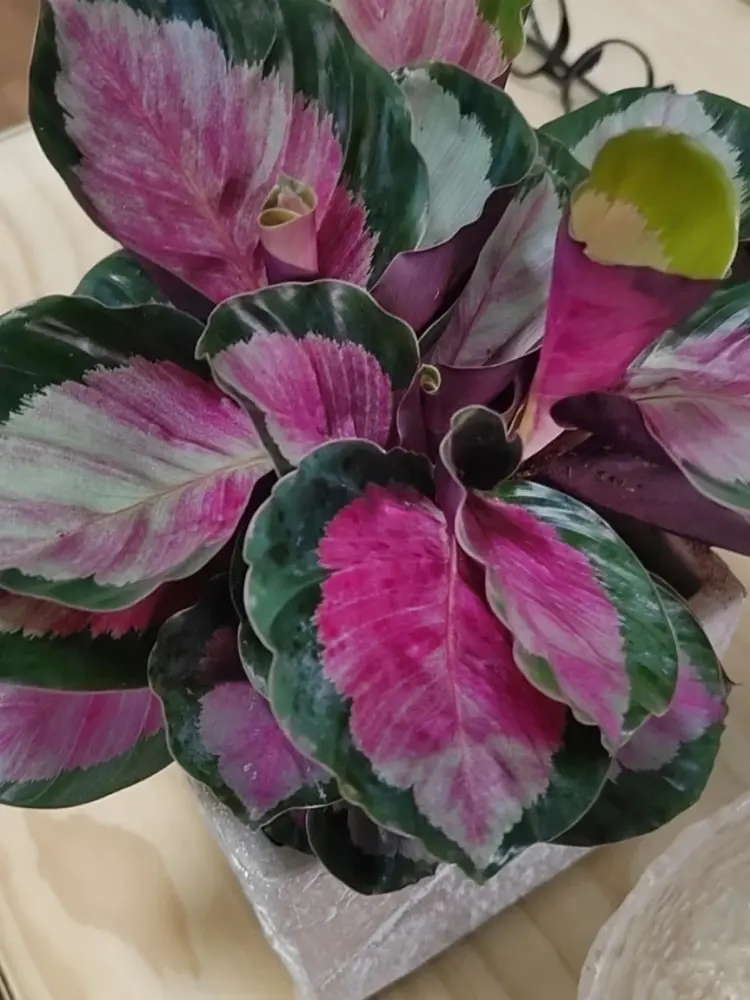
I bought my Calathea Rosy for one simple reason: I loved that soft, painted pink center. I had a corner on my south-facing balcony that did not get the strongest light, and I thought this plant might be perfect there — bright enough to show its color, but not sitting directly in the hottest spot.
When it arrived, it was even prettier than I expected. The leaves looked almost unreal, like a small oil painting with a dark green frame around the pink center. But that perfect first impression did not last long.
Even though the balcony corner was not extremely bright, it still received some direct sun and warm reflected light. Soon after arrival, the leaves began to curl at the edges and droop. That was my first reminder that Calathea Rosy care is less about giving it one “perfect” condition and more about helping it adjust gently to a new home.
In this guide, I’ll focus on what actually mattered for my plant: soft light, careful watering, warm humidity, and a slower transition back to the balcony after the leaves started curling and drooping.
Calathea Rosy is commonly sold as Calathea roseopicta ‘Rosy’, a pink-centered form of the Rose Painted Calathea group. In this article, I use “Calathea Rosy” because that is the name most indoor growers search for.
Quick Answer: Is Calathea Rosy Hard to Care For?
Calathea Rosy is moderately difficult, but not impossible indoors. It is not the hardest Calathea I would grow, but its pink leaves show stress quickly when light, humidity, or watering is off.
The main things I would avoid are direct sun, dry indoor air, unevenly dry roots after shipping, and soil that stays wet for too long. Any of these can make the leaves curl, droop, fade, or develop crispy edges.
For daily care, I would give it bright filtered light, warm humid air, and evenly moist soil. The goal is not to keep changing its care every day, but to help it settle into one calm, stable spot.
What Happened When My Calathea Rosy Arrived
It Looked Perfect at First
When my Calathea Rosy arrived, it looked almost too perfect. The pink center was full and soft, with that painted, slightly unreal look that makes this plant so hard to resist. The darker green edge around each leaf made the pink stand out even more, almost like a frame around a small oil painting.
Then the Leaves Started Curling and Drooping
The problem started after I placed it near a corner of my south-facing balcony. It was not sitting in harsh sun all day, but the spot still had some direct light and warm reflected brightness. For a newly arrived Calathea, that was probably too much too soon.
The leaves began curling at the edges and drooping. I did not treat that as instant root rot. A newly shipped Calathea can droop from an unevenly dry root ball, sudden light change, lower humidity, or general adjustment stress.
So before changing everything, I checked three things first: the pot moisture, the light exposure, and the humidity around the leaves.
The Bottom-Watering Reset I Used After Shipping Stress
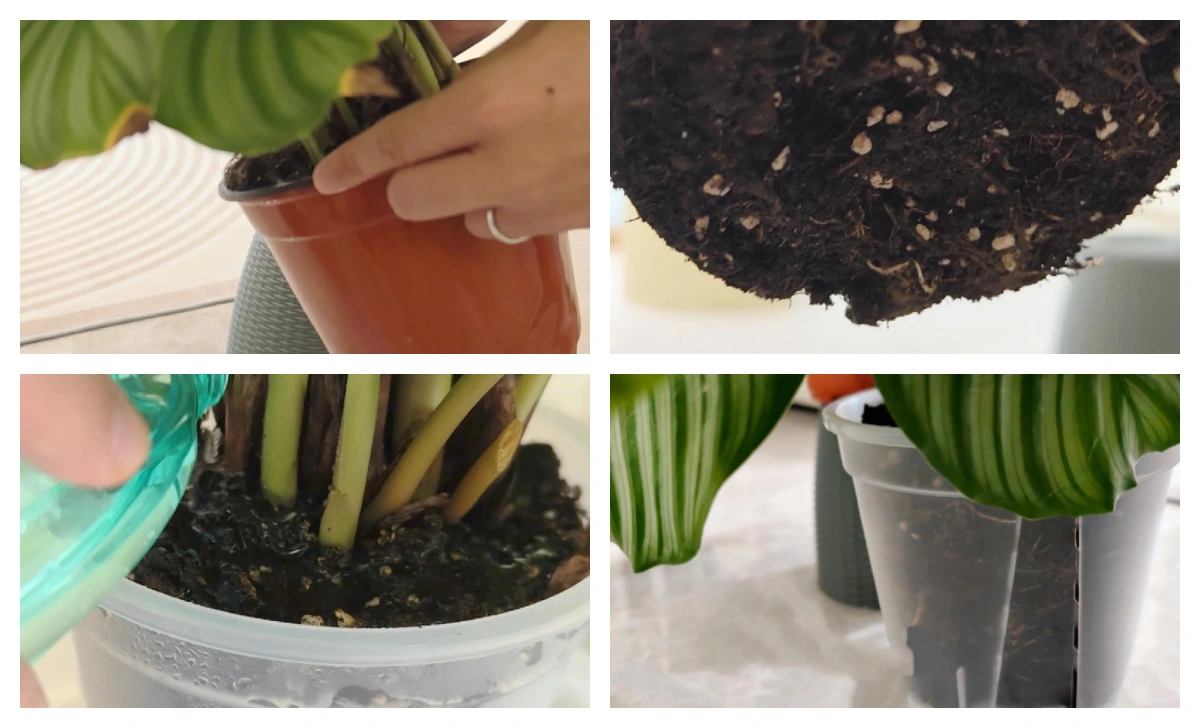
Because the plant looked thirsty and unsettled, I chose bottom watering instead of pouring water over the top again and again. My guess was that the root ball had dried unevenly during shipping, so I wanted the mix to rehydrate slowly from below.
I let the pot sit in water until the mix felt evenly hydrated, then took it out and let it drain completely. This part matters. Bottom watering can help a dry Calathea recover, but the pot should never be left standing in water afterward.
I would not turn a long soak into a normal care routine. It made sense here as a one-time reset because the plant had just arrived and the root ball seemed unevenly dry. For regular watering, I would bottom-water for a shorter time or water from the top, then let the pot drain fully.
My rule is simple: if the pot feels dry and light, watering can help. If the soil is already moist and the leaves are still drooping, I would check humidity, light, temperature, or root stress instead of adding more water.
Why I Moved It to the Shower Room First
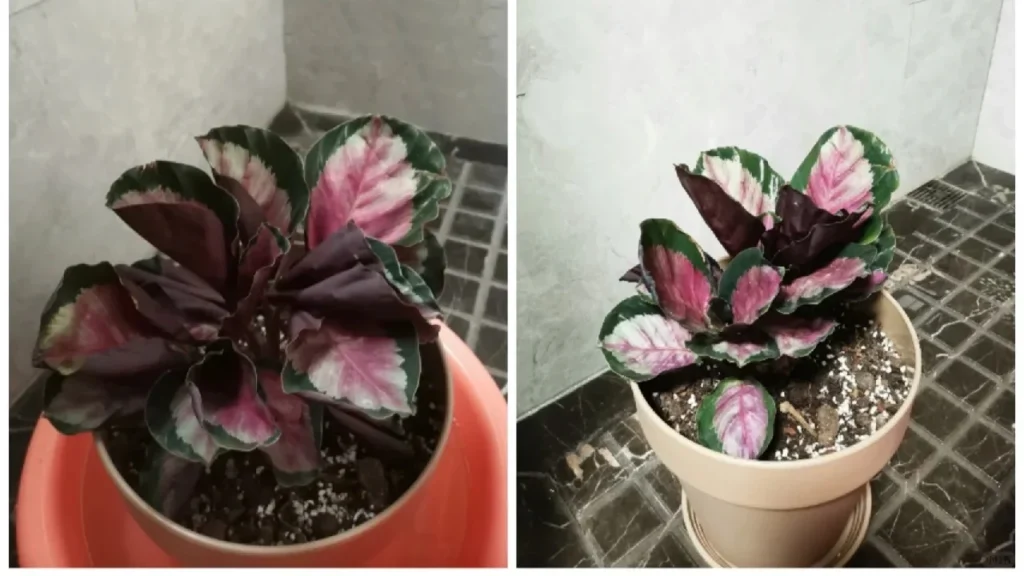
After the bottom-watering reset, I did not move my Calathea Rosy straight back to the balcony. The leaves had just started to relax, and I did not want to put it back into the same bright, slightly stressful spot too quickly.
I moved it temporarily into the shower room because the air there was warmer and more humid. For a newly arrived Calathea Rosy, that kind of short-term humidity can help the leaves recover without making the pot wetter and wetter. The plant needs moisture around the leaves, not just more water around the roots.
But I would treat this as a recovery setup, not a permanent home. A shower room can help if it is warm, humid, and not completely dark. If it stays dim, sealed, and wet for too long, the plant can still decline.
Once the leaves look steadier, I would move it back toward brighter light slowly, with protection from direct sun. For me, the shower room is a short recovery stop, not the plant’s permanent home.
Light: Why a South-Facing Balcony Still Needs Caution
A south-facing balcony can be tricky for Calathea Rosy. Even if the corner does not look extremely bright, short periods of direct sun or reflected heat from the glass can still be too much, especially for a plant that has just arrived.
Rosy’s pink center looks best in bright filtered light, not harsh direct sun. When the light is too strong, the leaves may curl at the edges, the pink can start looking faded, and the leaf margins may dry or crisp. A newly shipped plant is even more sensitive because the roots and leaves have not fully adjusted yet.
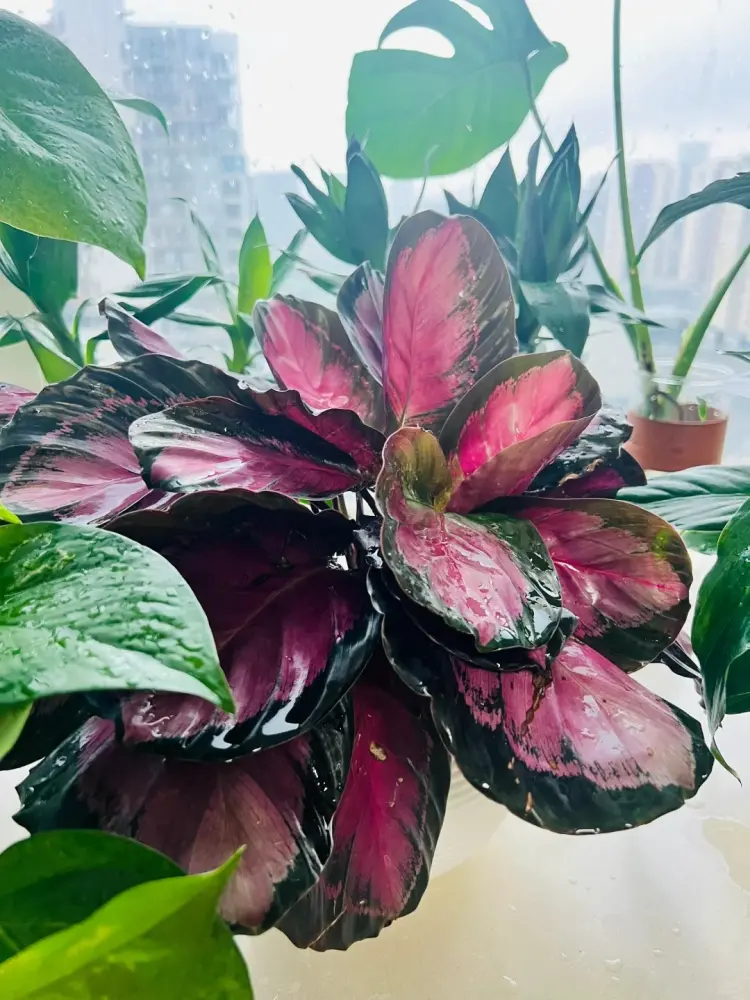
I would keep it behind a sheer curtain, farther inside the balcony, or in a bright spot where no midday or afternoon sun touches the leaves directly. For the first one to two weeks after arrival, I would prioritize settling the plant over chasing perfect color.
If the pink center starts looking washed out, or the leaf edges feel dry after moving it closer to the balcony, I would check the light first. For Calathea Rosy, soft filtered light is safer than a beautiful bright spot that hits the leaves too directly.
Watering Calathea Rosy Without Making the Roots Soggy
For daily care, I would keep Calathea Rosy evenly moist, not constantly wet. If the top layer begins to dry and the pot feels lighter, I water. If the pot still feels heavy but the leaves are curling, I check humidity and light before adding more water.
This is where the plant can be misleading. Curling leaves can mean thirst, but they can also come from dry air, direct sun, or moving stress. The pot tells me more than the leaves alone.
The long bottom-watering reset I used after arrival was a one-time recovery step, not my normal routine. It made sense because the plant had just been shipped and the root ball seemed unevenly dry. For regular watering, I would use shorter bottom watering or careful top watering, then let the pot drain fully.
| What I See | What I Check First |
|---|---|
| Curling leaves + dry, light pot | Watering |
| Curling leaves + moist, heavy pot | Humidity, light, or root stress |
| Drooping after arrival | Shipping stress and uneven hydration |
| Yellow lower leaves + wet pot | Overwatering or root trouble |
| Crispy edges | Humidity, water quality, or direct sun |
The main rule I follow is simple: check the pot before reacting to the leaves. With Calathea Rosy, more water is helpful only when the root zone actually needs it.
Humidity: The Part I Would Not Ignore
Humidity is one of the first things I watch with Calathea Rosy. When the air is too dry, the leaves can curl even if the soil is not completely dry. The pink center may also start looking duller, and the edges can turn crispy before the whole plant looks obviously stressed.
This is why the shower-room recovery made sense for my plant. It gave the leaves warm, humid air while I avoided repeatedly soaking the pot. For Calathea Rosy, the upper part of the plant often needs humid air more than the roots need another round of water.
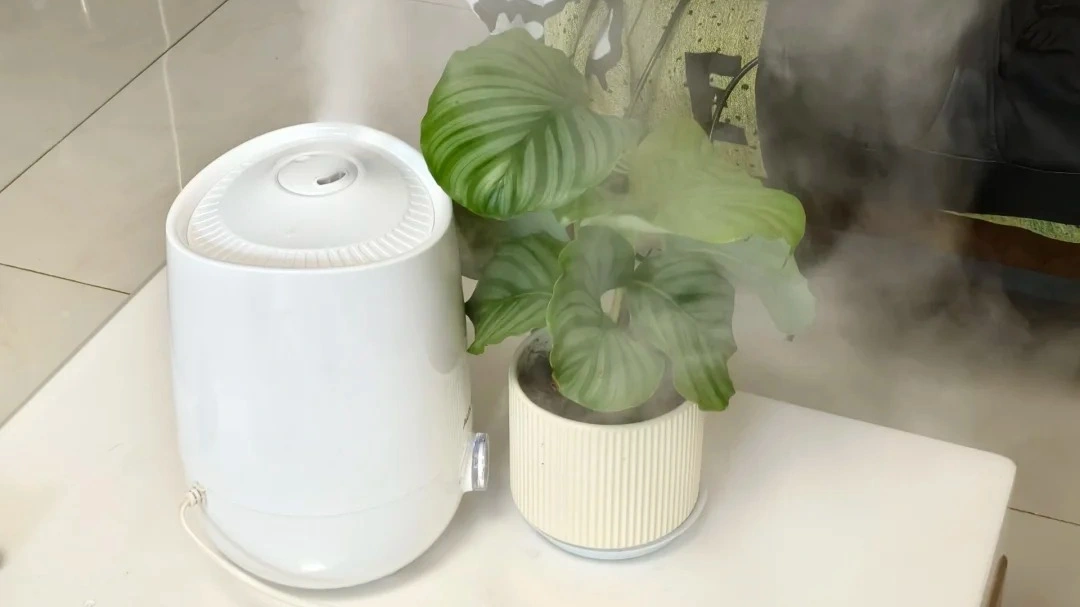
For daily care, I would rather use a small humidifier than rely on constant misting. Misting may make the leaves look fresh for a moment, but it does not create stable humidity. If water sits on the leaves too long, especially in a dim or still room, it can also create new problems.
I would keep Calathea Rosy away from air conditioners, heating vents, and dry airflow. A warm, humid bathroom can work as a short recovery space, but I would not keep it sealed in a dark, wet room long term. The goal is stable humidity with gentle airflow, not a closed, swampy environment.
How I Would Move It Back to the Balcony
Once the leaves look more open and steady, I would not move Calathea Rosy straight back to the balcony. Going from warm, humid air to stronger balcony light too quickly can make the leaves curl again.
I would move it back in stages:
- Keep it in the shower room or another humid spot for 1–2 days while the leaves settle.
- Move it to a bright shaded place with no direct sun touching the leaves.
- Watch it for 3–5 days before changing the position again.
- Move it slightly closer to balcony light only if the leaves stay firm and open.
- Pull it back immediately if the edges start drying, the pink center looks faded, or the leaves begin curling again.
For me, the goal is not to rush it back to the “best-looking” spot. The goal is to find the brightest place it can handle without stress. With Calathea Rosy, a protected bright corner is better than a beautiful sunny spot that keeps making the leaves react.
Common Problems I Would Watch For
Curling Edges After Arrival
Curling after arrival can come from shipping stress, dry air, direct light, or an unevenly dry root ball. If the pot feels dry and light, careful watering may help. If the pot is already moist, I would move the plant into softer light and raise humidity instead.
Drooping Leaves
When Calathea Rosy droops, I check the pot first. A dry pot may need bottom watering. A wet pot does not need more water. For a newly arrived plant, warm humid air and softer light can be more useful than another drink.
Pink Center Fading
The pink center can fade from direct sun, very weak light, or moving stress. I would check light before fertilizer. Bright filtered light keeps the color clearer than either harsh sun or a dark corner.
Brown Crispy Edges
Brown crispy edges usually point to dry air, harsh water, direct sun, or dry airflow from an air conditioner or heater. If the soil is already moist, crispy edges are not a reason to keep watering.
Yellow Lower Leaves
One older yellow leaf is not always a problem. Several yellow lower leaves while the pot stays wet is different. That pattern makes me check drainage, pot weight, soil smell, and root stress before adding more water.
My Current Take on Calathea Rosy
Calathea Rosy is the kind of plant I bought for its beauty, but it quickly reminded me that beauty is not the same as toughness. The pink center looks soft and painted, but the plant reacts fast when light is too direct, air is too dry, or the pot is watered without checking first.
For me, the first week matters most. I would not judge a newly arrived Calathea Rosy too quickly. I would protect it from direct sun, keep the air warm and humid, and water only after checking the pot.
What helped mine was not one magic trick. It was slowing down: rehydrating the root ball carefully, giving it a humid recovery spot, and moving it back toward balcony light gradually. If you can give it soft light, stable humidity, and careful watering, the pink leaves have a much better chance of staying open and full.
FAQ
Explore More Calathea Varieties
If you like the painted look of Calathea Rosy, you may also want to compare it with other pink, dark, or patterned Calatheas. Start with the full Calathea types guide to see which variety fits your light and humidity conditions best.
View Calathea Type Guides →