I used to think a drooping calathea was giving me one simple message: it was thirsty. If the leaves looked limp or the whole plant seemed to sag, my first instinct was always to assume it needed more water, a more humid setup, or some quick fix to perk it back up.
But after dealing with a few very different calathea varieties at home, I realized that drooping does not always mean the same thing. One plant recovered almost overnight after extra moisture. Another only stayed upright when the surrounding humidity stayed much higher. A third kept declining in winter no matter what I tried, until I finally admitted that low temperature and early cold stress were probably the real issue.
What helped me most was learning to read the context first: the soil, the room, the season, and how fast the plant responds. These three cases taught me that a drooping calathea is not always asking for the same solution.
Case 1: My Calathea Orbifolia Recovered Overnight After Extra Moisture
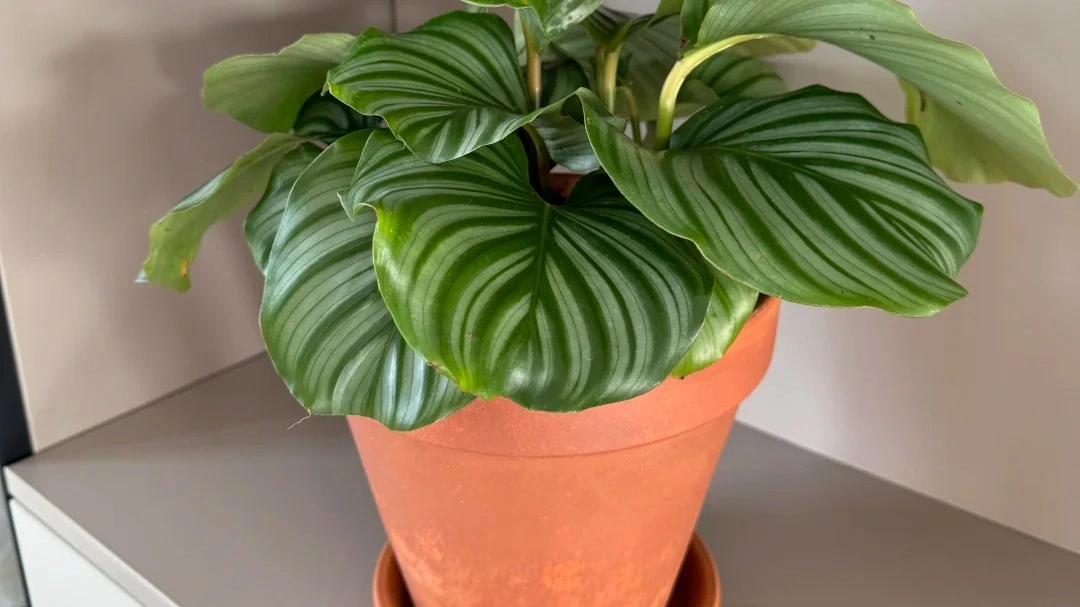
One of the first times I realized drooping did not always mean the same thing was with my Calathea Orbifolia. As the leaves got bigger, they kept drooping more and more, and the whole plant started looking soft and tired all the time. I could not immediately tell whether it was truly thirsty, reacting to dry air, or just struggling in a way I did not understand yet.
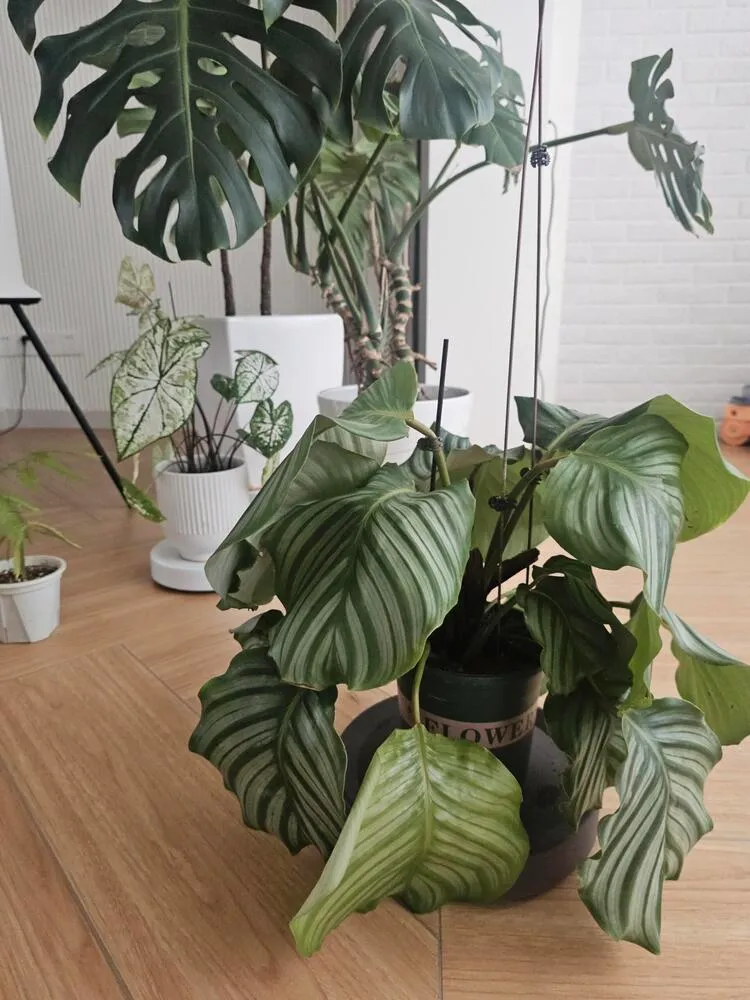
I ended up trying a warm bathroom treatment almost out of frustration. I let it sit through a shower for about 15 minutes and then left it there overnight. By the next morning, it had clearly lifted back up. The change was quick enough that it genuinely surprised me.
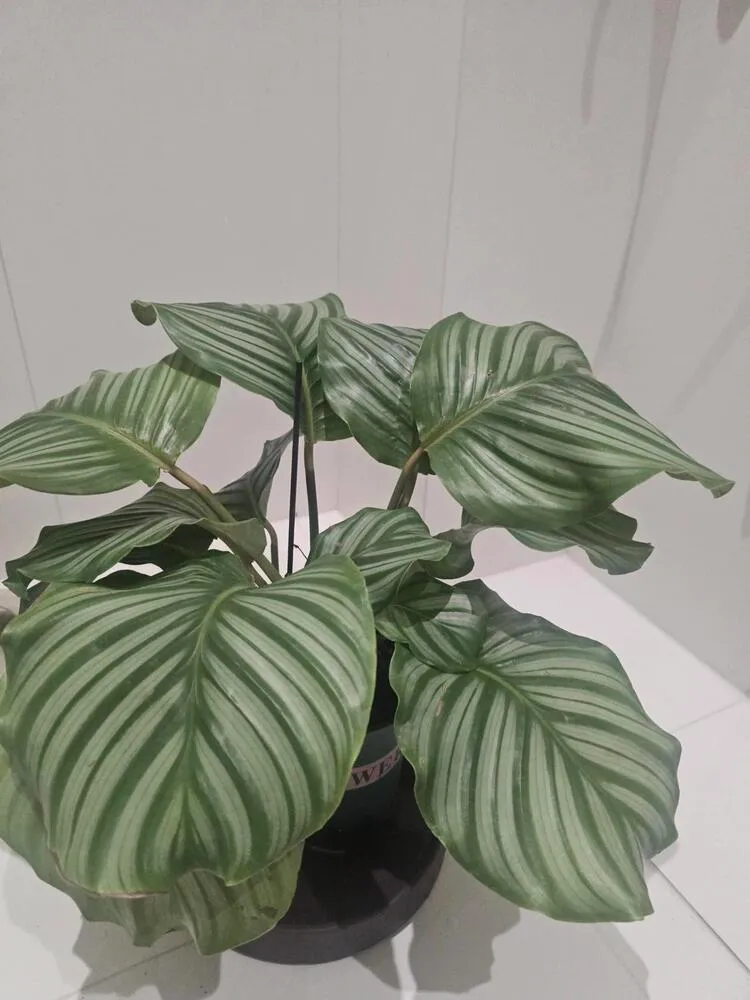
That quick recovery told me more than the drooping itself had. When a calathea responds that fast, I usually read it as a sign that the plant is still functionally okay underneath. It may be stressed, but it is not necessarily dealing with early root failure or the kind of deeper root problem that keeps getting worse in wet soil. In this case, the drooping seemed much more connected to temporary moisture stress than to anything structural or irreversible.
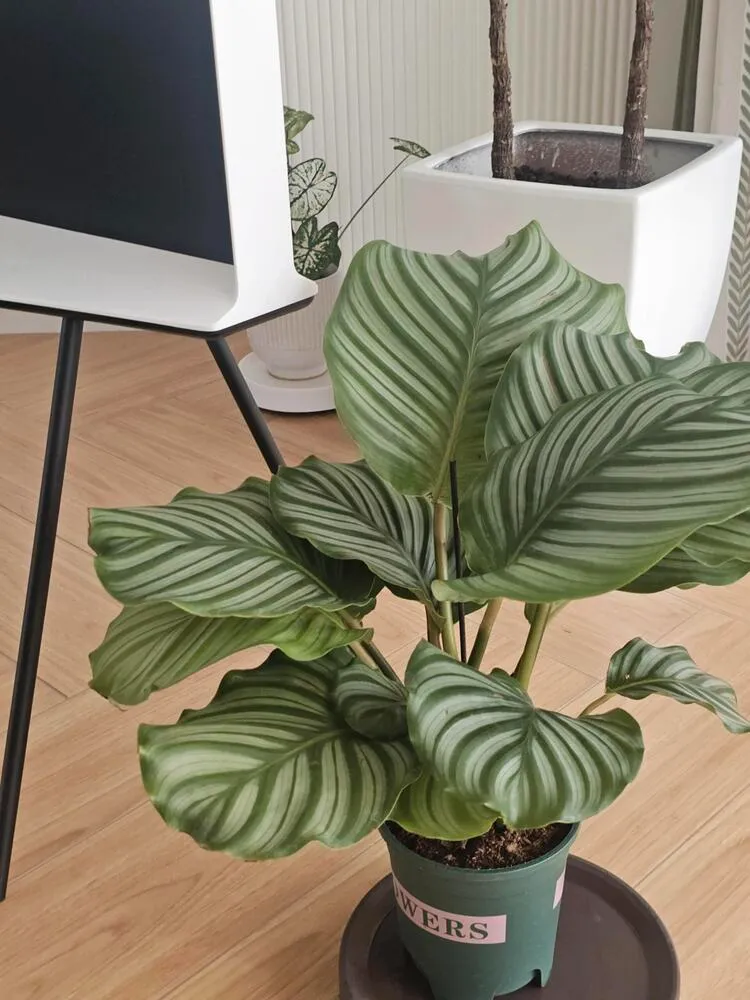
A fast rebound told me this was stress, not collapse. Since then, quick recovery has become one of the first clues I look for with a drooping calathea. If a plant perks up overnight after extra moisture, I worry much less than I do about one that stays limp for days in cold or wet conditions.
Case 2: My Velvet Calathea Only Stayed Upright in a Humid Room
My Velvet Calathea taught me a very different kind of lesson. The frustrating part was that it only looked upright for one day after I brought it home. Just one day. After that, it never really held itself up properly again. I ended up keeping it in the bathroom for long stretches because that was the only place where it seemed even remotely comfortable. The moment I moved it back into the living room, the leaves would droop again almost immediately.
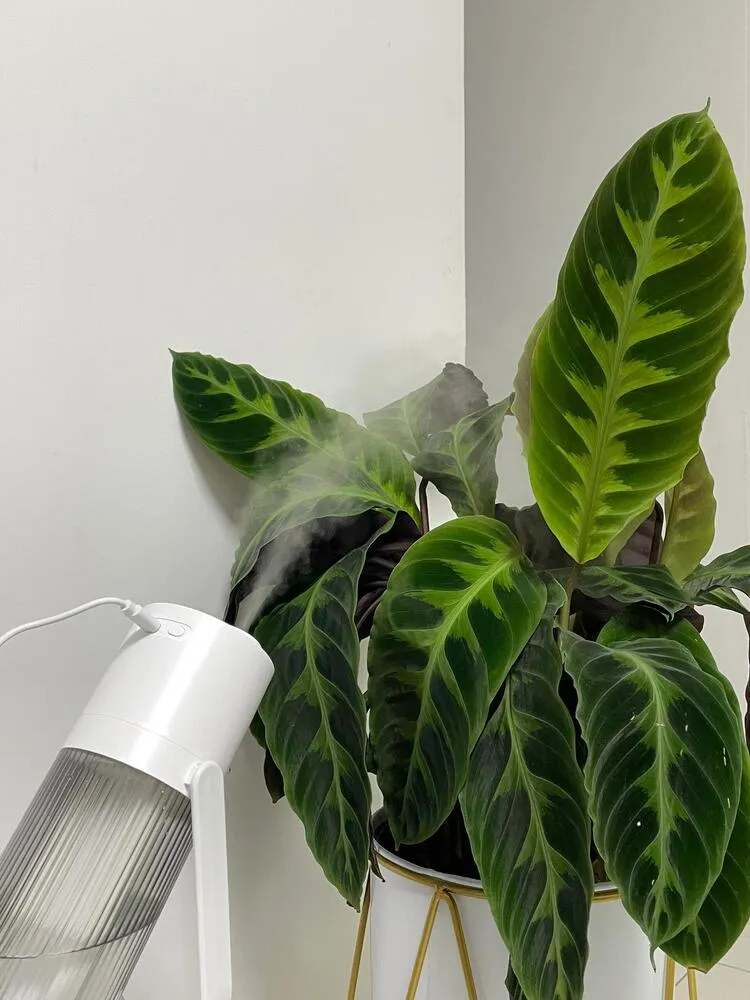
That was the point when I stopped thinking of it as a simple overwatering-or-underwatering problem. If a plant keeps collapsing the moment it leaves a more humid room, the issue is probably not just whether the soil was watered recently. In this case, the drooping seemed much more connected to the surrounding air than to one missed watering. The plant was reacting to the environment itself, not just the pot.
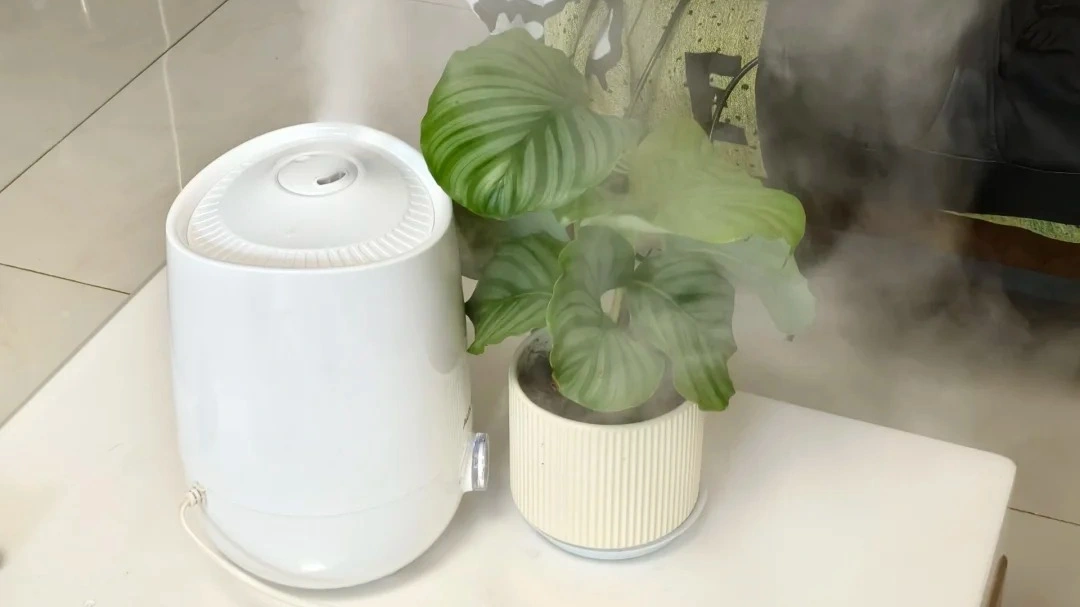
What finally helped was making the everyday setup more humid instead of treating the bathroom like a rescue room. I kept water in the tray underneath, added stones so the pot was not sitting directly in it, grouped it with other plants, and ran a humidifier more consistently. Once the surrounding humidity stayed higher over time, the plant’s posture improved noticeably.
This case taught me that some drooping is really about room conditions, not a one-time watering mistake. If a calathea keeps collapsing in one room but holds itself better in another, I now treat that as an environmental clue before I treat it as a watering problem.
Case 3: My Calathea Medallion Kept Drooping in Winter and Never Really Settled
My Calathea Medallion taught me the hardest version of this lesson. I bought one in December, and within about a week it had already started drooping badly. I ended up removing it from the soil and trying water culture, but the stems rotted and I had to give up on it. Then I bought another one in January, hoping the first plant had just been a bad individual. But after about a week, the second one started doing the same thing.
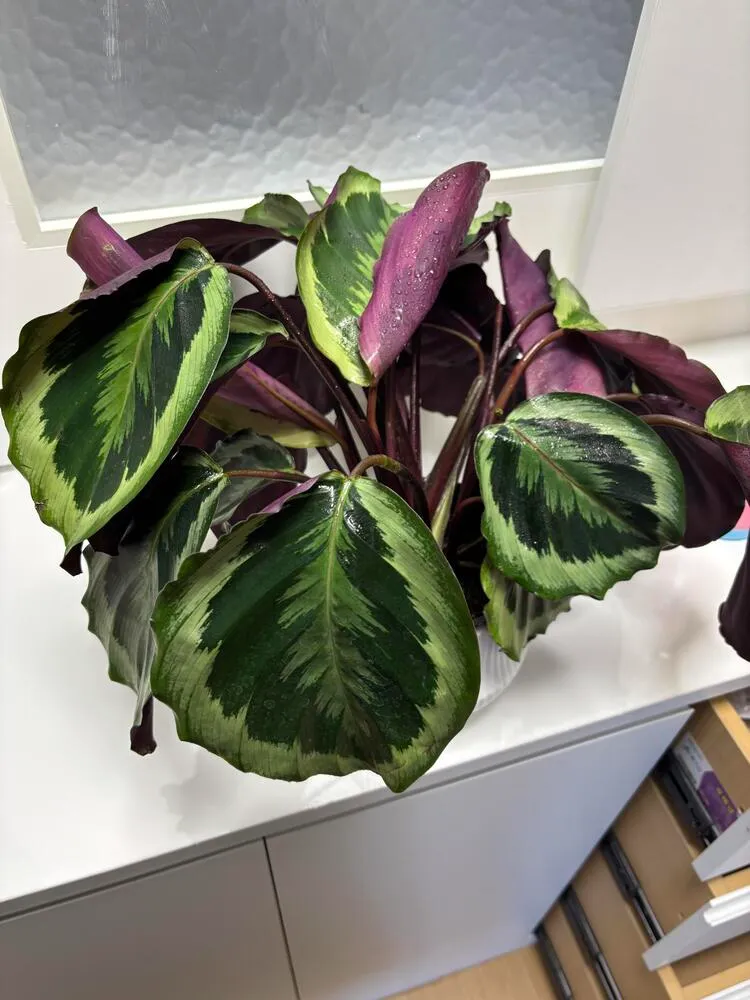
What made this case different was that the drooping did not behave like the first two. It did not bounce back quickly after extra moisture, and it did not simply improve once I changed the humidity around it. It stayed in that limp, weakened state for weeks. At the time, my average temperature was only around 10°C, and looking back, I think that mattered much more than I wanted to admit.
At this point, I think the real problem was the combination of cold air, environmental shock, and bad timing. Calathea Medallion is not the kind of plant I would choose to bring home in the middle of winter again, especially not when the indoor temperature is already on the edge for tropical plants. A warm-season plant that has just been transported, moved into a new room, and exposed to cooler air does not always get a fair chance to settle in.
This was the case that made me stop buying heat-loving calathea in winter. Sometimes a drooping plant is not asking for a clever rescue method. Sometimes the timing was wrong from the start, and the plant never really had a fair chance to settle in.
What These Cases Changed in the Way I Read Drooping
What These Cases Changed in the Way I Read Drooping
These plants did not all droop for the same reason, and that is what changed my thinking most. One recovered fast once moisture improved, another stayed dependent on a much more humid setup, and another kept declining because winter cold and timing were already working against it. That taught me to stop treating drooping like one diagnosis.
Now I pay much more attention to context than to the droop alone. I want to know how fast it changed, whether the plant responds quickly, what the soil feels like and how slowly the pot is drying, and whether the room itself is making recovery harder. That shift has been much more useful than assuming every droop means thirst.
The First Things I Check Now When a Calathea Starts Drooping
Before I try to fix anything, I check a few specific clues first. The context usually tells me more than the drooping itself.
Did anything change recently?
This is usually the first question I ask. Was the plant just moved? Did it just come home from the shop? Was it recently repotted, shifted closer to a window, or exposed to a sudden temperature change? A calathea that starts drooping right after a change often needs to be read differently from one that has been slowly declining in the same setup for weeks.
Is the soil dry, or is it still wet?
This is the first thing that really narrows the possibilities down. Drooping in dry soil and drooping in wet soil do not usually mean the same thing. I check below the surface and pay attention to pot weight, not just the top layer.
Did the plant perk up quickly after humidity or watering?
Recovery speed is one of the most useful clues I have now. If a plant visibly lifts after extra moisture, watering, or a more humid environment, that tells me something very different from a plant that stays limp for days no matter what changes. I have learned to pay close attention not just to the droop itself, but to how the plant responds afterward.
Is the room actually warm enough?
This matters more than I used to think, especially in winter. A room can feel tolerable to me and still be too cold for a tropical plant to settle comfortably, especially near windows, drafts, or cooler surfaces. When a newly purchased calathea starts drooping in a cold season, I now pay much more attention to whether warmth is part of the problem.
Are there other clues besides watering?
I also look for clues that change the meaning of the droop: curling, yellowing, dull heavy leaves, or signs that the plant is no longer recovering cleanly, or a plant that reacts strongly to room changes. Those details often explain more than watering alone, especially when the pot itself is not giving a clear answer.
My Take on a Drooping Calathea
I used to think all calathea drooping meant basically the same thing. If the leaves looked limp or the whole plant seemed to sag, I assumed it was asking for one obvious fix. But the more cases I lived through, the less true that felt.
Now I pay much more attention to context before I react. I want to know what changed, what the soil feels like, how quickly the plant responds, and whether the room itself is making recovery harder. That shift has helped me far more than any one rescue trick ever did.
What helped me most was not learning one universal fix, but learning that different droops mean different things. Once I started reading the droop before reacting to it, my decisions got calmer and much more accurate.
Still trying to figure out what kind of drooping you’re seeing?
- Calathea Overwatering vs Underwatering
- Root Rot Symptoms in Calathea
- Cold Damage in Calathea
- How to Revive a Dying Calathea
FAQ
Still worried about your plant?
👉 For more tips on keeping your plant healthy, explore our Complete Calathea Care Guide.
Explore All Problems →