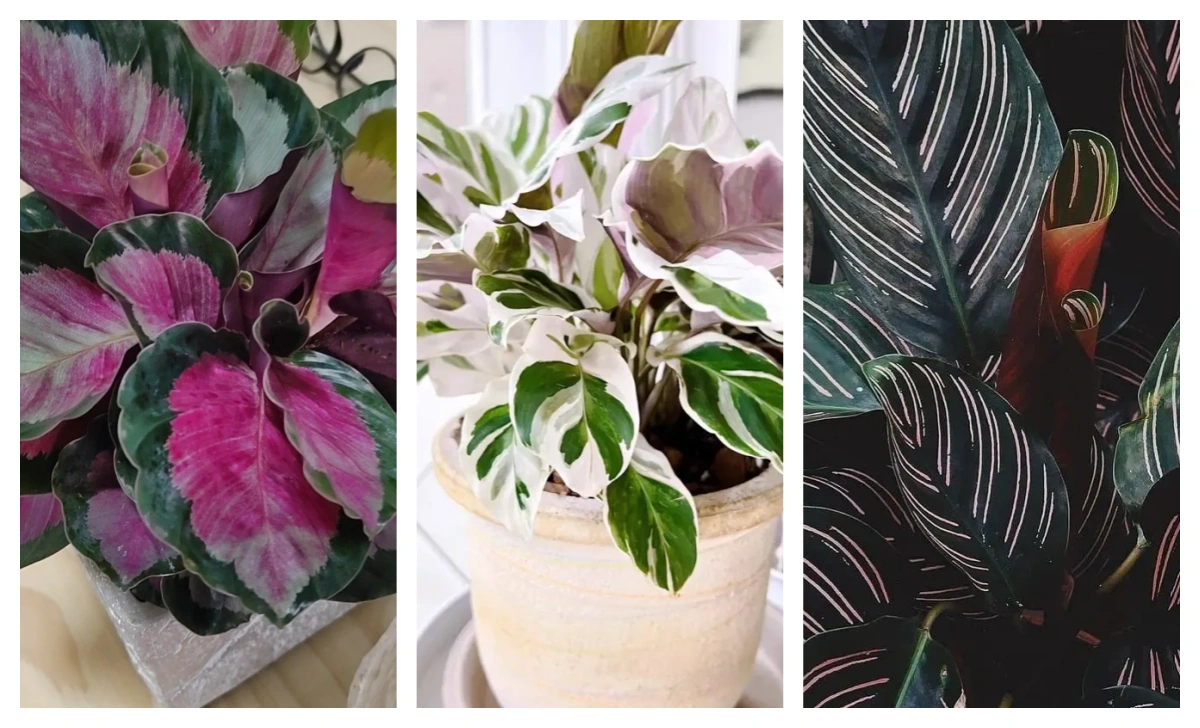
When a calathea starts looking rough, watering is usually the first thing people blame — and the first thing they change. Brown edges, curled leaves, drooping stems. It all looks like thirst, so we water more, mist more, and adjust more, hoping the plant will finally respond.
What makes calatheas so frustrating is that the same symptoms can point to very different problems. Reacting too quickly — without understanding what the plant is actually responding to — is often what turns a manageable issue into a slow decline.
Why Calatheas Are So Easy to Kill With Watering
Calatheas don’t fail because they “hate water.” They fail because their roots need oxygen as much as moisture, and most home setups make it easy to deprive them of both without realizing it. If you want the full baseline first, see my Complete Calathea Care Guide.
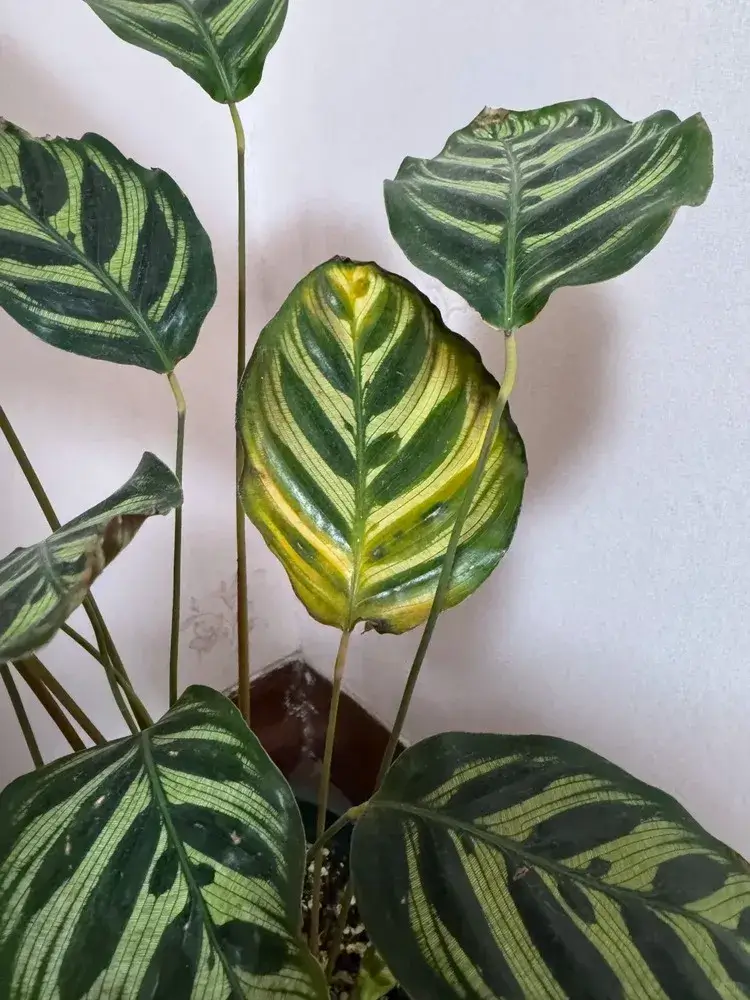
The challenge is that overwatering rarely looks dramatic at first. Instead of obvious rot, it creates a slow, misleading decline — soggy soil, stressed roots, and dull leaves that mimic dehydration from above. By the time the mistake becomes clear, the damage is often already layered.
This is why watering mistakes are so common with calatheas. The problem isn’t effort, but interpretation. Once I stopped asking “Should I water?” and started asking “What does this response actually mean?”, my results changed completely.
When Overwatering Looked Exactly Like Thirst
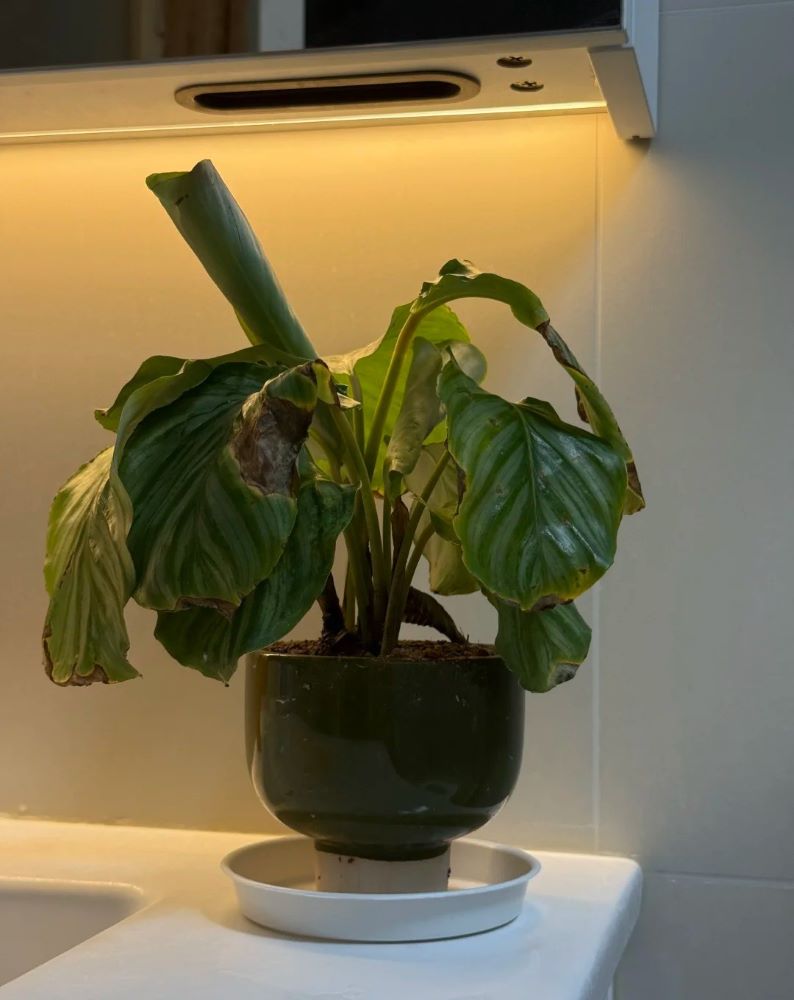
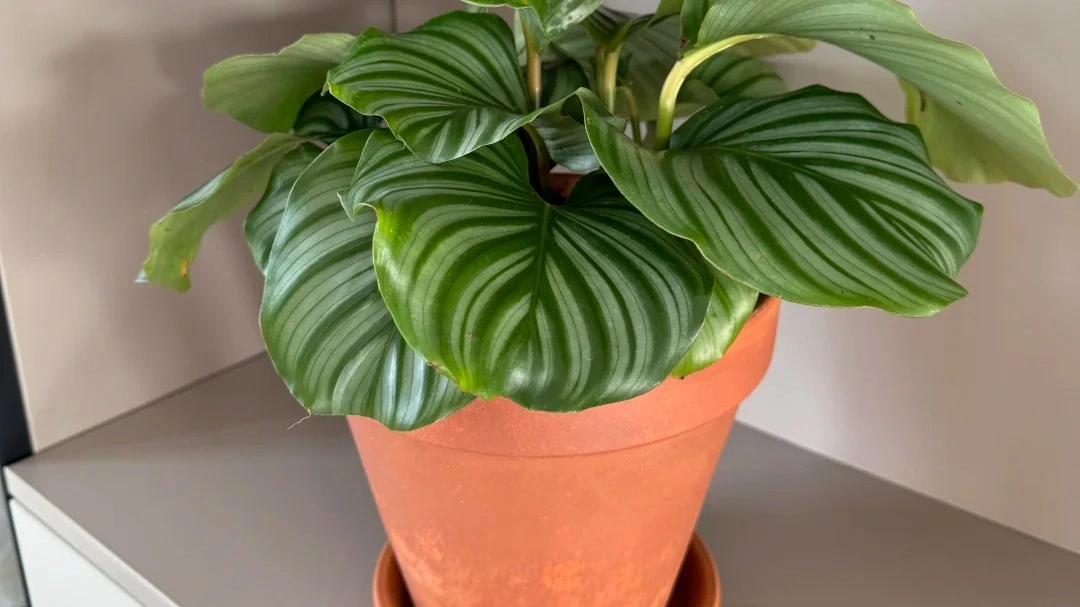
When I first brought this calathea home, it never really settled. The leaves stayed half-burnt, half-tired — brown edges everywhere, no real momentum. I kept trimming damaged leaves, hoping new growth would finally take over, but it never did. No matter how much I cleaned it up, the plant just hovered in this constant “almost dying” state.
What confused me most was that it looked like it needed water. I hadn’t skipped watering for long, yet the plant stayed limp and unresponsive. Every time I watered, nothing improved — sometimes it even seemed worse. At the time, I read that as a sign I still wasn’t doing enough.
I was wrong.
The Clue Was Never on the Leaves
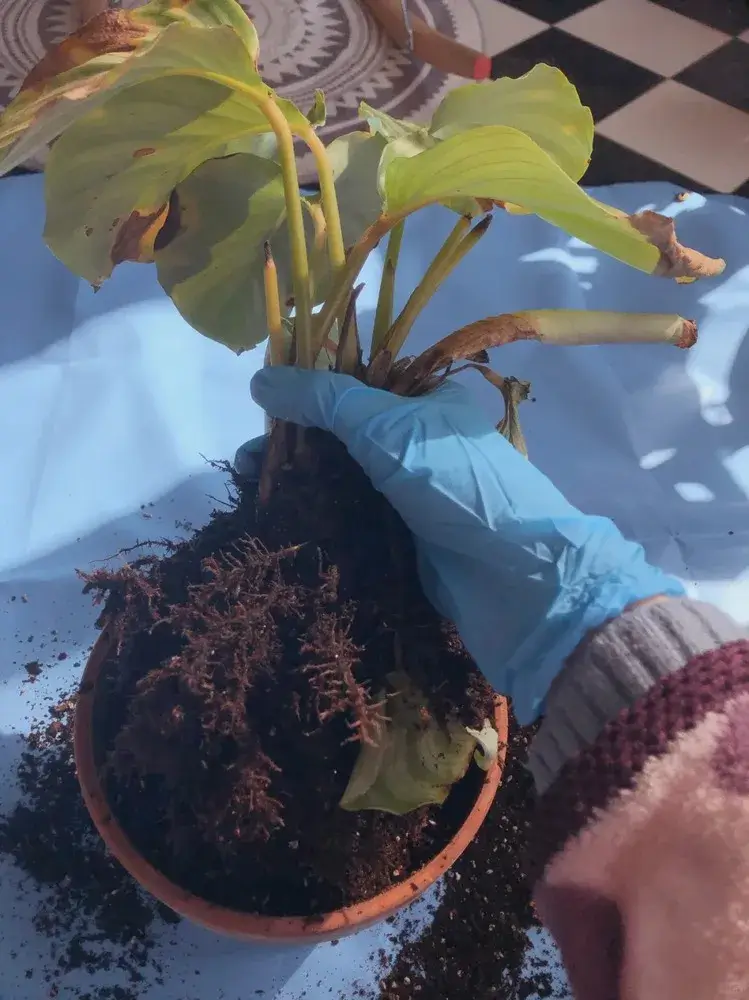
The real answer only showed up when I repotted — more than once.
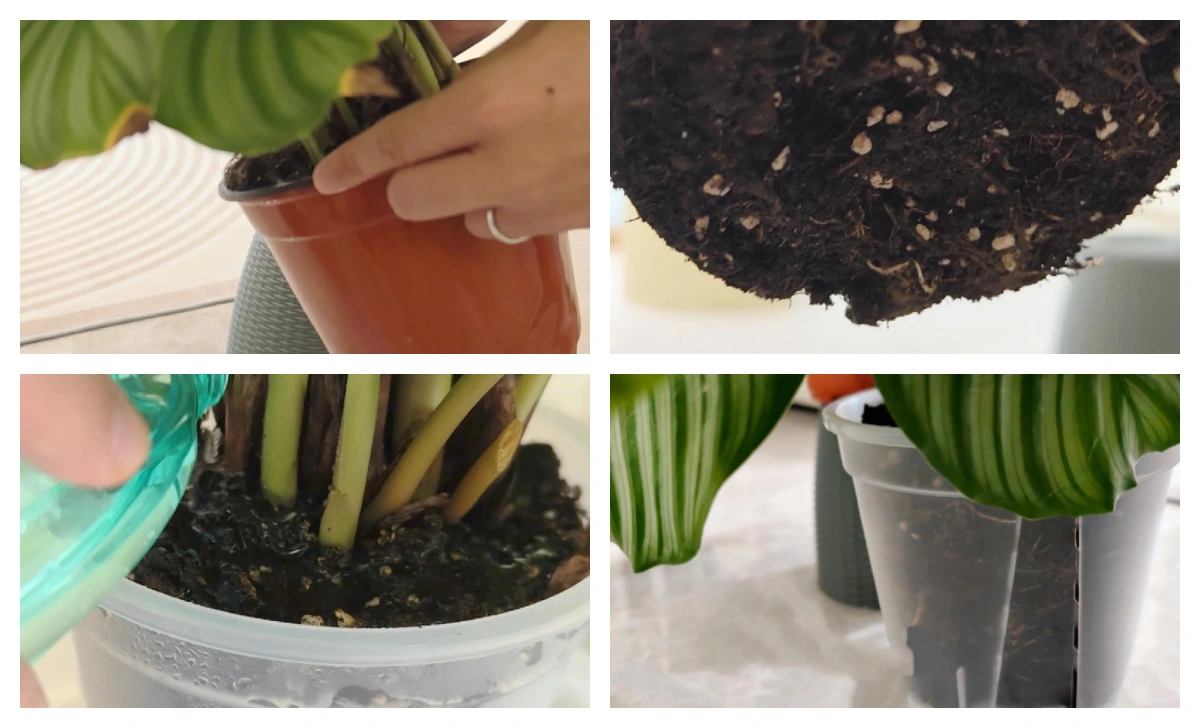
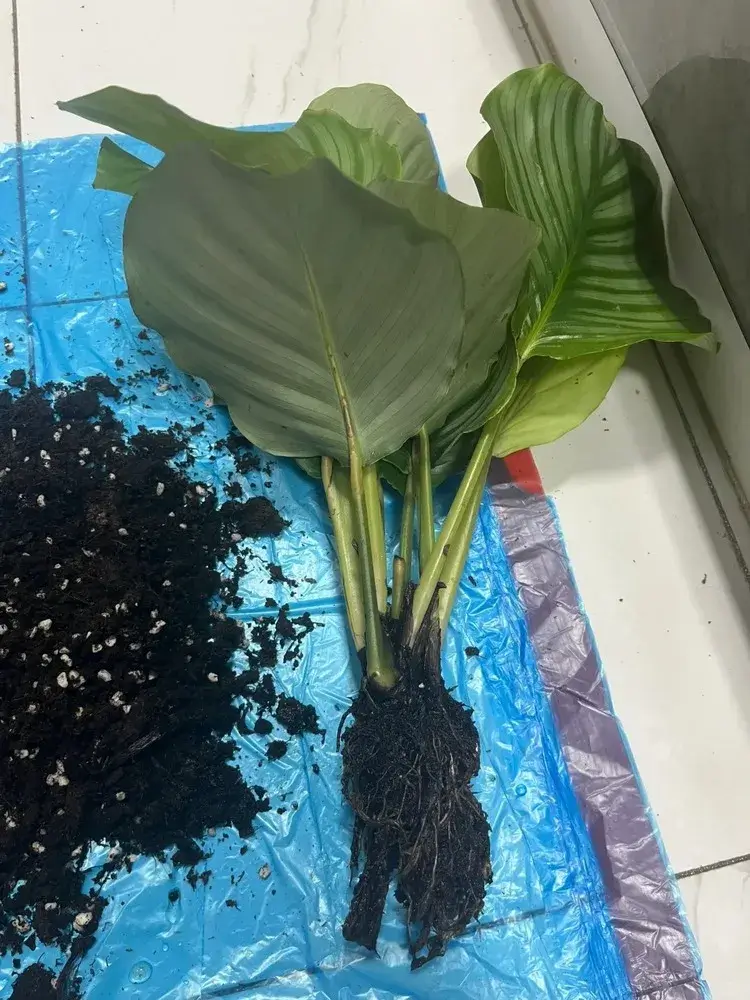
Every single time I lifted the plant out, the soil inside was soaked. Not freshly watered wet, but heavy, cold, bottom-layer wet. The kind of moisture that doesn’t evaporate, just sits there. The top might look fine, but the lower half of the pot was holding water constantly.
The roots told the same story. They weren’t rotten or foul-smelling yet, but they weren’t thriving either. Pale, stressed, clearly sitting in moisture for too long — right on the edge.
That’s when something finally clicked for me:
If a calathea looks thirsty, but the soil is consistently wet when you check, the problem is almost never underwatering.
At that point, the leaves are no longer reliable messengers. The pot is.
Everything I Did That Made It Worse
Looking back, I can clearly see how many well-meaning “fixes” were actually stacking pressure on the plant.
- I gave it more sun, thinking stronger light would help it recover — increasing transpiration while the roots were already struggling.
- I misted the leaves constantly, adding moisture to an environment that was already too damp and poorly ventilated.
- I watered frequently but lightly, wetting the surface while the bottom of the pot stayed permanently saturated.
- I used a pot that looked fine but held moisture longer than this plant could tolerate.
- And the soil itself was too water-retentive, trapping everything in place.
At the time, it felt like attentive care. In reality, I was tightening the environment around an already stressed root system.
I thought I was helping. I was actually adding weight.
What Finally Turned the Plant Around
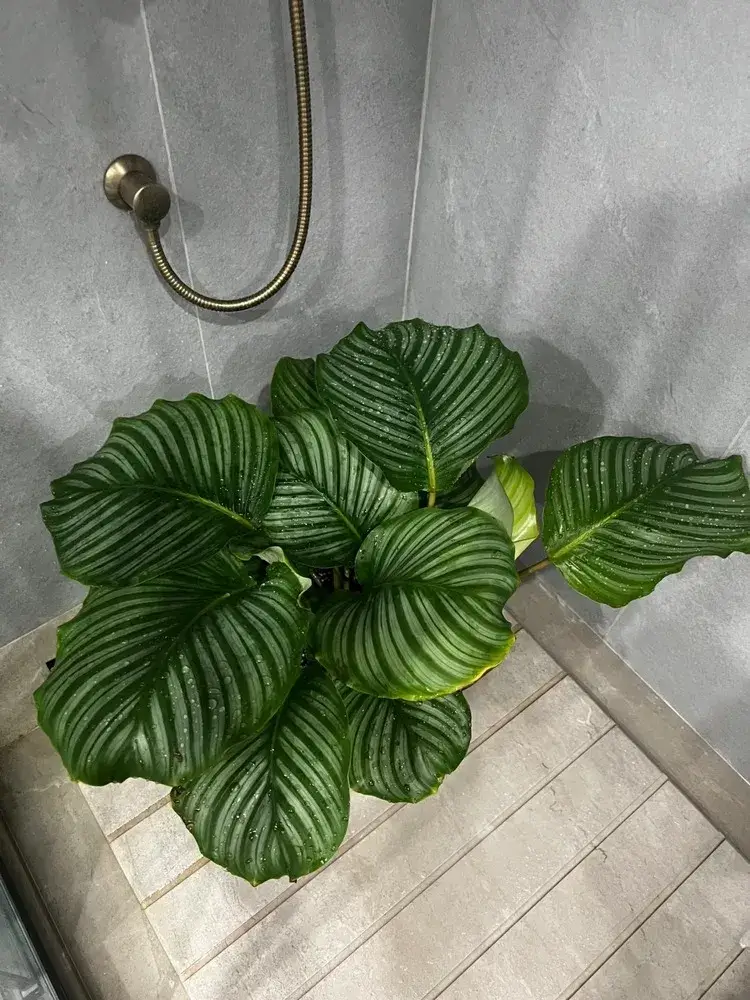
The recovery didn’t come from a product or a treatment. It came from removing excess.
I switched the plant into a more breathable pot — one that had already worked well for my Monstera. I discarded all the old, saturated soil and rebuilt the mix with faster drainage and more air. I stopped misting entirely. I stopped moving it. I stopped “checking on it” every day.
Nothing dramatic happened overnight. But once the environment stabilized, the plant did the rest on its own.
The roots weren’t fully rotten yet — they just needed oxygen. And once they had it, the calathea stood back up without being forced.
How I Know When a Calathea Is Actually Thirsty
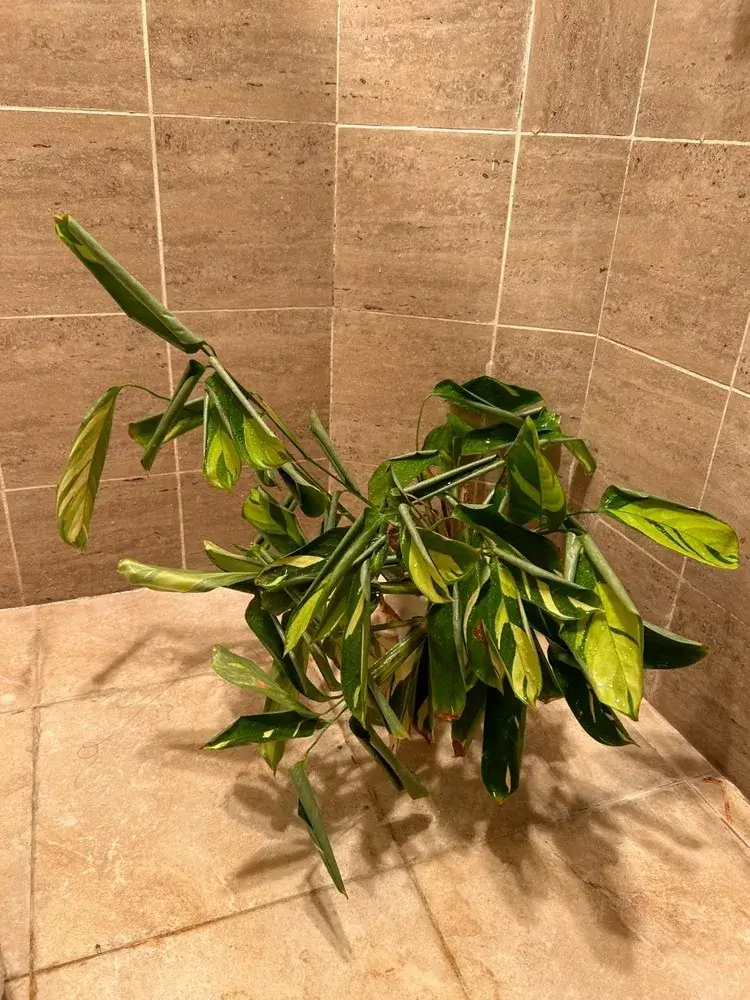
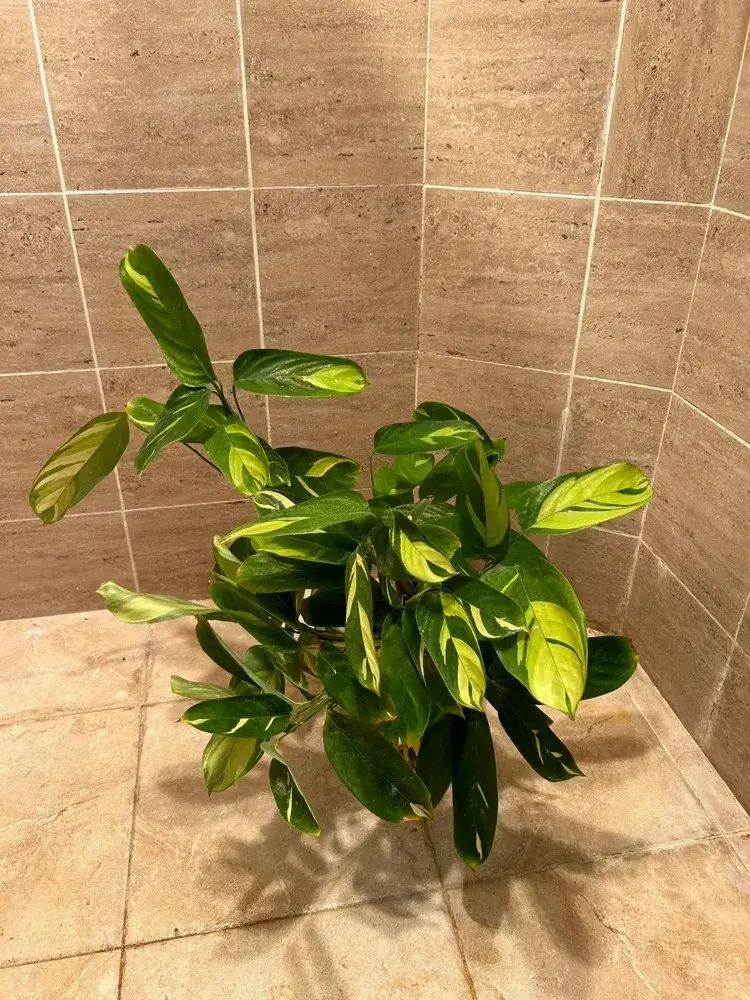
The clearest contrast came from a small Calathea lubbersiana I’d been growing in a lightweight pot. Unlike the overwatered plant that lingered in decline, this one reacted fast — sometimes almost too fast.
When it needed water, the signs showed up together and without hesitation. The pot became noticeably lighter. The soil could go from barely damp to dry overnight. The leaves didn’t just droop — they curled inward, as if conserving what little moisture they had left.
There was no ambiguity in the timing. The change was sudden, and it was obvious.
The “Two-Hour Recovery” Test
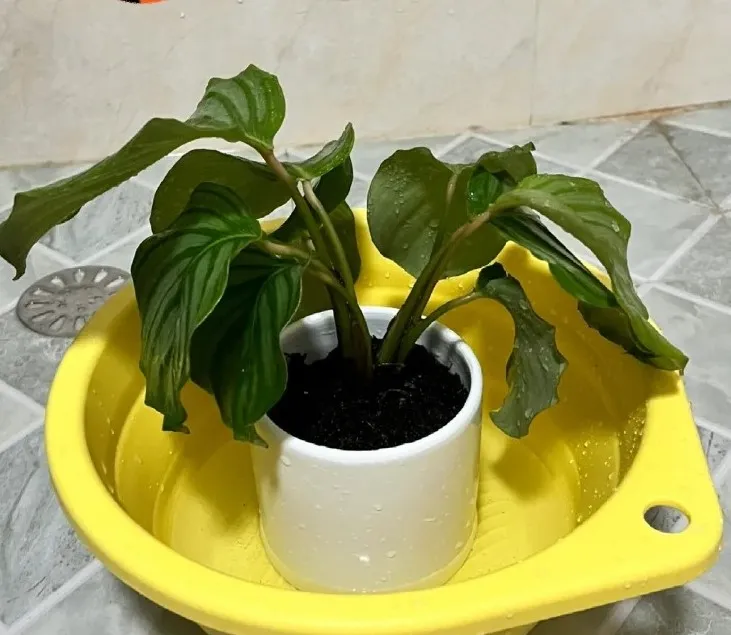
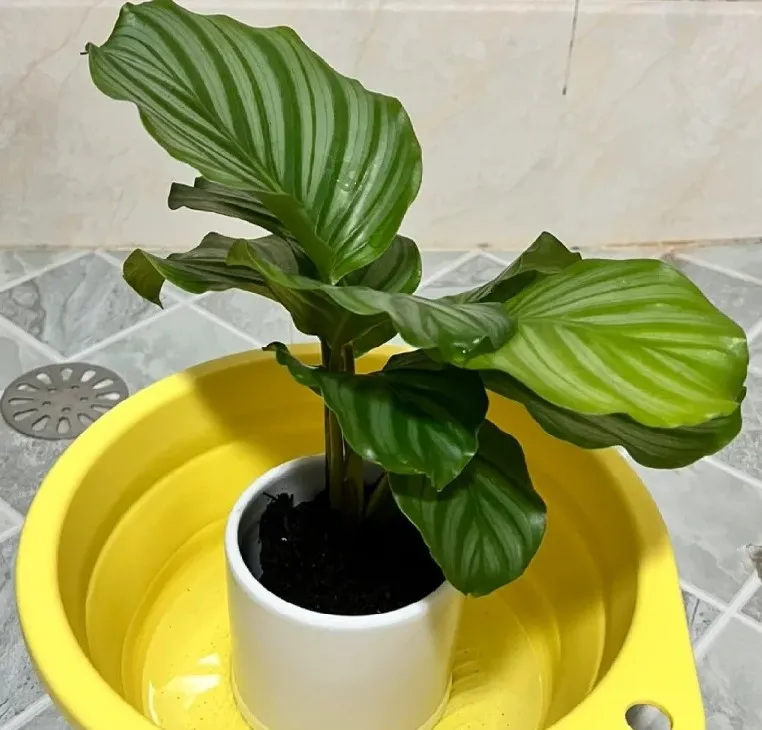
What confirmed it for me wasn’t speed, but the way the plant responded when I removed urgency from the process.
Instead of watering from the top, I used bottom watering — placing the pot in a larger container of water and letting moisture move upward through the soil on its own. This method is slower by nature, and that’s exactly why it’s useful for diagnosis rather than rescue.
With bottom watering, nothing happens immediately. The roots need time to take up moisture, and internal pressure rebuilds gradually instead of being forced. That waiting period matters.
Within one to two hours, the difference became clear. The leaves began to relax. Tight curls slowly loosened. The leaf blades regained firmness and structure, as if tension was being restored from the inside rather than pushed from the surface.
That kind of delayed but steady rebound doesn’t happen with overwatered roots. When roots are already stressed or oxygen-deprived, even access to moisture from below changes nothing — sometimes the plant looks worse.
This became my simplest rule of thumb:
If a calathea shows a clear, gradual rebound within a short window after bottom watering, it was genuinely underwatered.
If there’s no response — or continued decline — the issue lies elsewhere. In cooler rooms, this can also be caused by cold damage, not watering.
How I Water Now (Without Chasing a Schedule)
Once I understood that difference, my watering habits changed completely.
I no longer let calatheas dry to the point of stress just to “be safe.” At the same time, I don’t water on a calendar. I watch the soil surface, lift the pot, and pay attention to how quickly it dries compared to normal.
When the top layer is dry and the pot feels light, I water deeply and evenly. Then I leave it alone. No topping up. No misting to compensate. No second-guessing the decision a day later.
What keeps my plants stable isn’t precision timing — it’s consistency in how I read their responses. Once you recognize how quickly true thirst shows itself, it becomes much easier to avoid confusing it with the slow, misleading signals of overwatering.
Overwatering vs Underwatering: How the Signals Actually Differ
At a glance, overwatered and underwatered calatheas can look frustratingly similar. Both can droop. Both can show damaged leaves. Both can look “unhappy” in ways that invite quick fixes.
The difference only becomes clear when you stop looking at the leaf damage itself and start watching patterns, timing, and recovery.
Signs That Point to Overwatering
- The soil stays wet for days, and the pot feels consistently heavy
- The plant droops after watering rather than improving
- Leaf edges brown while the leaf stems feel soft or weak
- The plant looks stuck in a long-term decline instead of collapsing quickly
- When repotted, the lower half of the soil is damp and compacted, and the roots appear darker or stressed rather than crisp and pale
This is not a sudden failure. It’s a slow one.
Overwatering deprives roots of oxygen. The plant doesn’t “dry out” — it suffocates gradually, and the leaves respond long after the damage has started below.
Signs That Point to True Thirst
- The soil dries quickly, and the pot becomes noticeably lighter
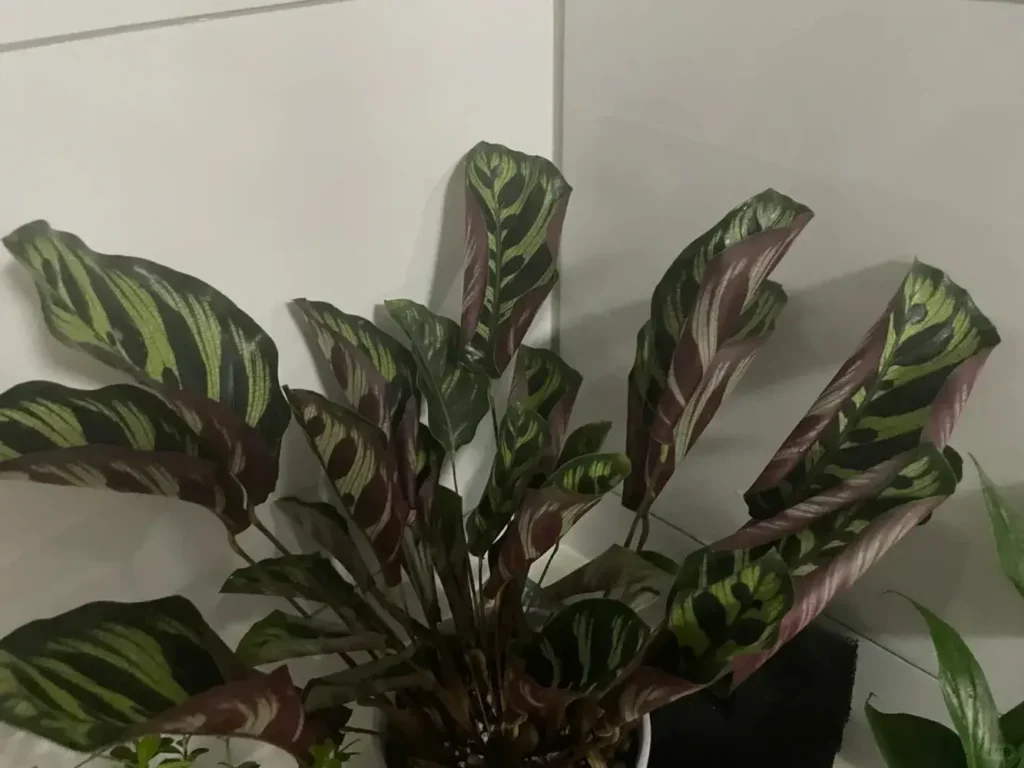
- Leaves curl inward but remain flexible rather than limp
- After a thorough watering, the plant shows clear improvement within one to three hours
- New leaves continue to emerge normally, even if older leaves look tired
This response is fast and decisive. There’s no lingering uncertainty.
When a calathea is genuinely underwatered, it takes up water as soon as it becomes available — and it shows you.
The Simplest Way I Remember the Difference
Overwatering is slow suffocation.
Underwatering is short-term dehydration.
One drags on quietly and resists quick fixes.
The other responds as soon as water can move through the system again.
Once you start judging calatheas by response instead of appearance, watering stops being guesswork — and most “mystery problems” stop being mysteries at all.
FAQ
If the soil stays wet and the plant droops after watering, overwatering is more likely.
If the soil dries quickly and the plant shows clear improvement within one to three hours after a deep watering (especially with bottom watering), it was underwatered.
Overwatered calatheas often develop brown edges and dry-looking damage because stressed roots can’t deliver water properly to the leaves. The soil may be wet, but the plant is still functionally dehydrated.
When roots sit in saturated soil for too long, they lose the ability to take up water effectively. Adding more water won’t help and often makes the problem worse.
This window reflects how long it takes for roots to absorb water and restore internal pressure.
If there’s no change — or the plant declines further — the issue is unlikely to be simple thirst.
It allows the plant to take up moisture at its own pace, making it easier to observe whether the roots can still absorb water. Overwatered plants usually show little to no response to bottom watering.
If the leaf is mostly damaged or bothering you visually, trimming is fine. What matters more is whether new leaves emerge healthy, which is the best indicator that the underlying problem has been resolved.
Still worried about your plant?
👉 For more tips on keeping your plant healthy, explore our Complete Calathea Care Guide.
Explore All Problems →