Calathea identification gets confusing faster than most people expect. Many plants are still sold under Calathea even though the newer botanical name is Goeppertia, seller labels are not always consistent, and broad names like “pinstripe calathea” or “peacock plant” are often used without much precision.
That is why I find it more useful to identify calathea by structure before names. I usually start with the leaf shape, the pattern style, the overall leaf color, and the underside. Once you group a plant by those features first, it becomes much easier to narrow down which variety you are actually looking at.
Quick Calathea Identification Chart
If you are trying to identify a calathea quickly, start with the overall leaf shape first, then look at the pattern style, base color, and leaf underside. This simple chart covers some of the most common varieties people mix up.
| Variety | Leaf Shape | Main Pattern | Leaf Color | Underside | Most Often Confused With |
|---|---|---|---|---|---|
| White Star | Long oval | Bold white to cream pinstripes | Medium green with strong pale striping | Purple to burgundy | Vittata |
| Vittata | Narrow oval | Thin white stripes running lengthwise | Light to medium green | Pale green to light purple | White Star |
| Ornata | Long oval | Fine pink pinstripes | Dark green | Deep purple | Beauty Star |
| Beauty Star | Long oval | Feathered pale stripes with pinstripe look | Bright green with lighter brush-like markings | Purple | Ornata |
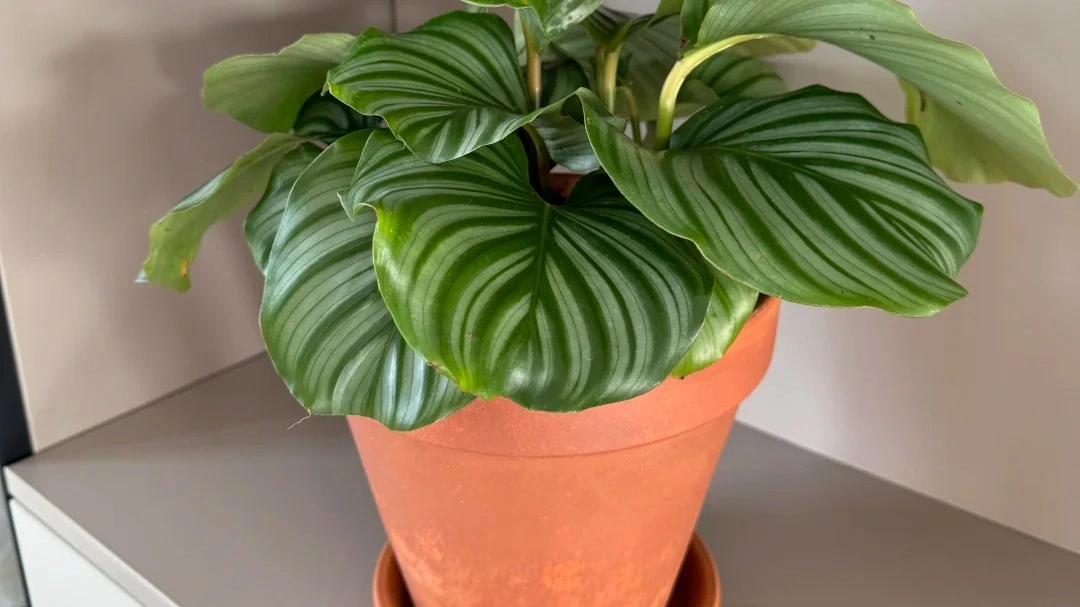
| Orbifolia | Large, broad, almost round | Wide silvery bands | Soft green with silver-green striping | Greenish | Fasciata |
| Fasciata | Broad round to oval | Rounded banding with deeper contrast | Gray-green to medium green | Purple | Orbifolia |
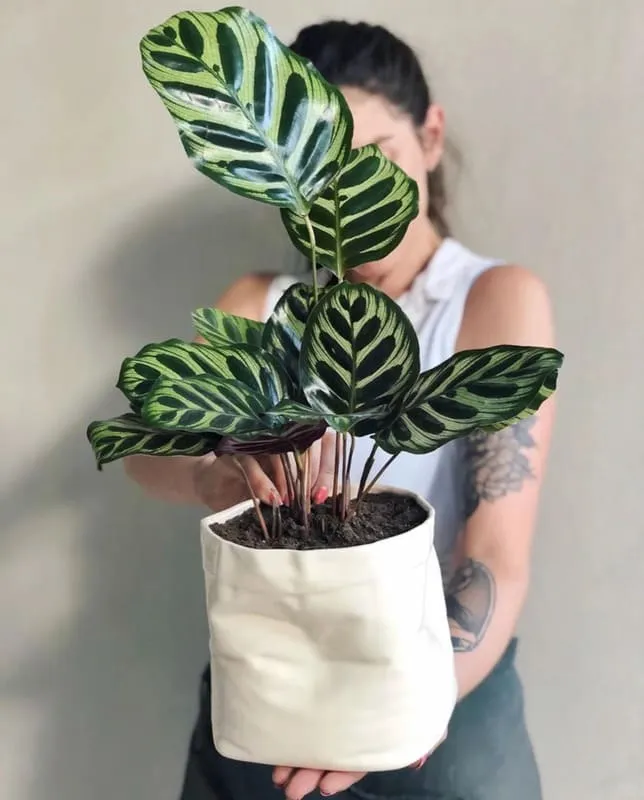
| Makoyana | Oval, thin-textured | Peacock-like feather pattern | Light green with dark markings | Purple with mirrored pattern | Medallion |
| Medallion | Broad oval to round | Dark outer band with lighter center | Medium green, dark green, and silver-green contrast | Deep purple | Makoyana, Dottie |
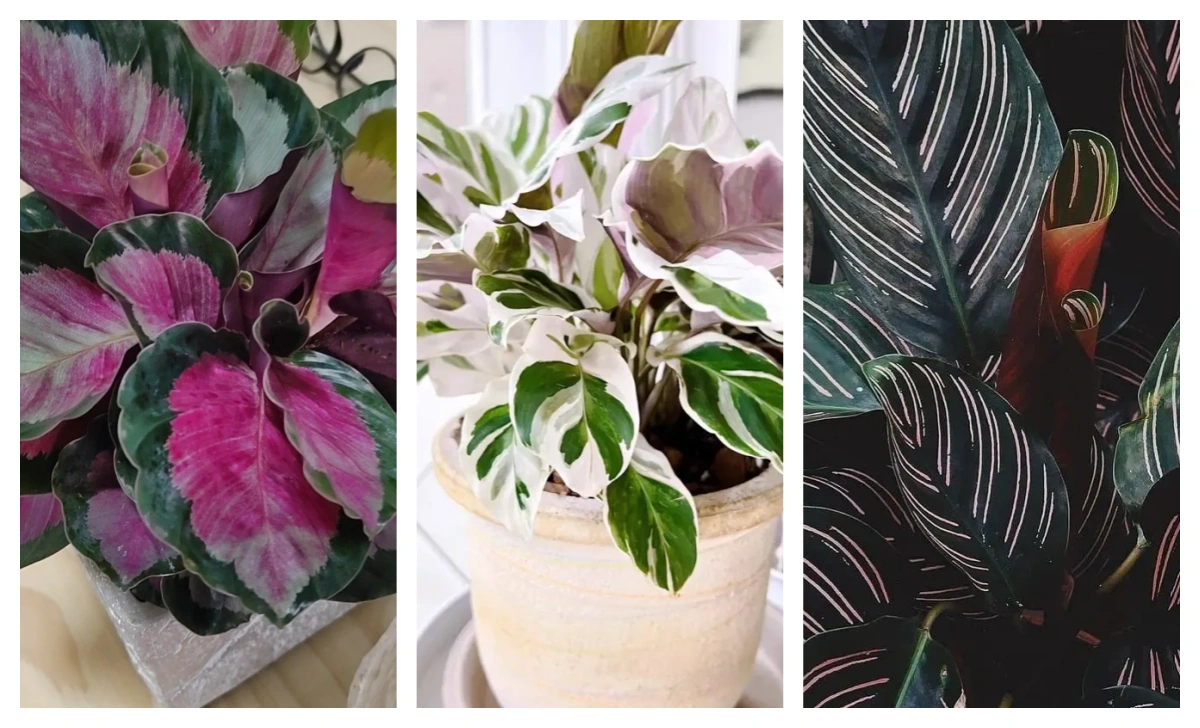
| Dottie | Round to oval | Dark leaf with pink ring or pink feathering | Very dark green to nearly black | Purple | Medallion |
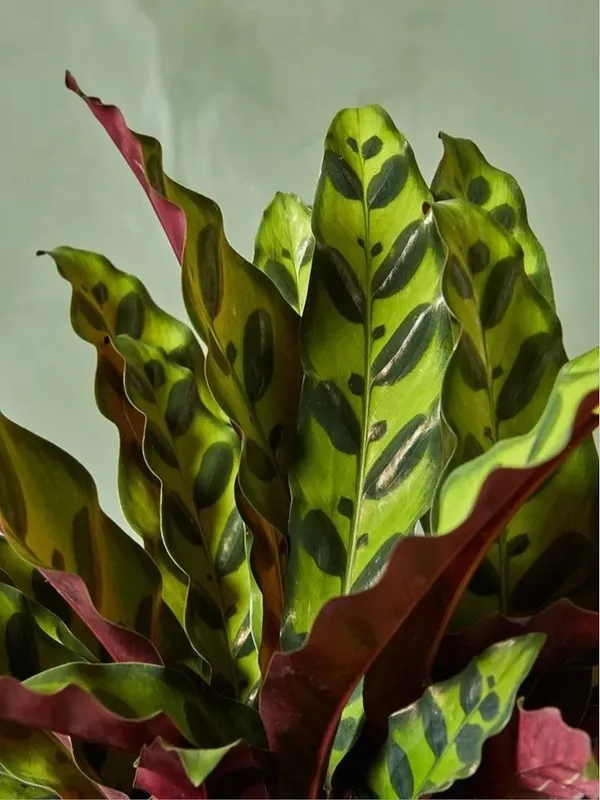
| Rattlesnake (Lancifolia) | Long, narrow, wavy | Dark oval blotches along the leaf | Light green with dark green markings | Deep purple | Zebrina |
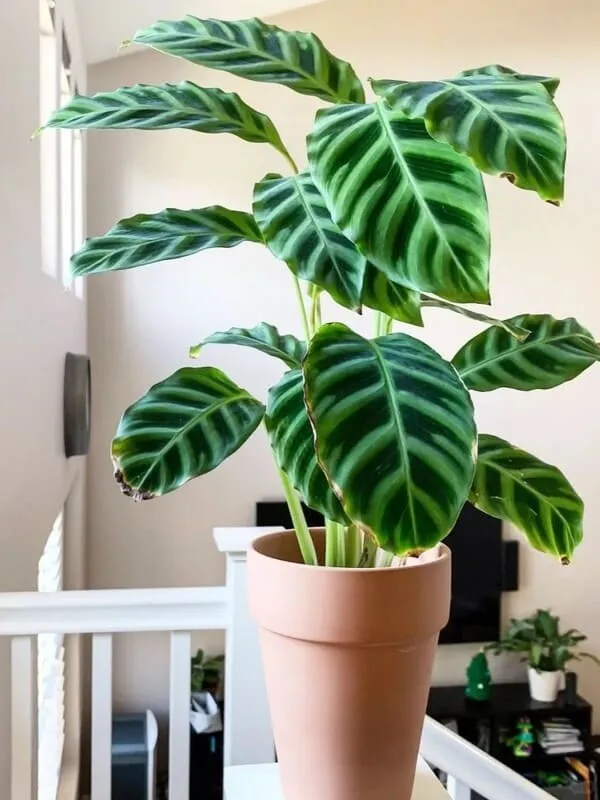
| Zebrina | Long, broad, velvety | Bold zebra-like stripes | Bright to medium green with dark brush strokes | Purple | Rattlesnake, sometimes Warscewiczii |
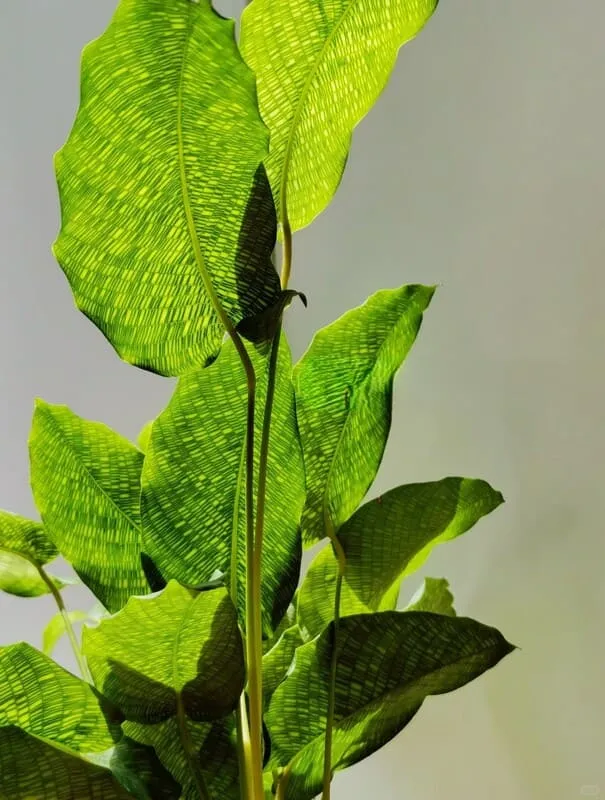
| Musaica | Oval | Fine network or mosaic pattern | Bright green with lime grid pattern | Light green | Rarely confused once mature |
If you only compare one feature first, compare leaf shape before color. Shape usually narrows the options down much faster than stripe tone, which can look different depending on age, lighting, and photo quality.
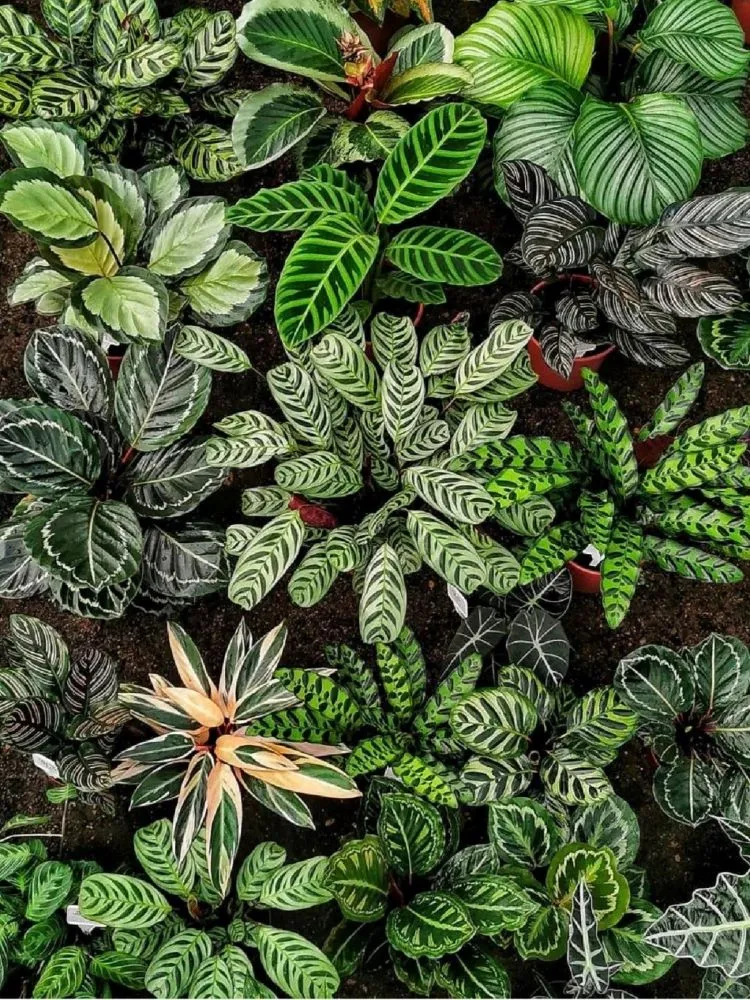
That chart gives you a quick starting point, but some calathea still look similar at first glance. The easiest way to narrow them down is to group them by leaf shape and pattern style before comparing the closest lookalikes side by side.
How I Group Calathea Varieties Before Identifying Them
When I am trying to identify a calathea, I do not start by memorizing names. I start by narrowing the plant down into a visual group first. In practice, I usually group it by leaf shape, then pattern style, and only after that do I compare the closest lookalikes.
Start with leaf shape
Leaf shape is usually the fastest way to reduce confusion. Some calathea have long, narrow leaves, like Rattlesnake, Ornata, Beauty Star, or Vittata. Others have broader oval leaves, which is where varieties like Makoyana, Medallion, and Dottie begin to overlap. Then there are the larger, rounder types such as Orbifolia and Fasciata, which often stand out before you even study the markings closely.
Look at the pattern style
After leaf shape, I look at the pattern family. Some calathea have thin pinstripes, like Ornata or Vittata. Others have broader brushstroke-style bands, like Orbifolia or Zebrina. Musaica is easy to separate once mature because the fine network pattern looks completely different from the rest. The darker roseopicta types are usually easier to read by their medallion-like center, dark border, or pink ring than by any single stripe.
Check the overall contrast, not just one stripe
With some calathea, especially in the roseopicta group, identification is less about one line and more about the overall visual balance of the leaf. Dottie reads darker and more dramatic, Medallion looks more layered, and Makoyana feels lighter and more airy across the whole surface. I also keep age and growing conditions in mind, because younger plants often show weaker contrast and less distinctive shape than mature ones.
6 Calathea Comparisons That Make Identification Easier
Some calathea are easy to recognize right away, but others are much easier to confuse, especially when they are sold young or labeled loosely. These are the pairs I think people mix up most often, and the visual clues I usually use to separate them.
White Star vs Vittata
What they have in common:
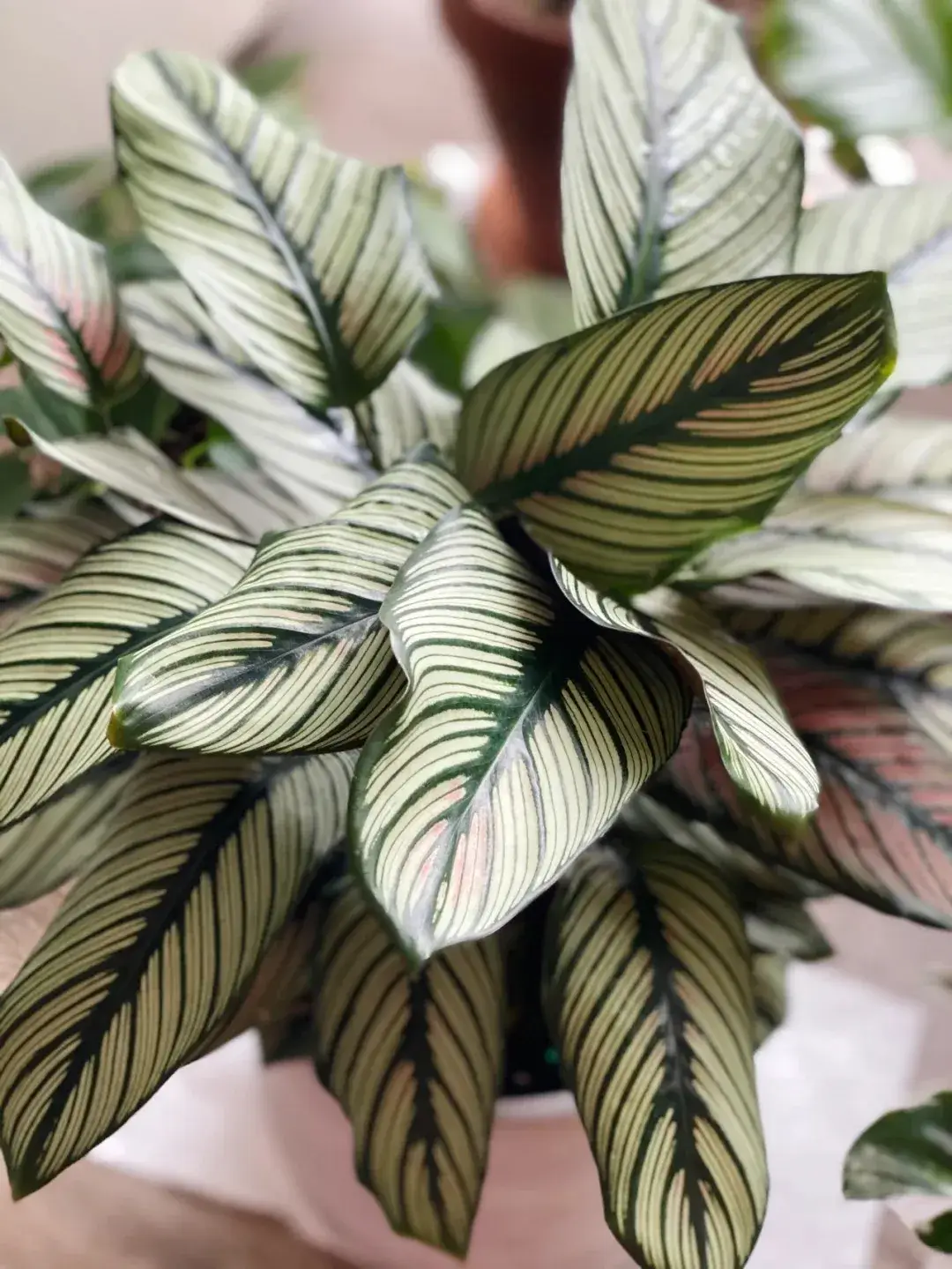
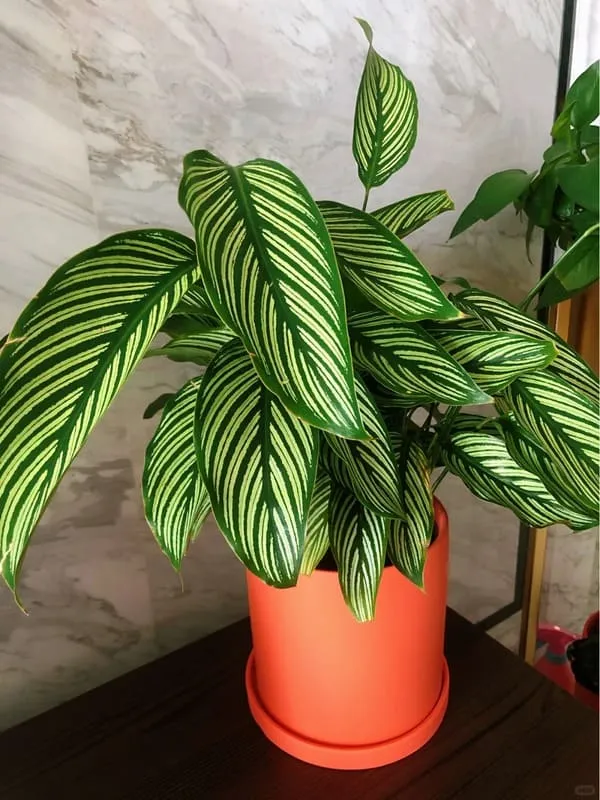
Both have elongated leaves with light striping running lengthwise, and both are often sold as elegant white-striped calathea. At a glance, they can look similar enough that many buyers assume they are the same plant under two different names.
How I tell them apart:
Calathea White Star usually looks bolder overall. The striping tends to appear broader, creamier, and more dramatic across the leaf surface. Vittata usually looks cleaner and lighter, with narrower white lines and a more delicate overall pattern. When I compare them side by side, White Star tends to feel more contrast-heavy, while Vittata feels finer and more restrained.
What sellers often get wrong:
These two are commonly blurred together in listings, especially when sellers use broad names like “white calathea” or “striped calathea.” White Star is more likely to be sold simply as Vittata than the other way around, especially when the plant is still small.
Ornata vs Beauty Star
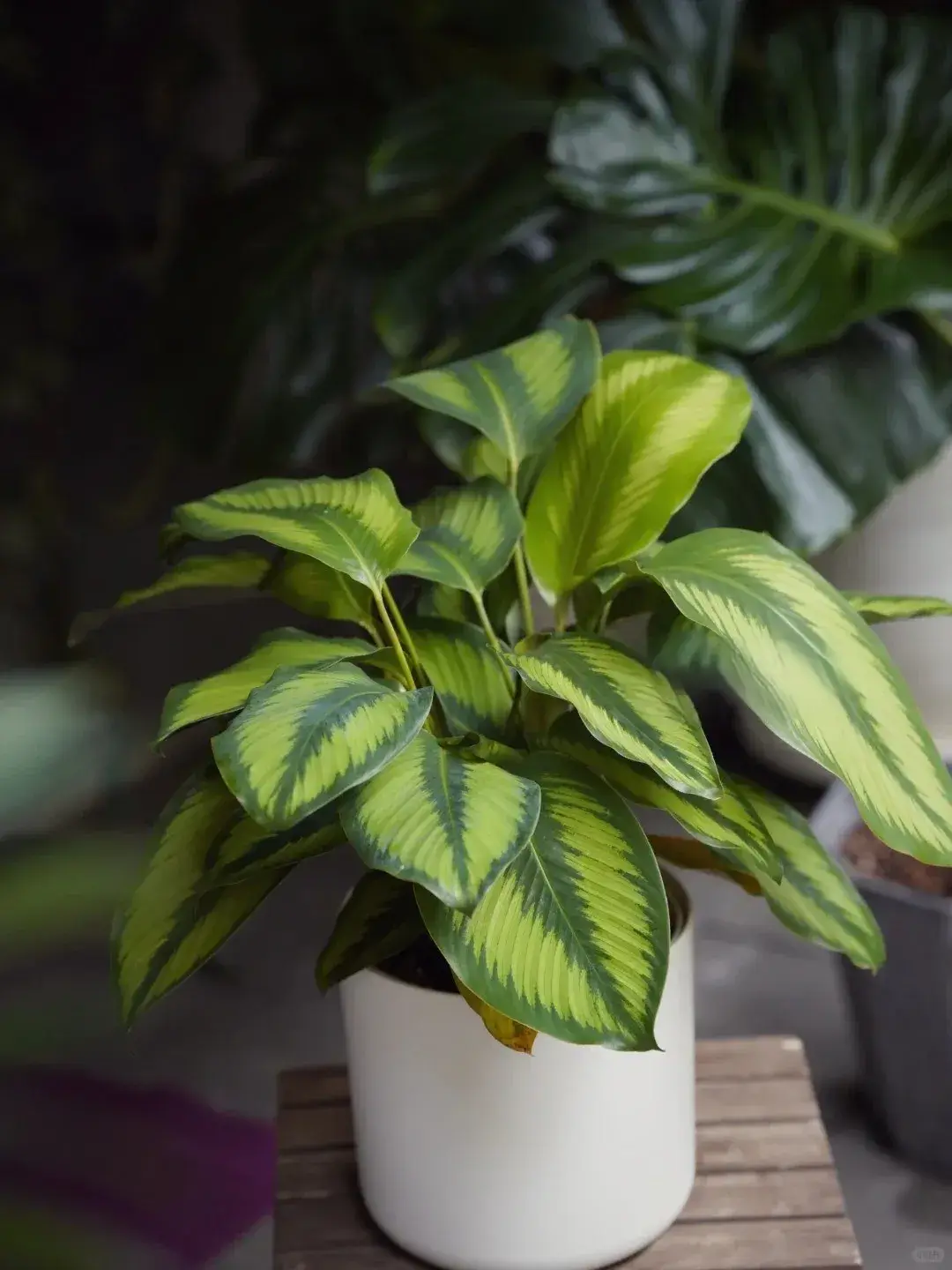
What they have in common:
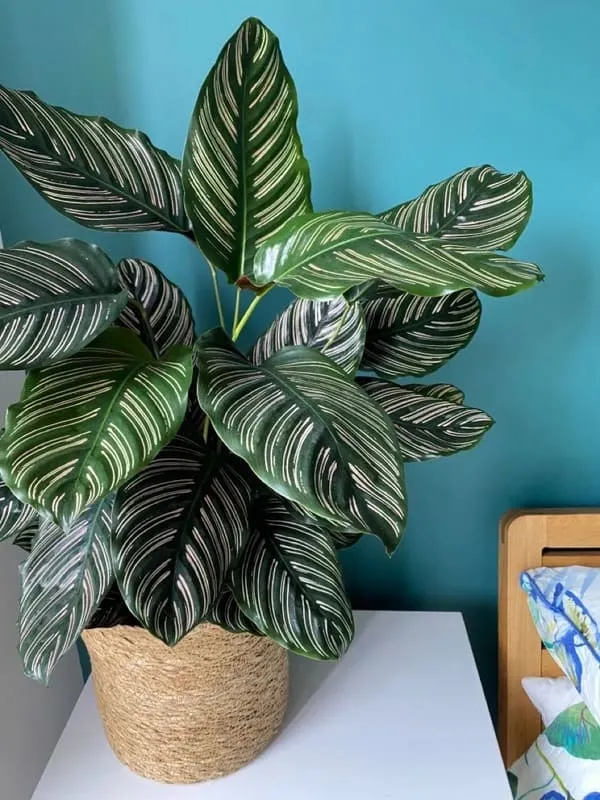
Both belong to the long-leaf, pinstripe-looking group, and both are often recognized by linear pale markings over a darker green background. If someone only remembers “the one with stripes,” these are easy to mix up.
How I tell them apart:
Ornata usually has finer, cleaner, more distinctly pinstripe-like lines, often with a pinkish cast. Beauty Star usually looks brighter and more feathered, with lighter green striping that blends into the leaf more softly instead of reading as neat, narrow lines. If Ornata looks more polished and pinstriped, Beauty Star usually looks more brushed and luminous.
What sellers often get wrong:
Many sellers use “pinstripe calathea” loosely, which makes these two harder to separate in listings. Beauty Star is especially likely to be grouped under Ornata-style naming even when the pattern is not truly the same.
Orbifolia vs Fasciata
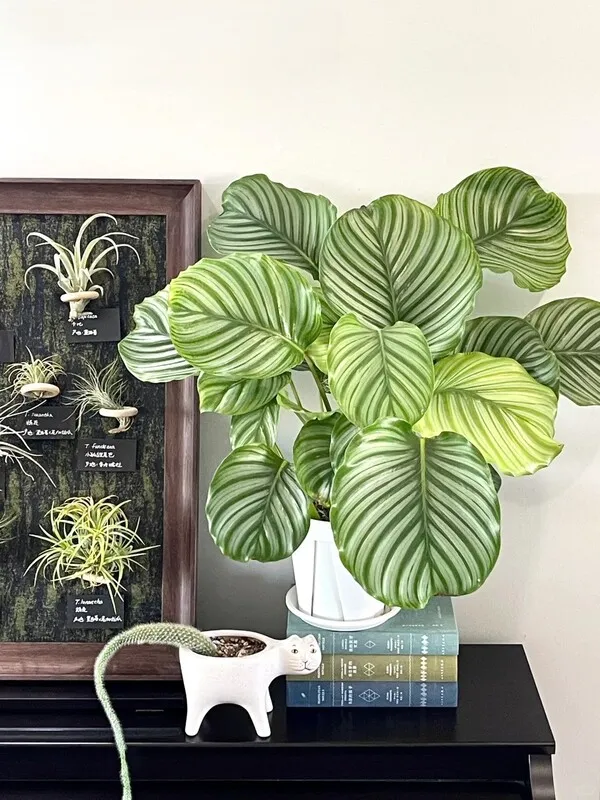
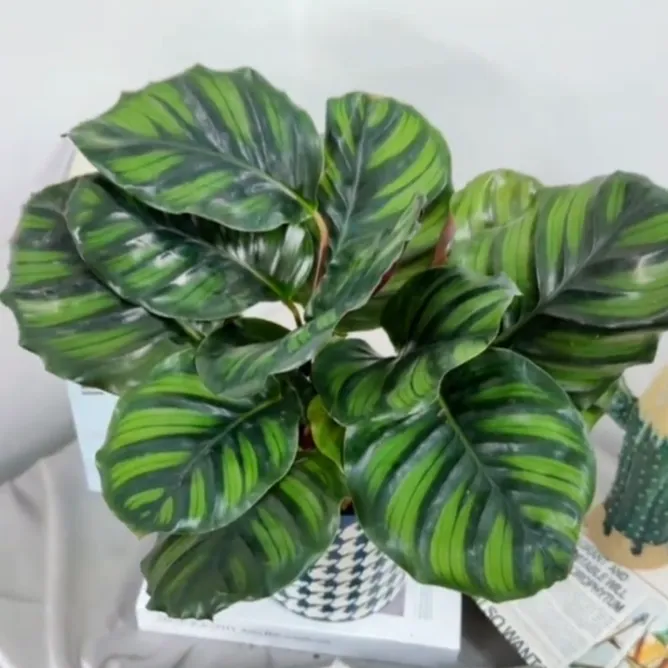
What they have in common:
Both are broad-leaf calathea with soft banding and a rounded, elegant look. They are often grouped together by people who just remember “the big round silver-striped one.”
How I tell them apart:
Calathea Orbifolia usually looks wider, softer, and more obviously silver-banded from a distance. Calathea Fasciata tends to have a denser feel, with broader rounded leaves and a deeper green-gray contrast rather than that airy silver look Orbifolia is known for. Orbifolia feels more open and pale overall; Fasciata usually feels heavier and more layered in tone.
What sellers often get wrong:
Because both are large and round-leaved, they are often confused in photo-based listings, especially when the image quality is poor or the plant is still immature. Orbifolia is generally the more recognized name, so Fasciata may get mislabeled under it more often.
Makoyana vs Medallion
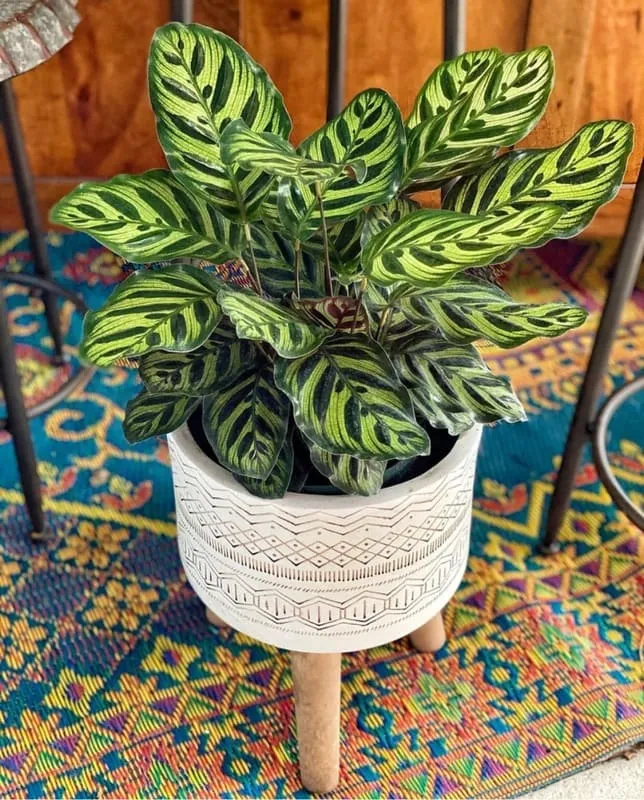
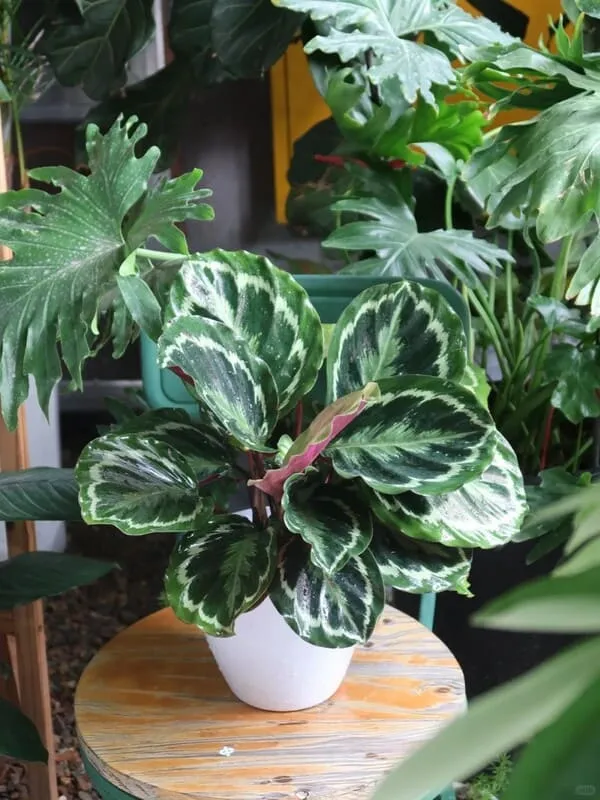
What they have in common:
Both are patterned calathea with strong leaf markings and purple undersides, and both are often recommended as decorative “statement” varieties. If someone remembers only that the leaves are patterned and dramatic, these two can blur together.
How I tell them apart:
Calathea Makoyana usually looks lighter, thinner, and more airy, with a peacock-like pattern spread across the leaf. Calathea Medallion usually looks broader, darker, and more centered in its contrast, with a more obvious darker border and a fuller, heavier leaf presence. Makoyana reads as intricate and layered; Medallion reads as bolder and more solid.
What sellers often get wrong:
Makoyana sometimes gets grouped into the broader “peacock” category, while Medallion gets used as a catch-all for patterned calathea with rounded leaves. That makes overlap common in casual plant labeling, even though the overall look is quite different once you know what to watch for.
Medallion vs Dottie
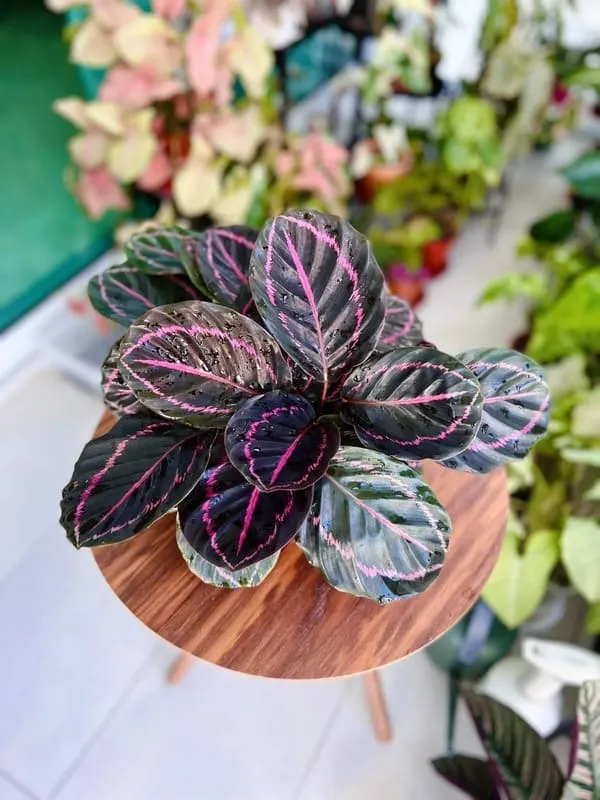
What they have in common:
Both belong to the roseopicta-type group and usually have rounded leaves, dark tones, and purple undersides. Their overall leaf shape can feel similar enough that beginners often assume Dottie is just a darker Medallion.
How I tell them apart:
Medallion usually shows a more mixed leaf surface, with lighter green or silvery tones toward the center and a darker surrounding pattern. Dottie usually reads much darker overall, often with a stronger pink ring or pink feathering that stands out against a nearly black-green background. If Medallion feels layered, Dottie feels dramatic and high-contrast.
What sellers often get wrong:
Because both are round-leaf and dark-toned, they are often grouped together by sellers who focus more on general appearance than exact cultivar identity. Dottie is usually easier to recognize once the pink contrast is strong, but younger plants can still confuse buyers.
Rattlesnake vs Zebrina
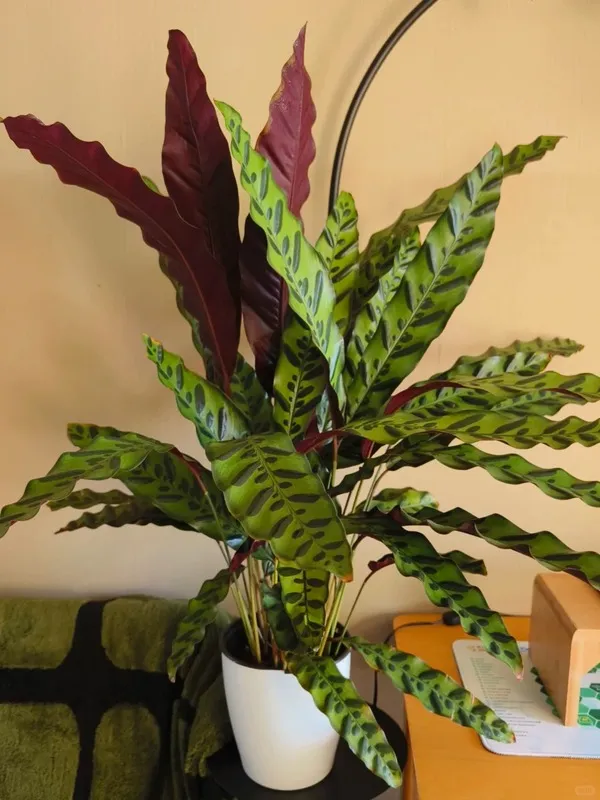
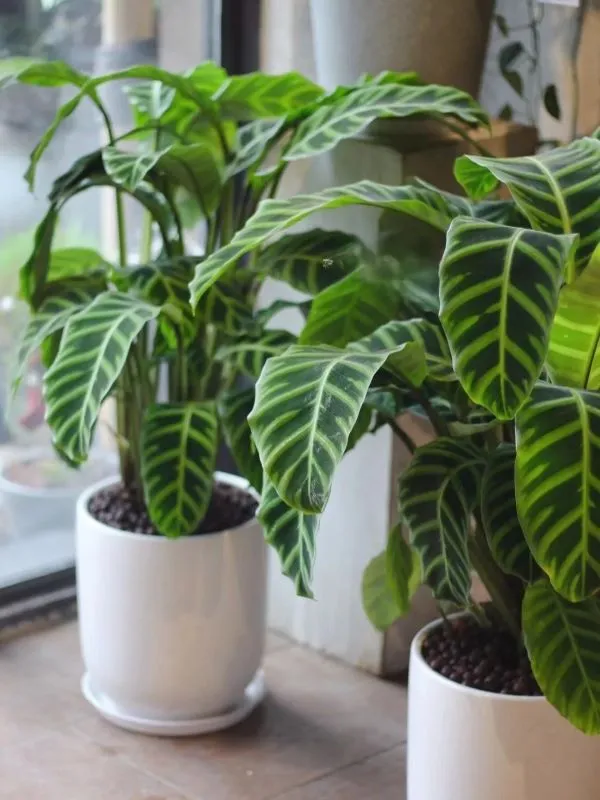
What they have in common:
Both have strong patterned foliage and both are memorable enough that people often recall them as “the striped one.” They also both stand out more than many softer-patterned calathea varieties.
How I tell them apart:
Rattlesnake calathea has much narrower, longer, wavier leaves with dark oval blotches that run along the center. Zebrina is broader and more velvety, with bold brush-like striping that looks more like zebra bands than spots. Rattlesnake feels lean and wavy; Zebrina feels wide, lush, and plush-textured.
What sellers often get wrong:
These two are not mislabeled as often as some of the other pairs, but beginners still confuse them because both have strong pattern contrast. In casual conversation, people may describe both simply as striped calathea, which hides how different the leaf shape actually is.
Why Calathea Identification Gets Confusing So Easily
Even when you know what features to look for, calathea identification can still be messy. A lot of the confusion comes from the way these plants are sold, labeled, and photographed rather than from the leaves themselves.
Many sellers still use older or inconsistent names
Many plants now classified under Goeppertia are still widely sold as Calathea, and cultivar names are not always used consistently. A familiar name often gets reused loosely, especially for striped or patterned types, which means different plants may end up sold under similar labels.
Juvenile leaves often look different from mature leaves
Young calathea are much easier to misread than mature ones. Smaller leaves often show weaker contrast, less distinctive patterning, and less obvious shape differences, so a young plant may point you in the right direction without showing its clearest identifying features yet.
Light and growing conditions can change the look
Lower light can make markings look flatter and leaf size smaller, while better light often makes the pattern clearer and the leaf shape fuller. Stress, slow growth, or recovery can also make a plant look less typical than shop photos or mature online examples.
Some plants are sold under broad names like “pinstripe calathea”
Broad labels like “pinstripe calathea,” “peacock plant,” or “striped calathea” may be useful for casual selling, but they are rarely precise enough for real identification. That is why I usually trust the leaf shape, pattern style, contrast, and underside more than the market label on the tag.
The Easiest Calathea Varieties to Identify at a Glance
Not every calathea is difficult to identify. Some varieties have such strong visual signatures that once you have seen them a few times, they become much easier to recognize without second-guessing every detail. These are the four I think stand out most clearly at a glance.
Musaica
Calathea Musaica is one of the easiest to identify because almost nothing else in the group has that same netted, mosaic-like pattern. The leaf surface looks gridded rather than striped, with a fine lime-green network spread evenly across the leaf. Once mature, it is usually the least confusing variety on the list.
Rattlesnake (Lancifolia)
Rattlesnake Calathea stands out because of its long, narrow, wavy leaves and its row of dark blotches running down the center. Even people who do not know the exact name often remember it as the one that looks more dramatic and “wild” than the rest. The leaf shape alone usually narrows it down very quickly.
Zebrina
Calathea Zebrina is usually easy to recognize once the leaves mature. It has broad, velvety foliage with bold dark green striping that looks more like painted zebra bands than pinstripes or spots. Compared with narrower-leaf varieties, Zebrina tends to look fuller, softer, and much more plush in texture.
Dottie
Calathea Dottie is another one that becomes easy once you know its overall look. The leaves are much darker than most other common calathea, often reading as deep green or almost black, with a pink ring or pink feathering that stands out clearly. It is not the kind of plant that usually disappears into the background of a mixed plant shelf.
If there is one thing I have learned from trying to identify calathea over time, it is that the process gets easier once you stop chasing the exact name too early. I find it much more reliable to group the plant first by shape, pattern, and overall contrast, then compare it to the closest likely match. The label might help, but the visual structure usually tells the more honest story.
And if you still cannot tell two varieties apart with full confidence, that usually does not mean you failed. Calathea naming is messy, young plants can be misleading, and sellers are not always precise. The goal is not to memorize every cultivar at once. The goal is to get good at reading the plant in front of you.
FAQ
Explore More Calathea Varieties
Looking to discover more beautiful Calathea plants?
Browse our full collection of Calathea varieties — from the bold Orbifolia to the velvety Warscewiczii — and find the one that fits your home best.