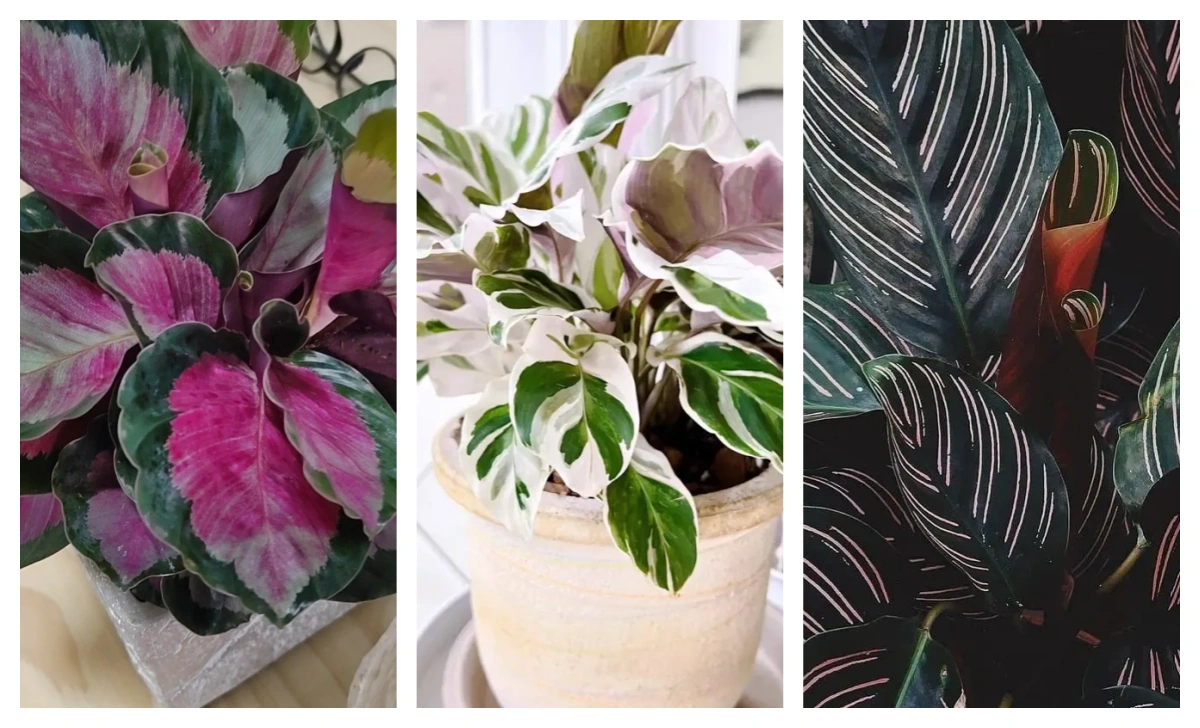
Yellowing leaves and brown, crispy tips are some of the most common problems Calathea owners face. Seeing those beautiful patterned leaves lose their shine can feel alarming, but don’t panic—it usually doesn’t mean your plant is dying.
In most cases, these changes are simply signals from the plant that something in its environment or care routine needs adjusting—whether it’s water, light, humidity, or fertilizer.
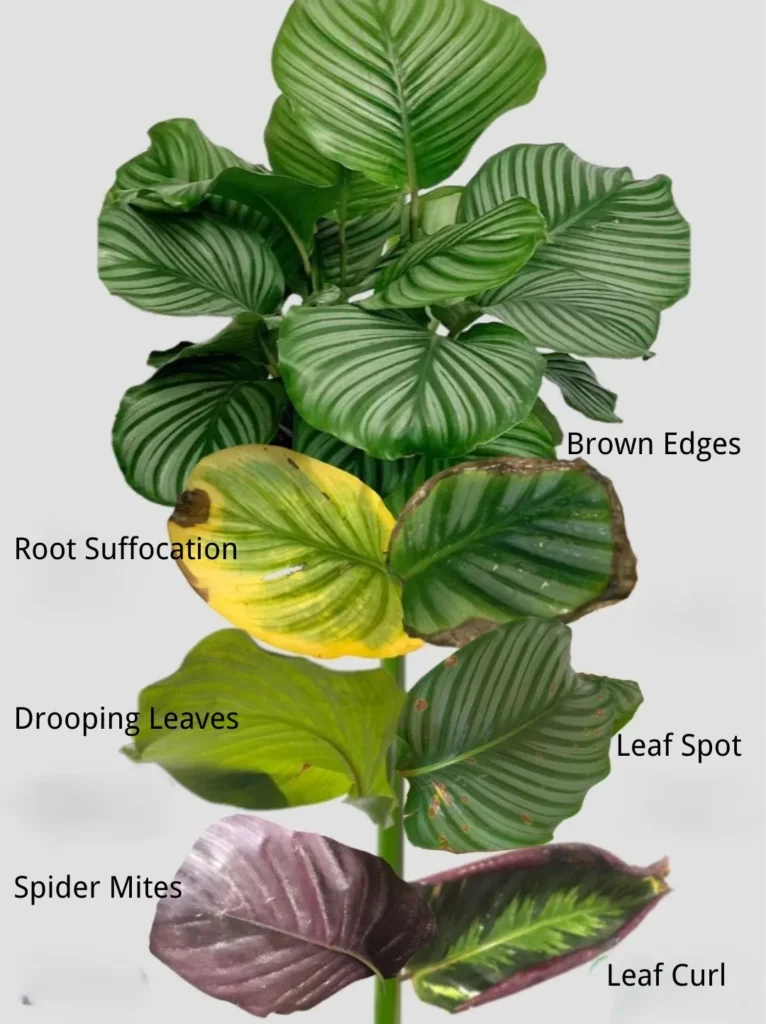
In this guide, we’ll walk through the most common causes of yellow or brown Calathea leaves and give you practical fixes to bring your plant back to health.
Quick Diagnosis Table (at-a-glance)
| Symptom | Likely Cause | Quick Fix |
|---|---|---|
| Entire leaf turning yellow | Overwatering or poor drainage | Let soil dry between waterings; check pot drainage; repot if roots are mushy |
| Yellow edges only | Nutrient deficiency (esp. nitrogen, magnesium) | Apply a balanced, diluted fertilizer; check soil pH |
| Leaf tips turning brown & crispy | Low humidity or underwatering | Leaf tips turning brown & crispyLow humidity or underwateringIncrease humidity with a humidifier, pebble tray, or plant grouping; adjust watering |
| Brown spots with yellow halo | Fungal/bacterial leaf spot | Remove affected leaves, improve airflow, avoid overhead watering. See more in our Calathea problems guide |
| Lower/older leaves yellowing first | Natural aging | Normal process—trim off old leaves, no action needed |
| Leaves scorched yellow-brown patches | Too much direct sunlight | Move plant to bright, indirect light |
💡 Tip: Use this table as a first step in diagnosis, then check the detailed sections below for specific fixes.
Causes of Yellow Leaves
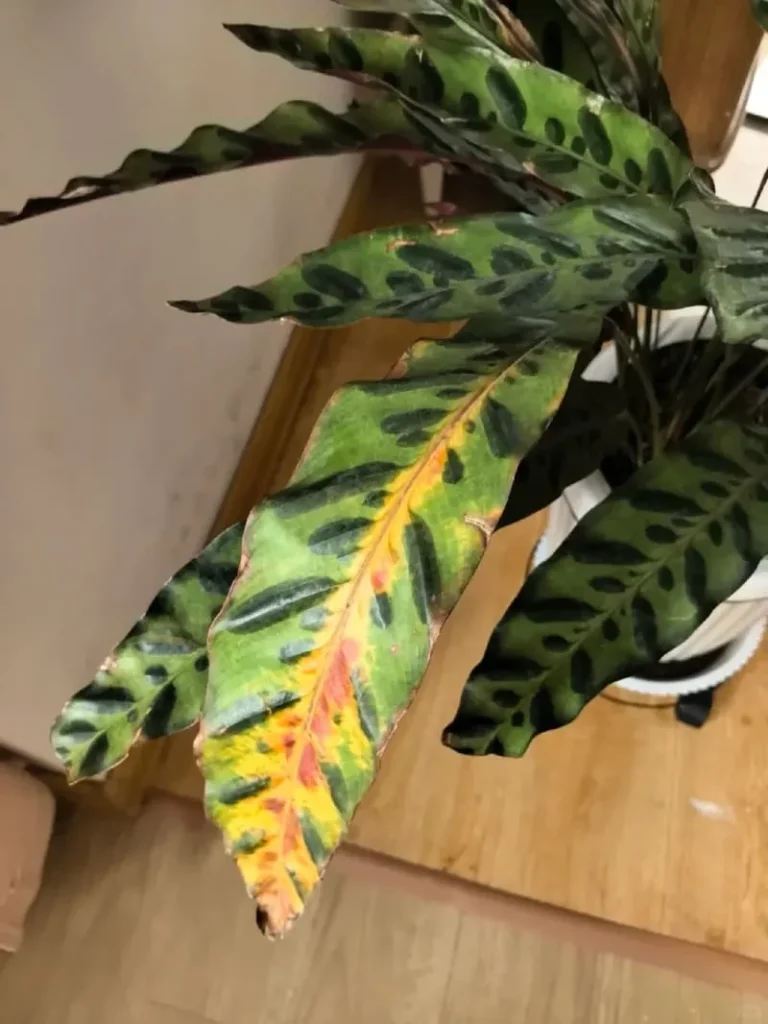
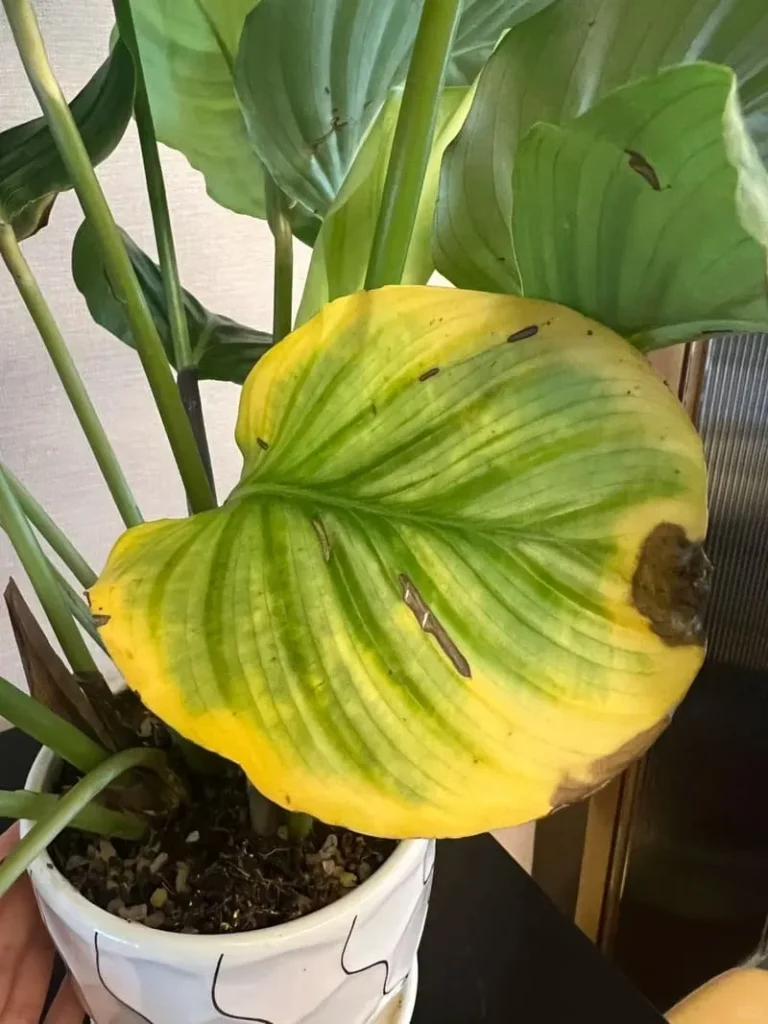
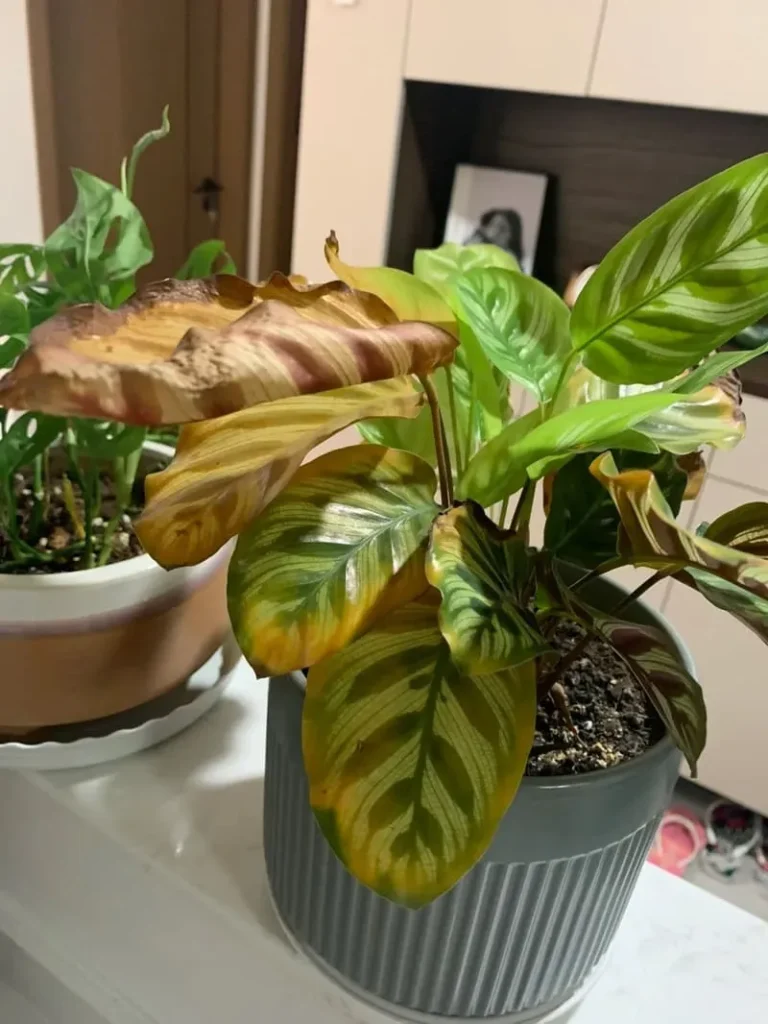
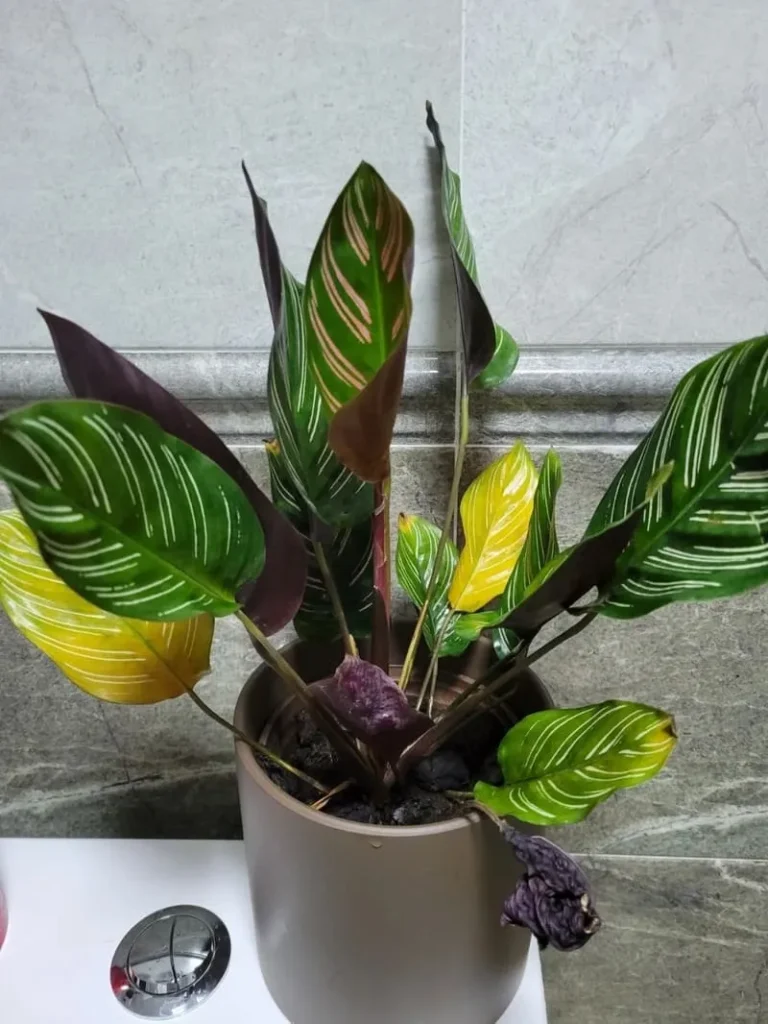
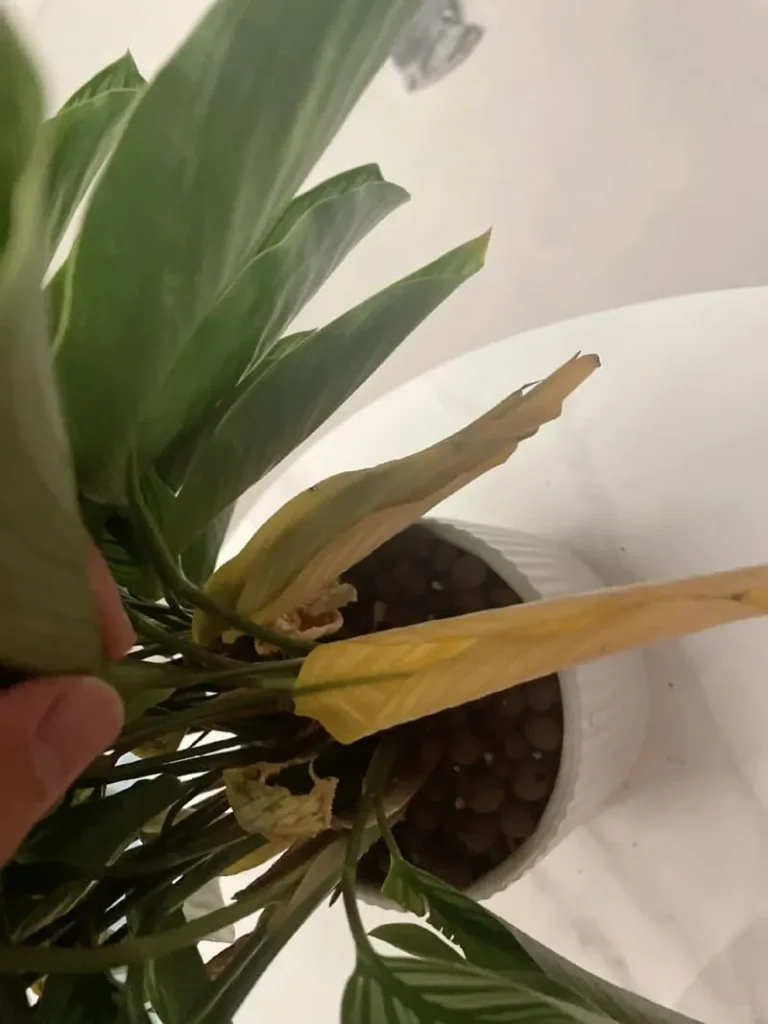


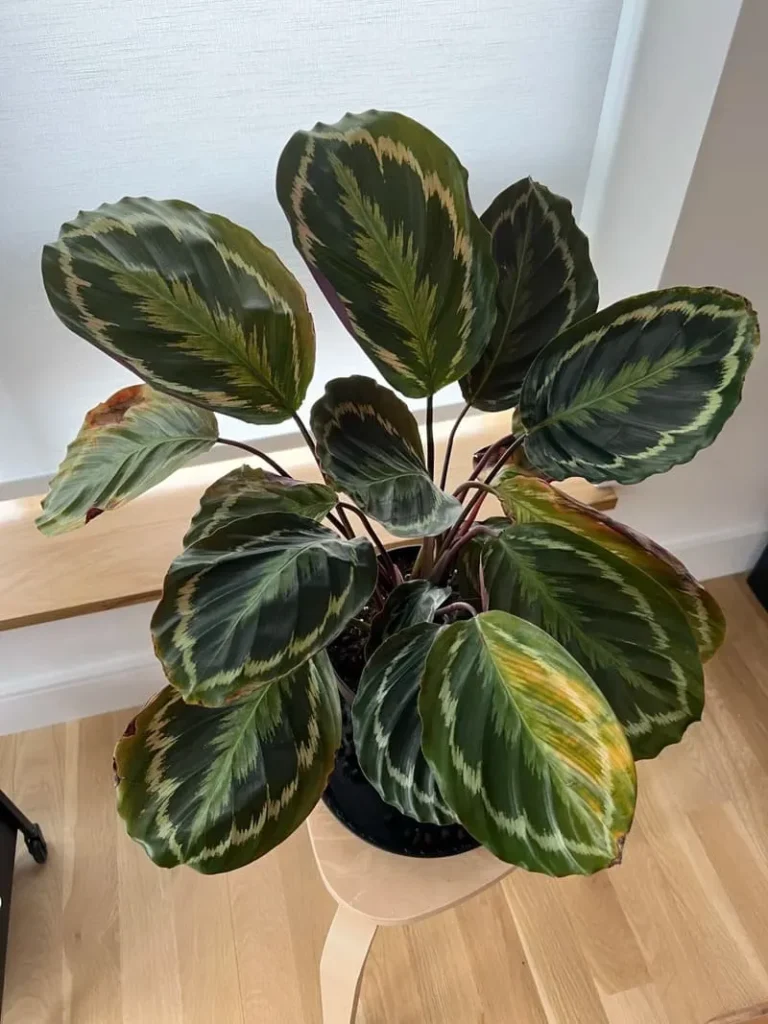
Yellow leaves on a Calathea can look worrying, but the cause is usually traceable. Here are the most common reasons:
1. Overwatering & Root Rot
- Signs: Leaves start yellowing from the base, soil stays soggy, and you may notice a musty smell. If roots feel soft or black, check our root rot guide.
- Why it happens: Calathea roots suffocate if the soil is too wet for too long, leading to rot.
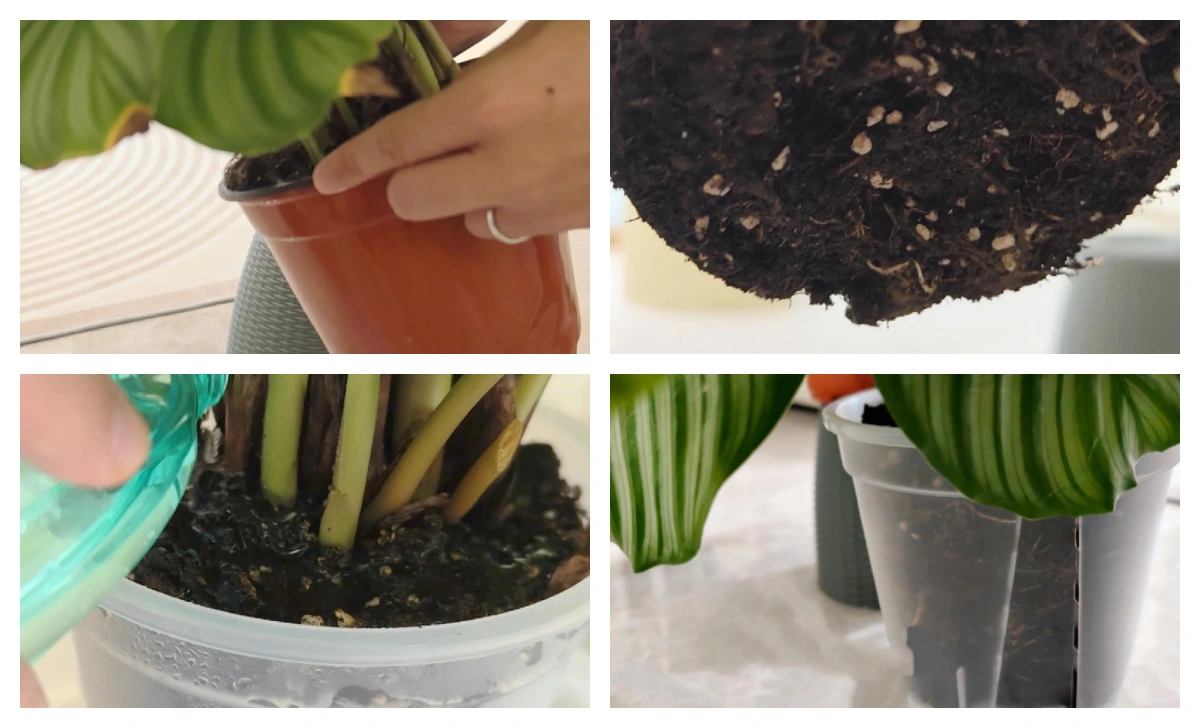
- Fix: Repot if roots feel soft or mushy, trim off rotten parts, and refresh the soil with a well-draining mix. Going forward, only water when the top 2 knuckles of soil feel dry.
If the soil keeps staying wet or smells musty, the problem may be the whole potting setup, not just your watering. I would check both the mix and the container: see my guide to store-bought soil for Calathea and my guide to the best pots for Calathea.
2. Nutrient Deficiency
- Signs: Leaves look pale, stripes fade, and new growth is weaker than usual.
- Why it happens: Without enough nitrogen, magnesium, or other nutrients, the plant cannot produce vibrant foliage.
- Fix: Feed with a diluted foliage fertilizer every 2–4 weeks during the growing season, and make sure the soil pH is slightly acidic (~6.0) so nutrients aren’t locked out.
3. Lighting Issues
- Too little light: Leaves gradually turn yellow, and new growth looks weak or stretched.
- Too much direct sunlight: Patches of yellow with a scorched or bleached look.
- Fix: Place your Calathea in bright, indirect light—never full sun, but not in deep shade either.
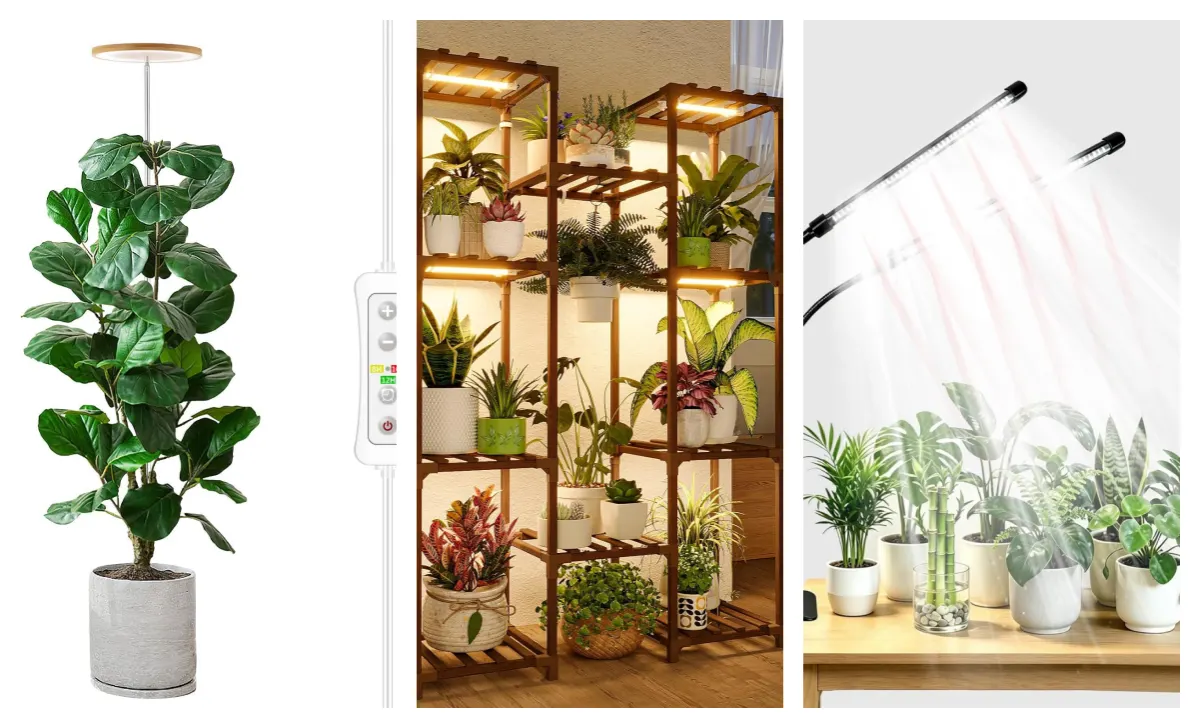
If your room is too dark but direct sun burns the leaves, a gentle grow light setup for Calathea can be safer than moving the plant into harsh window sun.
4. Natural Aging
- Signs: The lowest or oldest leaves turn yellow first while the rest of the plant looks healthy.
- Why it happens: Calathea naturally sheds old leaves to redirect energy to new growth.
- Fix: No treatment is needed—simply trim off the yellowed leaves for a tidier appearance.
💡 Tip: Always check where the yellowing starts (old leaves vs. new growth) and the overall soil condition—this will often reveal whether the issue is natural or a care problem.
Causes of Brown Leaves
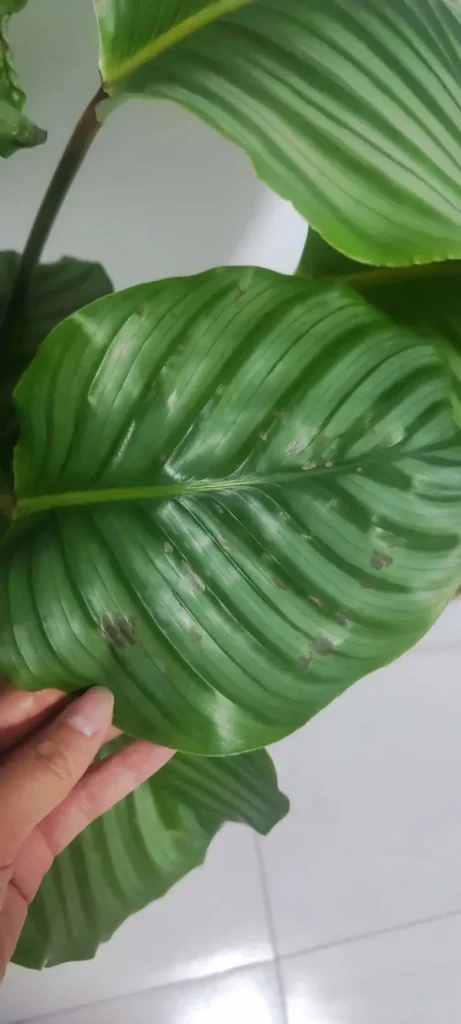
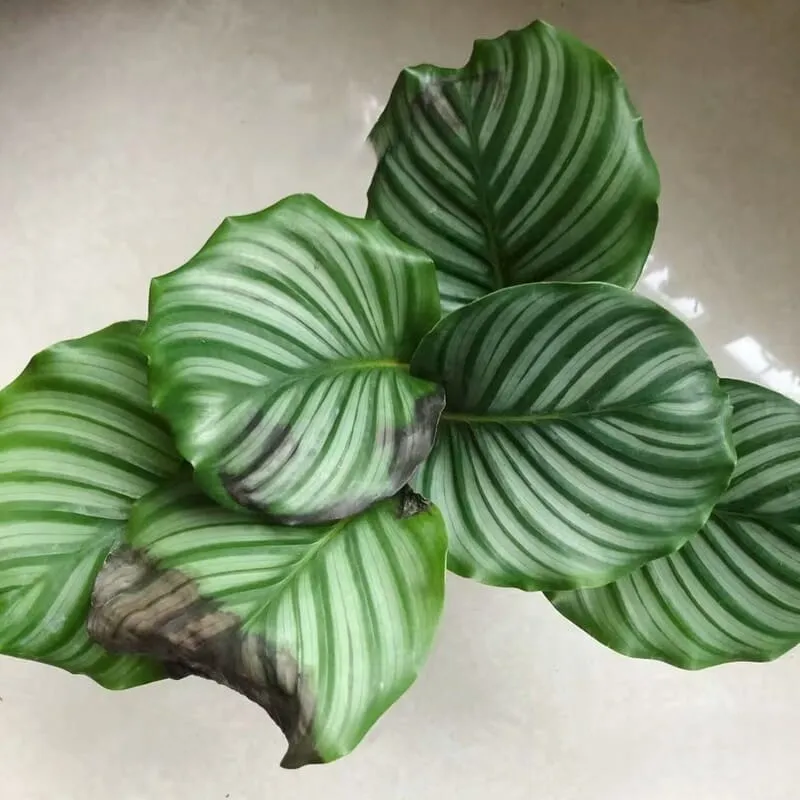
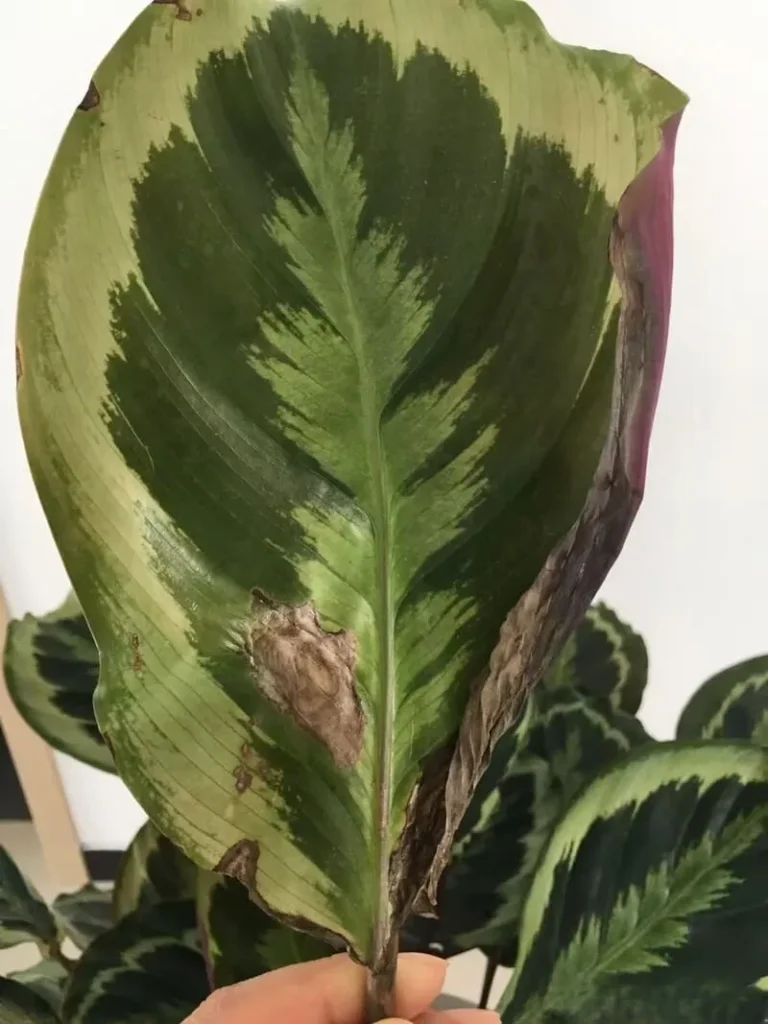
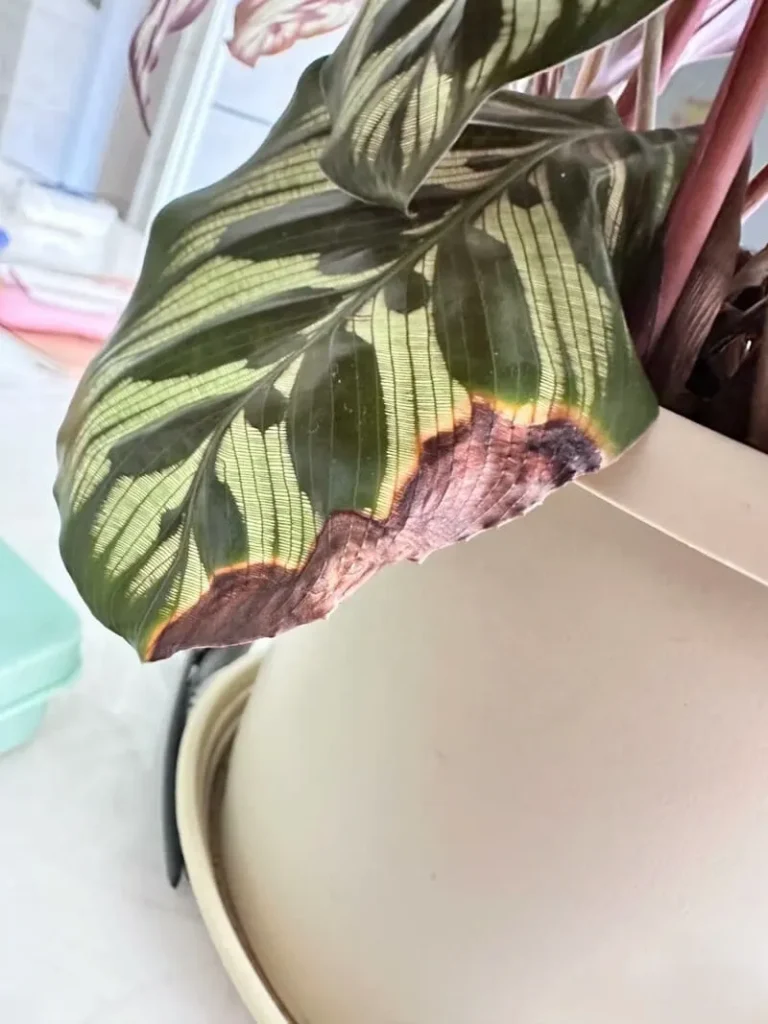
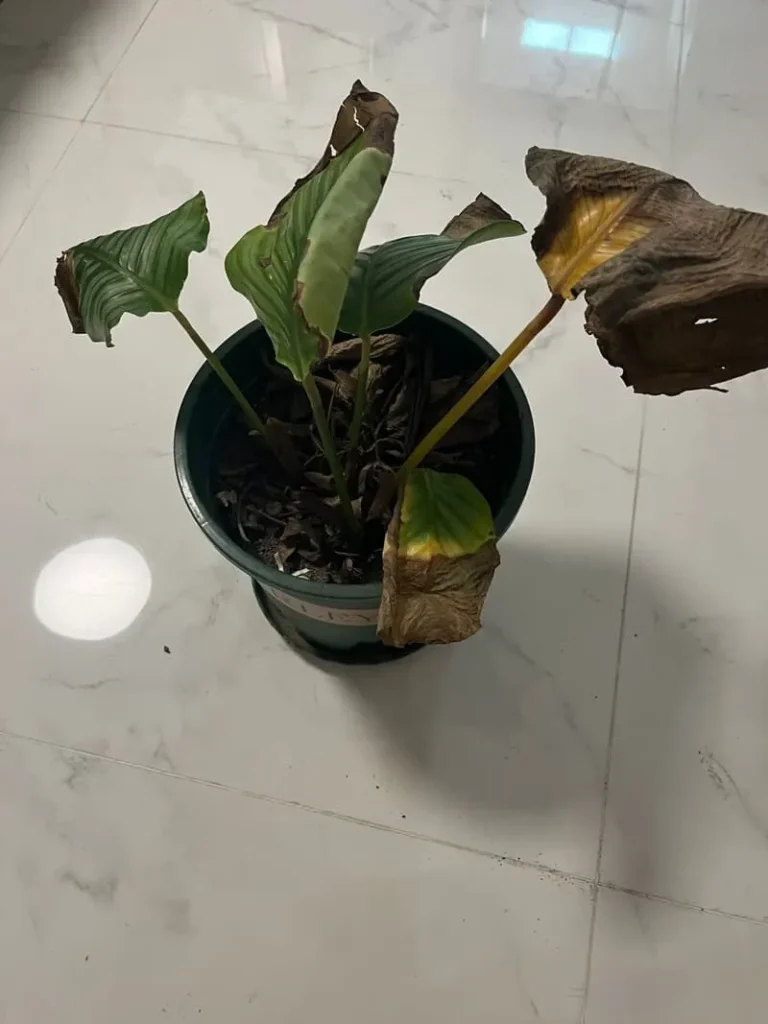
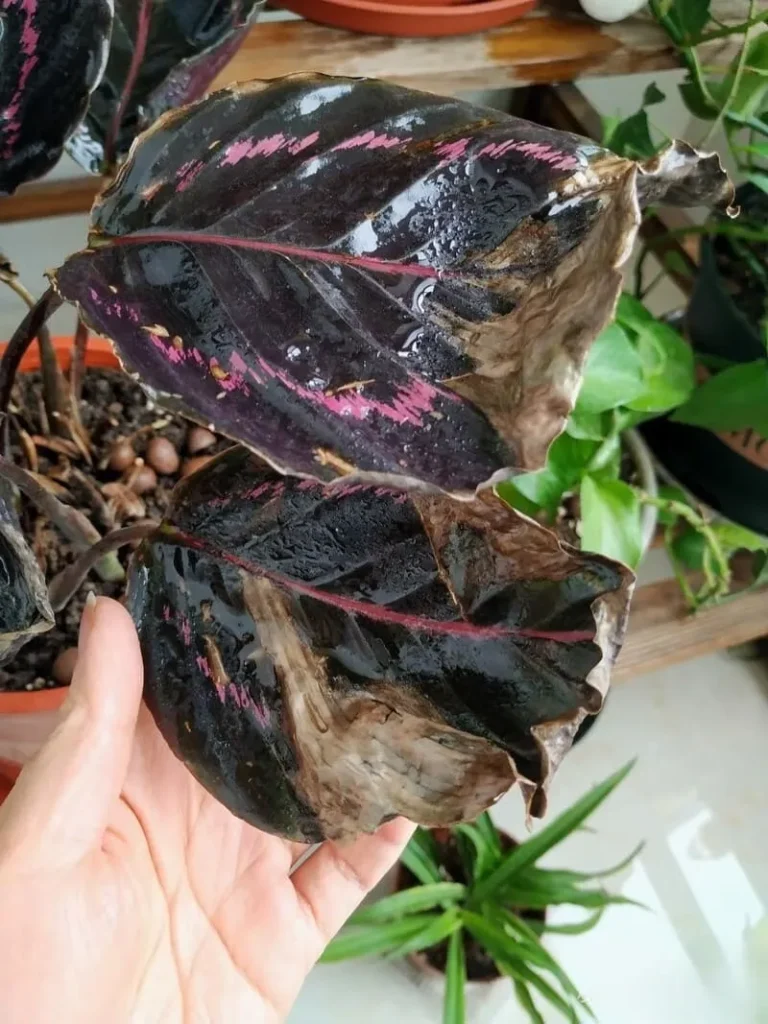
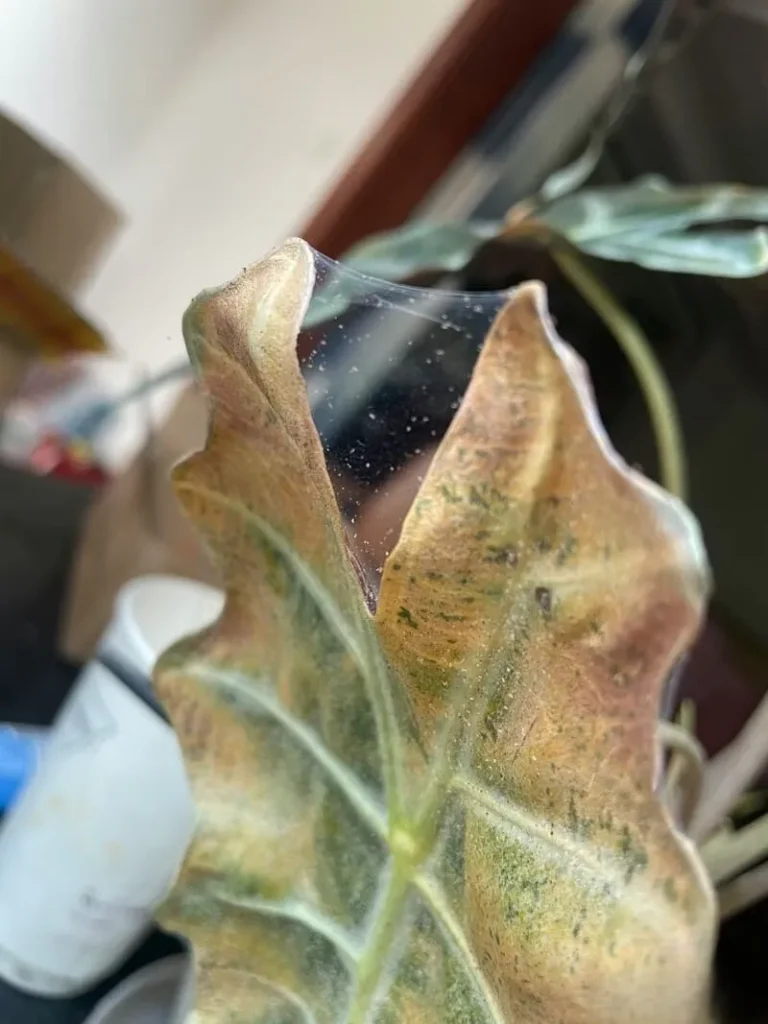
Brown edges or patches are another common issue with Calathea. Unlike yellowing, which often signals watering or nutrient problems, browning usually points to environmental stress or buildup in the soil.
1. Low Humidity
- Signs: Leaf tips turn dry and crispy, even if the soil is moist.
- Why it happens: Calatheas are native to rainforests and thrive in high humidity (50–60% or more). Indoor air—especially with heating or air conditioning—can be too dry.
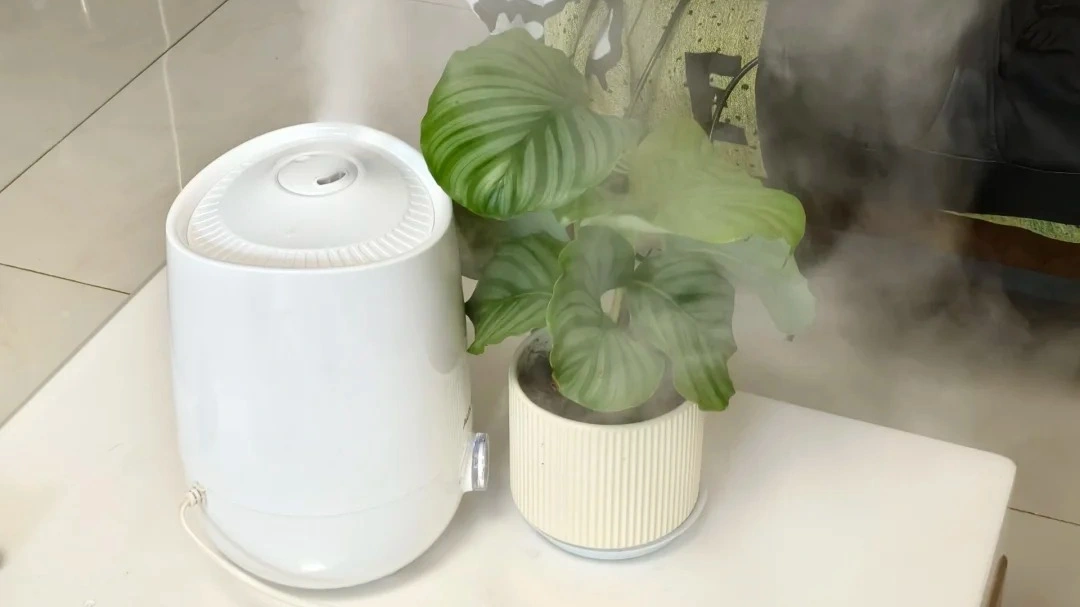
- Fix: Raise humidity with a humidifier, a pebble tray, or by grouping plants together to create a microclimate. More humidity tips in our Calathea care guide.
If your home air stays dry, see my guide on whether Calatheas need a humidifier.
2. Underwatering
- Signs: Leaves curl inward, edges turn brown, and the soil feels bone dry.
- Why it happens: Prolonged dryness stresses the roots, causing the plant to sacrifice leaf edges first.
- Fix: Rehydrate thoroughly with a deep watering, then adjust to a more regular schedule so the soil doesn’t completely dry out—see common watering mistakes.
3. Overfertilization (Salt Buildup)
- Signs: Brown, burnt-looking tips plus a white crust on the soil surface.
- Why it happens: Fertilizer salts accumulate in the soil when feeding is too frequent or too strong.
- Fix: Flush the soil with plain water (leaching) to wash out excess salts. Reduce fertilizer strength to ½ or ¼ of the recommended dose. (see our Calathea fertilizer guide)
4. Pests or Fungal Disease
- Signs: Irregular brown patches or spots that spread from leaf to leaf.
- Why it happens: Pests like spider mites or fungal/bacterial infections can damage tissue and cause browning.
- Fix: Isolate the plant, prune damaged leaves, and treat with neem oil or a fungicide. Improve airflow around the plant to reduce recurrence.
💡 Tip: If browning appears mainly on leaf tips, it’s usually humidity or salts. If it’s in patches, think pests, disease, or sunburn.
Prevention Tips
The best way to handle yellow or brown leaves is to prevent them from happening in the first place. With a few simple habits, you can keep your Calathea looking vibrant year-round:
- Water wisely: Wait until the soil is partly dry before watering again. Never let it stay soggy, as this leads to root rot.
- Keep humidity high: Aim for at least 50–60% humidity. Use a humidifier or group plants together if your home air is dry.
- Dilute fertilizer: Always feed at half or quarter strength. Strong doses can burn sensitive roots.
- Clean the leaves: Wipe them gently with a damp cloth to remove dust and discourage pests.
- Watch new growth: Healthy new leaves mean your care routine is working—even if older leaves show some damage.
💡 Tip: Focus on consistency. Calathea doesn’t like sudden changes in water, light, or feeding. A stable environment prevents most common leaf issues.
FAQ
Still worried about your plant?
👉 For more tips on keeping your plant healthy, explore our Complete Calathea Care Guide.
Explore All Problems →