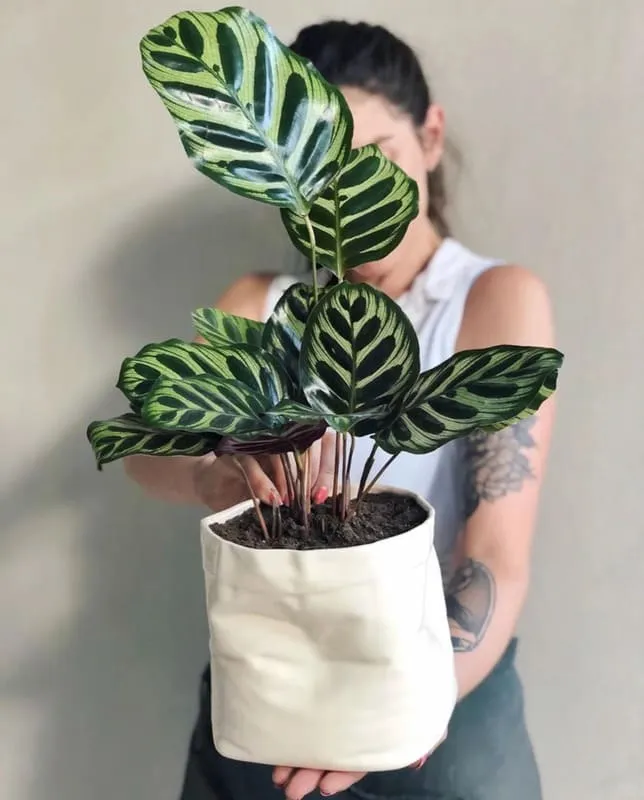
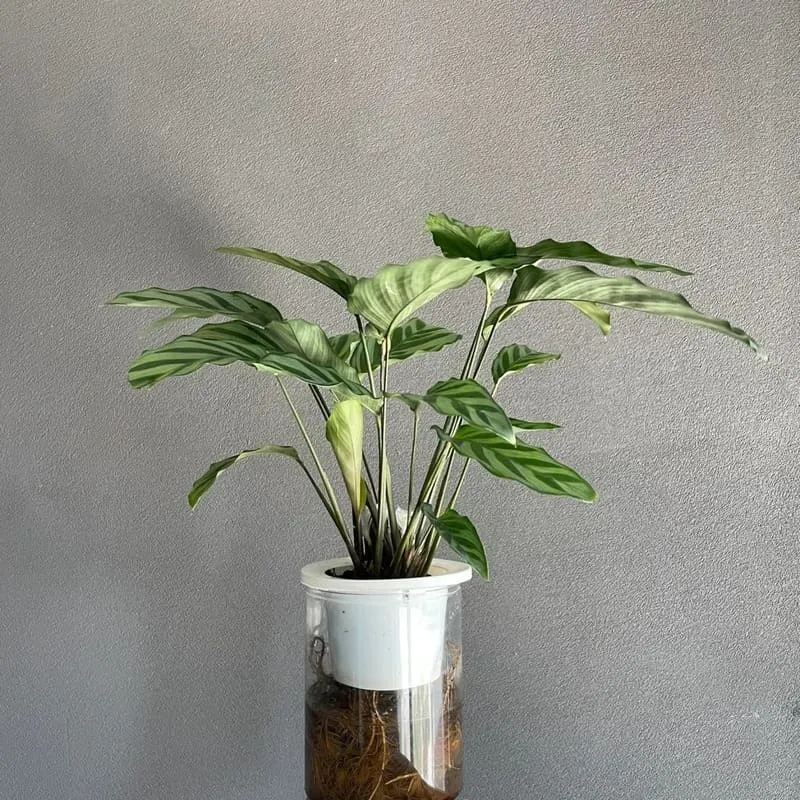
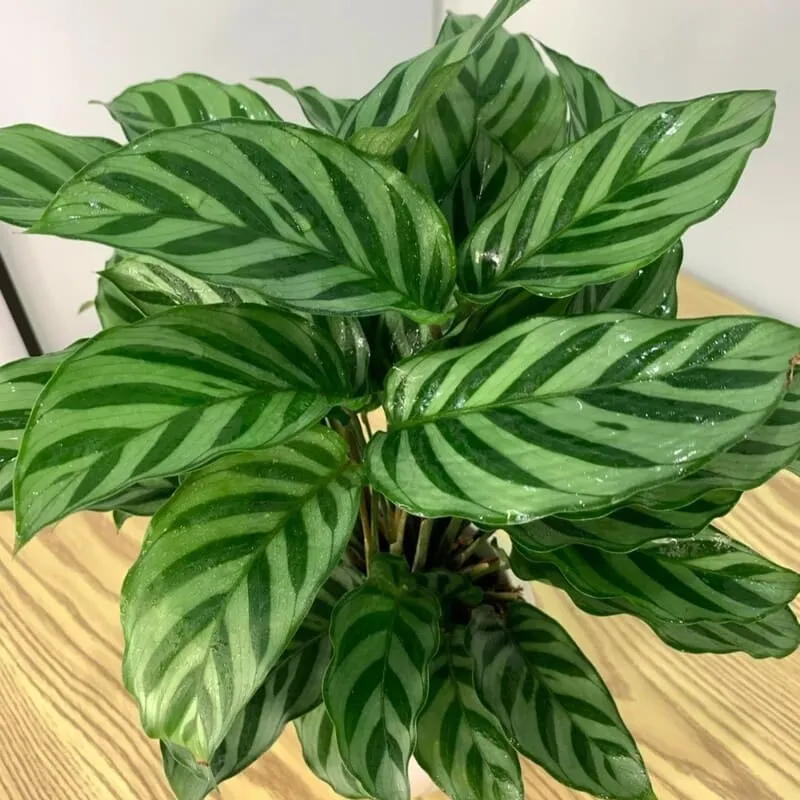
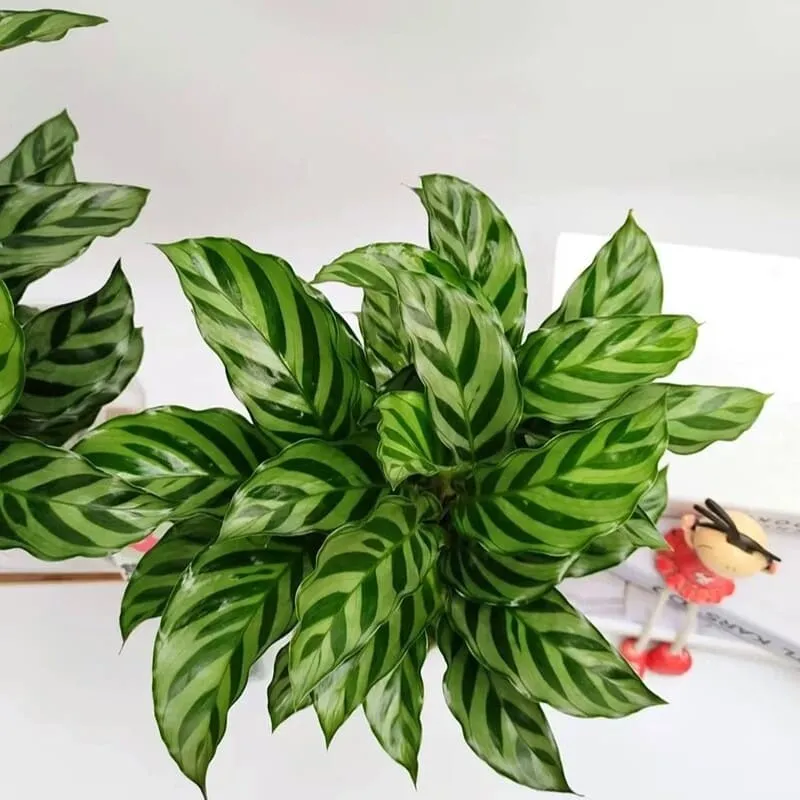
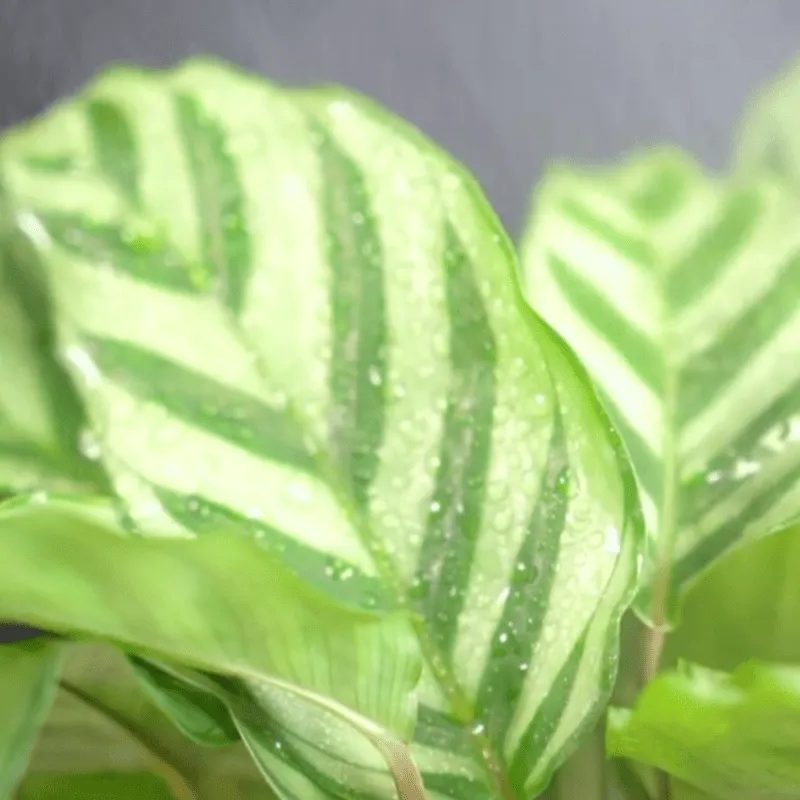
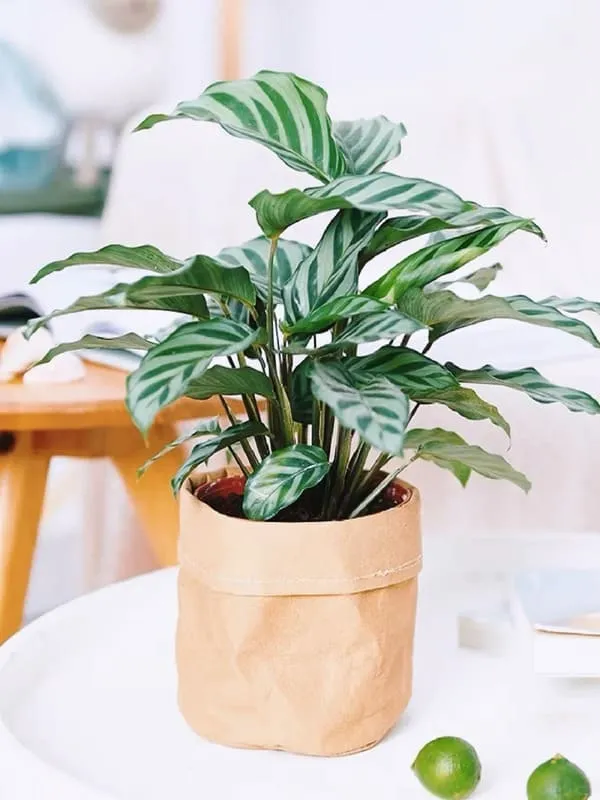
There’s a quiet beauty to Calathea Concinna Freddie — the kind that doesn’t demand your attention but rewards it once you slow down. Its deep emerald leaves are drawn with fine, feather-like stripes, each one tracing light the way ripples move across still water. When the afternoon sun fades, the plant lifts its leaves gently upward, as if to say the day’s done.
In my Seattle home, I keep one on the edge of a bookshelf, where direct sunlight never reaches. It doesn’t grow fast, but it holds its shape perfectly — compact, symmetrical, and content with the soft light that many Calatheas would find too little. Concinna doesn’t perform for you; it simply exists, calm and consistent, like a green heartbeat in a quiet room.
If the bright and lively Calathea Leopardina feels like a tropical morning, Calathea Concinna Freddie is the evening that follows — softer, slower, and more introspective. For a broader look at how different species express their patterns, explore our Calathea Types Guide.
Quick Facts: Calathea concinna
| Plant Type | Tropical perennial, foliage houseplant |
| Mature Size | 1.5–2 ft (45–60 cm) tall, compact and symmetrical form |
| Light Needs | Medium to bright indirect light; tolerates lower light better than many Calatheas |
| Watering | Keep soil slightly moist — allow top inch to dry between waterings |
| Humidity | Prefers >60%; benefits from consistent indoor humidity |
| Pet Safety | Non-toxic to cats & dogs — see Calathea Pets Safety Guide |
| Difficulty | ★★★☆☆ |
| Popularity | ★★★★☆ |
Appearance & Key Features
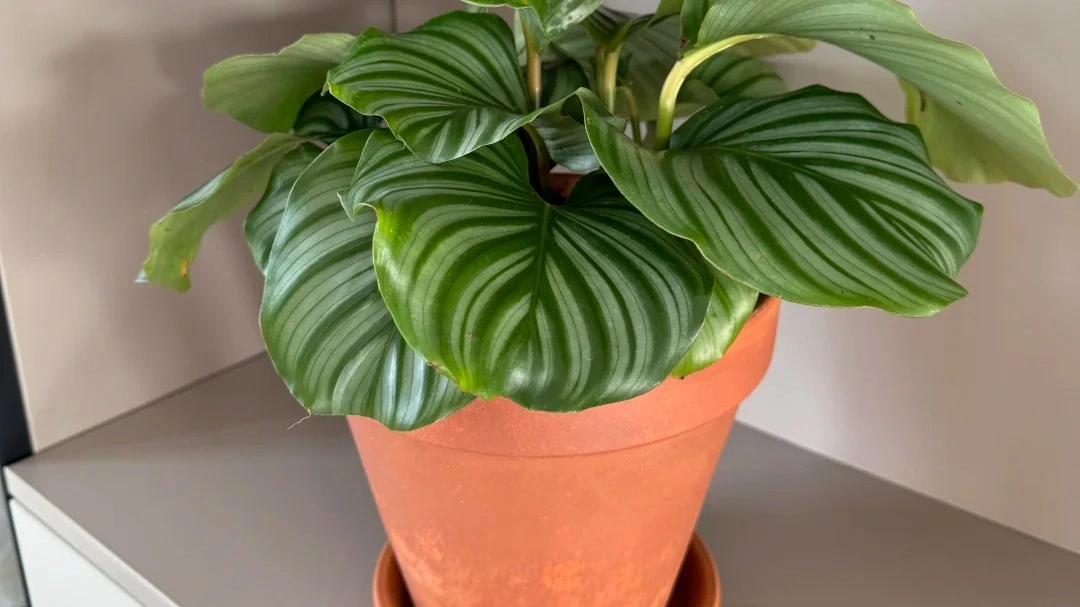
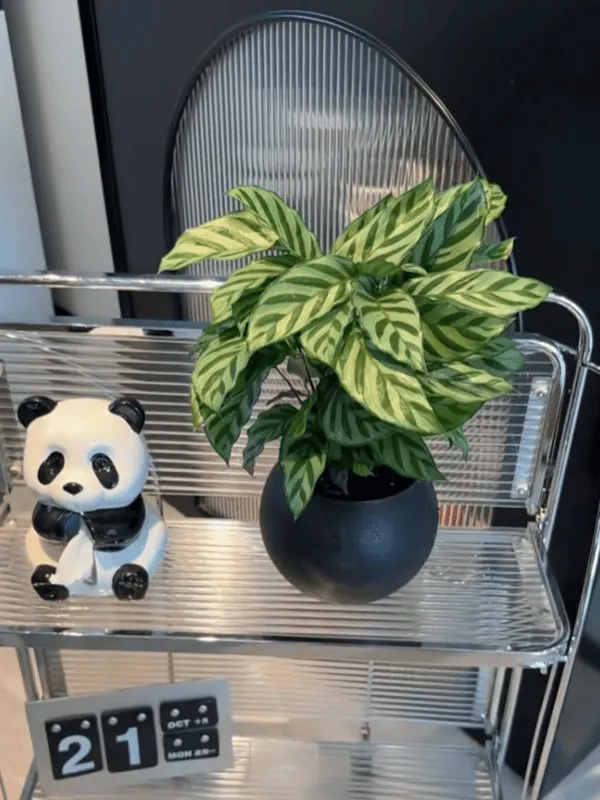
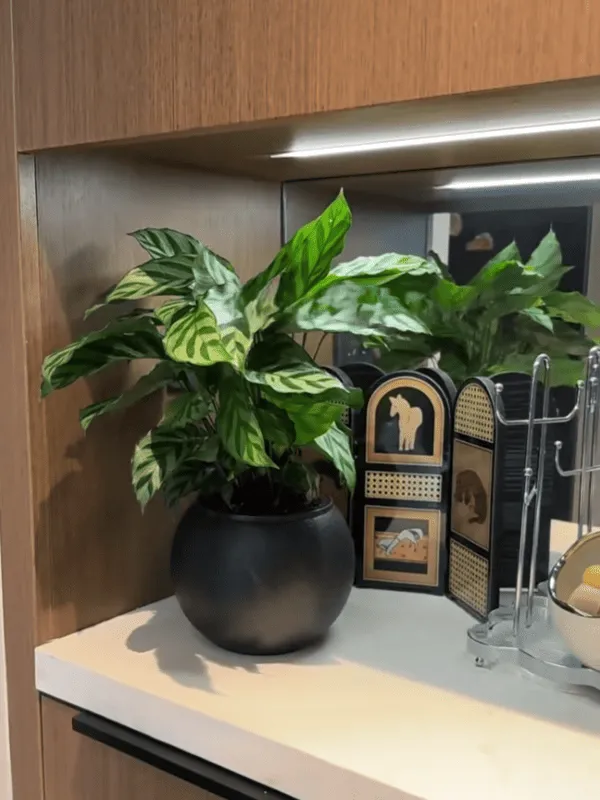
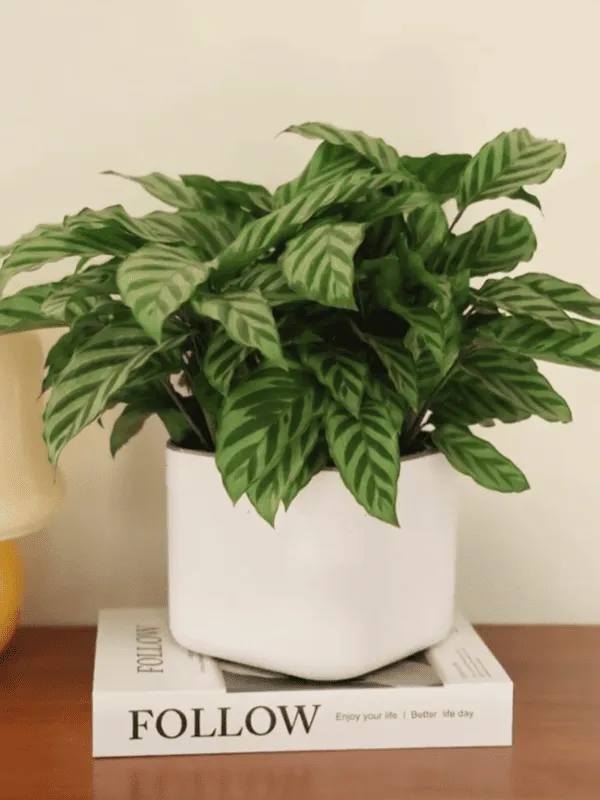
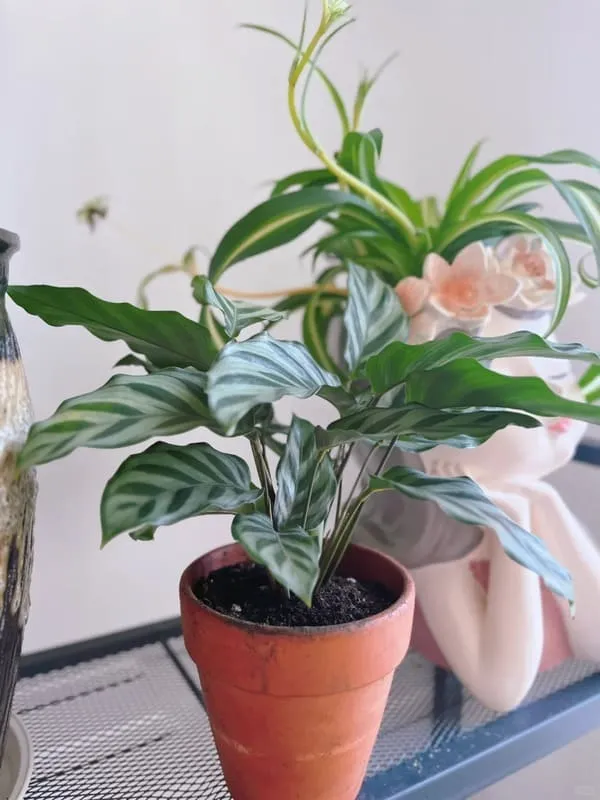
The Calathea Freddie stands out not through flashiness, but through balance and quiet symmetry. Its medium-sized, lance-shaped leaves are painted in deep emerald green, lined with soft feather-like stripes that shimmer slightly under indirect light. The pattern is more refined than that of Calathea Leopardina, with narrower veins and a darker overall tone that gives the plant a serene, polished look.
Unlike broad-leaved species such as Calathea Orbifolia, the concinna grows in a compact rosette form, keeping its foliage close and upright. Each leaf arches slightly at the edges, creating a layered structure that looks almost designed — every frond fitting neatly into the next.
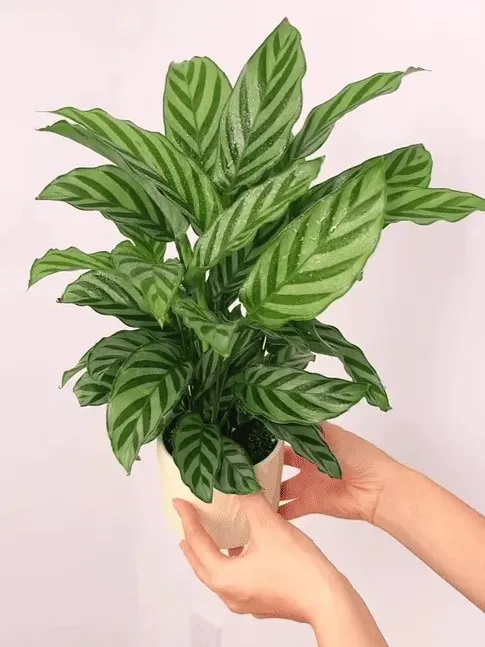
When light changes through the day, the leaves respond with the classic Calathea prayer movement — folding upward at dusk and opening again at dawn. In groups or on their own, mature concinna plants bring an elegant rhythm to shaded interiors, their fine striping catching just enough light to feel alive without demanding attention.
Growth & Environment Requirements
Native to the shaded understories of South American rainforests, Calathea Concinna Freddie thrives in stable warmth, filtered light, and consistently moist air. Its natural environment explains why it performs best indoors when given gentle light and balanced humidity.
- Growth speed: Concinna is a slow-to-moderate grower. It doesn’t rush to produce new leaves, but each one unfurls with precise, even striping. Mature plants develop a dense base of foliage rather than stretching upward, which makes them perfect for smaller spaces or shelves.
- Temperature: Keep it in a warm room between 65–80°F (18–27°C). The plant dislikes sudden drops in temperature, and prolonged exposure below 60°F (15°C) can cause leaf curling or fading.
- Humidity: Like most Calatheas, concinna loves moisture in the air — ideally above 60%. However, it is slightly more tolerant of short dry spells than other varieties. A pebble tray or grouping with other plants helps stabilize the environment.
Learn more about creating balanced indoor conditions in our Calathea Light Requirements Guide and Calathea Care Guide.
💡 Note: If your home’s air gets dry during winter, move concinna away from heaters and mist lightly in the morning. You’ll notice its color deepen and leaves stay glossy when humidity remains consistent.
Detailed Care Guide
The Calathea Freddie follows the same care principles as other Calathea species, but its compact form makes it slightly easier to manage in smaller indoor spaces. Here’s how to keep it thriving:
Watering
Concinna prefers evenly moist soil — neither soaked nor dry. Water when the top inch feels slightly dry to the touch, and always allow excess water to drain out. It’s less forgiving of long droughts than Leopardina, but more tolerant of brief drying periods than White Fusion.
👉 See our full Calathea Watering Guide for timing and seasonal adjustments.
Light
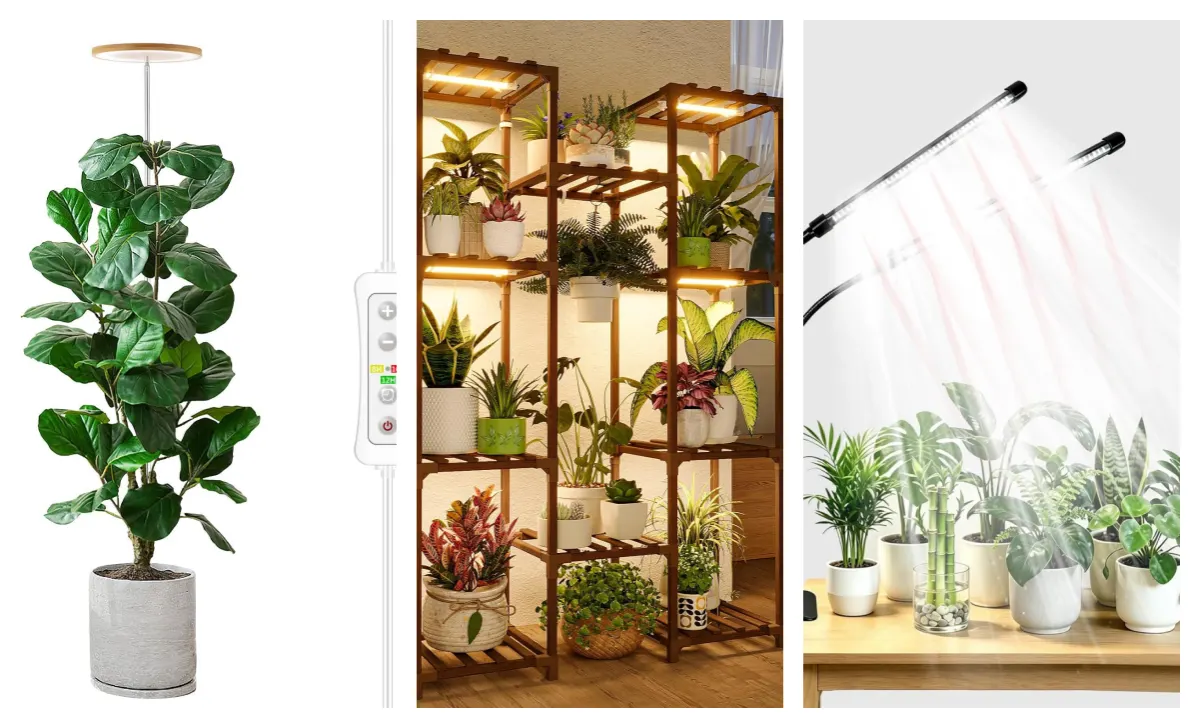
Provide medium to bright, indirect light. Concinna’s darker leaves absorb more efficiently, so it can handle lower-light corners without fading. Avoid harsh sunlight, which can cause pale patches or crispy edges.
👉 For setup ideas in shaded rooms, visit Calathea Low Light Care.
Soil
Use a well-draining, moisture-retentive mix — such as peat moss or coco coir blended with perlite and compost. The goal is to keep the roots aerated while maintaining even moisture.
👉 Mix ratios and texture tips are covered in Best Soil for Calathea.
Fertilizer
Feed lightly during spring and summer every 3–4 weeks using a balanced foliage fertilizer at half strength. Overfeeding can cause salt buildup, which leads to brown tips.
👉 Safe dosage and nutrient tips are explained in Best Fertilizer for Calathea.
Humidity
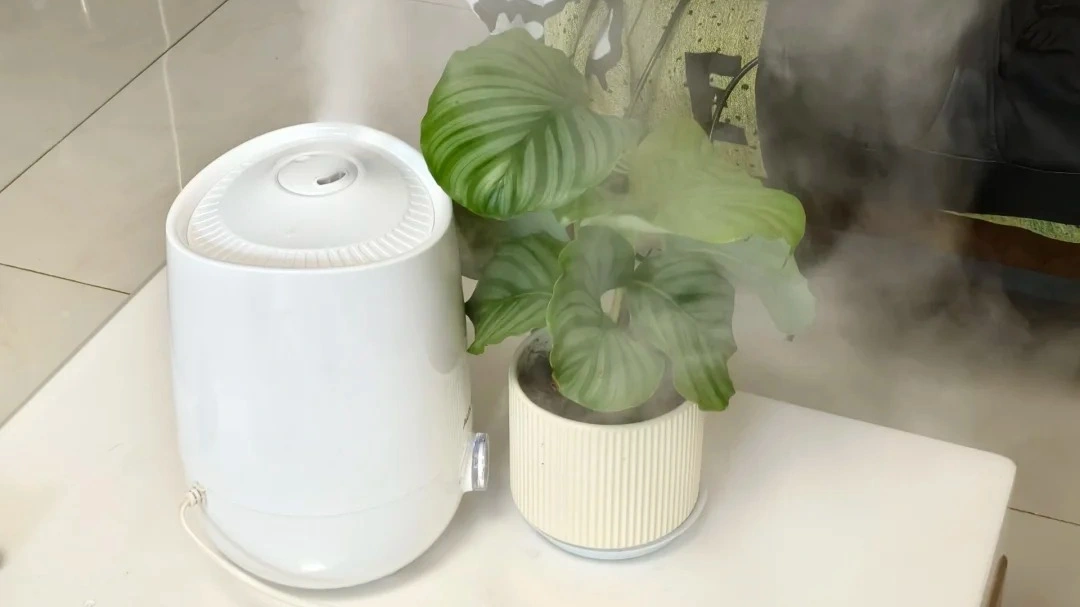
Aim for 60% humidity or higher. While concinna handles normal household air better than many Calatheas, consistent humidity helps maintain its glossy surface and prevents edge browning. Use a humidifier or cluster it with other tropical plants to create a stable microclimate.
👉 If you notice leaves curling or drooping, check our Calathea Curling & Drooping Guide for quick fixes.
Common Problems with Calathea Concinna
Although Calathea Freddie is steadier than many of its relatives, it can still show signs of stress when conditions shift too suddenly. Here are some common issues you might encounter — and what they usually mean:
- Yellowing Leaves →
Often caused by overwatering or poor drainage. Allow the topsoil to dry slightly between waterings and make sure the pot has enough drainage holes. If the yellowing spreads from the base upward, check for early signs of Calathea Root Rot. - Faded or Pale Patterns →
This usually means the plant is receiving too little light. Move it closer to a bright window with filtered light, but avoid direct sun. Pattern dullness can also occur from overfertilization, which is explained in Why Your Calathea Is Not Growing. - Brown Edges (Crispy Tips) →
Low humidity or irregular watering often causes dry, crispy leaf tips. Mist the plant regularly or place it near a small humidifier. If edges turn brown after sun exposure, check our Calathea Sunburn & Brown Patches Guide. - Curling Leaves →
A classic reaction to underwatering or sudden temperature drops. Recheck soil moisture and ensure your room stays above 65°F (18°C).
👉 For more detailed fixes, visit the Calathea Curling & Drooping Guide. - Slow Growth or No New Leaves →
Common during winter or if the plant is pot-bound. Gently check the roots — if they circle the pot, it’s time for repotting. You can follow steps from our Calathea Propagation Guide to refresh the soil and encourage new shoots.
Propagation & Repotting
Like most Calatheas, Calathea Freddie can only be propagated through division. It’s a patient grower with dense roots, so propagation should be done carefully and only when necessary.
Division →
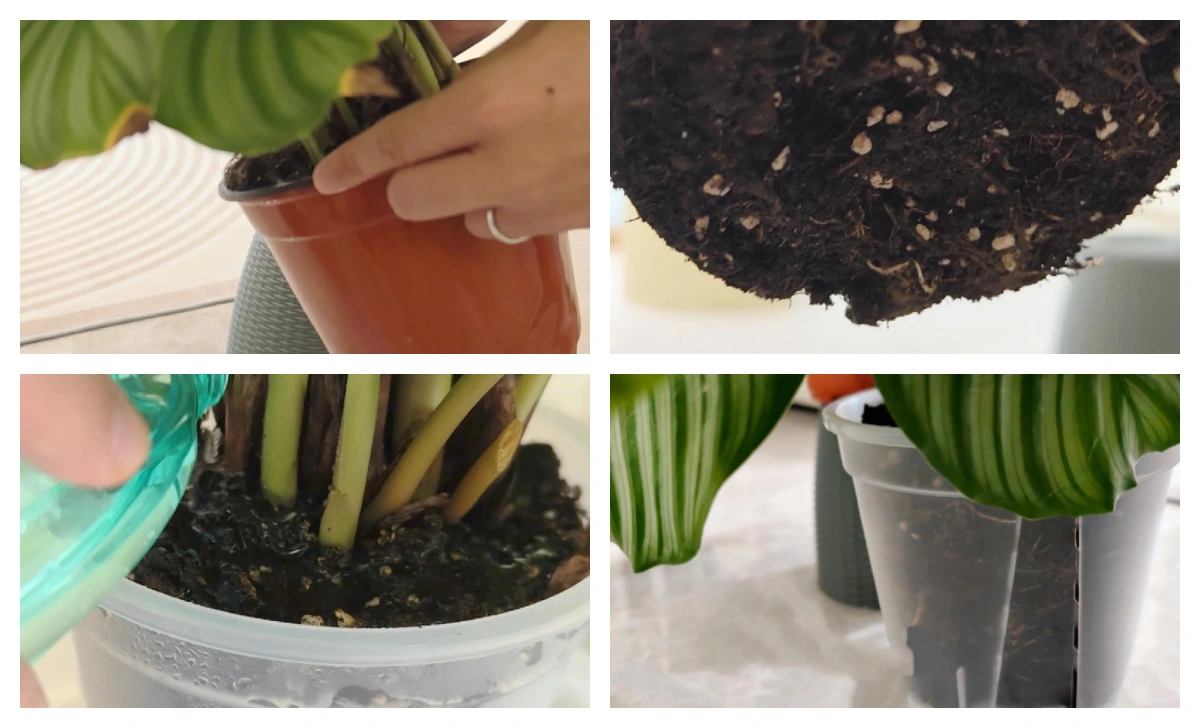
The safest and most effective method. When repotting in spring or early summer, gently separate the root ball into smaller sections, ensuring each has at least two healthy leaves and its own root system. Avoid tearing or cutting roots too close to the base — concinna’s fine root hairs are more delicate than they appear.
Best Season →
Late spring to mid-summer, when growth is active and humidity levels are naturally higher. Avoid propagation during winter dormancy, as the plant’s energy is focused on maintaining existing leaves.
Repotting Tips →
This species prefers to stay slightly root-bound. Repot every 1–2 years, or when you notice roots circling the pot or pushing up through the drainage holes. Choose a pot only one size larger, and refresh the soil mix with an airy blend from Best Soil for Calathea.
Aftercare →
Newly divided plants may appear droopy for several weeks. Keep them in a warm, shaded spot with high humidity until new leaves emerge. If leaves wilt or edges brown during recovery, review your moisture balance in the Calathea Root Problems Guide.
👉 For detailed division steps and recovery advice, check the full Calathea Propagation Guide.
Styling & Placement Ideas
Living Room or Study Corner →
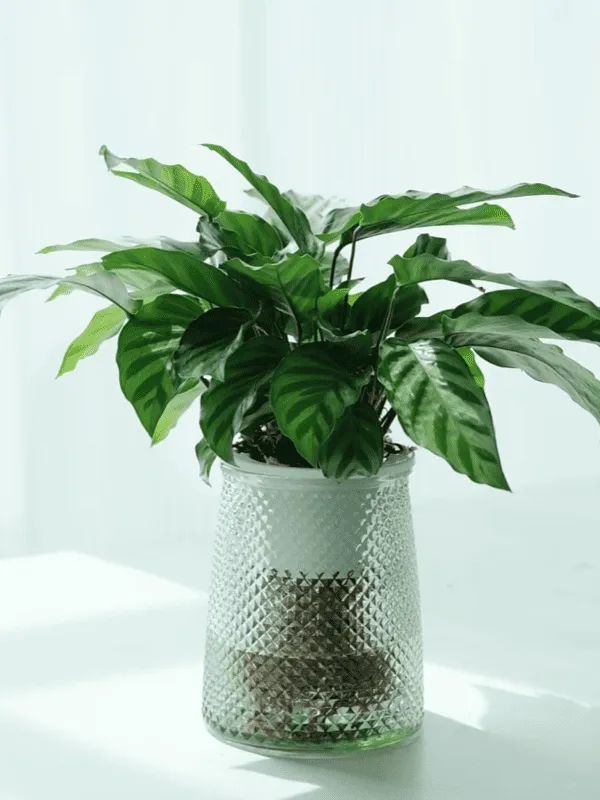
With its deep green tones and subtle striped pattern, Calathea Freddie brings a grounded, elegant calm to shaded corners or softly lit rooms. It thrives in spaces where light is gentle and steady — perfect for a bookshelf, bedside table, or the edge of a work desk. The compact form makes it a great choice for small apartments or studios that need a touch of life without clutter.
Paired with Brighter Varieties →
Concinna’s darker foliage contrasts beautifully with lighter-leaved Calatheas like Calathea Leopardina or the silvery Calathea Orbifolia. Mixing these species adds depth and rhythm to your indoor jungle, creating visual balance between bold and subtle textures. For more ideas, browse our Calathea Types Guide.
Interior Design Appeal →
The plant’s symmetrical shape and fine striping fit effortlessly into minimalist, Scandinavian, or natural wood interiors. It softens the edges of a modern room, adding a sense of calm continuity.
Practical Tip →
Keep concinna away from strong drafts or heaters — stability is key. A consistent position with moderate light and humidity will help preserve its even patterns. For more guidance on ideal placement, revisit our Calathea Light Requirements Guide.
FAQ
Explore More Calathea Varieties
Looking to discover more beautiful Calathea plants?
Browse our full collection of Calathea varieties — from the bold Orbifolia to the velvety Warscewiczii — and find the one that fits your home best.