| Botanical Name | Calathea leopardina |
| Plant Type | Tropical perennial, foliage houseplant |
| Mature Size | 1.5–2 ft (45–60 cm) tall, leaves up to 8 in (20 cm) long |
| Light Needs | Bright, indirect light |
| Watering | Keep soil evenly moist, avoid soggy roots |
| Humidity | Prefers 50–70% |
| Pet Safety | Non-toxic to cats & dogs — see Calathea Pets Safety Guide |
| Difficulty | ★★☆☆☆ |
| Popularity | ★★★★☆ |
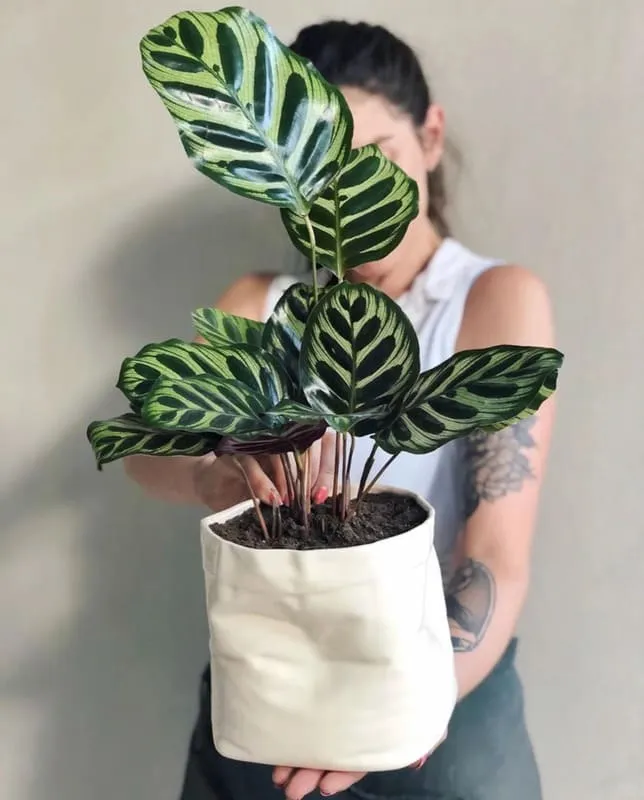
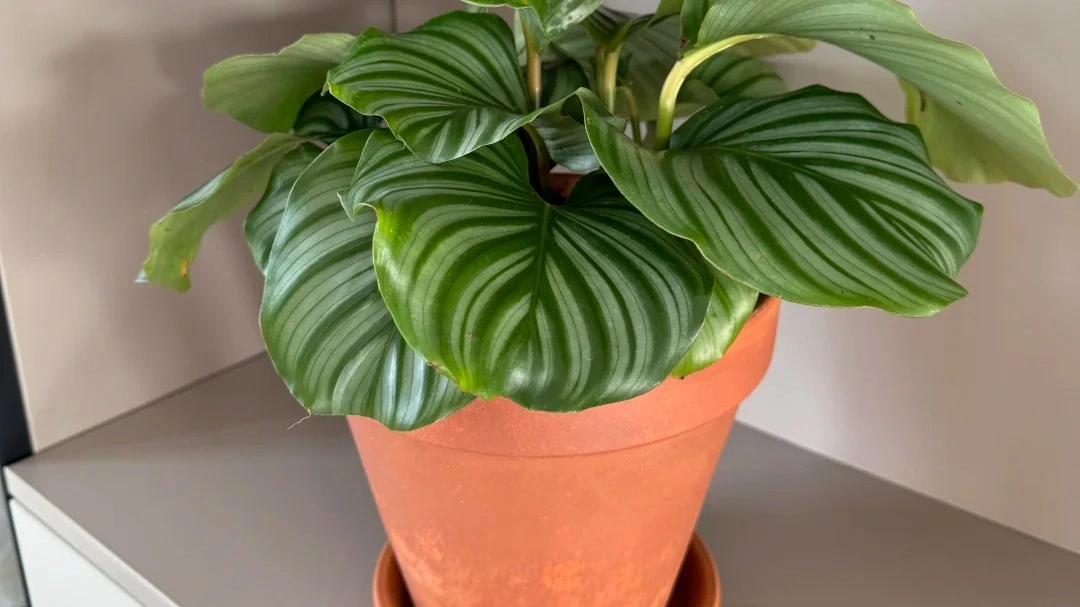
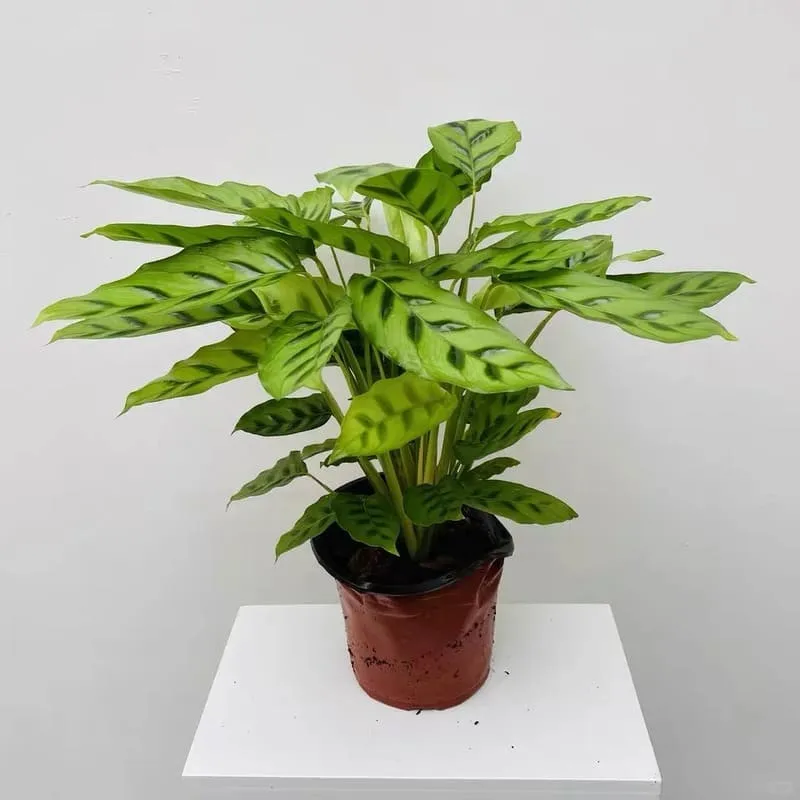
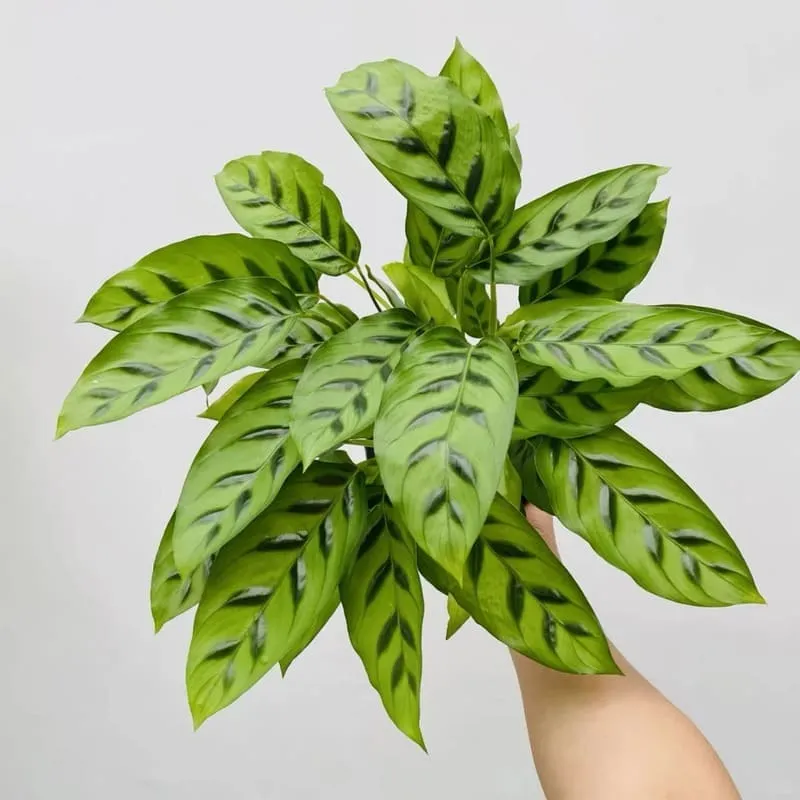
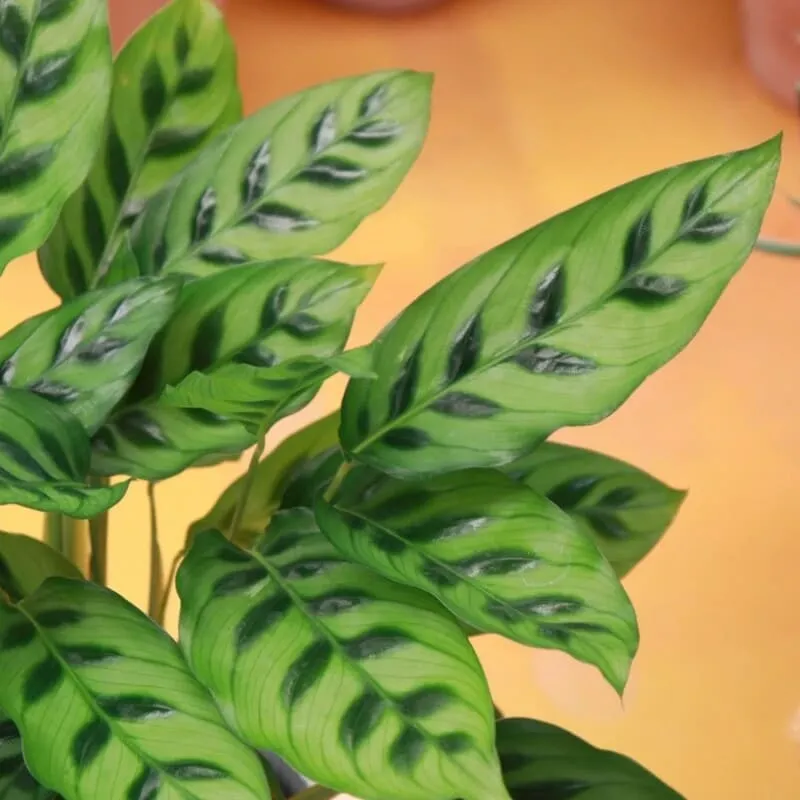
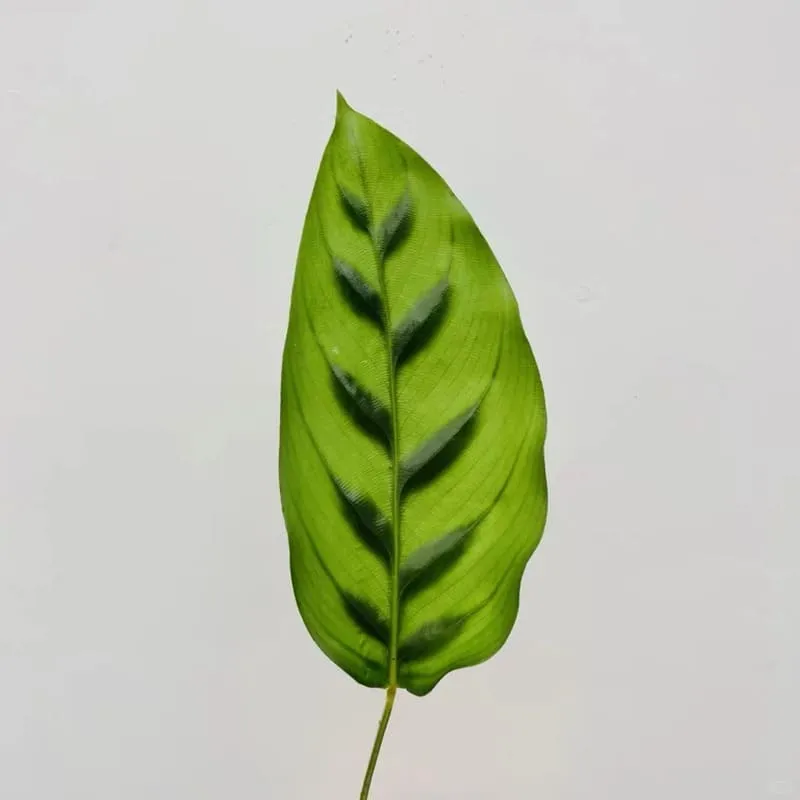
With its slender, lance-shaped leaves painted in vivid lime green and patterned with deep emerald brushstrokes, Calathea Leopardina brings a quietly elegant, jungle-fresh energy to any indoor space. Unlike the dramatic, oversized leaves of Calathea Orbifolia, the Leopardina’s charm lies in its rhythm — the symmetrical striping that resembles a leopard’s tail flicking under dappled rainforest light.
This variety is loved by beginners and collectors alike for one simple reason: it’s forgiving yet expressive. When conditions are right, the leaves “pray” and relax throughout the day like a living metronome. In my Seattle home, Leopardina has been one of the easiest Calatheas to keep happy — a touch more tolerant of missed waterings and medium light once it settles.
If you’re exploring different species, compare it with Calathea Makoyana (Peacock Plant) or the intricately patterned Calathea Vittata to see how subtle leaf differences reflect unique light and humidity needs. For a full lineup of species with care comparisons, visit our main Calathea Types Guide.
💡 Quick Tip: Leopardina rarely throws dramatic tantrums, but its thin leaves can curl when watering or humidity gets off balance. If that happens, check our practical fix in Calathea Curling & Drooping Guide and learn how to stabilize moisture the right way.
Appearance & Key Features
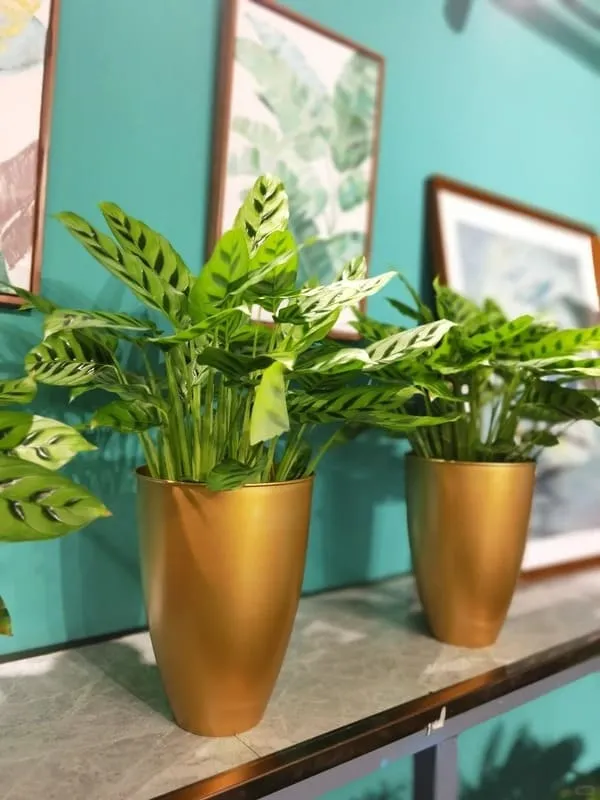
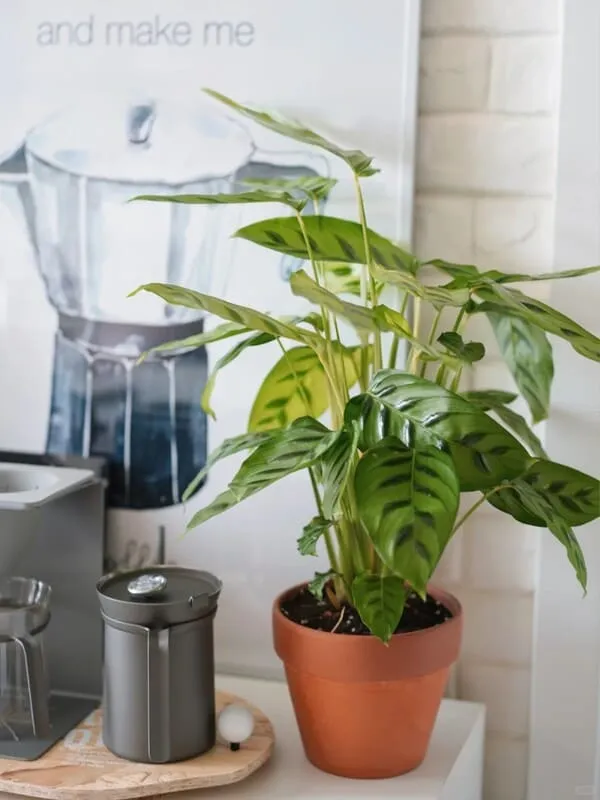
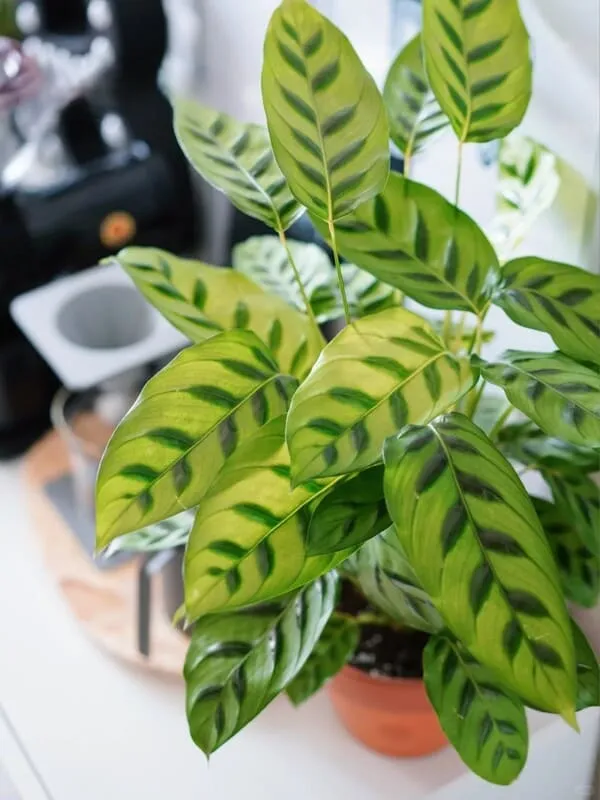
The Calathea Leopardina is instantly recognizable by its slender, lance-shaped leaves brushed with vivid lime-green and deep emerald markings that resemble watercolor strokes. Each leaf appears to shimmer slightly under indirect light, giving the plant a lively, rhythmic look that feels fresh even in low-light corners.
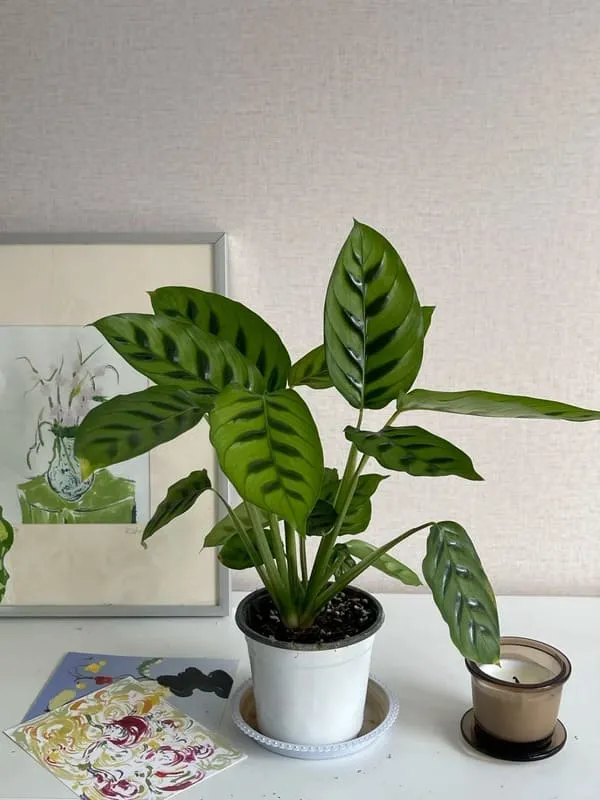
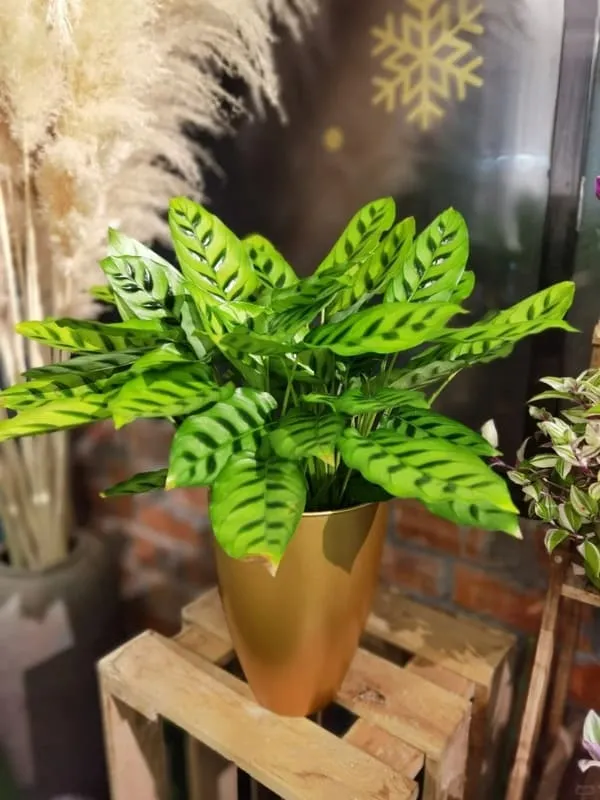
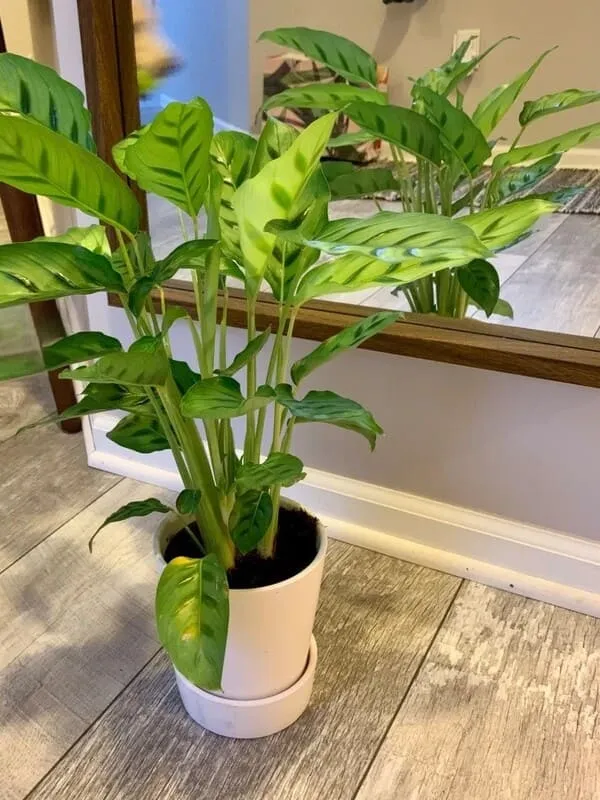
Unlike the broad and dramatic Calathea Orbifolia, Leopardina grows in a neat, upright form. Its leaves rarely exceed 8 inches (20 cm) long, but they emerge frequently, creating a full, symmetrical canopy that moves gracefully with changes in light. This natural “prayer movement” — folding up at night and opening in the morning — makes it one of the most interactive Calatheas to watch.
Mature Leopardina plants can reach about two feet in height, with multiple shoots spreading from the base. The leaves are thinner than those of Makoyana or Vittata, which means they respond faster to environmental changes. If the leaf tips start browning or edges curl, it’s often a humidity issue rather than disease — an easy fix with consistent moisture or reference to our Calathea Sunburn & Brown Patches Guide.
A healthy Leopardina displays vivid contrast between its pale midrib and darker stripes. Dull or faded patterns usually signal light imbalance or nutrient shortage; if growth slows or leaves stay small, check for root congestion or soil compaction — common causes covered in Why Your Calathea Is Not Growing.
Growth & Environment Requirements
The Calathea Leopardina comes from the warm, shaded rainforests of South America, where it grows under the canopy in consistently moist and humid air. This background explains why it thrives indoors when given balanced moisture, warmth, and filtered light.
- Growth speed: Leopardina grows at a moderate pace, producing slender new leaves throughout the growing season. Each new leaf shows distinct green striping, making every unfurling a small reward for patient care.
- Temperature: Keep it in a warm environment between 65–80°F (18–27°C). Avoid cold drafts or temperatures below 60°F (15°C), which can cause drooping or pale leaves.
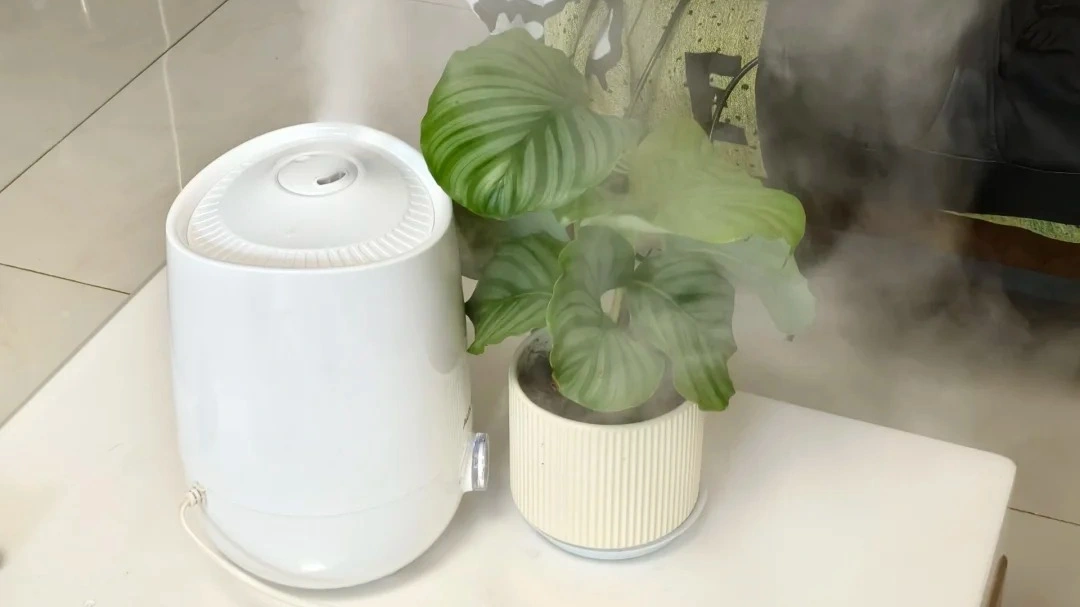
- Humidity: Like most Calathea species, Leopardina enjoys humidity above 50%. In drier homes, especially during winter, a pebble tray or small humidifier can help prevent crisp edges.
Learn more about ideal placement and temperature balance in our Calathea Light Requirements Guide.
💡 Note: In naturally dry indoor climates, grouping Leopardina with other humidity-loving plants or placing it near a bright bathroom window can make a noticeable difference. For extra ideas, see the main Calathea Care Guide.
Detailed Care Guide
The Calathea Leopardina follows the same general care rules as most Calathea species, but its narrower leaves make it slightly more tolerant of indoor fluctuations. Here’s how to keep it thriving:
Watering
Leopardina prefers evenly moist soil but dislikes sitting in water. Check the top inch of soil before watering—if it feels dry, water thoroughly and allow excess to drain. During cooler months, reduce frequency slightly.
👉 See our full Calathea Watering Guide for detailed watering schedules and seasonal adjustments.
Light
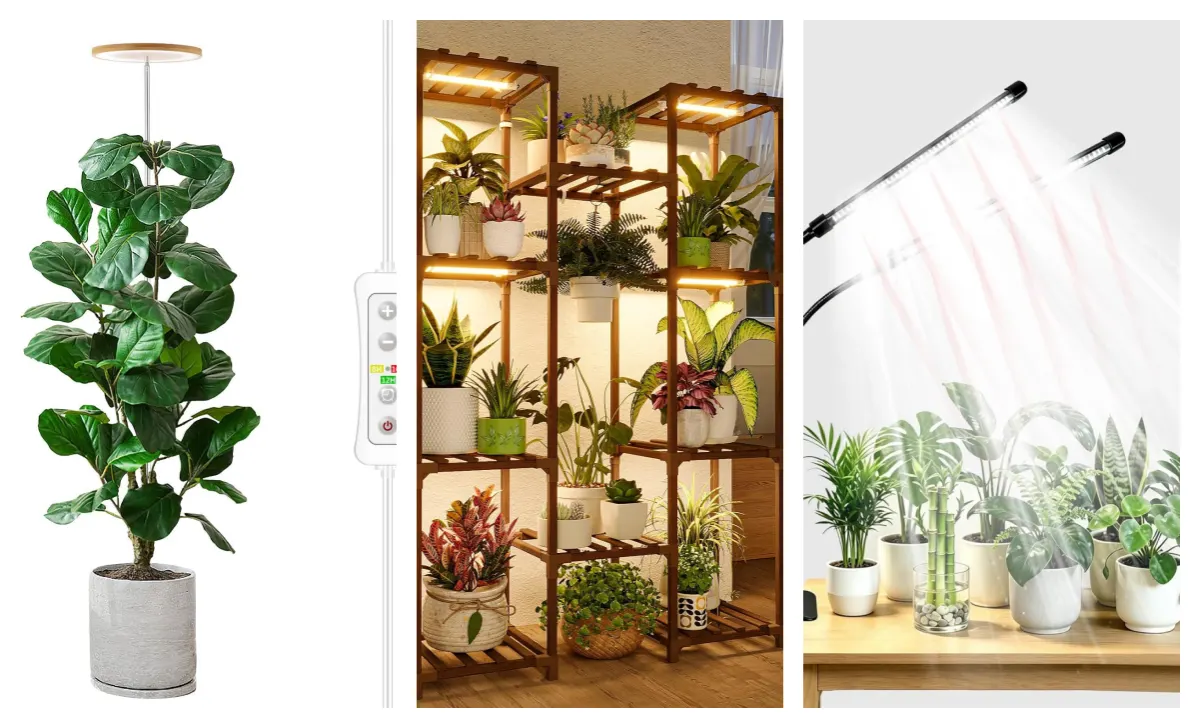
Provide bright, indirect light. Leopardina tolerates medium-light rooms better than many Calathea species but should still be shielded from harsh sun. A north or east-facing window is ideal, or place it a few feet from a south-facing one.
Soil
Use a loose, well-draining potting mix that stays slightly moist without compacting. A blend of peat moss, perlite, and compost works beautifully.
Fertilizer
Feed every 3–4 weeks during the growing season with a diluted foliage fertilizer. Overfeeding can cause leaf burn or fading.
👉 Check safe nutrient ratios and dilution methods in Best Fertilizer for Calathea.
Humidity
Leopardina enjoys humidity levels above 50%. In dry homes, place it near other tropical plants or use a small humidifier. Crispy edges or curling tips are early warning signs of dryness.
Common Problems with Leopardina
Even though Calathea Leopardina is one of the more forgiving Calathea varieties, it can still show stress when conditions slip out of balance. Here are the most common issues you may encounter—and what they usually mean:
- Yellowing Leaves → Often a result of overwatering or poor drainage. Always check that the pot has drainage holes and the soil isn’t compacted. If the roots stay wet for too long, you may be dealing with Calathea Root Rot.
- Brown Edges (Crispy Tips) → A classic sign of low humidity or dry air. Leopardina likes a consistent humidity above 50%. Use a humidifier or pebble tray, especially in winter. If browning continues, review the Calathea Sunburn & Brown Patches Guide.
- Faded or Dull Patterns → Typically linked to insufficient light or weak soil nutrition. Move the plant closer to bright, indirect light and feed monthly with diluted fertilizer. Learn more in Why Your Calathea Is Not Growing.
- Curling Leaves → Usually caused by underwatering or inconsistent moisture. Check your watering rhythm and soil texture; curling often appears before actual dryness. For quick fixes, see our Calathea Curling & Drooping Guide.
👉 For more troubleshooting steps, visit the Calathea Problems Hub, where we cover yellow leaves, pests, and recovery tips in detail.
Propagation & Repotting
Unlike many houseplants that can be propagated from cuttings, Calathea Leopardina can only be propagated by division.
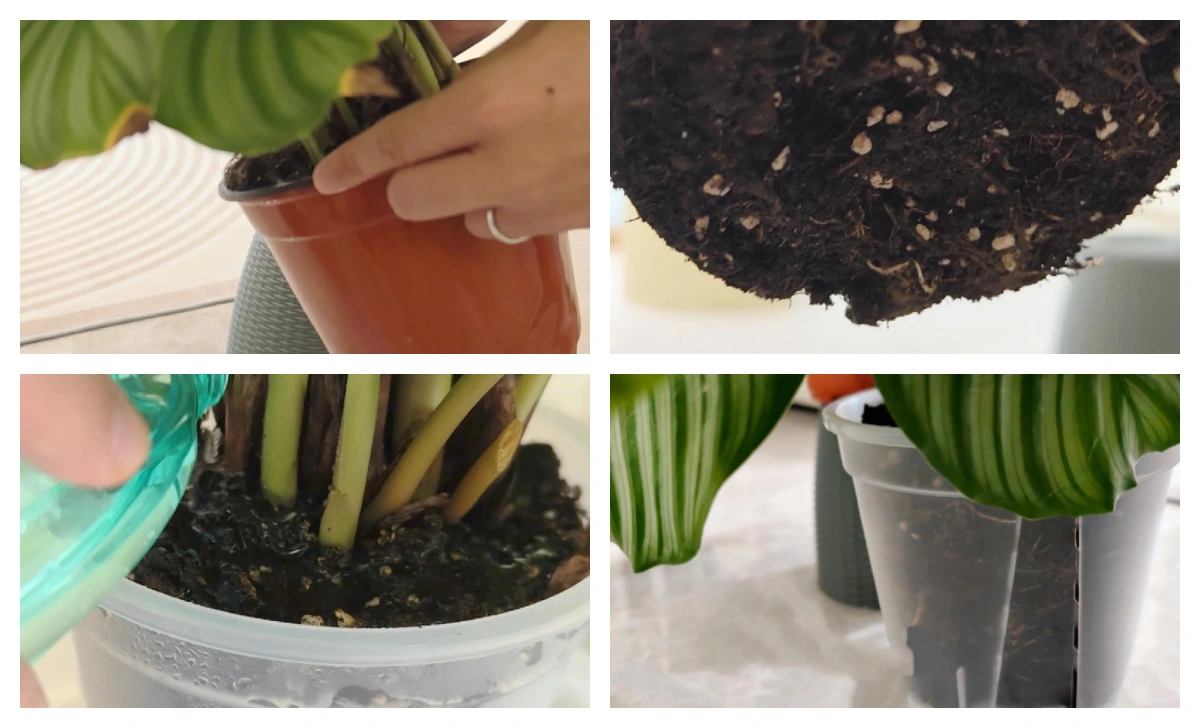
- Division → The safest and most reliable method. When repotting in spring or early summer, gently separate the plant at the root base, making sure each section has a few healthy roots and at least two leaves. This helps each division recover faster and maintain its pattern clarity.
- Best Season → Late spring to mid-summer, when the plant is actively growing and can regrow roots more efficiently. Avoid dividing during winter dormancy, as new shoots are slower to appear.
- Repotting Tips → Leopardina prefers a snug pot but will eventually need repotting every 1–2 years. Use a fresh, well-draining mix like the one described in Best Soil for Calathea. Choose a pot only one size larger to prevent waterlogging.
- Aftercare → Keep newly divided plants in bright, indirect light and high humidity until they re-establish. Growth may pause for a few weeks, which is completely normal. If leaves wilt or curl during recovery, double-check for compacted roots or drainage issues as outlined in our Calathea Root Problems Guide.
👉 For a full walkthrough on dividing, repotting, and recovery, see the step-by-step Calathea Propagation Guide.
Styling & Placement Ideas
- Living Room Accent → With its upright growth and patterned, lime-green leaves, Calathea Leopardina makes a refreshing addition to bright corners or near windows with filtered light. It brings a calm, tropical tone that complements wooden furniture and neutral interiors. Place it in a medium-height planter to showcase its full, vertical shape.
- Paired with Smaller Plants → Leopardina looks especially balanced when grouped with broader-leaved varieties like Calathea Orbifolia or feathery species such as Calathea Makoyana. Mixing leaf shapes and patterns adds depth and rhythm to your indoor garden. For visual variety, explore our full Calathea Types Guide.
- Interior Design Appeal → The plant’s slim leaves and symmetrical pattern fit perfectly into modern, Scandinavian, or minimalist rooms. Its light green tones help brighten dim spaces without overpowering them. Position it where it receives gentle light but avoid direct sun exposure.
- Practical Tip → Allow some space around the plant for airflow—crowding can cause moisture buildup and attract pests. For ideal placement and light adjustment, revisit the Calathea Light Requirements Guide.
FAQ
Explore More Calathea Varieties
Looking to discover more beautiful Calathea plants?
Browse our full collection of Calathea varieties — from the bold Orbifolia to the velvety Warscewiczii — and find the one that fits your home best.