Last updated: May 15, 2026
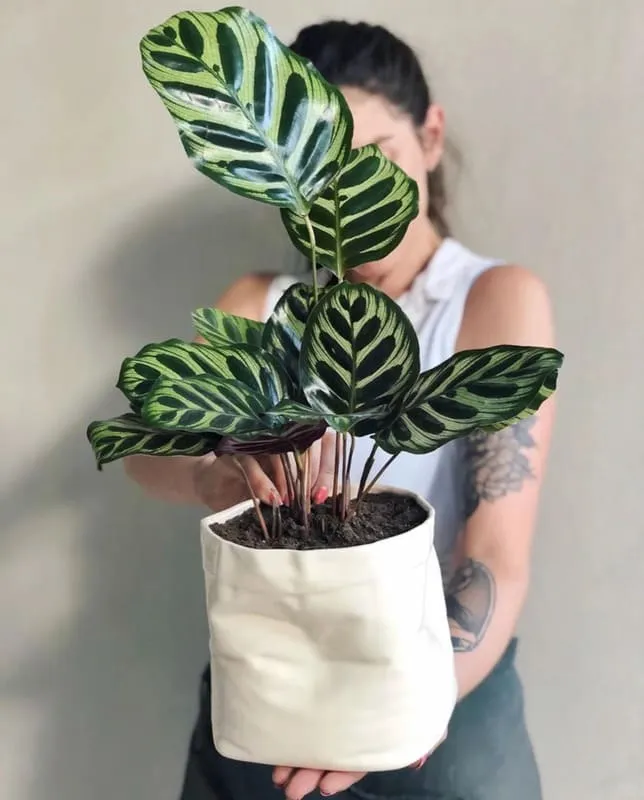
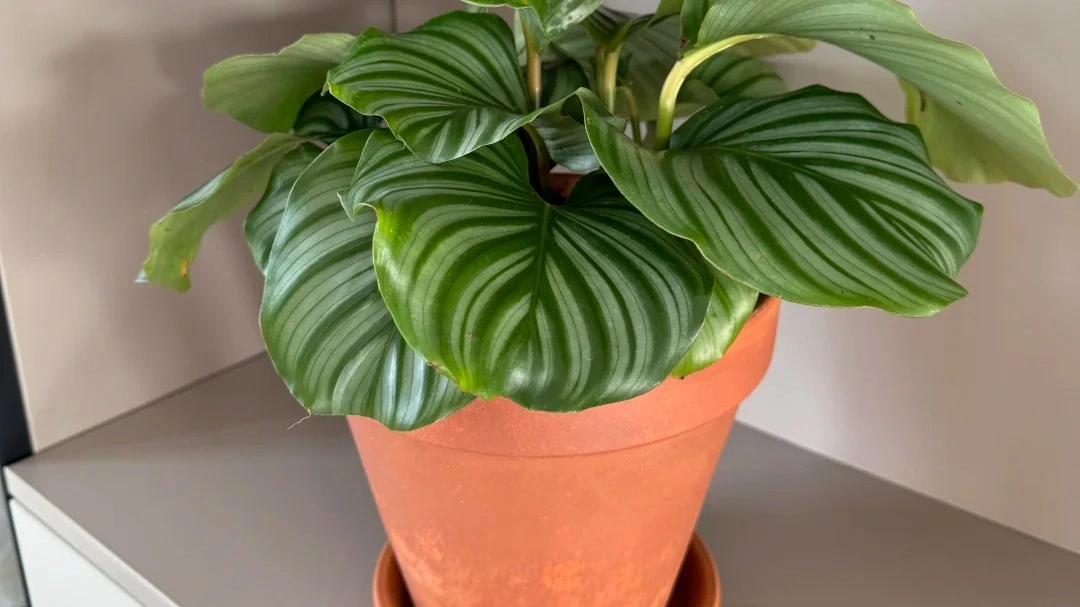
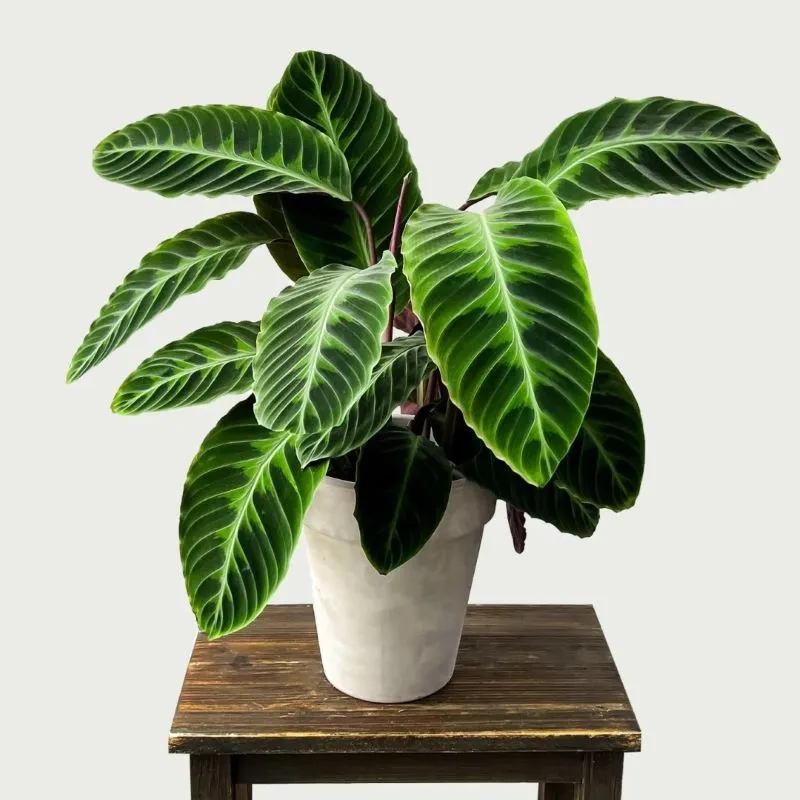
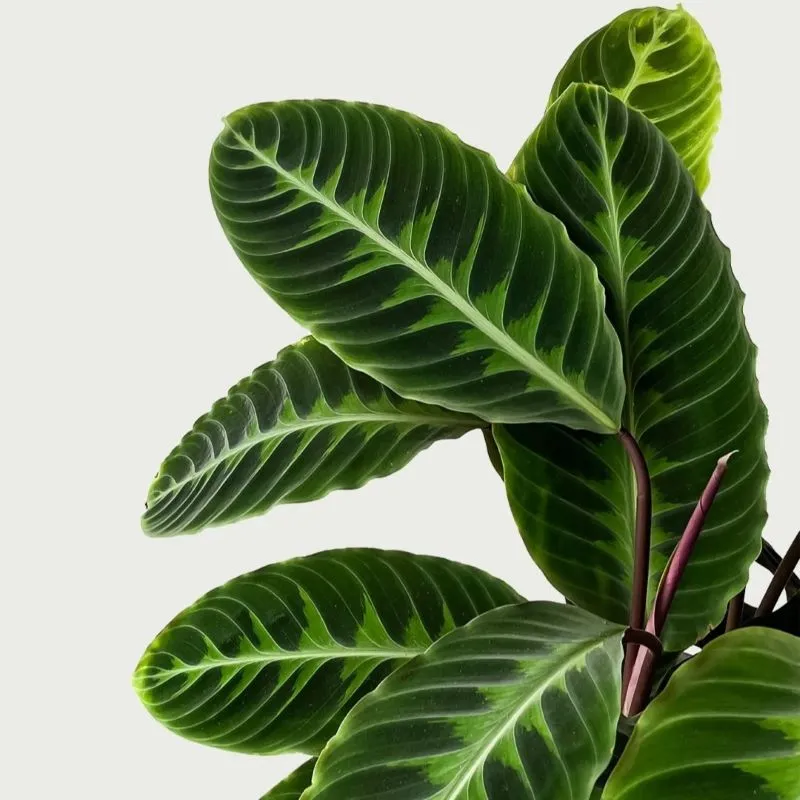
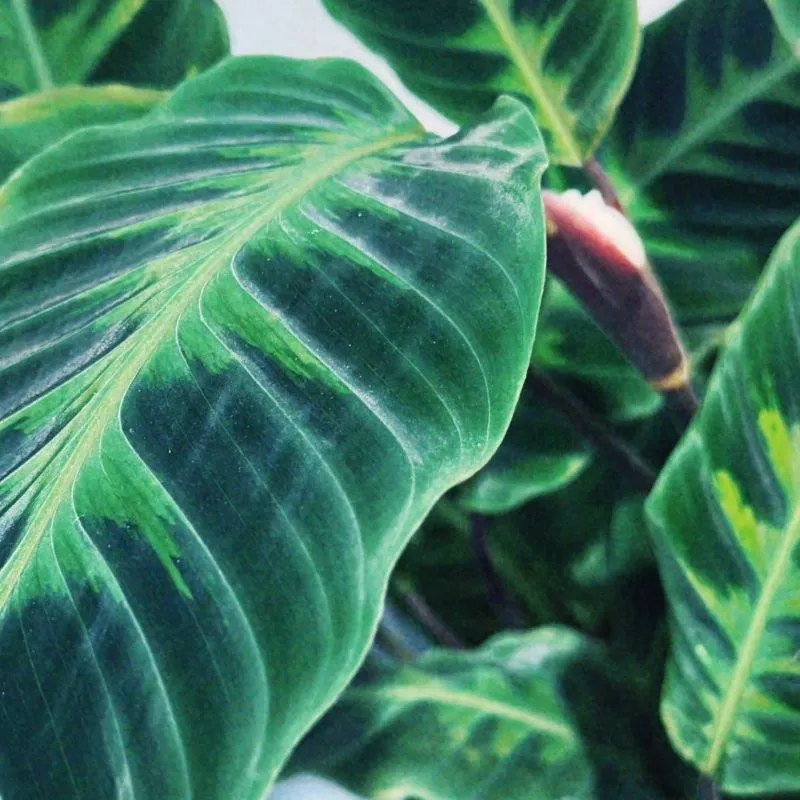
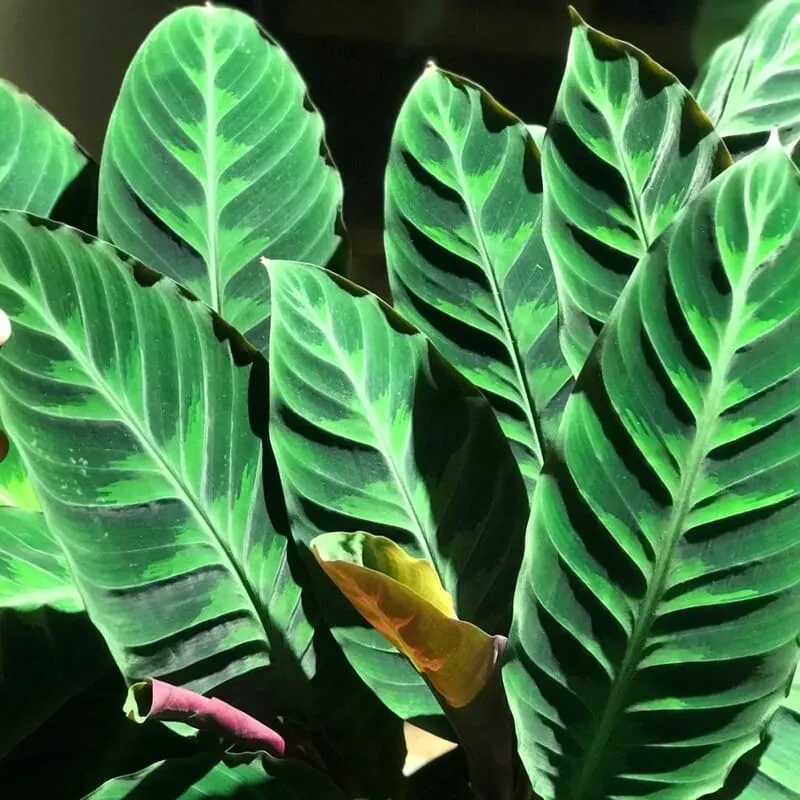
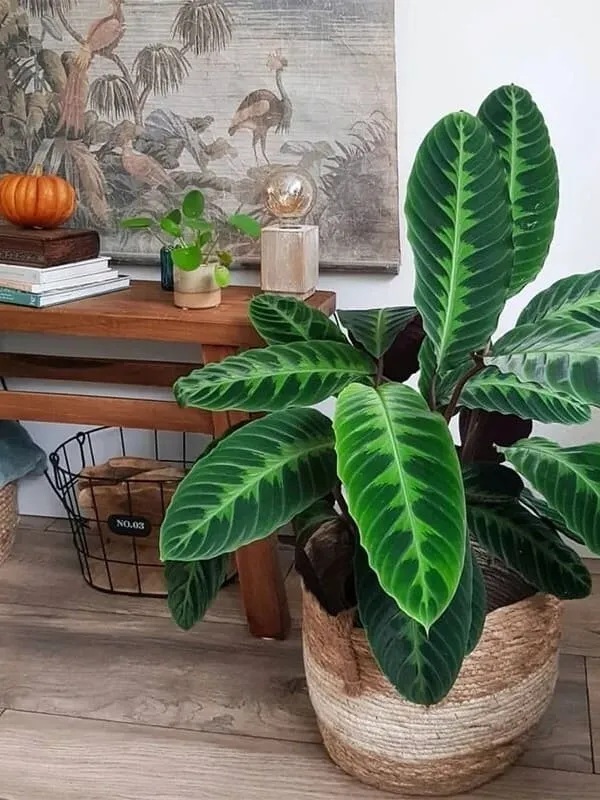
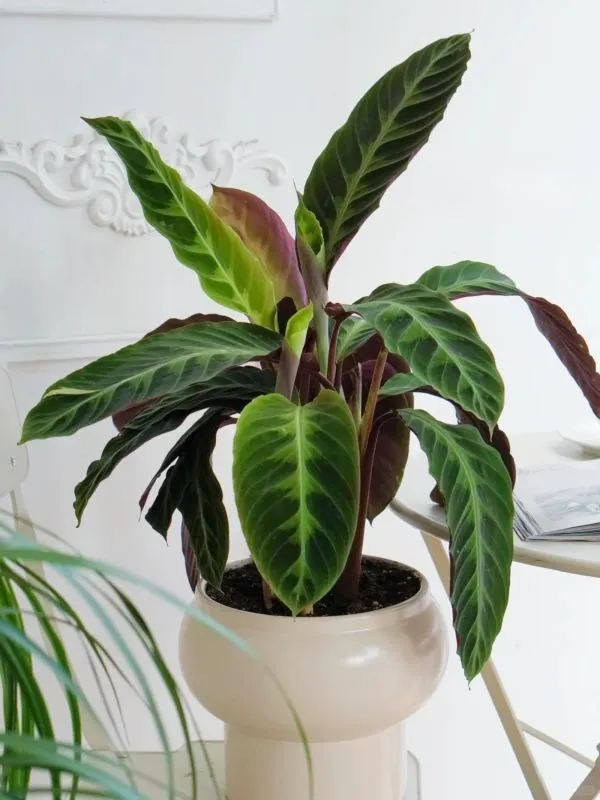
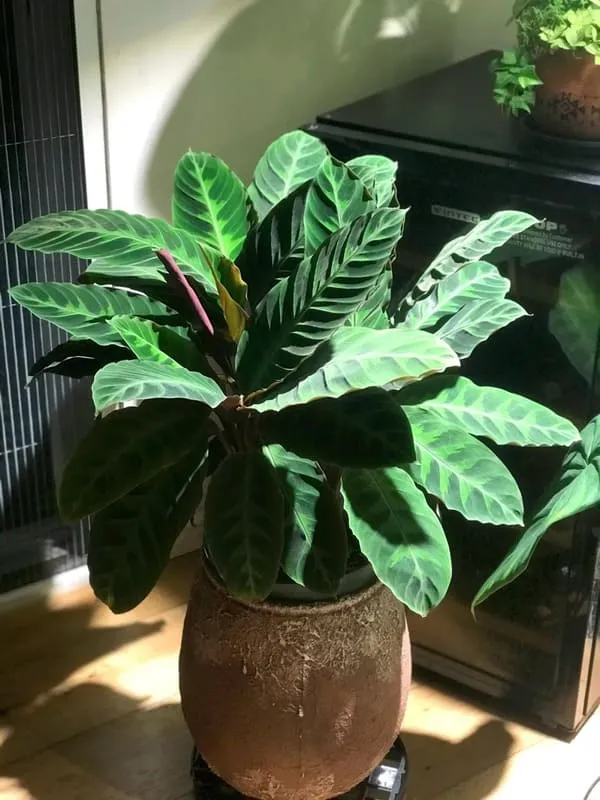
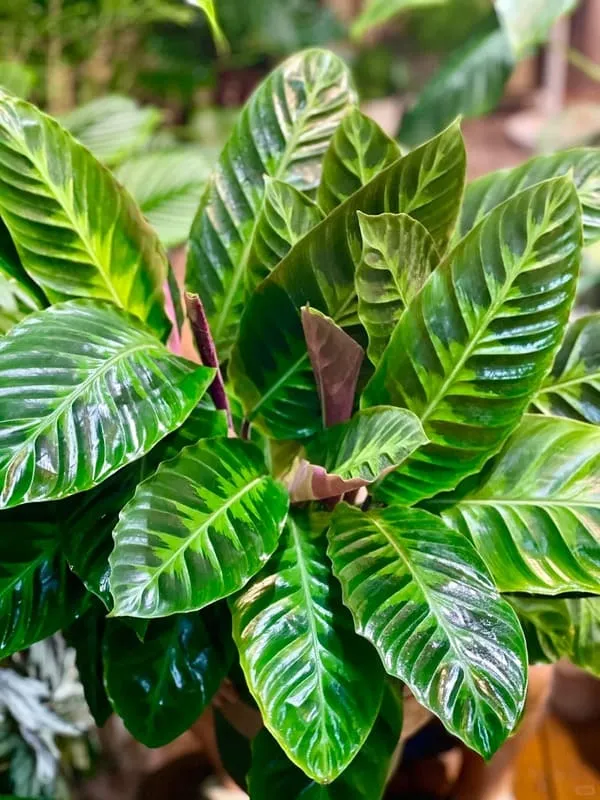
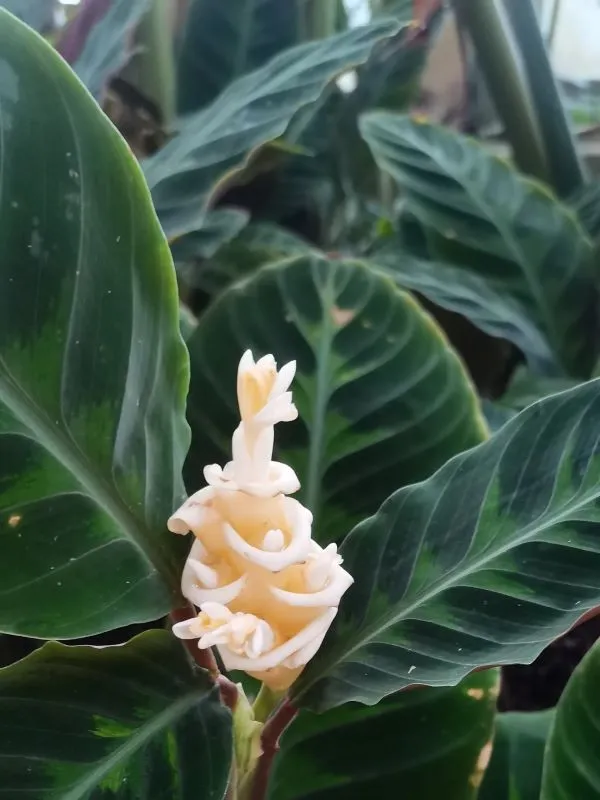
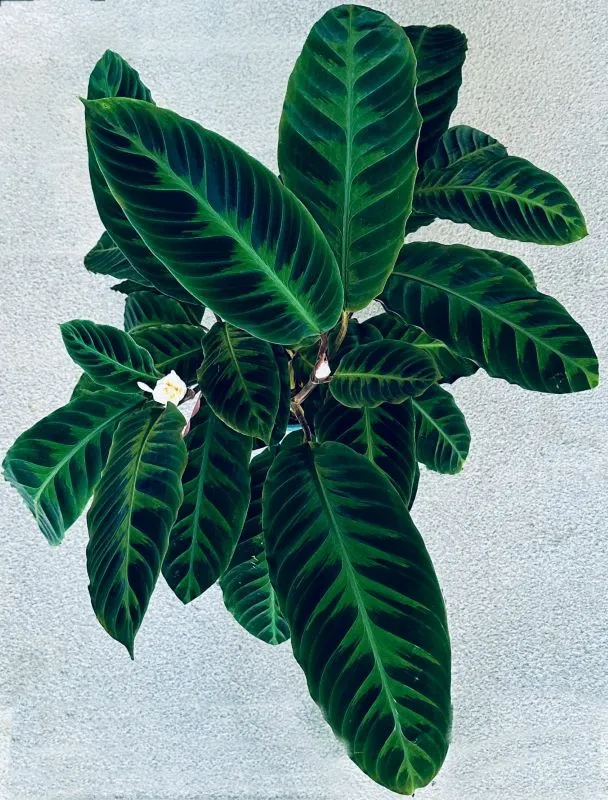
Velvet Calathea, often sold as Calathea warscewiczii, is one of the most beautiful Calatheas I have grown — and also one of the clearest examples of how much air humidity can matter. The leaves look soft and velvety from above, with deep green patterning and a purple underside that shows when the plant folds at night.
But this is not the Calathea I would describe as “forgiving.” Mine looked upright only on the first day after I brought it home. After that, the leaves kept sagging until I moved it into the bathroom, where the higher humidity finally helped it stabilize.
In this guide, I’m using Velvet Calathea as the main name because that is what most houseplant growers recognize. Botanically, the accepted name is Goeppertia warszewiczii, while Calathea warszewiczii is the older name still widely used in shops and searches.
My Velvet Calathea Care Snapshot
| Main issue I saw | Leaves sagged quickly outside a humid bathroom, even when watering and light looked reasonable. |
| What helped most | Higher air humidity and a more protected placement. |
| Best placement in my home | Bathroom during warmer months; grouped tropical setup with a humidifier in winter. |
| Watering rule | Keep the mix lightly moist, but never let the pot stay soggy. |
| What I do not rely on | Occasional misting. This plant needs stable humidity, not a few sprays. |
| Main warning sign | Fast drooping or curling after being moved into drier room air. |
| Best for beginners? | Not really. It is beautiful, but less forgiving than Musaica or Rattlesnake Calathea in dry homes. |
The Calathea That Taught Me How Much Humidity Really Matters
The first day it came home, it stood tall.
Just one day. That was it.
After that, the leaves never fully lifted again.
At first, I assumed it was a normal adjustment phase. I checked watering, light, temperature — nothing seemed obviously wrong. But the drooping never improved. Eventually, I moved it into the bathroom, thinking the higher summer humidity might help.
And it did.
The plant stabilized almost immediately. The leaves stopped collapsing, and for the first time, it looked like it wanted to live. Encouraged, I tried moving it back to the living room.
Big mistake.
Within hours, every leaf sagged again — not slowly, but dramatically. That was the moment I stopped blaming water or light and finally accepted the truth: this plant is extremely sensitive to air humidity.
So back to the bathroom it went.
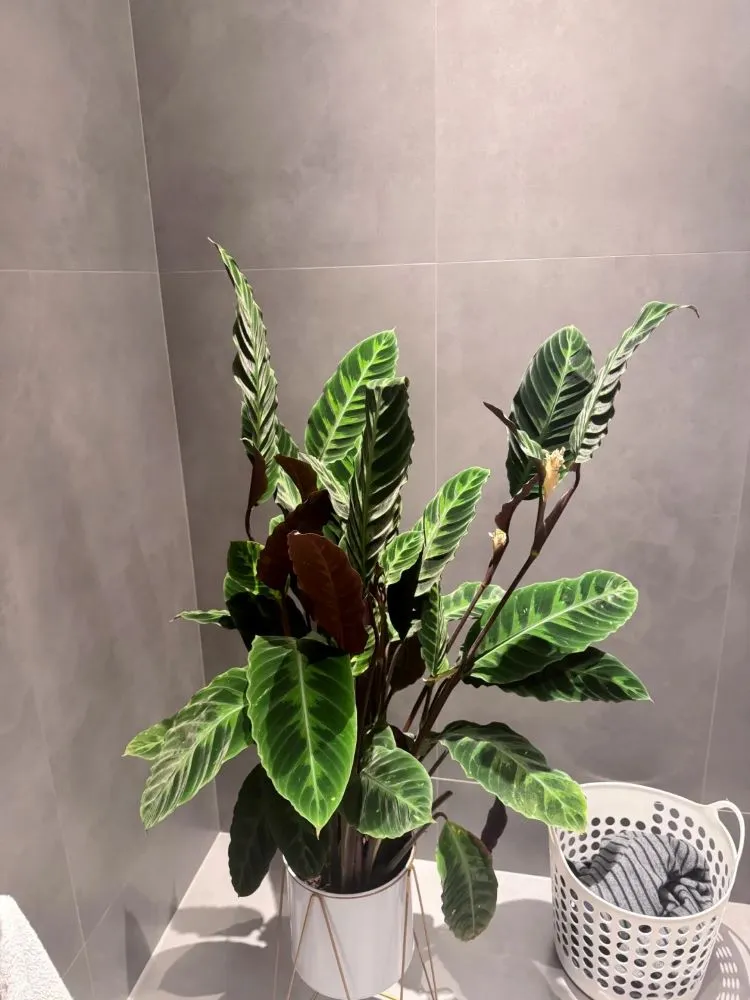
What really confirmed this for me was the comparison. I bought a Calathea ‘Green Apple’ at the same time. Same home, same light, similar watering — and that one never demanded this level of attention. No daily checking. No dramatic reactions. It simply adapted.
Warscewiczii didn’t.
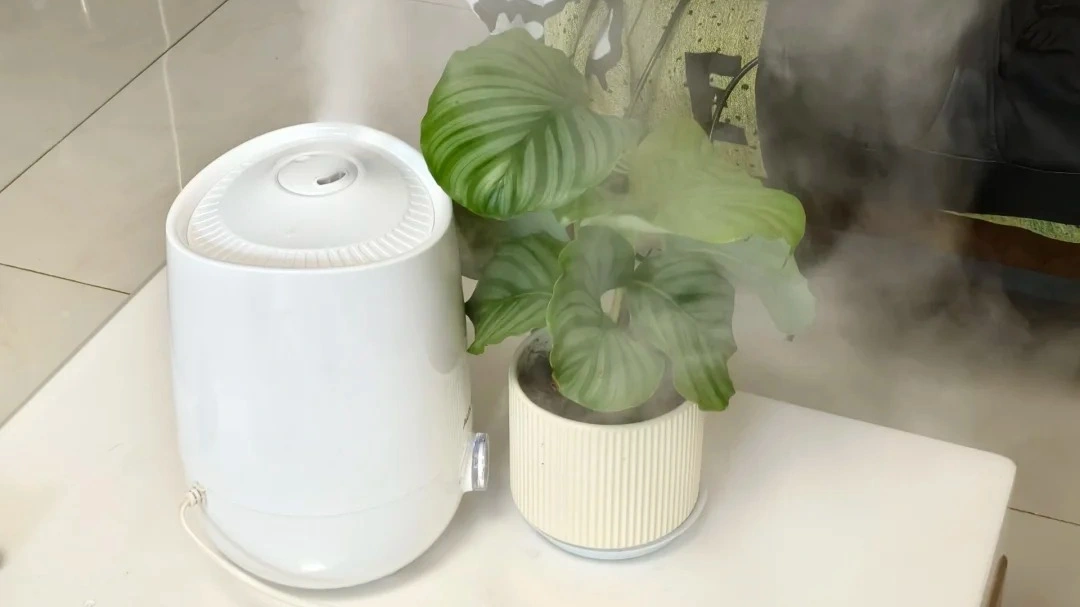
This plant doesn’t just prefer higher humidity — it relies on it. In normal living room conditions, especially without a humidifier running constantly, it struggles to hold its structure. Bathrooms, or grouped tropical setups with active humidification, are where it actually relaxes.
For now, it lives in the bathroom during warmer months.
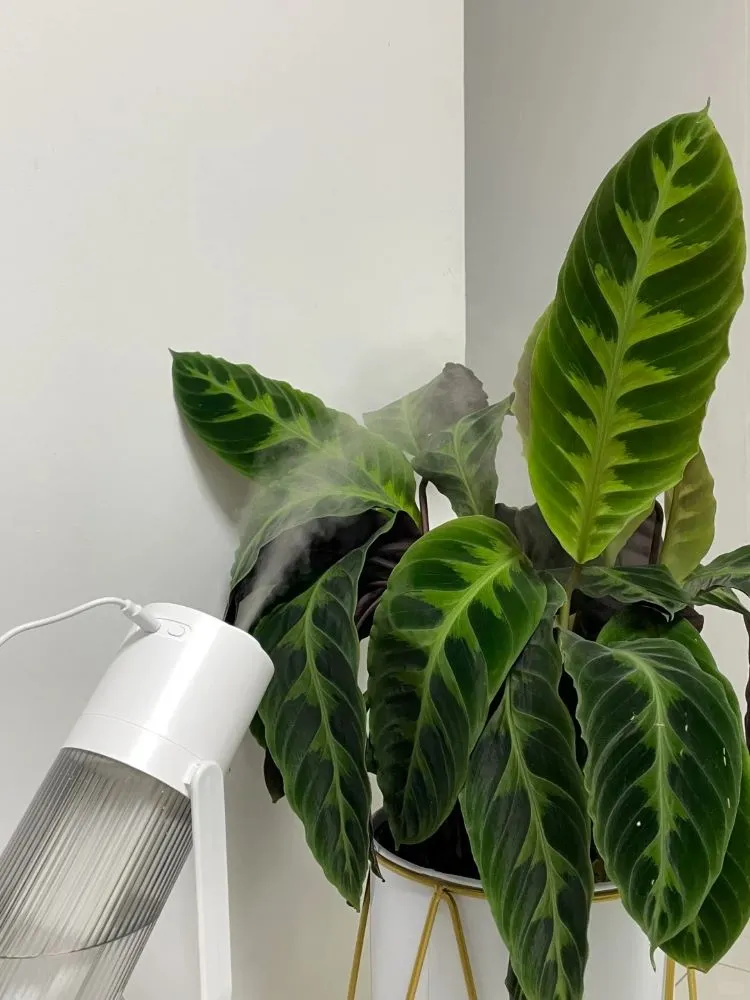
In winter, the plan is to move it out with my other tropical plants and run a humidifier consistently. Without that support, I already know what will happen — and so does the plant.
If there’s one lesson Warscewiczii taught me, it’s this:
some Calatheas tolerate dry air; this one absolutely does not.
Detailed Care Guide
Watering
I keep Velvet Calathea lightly moist, but I do not treat moisture as a replacement for humidity. In my case, the plant still drooped when the air was too dry, even when the soil did not look seriously wrong.
I water when the top layer has started to dry and the pot feels a little lighter, then I let extra water drain away fully. In winter, I water less often, but I do not let the whole root ball become completely dry.
For a broader watering routine, see my Calathea watering guide.
Light
Velvet Calathea likes bright indirect light, but I would not put it in a hot window just to chase stronger growth. The velvety leaf surface marks easily, and direct sun can dull or scorch the pattern.
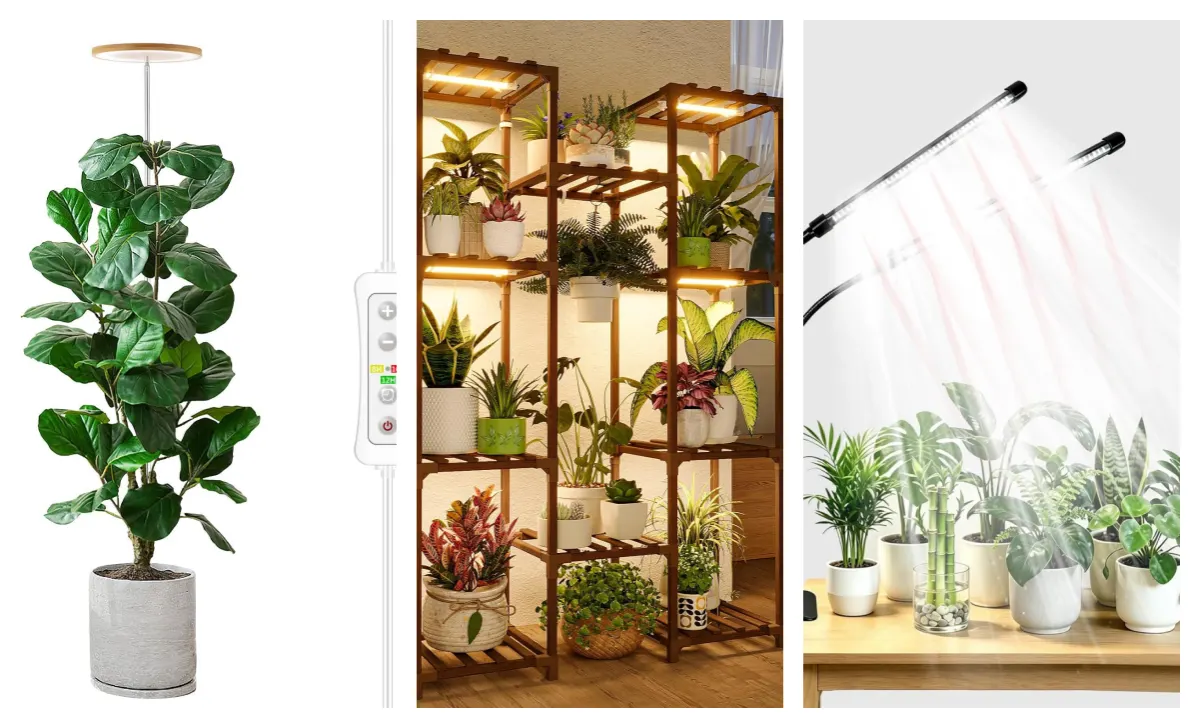
In my home, I care more about a stable, protected spot than maximum brightness. A north- or east-facing window can work well, especially if the plant is also getting enough humidity. For more detail, see my Calathea light requirements guide.
Soil
I use a loose, moisture-retentive mix rather than a heavy soil that stays wet for days. Velvet Calathea wants steady moisture, but the roots still need air.
- coco coir or peat for moisture
- perlite or pumice for air pockets
- a small amount of fine bark or compost for structure
The goal is simple: moist, not stagnant. My best soil for Calathea guide explains how I adjust the mix for indoor pots.
Fertilizer
I only feed Velvet Calathea when it is actively growing and the plant looks stable. If the leaves are drooping from dry air or stress, fertilizer is not the first fix.
During spring and summer, a diluted balanced fertilizer every few weeks is enough. I would rather underfeed slightly than push a stressed Calathea with too much fertilizer. For a simple schedule, see my Calathea fertilizer guide.
Humidity
Humidity is the care point I would not compromise on with Velvet Calathea. Mine made that very clear: bathroom humidity helped it stabilize, while the normal living room made the leaves sag again within hours.
I would not rely on occasional misting for this plant, especially because the velvety leaf surface can hold water marks. A humidifier, a naturally humid bathroom with enough light, or a grouped tropical setup works better than spraying the leaves once or twice a day.
For most homes, I would aim for steady humidity rather than a perfect number. My Calathea humidity guide explains which humidity methods actually help indoors.
Common Problems with Velvet Calathea
Common Problems with Velvet Calathea
With Velvet Calathea, I pay close attention to how fast the leaves react. A slow yellowing older leaf is one thing. A whole plant sagging within hours after being moved to drier air tells me something different.
Leaves suddenly drooping
This is the symptom I take most seriously with this plant. If the soil is not dry and the temperature is stable, I check humidity first. In my case, moving the plant out of the bathroom caused fast sagging, while the bathroom helped it stabilize again.
Curling leaves
Curling can come from low humidity, underwatering, cold air, or root stress. I do not automatically add water unless the pot actually feels light. If the soil is still moist, humidity and temperature are the next things I check. My Calathea curling and drooping guide can help separate the causes.
Brown or crispy edges
Dry air is a common cause, especially with this plant. Mineral-heavy water and inconsistent watering can also contribute. If the edges keep browning even when watering seems right, I would improve steady humidity before changing fertilizer or repotting.
Yellowing leaves
Yellowing often makes me check the roots and soil. A pot that stays wet for too long can stress the roots, especially if the plant has already been weakened by low humidity or a recent move. Compare symptoms in my Calathea root rot symptoms guide.
Faded or dull leaves
Harsh direct light can fade the velvety surface, while very low light slows growth. I would move the plant gradually into softer bright indirect light instead of making a sudden change.
Propagation and Repotting
Velvet Calathea cannot be propagated from a single leaf or stem cutting. Division is the realistic method, but I would only divide a healthy, actively growing plant.
- Best time: Spring or early summer, when recovery is easier.
- Method: Separate the root clump only where it naturally divides, with roots and several leaves on each section.
- Pot size: Move up only slightly. A pot that is too large can stay wet for too long.
- Aftercare: Keep the plant warm, humid, and out of direct sun while it settles.
For step-by-step photos and aftercare, see my Calathea propagation guide.
FAQ
Explore More Calathea Varieties
Looking to discover more beautiful Calathea plants?
Browse our full collection of Calathea varieties — from the bold Orbifolia to the velvety Warscewiczii — and find the one that fits your home best.