Last updated: April 26, 2026
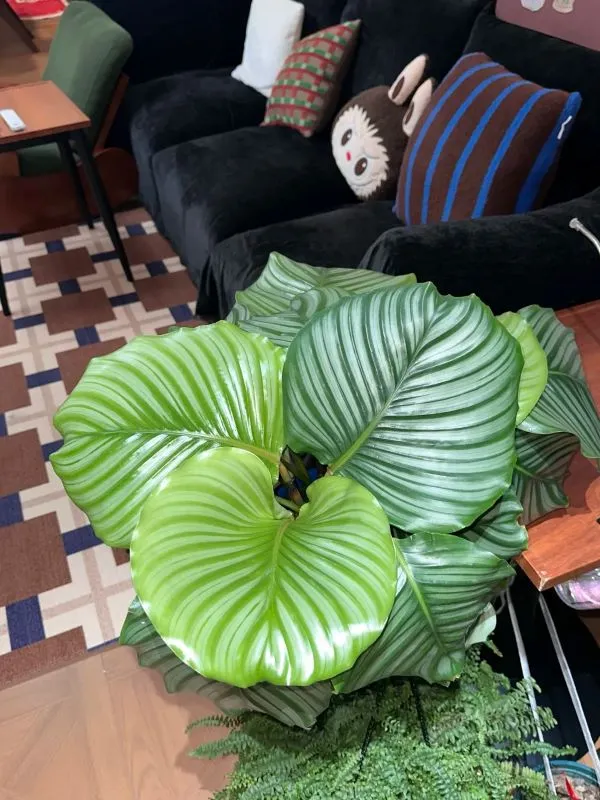
If I had to choose one everyday water for Calatheas, I would choose filtered water. If clean rainwater is available, I use that too. Rested tap water can also work in many homes, but only if it is not extremely hard or full of mineral buildup.
I learned this the slow way. My first Calathea developed brown edges and dull leaves while I was using tap water straight from the faucet. At first, I thought the problem was watering frequency, humidity, or light. But after testing different water sources over time — tap, filtered, rainwater, distilled water, and a few kitchen leftovers — I realized water quality was a bigger part of the problem than I expected.
For Calatheas, the best water is not the most expensive or the most “pure.” It is water that stays gentle on the roots: low in excess salts, not too alkaline, close to room temperature, and consistent enough that the plant does not have to keep adjusting.
In this guide, I’ll show what I actually use now, which water types helped, which ones caused problems, and which DIY options I would only treat as occasional experiments — not a regular watering routine.
The Real Comparison: What Works Best in Practice
After months of experimenting — and several near-disasters — I finally started tracking how each water type affected my Calatheas. Below is the summary I wish I had when I started.
| Water Type | Science Rating | Ease | My Results | Verdict |
|---|---|---|---|---|
| Tap (rested) | Moderate | 👍 High | 🌿 OK | Use if balanced and dechlorinated |
| Filtered Water | Good | 👍 | 🌿🌿 Great | Best daily option |
| Rain Water | Excellent | ⚠️ Seasonal | 🌿🌿🌿 Excellent | Ideal but rare |
| Fruit / Rice Water | Nutrient Boost | ⚠️ Needs care | 🌿🌿 | Good occasional tonic |
| RO / Distilled | Ultra-Pure | ⚠️ Costly | 🌿 | Use sparingly, not alone |
Tap Water — The Misunderstood Villain
What Really Happens in Tap Water
Tap water has earned a bad reputation among houseplant lovers — especially those who grow Calatheas. People blame it for everything: crispy tips, dull leaves, even root stress. But the truth is more complicated.
Tap water isn’t inherently “toxic”; it’s just chemically busy. Most municipal systems add chlorine or fluoride for sanitation and contain dissolved calcium and magnesium from underground rock layers — what we call hard water. These minerals are not evil on their own, but over time, they can accumulate in the soil, making it more alkaline and compact — the same reason you’ll notice growth slowdown after long use.
That shift raises the pH, reducing the plant’s ability to absorb iron, zinc, and manganese — the micronutrients that keep Calathea leaves green and patterned.
Letting tap water sit out can help in a few practical ways: it brings the water to room temperature, allows some dissolved gases to settle, and may reduce free chlorine if your local water uses chlorine. But it does not remove hardness, fluoride, chloramine, or mineral salts. That is why rested tap water can work in some homes, but not in every home.
If your tap water leaves white crust on pots, makes the soil surface look salty, or your Calathea keeps developing brown tips despite good humidity, I would switch to filtered water instead of trying to fix everything by resting the water longer.
My Safer Tap-Water Routine
I no longer treat tap water as automatically bad, but I also do not use it blindly. If your local tap water is not very hard, it can work for Calatheas after a little preparation. If you see white crust on the soil, mineral stains on pots, or repeated brown tips even when humidity is good, your tap water may be part of the problem.
Here is the routine I would actually recommend:
- Let tap water sit overnight before using it, mainly to bring it to room temperature and let some dissolved gases escape.
- Use filtered water if your tap water is hard. This is more reliable than trying to “fix” very hard water with vinegar.
- Only adjust pH carefully. A few drops of vinegar may help in some situations, but I would not recommend doing this every time unless you understand your water and soil conditions.
- Flush the pot occasionally with cleaner water if you see mineral buildup, but make sure the pot drains well afterward.
My main takeaway: tap water can be usable, but it should not leave the soil salty, crusty, or heavy over time. For sensitive Calatheas, filtered water is a safer default.
Filtered Water — My Best Everyday Choice
Filtered water is the option I trust most for everyday Calathea care. It is easier than collecting rainwater, gentler than hard tap water, and not as empty as distilled or RO water. For most indoor growers, this is the most realistic “best water” choice.
My Calatheas respond best when the water is consistent. Filtered water gives me that consistency. It reduces some of the harshness of tap water without turning watering into a complicated project every week.
If someone asked me what to use without testing five different options, I would say this: start with filtered water at room temperature, then adjust only if your plant still shows brown tips, yellowing, or mineral buildup.
Kitchen Leftover Water: What I Would Use Carefully, Not Regularly
If you’ve ever felt bad pouring leftover water down the drain — rice rinse, fruit peels, even flat soda — you’re not alone. I’ve tried them all. Some flopped, some surprised me. And the ones that worked turned out to be gentle, nutrient-rich tonics that Calatheas actually respond to.
Pasta or Potato Water — The Gentle Starch Tonic
If you don’t cook rice often, pasta water or potato water works just as well. When you boil pasta or potatoes, trace amounts of starch, amino acids, and minerals leach into the water — all mild nutrients that help feed soil microbes and improve texture.
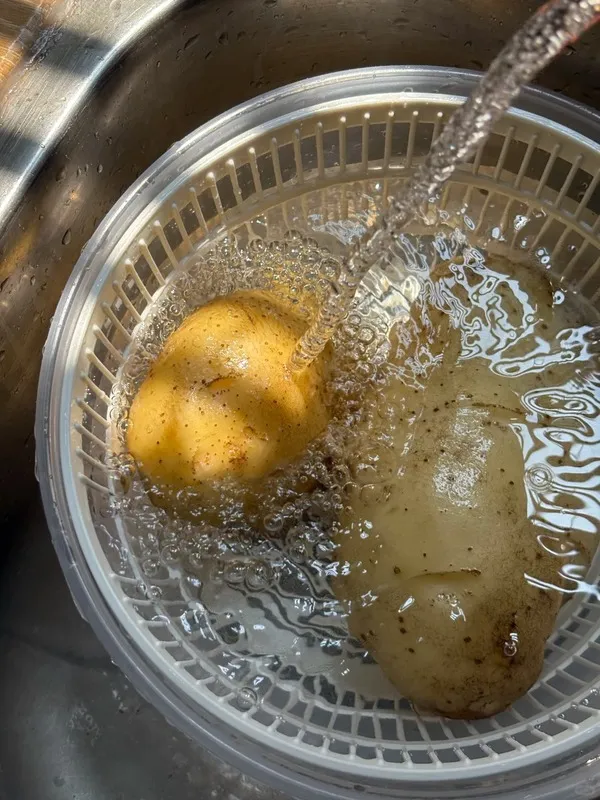
Just make sure it’s unsalted and fully cooled before use, and dilute it 1:3 with clean water. Salt and oil are dealbreakers, so always take the water before seasoning.
“When I tested diluted leftover pasta water occasionally, the leaves looked a little more awake — but I still would not treat it as a replacement for a balanced fertilizer routine.”
This gentle starch tonic supports root growth without overwhelming your plant — an easy supplement to your fertilizer routine.
Citrus Peels, Not Perfume: Turning Trash into Root Booster
Fruit-peel water sounds like a gimmick until you make it carefully. Citrus, banana, or apple peels may add small amounts of organic acids and trace nutrients after fermentation, but I treat this as a mild supplement, not a root-growth shortcut.
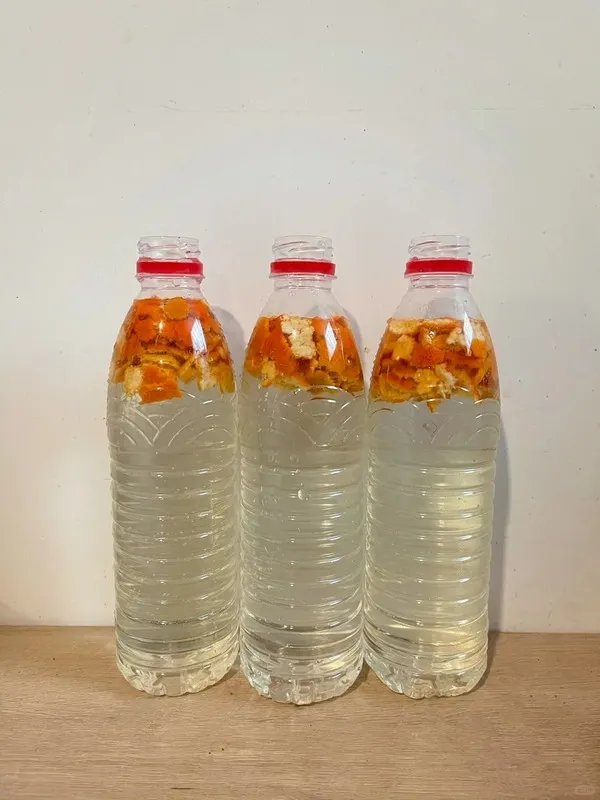
How I do it:
1️⃣ Chop up peels and place them in a bottle, filling it about 70 % with water.
2️⃣ Don’t seal the cap tightly — pressure builds as it ferments. Open it daily to release gas.
3️⃣ After 10–15 days, when the peels sink and bubbles stop, strain and dilute 1:20 before watering.
The smell should be lightly fermented, not rotten. If it smells sour, putrid, or moldy, I do not use it. Even when it turns out well, I only use fruit-peel water occasionally and always dilute it heavily.
One time I forgot to vent the bottle — it “popped” across the kitchen. Lesson learned: fermentation needs to breathe.
Soda or Beer Water: I Would Not Use This as a Calathea Routine
I have tested very diluted leftover drinks before, but I would not recommend soda or beer as a normal Calathea watering method. Calatheas are sensitive-rooted plants, and sugary or alcoholic leftovers can create more problems than benefits if used too often.
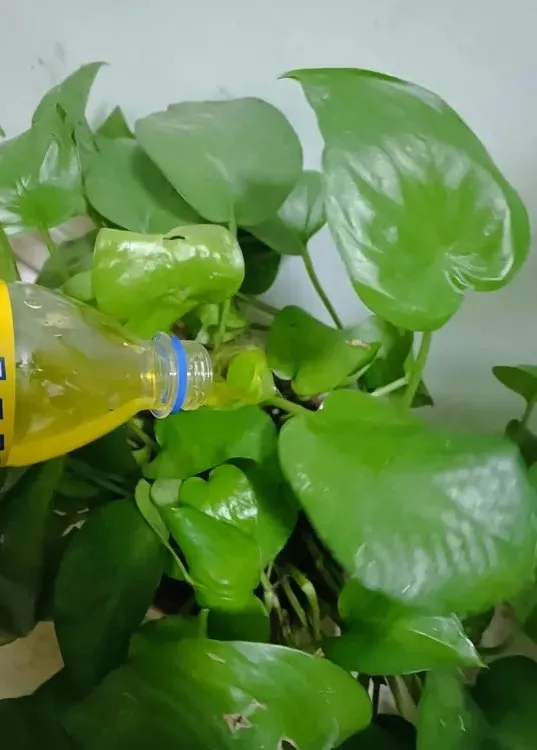
Leftover soda or beer may sound fun as a plant experiment, but I would not use them as a normal Calathea watering routine because sugar and additives can create more problems than benefits.
The main risks are simple: sugar can encourage mold or fungus gnats in Calathea soil, alcohol can stress roots, and flavored drinks may contain additives the plant does not need. Even when a drink has gone flat, that does not make it a clean plant food.
If you enjoy experimenting, keep this in the “rare experiment” category, not the care routine category. Personally, I would rather use filtered water, rainwater, or a properly diluted fertilizer than rely on soda or beer for a Calathea.
Aquarium Water: Useful Only If the Tank Is Clean and Freshwater
Freshwater aquarium water can be useful for Calatheas because it contains mild nutrients from fish waste and organic activity. But I only use it when the tank is healthy, freshwater, and free from medication, salt, algae treatments, or chemical additives.
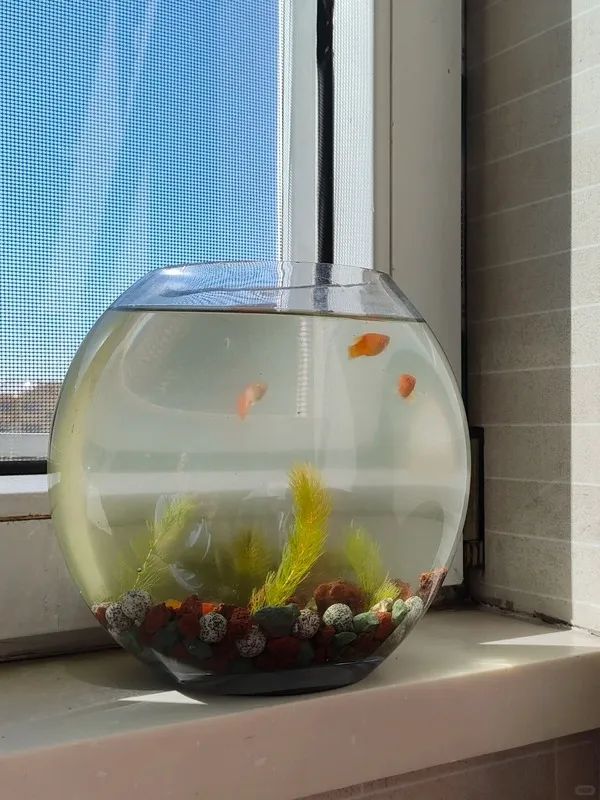
I do not use aquarium water as my main water source. I treat it more like a light fertilizer drink during active growth. If the water smells bad, looks cloudy, or comes from a treated tank, I skip it completely.
- Use only from a healthy freshwater tank.
- Avoid water with medication, salt, or algae remover.
- Dilute it if it is nutrient-heavy.
- Use occasionally, not every watering.
For daily watering, filtered water is still more predictable. Aquarium water is a supplement, not a replacement.
Snow & Rain — Nature’s Soft Water
🌨 Snow Water
If you live in a northern climate, you might be sitting on one of the best hidden watering sources — snow.
When melted and allowed to reach room temperature, snow water acts as natural soft water, almost completely free from the minerals that cause buildup in soil.
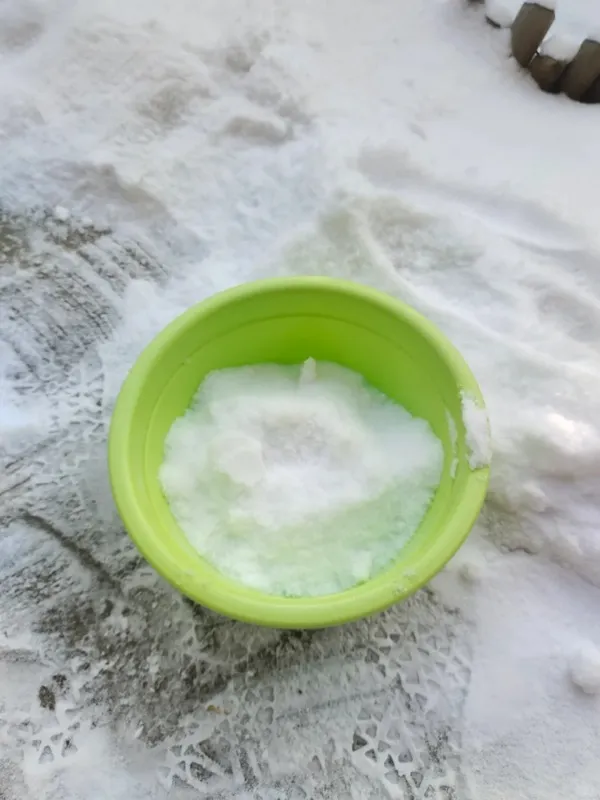
The key is temperature.
Cold melt straight from outside can shock the roots and cause drooping or leaf curl.
“Snow water feels poetic — until you shock the roots with icy melt. Always let it rest indoors before using.”
Once thawed and gently warmed, snow water delivers moisture that feels closer to what tropical rain would be — clean, oxygen-rich, and slightly acidic. It’s perfect for houseplants that crave softness over intensity.
🌧 Rain Water
Rainwater: My Favorite Natural Option When I Can Collect It Cleanly
Clean rainwater is one of the best water sources for Calatheas because it is naturally soft and usually lower in dissolved minerals than hard tap water. When I can collect it safely, I like mixing it with filtered water rather than using it as a complicated “special treatment.”
The important part is cleanliness. I avoid the first runoff from dusty roofs or dirty balconies, and I do not store rainwater for too long. I filter out debris, keep it covered, and let it reach room temperature before watering.
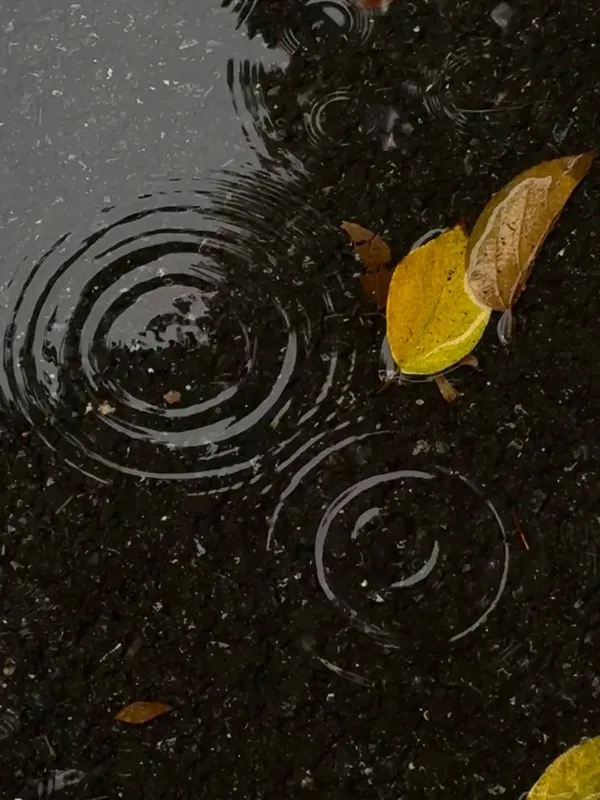
For indoor use, you can collect rainwater in a clean container, filter out debris, and store it in a covered jug for up to two weeks. It’s the most natural form of hydration you can offer your Calathea — soft, balanced, and biologically active.
Just make sure your area has low air pollution; rain near industrial zones or heavy traffic can carry unwanted residues.
📌 My Routine
I save clean rainwater whenever possible — usually from balcony runoff during early summer showers.
When mixed 1:1 with filtered tap water, it lasts longer and stays balanced.
The leaves respond almost instantly: more sheen, less crisping, and that subtle “alive” quality you only see in healthy foliage.
In every drop of rain, there’s a bit of the rainforest your Calathea once called home.
Science & Myth-Busting
💡 Soft Water Isn’t Always Good
For years, “soft water” has been praised as a plant-friendly choice — and in some ways, it is.
Softened water is free from the calcium and magnesium that make hard water problematic. But here’s the catch: most home water softeners don’t just remove minerals — they replace them with sodium ions.
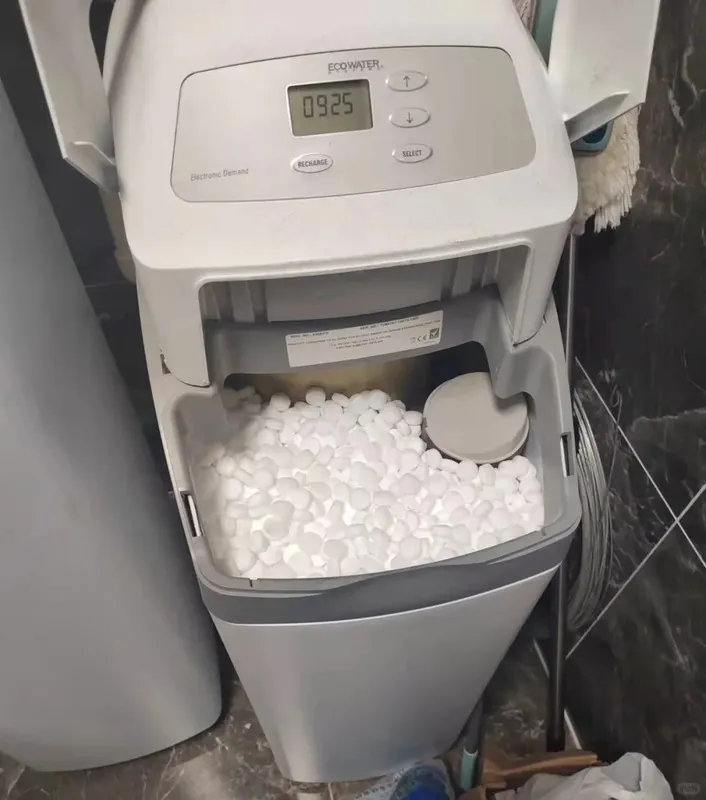
That sodium builds up in the soil over time, compacting the structure and disrupting the delicate nutrient exchange at the roots. The result? Yellow leaves, weak growth, and a plant that looks thirsty even when the soil is wet.
“Softened water solves one problem and creates another — invisible salt stress that may show up as yellow or brown leaves later.”
I’ve tested it myself: my Calathea looked fine for the first month, then gradually lost its sheen. The soil even felt heavier. It wasn’t until I flushed the pot with filtered water that the plant perked up again.
So while softened water might be great for your dishwasher, it’s not the kind of softness your Calathea wants.
Stick to filtered or naturally soft water instead.
This is especially risky in pots because salts do not wash away the way they might in outdoor soil. They stay in the root zone unless you flush the pot or refresh the mix.
💧 RO / Distilled Water Experiment
Next came the opposite extreme: reverse osmosis (RO) and distilled water — the purest water you can get.
I once thought it would be the perfect solution: no chlorine, no fluoride, no minerals.
But after several weeks of using it exclusively, the leaves looked flat, almost tired.

The science behind it explains why:
RO and distilled water have extremely low mineral content and very low osmotic pressure.
In lab experiments, plants grown hydroponically in pure RO water without nutrients actually lost minerals from their tissues — the water was so “hungry” it pulled ions back out of the roots.
Distilled and RO water are useful when you need very low-mineral water, especially for flushing salts from the soil or mixing with fertilizer. But I do not like using them as the only long-term water source for Calatheas unless nutrients are added back in some way.
In my own plants, using very pure water alone made growth feel flatter over time. The leaves were not burning, but they did not have the same steady look I got from filtered water or clean rainwater. For me, pure water works best as part of a routine, not the whole routine.
That’s the paradox of purity: Calatheas need softness, not emptiness.
Pure water can be useful when mixed with nutrient solution or used to flush excess salts, but on its own, it lacks the natural buffering that roots depend on.
Over time, I learned to aim for “moderate purity with organic cushioning.”
That means filtered water or rainwater enriched by trace minerals, or even tap water that’s been aged and slightly acidified — clean, but not blank.
📌 My Takeaway
Soft water isn’t automatically safe, and pure water isn’t automatically perfect.
Like most things in plant care, the sweet spot sits somewhere in between — a balance of chemistry and context.
Calatheas thrive not in extremes, but in equilibrium.
My Final Verdict
For most Calathea growers, I would start with filtered water at room temperature. If you can collect clean rainwater, use it occasionally or mix it with filtered water. If your tap water is not very hard, rested tap water may be fine, but watch for mineral crust, repeated brown tips, or soil that starts feeling heavy over time.
I would avoid softened water from a home softener, very cold water, and frequent use of sugary or fermented leftover water. Kitchen experiments can be interesting, but they should never replace a stable watering routine.
After all my experiments, the lesson was simpler than I expected: Calatheas do not need magical water. They need gentle, consistent water that does not leave their roots fighting salt, shock, or buildup. If water quality is only one part of the issue, I would check the full Calathea care routine next.
FAQ
Still have more Calathea problems?
🌿 If your Calathea still has brown tips, curling leaves, or yellowing after changing water, the next step is to check watering rhythm, soil mix, and humidity together in the full Calathea Care hub.
Start the Care Guide →