When spots show up on calathea leaves, most people assume something is wrong — and the first reaction is usually to spray. It looks like pests or fungus, so we treat it like pests or fungus, often before we even know what we’re dealing with.
But after keeping calatheas for a while, I’ve learned that spots are usually a reaction, not a diagnosis. In real homes, a huge portion of calathea spotting comes from stress: watering swings, low humidity, sudden temperature changes, harsh light, or poor airflow — not an active infection that needs chemicals.
That’s why this article isn’t a “how to treat” guide. It’s a how to read the pattern guide, because the trend matters more than the appearance: whether the spots are spreading, whether new leaves are affected, and what else the plant is doing at the same time.
Below are the five most common spot patterns I see on calathea leaves — and what they usually mean in real life.
Quick Spot Pattern Overview
If you just want a fast gut check before diving deeper, these are the most common spot patterns I see on calathea leaves — and what they usually point to.
- Brown, irregular patches → Most often stress-related, not disease
- Dark spots with yellow halos → Not always fungal, despite how they look
- Dense speckling on leaf backs → Frequently mistaken for pests
- Gray, scuffed-looking areas → Usually physical or handling damage
- Small yellow dots → Doesn’t automatically mean insects
None of these patterns tell the full story on their own. What matters is how they change over time, and whether new growth shows the same signs. If you’re seeing multiple symptoms at once, it helps to start from a full diagnosis list: calathea leaf problems.
Brown Irregular Patches
What It Looks Like
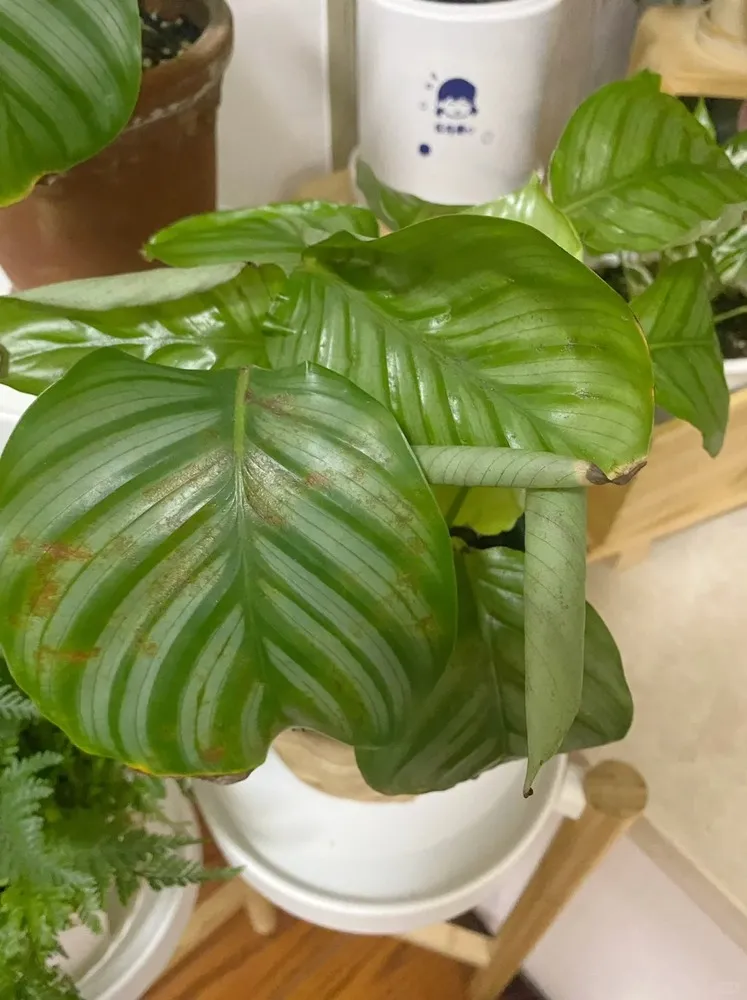
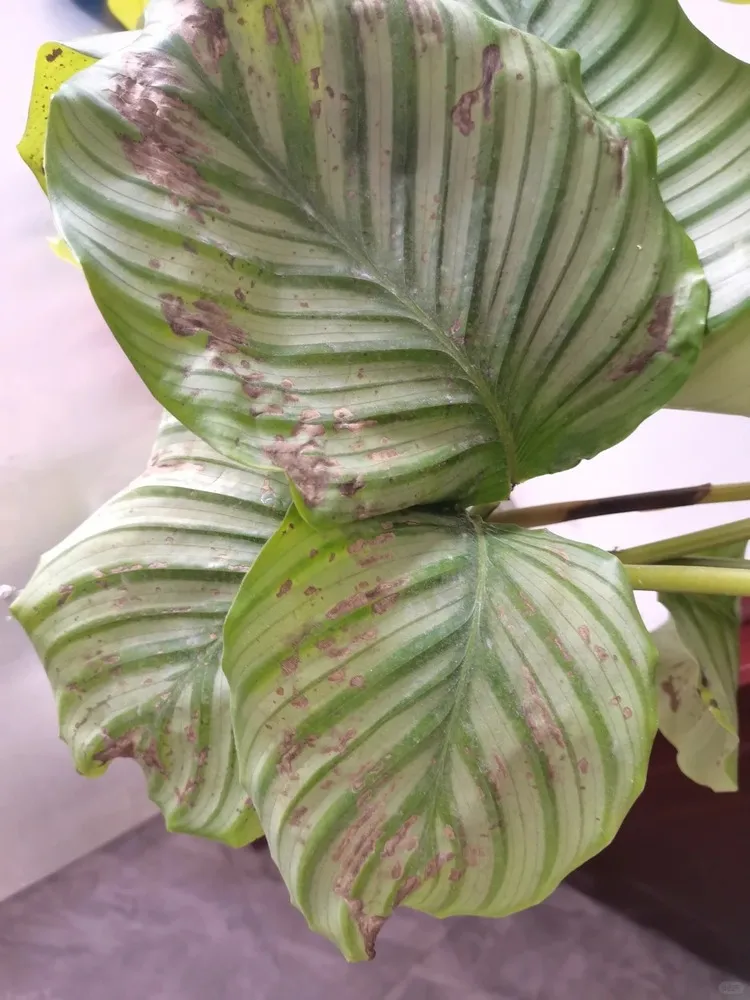
These spots are usually brown to gray-brown, with uneven shapes and soft, blurred edges. They tend to show up on older leaves first and don’t follow veins or margins in any clear pattern.
What It Usually Means
Most of the time, this pattern is a sign of environmental stress, not disease. Temperature swings, humidity fluctuations, inconsistent watering, or the adjustment period after moving the plant are the most common triggers, and older leaves are usually the first to react.
What It Is Not
This type of spotting is not contagious and does not behave like a fungal infection. It also doesn’t match typical pest damage, since there’s no chewing pattern, no residue, and no active spread once conditions stabilize.
What to Do
Instead of reacting to the spot itself, pay attention to whether it changes. If the patch stays the same size and no new spots appear on newer leaves, focus on stabilizing the environment rather than treating the leaf.
If the spot stays the same size, the problem has already passed.
Dark Spots With Yellow Halos
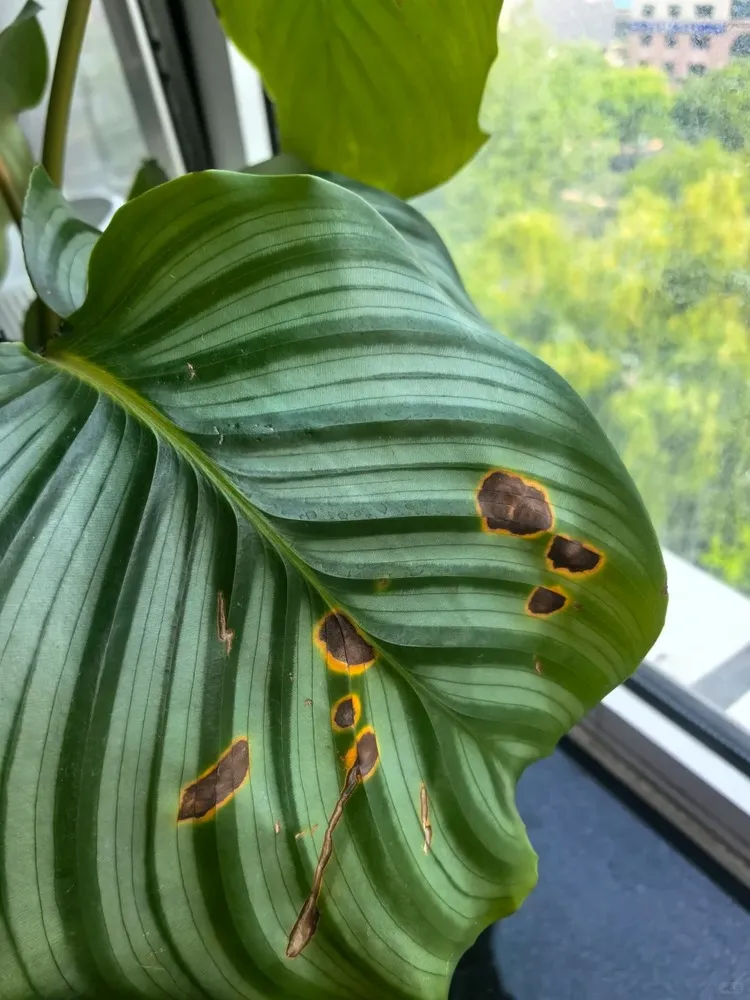
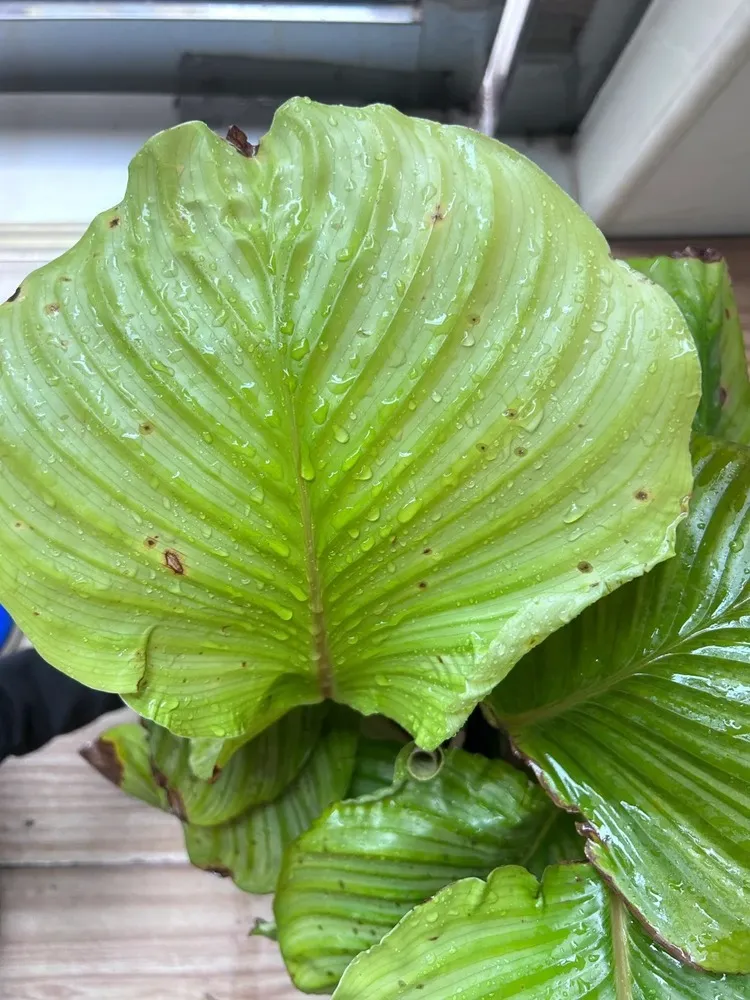
What It Looks Like
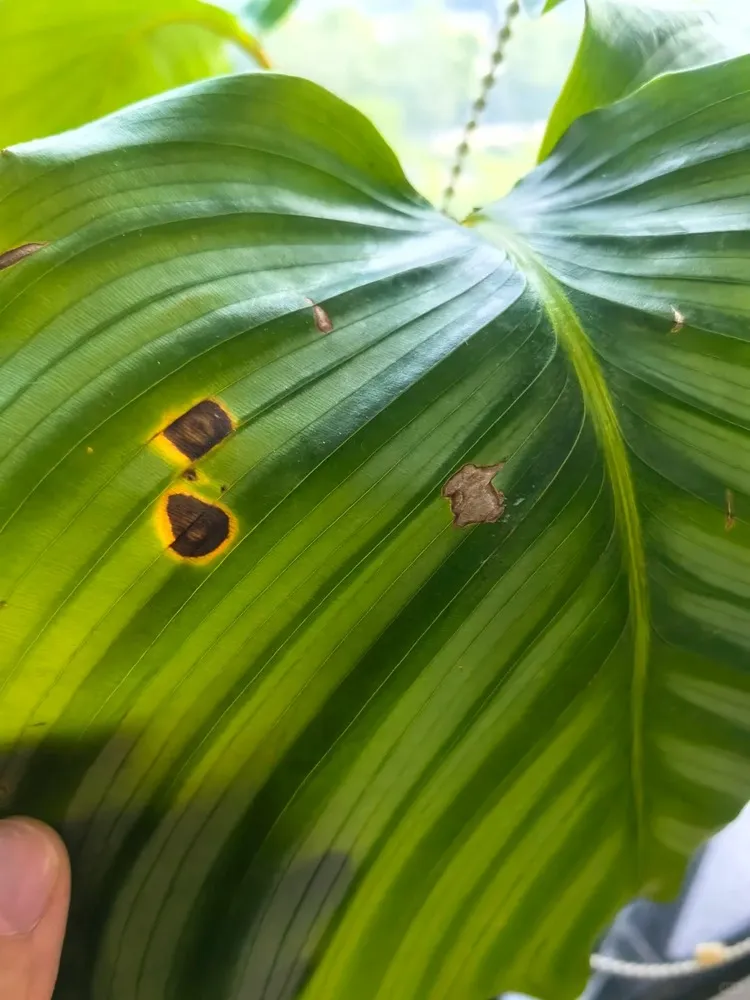
These spots appear dark brown to nearly black in the center, often surrounded by a faint yellow halo. The contrast makes them look sharp and alarming, especially when they stand out clearly from the rest of the leaf.
They usually show up on mature leaves and may look more defined than stress-related blotches, which is why they’re often mistaken for disease at first glance.
What It Usually Means
Despite how they look, this pattern does not automatically mean fungal or bacterial infection. In many real-life cases, it’s a stress response triggered by prolonged leaf wetness, cold exposure combined with moisture(see cold damage in calathea), or sudden environmental shifts.
Calatheas are sensitive to how water sits on their leaves. If your tap water leaves residue or you see repeated spotting after misting, switching water sources can help (my guide to the best water for calathea). When conditions are unfavorable, the plant may isolate damaged tissue, creating a dark center with a yellow boundary rather than allowing the issue to spread.
What It Is Not
This pattern is not proof of a contagious disease on its own. Without spreading edges, soft tissue, or new spots forming on nearby leaves, it doesn’t behave like an active infection.
It’s also not typical pest damage. Insects don’t create uniform dark centers with haloed margins, and there are usually other signs present when pests are involved.
What to Do
The key is to watch whether the spots expand or multiply. If they remain stable in size and no new halos appear, treatment is usually unnecessary.
Focus instead on keeping leaves dry, avoiding cold and wet conditions at the same time, and maintaining consistent airflow.
If nothing changes, intervention often creates more problems than it solves.
Dense Speckling on the Leaves
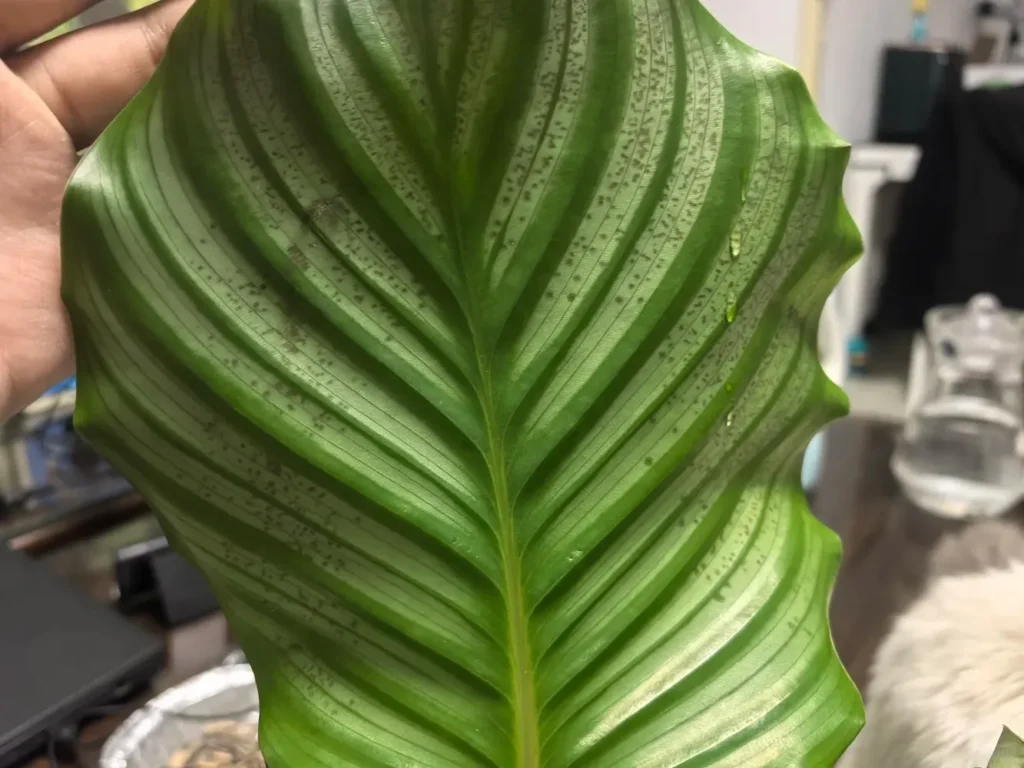
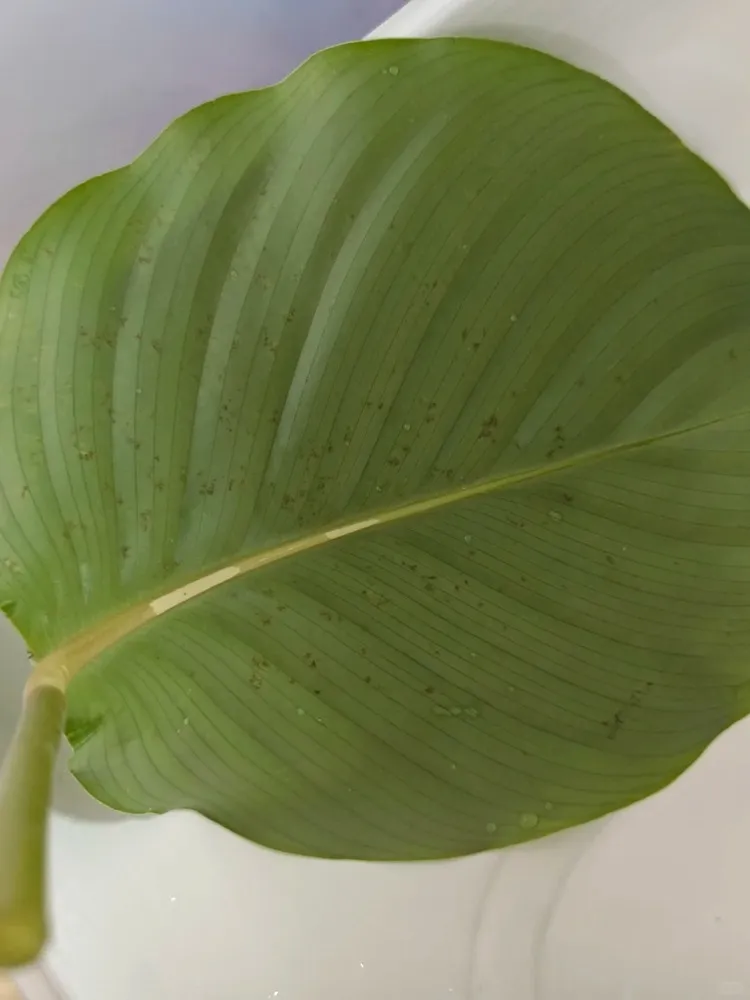
What It Looks Like
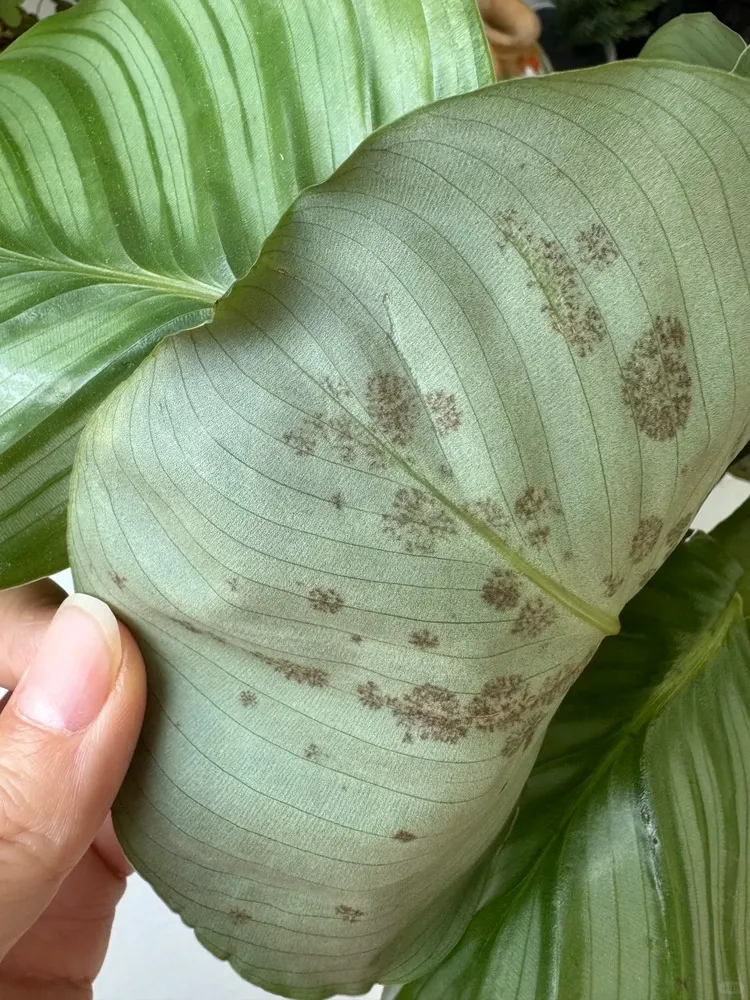
This pattern shows up as many tiny dots clustered on the underside of the leaf, often following the veins. From a distance, the leaf can look dusty or dirty rather than damaged.
The upper surface usually looks fine, which is why the spotting often goes unnoticed.
What It Usually Means
In most cases, this is a combination of leaf aging and long-term stress, not an active problem. Older calathea leaves tend to show subtle structural changes over time, especially when humidity has been consistently lower than ideal.
This kind of speckling develops slowly and reflects cumulative conditions rather than a single triggering event.
Why It’s Often Misdiagnosed
Many people assume these dots are insect eggs or pest residue. But when pests are involved, there are usually additional signs — silver streaks, webbing, visible insects, or sticky residue.
When none of those are present and the dots remain static, pests are unlikely to be the cause.
What to Check Instead
Look at whether the speckling appears mostly on older leaves and whether it has been stable over time. Also consider whether humidity has been consistently low rather than suddenly fluctuating.
If nothing is spreading and new leaves look normal, intervention usually isn’t necessary.
Not every dot is a bug.
Gray, Scuffed, or Scar-Like Areas
What It Looks Like
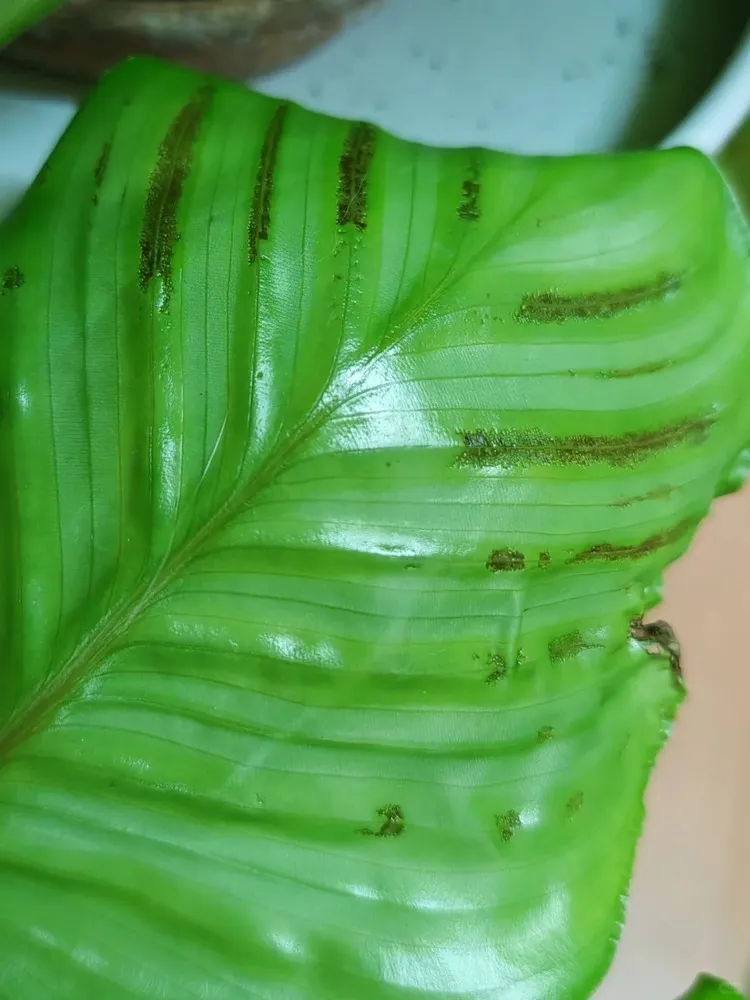
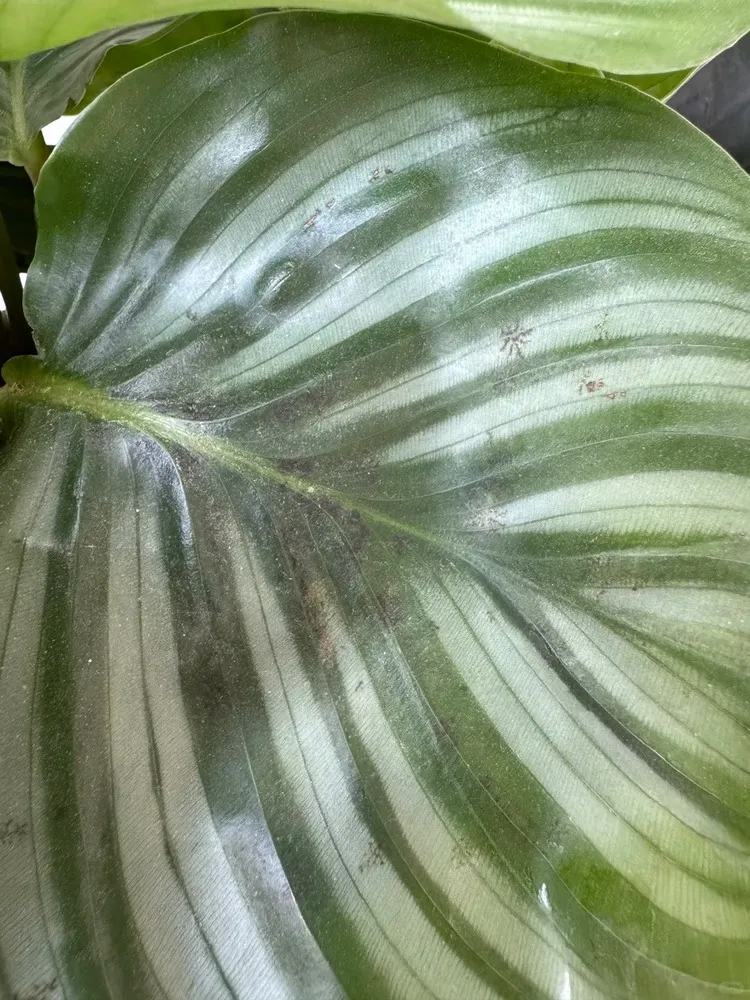
These areas appear lighter or grayish compared to the rest of the leaf, often with a dull, worn look. They tend to follow veins, folds, or natural creases rather than forming random shapes.
The texture stays firm and dry. There’s no softness, no water-soaked tissue, and no signs of decay.
What It Usually Means
This pattern almost always points to physical damage during leaf development. When a new calathea leaf unfurls under low humidity, gets rubbed during movement, or is briefly compressed, the tissue can scar as it hardens.
Once the leaf is fully expanded, these marks don’t change — they’re already “set.”
Important Note
This is a scar, not a symptom. It doesn’t spread, doesn’t worsen over time, and doesn’t affect future leaves.
Trying to treat it as a disease often causes more stress than the mark itself ever would.
Some spots are scars, not signals.
Yellow Dots or Light Spotting
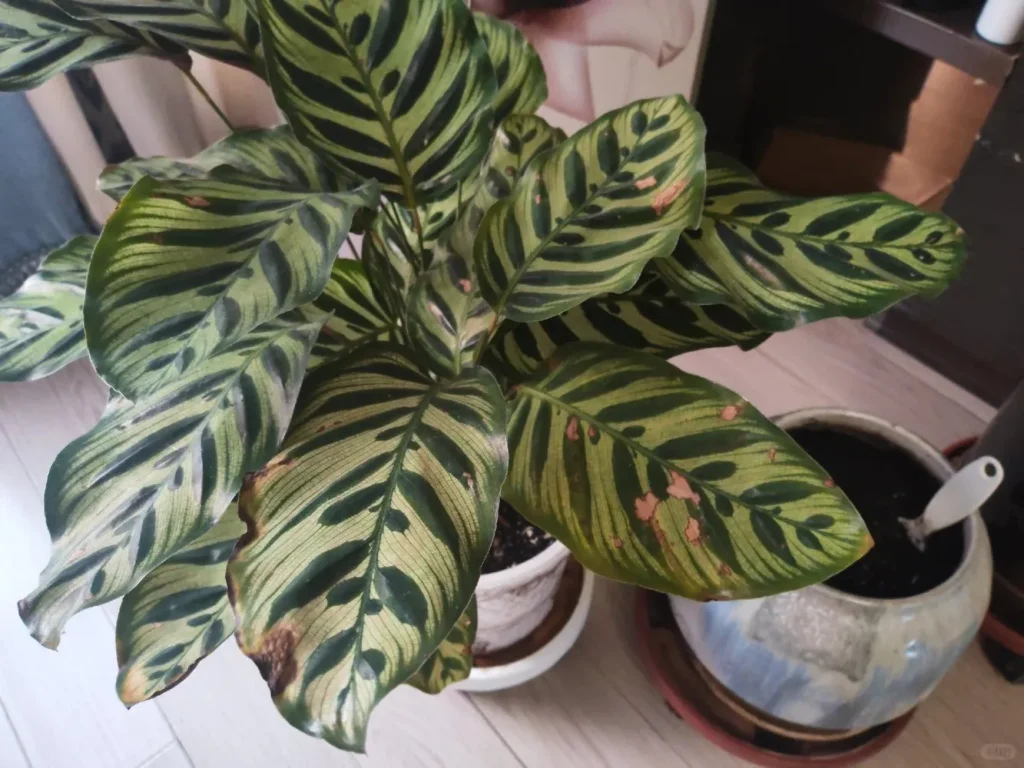
What It Looks Like
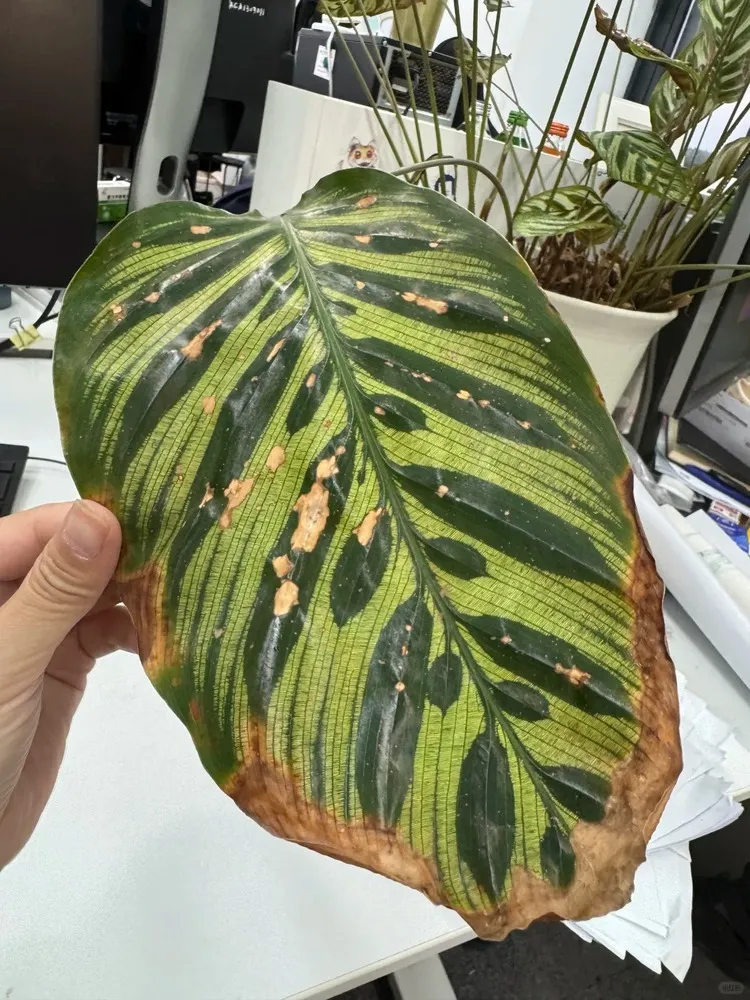
These spots are pale yellow and scattered rather than clustered. They don’t reflect light, don’t form lines or streaks, and usually appear quietly instead of suddenly.
From a distance, they can look subtle — more like fading than damage.
What It Usually Means
This pattern is most often linked to water or light fluctuations. A sudden change in light exposure (especially if it’s actually sunburn / brown patches), inconsistent watering, or a brief mismatch between the two can trigger mild stress that shows up as light spotting.
It’s a response to instability, not an ongoing attack.
How to Tell It Apart From Thrips
Unlike thrips damage, there are no silvery scrape marks, no black specks of waste, and no rapid spread across the leaf surface. If you suspect pests, start with the most common one indoors: calathea spider mites.
When those signs are absent and the dots remain unchanged, pests are unlikely to be involved.
What to Do
Check whether the plant was recently moved, rotated, or exposed to stronger light than before. Also review watering rhythm rather than volume — uneven timing matters more than a single missed or extra watering.
If conditions stabilize, these spots usually stop appearing on new leaves.
Spots on calathea leaves are often a record of what already happened, not what’s happening now. They reflect past stress, not current failure.
New growth tells the real story.
If new leaves look fine, your plant already recovered.
FAQ
If the spots don’t spread and new leaves look normal, the issue is usually already over.
Many calathea spots come from environmental stress, and chemicals add another layer of pressure. If your plant is also curling or drooping, this guide helps you rule out watering stress first: curling & drooping mistakes.
If the spots stay unchanged and none of those signs are present, pests are unlikely.
What matters is whether new leaves emerge clean — that’s the real indicator of plant health.
Keeping a spotted but stable leaf does not harm the plant or affect new growth.
Calatheas react more to inconsistency than to a single “mistake.” For seasonal shifts, this helps a lot: seasonal watering tips.
Still worried about your plant?
👉 For more tips on keeping your plant healthy, explore our Complete Calathea Care Guide.
Explore All Problems →