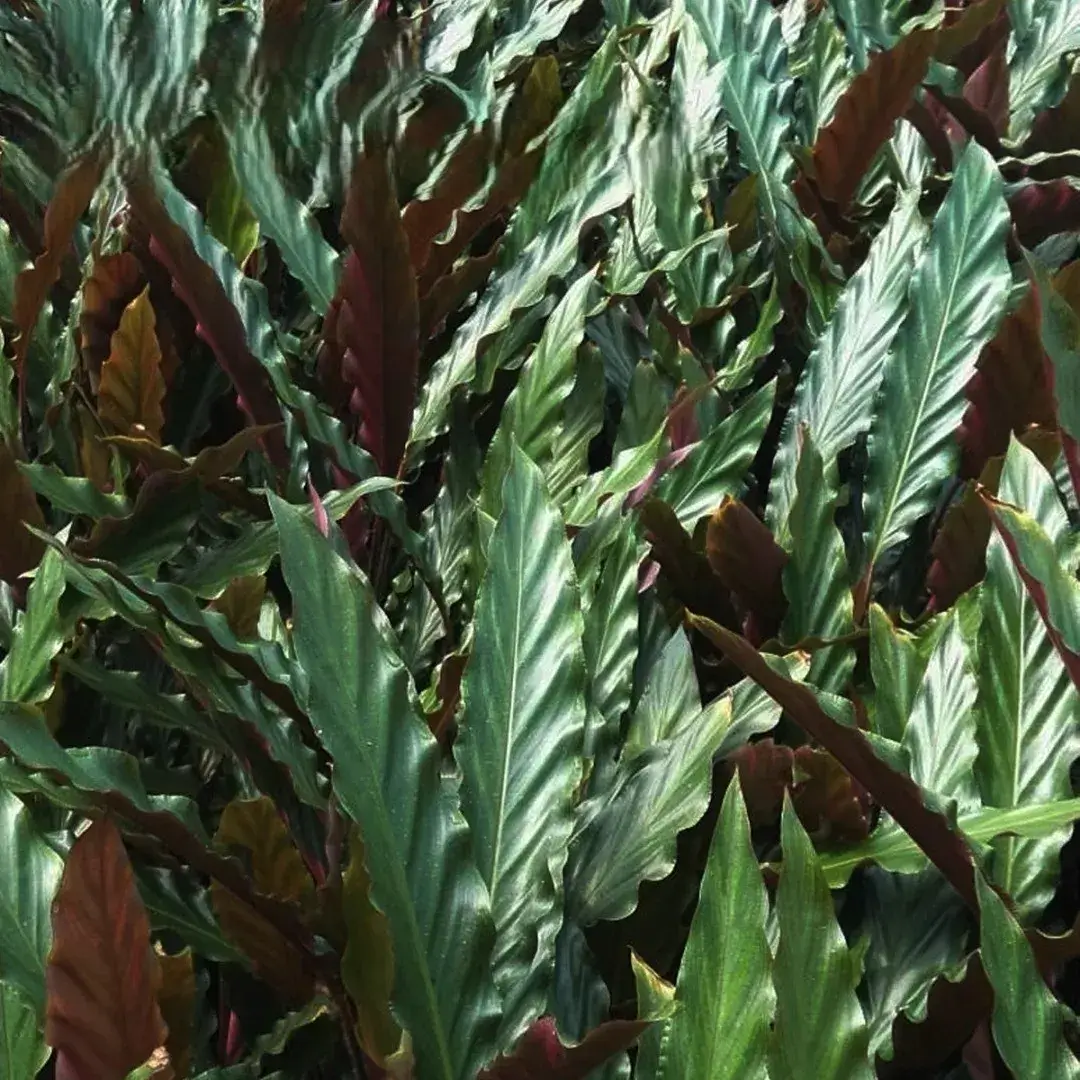
| Botanical Name | Calathea rufibarba |
| Common Names | Furry Feather, Velvet Calathea |
| Size & Growth | 1.5–2.5 ft (45–75 cm); upright, clumping form |
| Light Needs | Bright to medium indirect light; tolerates lower light |
| Watering | Keep lightly moist; slightly drought-tolerant |
| Humidity | 40–60% (more forgiving than most Calatheas) |
| Temperature | 65–80°F (18–27°C); avoid cold drafts |
| Soil | Light, airy tropical mix with fast drainage |
| Pet Safety | Non-toxic to cats and dogs |
| Difficulty Level | Easy–Moderate (beginner-friendly) |
The first time I touched a Calathea rufibarba, I finally understood why people call it “Furry Feather.”
The leaves look slim and elegant from above, but the moment you flip one over, you feel the soft layer of velvet along the underside — almost like peach fuzz. No other Calathea has this texture, and it gives the plant a warm, comforting personality that sets it apart immediately.
Rufibarba is also one of the few Calatheas I would confidently recommend to beginners — especially if you’re just learning the basics from a beginner Calathea care guide.
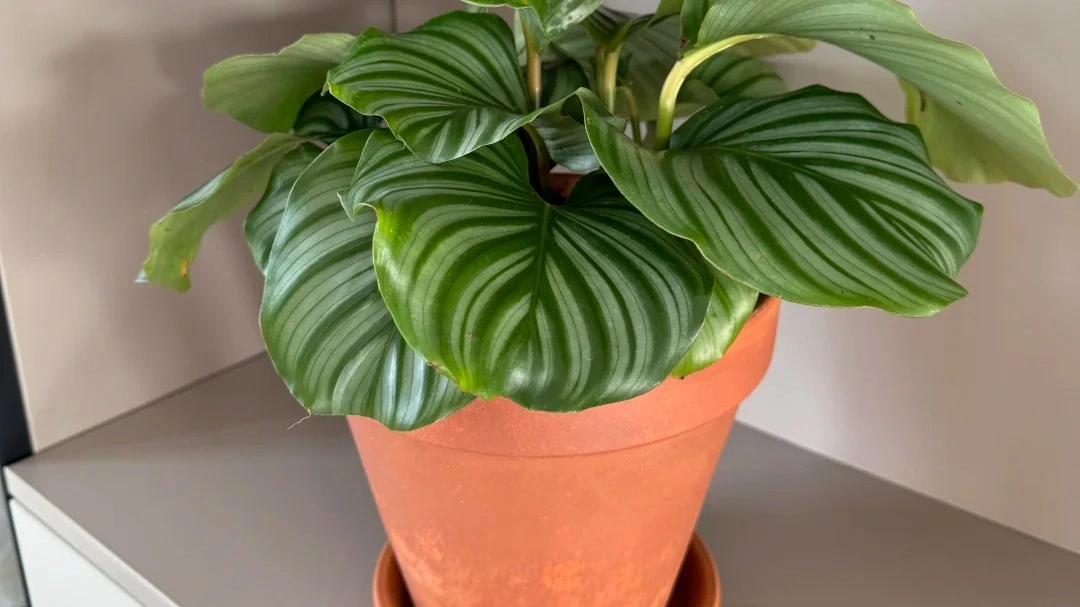
It doesn’t collapse in low humidity, doesn’t complain about a missed watering, and doesn’t demand a humidifier running 24/7. Compared with the dramatic Orbifolia or the sensitive White Fusion, this species is calm, steady, and genuinely forgiving.
But it still has the classic Calathea preferences:
it hates cold drafts, reacts to hard water, and prefers gentle, filtered light over anything harsh.
If you want a Calathea that keeps the tropical charm without the high-maintenance attitude, Calathea rufibarba is probably the easiest, softest, and most beginner-friendly choice in the entire group.
Appearance & Key Features
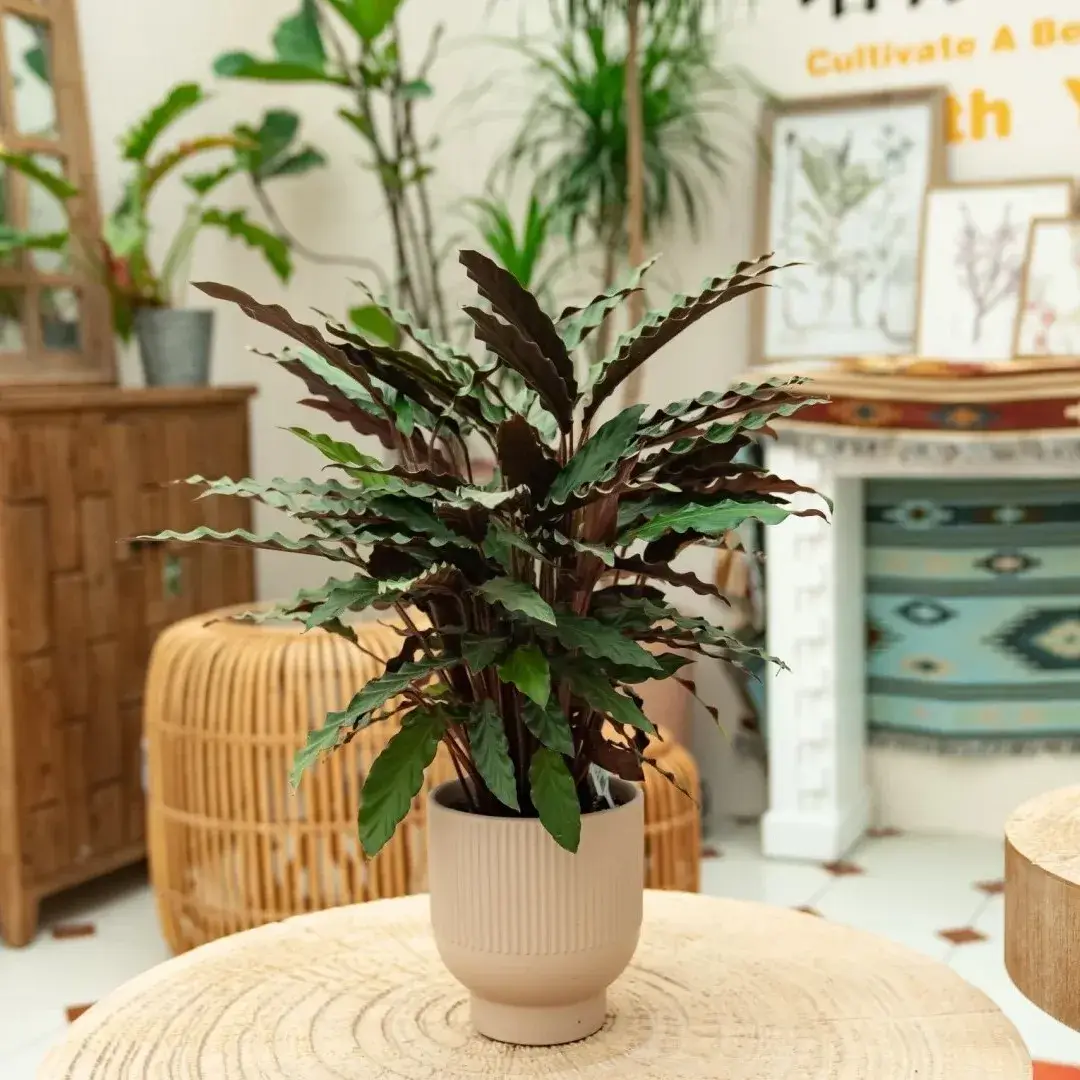
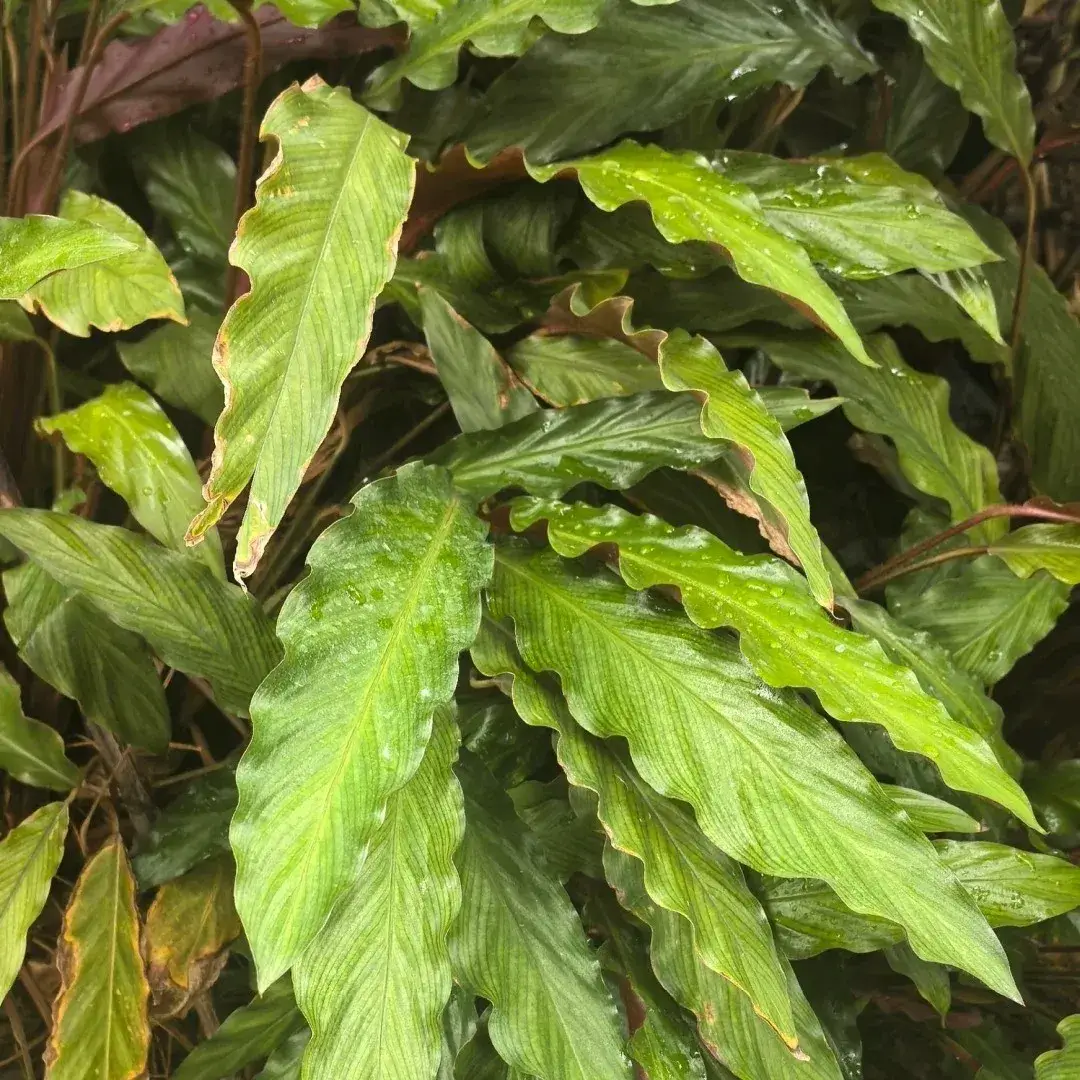
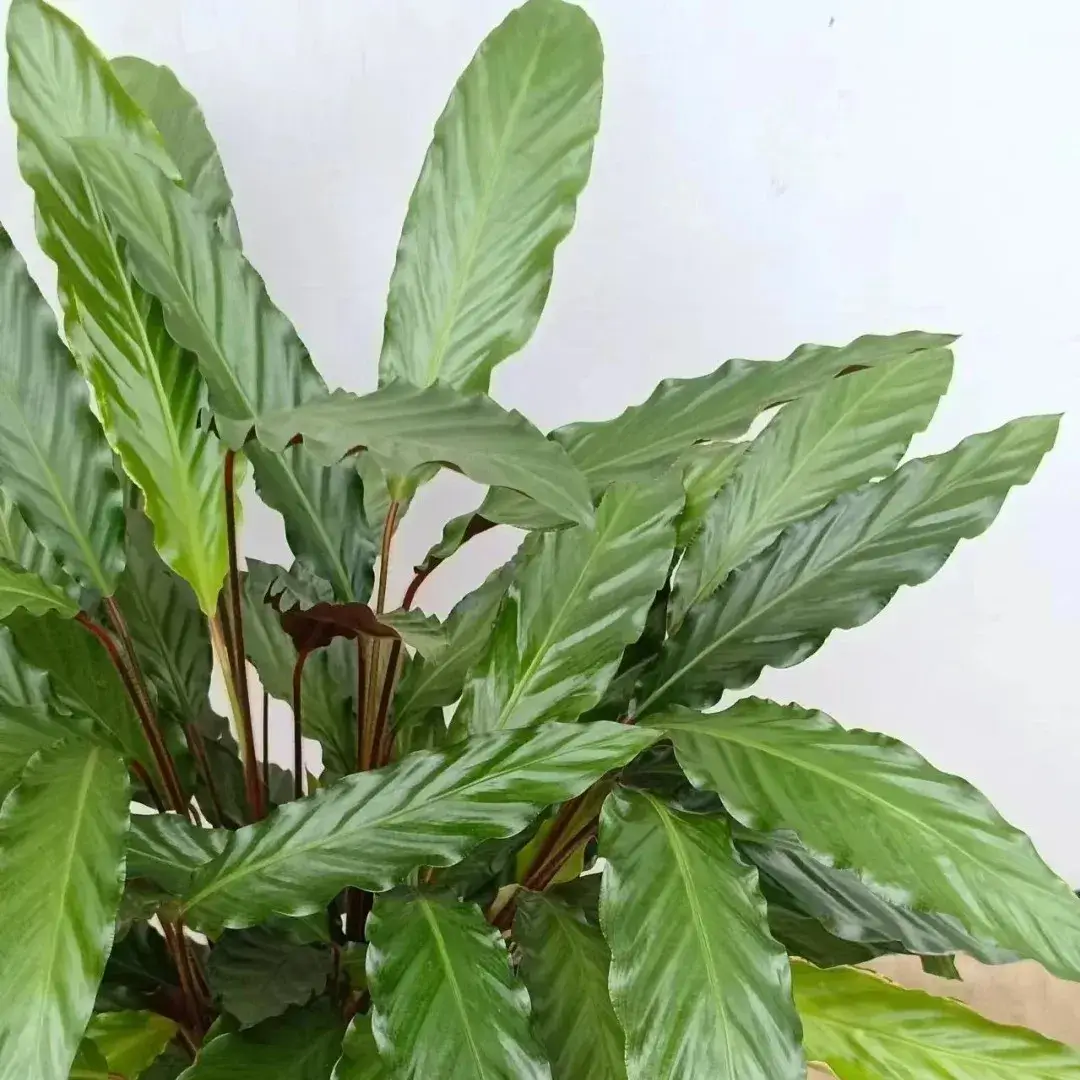
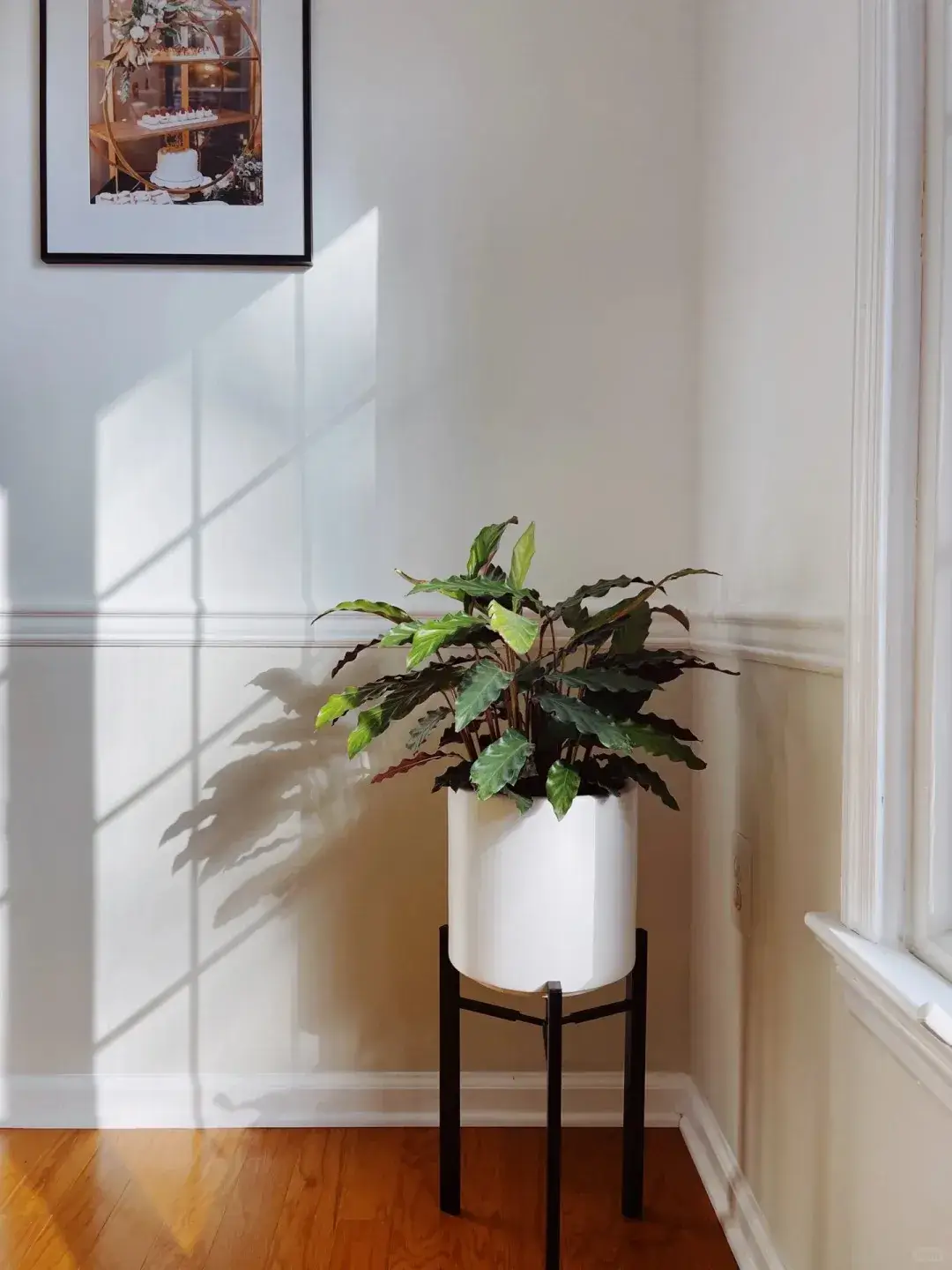
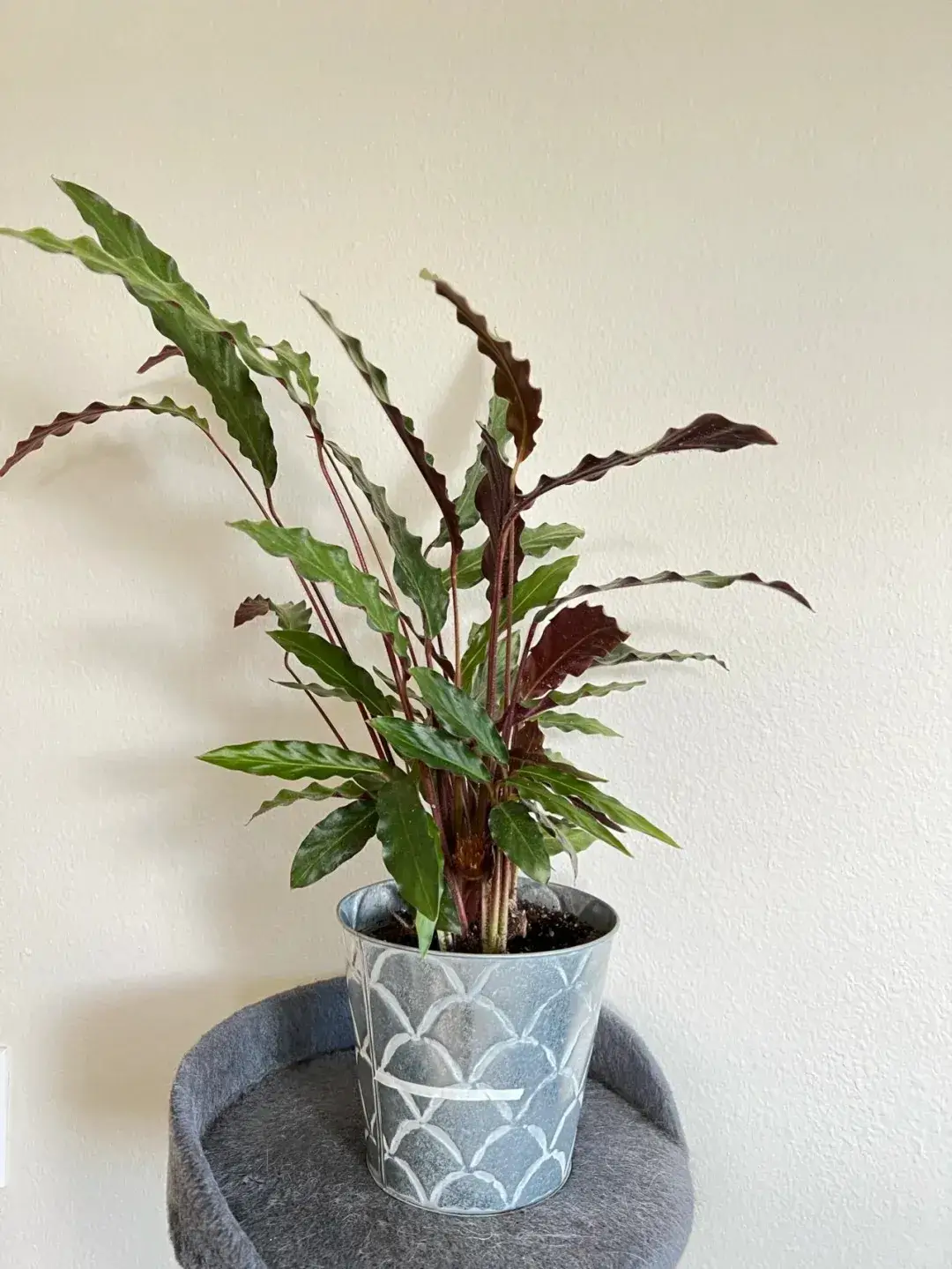
Calathea rufibarba stands out immediately because it looks nothing like the broad, flashy Calatheas most people know. The leaves are long, narrow, and softly wavy along the edges, giving the plant a light, feathery shape as it grows. When you lift a leaf, the surprise is on the underside: a layer of fine, velvety fuzz that feels almost like peach skin. This texture is what earned it the name “Furry Feather.”
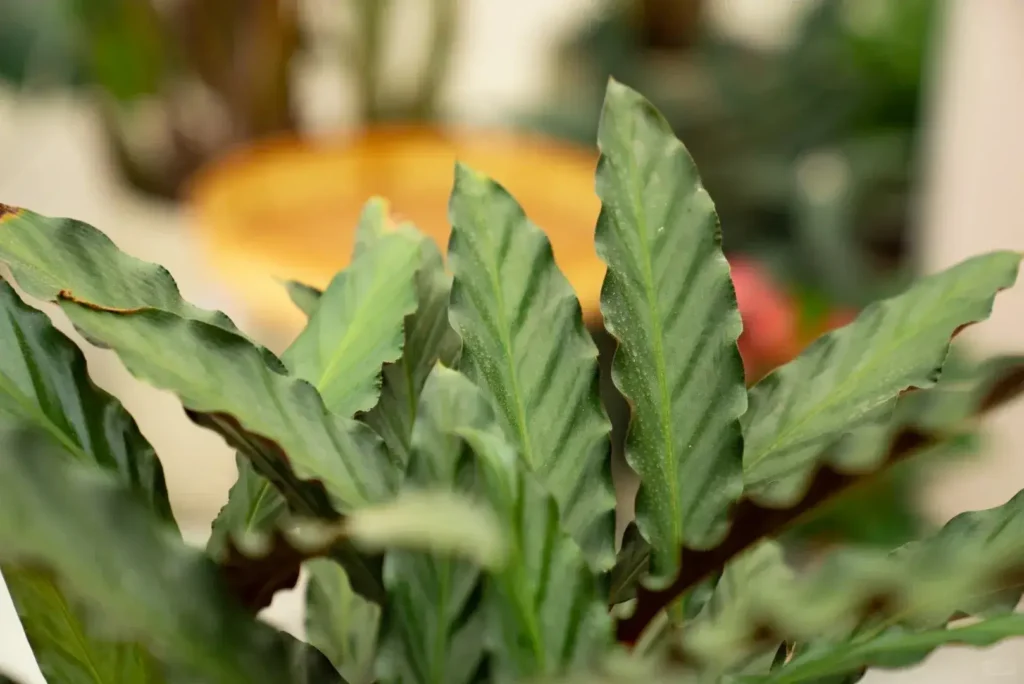
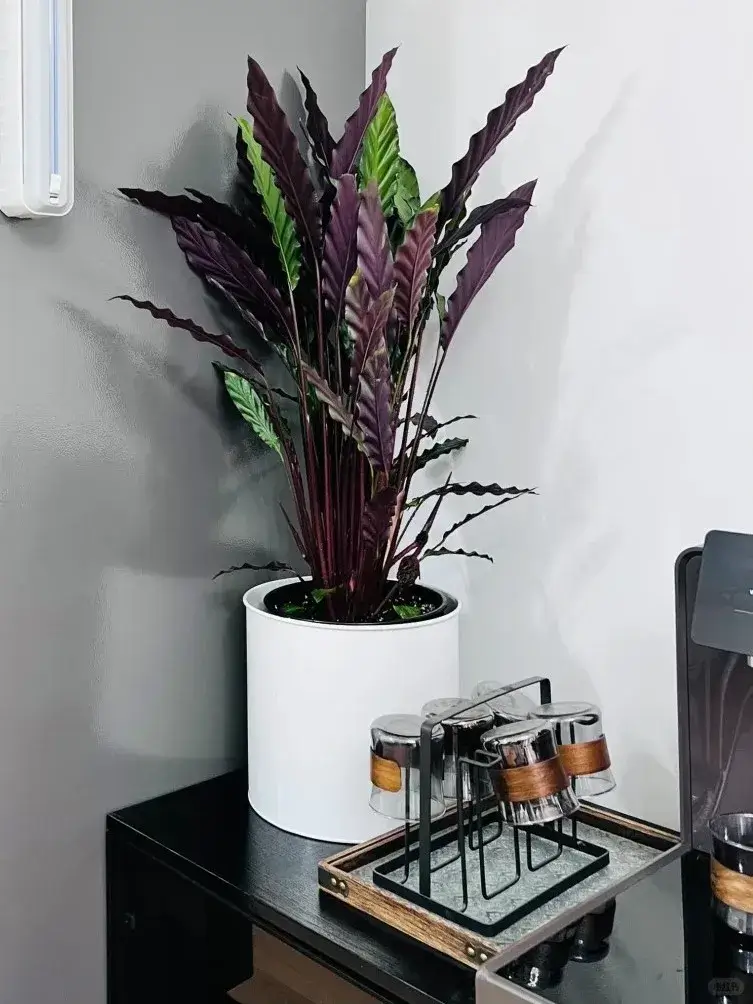
The color contrast is another hallmark of this species. The top of each leaf is a muted deep green, while the underside carries a rich burgundy or wine-red tone that catches the light beautifully whenever the leaves sway.
Unlike many Calatheas, Rufibarba doesn’t have dramatic “prayer plant” movements. The leaves shift subtly throughout the day but never fold up dramatically at night, making its overall presence calmer and more stable.
With its soft texture, dual-toned foliage, and airy shape, Calathea rufibarba is one of the easiest Calatheas to identify — and one of the most unique.
Growth Habit & Natural Environment
Calathea rufibarba comes from the tropical understory of Brazil, but unlike many broad-leaf Calatheas that grow in deep shade, this species often sits in areas with brighter filtered light and more moving air. Its native habitat is warm and humid, but not the “high-humidity bubble” that some Calatheas require. Because of this, Rufibarba naturally developed stronger roots, better drought tolerance, and much higher resilience in lower humidity.
This also explains why it behaves differently indoors: it doesn’t collapse when the air drops below 60%, and it can handle brief periods of dryness far better than the fussier Calathea varieties.
However, its tropical origin still shows in two weak points — cold temperatures and hard, mineral-heavy water. Anything below 15°C (59°F) or prolonged watering with hard tap water can quickly cause leaf stress, browning, or slowed growth.
Detailed Care Guide
Watering
The most reliable approach is water when the top layer feels slightly dry. The most reliable approach is water when the top layer feels slightly dry. If you’re unsure about timing, you can follow a simple how often to water Calathea routine that keeps the soil lightly moist without staying wet.
Its root system is stronger than many broad-leaf Calatheas, so it doesn’t collapse if you don’t water on the exact day it dries out.
However, be careful with water hardness — mineral-heavy tap water often leads to browned tips over time.
Light
Rufibarba grows best in bright, indirect light, where the leaves stay full and the fuzzy undersides remain healthy.
It can tolerate lower light better than most Calatheas, making it suitable for north-facing rooms or corners away from windows.
Avoid strong direct sun — the fine leaf hairs can dry out or burn, leaving the surface rough and dull.
Soil
Use a well-aerated, fast-draining mix — something that stays lightly moist but never soggy.
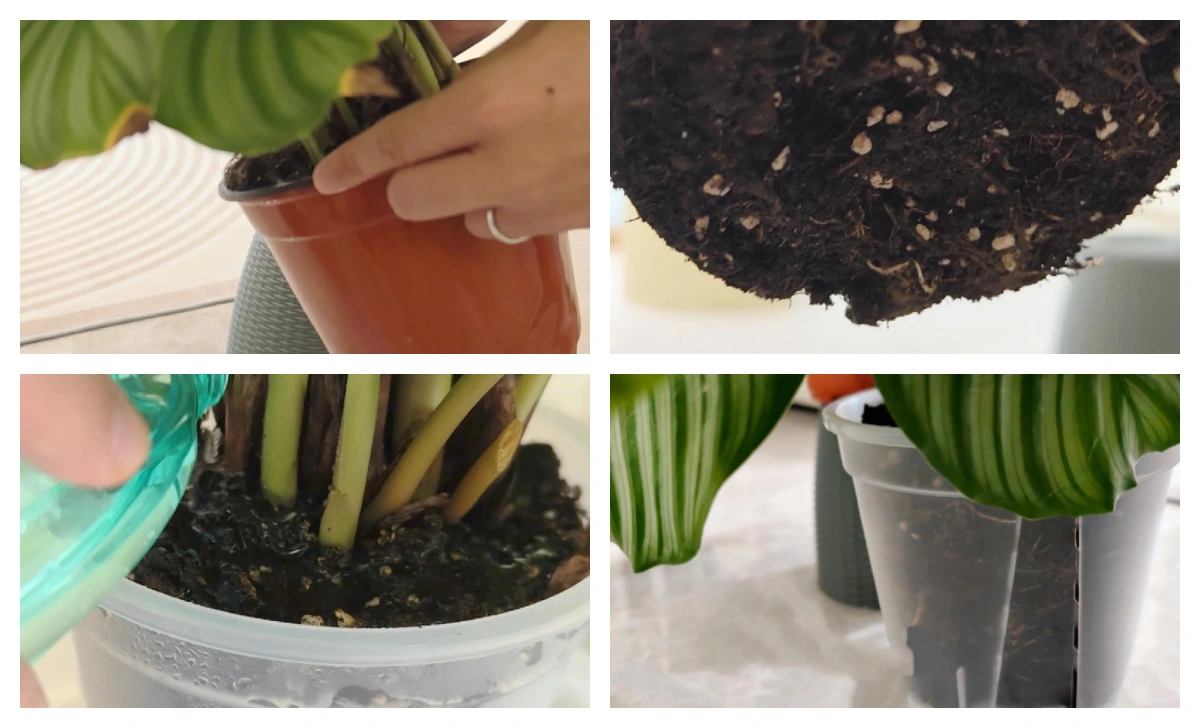
It dislikes oversized pots; choose a pot that fits the current root ball and size up gradually.
Repot every 1.5–2 years, or when the roots begin to circle the pot.
Fertilizer
Rufibarba doesn’t need much feeding.
A light, diluted fertilizer once a month during spring and summer is enough.
Stop feeding completely during winter, when growth slows naturally.
Humidity
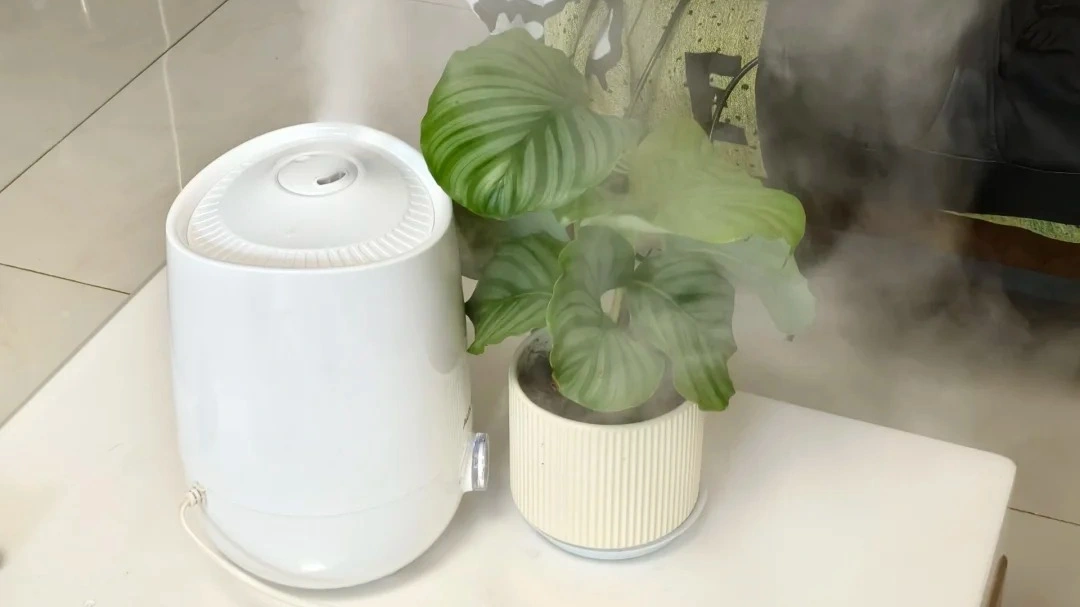
This is the Calathea that doesn’t demand high humidity.
A normal indoor range of 40–60% is usually enough.
You don’t need a humidifier; only when the air gets extremely dry will you see the fuzzy surface turn grayish or the edges curl.
Pruning & Maintenance
Older leaves naturally yellow and dry from the bottom, and this is completely normal for Rufibarba— just different from the yellow Calathea leaves caused by watering or light problems.
Whenever a leaf is fully faded or limp, you can trim it off cleanly at the base — doing so often encourages faster new growth.
Because the leaf undersides are covered with fine hairs, they tend to collect dust more easily than smooth-leaf Calatheas.
Instead of wiping with a wet cloth (which can damage the fuzz), gently blow off the dust or use a soft brush to keep the texture clean without harming the plant.
Styling & Placement Ideas
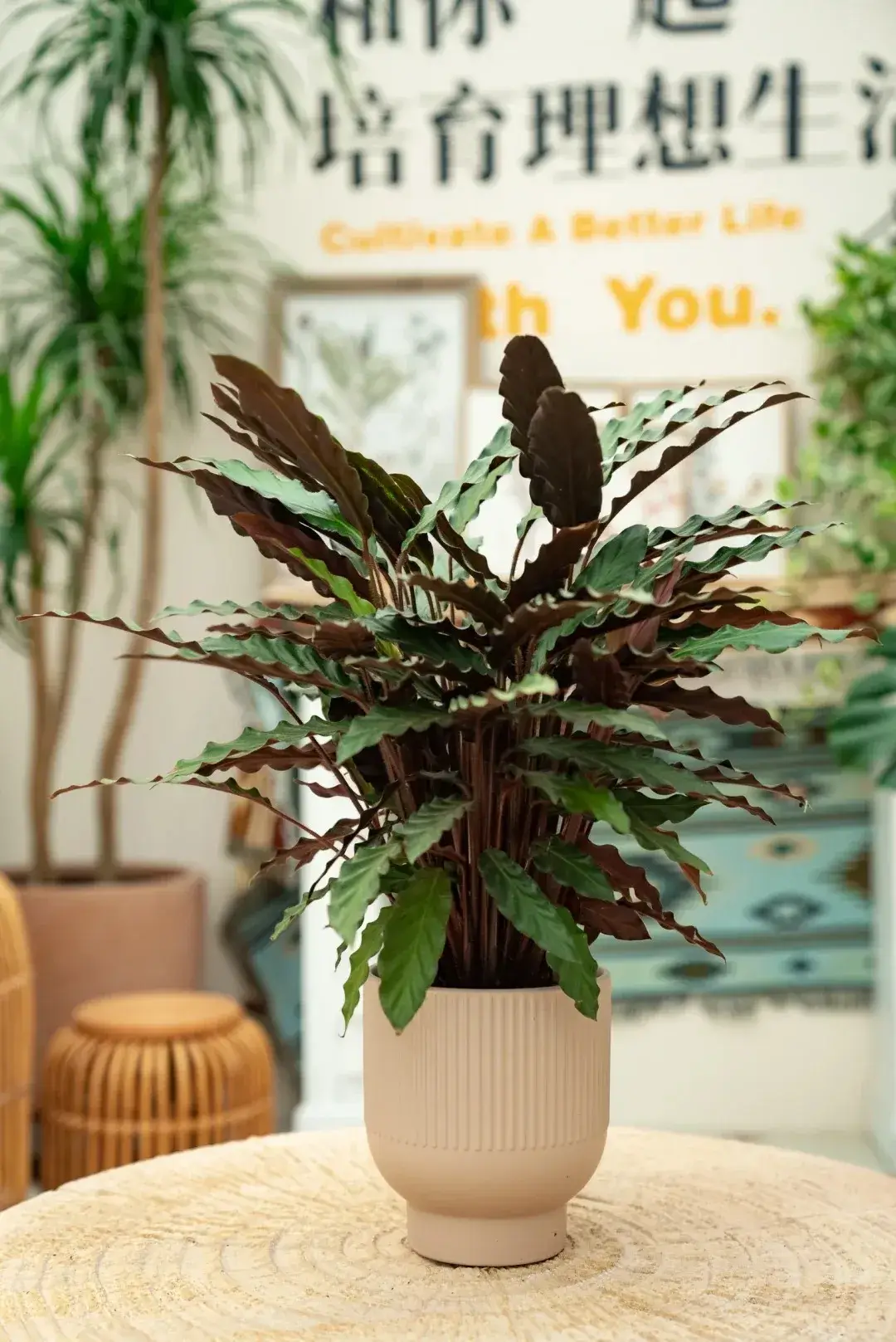
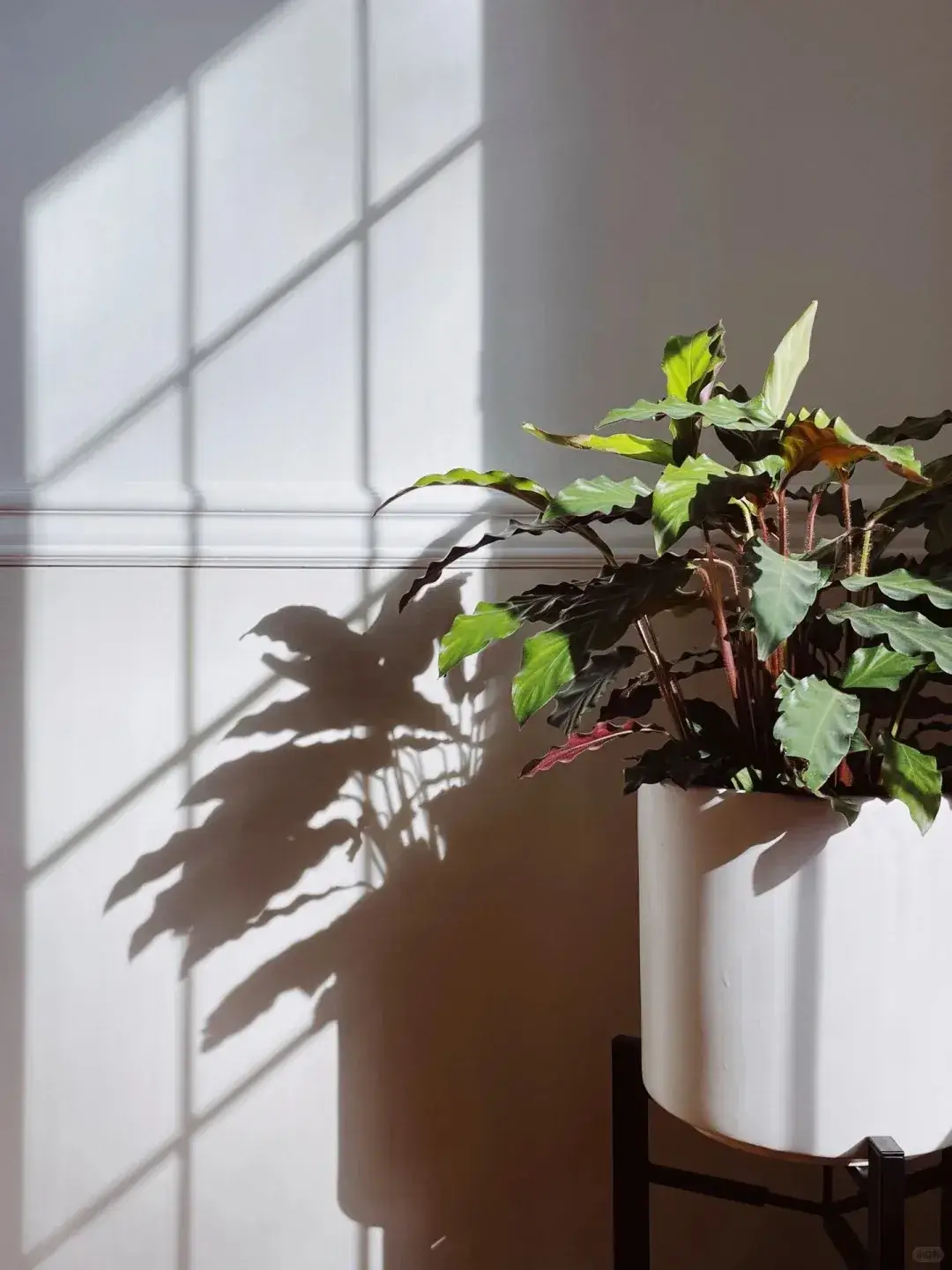
Calathea Rufibarba has a soft, cozy presence thanks to its velvety leaf texture and warm wine-red tones. It fits beautifully in spaces where you want a sense of calm and comfort — a living room, a reading corner, or even next to the bedside lamp.
Its matte, fuzzy leaves pair especially well with dark ceramic pots, warm wood tones, and neutral interiors.
I also love using it as a contrast plant: placing Rufibarba beside glossy foliage like Monstera or Pothos makes both textures stand out and creates a more layered, intentional design feel.

FAQ
Explore More Calathea Varieties
Looking to discover more beautiful Calathea plants?
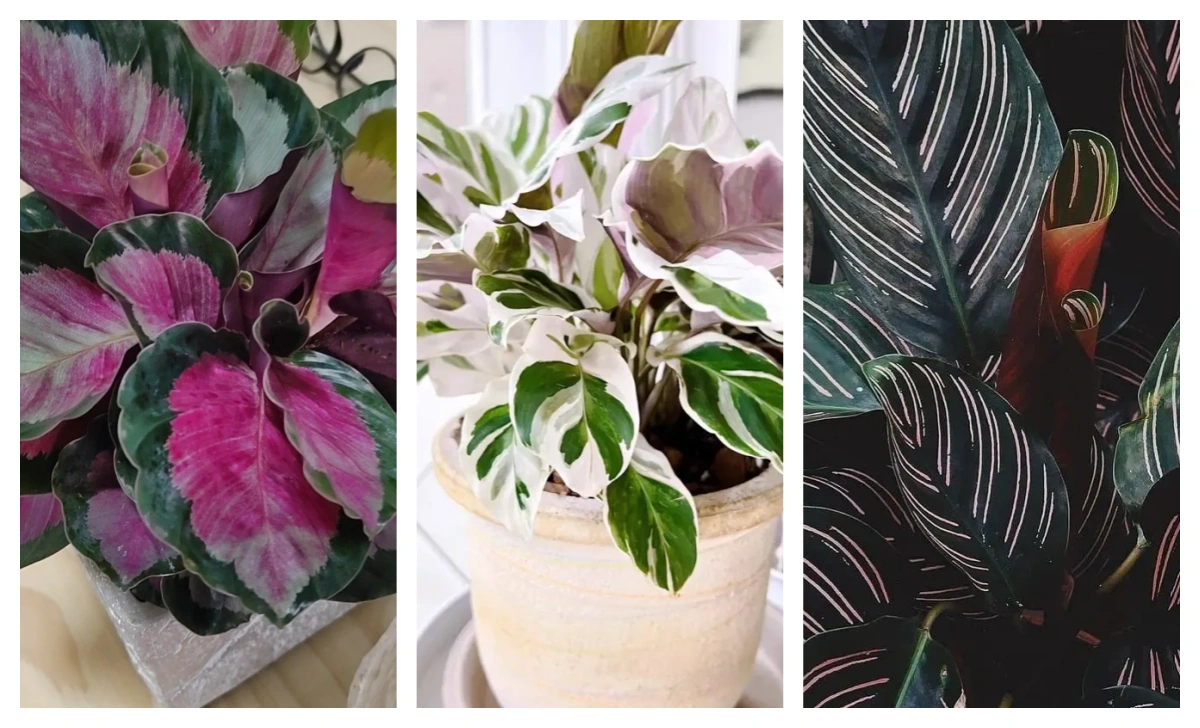
Browse our full collection of Calathea varieties — from the bold Orbifolia to the velvety Warscewiczii — and find the one that fits your home best.