Last updated: April 26, 2026
I used to think Calathea lutea was one of the easiest large Calatheas I had grown. For almost a year, mine behaved very predictably: the leaves would lean down a little during the day, then slowly lift back up at night. The brighter side of the plant also seemed more willing to push out new shoots, which made it feel like a very responsive, well-behaved plant.
Most of the time, my routine was simple. I watered about every four days in active growth, kept it in good light, and only had to deal with aphids twice. Compared with smaller, more dramatic Calatheas, lutea felt much sturdier and less emotional.
Then it suddenly started losing several stems. The newest leaves still looked fairly normal, but the older leaves had more and more speckled marks. When I checked the dead stems closely, I noticed many tiny grain-like particles inside and around the damaged areas. At first, I was not sure if it was dust, old plant tissue, or some kind of pest residue. Later, I realized the real problem was spider mites on Calathea.
That experience changed how I look at this plant. Calathea lutea is still tougher than many Calatheas, but its large leaves can hide pest damage until the problem has already spread. This guide is not just a basic care sheet — it is also a record of what helped mine grow well, what warning signs I missed, and how I would handle spider mites faster next time.
| Botanical Name | Calathea lutea |
| Common Name | Candle Calathea |
| Plant Type | Large tropical foliage plant |
| Mature Size | 6–12 ft (1.8–3.6 m) indoors; taller outdoors |
| Light Needs | Bright, indirect light; tolerates some soft direct sun |
| Watering | Keep evenly moist; slightly drought-tolerant |
| Humidity | 50–70% ideal, but adaptable |
| Temperature | 65–85°F (18–29°C); avoid cold drafts |
| Soil Type | Well-draining, airy tropical mix |
| Pet Safety | Pet SafetyNon-toxic to cats and dogs |
| Difficulty | Moderate (much easier than most Calatheas) |
My One-Year Growing Notes
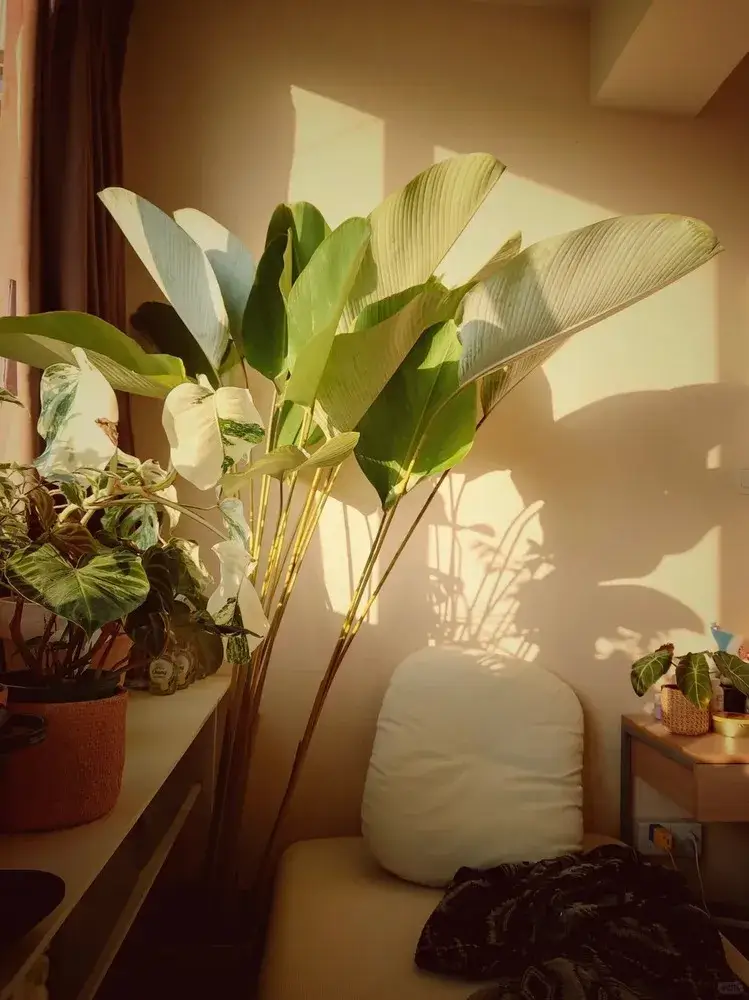
After growing Calathea lutea for about a year, I would describe it as a large Calathea with a surprisingly steady rhythm. It does move during the day, but not in a dramatic, alarming way. In my home, the leaves often relaxed downward during the brighter daytime hours, then slowly stood more upright again in the evening. That movement alone was not a problem.
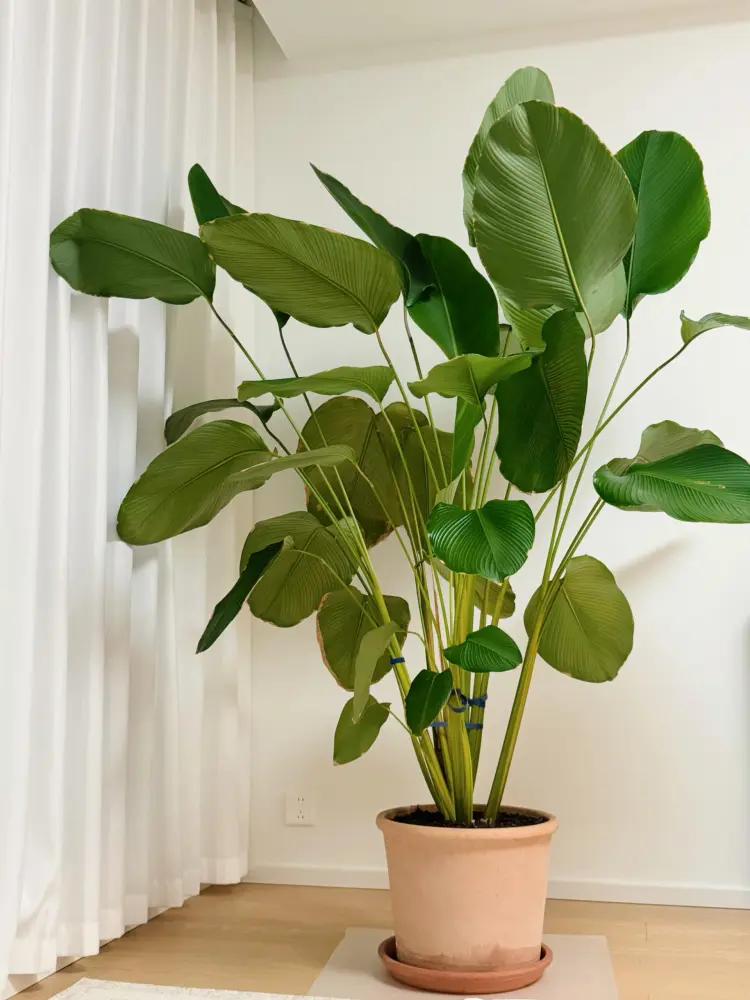
The plant also showed me how much it responds to light. The side with better light was more likely to produce new shoots, while the dimmer side stayed quieter. I would not grow this plant in a low-light corner if I wanted strong new growth. It can tolerate indoor conditions, but it still wants enough brightness to keep building stems and leaves.
For watering, my own plant usually needed water about every four days during active growth, but I would not turn that into a fixed rule. A larger plant in brighter light dries faster; a smaller plant, cooler room, or heavier mix may need much less. The more useful rule is to watch the pot: water when the upper layer starts to dry, but do not let the whole root zone stay wet and heavy all the time.
For most of the year, the only pests I dealt with were aphids, and I removed them before they became serious. The bigger lesson came later, when several stems suddenly declined and the older leaves developed speckled damage. That was when I learned that Calathea lutea can look strong on the outside while spider mites are already working through the older foliage.
Appearance & Key Features
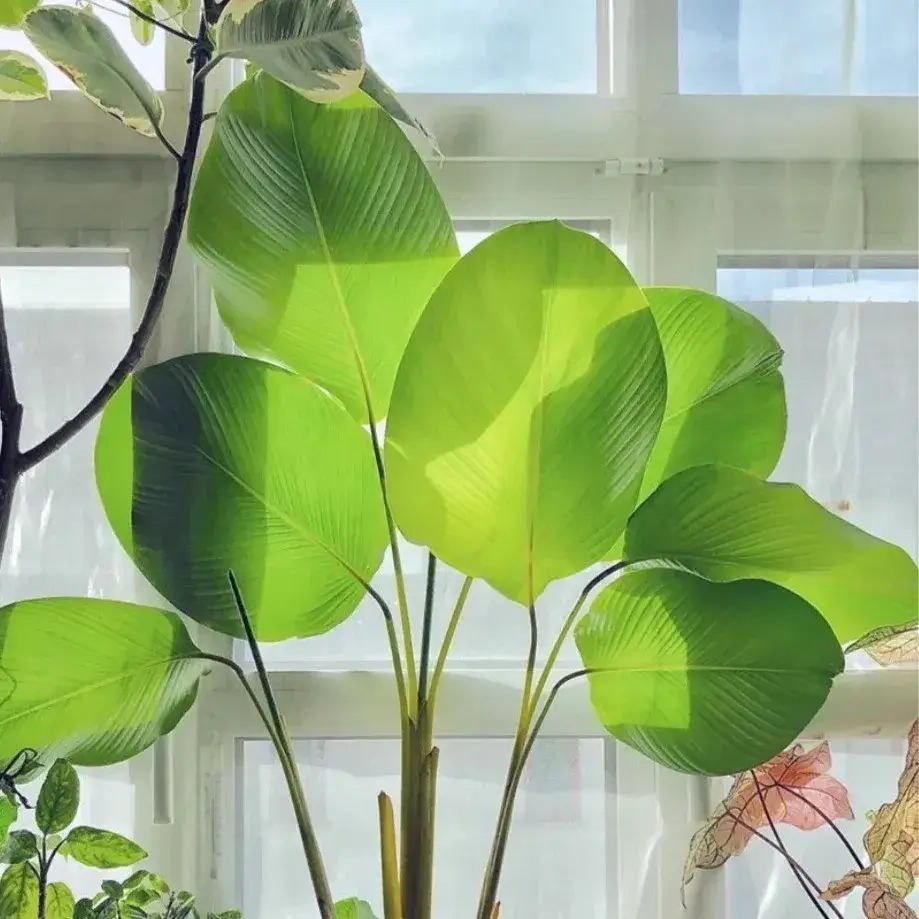
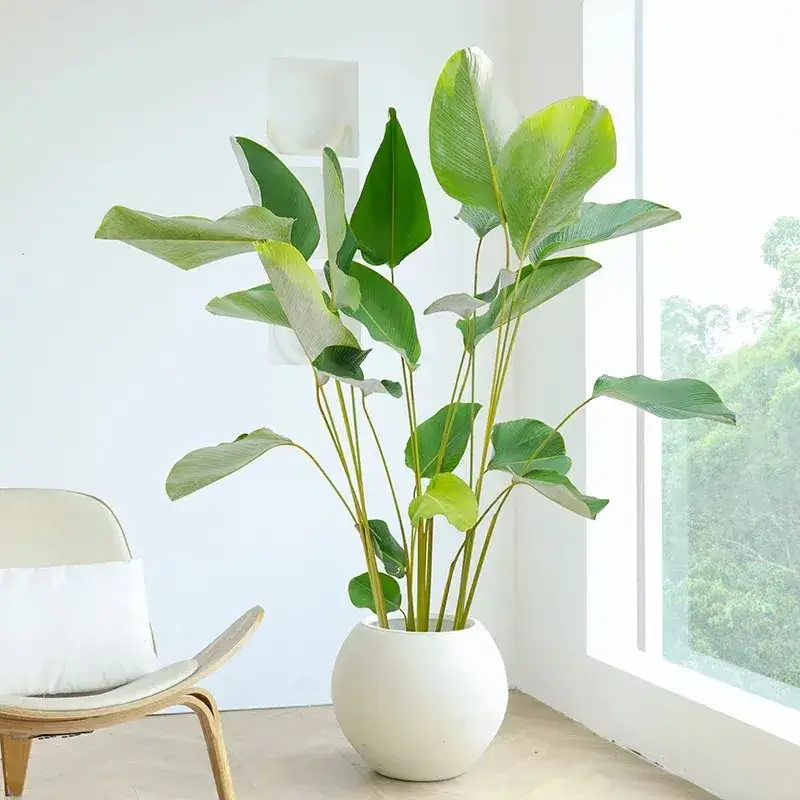
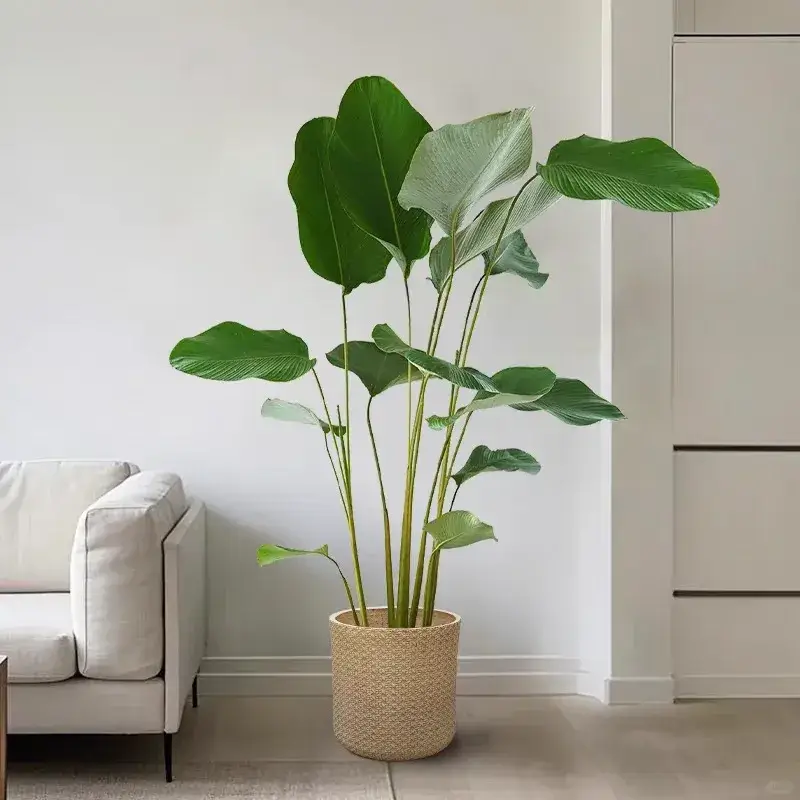
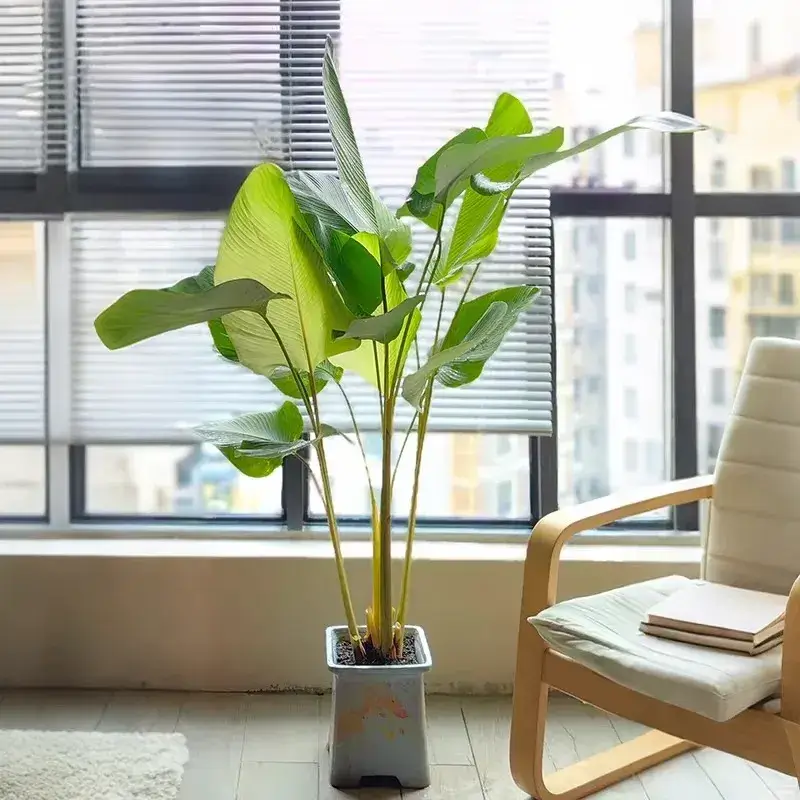
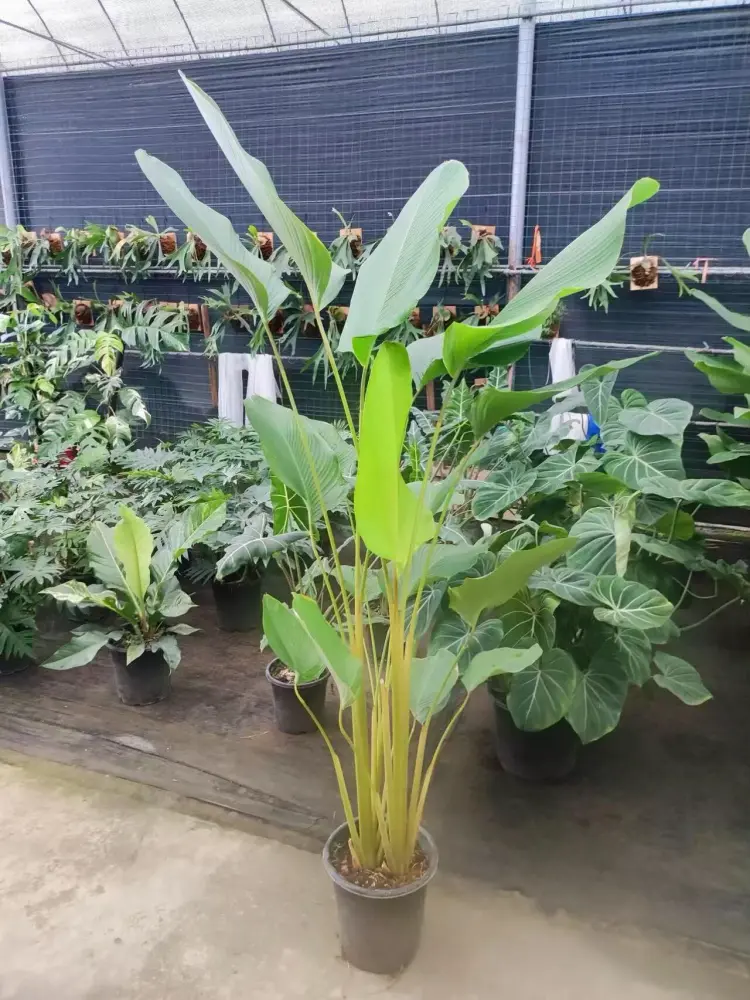
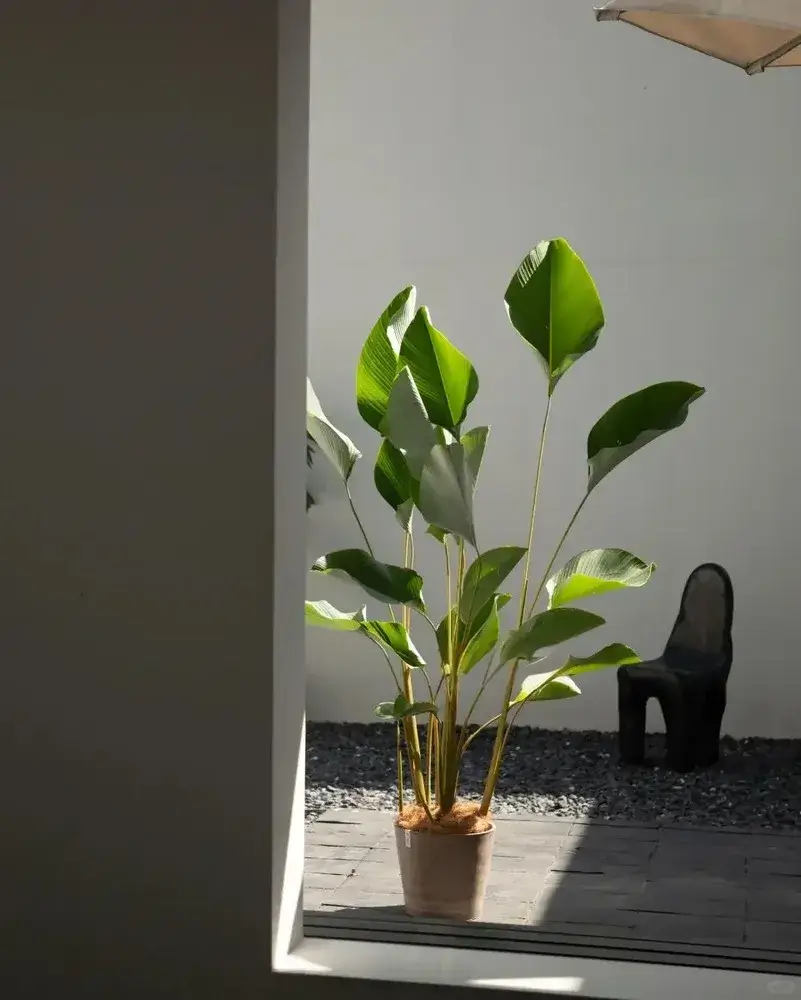
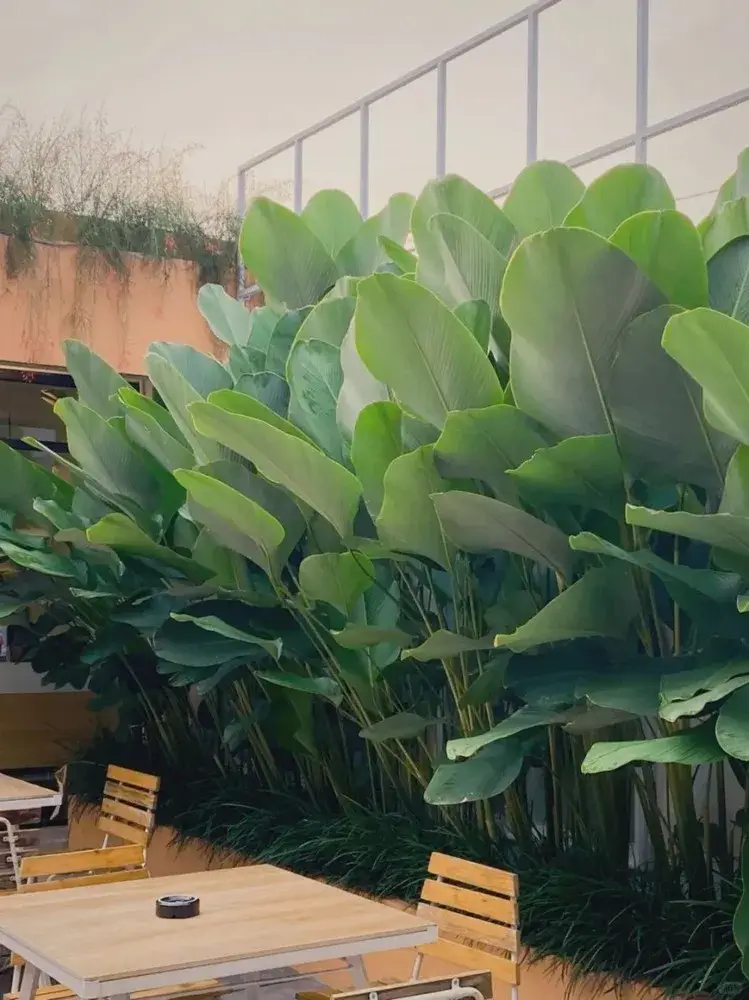
Calathea lutea is striking from the moment you see it. The plant develops huge, upright leaves that resemble banana leaves, but they stand more rigid and architectural, giving the plant a clean, sculptural presence. Each leaf has a smooth, powdery surface and a subtle silvery or pinkish sheen on the underside—something you only notice when light passes through the canopy.
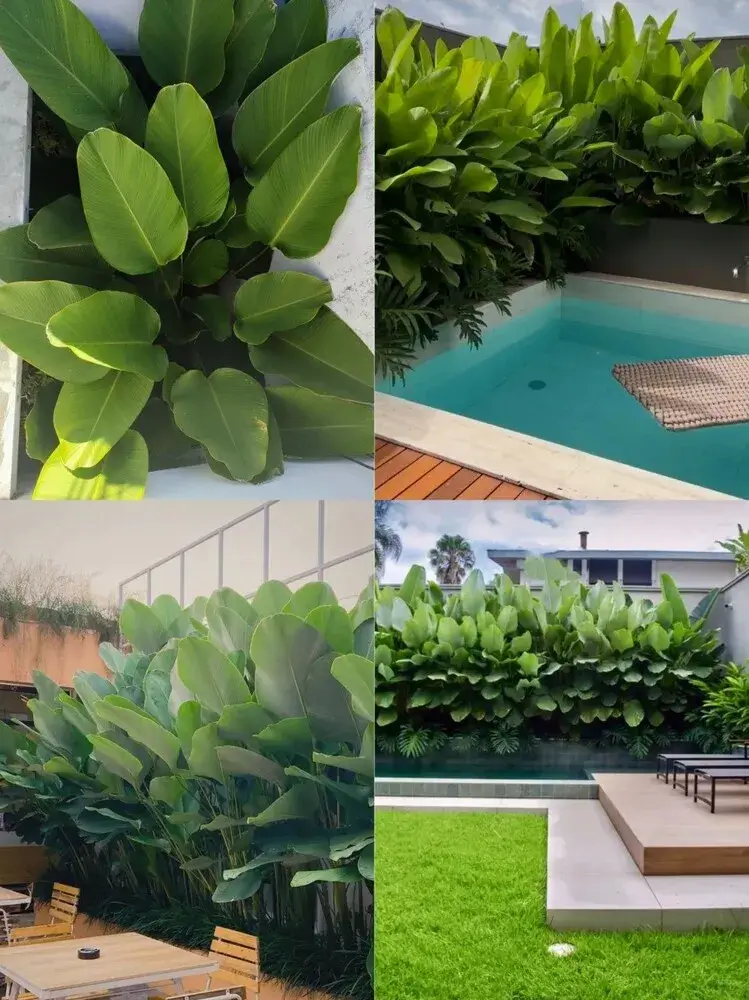
One of its most unique features is the bronze-yellow bract that appears on mature plants. These upright, candle-like structures give the species its nickname, “Candle Calathea.” Even when not in bloom, the plant’s tall stems and broad foliage create a naturally layered look.
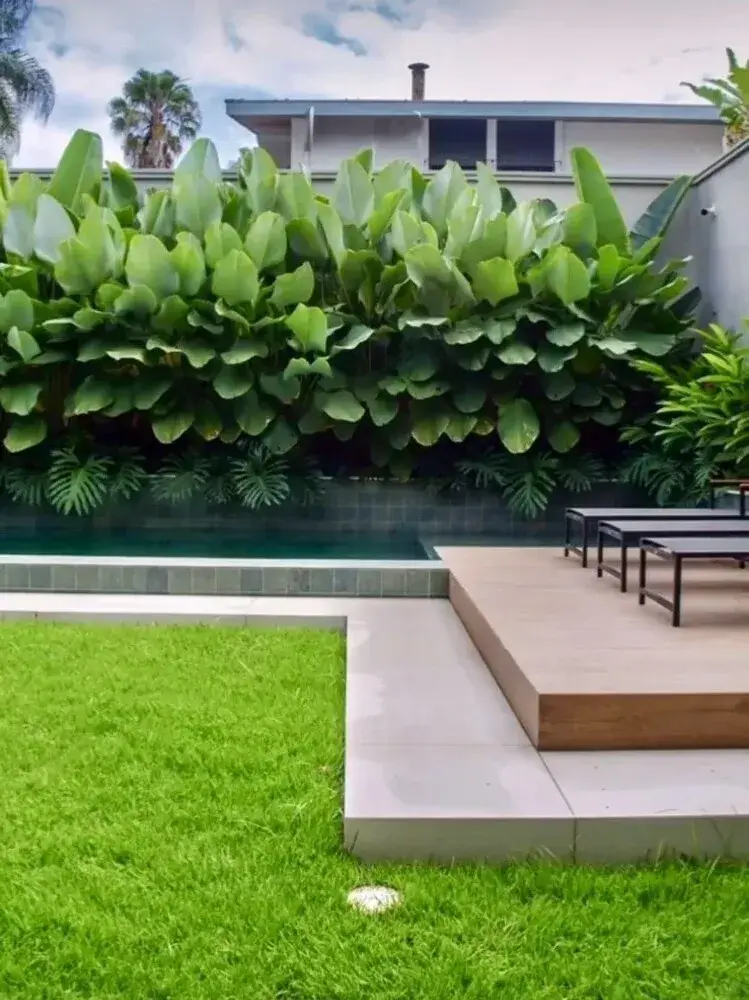
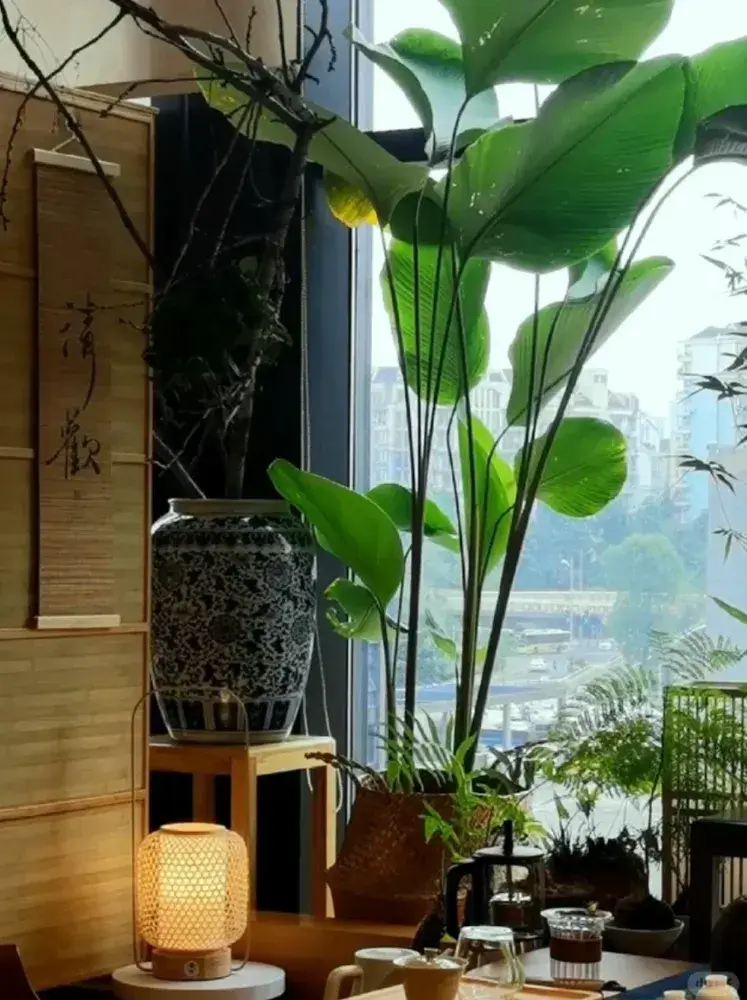
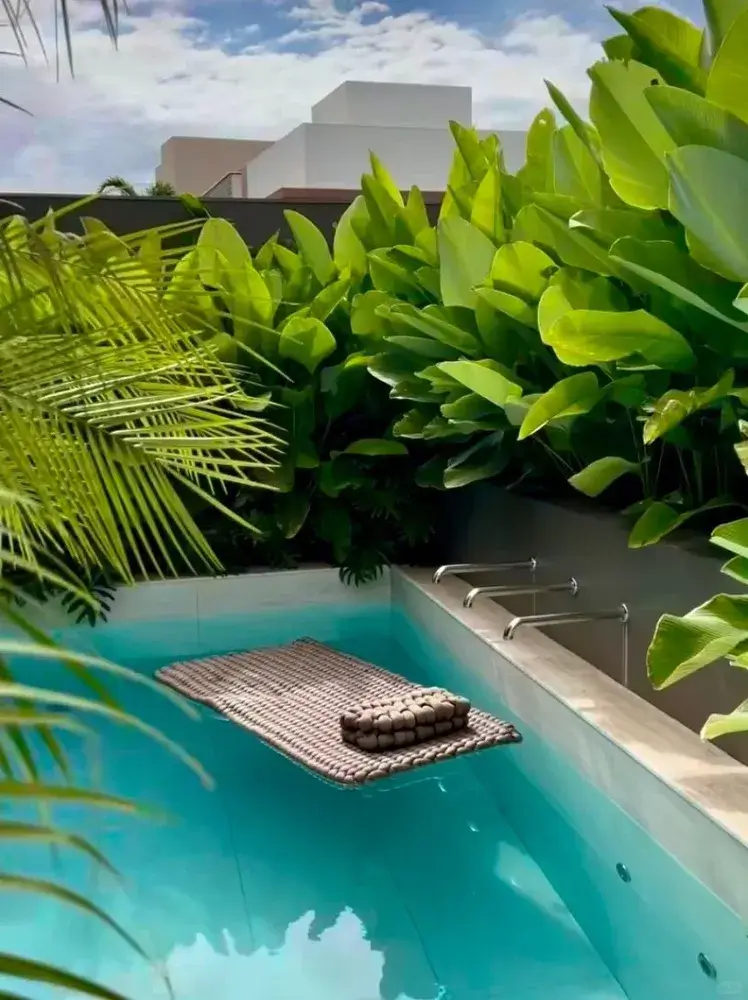
Because of its height and strong vertical posture, Calathea lutea works beautifully as a large background plant. Indoors, it can soften corners, add height to empty walls, or create a gentle privacy screen without feeling heavy or cluttered. Its combination of bold size and soft leaf texture makes it a favorite in interior design, especially in spaces aiming for a warm, tropical, or resort-like aesthetic.
Growth Habit & Natural Environment
Calathea lutea comes from the tropical lowlands of Central and South America, where the environment is bright, warm, and consistently humid year-round. In its native habitat, it grows along forest edges and open clearings—places that receive more light than the shaded understory where most Calatheas live. This is why lutea naturally develops tall, upright stems and large leaves that can capture and diffuse sunlight efficiently.
The species grows in loose, well-aerated soil, often enriched with organic debris but never compacted. Temperatures stay warm throughout the year, and there are no drastic seasonal swings. Constant warmth and humidity shape the plant into a strong, fast-growing tropical giant.
This background explains why Calathea lutea is more light-tolerant, more drought-tolerant, and overall tougher than the typical indoor Calathea. It can handle brighter rooms, larger pots, and occasional dryness without showing the dramatic stress reactions common in smaller Calathea species.
However, what it cannot handle is cold air or dry wind—conditions it would never encounter in the tropics. Sudden cold drafts, winter windowsills, or strong indoor heating in winter can cause leaf tearing, curling, or stalling. So while it’s a robust plant, it still needs the one thing all Calatheas crave: a stable, warm, humid environment.
Detailed Care Guide
Watering
This is one Calathea that doesn’t mind a little dryness.
Let the top inch of soil dry out before watering again. Its thicker stems and rhizomes hold moisture well, so overwatering is more dangerous than underwatering.
- Water thoroughly, then allow excess to drain
- Avoid letting the pot sit in water
- Winter: reduce watering, but don’t let the entire rootball dry out
If the lower leaves droop heavily or develop yellow patches, the soil is likely staying wet too long.
In my own setup, a well-established Calathea lutea in active growth often needed water about every four days. But I treat that as my plant’s rhythm, not a universal schedule. This plant is large, leafy, and thirsty when it has enough light and warmth, but the same schedule could be too much in a cooler room or a heavier soil mix.
What I watch for is the combination of leaf posture, pot weight, and soil surface. If the plant is pushing new shoots and the pot is drying predictably, regular watering works well. If growth slows and the pot stays heavy for too long, I would stretch the interval instead of forcing a fixed routine.
Light
Calathea lutea prefers bright, indirect light, not low light, but it is far more sun-tolerant than most Calatheas. A few hours of soft morning sun or filtered afternoon light actually help maintain strong stems and large, healthy leaves.
Avoid harsh midday direct sun indoors—it can fade or crisp the leaf edges—but dim rooms will make the plant stretch and lose its structure.
Best placements: bright living rooms, near east or north-facing windows, or a few feet from a west window.
From my own plant, I could see the light difference clearly. The brighter side was more active and more likely to push new shoots, while the shaded side stayed slower. That does not mean Calathea lutea needs harsh direct sun indoors, but it does mean “bright enough” matters if you want it to keep growing instead of just sitting there.
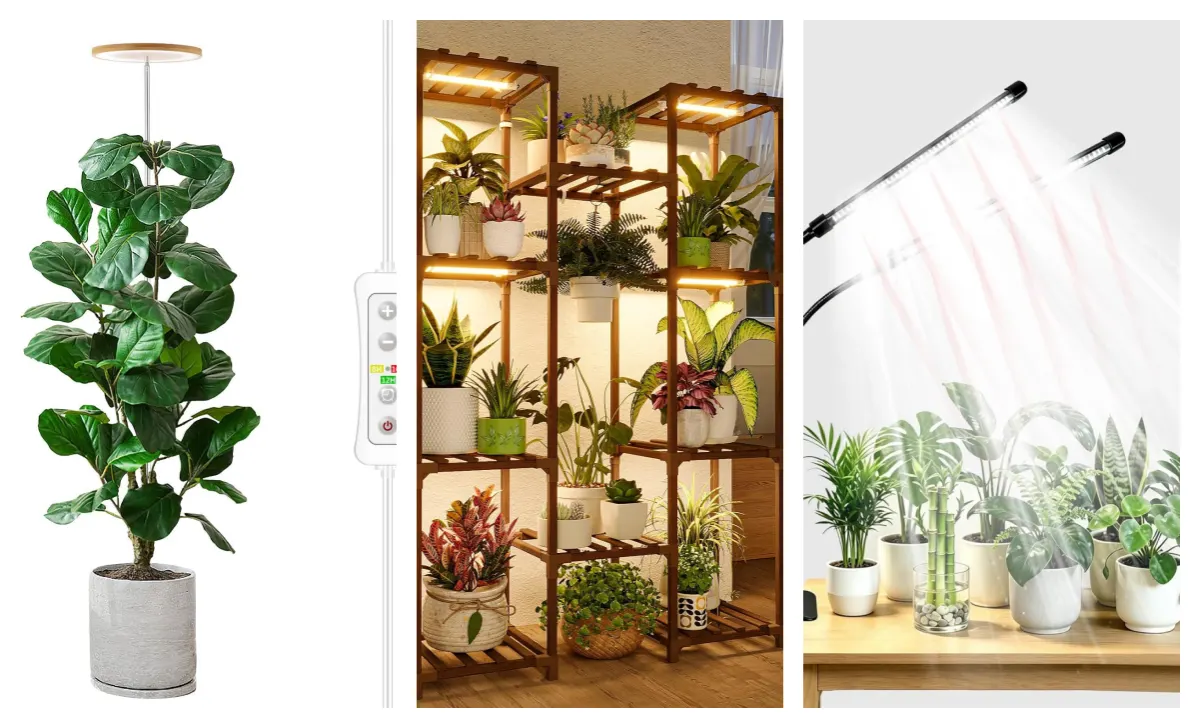
If your plant looks healthy but barely produces new growth, I would check light before fertilizer. Moving it slightly closer to a bright window, or rotating the pot so each side gets better exposure, can make a real difference over time.
Soil
Because this is a large, fast-growing species, the soil must stay light, airy, and fast-draining.
A good mix includes:
- coco coir or peat
- perlite or pumice
- orchid bark
Avoid compact, garden-style soils—they suffocate the roots and lead to slow growth or root stress.
Choose a pot only 1–2 inches larger when repotting. Oversized pots stay wet for too long, especially with a plant that doesn’t like having cold, soggy roots.
Fertilizer
Calathea lutea grows steadily but doesn’t need heavy feeding.
- Use a diluted balanced fertilizer once a month during spring and summer
- Skip fertilizing in fall and winter
- Reduce strength to 1/2 or 1/4 to avoid salt buildup
If leaf tips brown soon after feeding, it’s usually a sign the fertilizer was too strong or the soil didn’t drain well afterward.
Humidity
Calathea lutea prefers moderate to high humidity (50–70%), but it’s noticeably easier to manage than most indoor Calatheas. The large, thicker leaves don’t curl as quickly, and the plant can handle normal household humidity as long as it isn’t exposed to dry air from heaters or strong cold drafts.
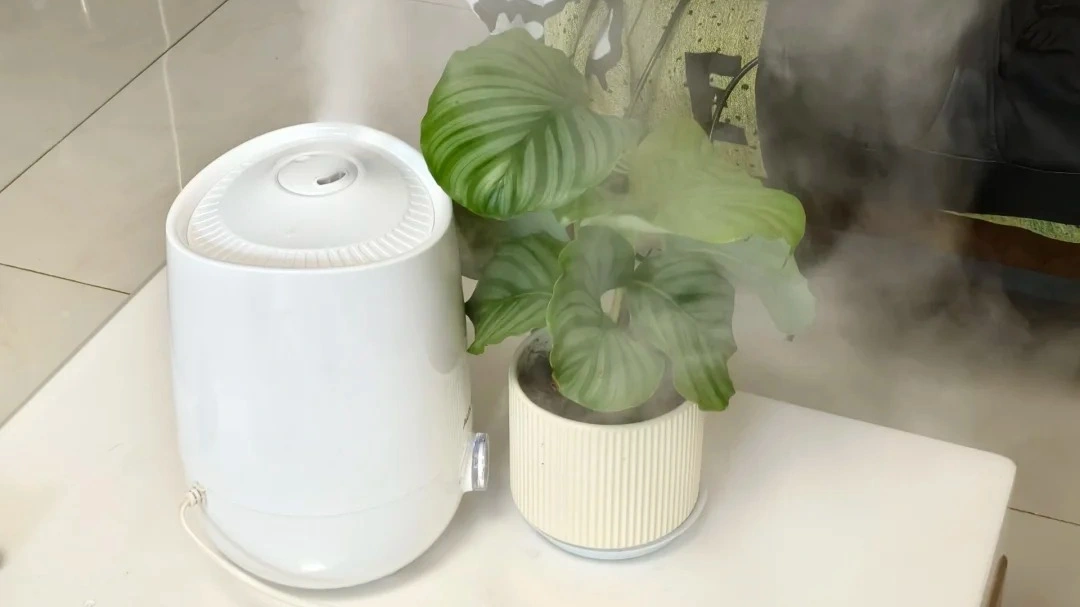
Instead of misting—which often leaves visible marks on the big leaves—it responds better to ambient moisture:
- a humidifier running nearby
- placing it in naturally humid rooms
- grouping it with other large tropical plants
If the air becomes too dry, you’ll usually see the lower leaves losing elasticity or edges turning slightly papery. Raising humidity stabilizes the plant quickly and helps maintain those smooth, paddle-like leaves.
The Spider Mite Problem I Almost Missed
The most serious problem I had with my Calathea lutea did not look dramatic at first. A few stems suddenly died back, but the newest leaves still looked fairly normal. That made the problem easy to underestimate. The older leaves, however, had more and more tiny speckled marks, and the dead stems had many small grain-like particles around the damaged areas.
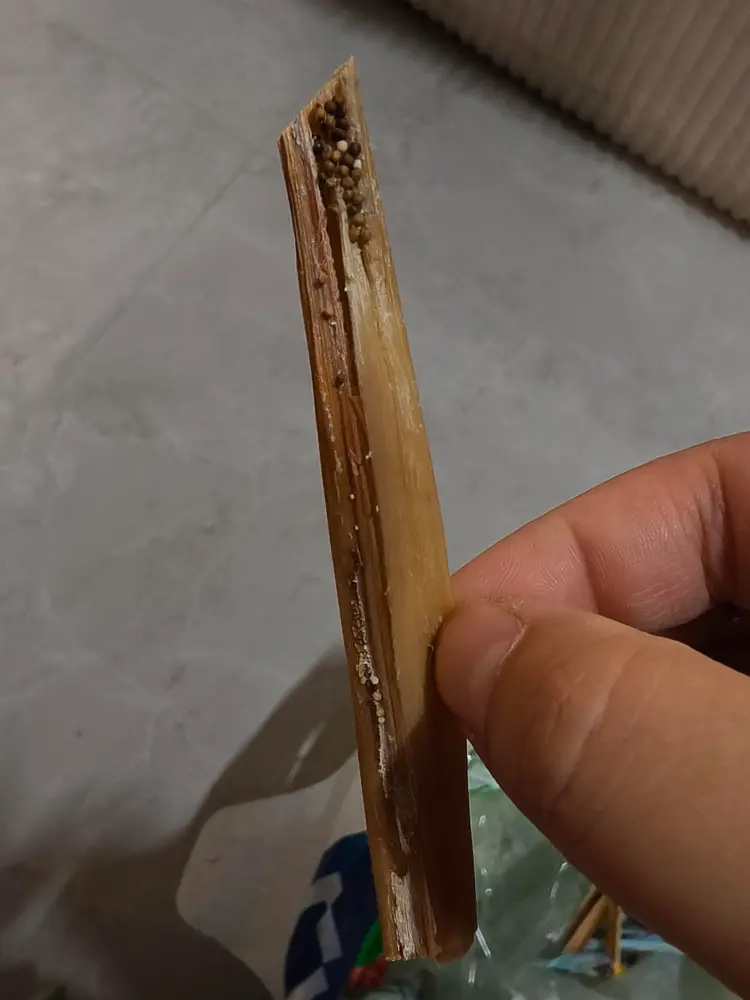
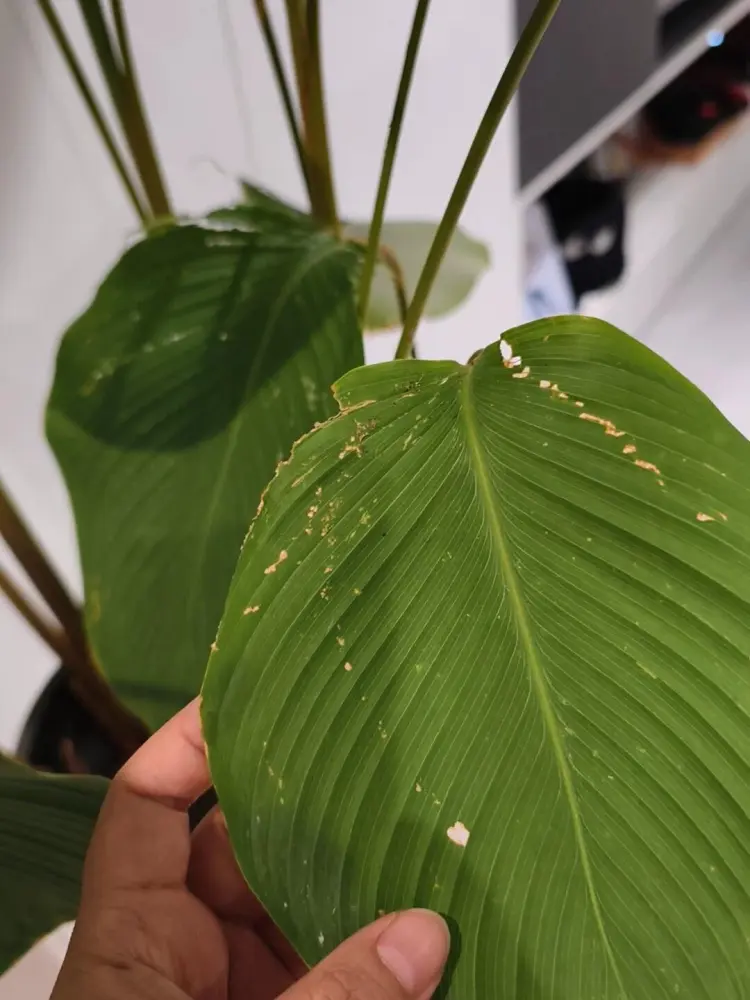
At first, I was not sure what I was seeing. It did not look like the obvious aphids I had dealt with before. Later, after checking the leaves and damaged stems more carefully, I realized it was a spider mite problem. On a plant this large, spider mites can hide on the undersides of leaves, along stems, and inside crowded growth where the air is drier and harder to clean.
The biggest warning sign was not just one bad leaf. It was the pattern: older leaves became speckled, several stems declined, and the plant looked uneven even though new growth was still trying to continue. That is why I now check the older leaves first whenever a large Calathea suddenly looks patchy or dusty.
How I Treat Spider Mites on Calathea Lutea
Once I realized the problem was spider mites, I treated the whole plant instead of only cutting off the dead stems. With Calathea lutea, the leaves are large and the stems are crowded enough that mites can stay hidden if you only clean the obvious damaged parts.
1. Isolate the plant first
I would move the plant away from other houseplants as soon as spider mites are suspected. Even if only one area looks damaged, mites can spread quickly between nearby plants, especially in warm, dry indoor air.
2. Remove the worst damaged leaves and dead stems
I cut off the stems that were already dead or badly weakened. I do not try to save leaves that are heavily speckled, dry, or collapsing, because they can keep sheltering mites and make treatment harder. Removing the worst parts also makes it easier to reach the remaining healthy leaves.
3. Rinse the leaves, especially the undersides
Before using any spray, I like to physically wash the plant. I focus on the undersides of the leaves, the leaf bases, and the stems. A gentle but thorough rinse helps remove active mites, webbing, dust, and loose debris. For a large plant like this, I would rather take my time and clean section by section than only spray the surface.
4. Treat with insecticidal soap or horticultural oil
After rinsing, I use a mite-safe treatment such as insecticidal soap or horticultural oil, following the product label carefully. Coverage matters more than simply spraying more. Spider mites sit on the undersides of leaves and in protected areas, so I try to coat the leaf backs, stems, and growth points without leaving the plant dripping wet for too long.
I avoid spraying in strong sun or on a heat-stressed plant. Large Calathea leaves can mark easily, so I prefer treating in the evening or in a shaded spot, then letting the plant dry with gentle airflow.
5. Repeat the treatment
One treatment is usually not enough. Spider mites reproduce quickly, and eggs or missed mites can restart the problem. I repeat cleaning and treatment every few days or weekly, depending on the product label and how severe the infestation looks. I keep checking new and old leaves for fresh speckling before moving the plant back near others.
6. Make the plant less mite-friendly afterward
After treatment, I try to make the environment less attractive to spider mites. Dry, warm air is where they often become more noticeable indoors, so I keep the plant away from heaters, improve humidity, and wipe the large leaves more regularly. This does not guarantee mites will never return, but it makes it easier to notice problems early.
My biggest lesson: do not wait until the whole plant looks bad. On Calathea lutea, check the older leaves, leaf backs, and crowded stems as soon as you see strange speckling or sudden stem decline.
How I Check Mine Now
Now I do not only look at the newest leaves. New leaves can still look fine while older leaves are already showing pest damage. Once a week, I check the lower and older foliage, especially the undersides. I also look at the stems near the base, because dead or weakened stems can hide small particles, webbing, or mite activity.
I also wipe the large leaves more regularly. With a plant this size, dust can hide early speckling, and spider mite damage can look like ordinary dirty leaf texture at first. Cleaning the leaves gives me a better view of what is actually happening.
If I see new speckling, fine webbing, or sudden decline on older stems, I isolate the plant and inspect it immediately. I would rather over-check for five minutes than miss spider mites for another two weeks.
Pruning & Maintenance
Calathea lutea naturally drops older leaves over time, especially when it is actively pushing new growth. I do not worry about one aging lower leaf. What worries me is when several stems decline suddenly, especially if the older leaves have dense speckling or the damaged stems contain tiny particles or webbing.
For normal maintenance, I remove fully yellow or dead leaves from the base, wipe the large leaves with a damp cloth, and check the undersides while I am cleaning. This plant has big leaves, so maintenance is not just about looks — it is also the easiest time to catch pests early.
If a stem is clearly dead, soft, or heavily damaged by pests, I remove it rather than leaving it in the clump. Crowded dead material can make the plant harder to inspect and can shelter pests. After pruning, I watch the new growth. If new leaves continue to emerge clean and strong, the plant still has a good chance to recover.
FAQ
Explore More Calathea Varieties
If Calathea lutea feels too large for your space, you can compare it with smaller indoor Calathea varieties in the full Calathea types guide. It is a better starting point if you are still deciding between a tall background plant and a smaller tabletop variety.
View Calathea Type Guides →