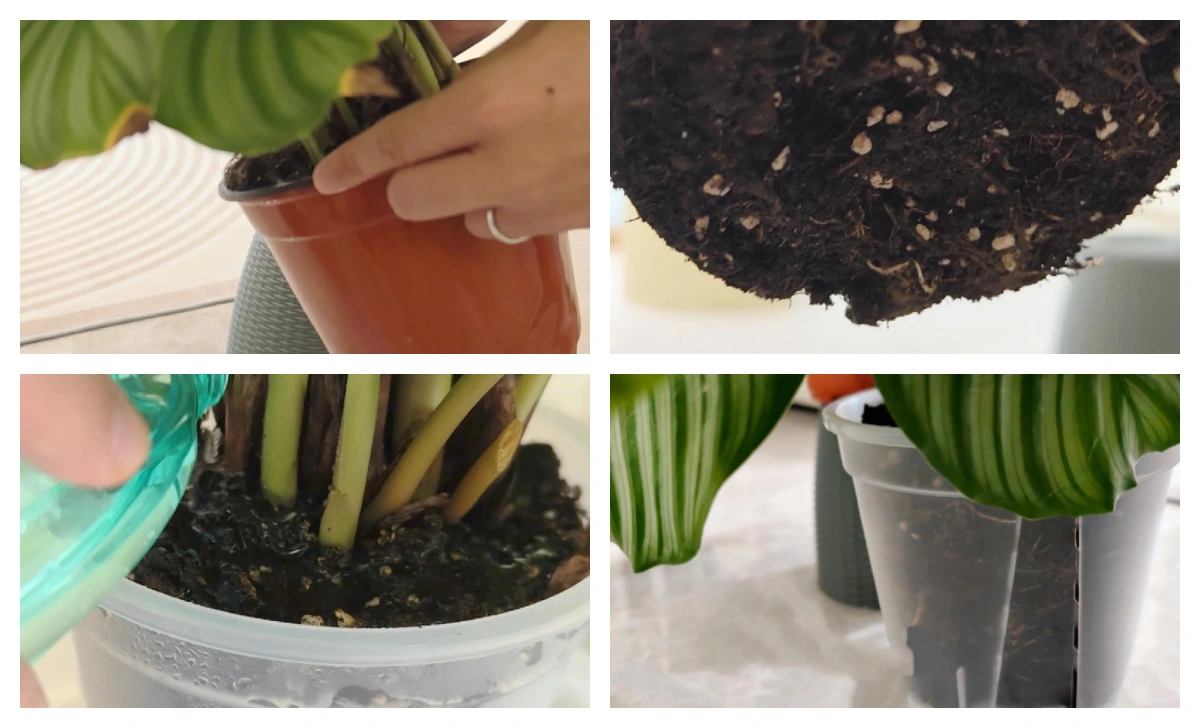
There’s something almost instinctive about cutting off damaged leaves.
When a Calathea starts yellowing, developing leaf spots, or looking messy, the first reaction is usually the same: just trim it and let it start fresh. I’ve done it too — sometimes out of logic, sometimes out of frustration.
But over time, I realized that cutting leaves isn’t always neutral. Sometimes it helps the plant reset. Other times, it removes working tissue the plant was still using. The real question isn’t “Can I cut this leaf?” — it’s “Should I?”
In this article, I’ll walk through a few real situations where I removed damaged leaves — what worked, what didn’t, and how I decide now whether to cut or wait.
Why We Want to Cut Leaves Immediately
When a Calathea starts looking damaged, it’s hard to ignore. A single yellow leaf can make the whole plant feel unhealthy, even if new growth is coming in just fine. Visually, our eyes go straight to the flaw. Cutting it off feels like restoring order.
There’s also the shape factor. Calatheas grow in layers, and when older leaves bend outward or turn brown, the plant can look messy or uneven. Trimming them makes the pot look fuller and more compact again — at least temporarily.
Sometimes the urge is driven by fear. We see spots or discoloration and assume it might spread. That’s why I now focus more on patterns than appearance. Even when the issue isn’t contagious, the instinct is to “stop it early” by removing the leaf entirely.
And then there’s the emotional reset. Cutting damaged leaves can feel like giving the plant a fresh start — like wiping away the past mistakes and hoping for clean, healthy growth. I’ve done that more than once.
But the desire to fix something quickly doesn’t always mean cutting is the best move.
Case 1 – Nutrient Yellowing and Natural Reallocation
One of the most common situations I’ve faced is slow yellowing on older leaves while new leaves continue to emerge normally. The plant overall looks healthy — upright posture, steady growth, no spreading spots — just one or two lower leaves gradually fading.
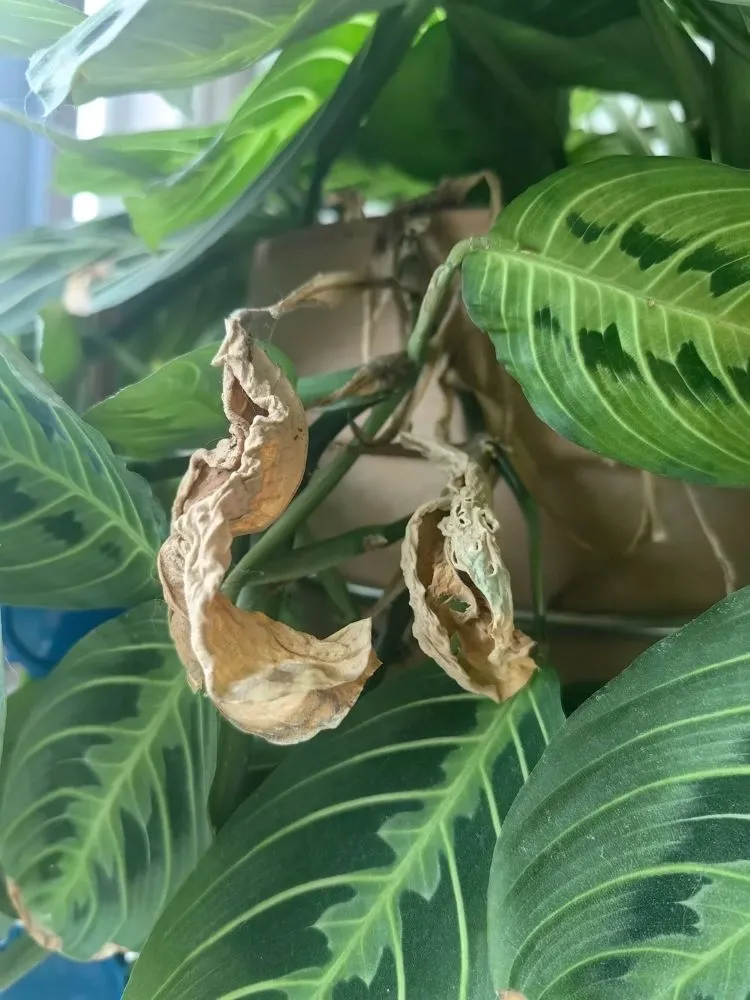
In these cases, I’ve learned to pause before reaching for scissors. Calatheas, like many plants, reallocate nutrients from older leaves when pushing new growth. A slow, even yellowing — starting from the tip or edges and progressing gradually — is often part of that internal balancing process. The leaf is not “failing.” It’s being phased out.
The key distinction is speed and pattern. If you’re trying to decide whether it’s a watering issue, this breakdown helps.
- Slow, uniform yellowing on older leaves usually signals natural metabolic turnover.
- Rapid yellowing across multiple leaves, especially if new growth also looks pale, can point to nutrient imbalance — and that’s when I review my fertilizer routine.
If the leaf is only partially yellow and still mostly green, I leave it. The plant may still be drawing resources from it. Once the leaf turns fully yellow, soft, or clearly nonfunctional, that’s when I remove it cleanly at the base.
Over time, I’ve realized that cutting too early interrupts a process the plant is already managing on its own. But waiting too long when multiple leaves decline quickly can delay necessary adjustment. The difference isn’t color — it’s progression.
Case 2 – Overcrowding After Rapid Growth
There was a period when my Calathea pushed out fifteen or more new leaves in a short time. It looked impressive at first — dense, full, almost overflowing. But the older leaves were gradually pushed outward, bent sideways, and partially shaded.
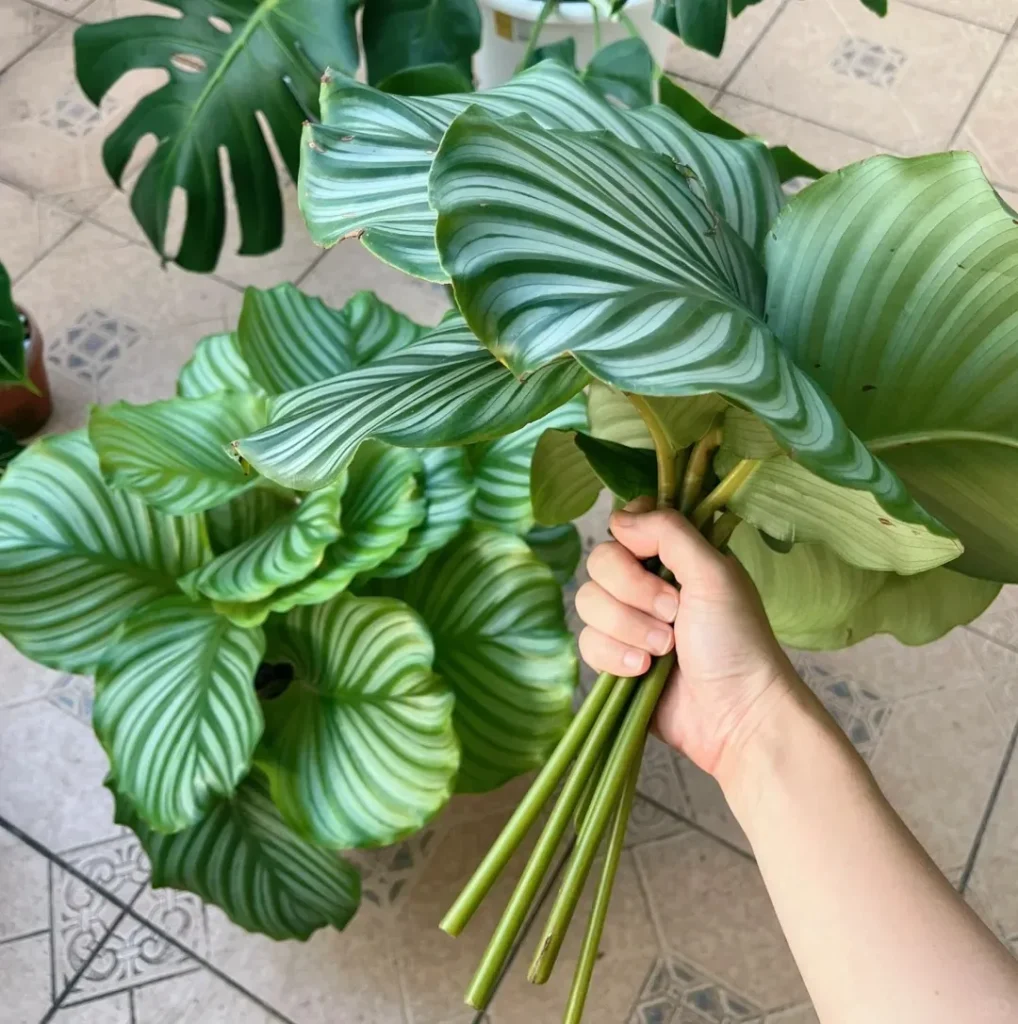
In this situation, the issue wasn’t disease or deficiency. It was structure. Lower leaves received less light, airflow decreased around the center, and the plant started to look crowded and uneven. Some of the oldest leaves were still green but no longer positioned well enough to function efficiently. If the plant is already struggling in low light, cutting can make it recover even slower.
Here, pruning wasn’t an emergency response. It was structural adjustment. I removed a few older leaves to improve light penetration and airflow, allowing the newer growth to develop properly.
This kind of cutting isn’t about “saving” the plant — it’s about shaping and balancing it.
Case 3 – Leaf Spots and Fungal Panic
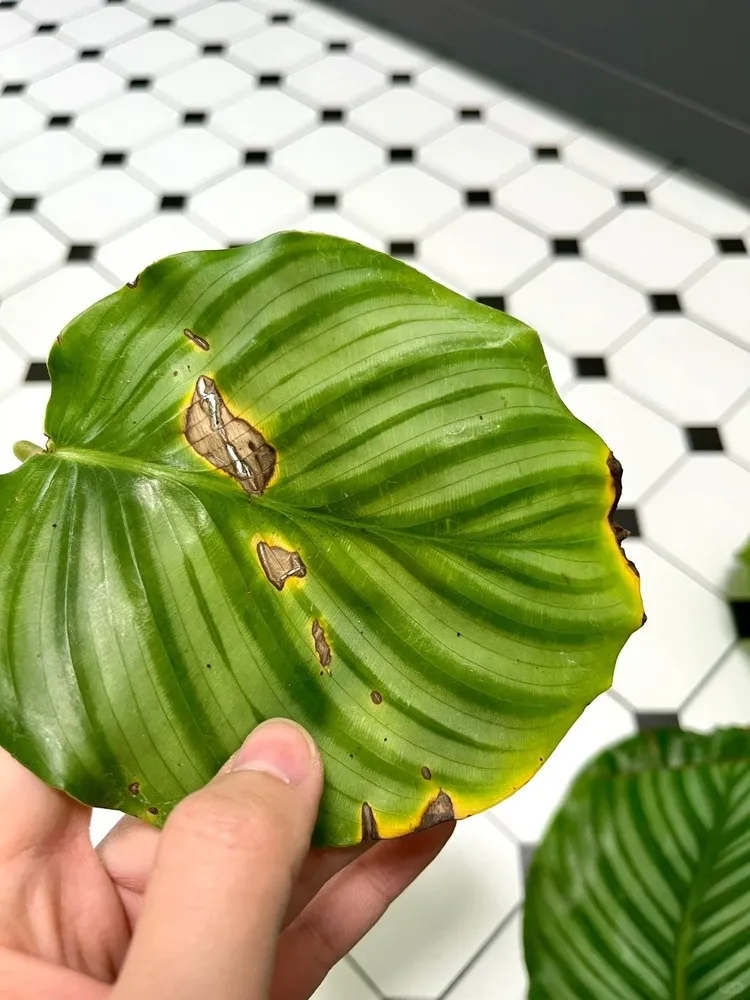
At one point, my Calathea developed scattered leaf spots — small brown patches, irregular edges, some minor damage across the surface. My first reaction was immediate: cut everything affected, treat the soil with a fungicide solution, and “start over.”
But with time, I realized that not every spotted leaf signals an active infection. The real question isn’t whether spots exist — it’s how they behave.
Before cutting, I now ask:
- Are the spots spreading week by week?
- Is the tissue soft or water-soaked, rather than dry?
- Are new leaves also developing fresh lesions?
If the spots are dry, stable, and limited to older leaves, it’s often residual damage — not an ongoing outbreak. In that case, aggressive pruning doesn’t change much.
If the tissue becomes soft, enlarges quickly, or new growth shows similar symptoms, then removal makes more sense — mainly to reduce surface-level spread and improve airflow.
But here’s the important distinction:
Cutting leaves does not kill soil pathogens.
If the underlying issue is in the soil — excess moisture, poor aeration, root stress — removing foliage only improves appearance. It doesn’t solve the root cause.
That was a lesson I learned the hard way. Sometimes the plant needs environmental correction more than dramatic pruning.
Case 4 – Pest Infestation and Full Reset
The most extreme pruning I’ve ever done was during a severe scale infestation. The plant had been healthy and full, but once scale insects established themselves along the stems and leaf undersides, it became a constant battle. I tried wiping them off, isolating the plant, even using treatment products — but they kept returning.
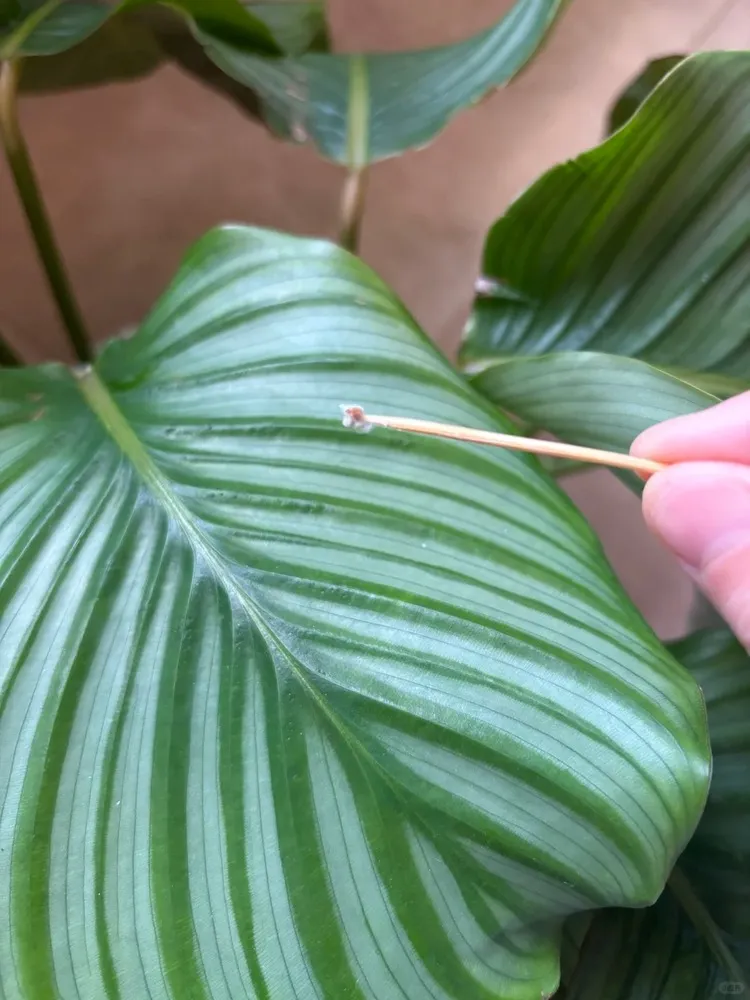
At a certain point, maintenance turned into stress. The plant wasn’t declining from nutrient issues or light. It was being drained by pests — the same kind of slow stress I’ve also seen with thrips and spider mites. After a full cut-back, the recovery phase matters more than the haircut.
That’s when I chose a full reset.
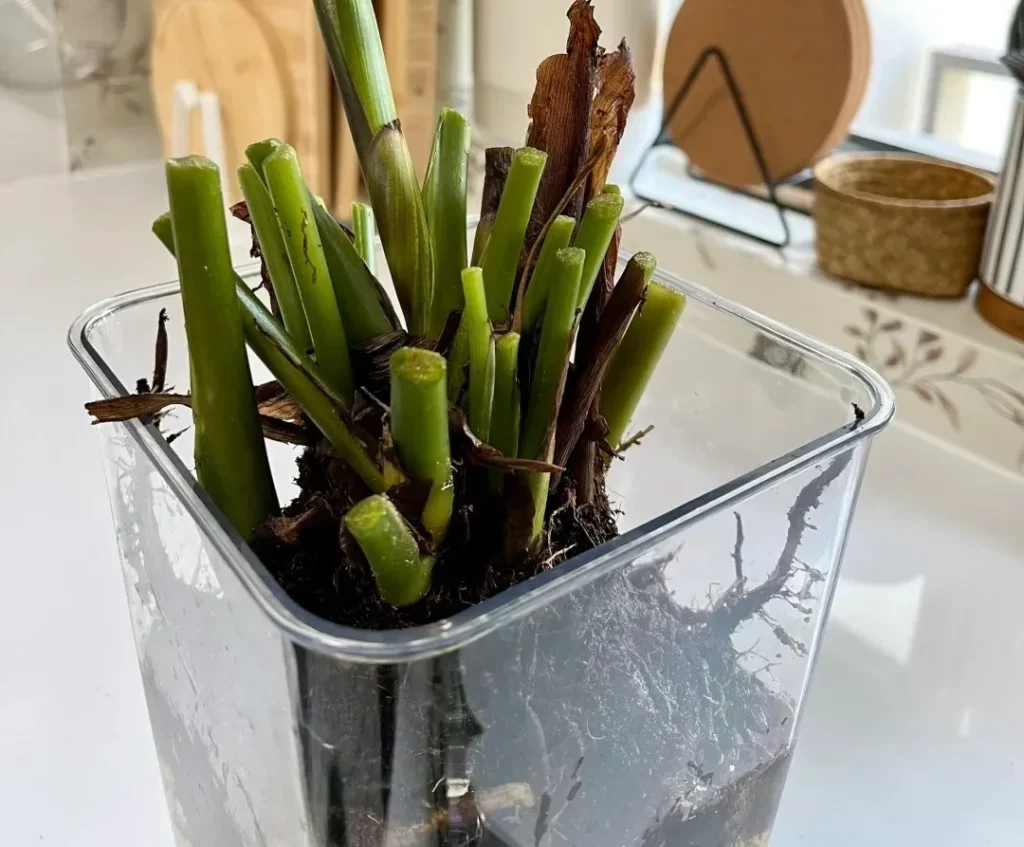
I cut the plant down almost completely — removing all foliage and leaving only the base and healthy root system. It looked drastic. For a while, it looked like I had ruined it.
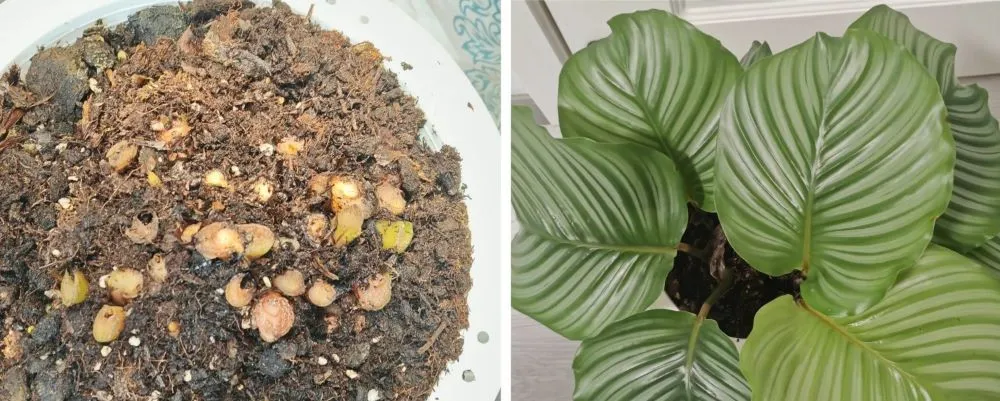
Right: New foliage emerging weeks later, showing gradual recovery from a complete reset.
But here’s what actually happened:
- Week 1–2: No visible growth. Just a bare pot and patience.
- Week 3–5: Small new shoots began emerging from the base.
- Day 76: Several new leaves had fully formed — large, stable, and pest-free.
The recovery wasn’t immediate, and it wasn’t guaranteed. A full cutback only works if the root system is still healthy and the pest source is fully addressed. But in cases of persistent infestation, physical removal can be more decisive than repeated surface treatments.
That experience taught me something important: drastic pruning isn’t a first response — it’s a last one. When used strategically, though, a plant can come back stronger than before.
A Simple Decision Framework
Over time, I stopped asking “Does this leaf look bad?” and started asking a more practical question: “Is this leaf still useful?”
Here’s the simple framework I use before cutting anything:
1. Is at least 50% of the leaf still green?
If most of the leaf surface is green and firm, it’s still photosynthesizing. I usually leave it. If more than half is yellow, brown, or structurally weak, it’s likely near the end of its functional life.
2. Is the damage spreading?
Stable damage is very different from active damage. If spots or discoloration haven’t changed for a week or two, it may just be old injury. If the affected area is expanding or new leaves show similar symptoms, intervention makes more sense. For example, leaf holes are often cosmetic and don’t always justify cutting.
3. Is the leaf affecting airflow or light distribution?
In dense growth, some older leaves block light to newer ones or reduce airflow around the center. In that case, selective removal can improve structure — even if the leaf itself isn’t severely damaged.
4. Is there a real pathogen risk?
Soft, wet, foul-smelling tissue is different from dry cosmetic damage. If there’s a clear sign of rot or infection that could spread under humid conditions, removing the leaf is a preventive step — but it should be paired with environmental correction. If the pot stays wet for too long, I revisit my watering rhythm first.
This framework keeps me from cutting impulsively. Instead of reacting to appearance alone, I evaluate function, progression, and risk.
What I’ve Learned About “Restarting” a Plant
There was a time when I thought cutting everything back meant giving the plant a fresh start. If it looked messy, spotted, or tired, I assumed a clean reset would fix it faster.
Now I’m more cautious. Not every problem needs a full cutback. In many cases, the plant is already adjusting on its own. Waiting a week or two often reveals whether it’s stabilizing without drastic action.
I’ve learned that pruning should be strategic, not emotional. Cutting can help — but only when it supports recovery, not just appearance. Sometimes the strongest move isn’t to reset the plant, but to let it work through the stress first.
FAQ
I usually leave a leaf until it’s mostly yellow or no longer firm. As long as it isn’t soft or decaying, it’s rarely urgent to remove it.
When I’ve cut aggressively in the past, recovery often took longer than when I pruned selectively.
If the tissue becomes soft, spreads quickly, or appears on new growth, then I remove the affected leaves and address airflow and soil conditions.
A plant can restart. But it shouldn’t have to every time something looks imperfect.
Still worried about your plant?
👉 For more tips on keeping your plant healthy, explore our Complete Calathea Care Guide.
Explore All Problems →