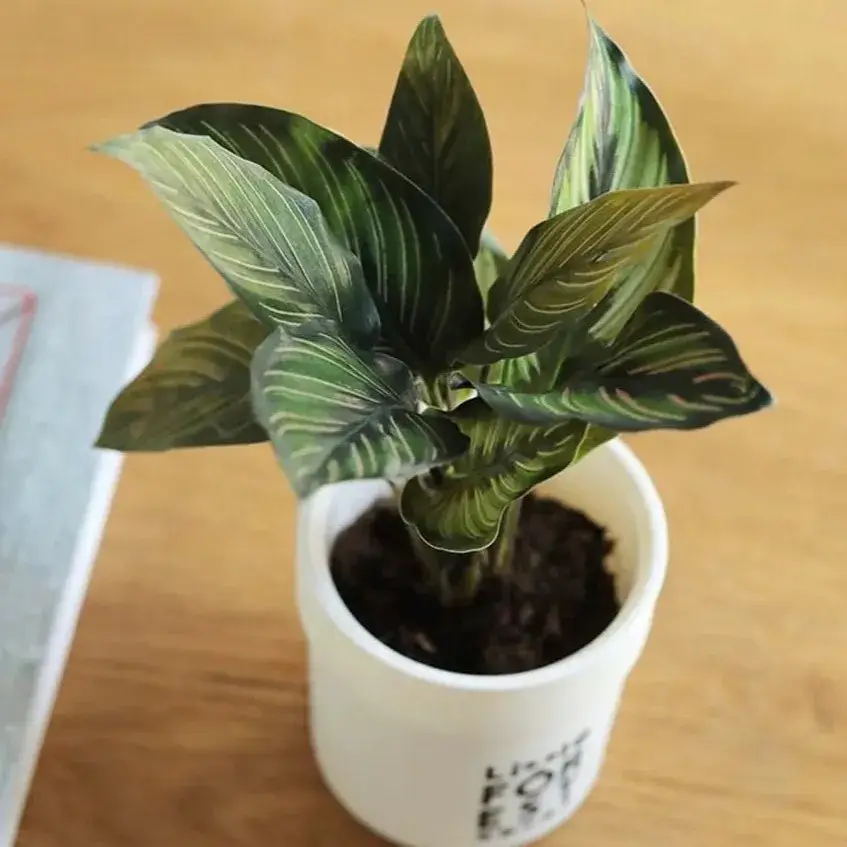
| Botanical Name | Calathea ornata ‘Beauty Star’ |
|---|---|
| Plant Type | Tropical evergreen (prayer plant family, Marantaceae) |
| Origin | South America (primarily Colombia rainforests) |
| Height | 16–24 in (40–60 cm) indoors |
| Leaf Size | 6–10 in (15–25 cm) long; elongated oval shape |
| Pet Safe | ✔ Yes — non-toxic to cats & dogs |
| Popularity | High — one of the most bought Calathea varieties due to gold–green variegation |
| Difficulty | Moderate — easier than Pink Ornata, but still humidity-sensitive |
Calathea Beauty Star has become the only Ornata-type Calathea in my Seattle home that consistently keeps its looks through winter.
Most of my other Calatheas start complaining the moment the heat kicks on—stripes fade, edges crisp, growth slows. But Beauty Star? It just… holds steady. The green-and-gold striping stays bright even when indoor humidity dips, and its leaves don’t collapse the way my Pink Ornata tends to every December.
What surprises me most is how reliable this plant feels. The variegation doesn’t wash out as easily, the leaf texture is a bit more forgiving, and new leaves open smoothly instead of doing that awkward, creased-or-crunched thing Ornata fans know too well. Even during those dry January weeks when my apartment drops below 50% humidity, Beauty Star remains the calmest plant on the shelf—never dramatic, never droopy, just quietly thriving.
If you’re new to Calatheas, this one is a far gentler entry point. And if classic Ornata has defeated you before, Beauty Star gives you the same elegant striping without the high-maintenance personality. For plant parents who want something showy but not fragile, this is the Calathea I recommend again and again.
What Makes Calathea Beauty Star Special?
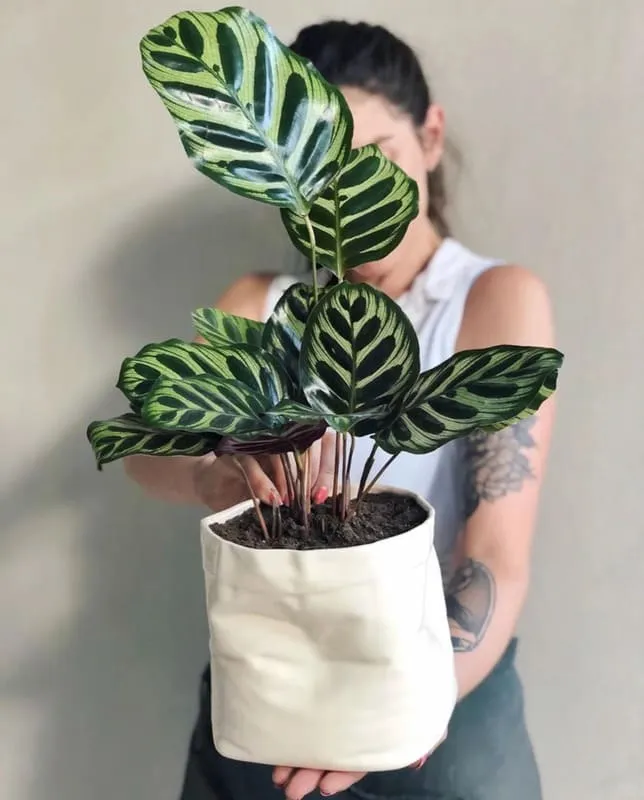
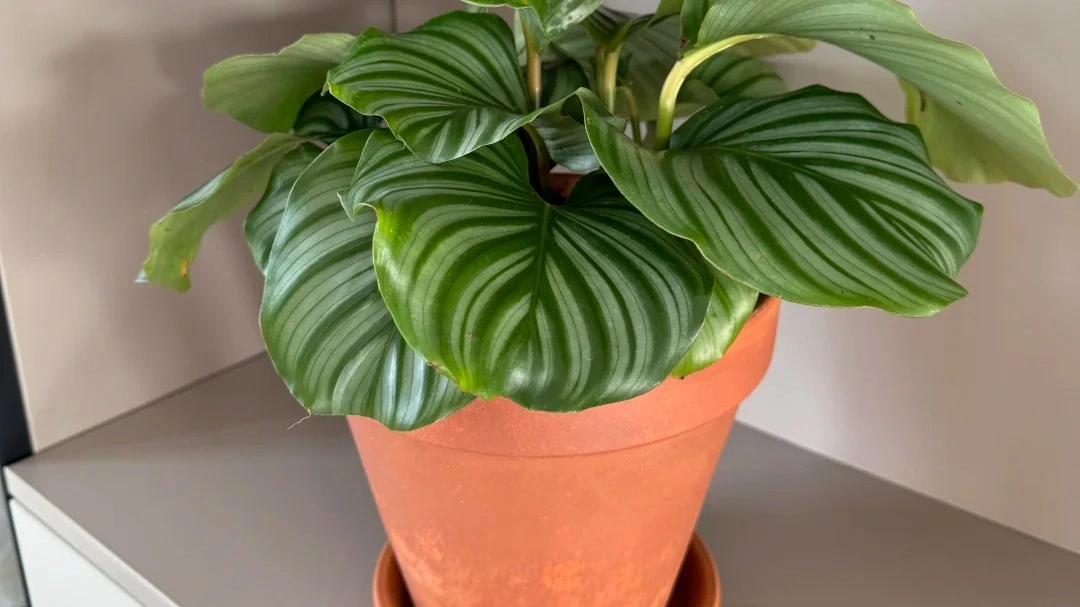
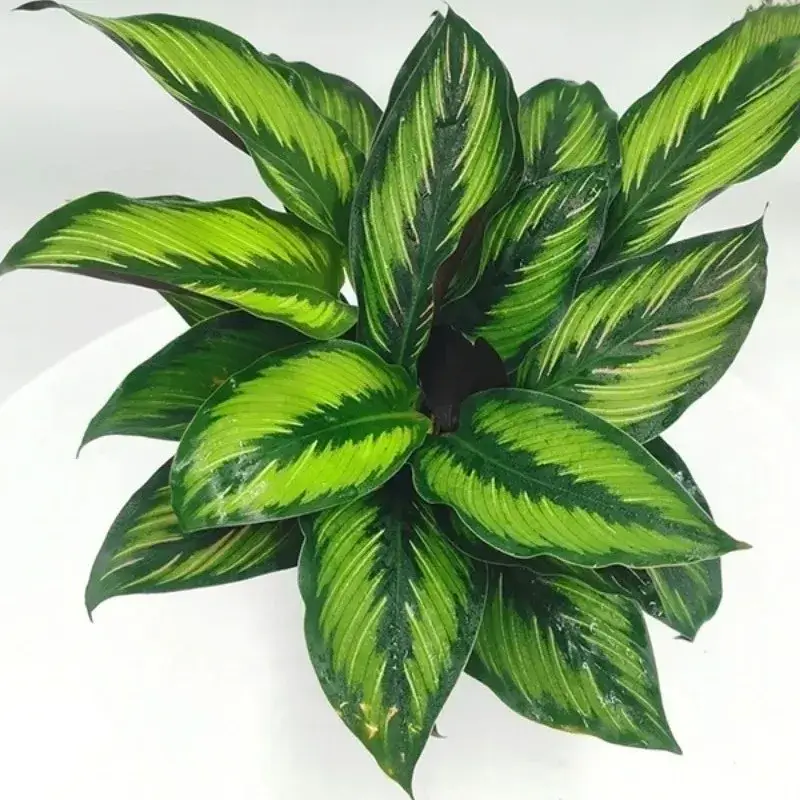
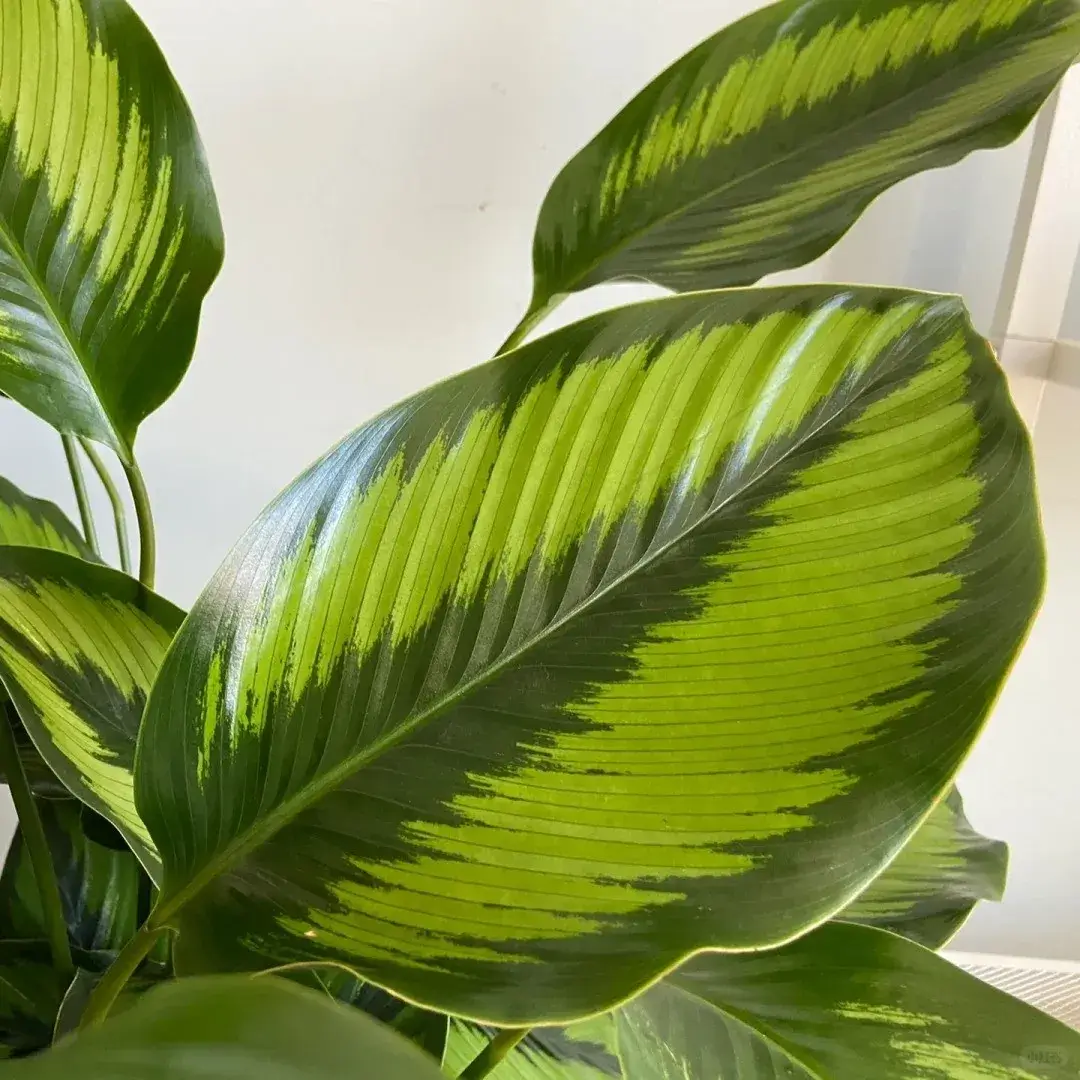
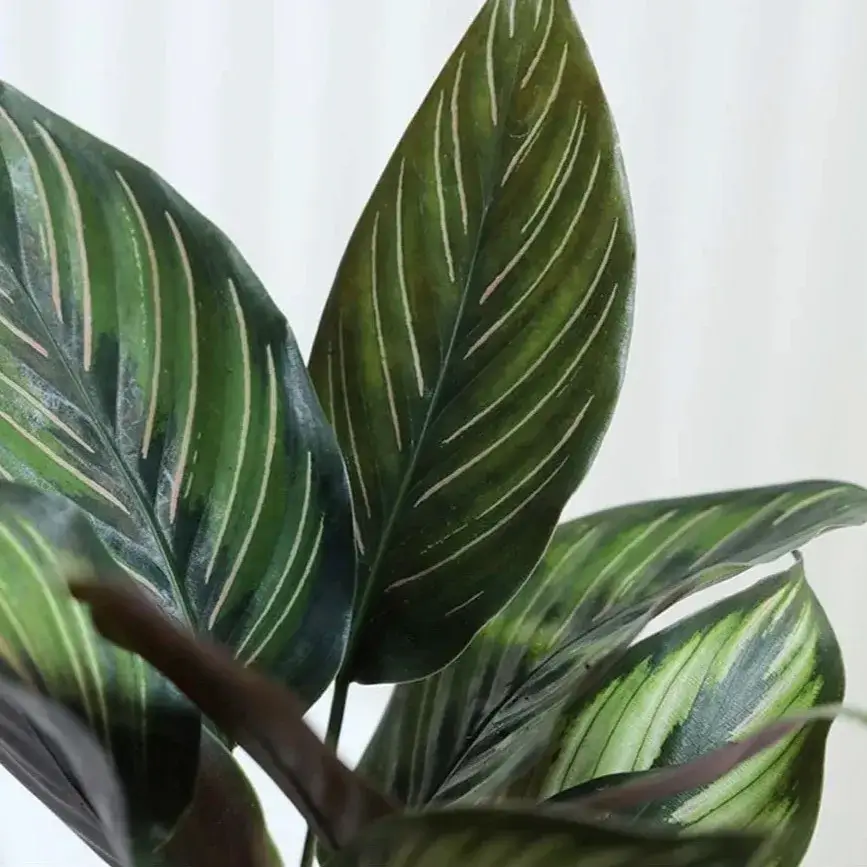
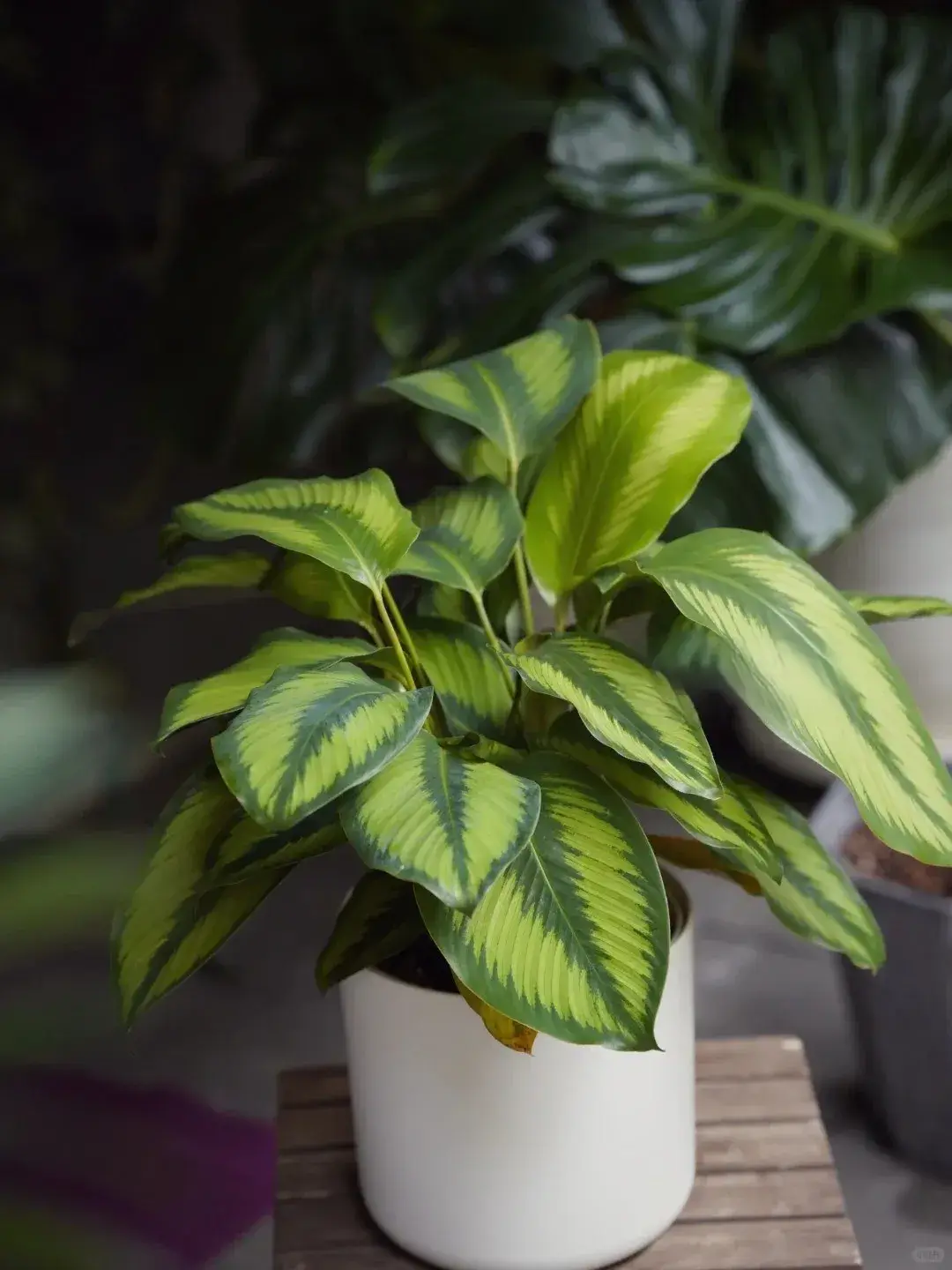
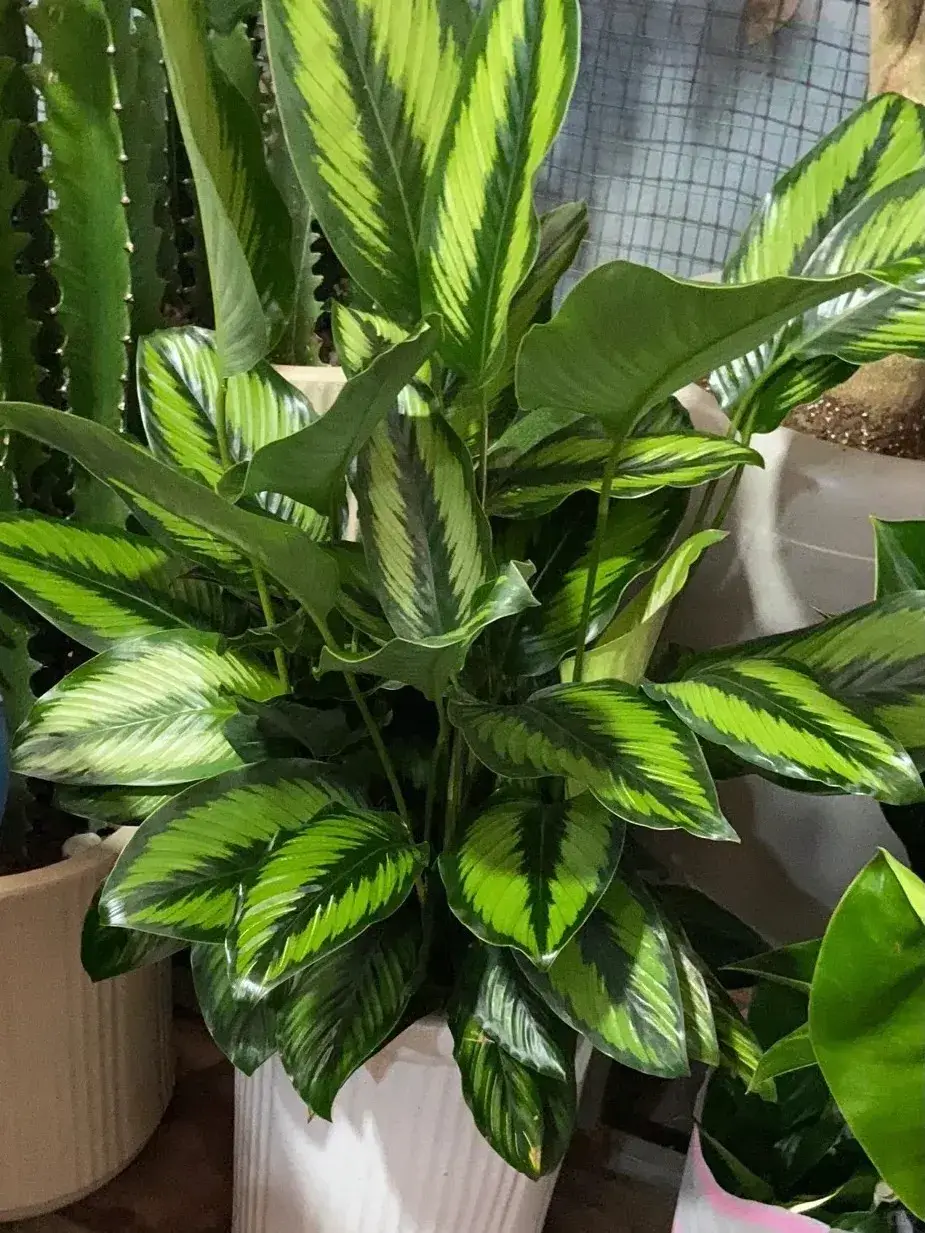
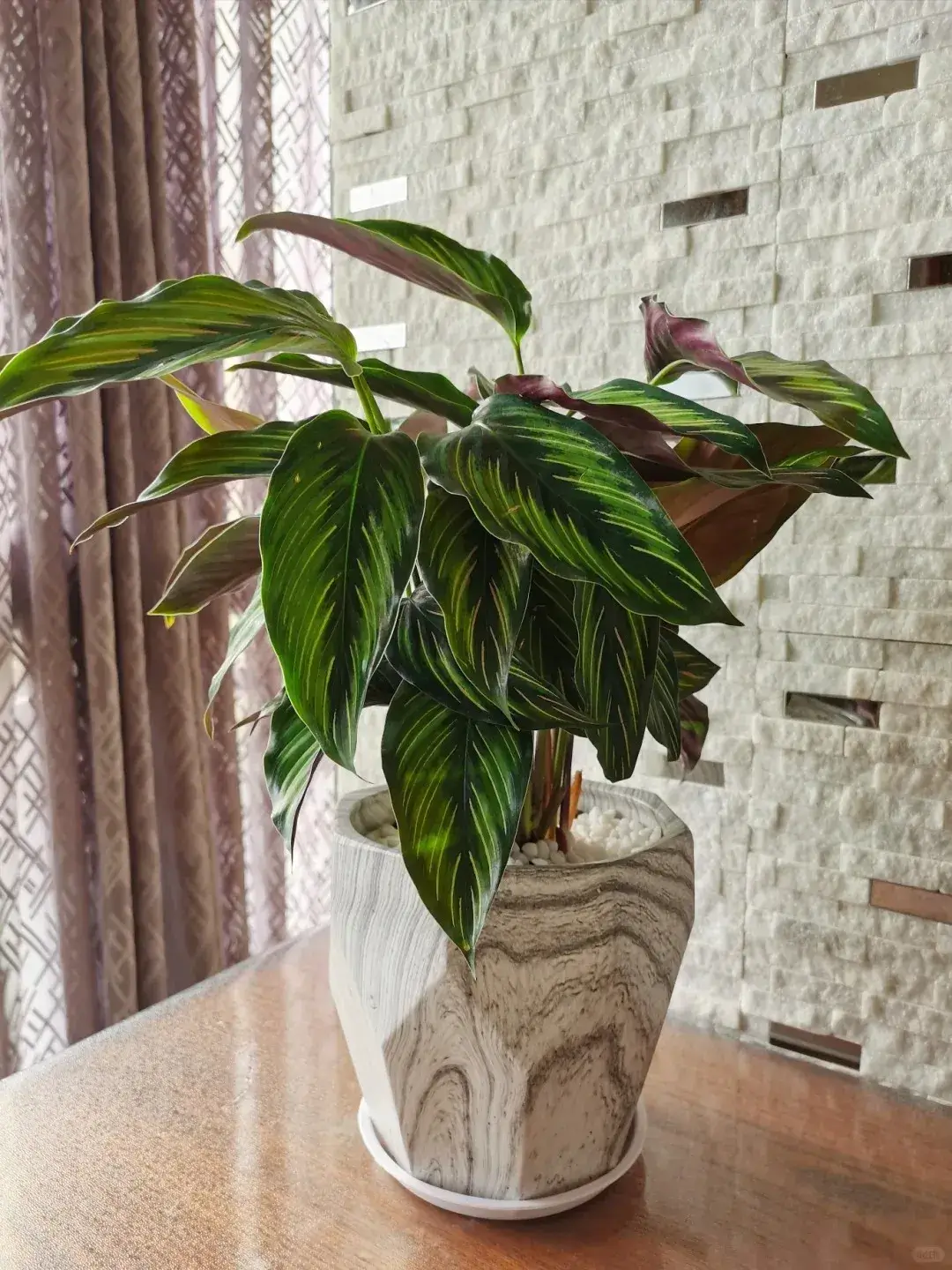
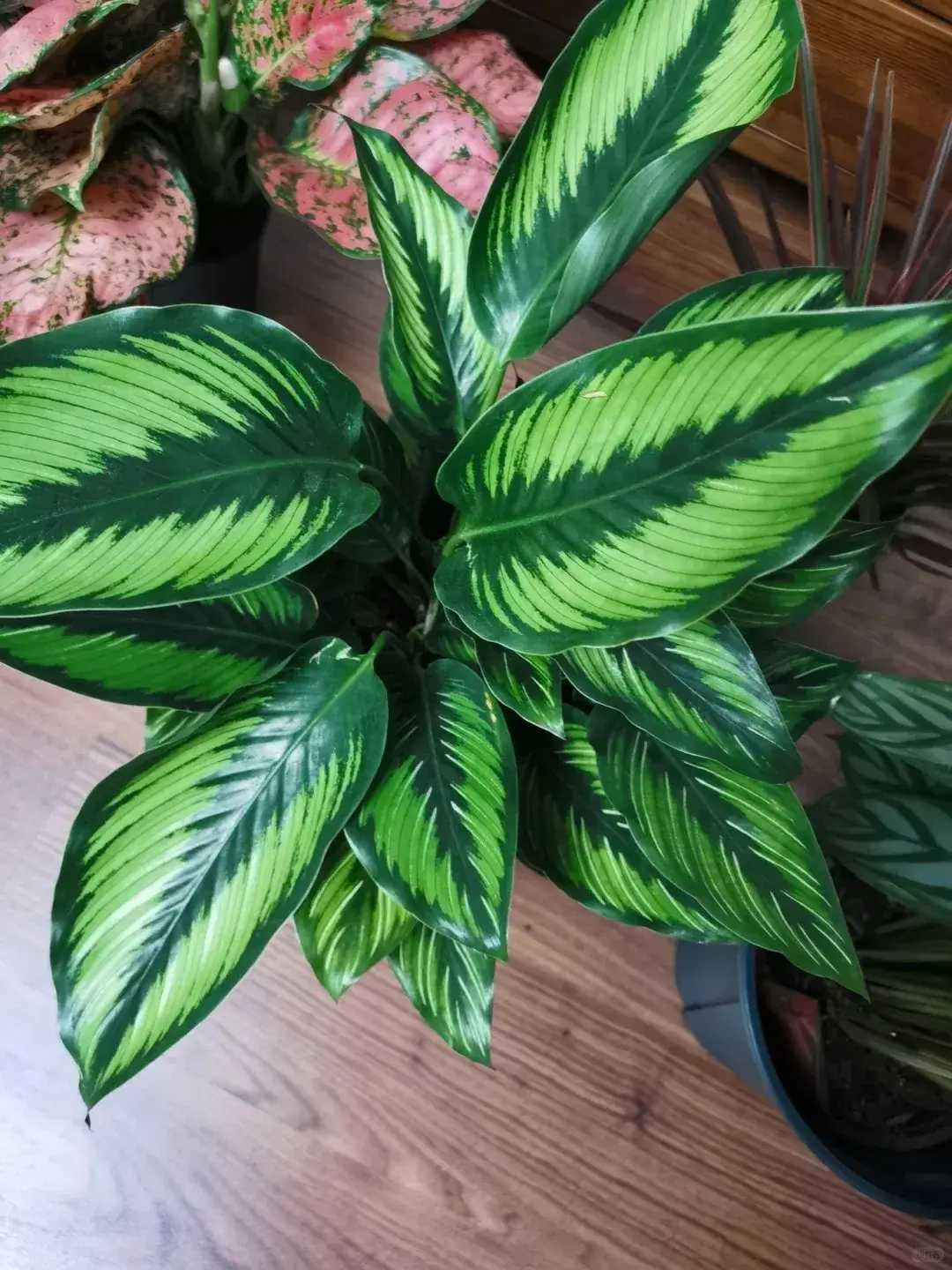
Calathea Beauty Star stands out because its leaves look hand-painted. The deep green base blends into soft lime gradients, and the gold brush-stroke variegation creates a shimmering effect when light hits the surface. It’s the kind of pattern that looks different throughout the day—subtle in the morning, brighter and more reflective in late afternoon light.
Another thing people fall in love with is its nighttime “prayer” movement. Like other Marantaceae plants, Beauty Star lifts its leaves in the evening, creating a gentle rustling sound if the room is quiet. For many first-time owners, this nightly movement is the moment they truly bond with the plant.
And while it belongs to the same family as the famously dramatic Pink Ornata, Beauty Star is noticeably more tolerant. It keeps its variegation under slightly lower humidity and doesn’t punish you as quickly for small environmental dips. The stripes remain sharp, the leaves stay glossy, and the plant holds its shape even during dry indoor winters—one of the reasons it has become a favorite among Calathea beginners and seasoned collectors alike.
My Personal Growing Notes
When I first brought home my Beauty Star, I was convinced something odd was happening.
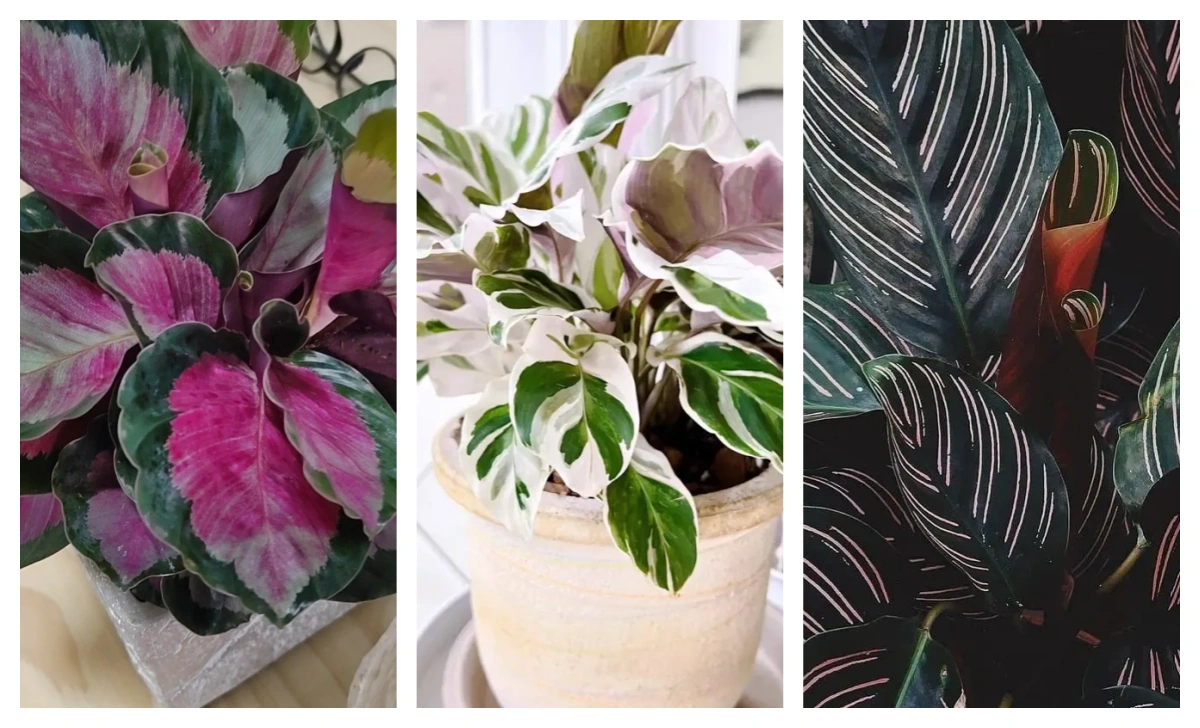
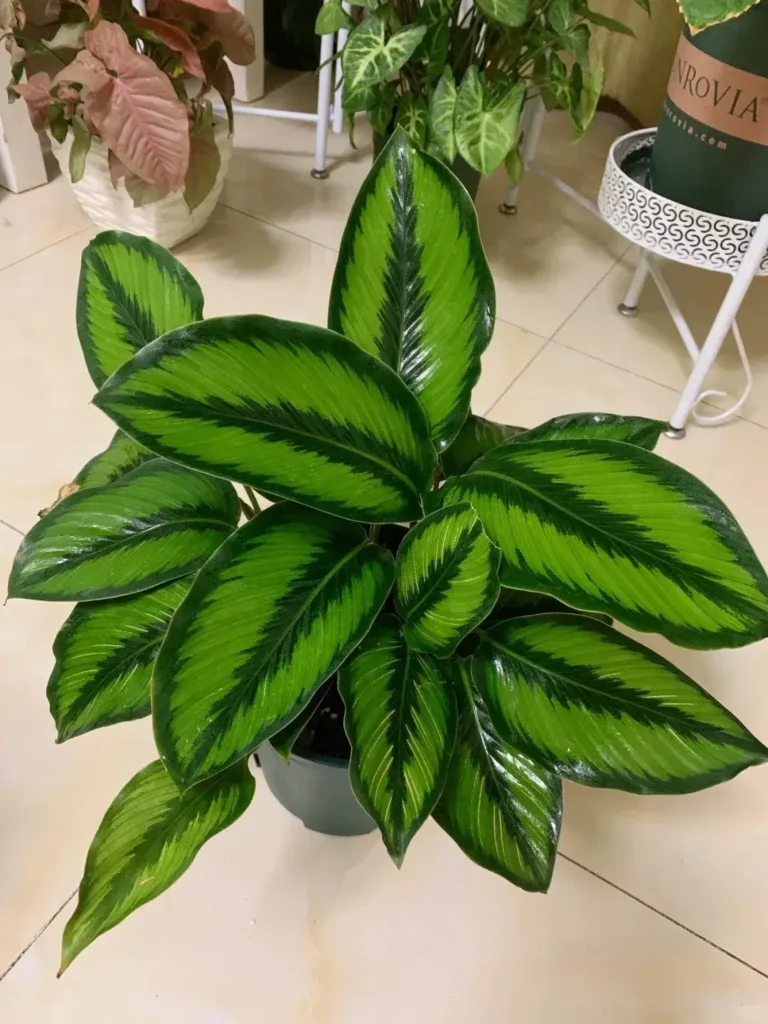
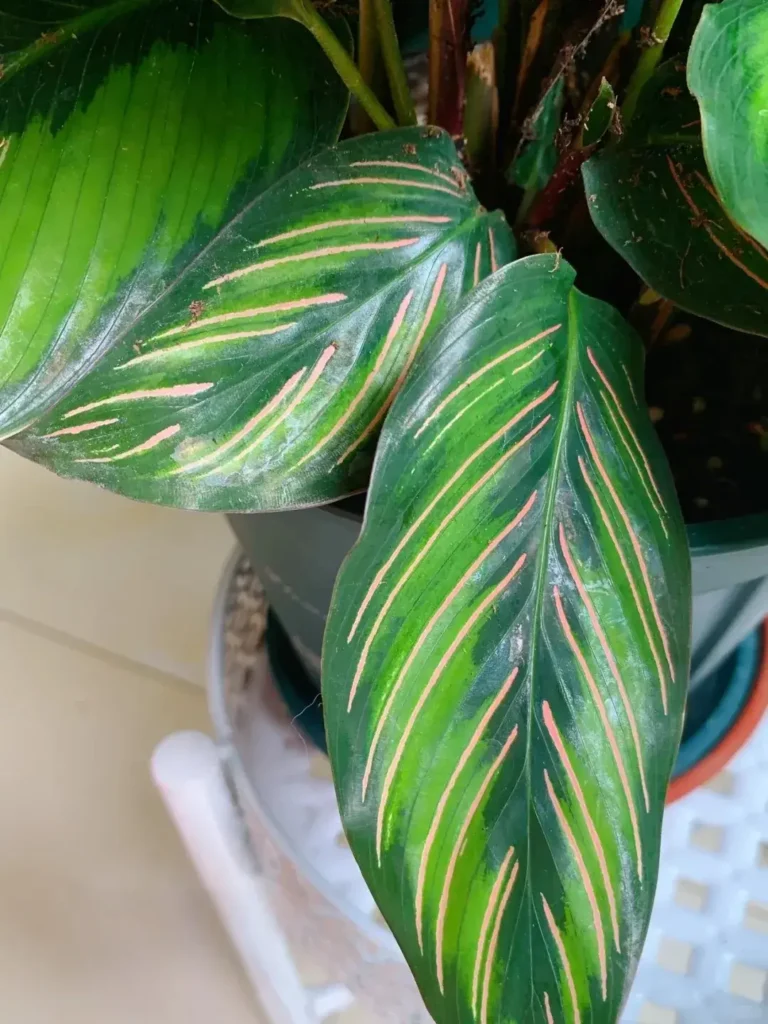
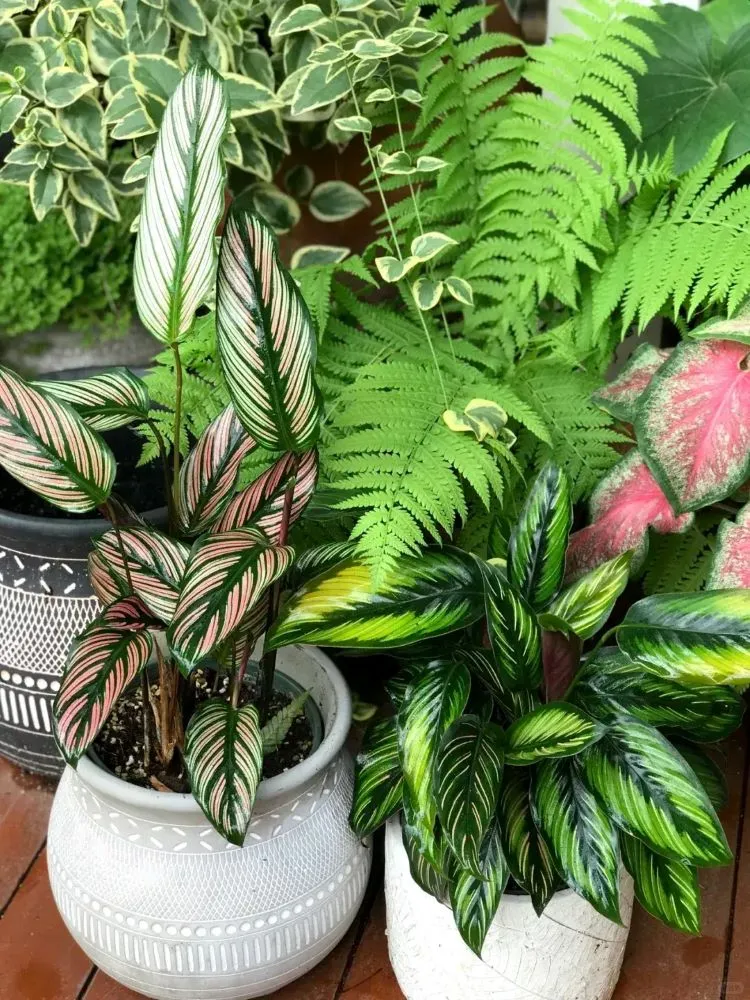
A few leaves had these smooth, pink racing stripes—almost like a mini Calathea Picturata Rosy vibe—while most of the other leaves stayed plain.
I remember thinking: “Wait… did I just get two varieties in one pot? Jackpot?”
One sunny Saturday, I finally decided to “separate” them so each could live in its own pot. I was already picturing myself owning both a Beauty Star and a Picturata-like Calathea.
Turns out… reality is humbling.
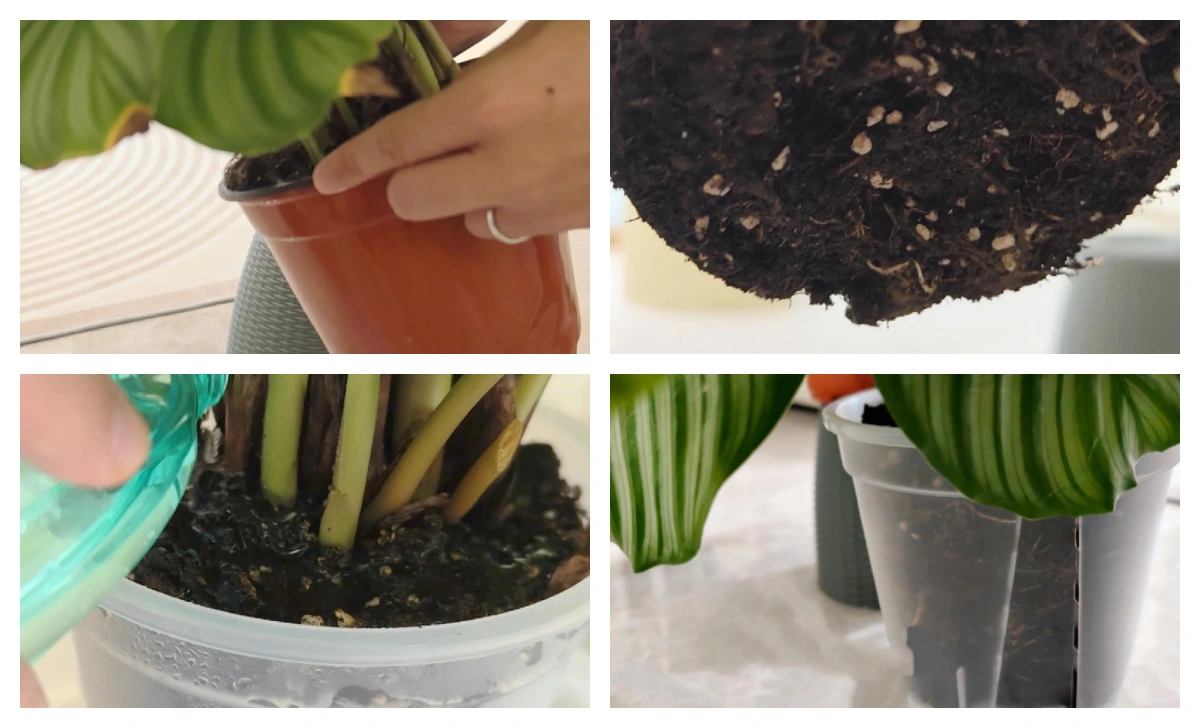
The moment I unpotted it, all the rhizomes were one single chunky root mass, almost taro-like—strong, fused, absolutely inseparable.
So no, it wasn’t two varieties. It was just one very normal, very unified Beauty Star.
I silently apologized to the plant for my wild imagination.
Later, after some research (and my own balcony experiments), I realized this pattern is totally normal for Beauty Star:
- The pink striping becomes more vivid when the plant gets bright, indirect light—
on my Seattle east-facing balcony, the stripes turn noticeably warmer and more defined in spring and summer. - Leaves grown in lower light come out greener and less streaky, sometimes almost “plain.”
That living, shifting pattern is exactly why it’s called Beauty Star — it truly changes its makeup depending on how much light you give it.
If your plant has a mix of stripe-heavy and stripe-light leaves, don’t worry.
It’s not a mislabeled hybrid.
It’s just doing its Beauty Star thing.
Growth & Environment Requirements
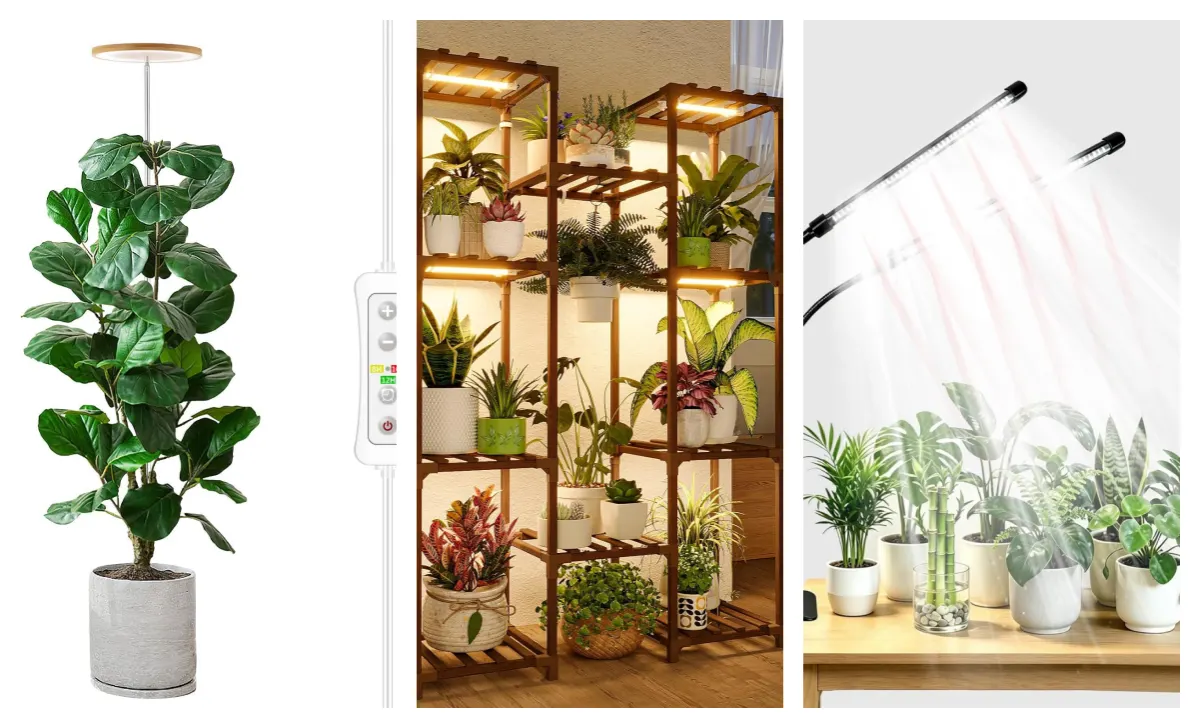
My Calathea Beauty Star grows in this gentle, upright shape that slowly fans outward as it matures. On my Seattle shelf, it’s happiest in bright, indirect light—just enough to keep the gold variegation sharp, but never direct sun. I learned quickly that even a short blast of sun can wash out the stripes, so mine sits a few feet back from an east-facing window.
Temperature-wise, it really prefers things warm and steady. 65–80°F keeps it moving along nicely, but I can always tell when my apartment slips below 60°F in winter—the new growth slows down and older leaves hold a little tighter.
Like most Calatheas, it wants consistent moisture, but not a wet pot. I keep the soil lightly damp and let the top inch dry before watering again. If I use regular Seattle tap water, the edges brown a bit, so Beauty Star gets filtered water or left-out tap water most of the year.
Humidity still matters, but this plant is much more forgiving than my classic Ornata. 50–70% keeps it perfectly comfortable, and even when my indoor humidity dips on cold January nights, the leaves don’t panic. With steady moisture, gentle light, and moderate humidity, my Beauty Star pushes out clean, glossy new leaves whenever it’s in its growing mood.
Detailed Care Guide
Watering
Calathea Beauty Star likes its soil to stay lightly moist, but never wet. I usually let the top inch dry before watering again—this small pause keeps the roots happy and prevents that classic Calathea droop.
In my Seattle apartment, I water every 5–7 days in summer, and closer to 8–10 days once the heat kicks on in winter. If your tap water is mineral-heavy, do what I did: switch to filtered or rainwater. The difference in leaf edges was immediate.
Light
I’ve learned that Beauty Star looks its best in bright, indirect light. Too much shade and the gold striping loses its punch; too much sun and the leaves wash out quickly. Mine sits a few feet from an east-facing window where it gets soft morning light, and it has held its colors beautifully.
Whenever I pushed an Ornata closer to direct sun, I regretted it—Beauty Star reacts the same way. Keep it bright but gentle.
Soil
A light, airy mix works wonders. I use an aroid-style blend with extra perlite because my first Beauty Star absolutely hated compact soil—it stayed wet too long and the new leaves came out misshapen. Once I switched to a fluffier mix, the growth straightened out.
If your plant feels “heavy” after watering, that’s usually a sign the soil isn’t draining fast enough.
Fertilizer
During spring and summer, I feed mine every 4–6 weeks with a diluted liquid fertilizer. Calatheas really don’t appreciate strong feedings, so I learned to go half-strength by default.
Once fall arrives, I stop fertilizing entirely. My Beauty Star slows down noticeably in colder months, and pushing nutrients when it’s resting never helped.
Humidity
Beauty Star prefers 50–70% humidity, and in my experience, this range keeps the leaves smooth and glossy. The nice part is that it’s more tolerant than classic Ornata—when humidity drops into the mid-40s in winter, it doesn’t panic immediately.
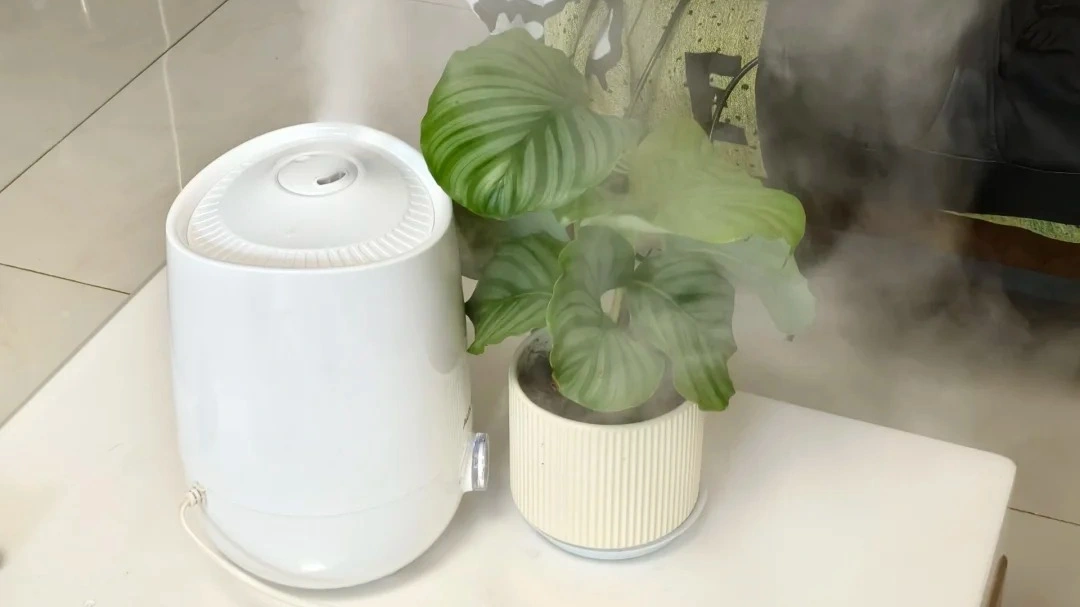
That said, when I ignored humidity completely one year, the edges crisped within days. Now I keep a small humidifier nearby (not blowing directly on it), and the plant stays much calmer through Seattle’s dry season.
💡Quick Tip Card
After growing Beauty Star through several Seattle winters, my routine has become pretty simple: I always let the top inch of soil dry before watering, and I stick to filtered or rainwater because it keeps the leaf edges so much cleaner. Bright, indirect light makes the gold variegation pop, while 50–70% humidity keeps the leaves smooth during our driest months. And if there’s one thing that changed everything for me, it’s switching to a light, airy soil mix—the plant stopped drooping and the new leaves finally opened perfectly.
Common Problems with Calathea Beauty Star
Even though Beauty Star is more forgiving than classic Ornata, it still shows stress through its foliage. Understanding these early signs helps you correct issues before they spread:
- Faded or yellowish streaks → Often a sign of too much light or mild sun stress. The gold variegation is sensitive to strong rays, even through sheer curtains. Move the plant slightly farther from the window and check whether the next new leaf comes in brighter. Learn more in Calathea Leaves Turning Pale.
- Crispy edges → Dry indoor air—especially during Seattle’s heater season—pulls moisture from the leaf margins. Drafts from vents can make it worse. Boost humidity or shift the plant away from moving air. Detailed fixes in Calathea Brown Leaf Edges.
- New leaves stuck or deformed → Beauty Star needs steady humidity while leaves unfurl. When humidity drops below ~45%, new leaves may open twisted or catch on their sheaths. A small humidity boost usually clears this up. See Calathea New Leaves Not Opening.
- Whole plant drooping → Most commonly caused by watering swings: soil staying too wet for too long or drying out completely between waterings. Occasionally, cool night drafts near windows also trigger sudden collapse. Troubleshooting steps in Calathea Drooping Guide.
💡My Tip
When my Beauty Star starts acting up, I first look at light strength and soil moisture rhythm—fixing one of these two solves most issues within a week.
Growth Habit & Repotting
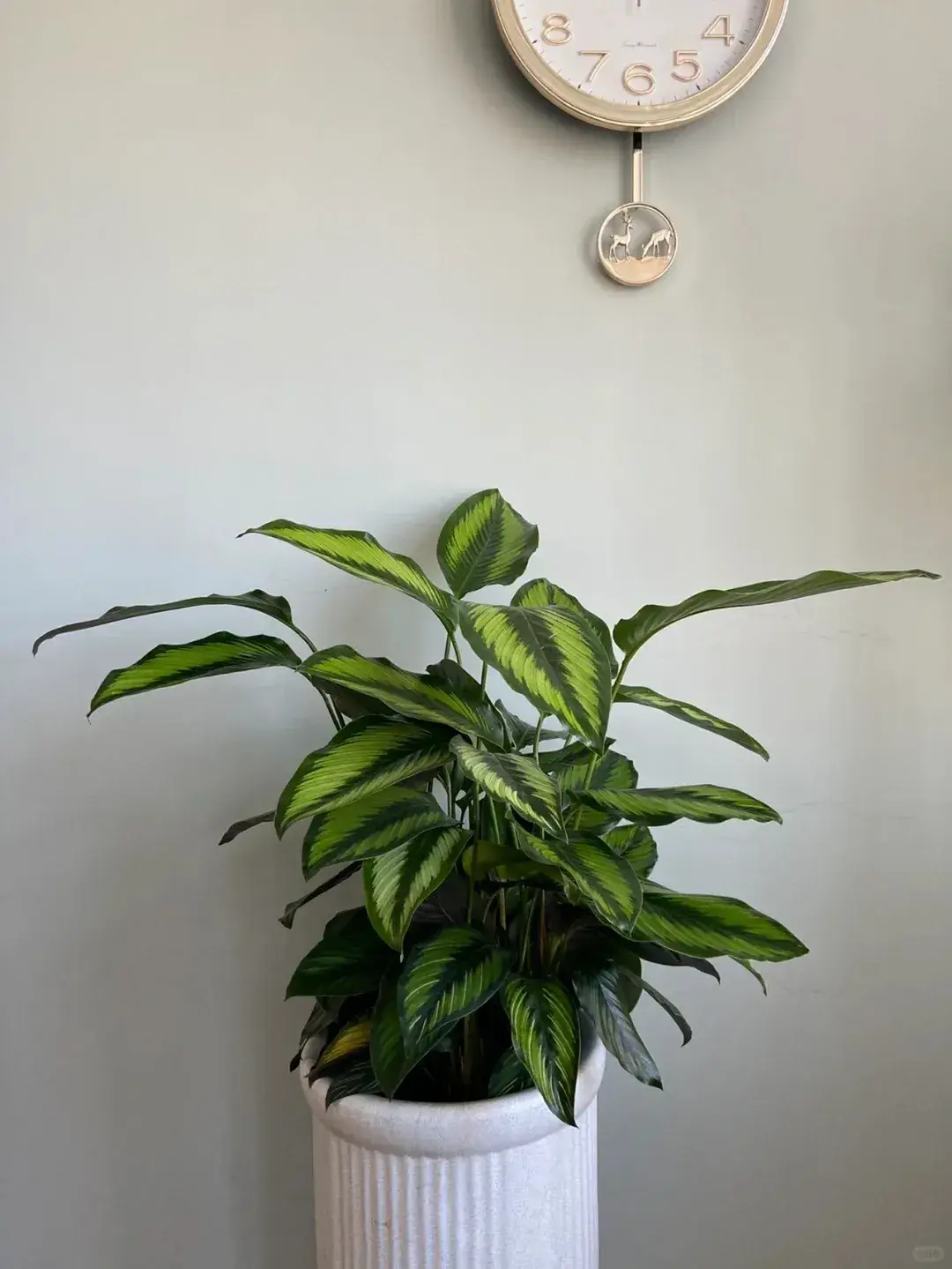
Calathea Beauty Star grows in a way that I’d describe as “slow but steady.” Mine never rushes into new leaves, but once it settles into its spot, it produces clean, glossy growth at a reliable pace. It starts upright when young and gradually spreads outward, forming a fuller, layered look over time. I’ve noticed that it puts out its best leaves during late spring and early summer, once the light and humidity in Seattle naturally stabilize.
When it comes to repotting, I’ve learned not to rush this plant. Spring is hands-down the safest time—every repotting I’ve done outside that window has slowed the plant down more than necessary. I usually move it up just one pot size every 1–2 years, depending on how tightly the roots have filled the container. Beauty Star doesn’t like being over-potted; giving it too much soil at once makes moisture management harder and can lead to drooping.
Like most Calatheas, this variety only propagates through division. Whenever I repot, I check whether there are natural clusters that can separate cleanly. If the roots resist or the plant feels like one solid mass, I leave it together—forcing a division has never gone well for me. A clean, gentle split during spring almost always results in two healthy plants that adjust quickly.
Styling & Placement Ideas
- Near an east-facing window
My Beauty Star looks its best here—soft morning light makes the gold striping glow without risking sun stress. - On a bookshelf or side table with gentle ambient light
The reflective leaves catch lamp light beautifully at night, giving the corner a warm, layered look. - Paired with dark or matte planters
I’ve found that charcoal, deep green, or matte black pots make the variegation pop far more than terracotta or white. - As a mid-height accent in a plant cluster
Its outward-spreading shape breaks up the vertical lines of taller plants and adds softness to the arrangement. - Away from vents or strong airflow
I once placed it near a heating vent for the “perfect lighting”—the edges crisped in a week. Gentle air, steady humidity works best.
FAQ
Explore More Calathea Varieties
Looking to discover more beautiful Calathea plants?
Browse our full collection of Calathea varieties — from the bold Orbifolia to the velvety Warscewiczii — and find the one that fits your home best.