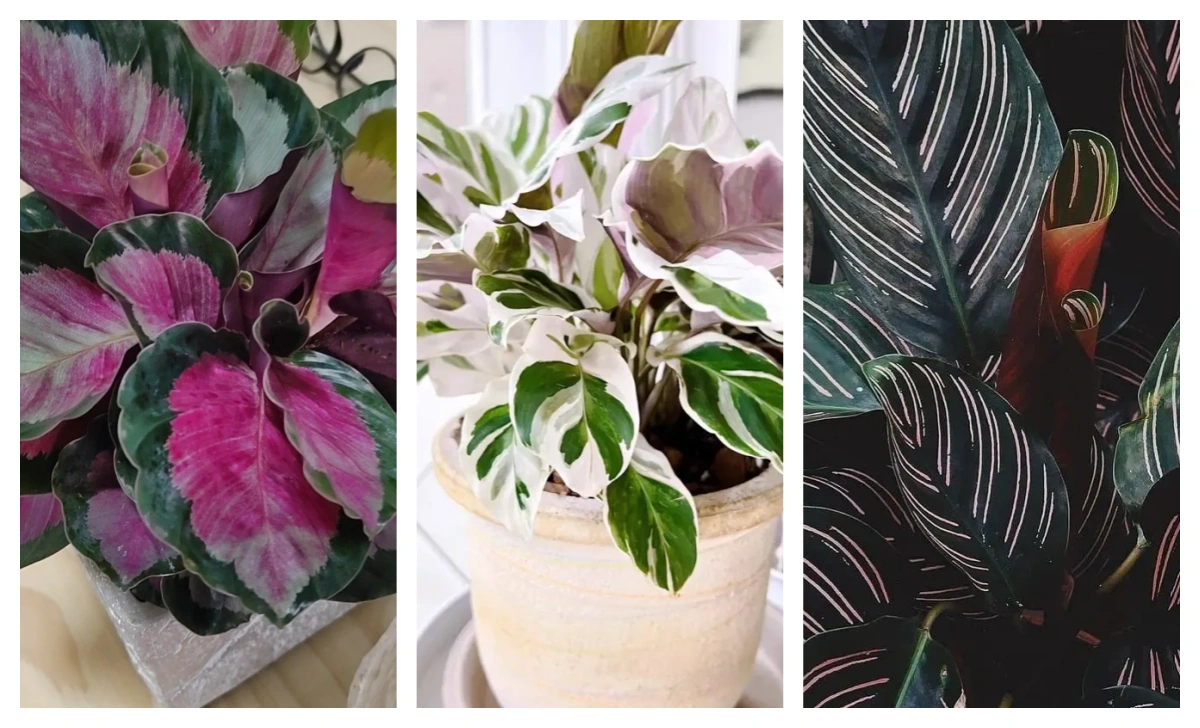
New Calathea leaves always start rolled — that part is normal. But they should open smoothly within 24–72 hours. When they don’t, the plant is signalling something very specific.
Use this quick chart to find your direction in 3 seconds:
| New leaf stays curled > 3 days | Low humidity / dry air |
| Leaf opens only halfway or wrinkles badly | Inconsistent watering |
| Leaf stuck to the sheath and won’t slide out | Sheath too dry / environment too dry |
| New leaf pale, soft, or floppy | Not enough light or weak roots |
| One side curls, the other expands | Mineral buildup (tap water) |
| Multiple new leaves curling at once | Root stress / potting mix too heavy |
This simple chart already eliminates 80% of the guesswork.
Everything that happens to a new Calathea leaf — curling, wrinkling, sticking, stalling — comes down to moisture, light, minerals, or root pressure.
How Calathea New Leaves Normally Unfurl (Normal vs. Not Normal)
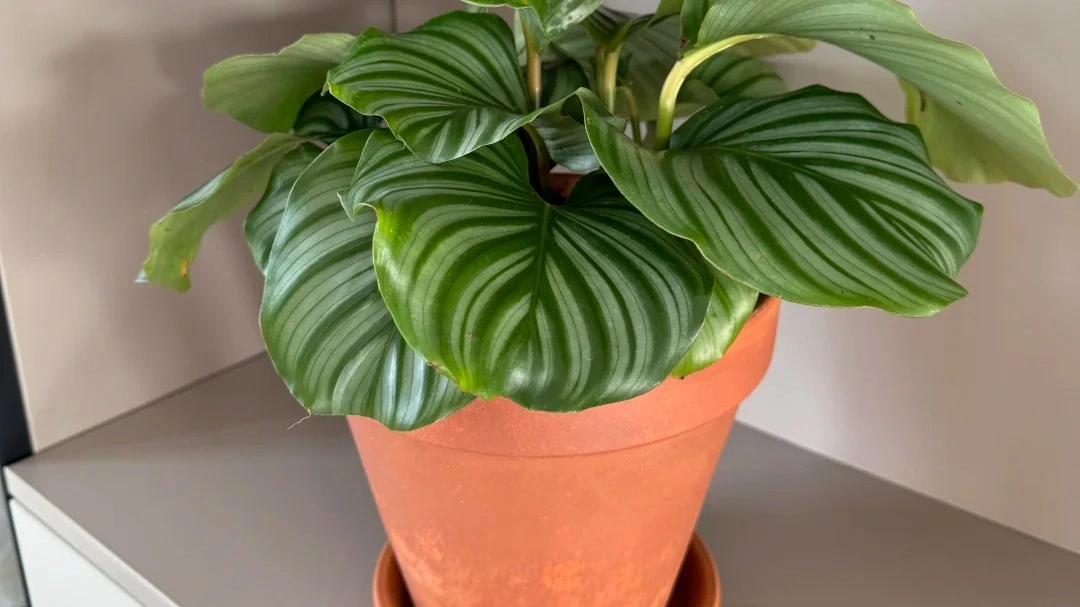
A Calathea’s new leaf always begins as a tight green roll — that part is completely normal.
In fact, the rolling protects the delicate inner surface while it develops.
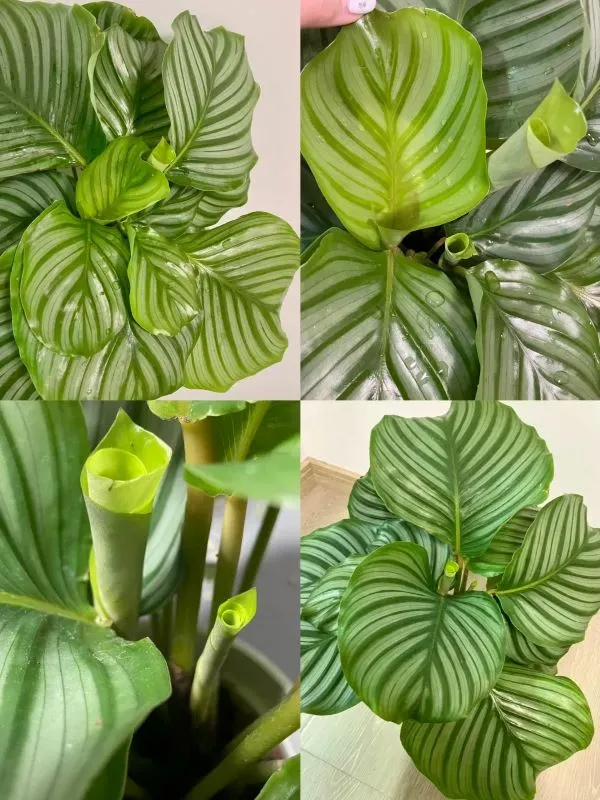
Here’s what healthy unfurling looks like:
- the leaf starts moving within 24–48 hours
- fully opens within 48–72 hours
- texture feels firm, not thin
- color is even across both halves
- no major wrinkles remain after it finishes spreading
A Calathea that’s growing in stable conditions will unfurl new leaves almost “automatically,” with very little drama.
But when something is off — humidity, watering rhythm, minerals, or light — the unfurling process slows down or jams. That’s when you start to see:
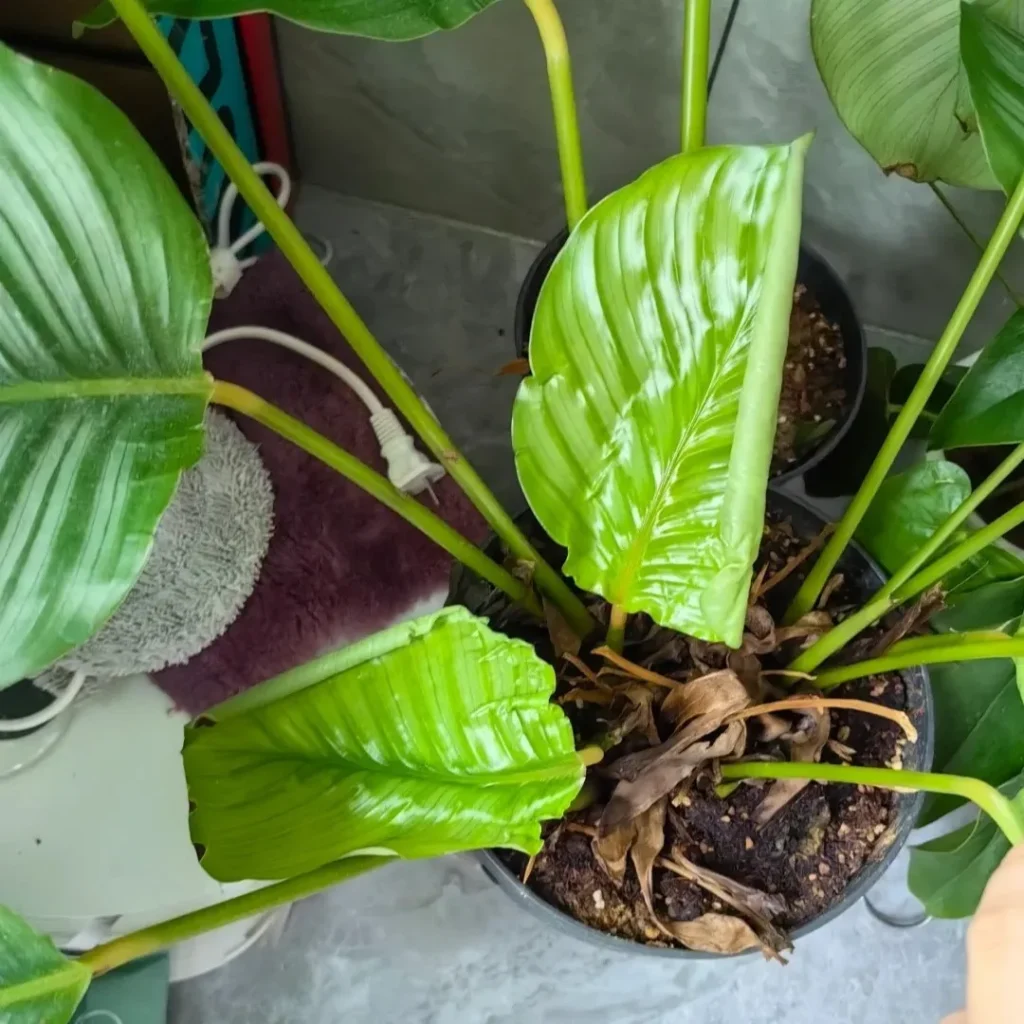
- the leaf staying rolled for more than 3 days
- only half of the leaf opening
- edges drying or curling inward
- pale, soft, or wrinkled patches
- the leaf getting stuck inside the sheath
These are early warnings, not random quirks.
Calathea new leaves are incredibly sensitive, and they reveal the plant’s overall condition faster than the older leaves will.
The Real Reasons New Calathea Leaves Curl
Calathea new leaves are dramatic, but they’re not mysterious.
They curl for a reason — and in my home, the same issues keep showing up, season after season.
Below is the frequency ranking I’ve learned from years of trial, error, and far too many wrinkled leaves.
| Rank | Most Likely Cause | What It Looks Like | Why It Happens |
|---|---|---|---|
| ① | Low Humidity | Stays curled >72h, edges dry or stiff | New leaves are thin and lose moisture faster than roots can supply |
| ② | Inconsistent Watering | Half-unfurling, wrinkles, limp texture | Pressure inside the leaf drops when soil swings from dry → wet |
| ③ | Dry / Tight Leaf Sheath | Leaf stuck in sheath, tearing edges | Sheath dries out and grips the emerging leaf too tightly |
| ④ | Not Enough Light | Pale color, slow unfurling, soft leaves | Low energy = weak expansion force |
| ⑤ | Mineral Buildup (Tap Water) | One side curls, edges crisp | Hard water stiffens leaf tissue during unfurling |
| ⑥ | Root Stress / Heavy Soil | Several new leaves curl at once | Roots can’t push enough pressure to open new leaves |
How I Diagnose This at Home (My 10-Second Method)
After killing more new leaves than I’m willing to admit, I now rely on a quick, repeatable check to figure out exactly why a new Calathea leaf is curling or stuck. It takes less than 10 seconds, and it works every single time in my Seattle apartment.
Here’s what I look at — in this exact order:
1. The Leaf Sheath (the fastest clue)
I gently touch the sheath where the new leaf is emerging.
If it feels dry, papery, or tight, I already know the leaf is struggling to slide out.
This alone explains more than half the “stuck leaf” situations I’ve seen.
2. The Light Level Around the Plant
I don’t measure lux — I just ask myself:
“Is this spot bright enough for a Calathea to grow a full leaf?”
If the plant is in winter shade or a north-facing corner, weak unfurling is almost guaranteed.
3. The Texture of the New Leaf
If the new leaf feels too soft, weak, or limp, that’s usually hydration or nutrient inconsistency.
If it feels crispy on the edges, that’s humidity or minerals.
4. Soil Moisture Consistency
I press my finger 2–3 cm into the soil.
- Top dry / bottom wet = inconsistent watering
- Even moisture = good
- Bone dry = leaf can’t build pressure to open
- Heavy, wet, cold = root stress
Soil consistency tells me more than any moisture meter.
5. Overall Growth Rhythm
If older leaves are fine but only new leaves are curling, it’s usually a short-term environment dip (humidity or watering).
If multiple new leaves are malformed at once, it points to root pressure problems.
My Real Fix at Home
When I first saw this happening, I was honestly heartbroken.
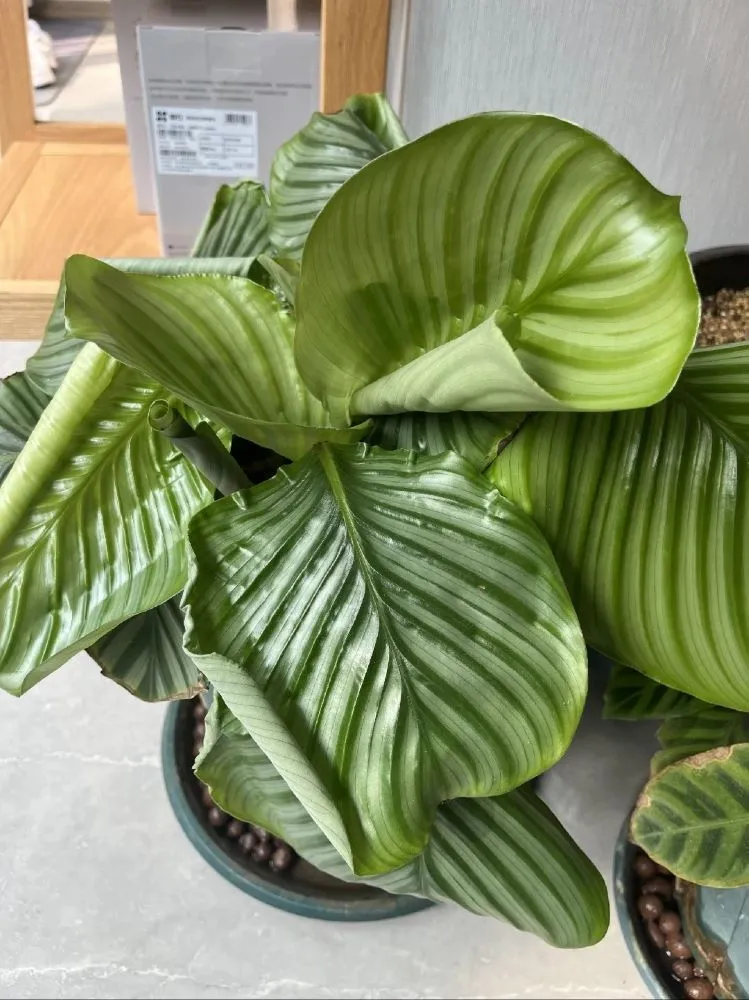
My Calathea had finally entered a growth spurt — seven or eight new leaves emerging at once — and I thought I was about to enjoy the long-awaited “full pot” moment.
But when the last few leaves opened, every single one had the same issue:
- the outer half curled inward,
- the color looked pale, almost undernourished,
- the texture was soft and wrinkled,
- and the leaf edge felt dry even though the soil wasn’t.
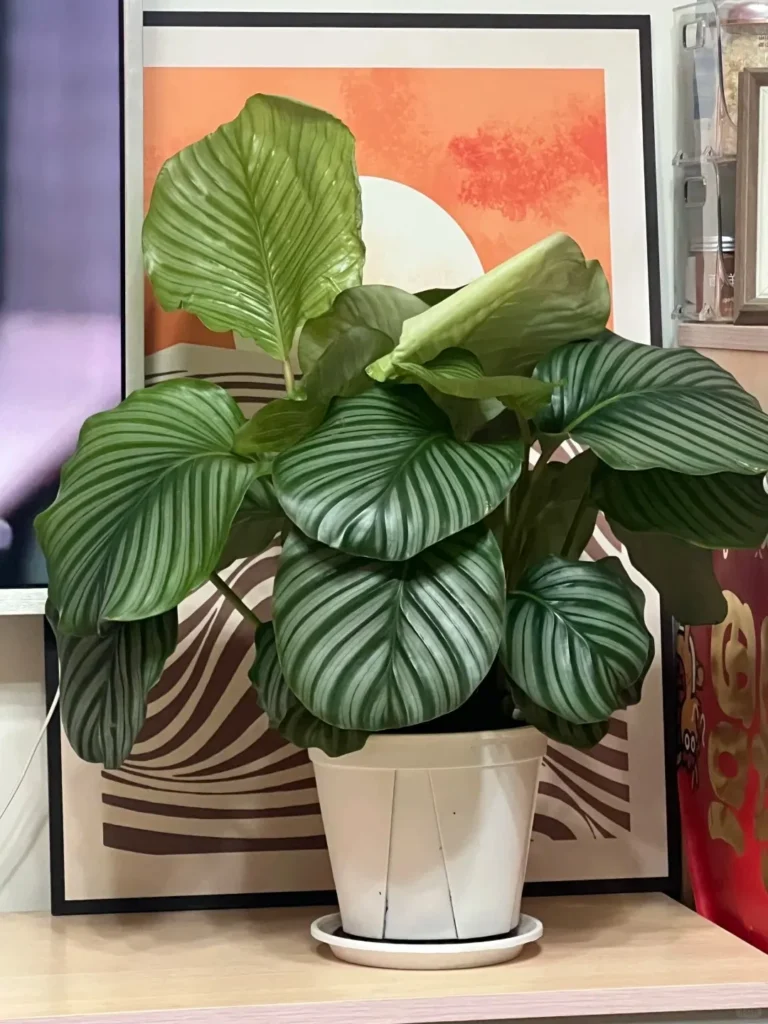
It looked like the plant had enough strength to start the new leaf, but not enough resources or moisture to finish it.
At first I suspected nutrition, then humidity, then watering — until I finally realized it was a combination of all three happening at the worst possible timing. During rapid growth, Calathea demands:
- steady moisture
- steady humidity
- steady nutrient availability
- steady root oxygen
I wasn’t giving it that consistency.
Here’s what I changed — and this is exactly what stopped the curling on ALL new leaves that followed:
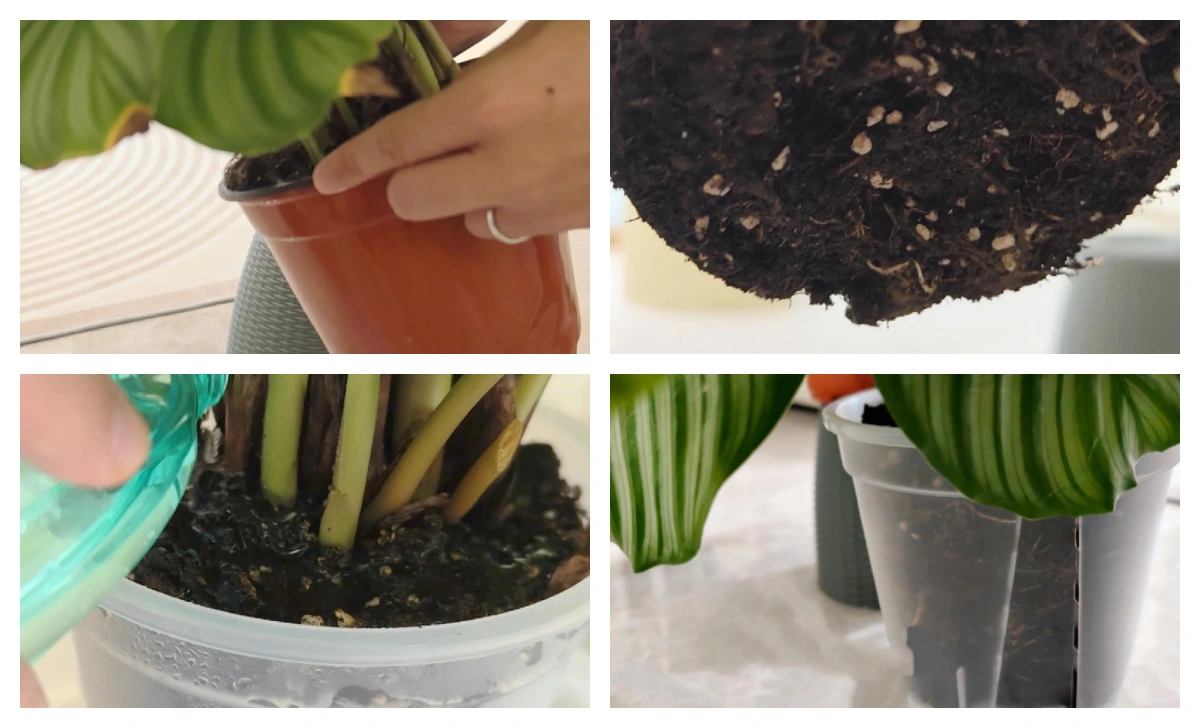
1. I switched to bottom-watering / self-watering mode
I let the plant pull the amount of moisture it needed instead of guessing from above.
This kept the root zone evenly moist — not “wet,” not “dry-then-wet”— and I noticed the next new leaf felt firmer and less thin.
2. I added a tiny amount of nutrient solution
Literally a small dose, not even half-strength.
New leaves are the most nutrient-demanding stage for Calatheas.
Once the nutrients became stable instead of “zero → suddenly a lot,” the leaves stopped showing the pale, weak half-curling.
3. I increased humidity during new-leaf weeks
I didn’t keep humidity high all month — only during the days the new leaf was preparing to open.
This alone made a huge difference.
The next leaf that emerged opened smooth, evenly green, and without the tell-tale crumpled half-moon shape.
After these adjustments, all future leaves came out completely normal.
The growth rhythm didn’t change — but the quality of each new leaf dramatically improved.
This was the moment I understood:
A Calathea doesn’t just need “adequate care.”
It needs stable conditions while new leaves are forming — that 3–5 day window decides everything.
Step-by-Step Fix: How to Help a Stuck or Curled Leaf
When a Calathea new leaf is curled, stuck, or opening unevenly, the key is to restore humidity, pressure, and glide — the three things a leaf needs to unfurl smoothly.
Here’s the exact method I use at home whenever a leaf stops moving for more than 24 hours.
Step 1 — Hydrate the Leaf Sheath (the fastest fix)
If the sheath is dry, the leaf simply cannot slide out.
How to do it:
- Dip a soft cloth or cotton pad in lukewarm water
- Wipe the sheath gently from bottom to top
- Let the moisture sit for 10–20 minutes
This rehydrates the sheath and makes it flexible again.
If the leaf was stuck, it usually starts moving again within a few hours.
Tip: Mist the sheath, not the entire plant. You want moisture on the “sleeve,” not on the leaf surface.
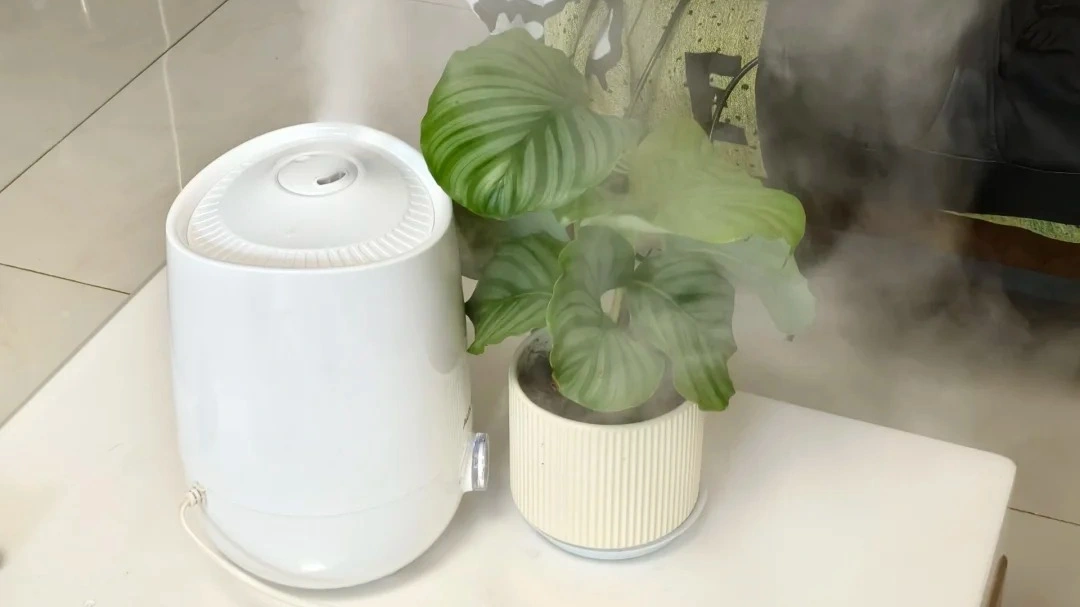
Step 2 — Raise Humidity for the Next 48 Hours
You don’t need high humidity all the time — only during the “unfurling window.”
Options that work instantly:
- Place a bowl of warm water next to the plant
- Move the plant to a bathroom with indirect light
- Run a small humidifier on low
- Cover loosely with a plastic dome for 2–4 hours only (not overnight)
The goal is 55–60% humidity until the leaf finishes unfolding.
Step 3 — Stabilize Soil Moisture (no dry–wet swings)
Unfurling requires internal pressure.
If the soil is too dry or suddenly too wet, the leaf loses the force needed to expand.
What to do:
- Lightly water if the top 2–3 cm are dry
- Avoid soaking
- Keep the mix evenly moist for a few days
- If soil feels cold and heavy → improve airflow or repot later (not now)
A curling new leaf is not the moment for big watering swings.
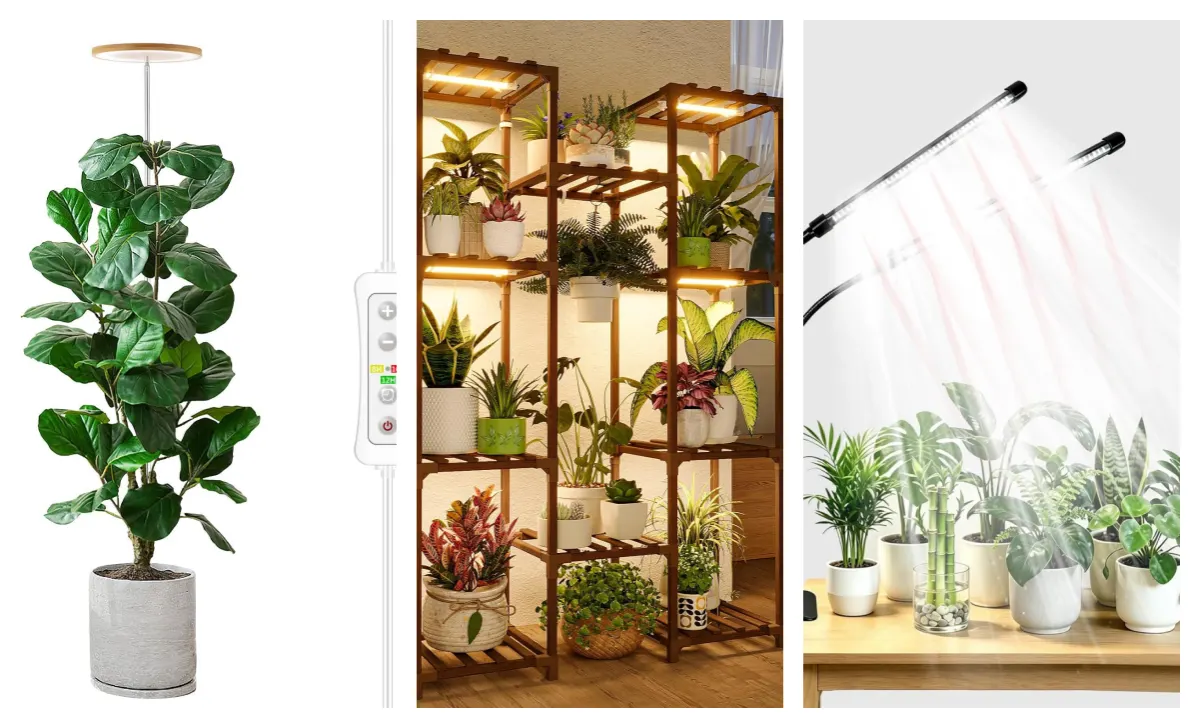
Step 4 — Give It More Light (but still indirect)
New leaves need energy to expand.
If the plant is in a dim corner, the leaf will stay thin, pale, and curled.
Move it to:
- A brighter north- or east-facing window
- Or 0.5–1 meter from a bright south/west window
- Avoid direct sun hitting the tender new leaf
Often the leaf finishes unfurling within 24–48 hours once light improves.
Step 5 — Remove Mineral Stress (if edges look stiff or crisp)
If your tap water is hard, the edges of the new leaf may stiffen before they can fully open.
Fix:
Switch temporarily to:
- filtered water
- rainwater
- distilled water
for the next few waterings.
This softens the leaf tissue and often corrects one-sided curling.
Step 6 — Don’t Touch the Leaf Itself
It’s tempting to pry open a stuck or slow leaf — don’t do it.
New Calathea leaves are easily torn, and once damaged, they remain deformed permanently.
Only help the sheath, never peel the leaf open.
Step 7 — Maintain Stability Until the Leaf Is Fully Open
The unfurling window is short but sensitive.
After you correct the environment, avoid sudden changes in:
- watering
- placement
- temperature
- airflow
Most leaves finish opening once the environment stays stable for 48–72 hours.
⭐ Why This Works
Because this method directly addresses what an unfurling Calathea leaf physically needs:
- Slip → moist sheath
- Strength → consistent moisture & nutrients
- Energy → enough light
- Soft tissue → low minerals
- Pressure → healthy roots
It’s not guesswork — it’s plant physiology applied to real homes.
When It’s Serious (Signs You Need to Act)
Most curled new leaves fix themselves once conditions improve.
But these signs mean the plant cannot recover on its own and needs real intervention:
• The new leaf hasn’t moved for 72 hours
A healthy leaf should show progress.
No movement = stuck.
• The leaf is yellowing inside the sheath
It’s suffocating before it can open.
The sheath is too dry or tight.
• The new leaf is much smaller than usual
A sign the plant is too weak — often from watering inconsistency or low light.
• The stem or petiole feels soft
This points to root issues, not just curling.
• The soil smells sour
Roots aren’t getting oxygen.
New leaves won’t open until the root zone is fixed.
FAQ
If the leaf hasn’t moved in 72 hours, it usually won’t fix itself.
Always hydrate the sheath, never pry the leaf open.
Anything longer signals low humidity or inconsistent moisture.
Humidity around the plant matters more than spraying the leaf.
Still worried about your plant?
👉 For more tips on keeping your plant healthy, explore our Complete Calathea Care Guide.
Explore All Problems →