| Botanical Name | Calathea fasciata (often listed as Goeppertia fasciata) |
|---|---|
| Plant Type | Tropical evergreen foliage plant (prayer plant family, Marantaceae) |
| Origin | South America (exact native range unclear in trade; widely cultivated in Southeast Asia) |
| Height | 18–28 in (45–70 cm) indoors |
| Leaf Size | 8–14 in (20–35 cm) wide; round to oval leaves with broad silver-green striping |
| Pet Safe | ✓ Yes — non-toxic to cats & dogs |
| Popularity | Moderate — commonly sold but frequently confused with Orbifolia and fasciata-like forms |
| Difficulty | Moderate — slow-reacting, sensitive to heat and poor airflow rather than occasional watering mistakes |
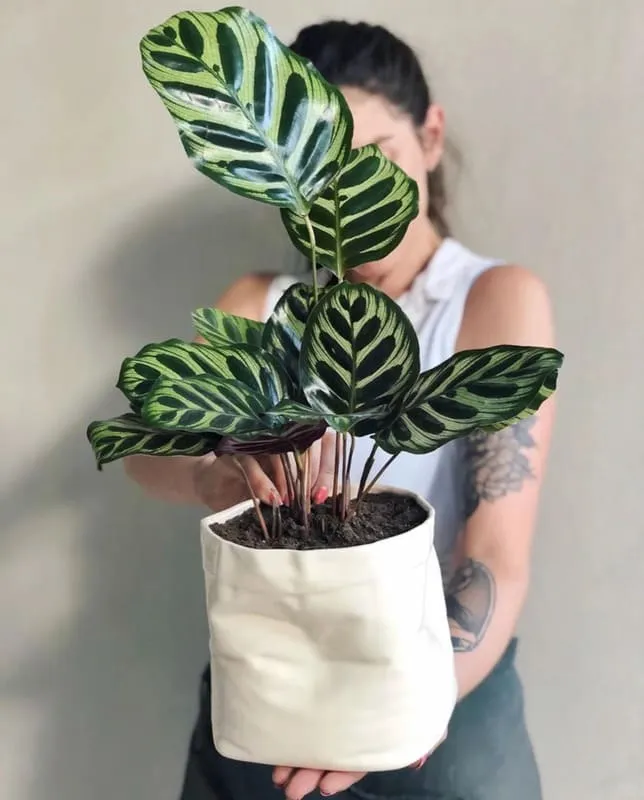
If you’ve ever stood in front of a group of striped Calatheas and wondered whether you were looking at the same plant repeated three times, you’re not alone. Few names in the Calathea world cause as much confusion as fasciata — not because the plant is rare, but because so many similar-looking plants quietly carry that label.
At first glance, they all seem to speak the same visual language: broad leaves, silver-green striping, a calm, almost meditative presence. In photos and plant shop displays, the differences feel subtle enough to ignore. But once you bring one home, live with it, repot it, move it through seasons, and watch how it reacts to stress, those “small differences” stop feeling small very quickly.
That’s where the confusion really begins.
Many growers only realize something feels off after the purchase — when growth patterns don’t match expectations, when leaf texture behaves differently, or when one plant handles heat far better than another that looks nearly identical. The name Calathea fasciata promises clarity, but in reality, it often raises more questions than answers.
I’m not writing this as a textbook explanation or a strict botanical classification. This article comes from growing and observing these plants side by side — seeing how Orbifolia, fasciata, and fasciata-like forms overlap visually, yet diverge in structure, behavior, and tolerance once they settle into a real home environment.
If fasciata has ever made you pause, hesitate, or second-guess your plant ID, you’re exactly who this comparison is for.
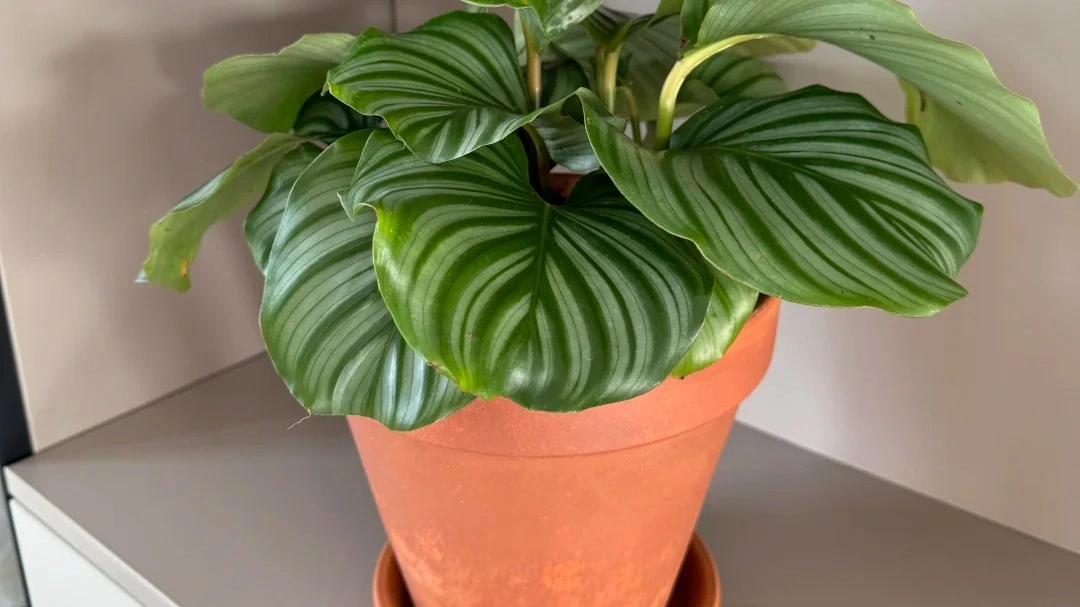
Appearance Comparison|Orbifolia vs Fasciata vs Fasciata-Like (Indo)
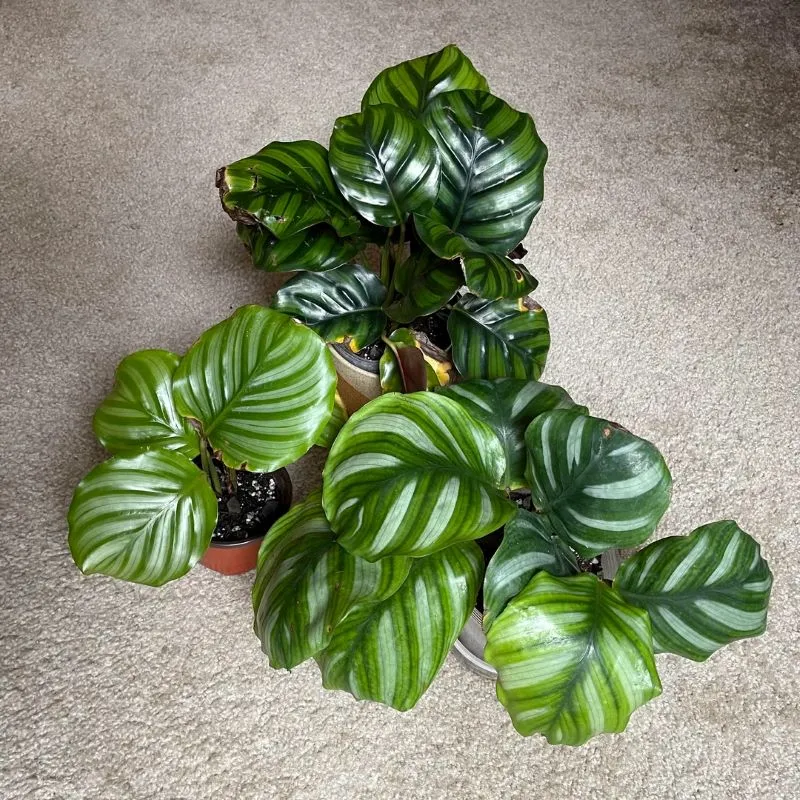
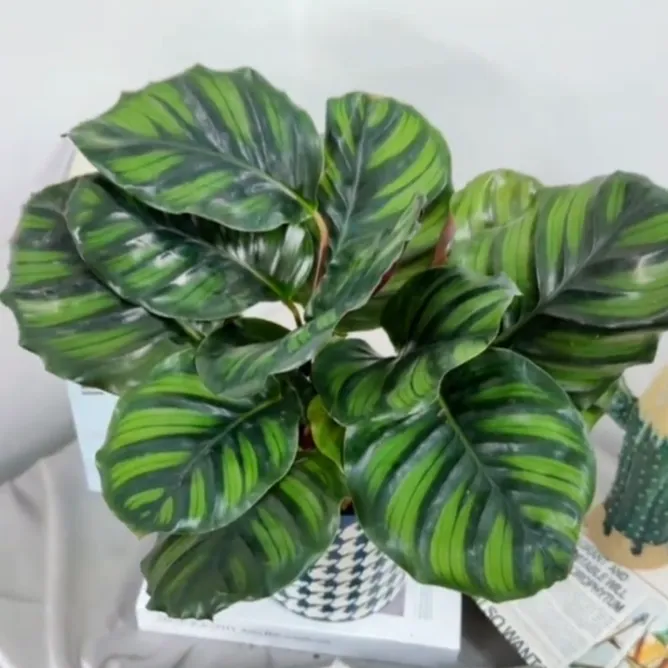
| Feature | Calathea orbifolia (right) | Calathea fasciata (top) | Fasciata-like (Indo) (bottom) |
|---|---|---|---|
| Overall leaf size | Largest leaves of the three | Medium-sized, more compact | Medium to large, variable |
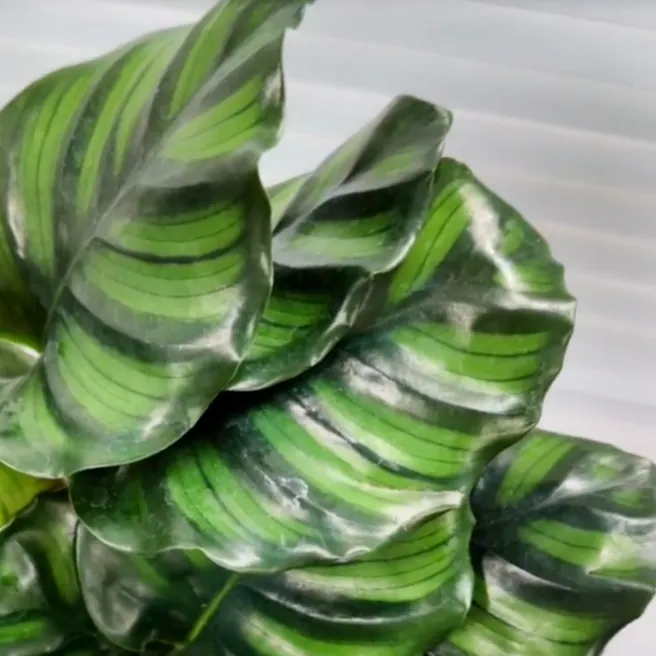
| Leaf shape | Very round and wide | Slightly narrower, more oval | Broad but less perfectly round |
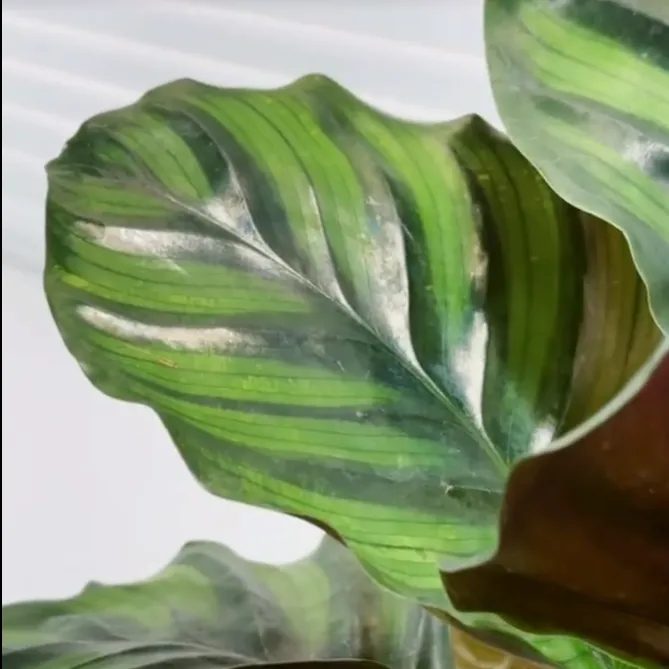
| Leaf surface | Mostly flat and smooth | Thicker with visible structure | Moderately textured |
| Striping pattern | Wide, soft silver bands | Darker, more defined bands | Irregular, less uniform striping |
| Stripe consistency | Very even and symmetrical | Relatively consistent | Varies leaf to leaf |
| Leaf thickness | Thinner, flexible feel | Noticeably thicker and firmer | In between the other two |
| Visual posture | Spreads outward, relaxed | More upright and compact | Balanced, neither fully flat nor upright |
| Overall impression | Open, airy, calm | Dense, structured, solid | Organic, softer, less symmetrical |
| Common trade labeling | Usually sold correctly as orbifolia | Commonly sold as fasciata | Often sold as fasciata or fasciata Indo |
| Why it causes confusion | Shares color & stripes with fasciata | Looks close to orbifolia in photos | Sits visually between the other two |
Why they’re so often confused
Placed together, these three plants reveal the core of the confusion. They share color, pattern, and general shape, but differ in leaf thickness, surface texture, and overall posture. Those differences are easy to overlook in photos or plant listings, yet become obvious once the plants are grown and observed over time.
This is why names like Orbifolia, fasciata, and fasciata-like tend to blur in real life — and why visual comparison matters far more than labels when trying to understand how these plants truly differ.
My Plant’s Timeline|From Arrival to Adaptation
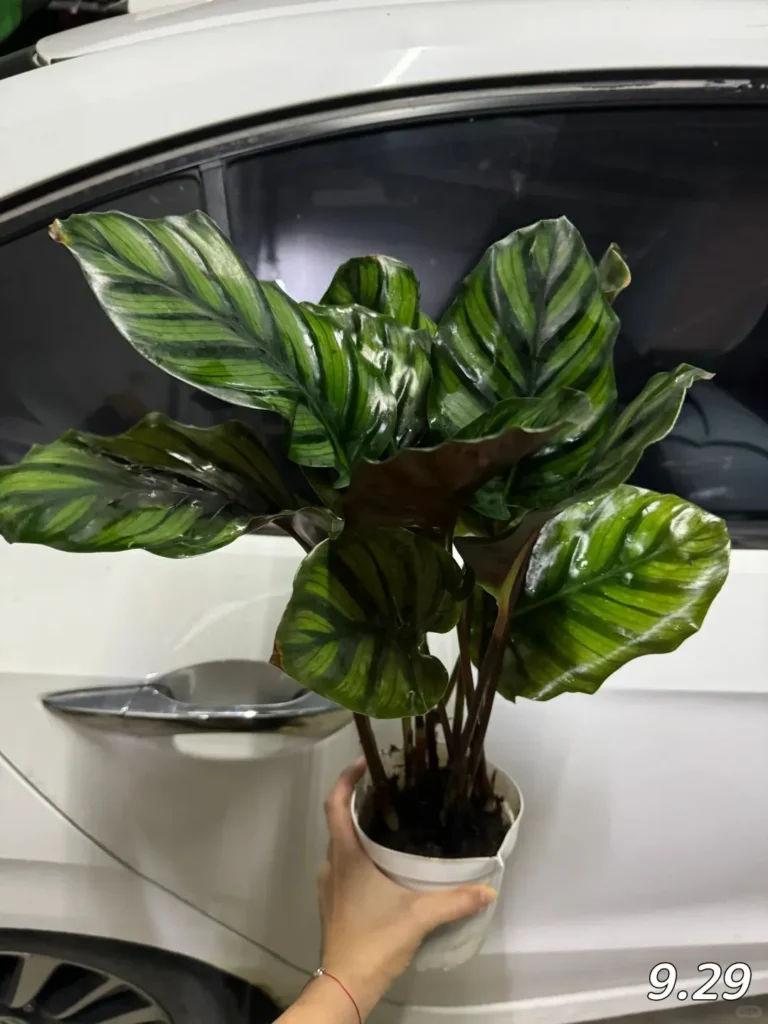
I placed the order at the end of September, and the plant arrived the very next day. At first glance, it looked better than I expected. The leaves were firm, upright, and visually healthy. There were a few soft, decaying stem pieces visible at the soil surface, but nothing that immediately raised alarms. It felt manageable rather than concerning.
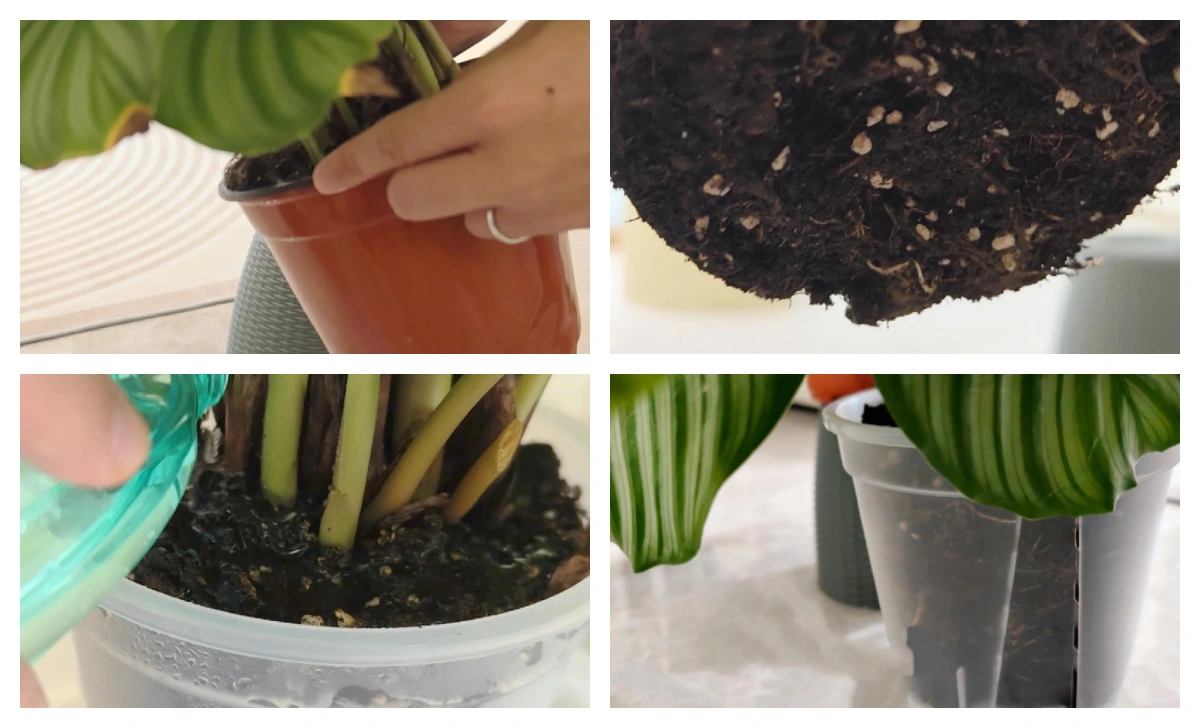
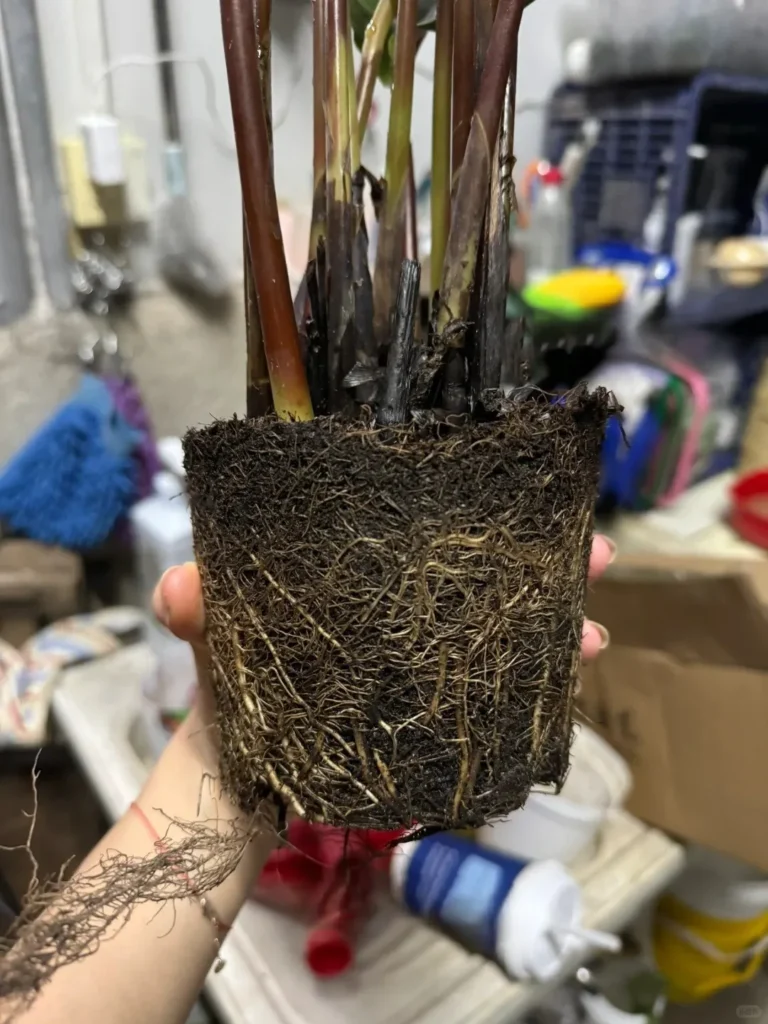
Out of curiosity, I removed the plant from its pot to check the roots. The root system was extremely full — dense, compact, and clearly rootbound. I gave it a short adjustment period, but by the second day, I decided not to wait. I repotted it, adding fresh soil and moving it into a thick ceramic pot. Looking back, that choice likely slowed things down more than I realized. The pot was sturdy and heavy, but not very breathable, and over the next month, new growth was minimal.
At that stage, the plant was placed under my plant wall, sitting inside a long planter box. Not long after, I restructured that area and built a raised plant bed, which meant the planter had to be moved to a different location. Between the relocation, the dense pot, and the compact soil, the plant started showing signs of stress. Some leaf edges began to dry and crisp, which made me question whether the issue was airflow, soil aeration, or simply my watering rhythm.
Eventually, I decided to change the pot again — this time choosing one with multiple ventilation holes and adding a saucer underneath to retain moisture without trapping the roots. That adjustment marked a clear turning point. The plant didn’t respond instantly, but its posture stabilized, and over time, it began to look more settled, as if it had finally accepted the conditions in my home.
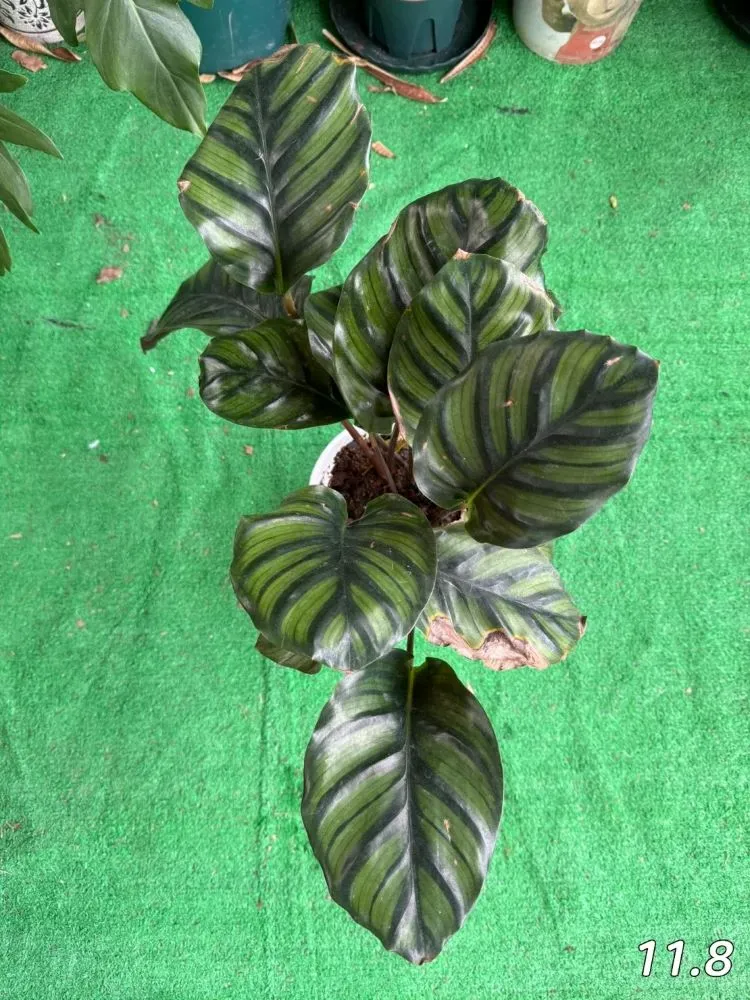
Summer brought a different challenge altogether. Between long workdays, late nights, and a stretch of heavy heat and humidity, maintenance slipped. Even with windows open, the indoor air felt stagnant. I ended up turning on the air conditioning for the plants, not just for comfort but for survival. Outdoor plants were brought back inside, and slowly, the entire space began to recover.
This fasciata was one of the first to show stress during that heat. For several days, the leaves drooped noticeably, losing their usual lift and firmness. It was discouraging to watch. But once the plant was moved fully indoors and the environment stabilized, something reassuring happened — the leaves lifted again. Not dramatically, not overnight, but steadily.
Seeing that recovery, especially in the middle of summer, restored a small but important sense of confidence. It was a reminder that these plants don’t always need perfect care — they need consistent adjustments and time to respond. As summer begins to ease, I’m hopeful it will continue to settle in and grow stronger, leaf by leaf.
Real-Life Care Notes|What Actually Made a Difference
Looking back, this plant didn’t teach me how to care for Calathea fasciata — it taught me how to judge what actually matters.
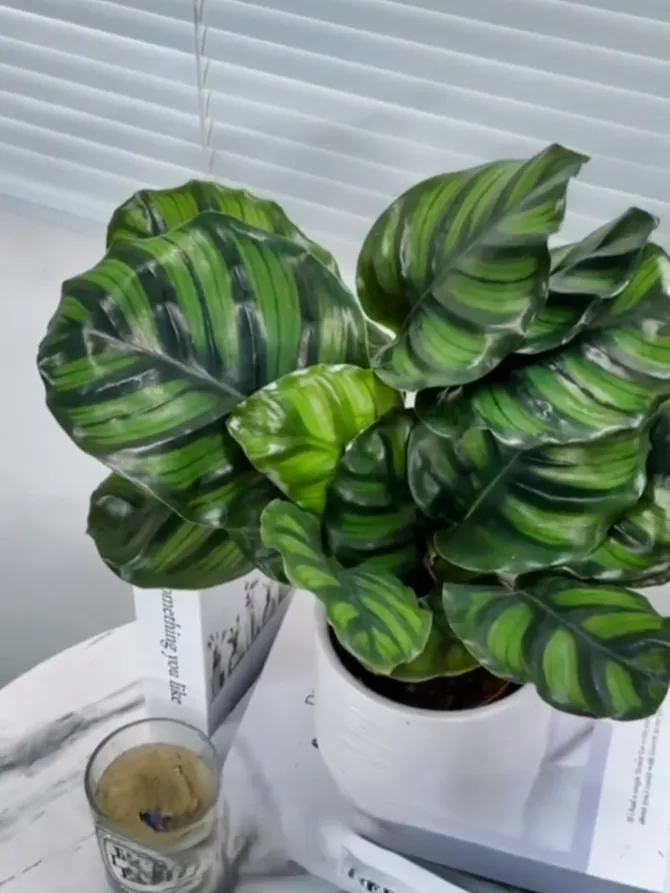
Here are the four things that made the biggest difference in my case.
Pot breathability mattered more than pot size.
I initially focused on giving the plant more room, but the thick ceramic pot slowed everything down. Once I switched to a pot with better airflow, the plant stabilized, even without changing light or watering much. Fasciata types seem far more sensitive to trapped moisture than to being slightly snug.
A rootbound plant may pause before it grows.
What surprised me was how little new growth appeared after repotting. The roots were healthy but extremely dense, and instead of pushing new leaves, the plant seemed to “hold” for weeks. That pause wasn’t failure — it was adjustment.
Fasciata doesn’t react fast, but it reacts honestly.
This plant didn’t collapse overnight or bounce back dramatically. Changes showed up slowly: posture, leaf tension, and overall presence shifted first, long before new growth appeared. It rewards patience more than intervention.
Drooping doesn’t automatically mean dying — especially in heat.
During the hottest days, the leaves drooped for several days straight. It looked alarming, but once the environment cooled and airflow improved, the leaves lifted again on their own. That experience changed how quickly I “panic-adjust” in summer.
If there’s one takeaway, it’s this:
Calathea fasciata responds best when you observe first, adjust gently, and then wait.
Is Calathea fasciata Right for You?
Calathea fasciata isn’t a dramatic plant — and that’s exactly why some people love it, while others feel underwhelmed.
This plant is for you if…
You enjoy observing slow changes rather than chasing fast growth. Fasciata types don’t constantly push new leaves, but they reward patience with structure, posture, and quiet presence. If you prefer plants that settle in and stay steady, this one fits well.
It may not be for you if…
You expect immediate visual feedback. If drooping leaves trigger panic, or if you like plants that visibly react within days, fasciata can feel frustrating. It responds slowly, and intervention-heavy care often backfires.
Compared to Orbifolia, fasciata feels more reserved.
Orbifolia tends to be expressive — big leaves, clearer reactions, and faster visual payoff. Fasciata, by contrast, is calmer and more internal. It doesn’t shout when something’s off; it waits. That difference alone explains why people often prefer one strongly over the other.
Fasciata-like (Indo) varieties suit a specific aesthetic.
If you’re drawn to layered greens, subtle striping, and a slightly wilder, less “polished” look, fasciata-like plants make sense. They blend beautifully into plant collections without dominating the space — perfect for growers who value cohesion over contrast.
In short, Calathea fasciata isn’t about instant beauty.
It’s about learning to read a plant that speaks quietly — and appreciating that kind of presence.
FAQ
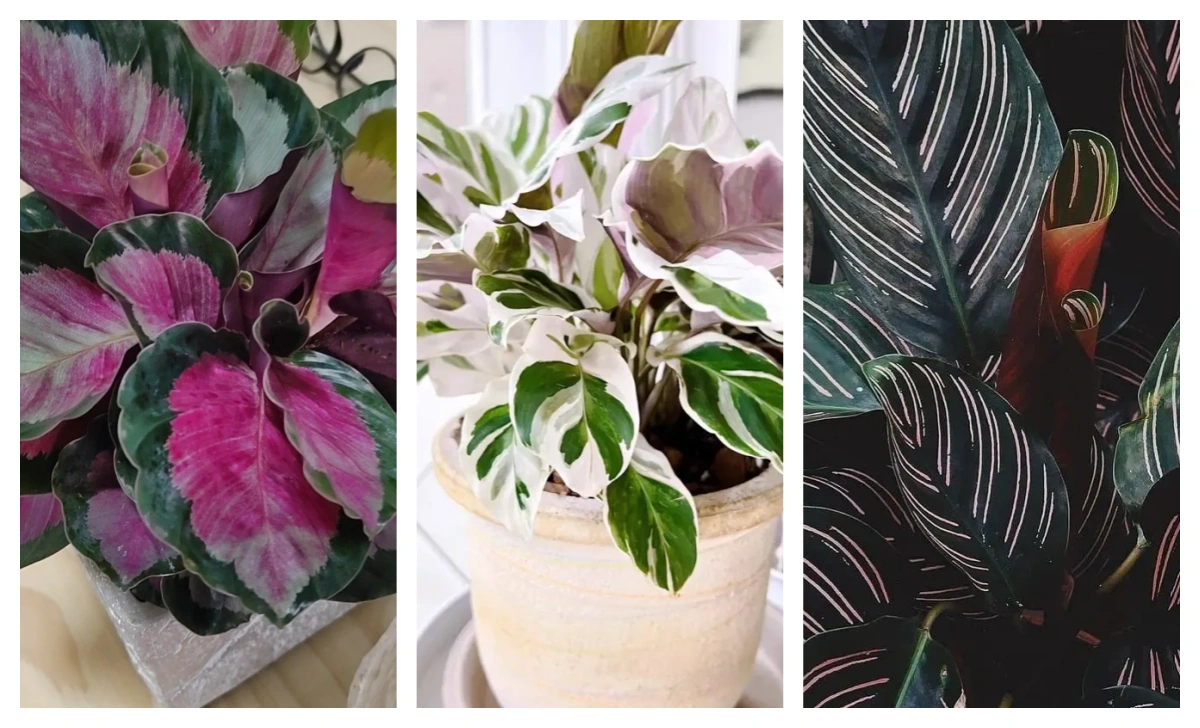
Explore More Calathea Varieties
Looking to discover more beautiful Calathea plants?
Browse our full collection of Calathea varieties — from the bold Orbifolia to the velvety Warscewiczii — and find the one that fits your home best.