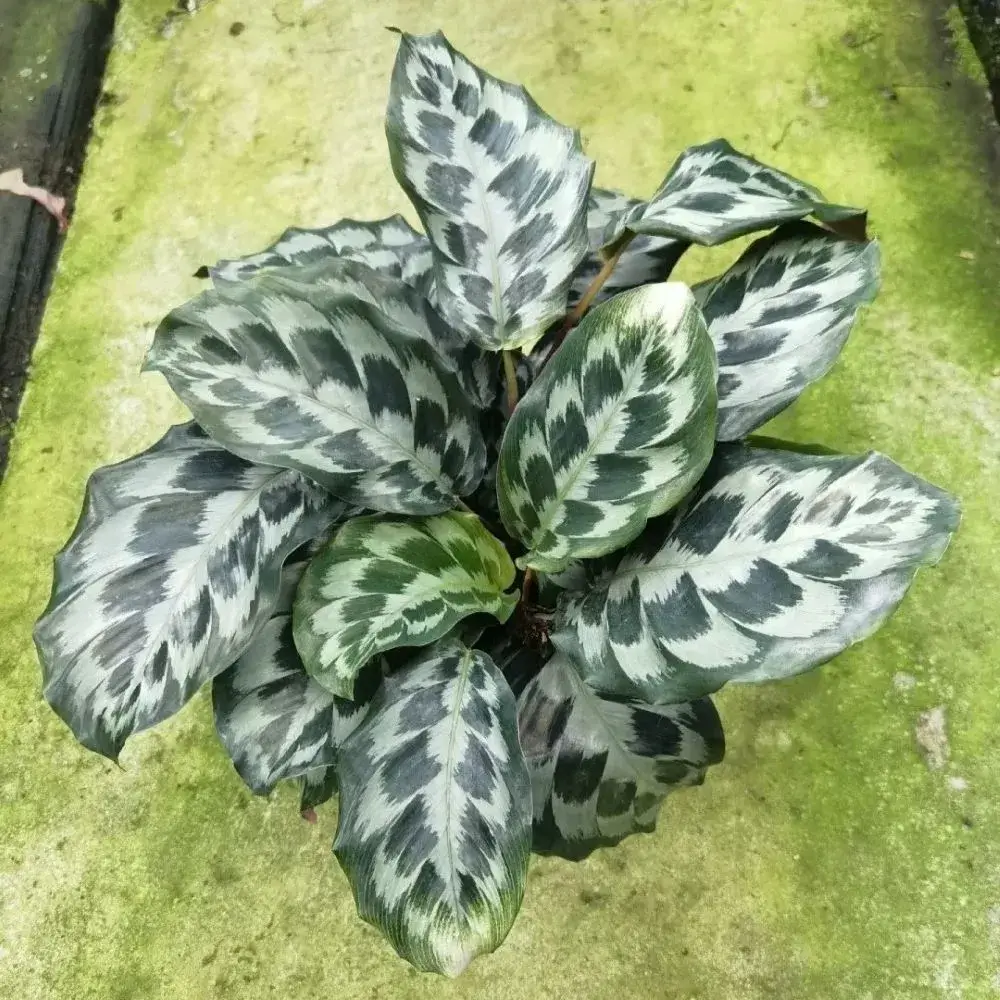
| Botanical Name | Calathea elegans |
| Plant Type | Tropical evergreen foliage plant (prayer plant family, Marantaceae) |
| Origin | South America (native to tropical rainforest understory) |
| Height | 14–24 in (35–60 cm) indoors |
| Leaf Size | 6–9 in (15–23 cm) long; narrow, elongated leaves |
| Leaf Texture | Glossy, waxy upper surface with velvety underside |
| Growth Habit | Dense clumping, upright and spreading |
| Light Needs | Bright, indirect light; sensitive to direct sun |
| Watering | Keep soil evenly moist; dislikes drought or soggy roots |
| Humidity | Prefers 60%+ for best leaf quality |
| Pet Safe | ✓ Yes — non-toxic to cats & dogs |
| Difficulty | Moderate — more forgiving than many colorful Calatheas |
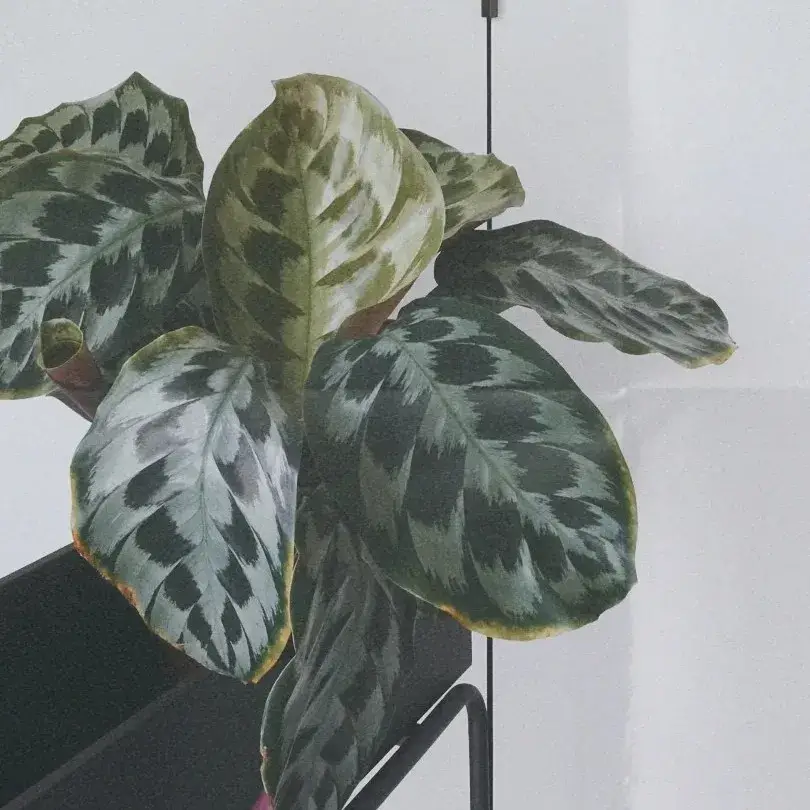
| Notable Feature | Cool blue-green foliage with a subtle checkerboard pattern |
Some plants feel familiar the moment you bring them home.
Calathea elegans didn’t.
Calathea elegans is also commonly sold as Calathea ‘Helen Kennedy’ (and sometimes labeled Blue Wave Calathea) in the houseplant trade. If you’re here because your tag says “Helen Kennedy,” you’re in the right place — the care is the same.
From the first day, it felt like something from another world — as if it had wandered out of a storybook and quietly settled among my other plants. Even surrounded by Calatheas, ferns, and broad-leaf tropicals, it never blends in. My eyes always find it first.
There’s something almost unreal about the way its leaves look from a distance. The pattern reads like a soft checkerboard, cool and calm, neither loud nor colorful. In a collection full of pink veins, bold stripes, and dramatic contrasts, this muted blue-green plant feels unexpectedly refreshing — and strangely more captivating the longer you look at it.
Every evening when I come home, I notice it before anything else. Not because it demands attention, but because it quietly holds it. Among dozens of plants competing for space and light, Calathea elegans stands apart without trying — and that subtle presence is exactly what made me fall for it.
What Is Calathea elegans?
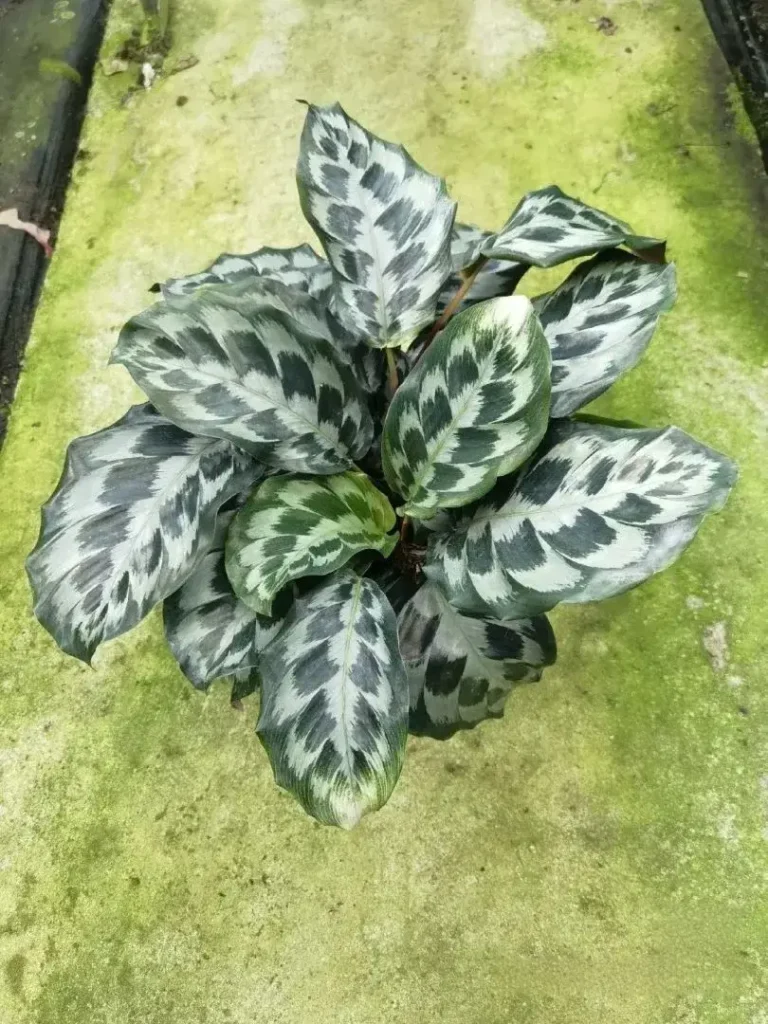
Calathea elegans is a tropical foliage plant from the Marantaceae family, commonly grown for its distinctive patterned leaves rather than flowers. In the houseplant trade, it is often referred to as Blue Wave Calathea, a name that reflects its cool-toned foliage and flowing leaf pattern.
This species grows in a dense, clumping form, with upright leaves emerging closely from the base. Over time, it develops into a full, layered plant rather than a single-stem specimen, making it especially attractive as a floor or tabletop accent once mature.
Like other members of the prayer plant family, Calathea elegans displays subtle leaf movement in response to light and time of day, gently lifting and relaxing its foliage. However, what sets it apart is not this behavior, but its visual presence — a combination of structure, texture, and pattern that feels unusually refined for a Calathea.
In plant trade listings, Calathea elegans is sometimes mislabeled or confused with similar species due to its distinctive leaf pattern, so accurate identification is best made by leaf shape, texture, and growth habit rather than by name alone. You’ll also see it sold as Calathea ‘Helen Kennedy’ — a common trade name for this plant.
Calathea elegans vs. Calathea ‘Helen Kennedy’: Are They the Same Plant?
In most houseplant listings, Calathea ‘Helen Kennedy’ is simply a trade name used for Calathea elegans. That’s why care advice is interchangeable — light, watering, humidity, and growth habits are the same.
The confusion comes from inconsistent labeling in nurseries and online shops, where “Helen Kennedy” may appear without the botanical name. If your plant has narrow, waxy leaves and that soft checkerboard pattern, you’re almost certainly looking at Calathea elegans / Helen Kennedy.
Why Elegans Looks So Different
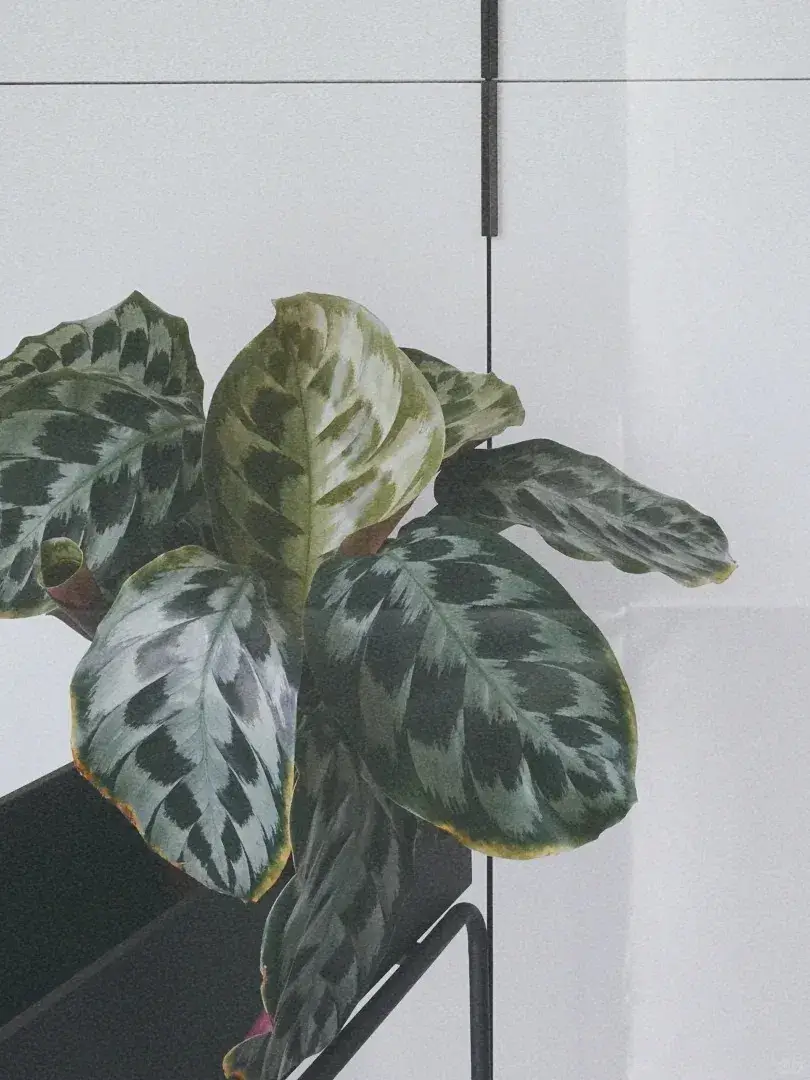
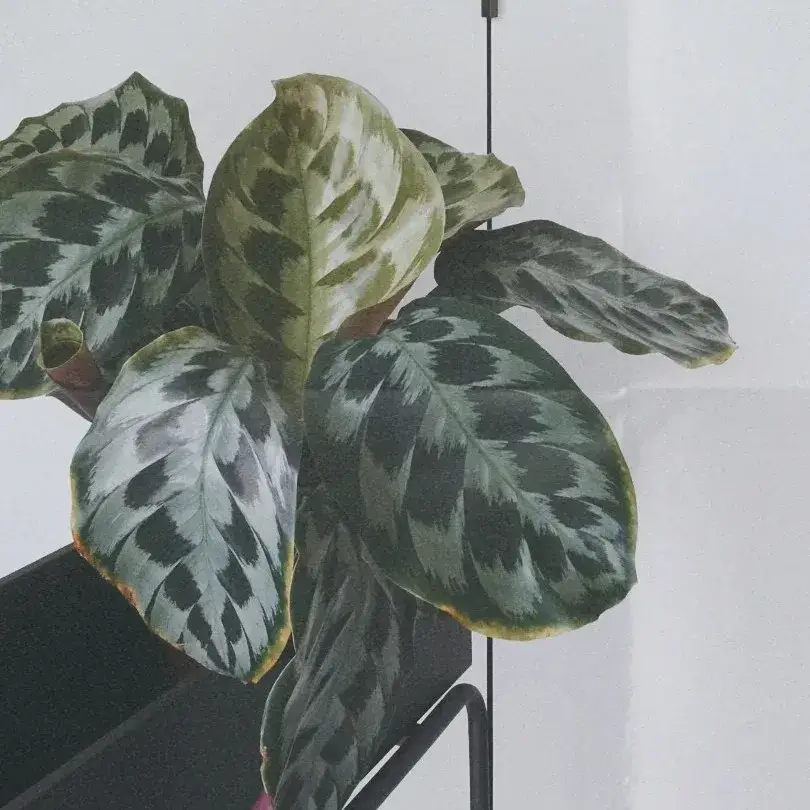
From a distance, the leaves of Calathea elegans read almost like a soft checkerboard. The pattern isn’t loud or sharply defined — it’s subtle, rhythmic, and calm, giving the plant a quiet visual structure that draws you in the longer you look. It doesn’t demand attention the way bold stripes or high-contrast markings do. Instead, it holds it.
The color palette is what truly sets it apart. Rather than pink veins, white splashes, or dramatic contrasts, elegans stays within a cool blue-green range, with gentle shifts in tone that feel surprisingly modern. Among more colorful Calatheas, this restrained palette feels refreshing — almost understated — and far more enduring over time.
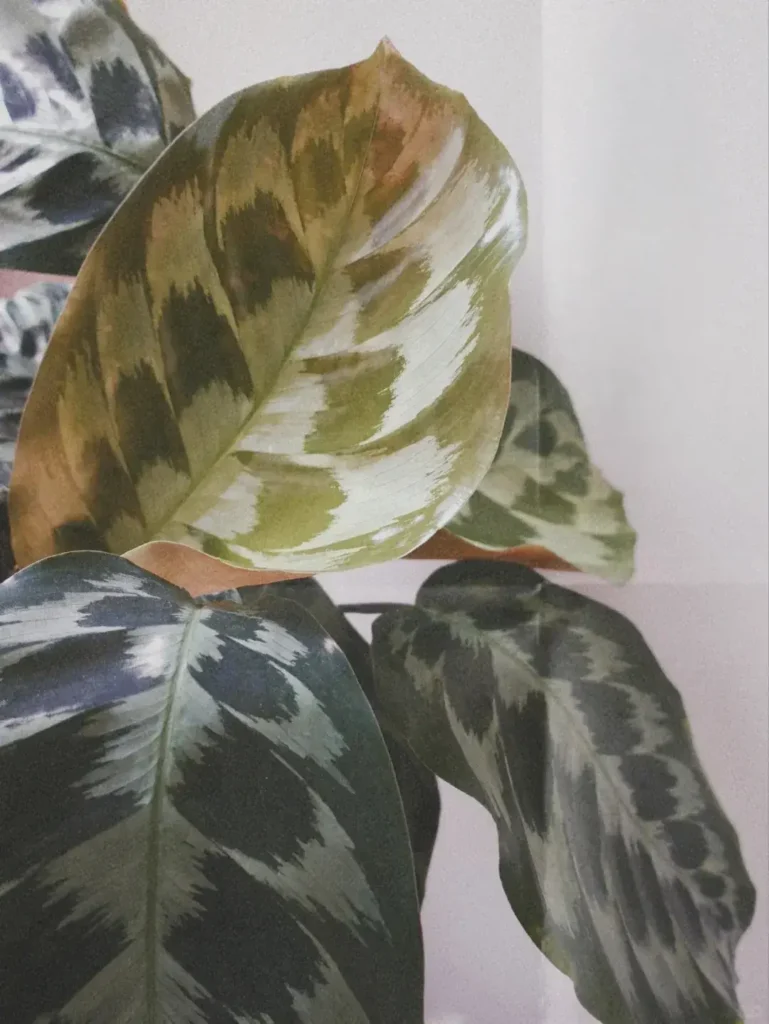
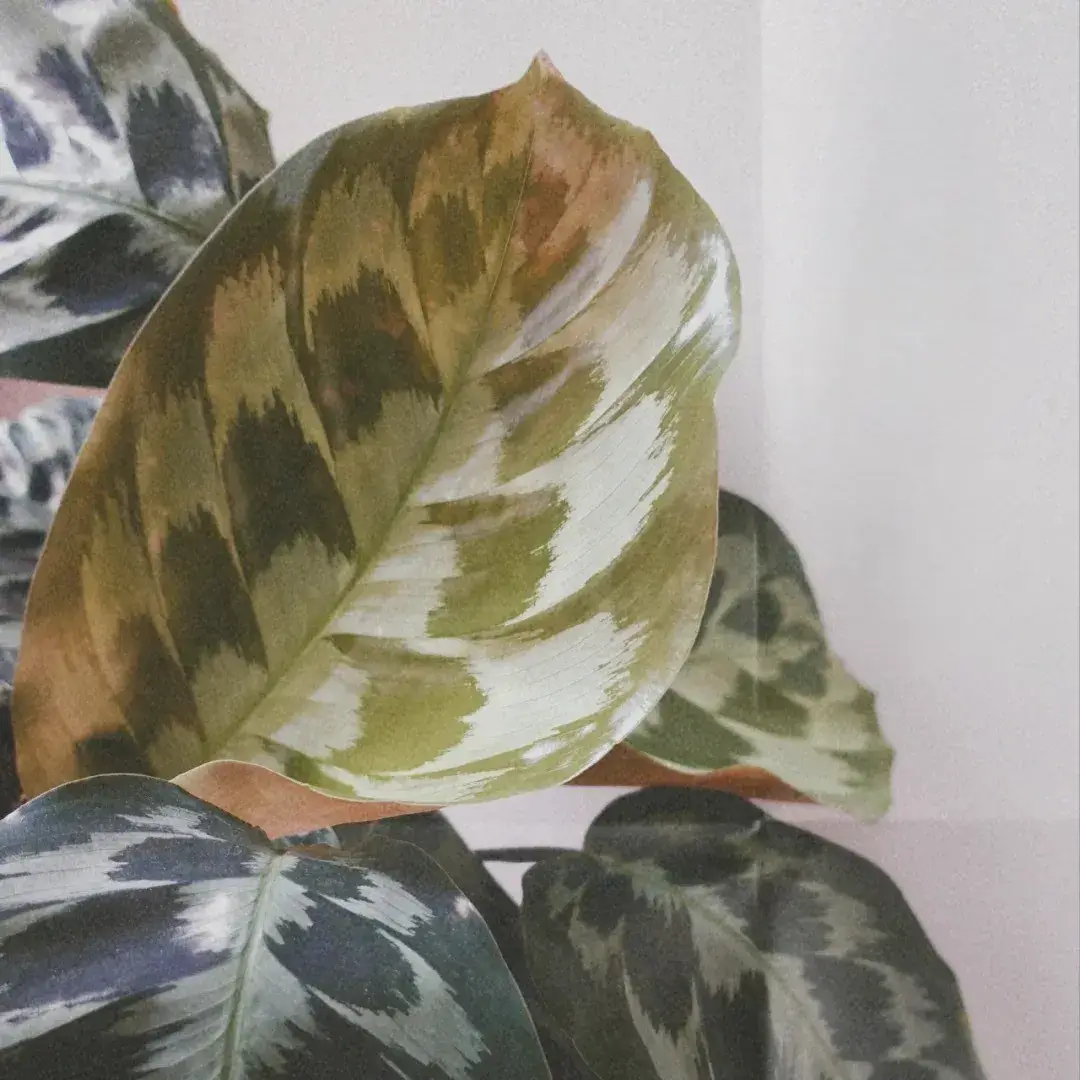
Up close, the leaves reveal another layer of character. They are thick and substantial, with a smooth, glossy surface that catches the light softly rather than reflecting it harshly. The waxy finish gives the foliage a polished look and adds a sense of durability that many thin-leaved Calatheas lack.
Turn a leaf over, and the experience changes completely. The underside has a soft, velvety texture, almost like brushed fabric, creating a tactile contrast that’s genuinely satisfying. The difference between the sleek upper surface and the plush underside is so striking that I catch myself touching the leaves far more often than I should — not out of habit, but curiosity.
This balance of pattern, color, and texture is what makes Calathea elegans feel so distinct. It isn’t just visually interesting; it’s a plant you experience up close, with layers that reveal themselves slowly rather than all at once.
My First Weeks With Calathea elegans
Calathea elegans arrived in surprisingly good condition. A few leaves showed minor yellowing and some light edge damage, but nothing alarming — the kind of wear that suggests transport stress rather than a deeper problem. Overall, the plant looked settled and healthy enough to observe before making any immediate changes.
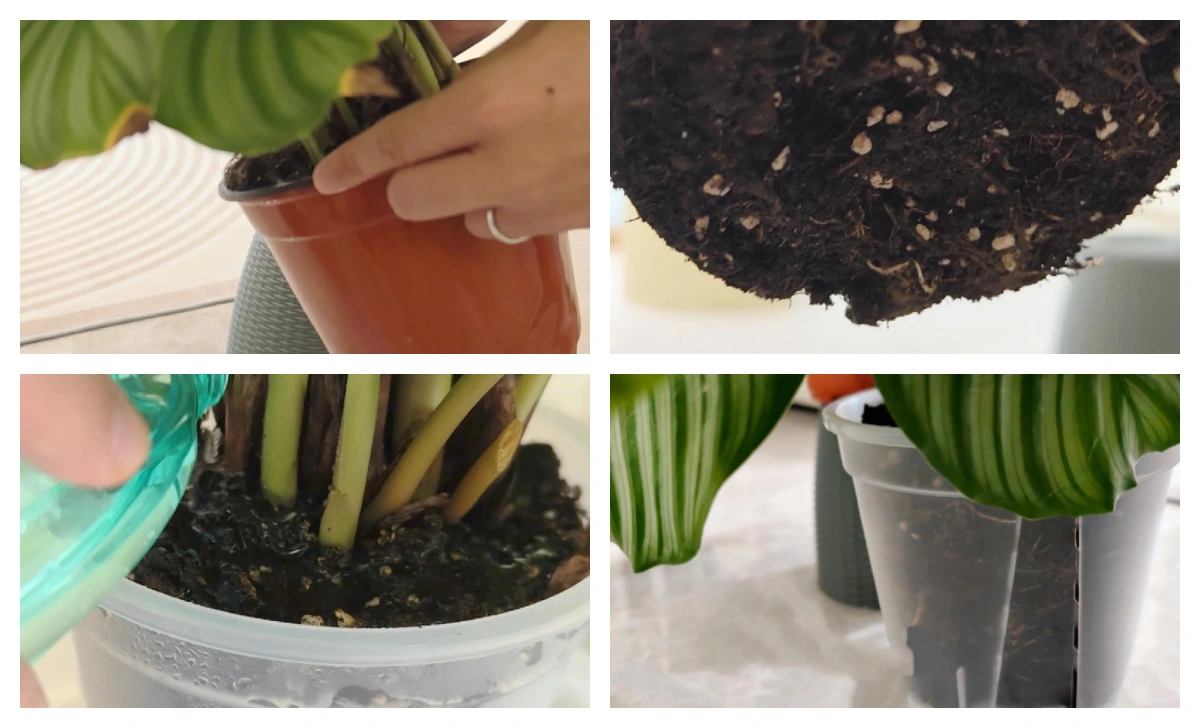
The soil, however, was instantly familiar. Dense, compacted, and poorly aerated — the typical nursery mix that holds water too tightly and leaves little room for airflow around the roots. Under normal circumstances, I would have repotted it right away. This time, work got in the way, and the plant stayed in its original soil longer than planned.
Instead of rushing to “fix” it, I chose to watch. Despite the less-than-ideal substrate, the plant didn’t decline. New growth held steady, the leaves remained firm, and no additional damage appeared. That early stability told me more than a rushed repot ever could.
What surprised me most was how present it felt in my daily routine. Even with imperfect soil and a few flawed leaves, I found myself noticing it every evening after work. In a room full of plants, Calathea elegans consistently drew my attention — not because it was struggling, but because it seemed quietly comfortable where it was.
Those first weeks reinforced an important point: initial observation matters. Before changing anything, letting a plant show you how it responds to your space can reveal far more than immediate intervention ever will.
Real-Life Care Notes (Not a Textbook Guide)
In daily care, Calathea elegans behaves more forgivingly than many of its more colorful relatives — not because it needs less attention, but because it communicates stress more gently.
Light plays a bigger role than it might first appear. Elegans responds best to bright, indirect light, where its cool-toned pattern stays clear without washing out. Harsh sun isn’t tolerated, but in softer conditions, the leaves hold their color and structure well, showing far less sensitivity than high-contrast varieties.
Watering is about consistency rather than frequency. The plant prefers evenly moist soil, yet it doesn’t react dramatically to small timing shifts. As long as the roots aren’t sitting in water, elegans maintains firm, healthy leaves without the rapid curling or collapse seen in more temperamental Calatheas.
One noticeable advantage is the waxy leaf surface. Compared to thin-leaved varieties, the glossy finish seems to slow moisture loss, making leaf edges less prone to sudden browning. This doesn’t make the plant drought-tolerant, but it does buy you time — a small buffer that matters in real homes.
When temperatures rise and conditions stabilize, feeding makes a visible difference. Light fertilization during warmer months supports strong, confident growth, quickly filling out the plant with broad, polished leaves. The response feels proportional rather than explosive, reinforcing the sense that this is a plant built for steady progress rather than dramatic swings.
Together, these traits explain why Calathea elegans often feels easier to live with. It still asks for care, but it rewards consistency rather than perfection — a quality that’s easy to underestimate until you grow it yourself.
An Unexpected Bloom
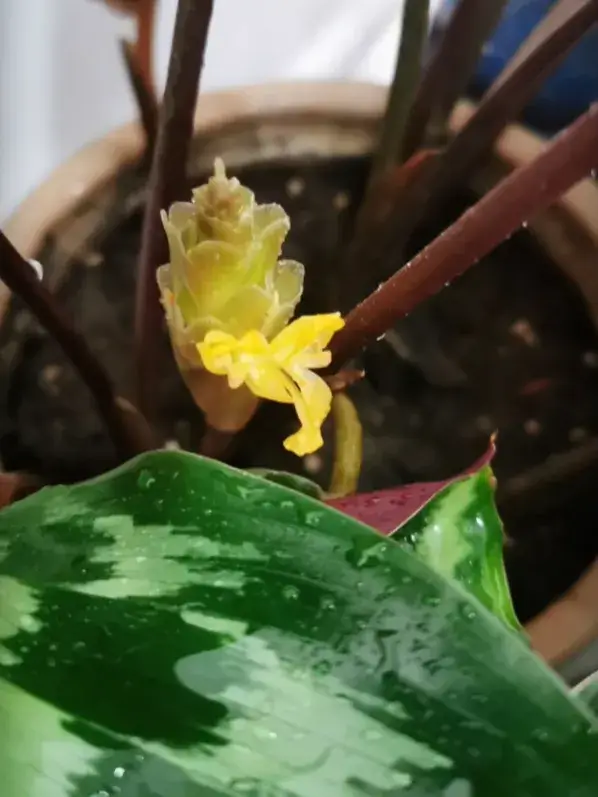
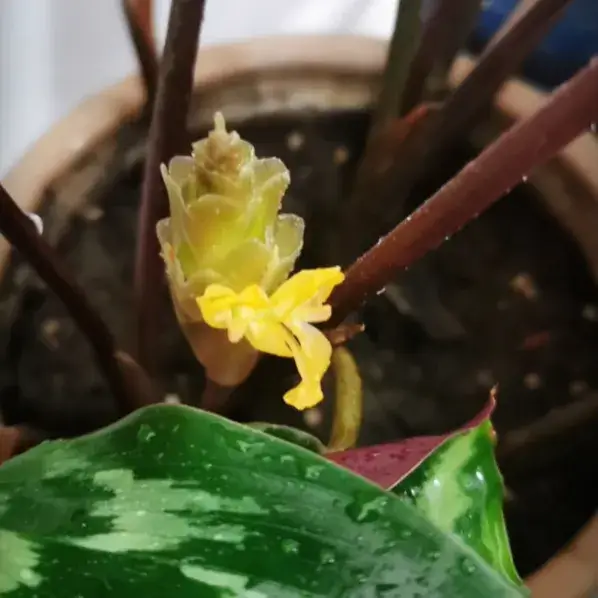
One day, without any warning, Calathea elegans produced a small yellow flower.
It wasn’t something I had been expecting, or even hoping for. Most Calatheas are grown for their foliage, and flowering often feels incidental at best. That’s exactly why this moment stood out. There was no change in routine, no special treatment — just a quiet response after weeks of stability.
The bloom was modest, almost easy to miss, but it carried weight. For a plant known to be sensitive, flowering felt like confirmation rather than decoration. A sign that light, moisture, and temperature had settled into a balance the plant was comfortable with.
What surprised me most wasn’t the flower itself, but the timing. It arrived during an unremarkable stretch of care — no adjustments, no corrections — reinforcing the idea that consistency, not effort, had done the work.
That single yellow bloom changed how I saw the plant. It wasn’t just surviving in my space; it was responding to it. And for a Calathea, that quiet acknowledgment meant more than any perfect leaf ever could.
Is Calathea elegans Worth Growing?
Calathea elegans is worth growing if you appreciate subtlety more than spectacle. It’s for plant owners who enjoy observing patterns, textures, and slow, steady growth rather than chasing dramatic color shifts. If you’re drawn to calm, cool-toned foliage and value plants that age gracefully over time, elegans fits beautifully into that space.
This plant may be challenging for those who expect instant results or prefer bold, high-contrast foliage. It doesn’t announce stress loudly, nor does it reward constant adjustment. In very dry environments or under inconsistent light, it can struggle quietly — making it less forgiving for hands-on growers who tend to overcorrect.
Personally, I love Calathea elegans because it feels balanced. It doesn’t overwhelm a plant collection, yet it never disappears into the background. Its waxy leaves, restrained color palette, and steady growth give it a sense of permanence that many Calatheas lack. It’s a plant that doesn’t ask to be managed — only understood.
For anyone looking to grow a Calathea that feels refined rather than fragile, Calathea elegans is an unexpectedly rewarding choice.
FAQ
Explore More Calathea Varieties
Looking to discover more beautiful Calathea plants?
Browse our full collection of Calathea varieties — from the bold Orbifolia to the velvety Warscewiczii — and find the one that fits your home best.