Last updated: April 26, 2026
When I first brought my Calathea zebrina home, it looked almost unreal — wide velvety leaves, soft green stripes, and that lush “zebra plant” look that makes you want to put it in the brightest corner immediately. But about two weeks later, in the middle of winter with the heating on at home, the plant started to look completely different.
The leaves drooped, some looked dull and tired, and a few started showing clear yellowing. At first I thought it needed more water, but the soil was not actually dry enough to explain that level of collapse. What finally made the difference was not pouring more water into the pot. It was giving the plant what it was really missing: warm, humid air without making the root zone soggy.
That experience changed the way I care for Zebrina indoors. I still think it is a beautiful Calathea, but I would not call it an easy “set it anywhere” plant. It wants warmth and humidity at the same time, especially after being moved from a nursery or shop into a heated winter home. In this guide, I’ll cover the normal care basics, but I’ll also show the exact winter recovery method that helped mine perk up again.
| Botanical Name | Calathea zebrina |
|---|---|
| Common Name | Zebra Plant |
| Plant Type | Tropical perennial, foliage houseplant |
| Mature Size | 2–3 ft (60–90 cm) tall; leaves up to 18 in (45 cm) long |
| Light Needs | Bright, indirect light; avoid direct sun |
| Watering | Keep soil evenly moist, never soggy |
| Humidity | Prefers 60–70%; higher humidity enhances leaf sheen |
| Pet Safety | Non-toxic to cats & dogs — see Calathea Pets Safety Guide |
| Difficulty | ★★★☆☆ (Moderate) |
| Popularity | ★★★★★ (Very popular among Calathea collectors) |
Appearance & Key Features
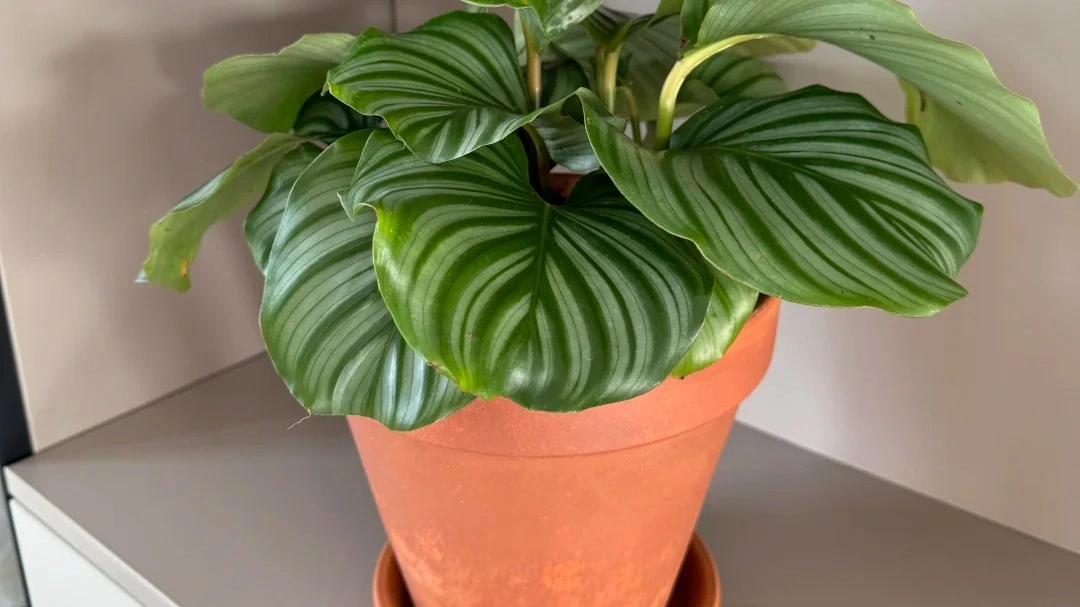
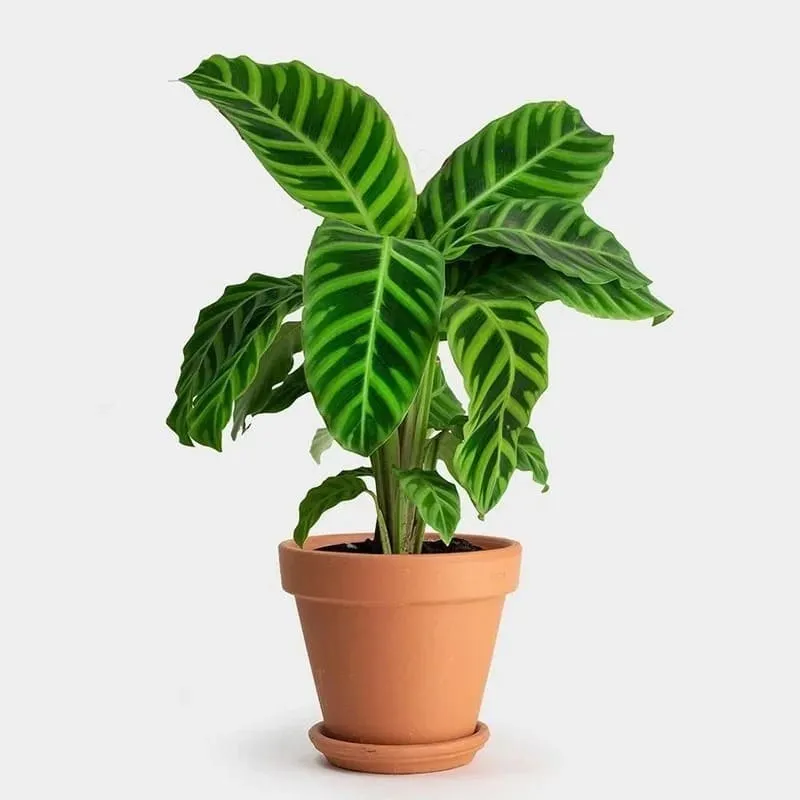
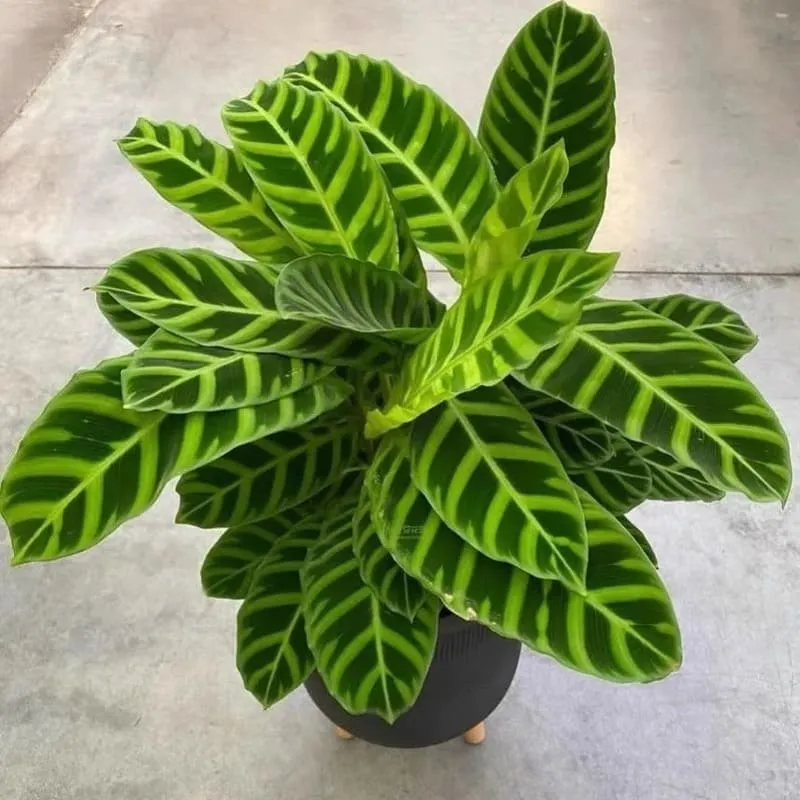
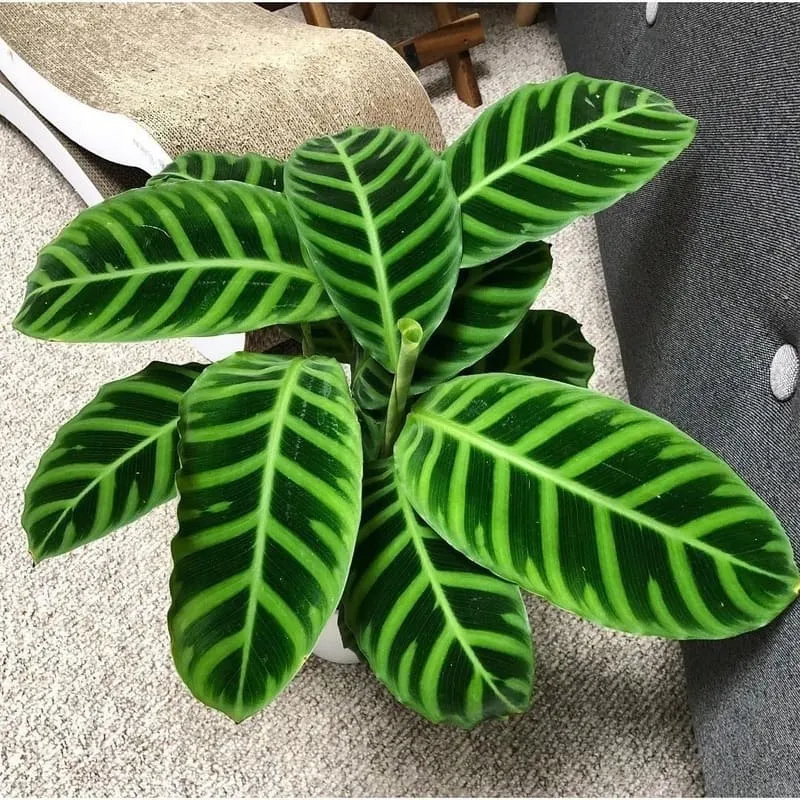
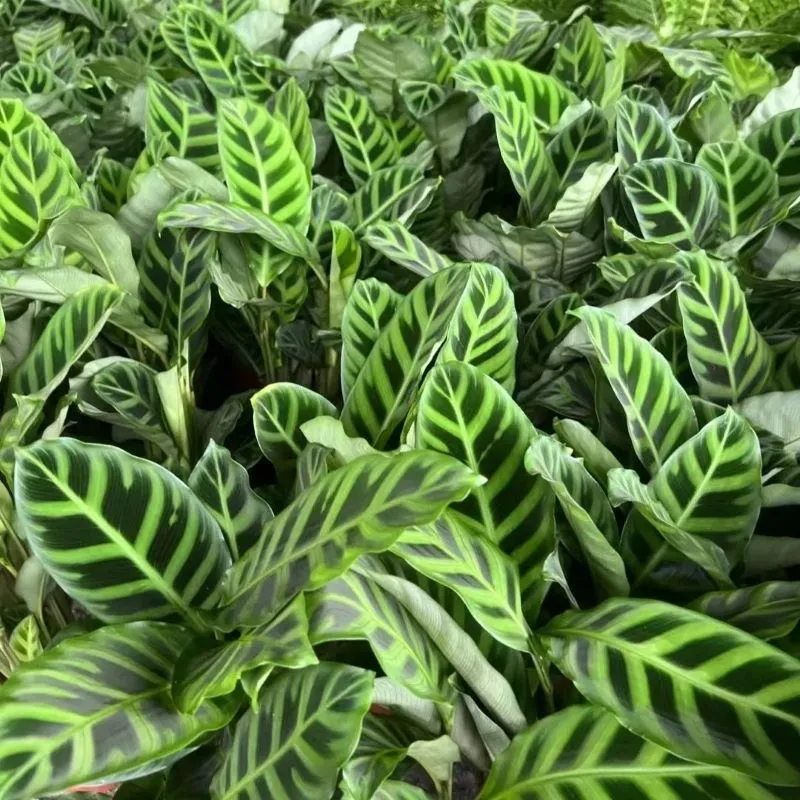
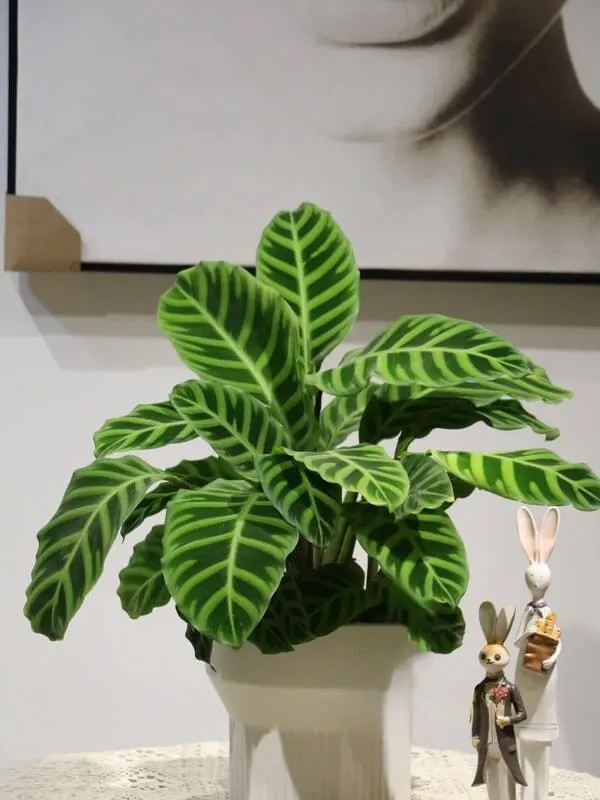
Few houseplants command attention like the Calathea zebrina. Its broad, velvety leaves are painted with bold lime-green stripes that run symmetrically along the midrib — earning it the nickname Zebra Plant. The leaf surface has a soft, almost suede-like texture, while the underside glows a deep burgundy when light filters through.
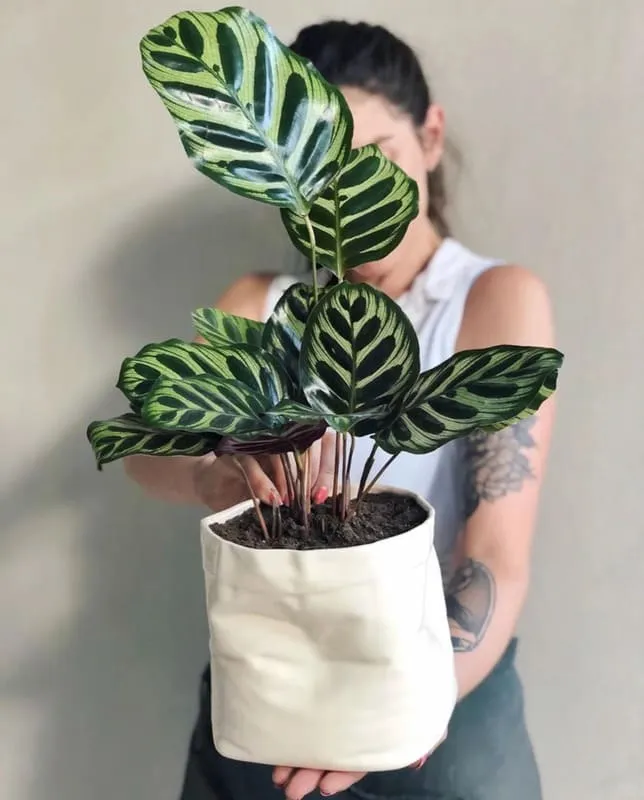
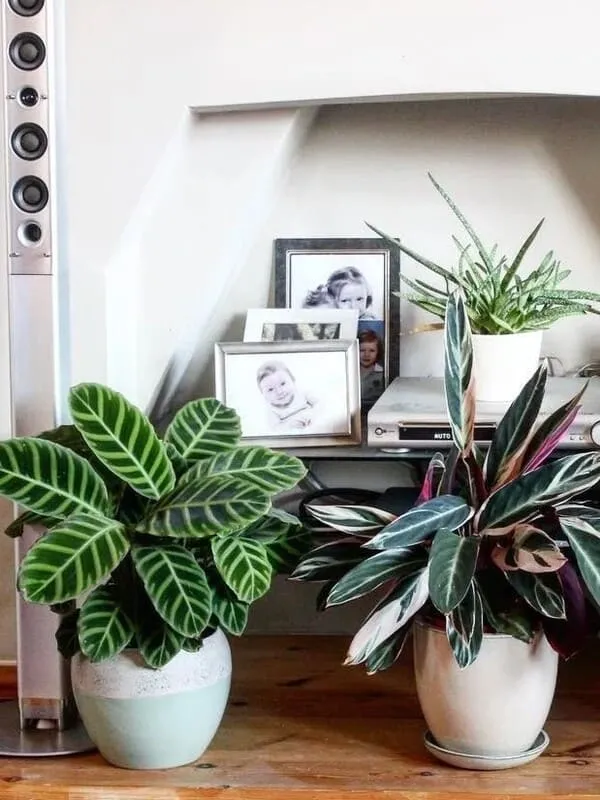
Unlike some Calatheas with patterned or feathery designs (like Calathea makoyana), Zebrina’s look is clean, graphic, and architectural — perfect for modern interiors. Each mature leaf can reach up to 18 inches (45 cm) long and waves gently as it grows, giving the plant a dynamic, almost lifelike quality.
The plant grows in a clumping form, with new leaves emerging from the center in tight rolls that slowly unfurl. Under good humidity and indirect light, the canopy becomes full and lush, forming a vibrant green mound that instantly softens any space.
💡 Fun fact: Zebrina leaves tend to move slightly throughout the day, following the light — a classic Calathea “prayer” behavior that makes it feel alive and responsive.
What Happened to My Zebrina Two Weeks After I Brought It Home
The most useful thing I learned from my own Zebrina was that drooping does not always mean the plant is thirsty. Mine started to decline about two weeks after I bought it. The room was warmer because the heating was on, but the air felt much drier than before. The leaves lost their firmness, some began to hang lower, and I noticed yellowing that made me worry about root problems.
My first instinct was to water it, but I stopped myself because the pot was not drying unusually fast. With Calatheas, especially in winter, adding more water when the roots are already sitting in slow-drying soil can make things worse. A plant can look limp from dry air, temperature stress, or root stress — and the fix is not the same for each one.
In this case, the plant seemed to be asking for a warmer and more humid microclimate, not a wetter pot. That is when I tried moving it into a bathroom corner during shower time. I let the room fill with warm humidity, allowed a little moisture to reach the leaves, but I was careful not to soak the potting mix or leave water pooling in the saucer.
After the shower, I closed the bathroom door for a few hours so the air stayed warm and humid. The difference was surprisingly visible: the leaves looked softer, fuller, and more upright again. I do not use this as a permanent setup, and I would not keep the plant in a sealed, wet room for days. But as a short “humidity reset” for a stressed Zebrina, it worked better for me than another round of watering.
Growth & Environment Requirements
Calathea zebrina is often described as a rainforest plant, but indoors that does not simply mean “give it more water.” In my home, the biggest challenge was balancing three things at once: warmth, humidity, and a pot that was not staying too wet.
This is where Zebrina can confuse new growers. A heated room may feel warm enough for the plant, but heating often dries the air quickly. The leaves can droop or yellow even when the soil still feels moist. If you respond by watering again and again, the plant may move from humidity stress into root stress.
So I now think of Zebrina as a plant that needs a stable “soft” environment: warm air, bright indirect light, steady moisture, and higher humidity — but never a swampy pot.
Here’s a quick summary of what it loves most:
- Growth pace: Moderate. It grows steadily from spring to early autumn but slows down in winter.
- Temperature: Ideal range is 65–80°F (18–27°C). Anything below 60°F (15°C) can cause drooping or leaf damage.
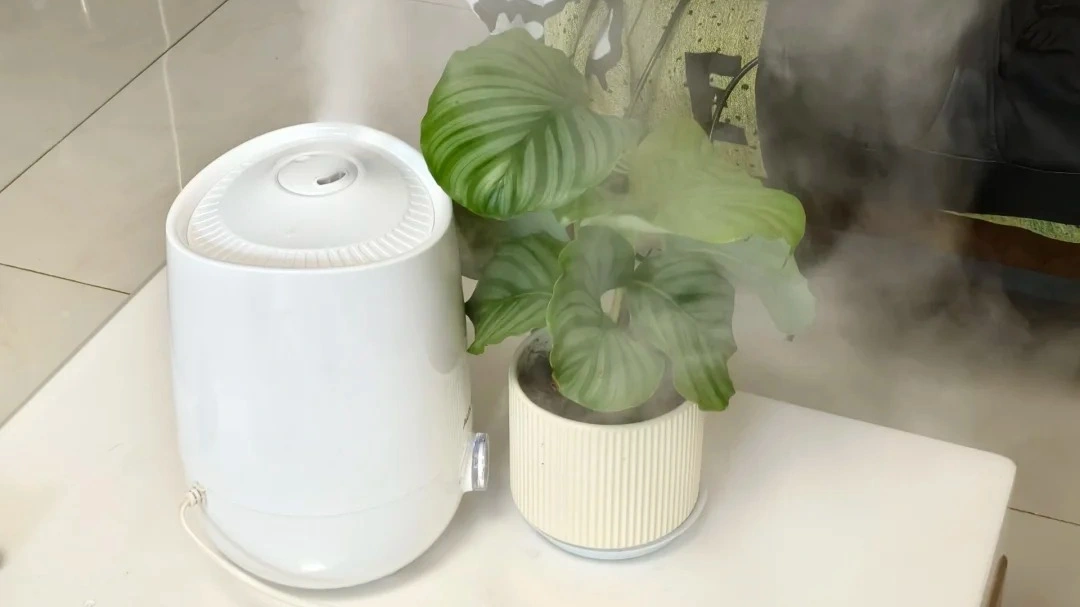
- Humidity: Aim for 60–70% year-round. A small humidifier or pebble tray helps maintain that level indoors.
- Light: Bright, indirect light is perfect. Avoid direct afternoon sun, which can bleach the stripes.
- Airflow: Gentle, consistent airflow keeps the foliage fresh, but avoid cold drafts or AC vents.
- Stability: Once you’ve found a bright, humid spot it enjoys — don’t move it too often. Zebrina doesn’t like sudden changes.
💡 Tip: If your home air feels dry in winter, group your Calatheas together or place Zebrina near other moisture-loving plants. Shared humidity often keeps the leaves soft and glowing.
Detailed Care Guide
Calathea zebrina isn’t difficult once you understand its rhythm — it simply needs consistent attention to water, light, and humidity. Below are the essential points to help it thrive indoors.
Watering
Zebrina prefers evenly moist soil, never bone dry or waterlogged. Let the top 1 inch (2–3 cm) of soil dry before watering again, and always use filtered or rainwater if possible, as fluoride and chlorine from tap water can damage leaf tips.
👉 See the full Calathea Watering Guide for detailed seasonal tips.
Light
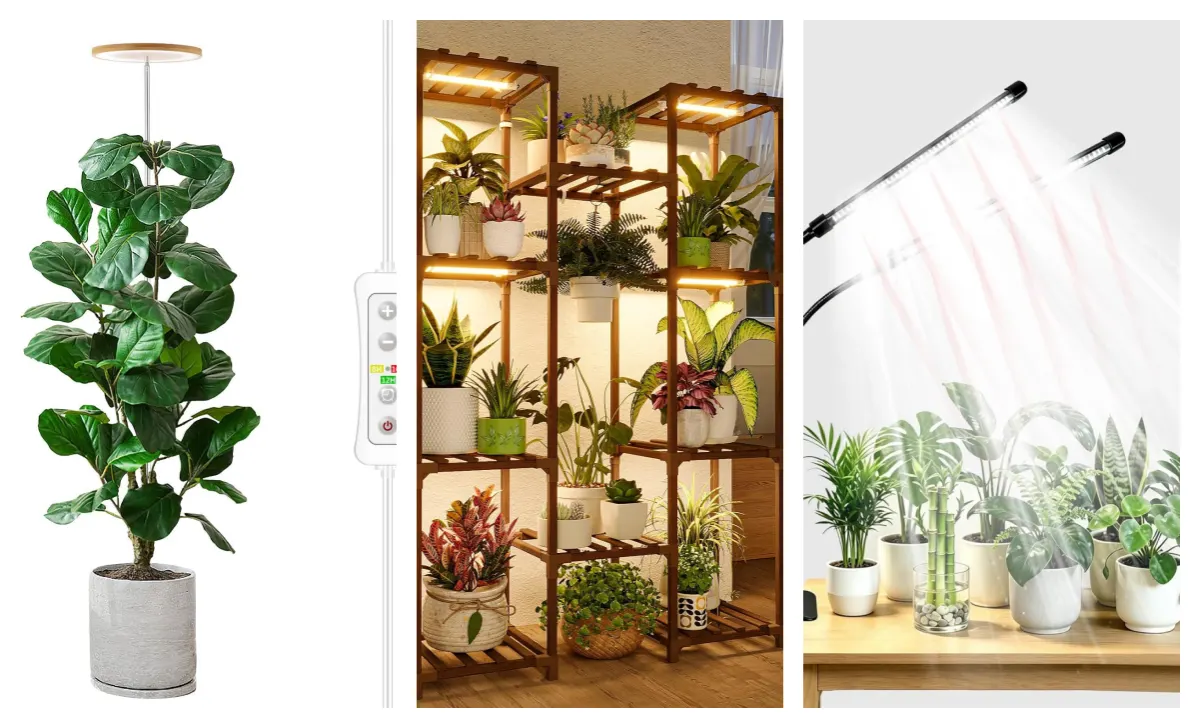
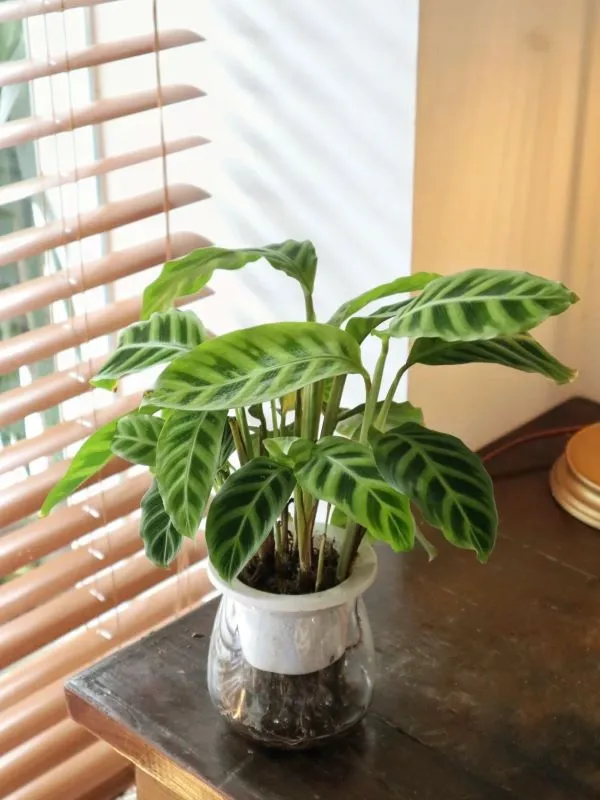
Provide bright, indirect light — think dappled sunlight through curtains or a north/east-facing window. Too little light makes the leaf color fade; too much sun burns the velvety surface. If your room is darker, supplement with a small grow light placed a few feet away.
👉 Learn about ideal lighting in our Calathea Light Requirements guide.
Soil
Use a loose, airy mix that holds moisture but drains freely. A good formula is:
- 2 parts peat moss or coco coir
- 1 part perlite
- 1 part compost or worm castings
This combination mimics its native soil — rich, slightly acidic, and well-aerated.
👉 Explore more mix ideas in Best Soil for Calathea.
Fertilizer
Feed lightly during the growing months (spring to early fall). Use a balanced liquid fertilizer diluted to half strength every 3–4 weeks. Avoid overfertilizing — it can leave salt residue and cause brown tips.
👉 See nutrient recommendations in Best Fertilizer for Calathea.
Humidity
Humidity is where my Zebrina reacted the most. It did not just want slightly moist soil — it wanted moisture in the air. When winter heating dried the room out, the leaves lost their firmness even though the pot was not completely dry.
What helped most was a short bathroom humidity reset. I placed the plant in a bathroom corner while I showered, let the warm steam raise the humidity, and allowed a little splash of water on the leaves. But I did not water the pot heavily, and I did not let the plant sit in a saucer of water. That distinction matters.
After the shower, I closed the bathroom door for a few hours so the plant could sit in warm, humid air. The leaves looked noticeably more hydrated and upright afterward. I see this as a temporary recovery method, not a permanent care routine. If the room stays sealed and wet for too long, you can create fungal problems or stale air around the plant.
For everyday care, I would still aim for steady humidity with a small humidifier, grouping plants together, or keeping Zebrina away from heating vents. But when the plant suddenly droops in winter and the soil is already moist, humidity is the first thing I check before reaching for the watering can.
💡 My note: A bathroom humidity reset can help a drooping Zebrina, but do not confuse humid air with wet roots. Let the leaves enjoy the humidity, while keeping the potting mix only lightly moist — never soggy.
💡 Tip: If your Calathea Zebrina develops dry tips despite proper watering, check for air conditioning or heating vents — dry airflow is often the hidden cause.
Common Problems with Calathea Zebrina
Most Zebrina problems look similar at first: drooping, curling, yellowing, dull leaves, or crispy edges. The important part is not naming the symptom too quickly, but reading the whole pattern. I always check three things together: soil moisture, air humidity, and recent environmental change.
Drooping After You Bring It Home
If your Calathea Zebrina starts drooping within the first few weeks after purchase, do not assume it only needs water. Mine drooped about two weeks after coming home, and the main trigger seemed to be the change from a humid growing environment to a heated winter room.
Check the soil first. If the mix is lightly moist or still drying slowly, avoid watering again. Instead, try raising humidity and warmth around the plant. A short bathroom humidity reset after a warm shower worked well for mine, as long as the pot itself was not soaked.
Yellowing Leaves
Yellowing can come from overwatering, but with Zebrina it can also happen after a sudden environment change. A few yellowing leaves after moving the plant home may be stress-related, especially if the room is warm but dry from heating.
The difference is in the pattern. If the soil stays wet for many days, the pot feels heavy, and more lower leaves turn yellow one after another, I would suspect root stress. If the soil is not overly wet but the leaves look limp, dull, or papery in dry indoor air, humidity may be the bigger issue.
👉 If you are seeing yellow and brown leaves together, compare the signs in the Yellow & Brown Leaves Guide.
Crispy or Brown Leaf Edges
Crispy edges usually point to dry air, inconsistent moisture, mineral-heavy water, or direct airflow from heating and AC. In winter, I pay special attention to heaters because they can dry the leaves while the soil remains damp. That combination is frustrating because the top of the plant wants humidity, while the roots do not need more water.
Curling Leaves
Curling can happen when Zebrina is trying to reduce moisture loss. If the pot is dry, water it properly. If the pot is still moist, focus on humidity and warmth instead. This is where many growers accidentally overwater — they see curling, assume thirst, and keep adding water to a root zone that is already slow to dry.
👉 For a broader diagnosis, see the Calathea Curling & Drooping Guide.
Faded or Dull Leaves
Faded leaves can come from too much light, but dull leaves can also appear when the plant is stressed by dry air or unstable care. Zebrina’s velvety surface looks best when the plant is hydrated through both the roots and the surrounding air. If the plant looks flat and tired, I check humidity before changing fertilizer or soil.
When I Would Check the Roots
I would not unpot Zebrina just because one leaf turns yellow. But I would start worrying about roots if the pot stays wet much longer than usual, several lower leaves yellow in sequence, the plant feels loose in the pot, or the leaves stay limp even though humidity and warmth have improved.
👉 If that pattern sounds familiar, compare it with the signs in Calathea Root Rot Symptoms.
💡 Tip: If you notice more than one issue at once, fix environmental factors first — humidity and light. Calatheas recover best when their surroundings are stable, not when you rush to change soil or fertilizer.
Propagation & Repotting
Like most Calatheas, Calathea zebrina can only be propagated by division, not from leaf or stem cuttings. It’s a slow grower, so patience and timing are key — spring or early summer is the best season, when the plant is actively pushing out new leaves and can recover faster after being disturbed.
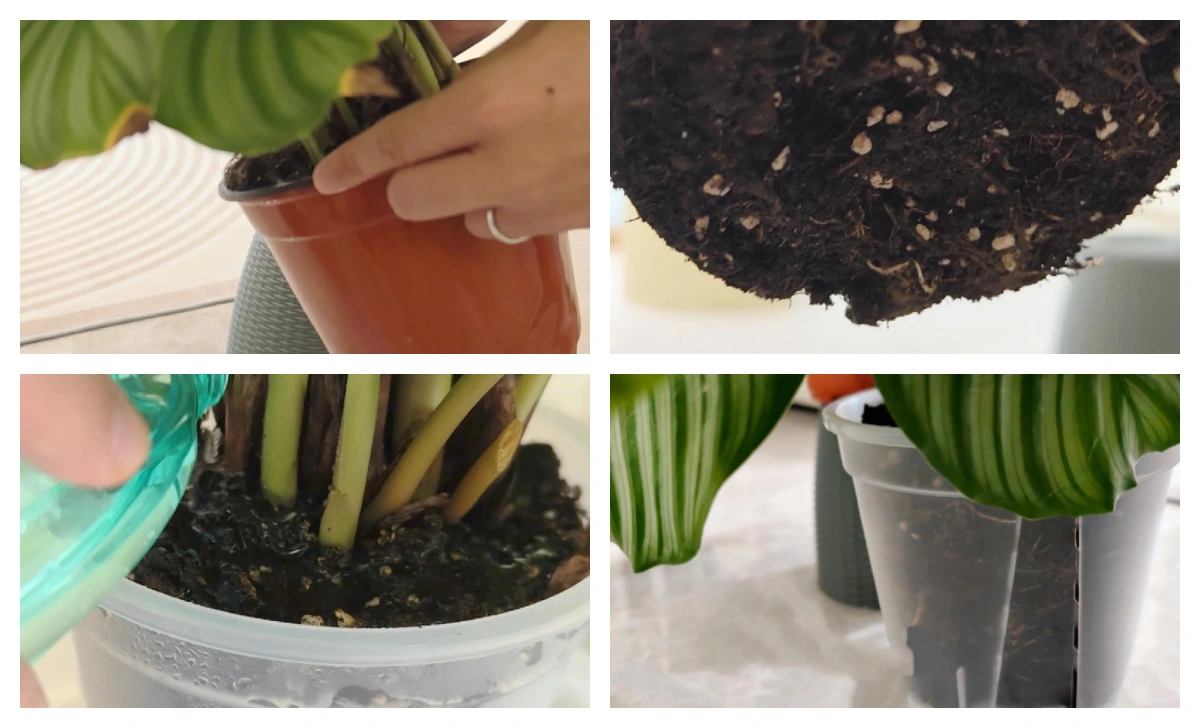
When dividing, gently remove the plant from its pot and shake off excess soil. Use your fingers to separate the root clumps, making sure each section has at least 2–3 healthy leaves and roots attached. Replant each division in fresh, lightly moist soil, and keep them in a warm, humid area out of direct sun for the first few weeks.
For repotting, Zebrina prefers snug pots. Move up only one size when the roots begin circling the bottom — typically every 1–2 years. A pot that’s too large holds excess moisture and can suffocate the roots. After repotting, water lightly and maintain humidity to help the plant settle in.
💡 Tip: Newly divided or repotted Zebrinas often pause growth for a few weeks. That’s normal. Keep conditions stable and avoid fertilizing until you see new leaves emerging again.
👉 For a full walkthrough with step-by-step photos, visit the Calathea Propagation Guide.
Where I Would Place Calathea Zebrina Indoors
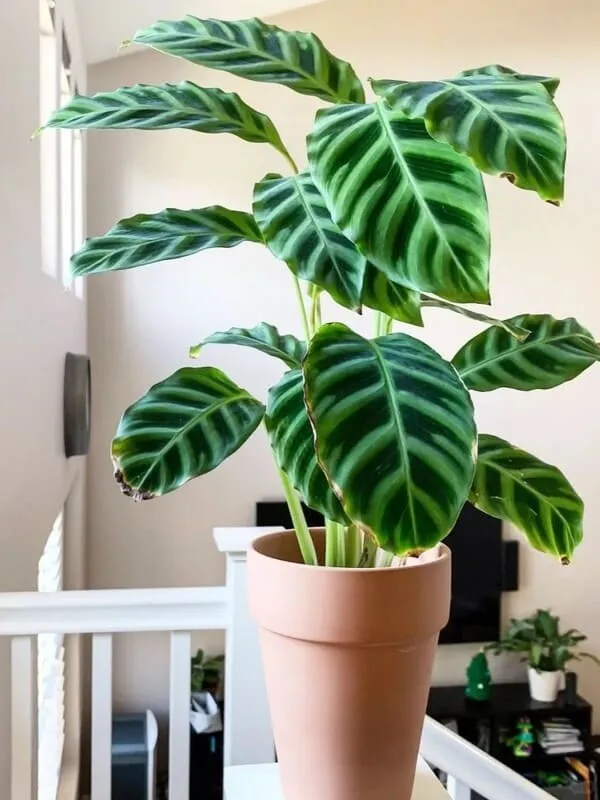
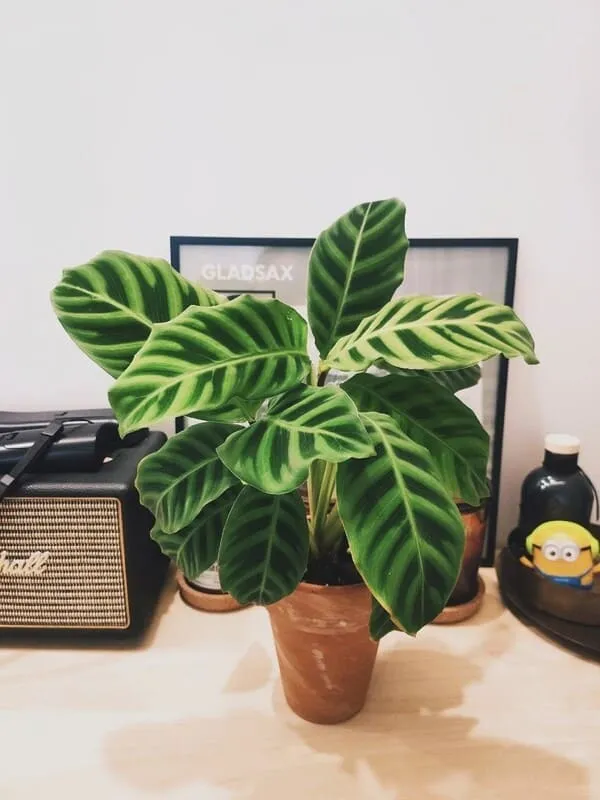
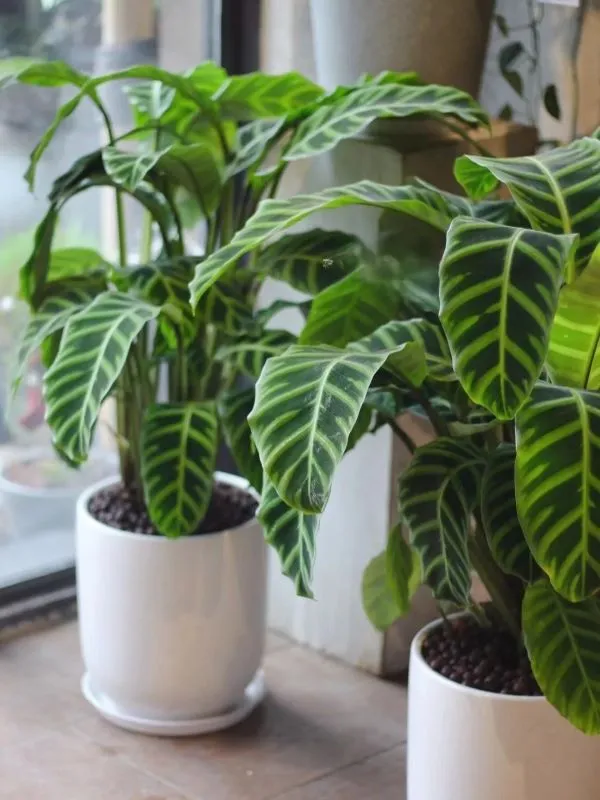
I would not place Zebrina in a dry, exposed corner just because it looks beautiful there. This plant looks best when the placement also protects its leaves: bright indirect light, no direct heater airflow, and enough space for the large leaves to fan out.
In winter, I prefer a warm room with soft light over a colder bright window. If the only bright spot is near a drafty window or heating vent, I would rather move the plant slightly back and support it with humidity than force it into a stressful position.
A plant stand can work well because Zebrina leaves spread horizontally. Just avoid narrow shelves where the leaves press against walls or other plants, especially when the foliage is already stressed.
💡 Tip: Give your Zebrina room to spread — its leaves fan out horizontally, so avoid cramped corners or narrow shelves.
FAQ
👉 For a broader diagnosis, see Why Is My Calathea Drooping?
Explore More Calathea Varieties
If you are comparing Zebrina with other striped or patterned Calatheas, start with the Calathea types guide. If you are not completely sure which variety you have, the Calathea identification chart may be more useful.
View Calathea Type Guides →