Last updated: April 27, 2026
I’ve grown quite a few Calathea varieties over the years. Some were beautiful but dramatic, and a few tested my patience more than once. That is why Calathea White Star stands out to me.
It is not the rarest or the most dramatic Calathea, but it has been one of the most stable in my home. I have kept mine for about two years, moved with it twice, and gone through periods where I did not give it perfect care.
I have not repotted it often. I have not followed a strict fertilizing routine. Yet it kept growing, recovered after stress, and responded when I finally improved the conditions again.
This guide is not a textbook care sheet. It is my real experience living with White Star — how it handled neglect, spider mites, dry periods, and recovery, and why I think it is one of the more forgiving Calatheas for indoor growers.
| Botanical Name | Calathea ‘White Star’ (often listed as Goeppertia majestica ‘White Star’) |
|---|---|
| Plant Type | Tropical evergreen foliage plant (prayer plant family, Marantaceae) |
| Origin | South America (cultivated hybrid; exact wild origin unclear in trade) |
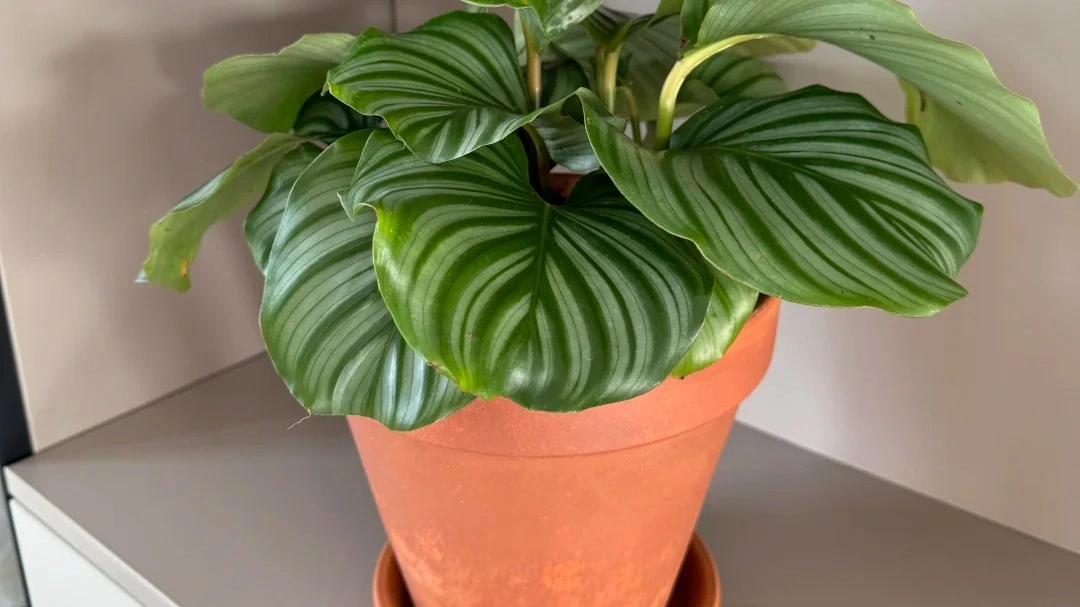
| Height | 20–30 in (50–75 cm) indoors with proper care |
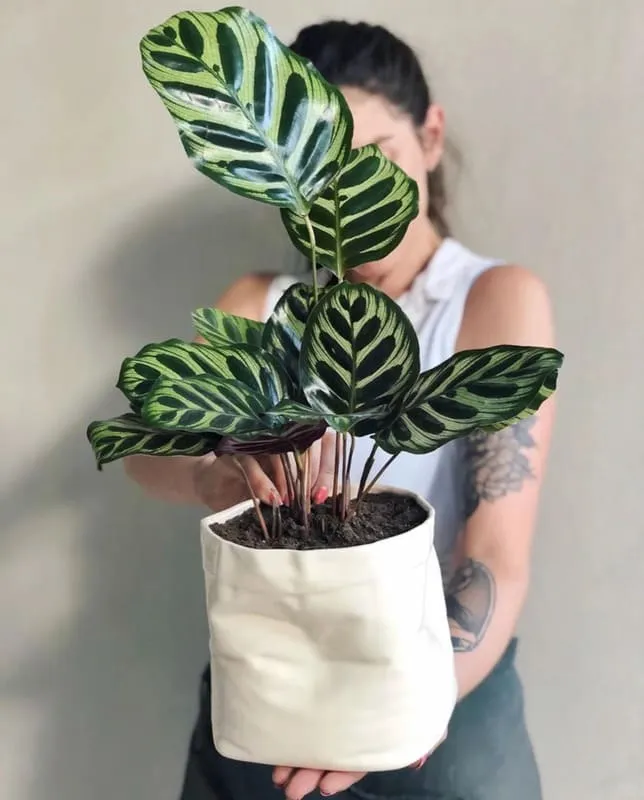
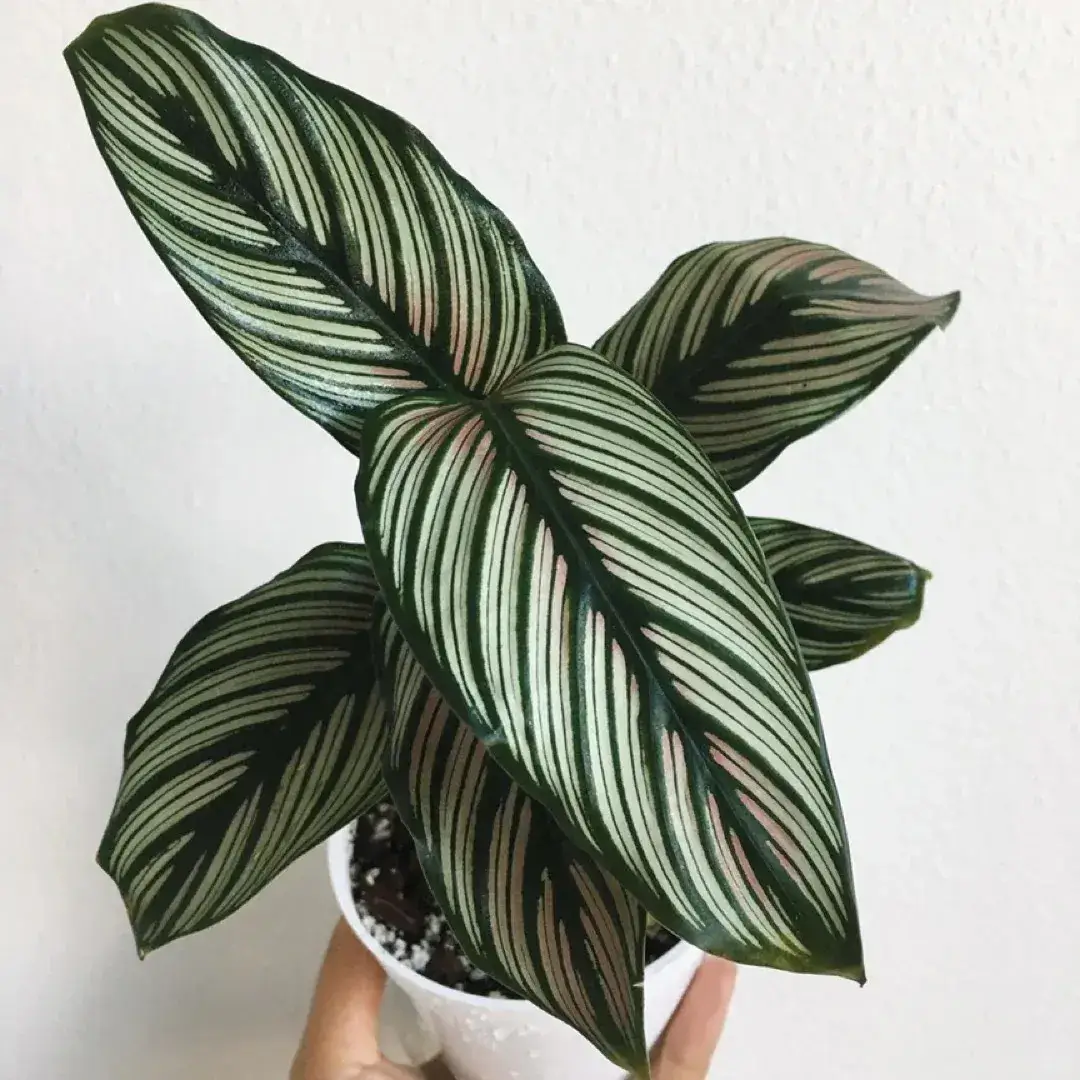
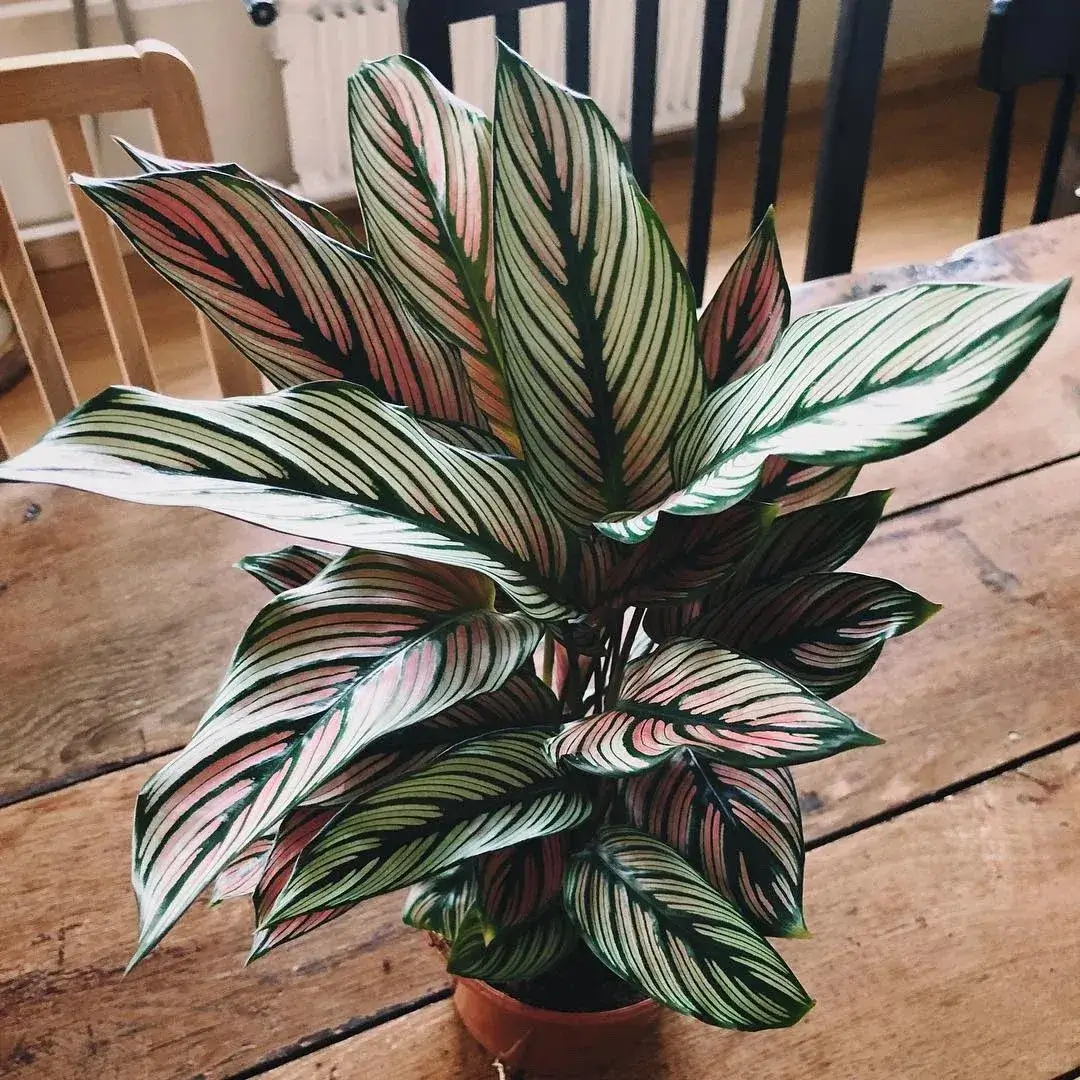
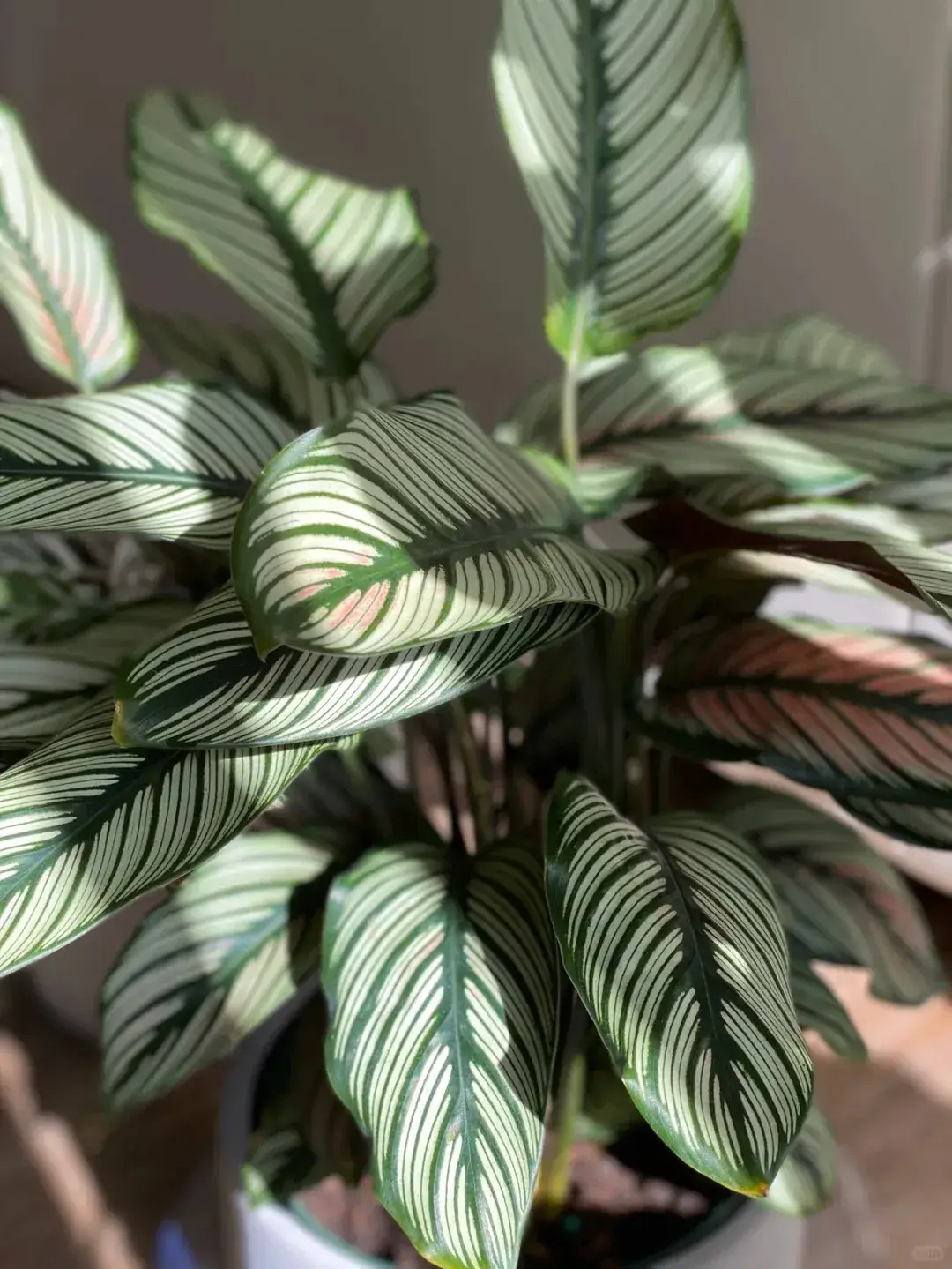
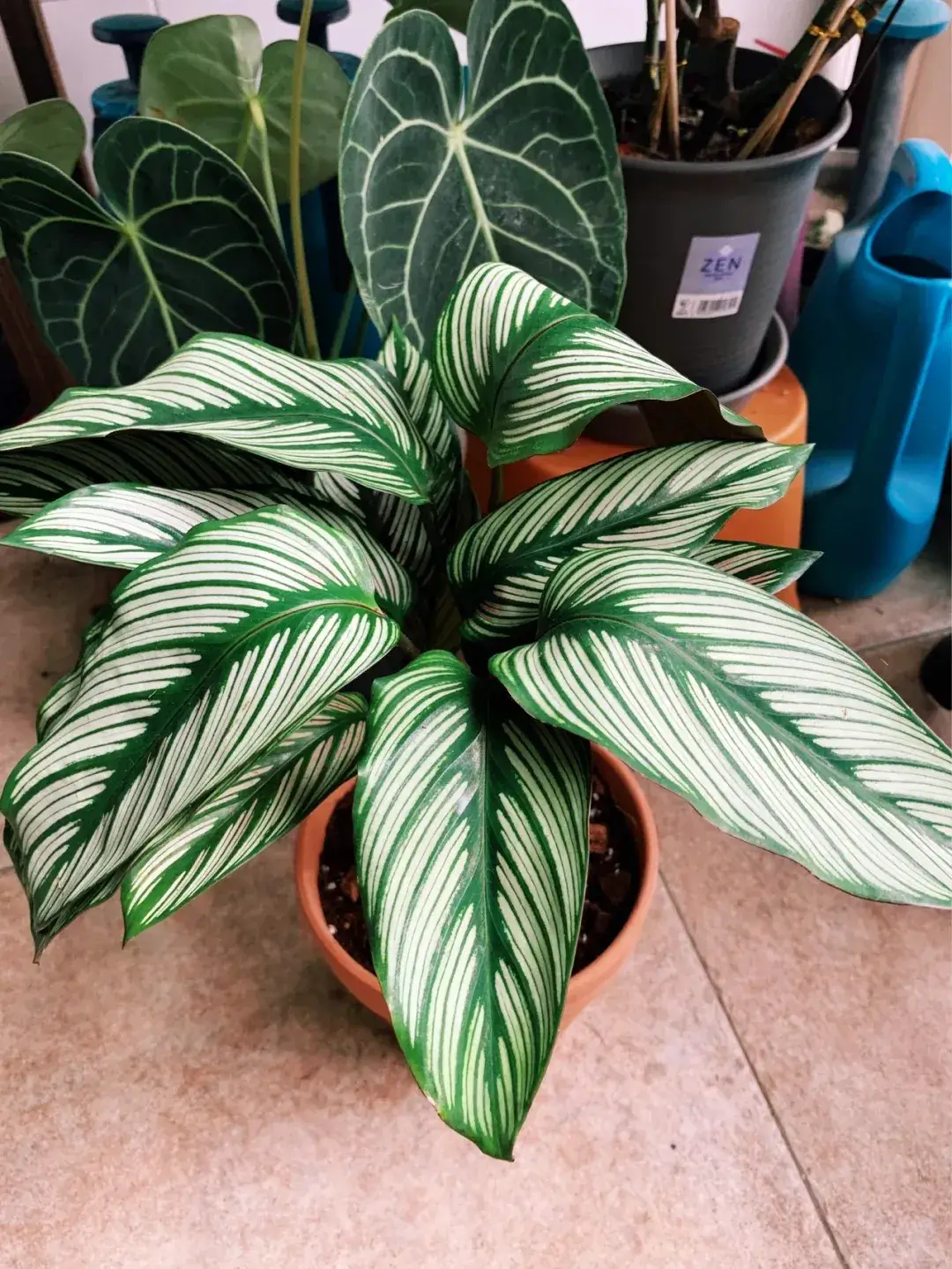
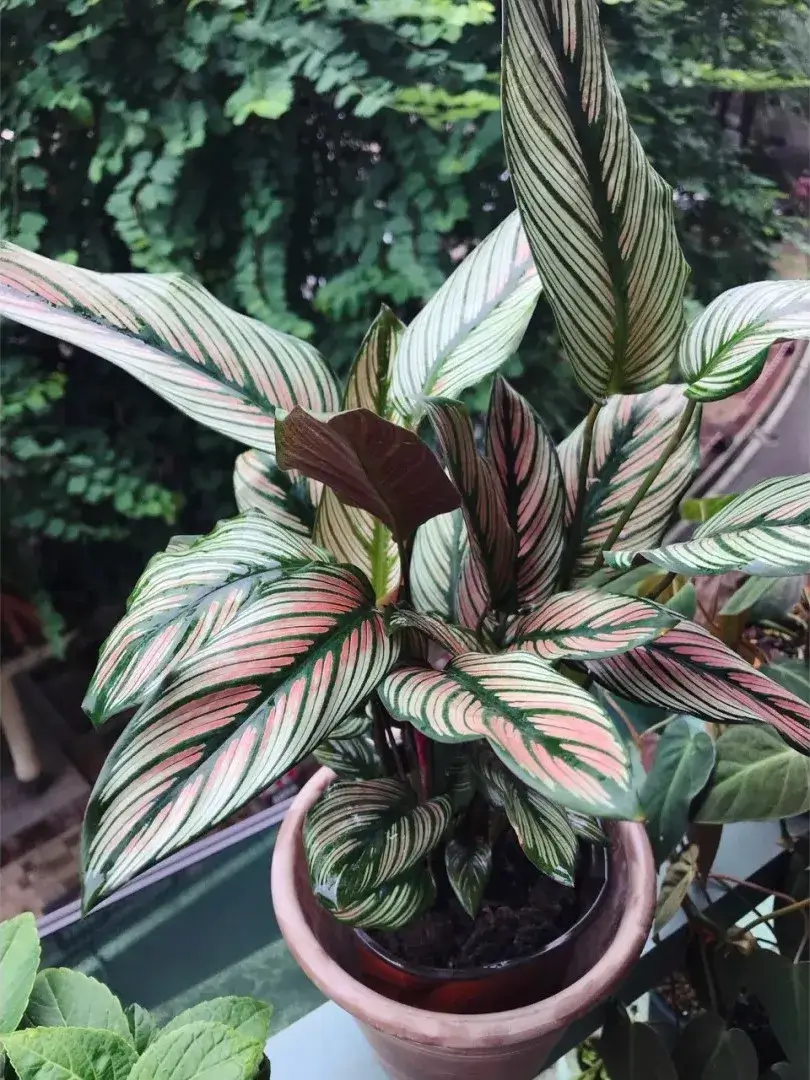
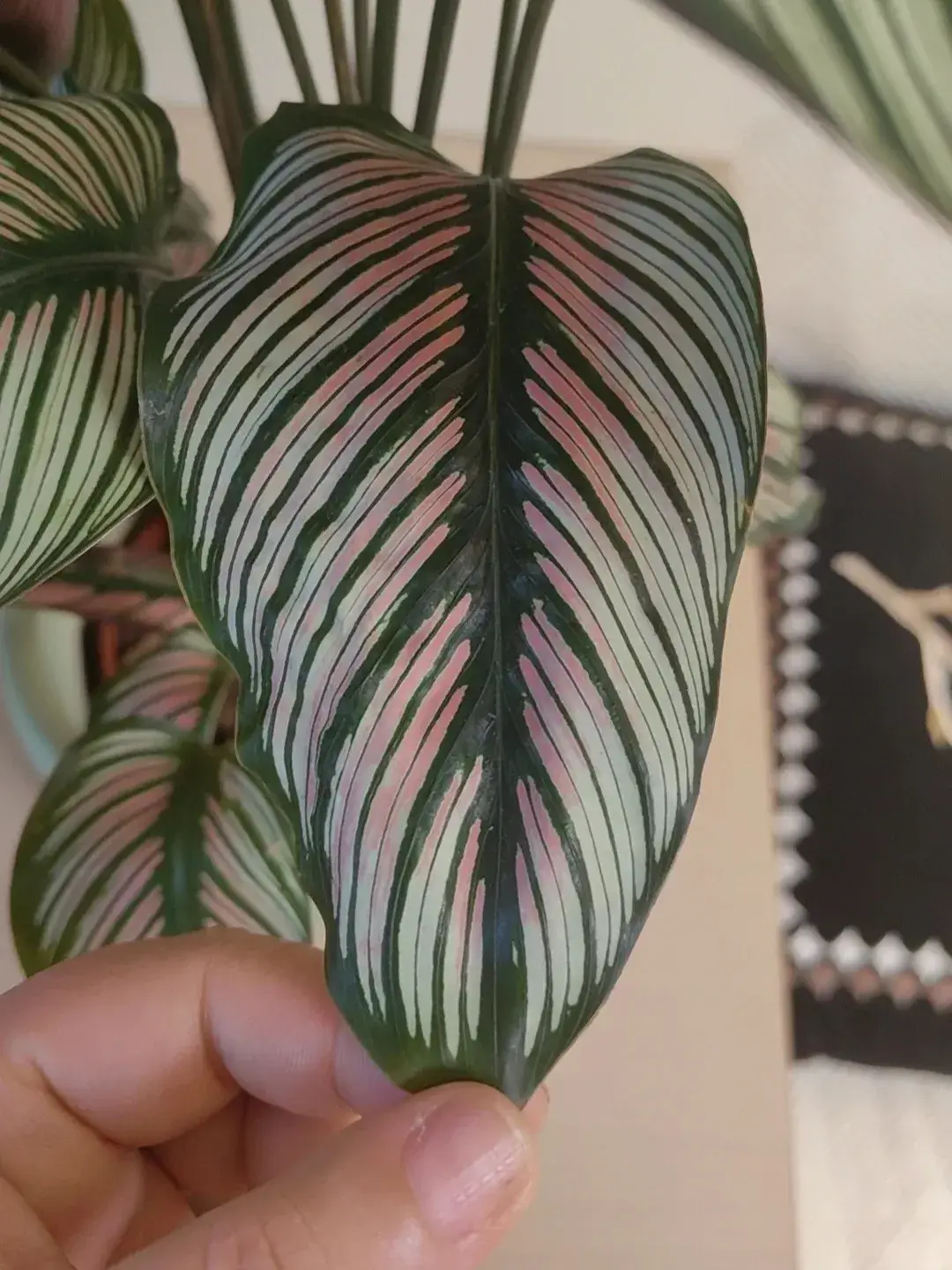
| Leaf Size | Large, elongated oval leaves with white and pale green striping; pink to red midribs on mature leaves |
| Pet Safe | ✓ Yes — non-toxic to cats & dogs |
| Popularity | Moderate — not the most hyped Calathea, but widely available and often underrated |
| Care Level | Beginner-friendly for a Calathea — forgiving, resilient, and adaptable compared to most varieties |
Two Years With White Star: Why I Call It Tough
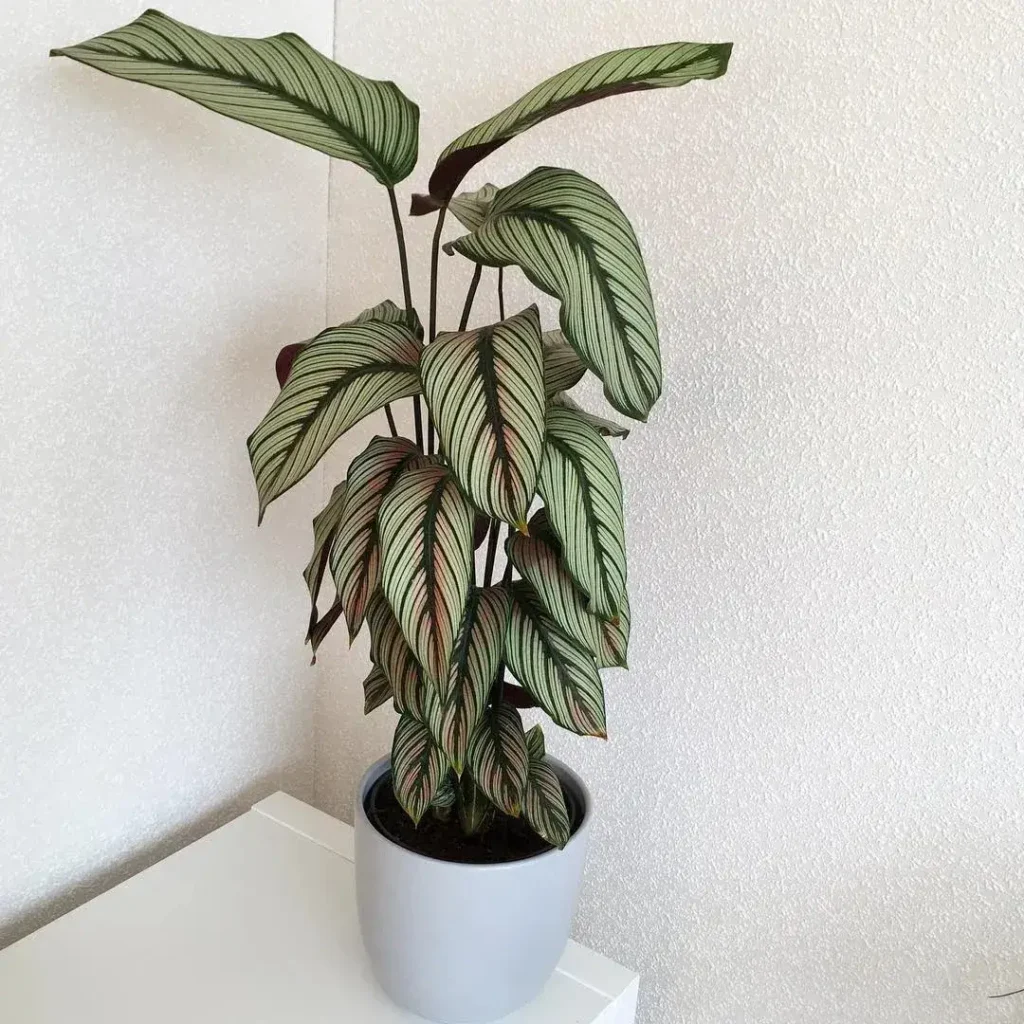
I’ve had my Calathea White Star for about two years now, and that time alone has shaped how I see this plant.
In those two years, it’s moved with me twice. Different rooms, different light angles, different daily rhythms. Through all of that, I never repotted it. I never followed a fertilizing schedule. There were long stretches where I simply made sure it had water and left it to figure things out.
And it did. It kept pushing out leaves, held its shape, and responded whenever conditions improved.
That is why I call it tough — not because it is indestructible, but because it does not give up easily. For a Calathea, that kind of steady resilience is rare.
When Things Went Wrong: Spider Mites & Drought Stress
There was a period when I almost lost this plant — and it wasn’t because White Star is fragile. It was because I wasn’t paying attention.
Life got busy, and the plant slowly slipped into the background. Watering became irregular, and airflow wasn’t as good as it should have been. By the time I really looked at it again, the signs were already there.
Spider mites.
Dry air.
Leaves losing their firmness.
Several leaves had already dried out completely, turning crisp at the edges and dull in color. At that point, it didn’t feel like routine care anymore — it felt like damage control. I wasn’t confident it would recover.
I remember looking at it and thinking, I’ll try to save it, but I won’t be surprised if it doesn’t make it.
That mindset changed how I acted. Instead of chasing perfection, I focused on giving the plant a chance: addressing the mites, restoring consistent moisture, and removing what was already beyond saving. There was no expectation of instant results — just a quiet hope that it still had some strength left.
This was the moment that really tested White Star. And the fact that it didn’t give up here is a big reason why I trust this plant today.
How I Brought My White Star Back
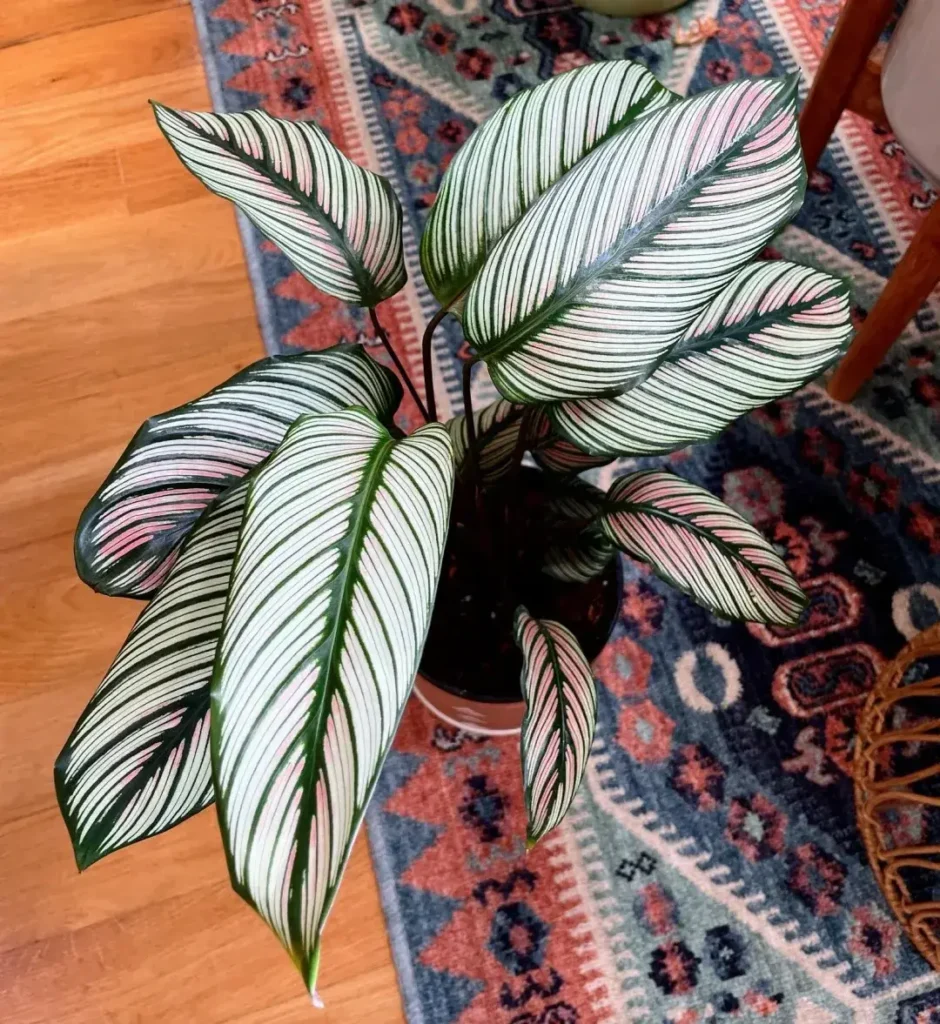
Step 1: Physically Removing Spider Mites From the Leaves
Once I decided to really try saving it, I kept everything simple and deliberate.
The first thing I did was wipe down the leaves with alcohol pads. I didn’t spray blindly or rush through it — I worked leaf by leaf, gently removing spider mites and their residue while checking the overall condition of the plant.
This step wasn’t about perfection. It was about stopping the damage from getting worse.
Step 2: I Avoided Heavy Spraying After the First Cleanup
After wiping the leaves, I did not want to keep spraying the plant heavily. Calathea leaves can mark easily, especially when the air is still or the plant is already stressed.
I did use a very light essential-oil water spray as a personal choice, but I would not present it as a universal spider mite treatment. If I were doing it again, I would focus first on leaf-by-leaf cleaning, isolation, repeat checks, and better airflow.
Step 3: Letting Go of Damaged Leaves
Next came the hardest part emotionally: removing damaged leaves so the plant could recover.
Anything that was fully dried, badly scarred, or clearly beyond recovery was cut away. The plant looked smaller and less impressive afterward, but it also stopped wasting energy on leaves that weren’t coming back.
That moment felt less like pruning and more like giving the plant permission to start over.
Step 4: Immediate, Thorough Watering
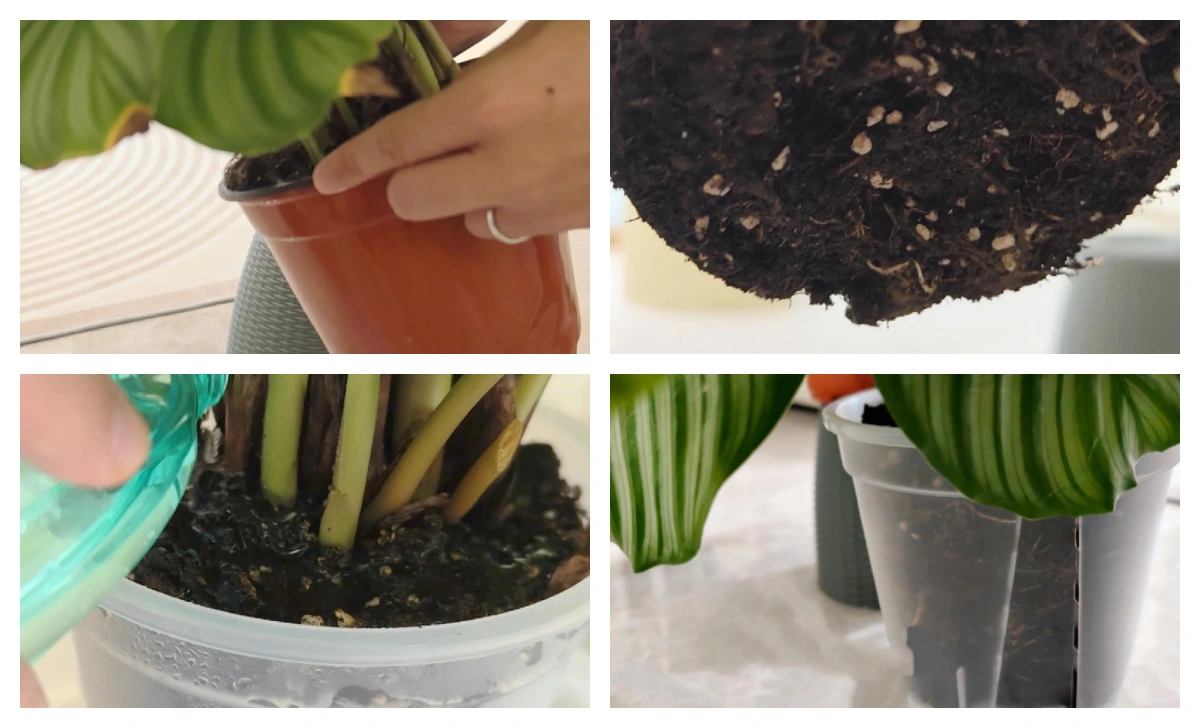
After that, I gave it immediate and thorough watering. The plant had been too dry for too long, so I wanted to restore moisture properly instead of giving it a small half-watering.
I still let the pot drain fully afterward. For a stressed Calathea, the goal is not to keep the roots soaked — it is to rehydrate the root ball and then return to a steadier watering rhythm.
The Result: From Struggling to Thriving Again
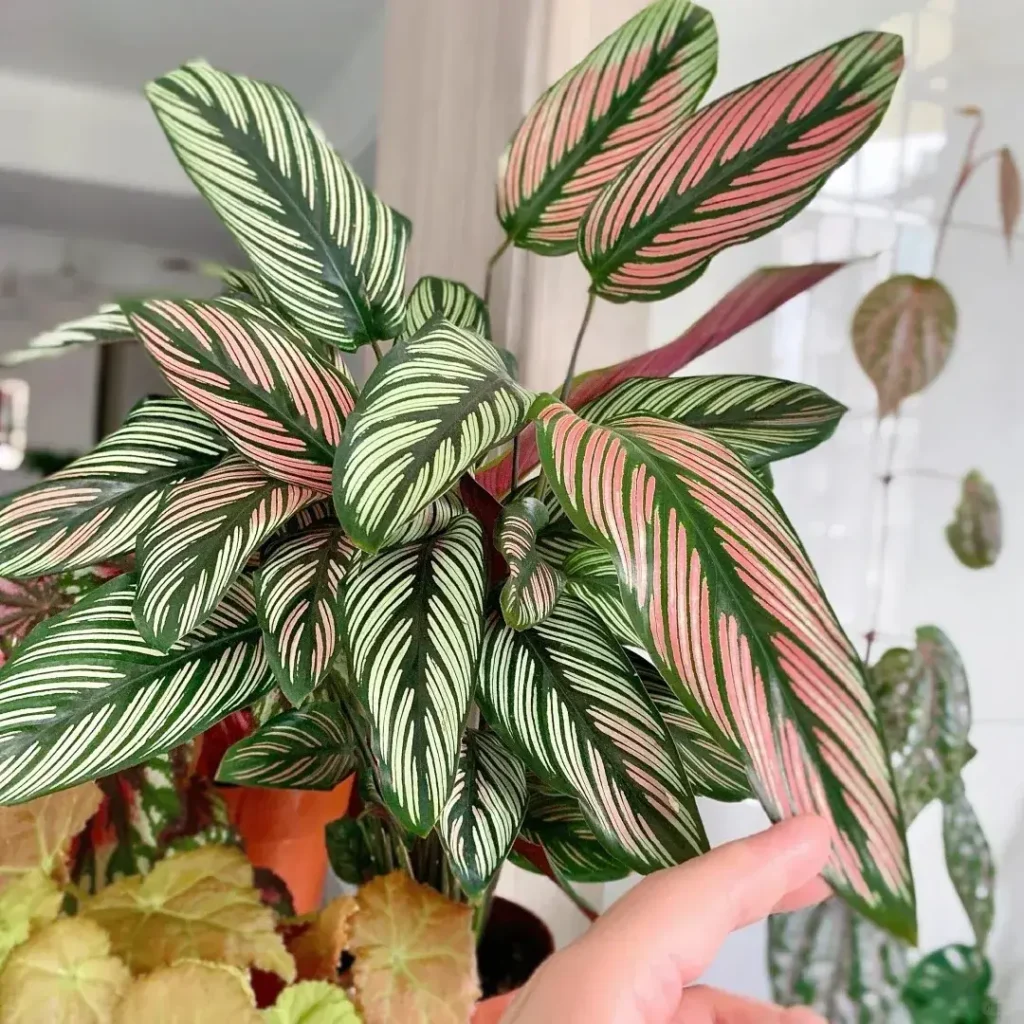
The change wasn’t instant, but it was steady.
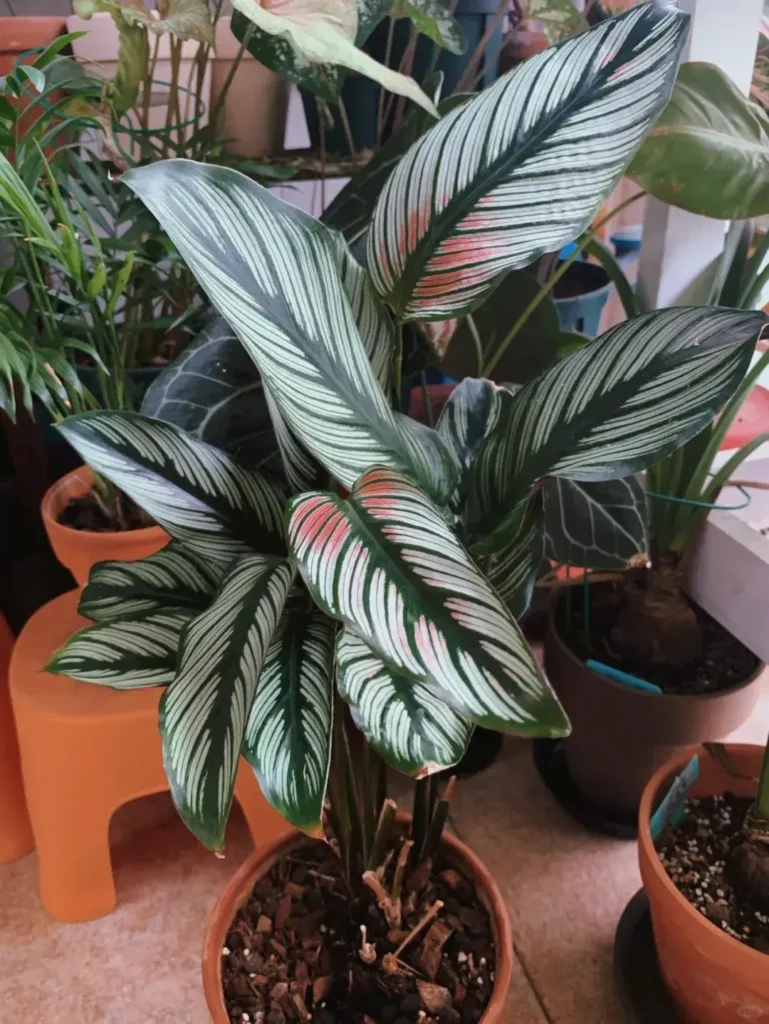
Over the following weeks, new leaves appeared, posture improved, and the plant slowly regained its presence. Then I noticed something that felt almost magical — a soft red blush returning to the leaves, a clear sign that growth and health had resumed.
It went from struggling to looking like a little fairy again.
That recovery is why I trust White Star. It doesn’t just survive ideal conditions — it responds when you show up, make adjustments, and give it a real chance.
Daily Care That Actually Works for Me
I don’t follow a strict routine with my White Star. What works for me is paying attention, not chasing schedules.
Light
It lives in a north-facing living room with soft but usable indirect light. I would not call it a deep low-light plant, but it does not need direct sun or a very bright window to stay stable.
Water
I don’t water on a timetable. When the pot feels light, I water thoroughly. I use filtered water when I can, especially if the leaf edges are starting to look dry or marked. Trying to force a schedule only led to mistakes — responding to the plant has been far more reliable.
Soil
I keep White Star in a light, breathable mix rather than a heavy moisture-trapping soil. It likes steady moisture, but the roots still need air. If the mix stays wet for too long, the plant becomes much easier to stress.
For most homes, I would use a loose Calathea-style mix with potting mix, perlite or pumice, and a little bark or coco coir. The exact recipe matters less than the result: lightly moist, never compact or sour.
Airflow
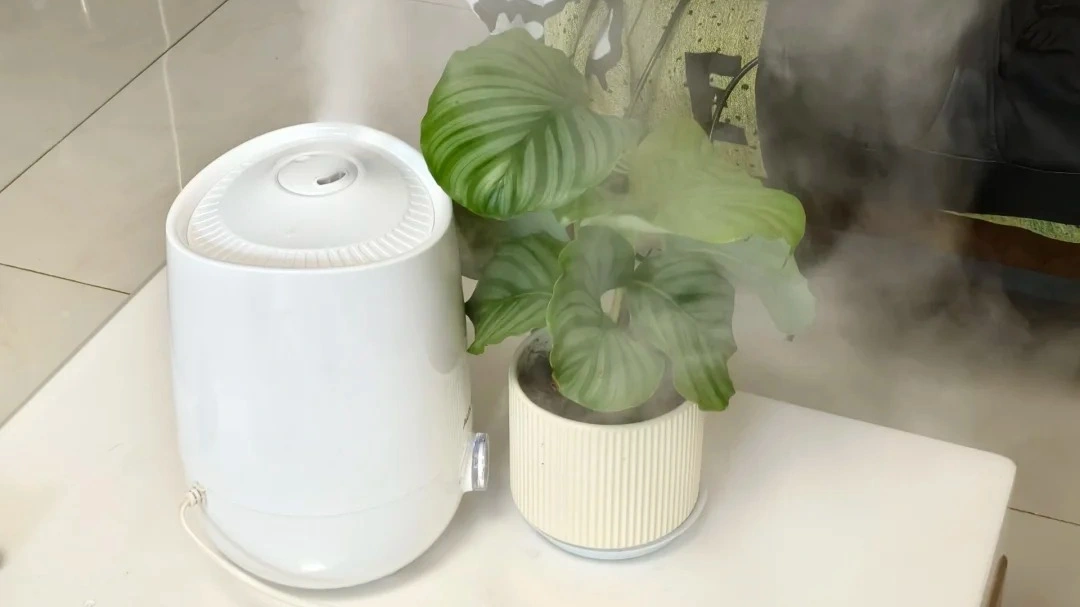
This matters more than many people realize. Good airflow helps prevent pest pressure and keeps moisture from sitting around the leaves. In my experience, moderate humidity with moving air works better than very high humidity in a still, closed corner.
That’s really all I do. No complicated systems — just steady conditions and attention.
Is Calathea White Star Beginner-Friendly?
Yes — for a Calathea, White Star is beginner-friendly. It is not a plant you can ignore completely, but it gives you more room to adjust than many dramatic Calathea varieties.
I would recommend it to someone who wants patterned foliage but does not want a plant that collapses after every small mistake. It still needs indirect light, steady watering, and airflow, but it has been much more patient in my home than many other Calatheas.
In short, White Star is not effortless — but it is forgiving. For this plant family, that makes a real difference.
FAQ
Explore More Calathea Varieties
If you like White Star because it feels steadier than many dramatic Calatheas, you may also want to compare other striped, silver, and beginner-friendly varieties. Start with the full Calathea types guide to find one that fits your light, humidity, and watering habits.
View Calathea Type Guides →